-10.8 C
New York
Home Blog Page 378

Maersk and the Spanish Government to explore large-scale green fuels production

0

A.P. Moller – Maersk (Maersk) and the Spanish Government have signed a General Protocol for Collaboration to explore the opportunities for large-scale green fuels production in Spain.

Signing the Protocol marks a significant milestone in the collaboration that, if implemented in full, could deliver up to 2 mil. tonnes of green fuels per year.

Soren Skou, CEO, A.P. Moller – Maersk, said:

“We are living in a climate emergency, and we need to rapidly accelerate the availability of green future fuels. We are very pleased to explore green fuel opportunities with the Spanish Government, as the country holds key characteristics to help solve this challenge with its great hydrogen ambitions and aspiring sustainability goals. At the same time, Spain encompasses significant renewable resources and is placed along key shipping routes.”

The parties are reviewing production opportunities in the Andalusia and Galicia regions. The project has an overall estimated potential to generate up to around 85.000 jobs including construction and temporary positions.

Pedro Sánchez, President of the Government of Spain, said:

“This project is perfectly aligned with Spain’s strategy of reindustrialisation, just transition and the green hydrogen roadmap, advancing in the fulfillment of the common commitment of decarbonisation of the European Union. It will also strengthen economic, political and commercial ties with Denmark, partner and a friend in EU.”

The availability of green energy and fuels in sufficient quantities and at cost-competitive price levels remains the main challenge for the decarbonisation of global shipping. 

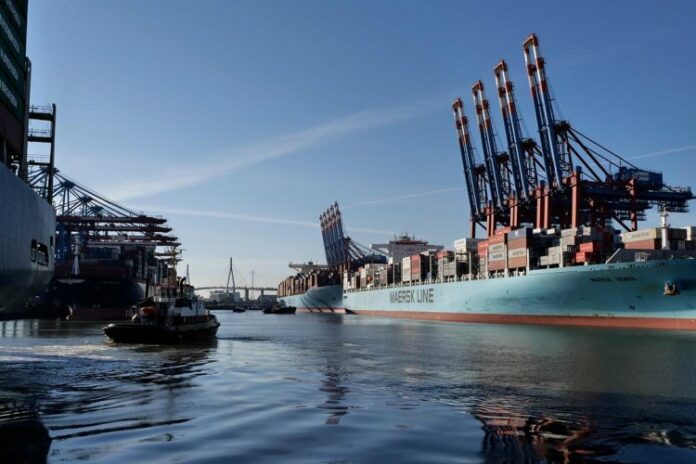
Maersk alone needs approximately 6 mil. tonnes of green methanol per year to reach its 2030 milestone fleet emissions target and even larger amounts by 2040 for its fleet to reach net zero.

Henriette Hallberg, CEO Fleet & Strategic Brands, A.P. Moller – Maersk, said:

“Operating a large fleet of container vessels, we are part of the climate problem, and we have made the choice to take an active part in shaping the solutions to secure a green and just transition, enabling the global shipping industry to deliver on the Paris Agreement and Maersk to achieve its 2040 net-zero target. To achieve our goals, we need to collaborate with partners who are actively looking at green solutions for the future.”

The 19 vessels capable of running on green methanol that Maersk will put in operation during 2023-2025 will require approx. 750.000 tonnes of green methanol. Earlier in 2022, Maersk announced a total of seven strategic partnerships to secure the volumes needed to meet the demands of these initial vessels.
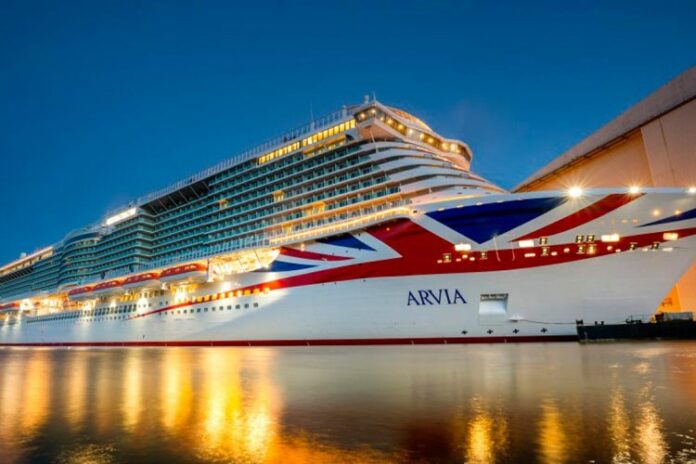
MEYER WERFT conveys cruise ship Arvia

0

MEYER WERFT’s newest cruise ship, Arvia, is expected to leave Papenburg on Saturday, November 5, 2022 and be transferred on the Ems River to Eemshaven (Netherlands).  

After technical and nautical trials, the Arvia will set course for Bremerhaven for delivery to P&O Cruises (UK).

The new cruise ship is equipped with the cleanest propulsion system currently available to the shipping industry, an LNG propulsion system. This means that the Arvia is built to be future-proof and, in perspective, can even be operated in a climate-neutral manner using green regenerative LNG. Even today, LNG propulsion eliminates nitrogen oxides and particulate matter in addition to reducing CO2 emissions – sulfur oxides are completely eliminated. Currently, all cruise ships in MEYER WERFT’s order book are equipped with this low-emission propulsion system.

Arvia, the sister ship to the Iona due to enter service in 2020, has 2,614 cabins and is designed to carry 5,200 passengers. One of the highlights on board is the SkyDome, an entertainment area with a pool whose glass dome can be opened.

The Arvia will sail the Ems towards the North Sea again backwards and with the support of two tugs. This way of transfer has proven to be successful due to the better maneuverability.

The transfer of the ship will again be carried out by the team of the pilot brotherhood Emden. The Ems pilots have been performing the maneuvers for many years. The team uses state-of-the-art technology to prepare for a realistic simulation of the Ems river passage in Wageningen (Netherlands).

MOL modernizes ship operations with digital transformation initiatives

0

MOL and MOL Drybulk announced that they completed the replacement of their current core systems for ship operations, fuel procurement, finance, and accounting with a variety of cutting-edge cloud-based business application software that they adopted in April this year.

This time, MOL and MOL Drybulk incorporated SaaS to pursue the Fit-to-Standard approach (a technique for adapting operations to the systems) after thoroughly evaluating and standardizing the processes for the operations covered by the systems.

MOL positioned digital transformation (DX) as the foundation to enable its business strategies (portfolio strategy, environmental strategy, and regional strategy) and initiatives to enhance organizational strength while implementing workstyle reforms in its fiscal 2022 management plan, “Rolling Plan 2022.”

MOL and MOL Drybulk will accelerate efforts to use digital technology to address various social and general management issues, such as addressing GHG emissions by sharing accumulated vessel and operational data, while leveraging the renewal of the core systems as a cornerstone to further promote DX initiatives. Additionally, the two companies will advance the thorough standardization of operations implemented this time to promote business structure reforms.

GET and Stellar to build first dedicated methanol bunkering ship in Singapore

0

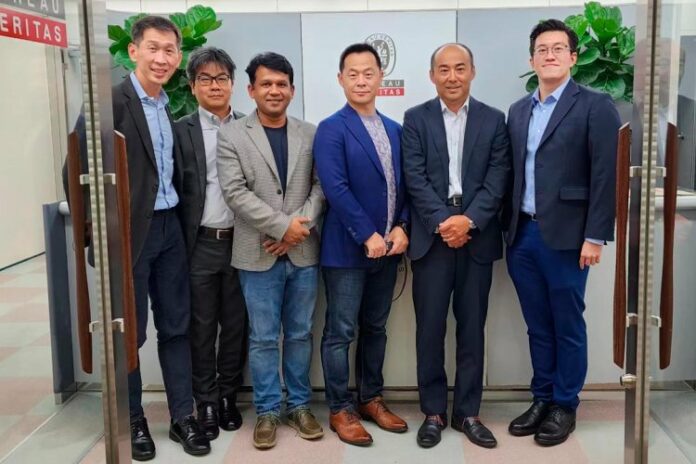
Global Energy Trading Pte Ltd, Stellar Ship Management Services Pte Ltd, wholly owned subsidiaries of Global Energy Group, along with Bureau Veritas, have entered an agreement for the construction of a 4,000 DWT IMO Type 2 Chemical and Oil Tanker, which will be classed by BV. The tanker will be the first dedicated methanol bunkering ship in Singapore.

The order was confirmed at a signing ceremony in Osakikamijima, Hiroshima, Japan, on 18th October 2022. The vessel will be built in Sasaki Shipbuilding Co., Ltd, Hiroshima, Japan.

A Singapore MPA-licensed and UAE-licensed bunker supplier, GET provides a full range of marine fuels which will soon include Biofuel (beyond Bio25) and Methanol in 2024. The new tanker will join GET’s fleet by the end of 2023, becoming the first Category A bunkering tanker for carriage of biofuel and methanol in Singapore.

Stellar is a leading ship manager for oil and chemical tankers, providing full technical management, and crewing services exclusively for the fleet of 20 tankers owned by the Global Energy Group. A dedicated team from Stellar will supervise the construction of the 4,000 DWT IMO Type 2 Chemical and Oil Tanker, providing their expertise for the project.

Mr. Loh Hong Leong, Group Managing Director of Global Energy Group, commented:

“We have made an important step to support the industry’s effort on carbon emissions reduction by introducing alternative and green fuel bunkering supply chain solutions. The new tanker could pave the way for the next generation of a more versatile bunkering tanker.”

Vince Koh, Group General Manager of Global Energy Group, commented:

“With this IMO Type 2 Chemical and Oil Tanker added to the fleet, it will widen our scope of services to meet the needs of shipowners in support of their carbon reduction and ESG initiatives.”

David Barrow, Vice-President South Asia and Pacific, Bureau Veritas Marine & Offshore, commented:

“As the industry explores alternative fuel options to support its decarbonization journey, developing the industry’s supply and bunkering capacities will be an essential step to scale up and ensure the availability of these new fuels.”  

Aventra Group launches fleet emissions performance management suite

0

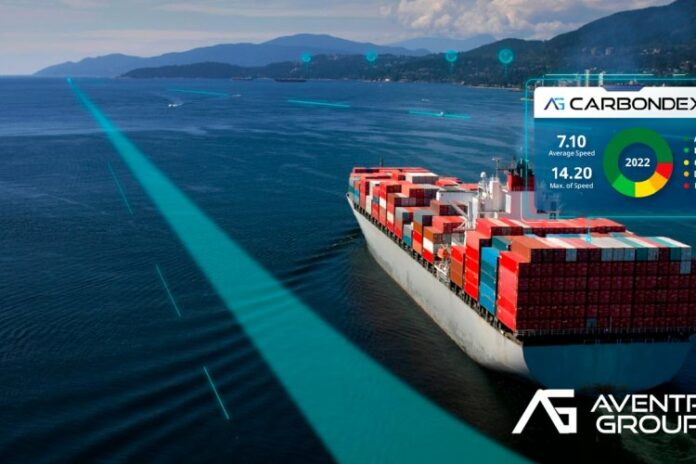
AG CARBONDEX, a new artificial intelligence-powered application, precisely predicts Carbon Intensity Indicator (CII) scores for every vessel in the billion-dollar maritime shipping industry, an application made especially for shipping companies to measure risks, increase ratings and make better-informed commercial decisions. Basically to measure the effects of the regulations.

Starting in 2023, the International Maritime Organization (IMO) will require ship owners to report CII on an annual basis, a report systematically graded from A to E. To trade internationally, vessels will need to bear a certificate of compliance. Additionally, ship owners and ship management companies are required to file multi-year plans to improve emission on each of their ship.

Vessels with better CII scores are expected to demand higher market rates, while those with lower scores will be forced to charge less. Therefore, with limited time in their hands, operators are now set on a time limit to adapt before the new regulation takes effect on Jan 1, 2023.

Using AG Carbondex, shipping companies can achieve the following:

– Real-time benchmarking and monitoring of an individual vessel or the entire fleet
– Accurately forecast vessel CII rating to improve regulatory compliance
– Smarter fuel management with detailed visualization
– ISO 27001 – best-known standard for information security management systems

“The Maritime Industry is at the crossroads for compliant fuel and emission regulations, so it would be prudent for Ship owners, operators, and managers to rethink their cost while helping them achieve the mandatory compliance. The application will also help them obtain that extra value for every dollar spent,” says Venkat – Product Manager.

To support the industry’s transition to decarbonization, AG CARBONDEX enables users to access real-time monitoring activities of their fleet’s CII-related performance and simulate vessel CII ratings. The software allows an operator to reduce emission and improve revenue with an interconnected Carbon Intensity Indicator analysis, which would result in a more distinct bird’s eye view of their fleet’s operations.

“We have developed a rock-solid solution to meet the needs of ship owners and Commercial & Technical teams. When set up our minds to build AG CARBONDEX, we knew we wanted to create an edge for technical teams to improve the performance of their fleets by transforming Noon reports into insightful analytics for an optimized operation. We have a great vision for Technical Management Analytics. AG CARBONDEX is just the beginning of the Digital Transformation of Technical Management” says Juan J. Gil – CEO Aventra Digital, Singapore. 

Neptune Energy begins drilling Calypso exploration well

0

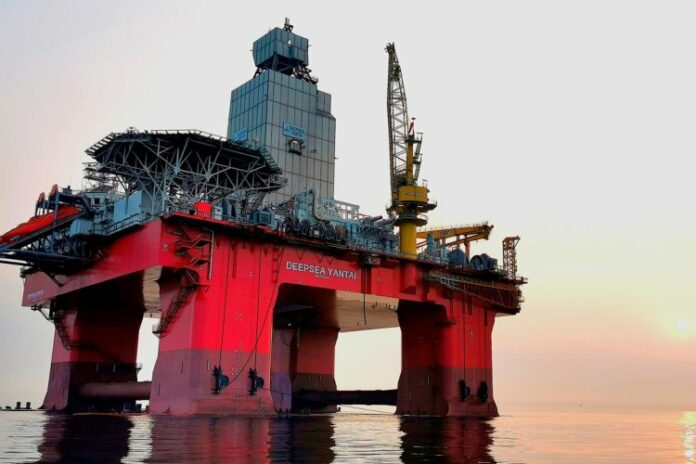
The exploration well, 6407/8-8 S, is being drilled by the Deepsea Yantai, a semi-submersible rig, owned by CIMC and operated by Odfjell Drilling. 

The Calypso prospect is located 14 kilometres north-west of the Draugen field and 22 kilometres north-east of the Njord A platform, within the Neptune-operated PL938 Licence.

Calypso is positioned within one of Neptune’s core areas on the Norwegian Continental Shelf. In the event of a commercial discovery, Calypso could potentially be tied back to existing infrastructure.

Neptune Energy’s Director of Subsurface in Norway, Steinar Meland, said:

“Calypso is an exciting prospect and fits our exploration strategy of focusing on opportunities within core areas and near existing infrastructure.”

The reservoir target is the middle and lower Jurassic formations and is expected to be reached at a depth of approximately 2,960 metres.

The drilling program comprises a main-bore (6407/8-8 S) with an optional side-track (6407/8-8 A) based on the outcome of the exploration well.

Partners: Neptune Energy (operator, 30%), OKEA ASA (30%), Pandion Energy AS (20%) and Vår Energi ASA (20%)

Sembmarine SLP awarded exclusive maintenance contract from Ørsted

0

Sembcorp Marine Ltd has been awarded the Planned Preventative Maintenance (PPM) contract by Ørsted A/S (“Ørsted”) for the Hornsea 2 Offshore Wind Farm, one of the world’s largest wind farms located 89 km off the Yorkshire coast in the UK North Sea.

The PPM contract involves the maintenance and servicing of the low voltage (LV) and ancillary systems, on both the Offshore Substation (OSS) and Reactive Compensation Station (RCS) with provisions for further service extension. 

The Hornsea 2 Offshore Wind Farm, which became fully operational at end August 2022, is expected to contribute significantly to Ørsted’s goal of installing 30GW of offshore wind assets by 2030. Spanning 462 sqm (equivalent to more than 64,000 football pitches), the wind farm has a total capacity of over 1.3GW with the ability to provide clean electricity to more than 1.4 million homes.

Mr Peter Russell, Transmission and Maintenance Manager at Ørsted, said:

“It is great to have Sembmarine SLP on board as our exclusive service partner for the Hornsea 2 Offshore Wind Farm. They are perfectly placed to undertake the PPM element of the project following their excellent delivery of the hook-up and commissioning under challenging circumstances. We look forward to partnering the Sembmarine SLP team to advance our renewable energy objectives through our Hornsea 2 Offshore Wind Farm operations.”

Mr Colin Yaxley, Managing Director of Sembmarine SLP, said:

“Our success on the hook-up and commissioning of the Hornsea 2 Offshore Wind Farm platforms fabricated by our sister company, Sembcorp Marine Offshore Platforms in Singapore, has been a large contributing factor to our award for the PPM contract. This exclusive contract will position Sembmarine SLP as Ørsted’s main service provider for Hornsea 2 Offshore Wind Farm’s LV and ancillary systems, enabling enhanced operational efficiency and greater risk mitigation for the developer.”

The above contract is not expected to have a material impact on the net tangible assets or earnings per share of Sembcorp Marine for the current fiscal year.

Bureau Veritas delivers AiP to COLD PAD for their C-Claw technology

0

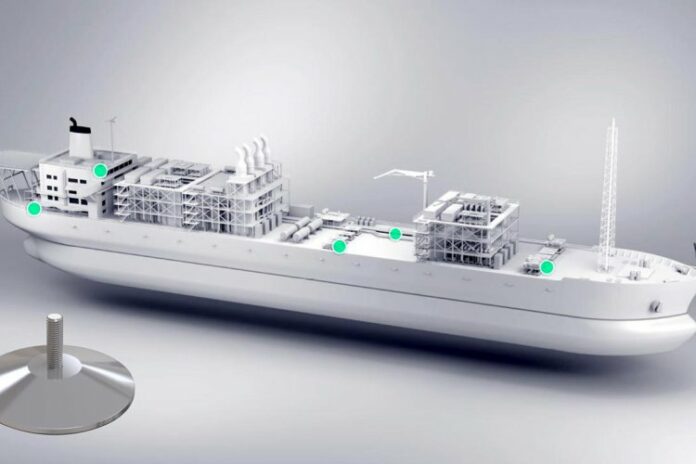
C-Claw™ was designed as an alternative to welding and drilling for the maritime and offshore sectors. The technology offers a quick fastening solution for any structural outfitting, maintenance and modification operations, including works on cable trays, pipe supports, skids, handrails, or ladders.

The CEO of COLD PAD, Jean-Philippe Court, explained:

“C-Claw™ has been developed for marine environments like offshore platforms. It is truly revolutionary in the marine world and inspired by composite techniques that have been used for decades in aeronautics, with an exceptional reliability and durability due to a process-controlled installation.”

The Approval in Principle follows years of collaboration between Bureau Veritas and COLD PAD and was delivered following rigorous mechanical testing and a review of the installation procedure. BV and COLD PAD are already working together towards design approval with a view to obtaining a Type Approval Certificate, further confirming that the innovative technology is safe to use and any risks have been assessed.

Laurent Leblanc, Senior Vice President Technical & Operations at Bureau Veritas Marine & Offshore, commented:

“Floating Production Storage and Offloading (FPSO) units require a high level of maintenance due the harsh environment they operate in. C-Claw brings a cost-effective and efficient solution to the industry as the demand for FPSO continues to grow. I am glad we, as a class society, can support and bring expertise to help new technology providers to innovate and develop new solutions that will help the marine industry.”

COLD PAD is an industrial start-up that provides innovative solutions designed to improve the reliability of structural bonding for harsh industrial environments. COLD PAD’s solutions cover the majority of structural issues via cold working techniques to maximize production time and safety.

Evonik and EnBW sign contract for electricity from offshore wind farm He Dreiht

0

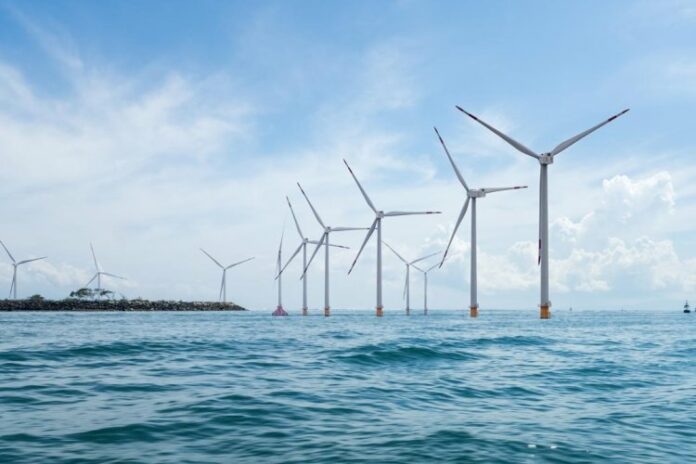
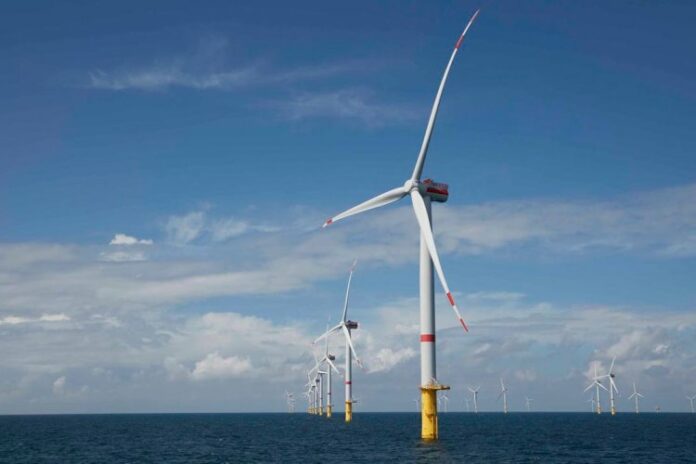
The PPA provides Evonik with 100 megawatts (MW) from the new 900-MW He Dreiht wind farm in the German North Sea. 

This agreement alone will enable Evonik to cover around a quarter of its electricity needs in Europe with renewable energy from 2026 on. EnBW will supply the green electricity over a period of 15 years. Since chemical production requires a constant energy supply, Evonik will compensate for fluctuations of the wind energy feed-in through its own balancing group management.

Christian Kullmann, CEO of Evonik, says:

“Together with EnBW, we are accelerating the implementation of our ambitious sustainability strategy. We are becoming less dependent on fossil fuels and their price fluctuations. Clearly, the less fossil and more green energy we use, the better the future opportunities for our German and European sites will be.” 

The PPA with EnBW is just the beginning. Evonik is working on other agreements for green electricity purchased directly from producers to increase the company’s share of renewable energy usage.

Thomas Wessel, responsible for sustainability on the Executive Board, says:

“The green electricity from the new offshore wind farm is a very important lever for our goal of reducing greenhouse gas emissions. Today, 27 percent of Evonik’s externally purchased electricity worldwide already comes from renewable sources. Implementing the PPA with EnBW significantly increases this share to more than 40 percent.”

At the same time, the cooperation reduces Evonik’s Scope 2 emissions (electricity from external sources) by 100,000 metric tons of CO₂ per year. The company recently announced the goal of reducing its Scope 1 and Scope 2 emissions from the current 6.5 million tons to 4.9 million tons by 2030. About one-third of this net reduction will be achieved by switching to renewable energy sources.

The He Dreiht wind farm will be built about 90 kilometers northwest of Borkum and 110 kilometers west of Helgoland. It is scheduled to start operating at the end of 2025. In 2017, EnBW won the first tender in Germany with a zero-cent bid and thus initiated a new trend in the offshore market. The subsidy-free offshore wind farm is currently one of Europe’s largest energy transition projects. For the first time, 15-MW turbines will be deployed.

As a central instrument of the energy transition, PPAs are becoming increasingly important.

EnBW management board member Georg Stamatelopoulos explains:

“We can only achieve the energy transition together. PPAs are a tool for this. They help companies to achieve ambitious climate targets and enable developers of renewable energy projects to obtain reliable financing. This way, the economy and the climate both benefit. With Evonik, we have gained another strong partner for our He Dreiht offshore wind farm.”

EnBW will make the final investment decision on the offshore wind farm in 2023.

Corvus Blue Whale ESS completes sea trials on board Seaspan Reliant

0

In 2018, Corvus Energy started a ground-breaking project to develop the next-generation energy storage system (ESS) for maritime applications. The process has focused on cost-effectiveness, scalability and safety, as well as flexibility and sustainability.

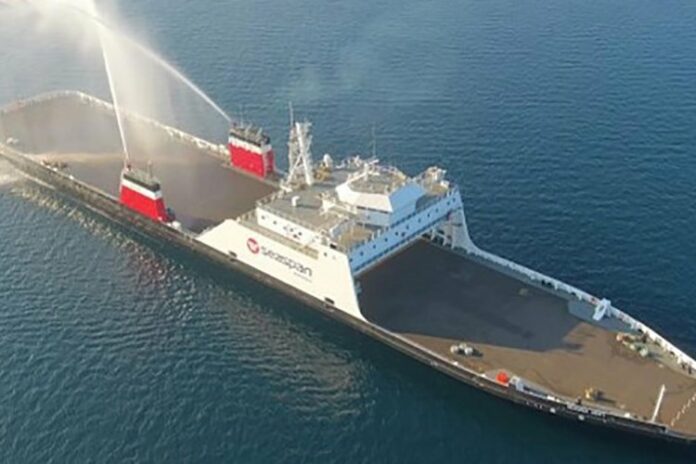
The first product in this series, the Corvus Blue Whale ESS, is designed for large installations and is now ready for delivery after successful sea trials on board Seaspan Reliant, a drop-trailer cargo ferry owned and operating by Seaspan Ferries Corporation (SFC). On October 15 and 16, SFC, Corvus Energy and integrator Elkon conducted tests of a suite of sea-trial requirements for the Corvus Blue Whale ESS, resulting in successful completion of customer acceptance testing (CAT).

“SFC has successfully integrated Corvus propulsion battery systems onboard four SFC dual fuel hybrid ferries. The new Corvus Blue Whale ESS system is a natural addition to our fleet and is a remarkable product which is particularly well suited for the Reliant’s existing architecture,” says Harly Penner, General Manager at SFC, which offers commercial cargo ferry service between its four coastal terminals on Vancouver Island and British Columbia’s mainland.

The new Blue Whale battery, which replaces a battery with only a quarter of the upgraded energy capacity, will allow SFC to perform engine load optimizations, without sacrificing vessel speed, resulting in higher efficiency operations and minimizing the requirement of dual generator operations.

Ahmed Khan, Project Manager at SFC, says:

“During the sea trials, it was impressive to witness the advantages of this new technology by discharging the battery system to 3% capacity, while still outputting peak power to propel the vessel. We envision being able to operate on a single generator and using the battery system to maintain target speeds, which will reduce fuel costs and total engine hours. In addition, the 1.8 MWh capacity of the Reliant’s new system affords new modes of operations, such as powering the vessel by battery power only during port cargo exchanges.”

Richard Wing, Chief Research & Development Officer at Corvus Energy, says:

“Blue Whale is the result of an extensive, multi-million dollar development effort by our Vancouver R&D team. It leverages what the company has learned over the past decade about maritime energy storage requirements and validates market requirements and acceptance. Moreover, the new architecture is modular and flexible to suit not only Blue Whale, but an ever-expanding range of maritime energy storage applications in the future.”