-12.6 C
New York
Home Blog Page 370

Deltamarin receives 3D model-based DNV approval

0

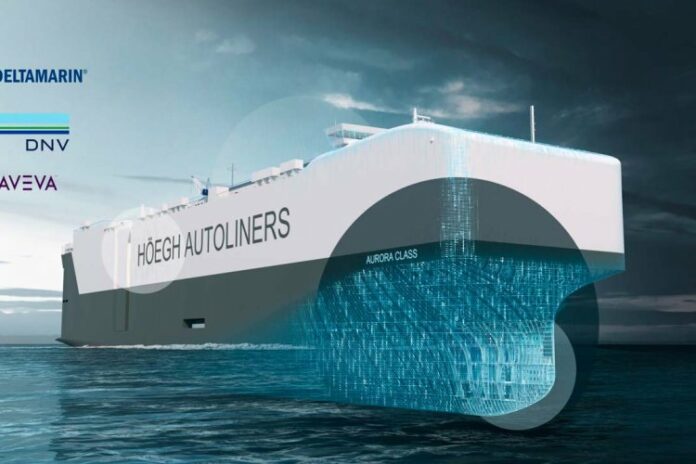
The three companies have been cooperating on streamlining the approval processes of classification materials from drawings to 3D models using the new Open Class 3D Exchange (OCX) standard. 

Deltamarin completed part of the steel design work for Höegh Autoliner’s Aurora Class PCTCs with the use of AVEVA’s new E3D software and in close collaboration with AVEVA’s skilled Marine team. E3D is the next generation design software which has OCX export capability together with other innovative features.

OCX is a new standard for 3D model-based class approval with the purpose of breaking the barriers between different design and software platforms to enable the seamless exchange of idealised geometry and metadata between them. The OCX 3D model can replace the traditional 2D structure drawings, thereby saving time for Deltamarin and allowing DNV to respond more quickly to designer’s needs. The OCX standard is the result of the joint industry project ‘Approved (2016-2020)’ headed by DNV. The standard is now jointly owned and managed by the OCX Consortium established in 2021. This consortium has brought together more than 30 industry leaders to jointly promote and maintain the standard. The members consist of all the major classification societies, significant CAD vendors and several designers and yards.

Janne Uotila, the CEO of Deltamarin says:

“Increasing productivity and shortening the calendar time for design through digitalisation is one of the internal development areas we have been focusing on at Deltamarin. This is a great practical example of that.”

Mr Geir Dugstad, Director of Ship Classification & Technical Director at DNV continues:

“Moving away from 2D structure drawings to a 3D digital twin is a milestone for the maritime industry. This opens up for new possibilities in asset data management, which I strongly believe will drive the safety and reliability of ship’s design and operation. A good example would be a more efficient process for verifying rule compliance. The OCX format helps designers to control and optimise their designs, and enables DNV to confirm rule compliance directly on the 3D design model.”

Hervé Lours, the Marine Vice President of AVEVA adds:

“AVEVA’s mission has been about increasing productivity in ship design, manufacturing and operations for decades; providing Deltamarin, DNV and the OCX Consortium with our expertise to break the silos and ease data exchange between software and players was then a no brainer; this success highlights an additional value of the digital twin and paves the way for an even larger adoption in the maritime industry”

Deltamarin, DNV and AVEVA are excited about this new step towards the future of ship design.
Proman Stena Bulk officially names new methanol-fuelled tanker Stena Pro Patria

0

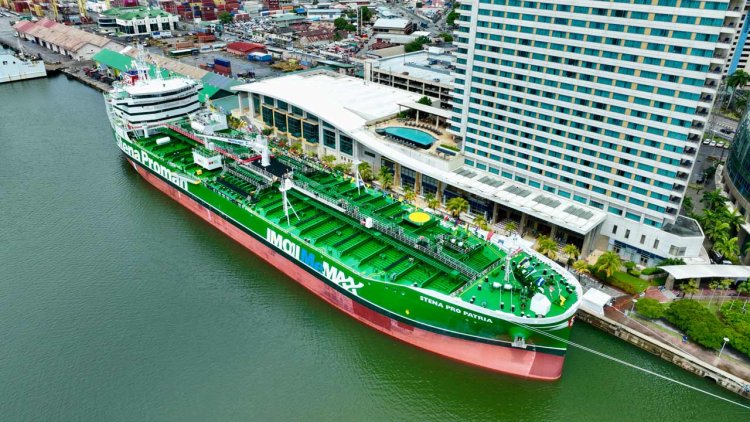
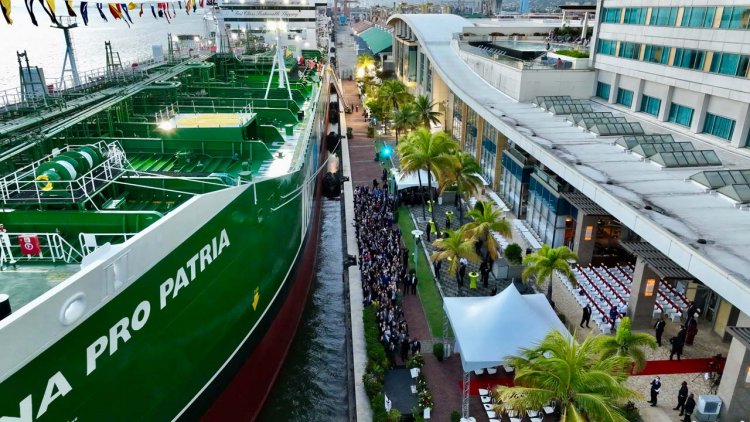
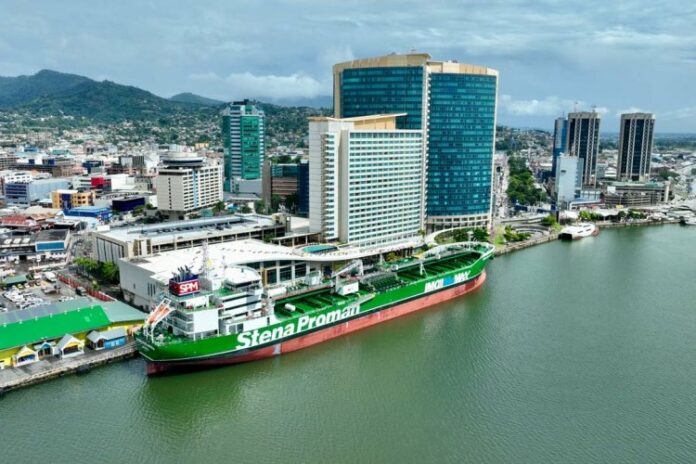
Stena Pro Patria is the first of three methanol-fuelled vessels delivered in 2022 to the joint venture between leading tanker company Stena Bulk and the leading methanol producer Proman, with a further three newbuilds due for delivery between now and 2024.

The naming ceremony was the first for a methanol-fuelled newbuild in Trinidad and Tobago, and was attended by Trinidad and Tobago’s Prime Minister, Dr. the Honourable Keith Rowley, as well as the Minister of Energy and Energy Industries the Honourable Stuart Young.

During the visit, Stena’s leadership, including William Olsson, Chairman of Stena Sessan AB and Board Member Stena AB; Erik Hånell, President & CEO Stena Bulk AB; and Markus Lindbom, CEO Stena Rederi AB, had an opportunity to visit Proman’s fourteen petrochemical production facilities in the Point Lisas Industrial Estate, as part of a plant tour led by Proman’s Chief Executive David Cassidy.

Proman is the largest investor and employer in the Point Lisas Industrial Estate, which is home to Trinidad and Tobago’s downstream petrochemicals sector. Proman’s facilities include the world-scale M5000 methanol plant, which produces industry-leading low-carbon methanol by recycling CO2 produced from nearby ammonia plants. Since 2006, almost 24 million tonnes of CO2 have been captured from both Proman’s own and neighbouring ammonia plants and re-used.

Stena Pro Patria was delivered in June 2022 and has demonstrated an unprecedently low EEDI (Energy Efficiency Design Index) value while running on methanol. The IMOIIMeMax vessel series benefits from industry-leading design improvements and technologies to maximise energy efficiency, resulting in an EEDI 11% below the 2025 Phase 3 requirements – setting a new benchmark for methanol-fuelled tankers and further proving the operational viability of methanol as a marine fuel.

Stena Pro Patria will use approximately 12,500 tonnes of methanol as fuel per year, which will significantly reduce the volume of greenhouse gas emissions resulting from the vessel’s commercial operations compared to conventional marine fuels.

During his feature address, Dr. The Honourable Keith Rowley, Prime Minister of Trinidad and Tobago outlined the potential for bunkering in Trinidad and Tobago to be a significant part of the country’s economic development, saying:

“We are one of the largest producers and exporters of methanol in the world, and we happen geographically to be on a place at the tip of South America, East of the Panama Canal where all these vessels are being encouraged to change their fuel consumption from the dirty fuel to clean fuel – and that fuel is available in Trinidad and Tobago. What we are aiming to do is to make Trinidad and Tobago a major refuelling hub for oceangoing vessels that can be refuelled by clean fuel.”

Erik Hånell, President and CEO of Stena Bulk, said:

“This naming ceremony for Stena Pro Patria in Trinidad and Tobago is another important milestone for Proman Stena Bulk.

“Every step our joint venture takes proves the viability of methanol as a marine fuel and underlines that it is technically feasible, with the right knowledge and backing, to be used in-operation today.”

David Cassidy, Chief Executive of Proman, added:

“We share a commitment to accelerating the clean shipping transition, via our methanol-fuelled newbuilds and other initiatives, so it was particularly valuable to tour our methanol production facilities and reaffirm the low-carbon pathway for the maritime market.

“Stena Pro Patria is a very special vessel, as the first tanker in our joint venture with Stena Bulk and due to her deeper connection to the Proman family. It was a pleasure to bring everyone together, from Stena to our wider partners and employees here in Trinidad and Tobago, to give Stena Pro Patria the naming ceremony that she deserves.” 

AD Ports inks deal with Chinese firm for infrastructure project

0

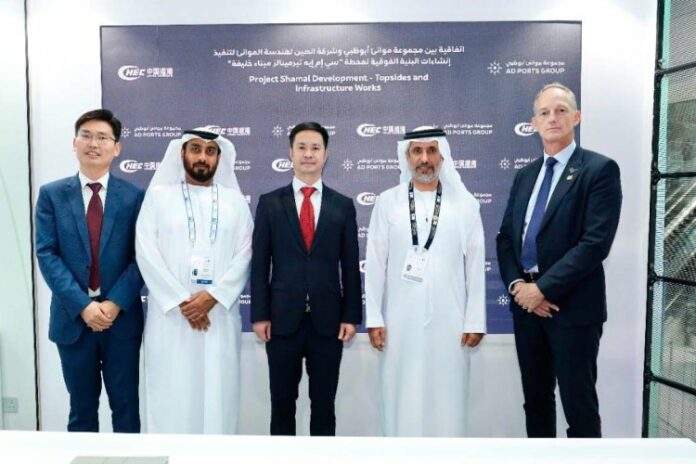
AD Ports Group has signed a contract with China Harbour Engineering Company for the development of buildings and topside infrastructure for the cutting-edge CMA Terminals Khalifa Port, a joint venture owned by CMA CGM’s subsidiary CMA Terminals (with a 70 percent stake) and AD Ports Group (30 percent stake).

The agreement includes the development of the first net zero carbon administration building to be constructed for the joint venture, which is being developed in-line with the company’s role as an official partner of World Green Building Council’s Middle East & North Africa Regional Network. The award-winning administration building, which won the Net Zero Design Building Project of the Year in October, will be a highly energy efficient building that is powered from renewable energy sources and offsets.

In addition, the agreement will see the development of 28 office and utilities across the terminal, more than one million square metres of yard paving, reefer stacks, STS cranes and access roads.

The terminal, which is expected to be operational in H1 2025, will be managed by a 70/30 joint venture owned by CMA Terminals, a subsidiary of CMA CGM, a global player in sea, land, air, and logistics solutions, and AD Ports Group. Once completed, CMA Terminals Khalifa Port will have an initial capacity of 1.8 million TEUs, will be fully integrated with Etihad Rail and will significantly enhance Khalifa Port’s connectivity and position as a key gateway for the region.

Saif Al Mazrouei, CEO, Ports Cluster, AD Ports Group, said:

“We are making positive progress on the development of CMA Terminals Khalifa Port, which will be one of the most modern and innovative terminals in the region upon completion. Under the guidance of our wise leadership, we are incorporating sustainability principles into our construction plan, with the development of our first net zero administration building. Our design practice supports the UAE’s wider targets for building the circular economy, recycling construction and operational waste and using high recycled content materials.”

Yang Zhiyuan, CEO of CHEC Middle East Division, said:

“We are proud to be selected for this flagship project, contributing to the development of what will be one of the most advanced terminals in the region. In particular, we will ensure that the design and construction of buildings and topside infrastructure will meet the highest architectural and sustainability standards.”

With fewer than 500 net zero commercial buildings in the world, AD Ports Group’s first net zero carbon building will represent a major milestone for the company and for the UAE. It will be one of the company’s first projects to use significant amounts of concrete with recycled content and save the equivalent of 38,721 metric tonnes of carbon dioxide over 30 years.

David Gatward, Chief Engineering & Technical Services Officer, AD Ports Group, explains:

“With this project, we are looking to demonstrate that meaningful sustainability measures can be incorporated into the construction process with only a negligible increase in the budget. The long-term benefits of building the net zero carbon administration centre for CMA Terminals Khalifa Port will be significant and will create the opportunity for AD Ports Group to offer green business models for future tenants across our assets.”

CargoValue now measuring a share of global emissions from dry bulk shipping

0

The monitoring solution, titled ‘Emissions’, is now measuring a significant share of emissions from global dry bulk shipping, empowering its customers to continuously track and manage their carbon footprint.

Klaveness Digital Managing Director Aleksander Stensby said:

“Arming our industrial customers with crucial insight like this means they can spend their time actively looking for emissions hotspots and opportunities to reduce their footprint”. 

Monitoring of emissions was just recently added as a service to the CargoValue platform, marrying industry expertise and technical know-how to mitigate carbon risk in supply chains across all main shipping segments. 

Stensby added:

“In dry bulk we’ve expanded fast and are now serving major global accounts in aluminium, grain and mining to name a few.”

The platform tracks greenhouse gas emissions generated by every freight shipment, using calculations based on satellite data, vessel particulars and actual behaviour. This complements and corroborates an increasing share of data coming into CargoValue from vessels reporting their actual emissions.  

“Quality data is the backbone of the digitalization movement, with demand coming not only from customers, but also investors and other stakeholders. Working with us allows charterers to take action now on accurately measuring, assessing, and benchmarking their Scope 3 emissions,” added Stensby, arguing that the industry needs to follow the example of the first movers and drop the “wait and see mentality” often linked with zero fuels or regulatory agenda.

Head of ZeroLab Morten Skedsmo said:

“As a shipping company we are taking action on our own emissions and helping other companies do the same, we want to create value every step of the way.”

Building on the insights available through the Emissions module in CargoValue, ZeroLab’s team then apply their expertise to focus on helping charterers to explore reduction strategies, for example by establishing an emissions trajectory in line with the customer’s ESG commitments. As up to 30% of emission reductions can be achieved through improved operational efficiency, the team uses the data to guide customers on where improvements can be made across the supply chain.

Stensby added:

“As well as quantifying supply chain  emissions and assessing how they align with established frameworks for ESG compliance and industry initiatives such as the Sea Cargo Charter, CargoValue enables collaboration with stakeholders in real-time to build transparency. Some customers have incorporated their global operations and spanning hundreds of supply chain stakeholders into the platform.” 

“Digital transformation, leveraging intelligent, cost-effective ways to complement work done by humans is key for survivability and profitability. With our platform of services providing end-to-end commodity visibility, we can act as an extension of customers’ own supply chain function and guide them on their digital journey towards resilience and long-term sustainability.”

ABB to provide shaft generator systems for COSCO boxships

0

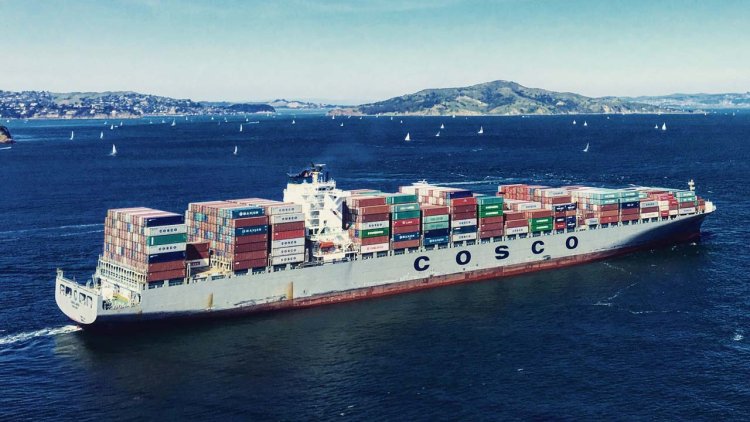
ABB has secured a breakthrough contract with the shipyard COSCO Shipping Heavy Industry (Yangzhou) Co. Ltd., to equip 10 China COSCO Shipping Corporation Limited container vessels with its permanent magnet shaft generator systems.

The deal reaffims the growing appeal of the systems as a market-ready route to greater ship efficiency. Due for delivery by the end of 2025, the order comprises systems for six 14000TEU vessels and four 16000TEU vessels.

The International Maritime Organization (IMO) is introducing new regulatory standards – the Energy Efficiency Existing Ship Index (EEXI) and Carbon Intensity Indicator (CII) – which will come into force in January 2023. ABB’s permanent magnet shaft generator system will help the COSCO vessels achieve required efficiency levels as well as CII ratings which verify reduced GHG emissions.

COSCO Shipping’s selection of ABB permanent magnet shaft generator systems is the latest in a series of significant endorsements for the technology. The contract follows a run of orders from roll-on, roll-off, bulk carrier and container ship owners specifying the high efficiency system, whose permanent magnet technology takes the benefits provided by shaft generators over conventional shaft lines to a new level.

Shaft generators with permanent magnet technology offer 3-4 percent higher efficiency, reduced maintenance costs and an upto 20 percent smaller footprint compared to traditional, synchronous excitation-based shaft generator systems. In combination with ABB’s advanced ACS 880 drive, which ensures maximum functionality and flexibility in hybridization applications, the technology can increase fuel efficiency by one additional percent. Moreover, compared with auxiliary diesel generator sets, permanent magnet shaft generators deliver up to 17 percent greater fuel efficiency during voyages.

Michael Christensen, Global Segment Manager Dry Cargo, ABB Marine & Ports, said:

“ABB has been supporting China’s maritime industry for almost two decades, and we are proud to collaborate with COSCO Shipping, the country’s largest shipping company, in this breakthrough project. As we continue to develop our local capabilities to better serve our customers and help them achieve their sustainability targets, our permanent magnet technology will have an important role to play.”

OSC and MRC announce partnership to advance renewable ocean energy

0

Canada’s Ocean Supercluster (OSC) and Marine Renewables Canada (MRC) have announced their new, collaborative partnership to share knowledge and support the advancement of marine renewable energy in Canada. This agreement will increase formalize the partners’ collaboration particularly in the areas of offshore wind, wave and tidal energy.  

Only requiring wind and water’s natural movement to create power, marine renewable energy has the potential to provide sustainable energy sources, thereby reducing dependence on fossil fuels and supporting Canada’s path to net-zero. In their partnership, OSC and MRC will work together to generate increased awareness, innovation, investment, and opportunity in the development and use of marine renewables in Canada.

The partnership between OSC and MRC will include:

  • Knowledge exchange and transfer on offshore wind, wave, and tidal energy
  • Annual meetings and continuous relationship development
  • The facilitation of networking, exchange of best practices and collaboration initiatives between OSC and MRC members
  • Shared and cross promotion and public awareness on the advancement of marine renewables

Kendra MacDonald, CEO of Canada’s Ocean Supercluster, said:

“As the world begins to transition to more renewable energy sources, it creates significant opportunity for sustainable offshore energy growth. Canada has the wind and water but will require significant collaboration and investment to advance these industries and compete globally. We are excited about the potential of this partnership with the Marine Renewables Canada where we will work together with our memberships to help realize the Canada’s full potential in renewable marine energy.”

Additionally, the partnership between OSC and MRC extends beyond Canada with the European Leaders of Blue Energy (ELBE) Alliance partnership announced earlier this year. ELBE gathers seven European clusters with top expert companies and research and development organizations in blue energy to tackle the expansion of renewable blue energy beyond Europe. The triparty collaboration plans hope to unlock partnership and business development opportunities for Canadian companies at home and abroad.

Elisa Obermann, Executive Director of Marine Renewables Canada, said:

“Canada’s marine renewable energy resources have enormous potential to contribute to national and international decarbonization goals, but there is still a lot of work to be done to address challenges and advance the sector. By partnering with Canada’s Ocean Supercluster we will be able to foster collaboration amongst our memberships, facilitate innovation, and ultimately drive growth of the marine renewable energy sector in Canada.”

A warmer Arctic Ocean leads to more snowfall further south, according to new model

0

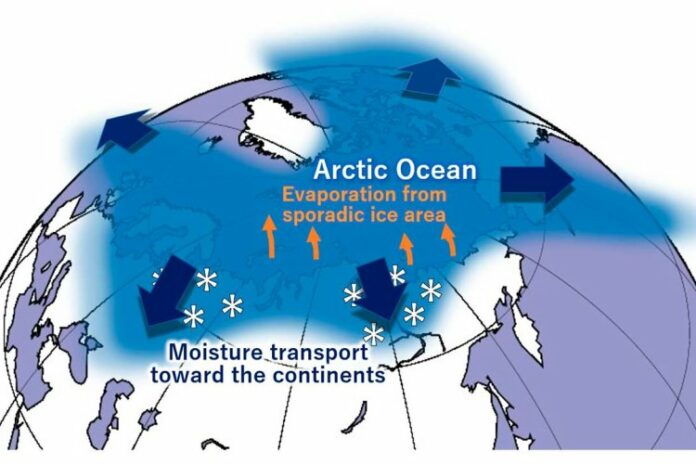
A new model explains that water evaporating from the Arctic Ocean due to a warming climate is transported south and can lead to increased snowfall in northern Eurasia in late autumn and early winter. This information will allow for more accurate predictions of severe weather events.

Rising air temperatures due to global warming melt glaciers and polar ice caps. Seemingly paradoxically, snow cover in some areas in northern Eurasia has increased over the past decades. However, snow is a form of water; global warming increases the quantity of moisture in the atmosphere, and thus the quantity and likelihood of rain and snow. Understanding where exactly the moisture comes from, how it is produced and how it is transported south is relevant for better predictions of extreme weather and the evolution of the climate.

Hokkaido University environmental scientist Tomonori Sato and his team developed a new tagged moisture transport model that relies on the “Japanese 55-year reanalysis dataset,” a painstaking reanalysis of world-wide historical weather data over the span of the past 55 years. The group used this material to keep their model calibrated over much longer distances than hitherto possible and were thus able to shed light onto the mechanism of the moisture transport in particular over the vast landmasses of Siberia.

A standard technique to analyze moisture transport is the “tagged moisture transport model.” This is a computer modeling technique that tracks where hypothetical chunks of atmospheric moisture form, how they are moved around, and where they precipitate due to the local climatic conditions. But the computer models become more and more inaccurate as the distance to the ocean increases. In particular, this makes quantitative predictions difficult. Thus, these methods have not been able to satisfyingly explain the snowfall in northern Eurasia.

The results of the study, published in the journal npj Climate and Atmospheric Science show that water evaporation from the Arctic Ocean has increased over the past four decades, and that the biggest changes have occurred from the Barents and Kara Seas north of western Siberia, as well as over the Chukchi and East Siberian Seas north of eastern Siberia, between October and December. At this time of year, the Arctic Ocean is still warm and the area not covered by ice is still large.

Importantly, this development coincides with the area where sea ice retreat has been strongest over the time frame of the study. In addition, the quantitative model shows that evaporation and snowfall are especially strong during certain weather events such as cyclonic systems taking up unusually large quantities of moisture and transporting them south into Siberia, thus also highlighting detailed and specific mechanistic insights into the weather dynamics of the region.

With the Arctic Ocean being twice as sensitive to rapid warming than the global average, evaporation and subsequent changes to the hydrological cycle over northern Eurasia will become even more pronounced in the years to come.

The researchers say that, since snowfall often delays the downstream effects of the abnormal weather events that cause it, “knowledge of the precursor signal stored as a snow cover anomaly is expected to help improve seasonal predictions of abnormal weather, e.g., the potential for heatwaves that enhance the risk of fire in boreal forests.”

This study therefore yields a key element to understanding the mechanism of this weather system as well as others that are influenced by it, and thus to making better predictions of severe events that could do harm to people and infrastructure.

TES and EWE to build 500MW electrolyser at Wilhelmshaven Green Energy Hub

0

Tree Energy Solutions (“TES”) and EWE have announced the signing of a Memorandum of Understanding (MoU) to build an electrolyser in TES’ Green Energy Hub in Wilhelmshaven.

The electrolyser is to be installed and operated starting in 2028. The planned capacity of the electrolyser is 500MW and one more unit is planned to reach a total capacity of 1GW. 

This MoU is in line with Germany’s strategic energy policy to develop clean energy generated by the North Sea and broaden the possible supply for hydrogen. The signing marks a joint interest in delivering national energy security as Germany continues to diversify its energy supply from renewable energy sources.

The hub in Wilhelmshaven is strategically placed on the North Sea coast and can accommodate up to 2GW capacity electrolysers with renewable energy sources such as offshore wind in order to generate locally produced green hydrogen. TES and EWE will both benefit from the synergies like the joint connection to the grid or the utilization of oxygen in other green energy processes.

Marco Alvera’, CEO of TES, said:

“The signing of this MoU is a clear example of the progress underway for Wilhelmshaven to become a major green energy hub for all of Europe, which will not only import green energy but also generate locally produced hydrogen. We look forward to our collaboration with EWE in order to harness untapped energy potential and accelerate the transition to deliver affordable energy for all.”

Dr. Urban Keussen, CTO of EWE, said:

“Without hydrogen there can be no energy transition, no climate neutrality, and no move away from fossil fuels. In order to fill the national hydrogen strategy with life and to advance the topic of hydrogen together, partnerships and suitable location concepts are needed. Wilhelmshaven, as an energy hub, plays a crucial role in this. Together with TES, we want to develop Wilhelmshaven with a focus on green hydrogen and contribute our know-how to the planned partnership.“

Fugro secures two Dutch offshore wind site investigation contracts

0

Fugro has been awarded two geotechnical investigation contracts for the development of the Dutch IJmuiden Ver Site V-VI, Nederwiek (zuid) Site I and Hollandse Kust (west) Site VIII offshore wind zones.

This is the largest campaign undertaken by the Netherlands Enterprise Agency (RVO) to date and part of the accelerated development by the Dutch Government in line with the Offshore Wind Energy Roadmap 2030. Once completed, the wind farms will deliver a total installed capacity of circa 4.7 GW.

The comprehensive Geo-data will be used by wind farm developers as input for preliminary engineering design studies and future tenders, and will also be available for power cable design, archaeology and marine biology investigations. 

Specialist geotechnical vessels from the Fugro fleet will commence the surveys in March 2023 and continue into the fourth quarter of 2023; further processing, laboratory testing and reporting of results will take well into 2024.

The fieldwork will comprise investigations of the seabed and subsurface undertaken using state-of-the-art techniques and innovations, including Fugro’s SEACALF® Mk V DeepDrive® system for seabed cone penetration tests and WISON® Mk V Ecodrive. Fugro’s data delivery platform will provide secure and easy client access. Increased laboratory capacity onboard the vessels will ensure faster processing of results. Subsequent extensive laboratory testing will take place in Fugro’s recently extended laboratories in the UK and Belgium.

Peter-Paul Lebbink, RVO’s Coordinator Soil Characterisation, commented:

“By awarding this extensive geotechnical survey, RVO is taking another important step in the realisation of the Offshore Wind Energy Roadmap 2030.  We are looking forward to receiving high quality geotechnical results in 3 different Dutch offshore wind farm zones from Fugro”.

Erik Jan Bijvank, Fugro’s Group Director Europe & Africa stated:

“We are delighted to have been awarded this important project and support the Dutch Government in achieving its new fast track sustainability goals. Our unique combination of technical capabilities, resources, innovations and talented people underlines our commitment to secure a safe and liveable world by delivering the best possible data to assist with the energy transition”.

These awards were already partly included in Fugro’s 12-month backlog as per September 2022.

Partnership Rolls Royce-mtu starts with 10 battery systems for ferries and a yacht

0

EST-Floattech announces a new major order. The German office has recently signed a long-term framework contract with Rolls-Royce Power Systems for the ‘Green Orca 1050’ battery module on board of ten newbuild vessels. 

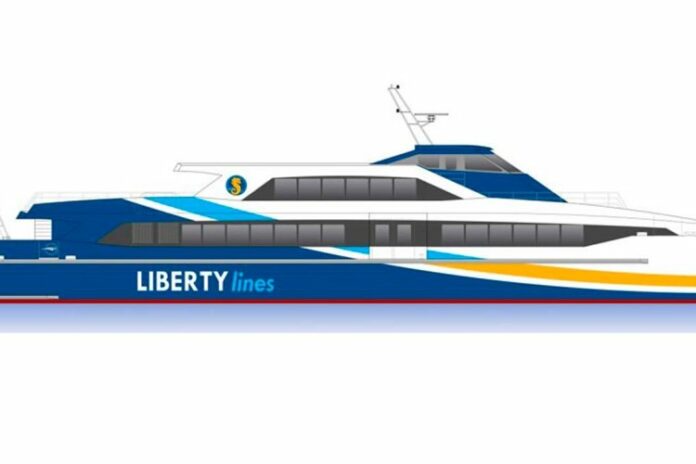
The first order of the new partnership is about 33 lithium polymer battery modules of the ‘Green Orca 1050’ series as part of 9 hybrid fast ferries of Italian operator Liberty Lines equipped with mtu hybrid propulsion packs supplied by Rolls-Royce Power Systems. Each of the modules has a capacity of 10.5 kWh, making a total of 3,118.5 kWh for 9 vessels. The sister vessels of identical design will be built at the Spanish shipyard Armon between April 2023 and April 2024. The vessels are scheduled to set sail between 2023 and 2026 for ferry operations between Sicily and Croatia, and will sail to and from smaller Italian islands as well.

Secondly, the hybrid propulsion pack of a 76 meter mega yacht from Turkish yacht builder Turquoise Yachts will be supplied with 1,512 kWh of battery power. Delivery of the propulsion pack is planned for 2023, and the yacht is scheduled to be taken into service in 2025. 

Both on the ferries and on the yacht, the battery systems are used for cruising speeds of up to 8 knots. In all-electric operation, for example when entering and leaving port, anchoring and maneuvering, this not only produces no emissions and protects the environment, but also enables greater comfort on board due to the minimal sound generated. 

Walter van der Pennen, Chief Commercial Officer at EST-Floattech, says:

“The Framework Agreement is a milestone achievement for EST-Floattech Hamburg. Rolls-Royce Power Systems and EST-Floattech will work well together. Both companies are setting milestones on the road to climate-neutral shipping with the approved Series 2000 and Series 4000 mtu marine diesel engines, respectively the approved and DNV-certified Green Orca 1050 batteries.” 

Sales Manager Germany Marc Mühlenbeck reports:

“Rolls-Royce Power Systems was convinced by the technical capability, high quality and reliability related to our battery system. Furthermore our technical and commercial team showed they can move fast and were able to respond fast to all technical requests.“