-12.6 C
New York
Home Blog Page 369

Wärtsilä will retrofit the 40 metre long vessel owned by Hidrovias do Brasil

0

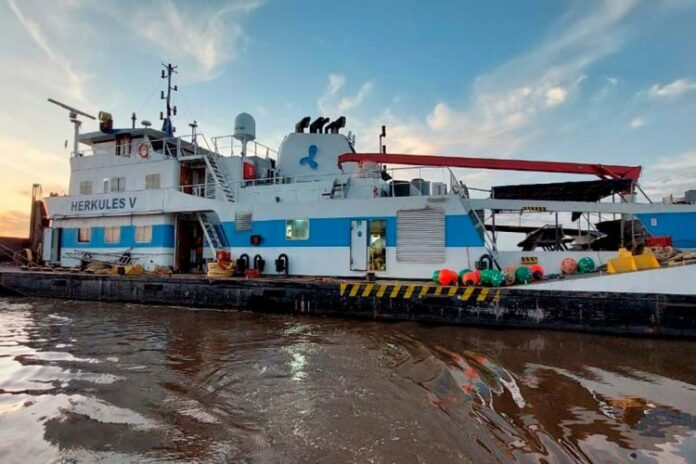
The project scope will retrofit the ‘Herkules V’, a pusher vessel owned by Hidrovias do Brasil, to achieve notably increased efficiency, reduced emissions, and lower operating costs. The order was included in Wärtsilä’s order book in the first quarter 2022.

The full scope of Wärtsilä’s contract includes three Wärtsilä 20 engines, three Wärtsilä fixed pitch propellers, three gearboxes, and propulsion controls. It is estimated that the conversion will result in significant annual fuel savings, based on 5000 operating hours, as well as related cost savings in parts, services, and oil lubrication consumption. Additional fuel savings will be derived from the installation of new, efficient, fixed pitch propellers.

Ricardo Brandalise, Head of Maintenance Brazil & Paraguay, says:

“Hidrovias do Brasil is committed to being a company that promotes efficiency, innovation, and sustainability. The Herkules V re-powering project will support this commitment by reducing the environmental impact, while enhancing the efficiency and safety of our operations. We always look for partners that share our ambitions for cleaner and more efficient ways of working, and Wärtsilä is that kind of company.”

Luis Grotz, Project Sales Manager, Americas at Wärtsilä, says:

“Wärtsilä has taken a leading position in guiding shipping towards a decarbonised future, and this project supports that goal. We are working with Hidrovias to further improve their sustainability. We have had an existing Optimised Maintenance agreement with Hidrovias since 2017 covering 30 Wärtsilä engines and this current delivery will be added to the agreement.” 

The Wärtsilä equipment is scheduled for delivery in December 2022, and the project is expected to be completed by February 2023.

Wärtsilä has a long-standing business relationship with Hidrovias do Brasil, which includes providing the engines for two vessels currently under construction. When delivered, this will bring the total number of Wärtsilä 20 engines on Hidrovias inland waterway pushers to 39.
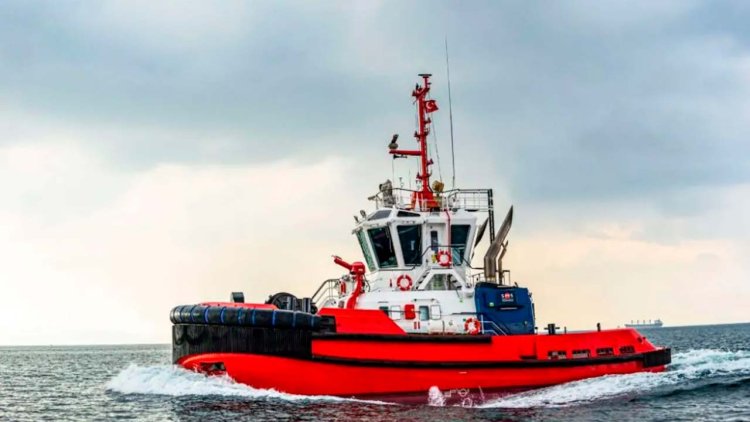
Sanmar Shipyards delivers two tugs to SMS Towage

0

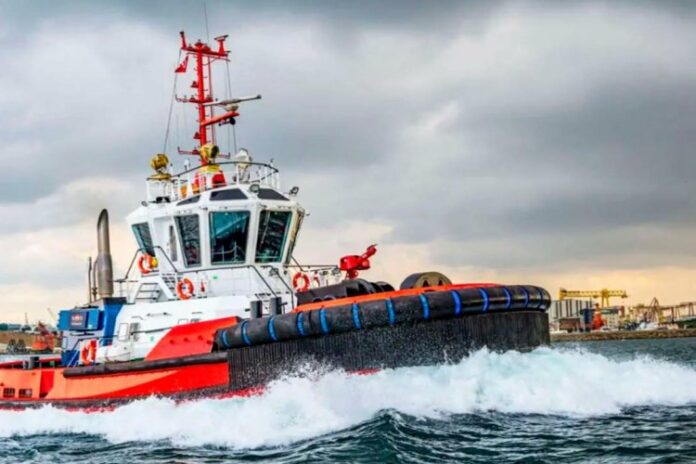
The delivery of the two RAmparts 2200 class sister tugs, which previously worked in Sanmar’s own fleet, brings the total number of tugboats Sanmar has delivered to SMS Towage to 14. The first was SCOTSMAN which was delivered in 2008.

Known as SIRAPINAR XVIII and SIRAPINAR XV while working in Türkiye, the tugs have been renamed TRUEMAN and KINGSMAN by their new owner, which has a fleet of tugs strategically positioned around the UK in the Humber, Bristol Channel, Belfast, Portsmouth, Teeside and the River Tyne.

The twin sisters are based on the RAmparts 2200 design from Canadian naval architects Robert Allan Ltd and measure 22.4m LOA, with a moulded beam of 10.84m, least moulded depth of 4.4m and approximate navigational draft of 4.85m.

The twin Z-drive, diesel powered tugs are designed for low manning operation and maximum efficiency in the performance of ship-handling duties for sea going ships. They are both powered by two Caterpillar 3512 C main engines, each producing 1,500 kW at 1,600 rev/min to drive 360-degree azimuthing Schottel SRP 360 FP thrusters.

TRUEMAN and KINGSMAN can achieve bollard pulls of 52 tons ahead and 49 tons astern and a free running speed of 11.5 knots. The tugs’ tank capacities include approximately 72m3 of fuel oil, 10.8m3 of fresh water and a 2.4m3 foam tank. A fire-fighting pump is driven through clutched flexible coupling in front of each main engine with a capacity of 1,200m3/hour.

Both TRUEMAN and KINGSMAN are classified by Registro Italiano Navale (RINA) as CX Tug X  AUT-UMS, INWATERSURVEY, Unrestricted Navigation, MLC DESIGN.

Ruchan Civgin, Commercial Director of Sanmar Shipyards, said:

“We have had a long term, mutually beneficial relationship with our friends at SMS Towage and we are delighted that we can once again provide them with the type of tugboats that fit their successful business’s specific operational needs. Our popular RAmparts 2200 class tugs are compact, highly manoeuvrable workhorse tugs that get the job done time after time. Our relationship with SMS Towage goes back a long way, and it is always pleasing when they come back to us again and again when enhancing their tug fleet.”

Seaspan Shipyards celebrates keel laying of Coast Guard science ship

0

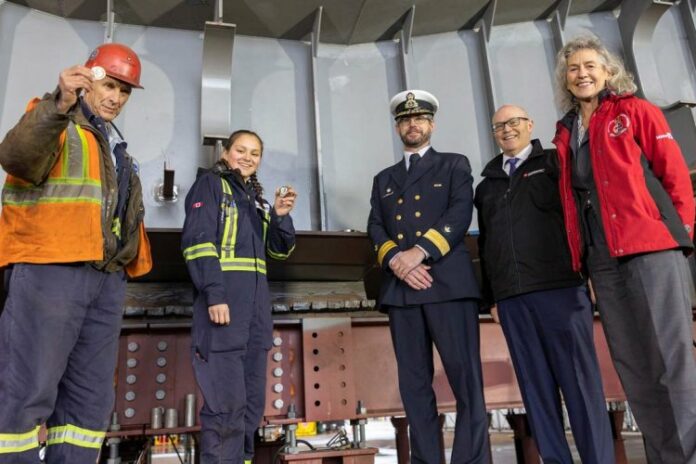
Seaspan’s Vancouver Shipyards celebrated a milestone on construction of another federal government vessel Friday, as Joyce Murray, Minister of Fisheries, Oceans and the Canadian Coast Guard, joined workers for a keel laying ceremony at the North Vancouver shipyard.

Traditionally, a keel laying marks the beginning of the construction of a ship, with the laying of the keel, a beam of timber that functions as the spine of the vessel. As shipbuilding modernized, and vessels trended toward being constructed as prefabricated modules, the keel laying has remained an important ceremonial event.

Once delivered, this vessel will provide Canada the scientific capacity to better understand our oceans and their effect on the world’s ecosystems. Like all CCG ships, the vessel will also be equipped to assist in environmental response and search and rescue activities when needed.

The future OOSV is being built as part of the Government of Canada’s National shipbuilding strategy. The new ship will replace the CCGS Hudson which was decommissioned earlier this year.

The Offshore Oceanographic Science Vessel, is the second class of Canadian Coast Guard vessel being built by Seaspan’s Vancouver Shipyards—critical steps in the renewal of the Coast Guard Fleet. The Oceanographic Vessel will support the Government of Canada’s next 30-plus years of cutting edge scientific research that will help inform decisions about protecting our fisheries, oceans and coastal areas.

As Canada’s most modern science research ship, the OOSV, will be able to accommodate up to 34 crew and 26 scientists. The OOSV will be outfitted with specialized equipment that includes several advanced wet and dry labs, an ocean water sampling room, a scientific seawater system for studying oxygen levels, temperature and salinity, and a state-of-the-art drop keel and sensor suite for collecting and analyzing data on everything from water current velocities to underwater acoustics.

The Honourable Joyce Murray, Minister of Fisheries, Oceans and the Canadian Coast Guard, said:

“Today’s milestone means the Canadian Coast Guard and Fisheries and Oceans Canada scientists are looking forward to new state-of-the-art equipment to carry on their critical work for the benefit of all Canadians. The new OOSV will serve as the main platform for ocean science to help us understand and chart our seabed, protect our marine environment, and restore the health of our oceans.”

Schottel to supply propulsion systems for Ouyang Offshore’s vessels

0

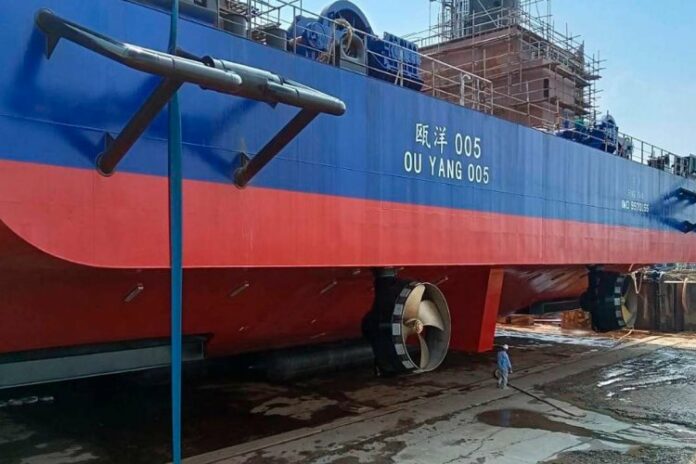
Four newly built Wind Turbine Installation Vessels (WTIVs) for Ouyang Offshore in Shanghai will all be propelled by SCHOTTEL azimuth thrusters. 

Each vessel will be equipped with two electrically-driven SCHOTTEL RudderPropellers type 430 azimuth thrusters and two SCHOTTEL TransverseThrusters type STT 4 to ensure DP mode manoeuvrability and precise positioning.

For 70 years, the SCHOTTEL RudderPropeller (SRP) has proven itself as a universal all-rounder in a wide variety of ship designs and areas of operation. The 360-degree steerable SRP combines maximum manoeuvrability and bollard pull with outstanding course stability during free sailing to provide powerful thrust in the chosen direction at all times.

The 90-metre-long and 42-metre-wide vessels will be able to operate in a working depth of up to 60 metres. They have enough accommodation for 100 people, who are on board to install offshore wind turbines and conduct maintenance work.

The series of vessels is set to be fully delivered by June 2023.

Ammonia fueled bulk carrier obtained AiP from ClassNK

0

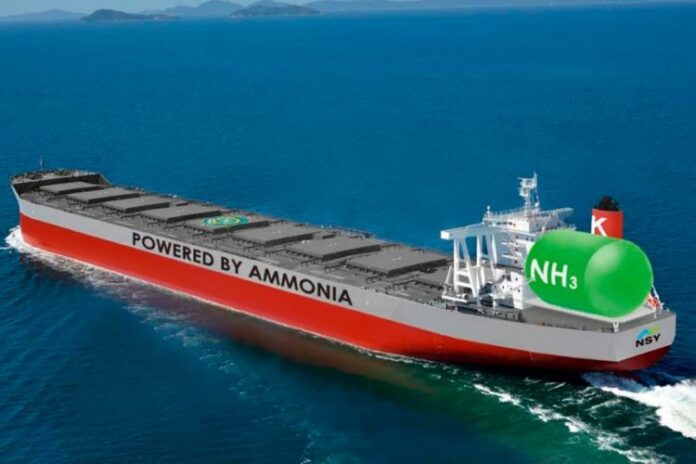
ClassNK has issued an Approval in Principle (AiP) for an ammonia fueled 200,000 DWT type bulk carrier jointly developed by ITOCHU Corporation, Nihon Shipyard Co.,Ltd., Mitsui E&S Machinery Co., Ltd., Kawasaki Kisen Kaisha, Ltd. (“K” LINE), and NS United Kaiun Kaisha, Ltd.

Ammonia is expected to be used as a ship fuel for decarbonization since it does not emit CO2 when combusted. Meanwhile, adequate safety measures are imperative as it has been pointed out that ammonia is toxic to humans and corrosive to materials. 

“K” Line and partners are looking toward obtaining Alternative Design Approval for the shipbuilding of the Vessel. A risk assessment (Hazard Identification Study – “HAZID”) was recently conducted on the safety of using ammonia as marine fuel, and the basic design of the Vessel was evaluated as “capable of ensuring the same level of safety as ships operating with existing fuel.”

The vessel, which recently received an AiP, was developed by Nihon Shipyard as the part of the “Integrated Project for the Development and Social Implementation of Ammonia Fueled Ships” which was jointly adopted by “the Green Innovation Fund Project / Development for NextGeneration Ships / Development of Ammonia Fueled Ships” of the New Energy and Industrial Technology Development Organization (NEDO).

Damen ASD 2312 tug for Fairplay Towage

0

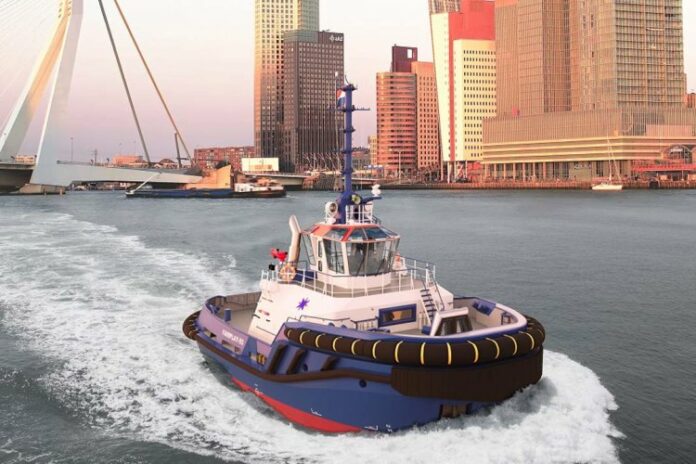
Fairplay Towage has closed a lease contract with Damen Marine Services on ASD tug 2312

Fairplay Towage has closed a lease contract with Damen Marine Services, who is able to deliver the vessel at very short notice following the contract signing on 27 October.

The contract marks the third contract that Fairplay Towage concludes with Damen within the last 18 months, encompassing a total of four vessels. The newly built Shoalbuster 2711 with Ice class 1D notation, called Fairplay-37, was delivered to the Group on 13 October. Two RSD 2513 tugs, Fairplay-90 and Fairplay-91, are in the final stages of outfitting at Damen Song Cam Shipyard. These vessels will be delivered from the yard in January 2023.

The 23 meter long vessel, with a 12 meter beam and 5.40 meter draught, is built to the Damen standardized ASD 2312 design. It was constructed at the Damen Song Cam Shipyard in Vietnam to be available for European delivery in the fourth quarter of this year. Just before her departure from Vietnam, Fairplay decided to add the vessel to their fleet. The possibility of very quick delivery of this ready-built tug enables rapid deployment in the Towage Group’s operations.

Two azimuthing stern drive propellers in nozzles each span a diameter of 2.8 meter. Power comes from two Caterpillar 3512TA engines, providing total of 5102 horsepower propulsion. Twin fins under the hull allow for side stepping as a special manoeuvre in narrow harbours. An exhaust gas after treatment system is installed to ensure the vessel’s compliance with IMO tier III emission standards. The vessel has a FiFi-1 fire extinguishing system that can spray up to 1400 cubic meters of water per hour.

Partners complete concept design phase of a new Capesize bulk carrier

0

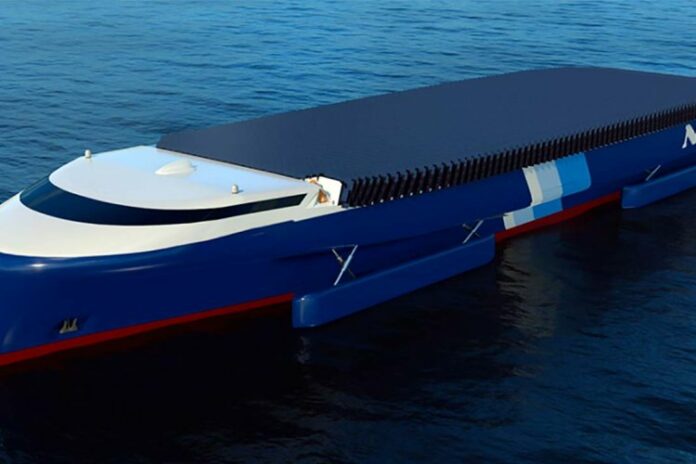
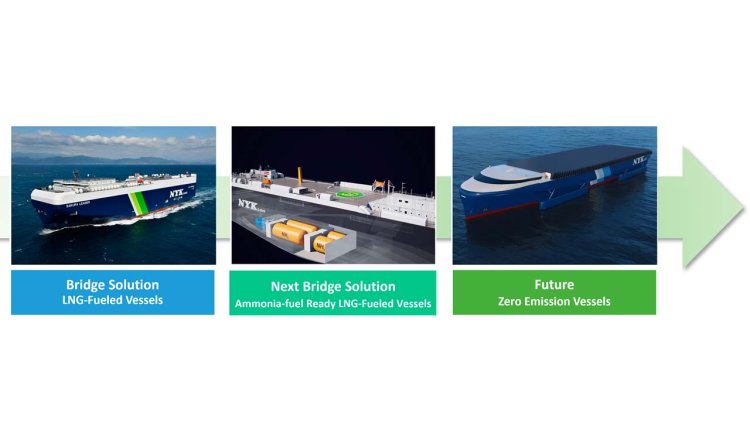
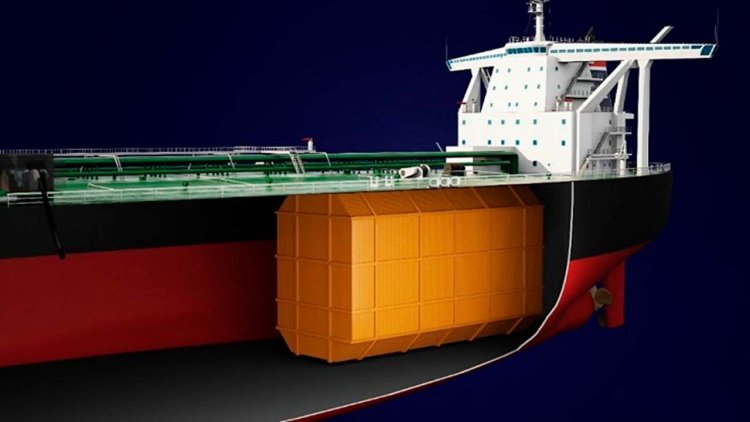
Nippon Yusen Kabushiki Kaisha (NYK), MTI Co., Ltd. (MTI), and Elomatic Oy (Elomatic) have completed the concept design phase of a new capesize bulk carrier and a very large crude oil tanker (VLCC) in a project that aims to build an LNG-fueled vessel that can be efficiently converted to an ammonia-fueled vessel, or ARLFV, an ammonia-fuel ready LNG-fueled vessel. 

The three companies are positioning ARLFVs as a next-bridge solution for the realization of future zero-emission vessels. In the future, the three companies will proceed with the actual design of an ARLFV with shipyards and marine equipment manufacturers.

A “concept design” includes ship specifications such as overall length and width, load capacity, voyage distance, ship speed, etc, for a vessel building.

NYK has set a long-term target of net-zero emissions of greenhouse gas (GHG) by 2050 for the NYK Group’s oceangoing businesses, and aims at launching zero-emission ships that run on low-environmental-load marine fuels, such as ammonia or hydrogen, in the future. NYK is positioning LNG, a low-carbon marine fuel, as a bridge-solution until future zero-emission ships are realized, and has thus been expanding its fleet of LNG-fueled vessels.

In September 2021, NYK, MTI, and Elomatic launched a project to develop an ARLFV as a “next bridge solution” with the aim of developing zero-emission vessels in the future. In the past, it was generally shipbuilders that implemented concept designs, but in this project, NYK, MTI, and Elomatic have been jointly crafting the concept design of the ARLFV. In March 2022, the concept designs of a pure car carrier and a post-panamax bulk carrier were completed in Phase 1 of the project.

Now, the three companies have completed the concept designs of a capesize bulk carrier and a very large crude oil tanker (VLCC) in Phase 1.5 of the project.

The main challenges in designing and developing ARLFVs are as follows:

  1. Because of the lower energy density of ammonia compared to LNG, a larger fuel tank capacity is needed in order to maintain the same level of endurance.
  2. Because of (1), the space for cargo loading, as well as the loadable cargo weight, is reduced.
  3. A bigger fuel tank and additional fuel tanks affect ship stability and hull strength.
  4. Due to the extreme toxicity of ammonia, ventilation for the ammonia tanks must be designed according to international conventions and/or domestic laws.
  5. Conversion from an LNG-fueled vessel to an ammonia-fueled vessel requires additional work periods and costs.

In the Phase 1.5 concept design, NYK, MTI, and Elomatic sought solutions to solve the above issues, and researched and studied the fuel-tank layout and other specifications of the ship. The three companies then completed a concept design that has viable, functional, and safe features.

Compared to a conventional LNG-fueled vessel, the ARLFV in this concept design is expected to feature a conversion-cost reduction of 12% for a capsize bulk carrier and 25% for a VLCC.

In the next step, i.e., Phase 2 of the project, the three companies will work with shipyards and marine equipment manufacturers on the actual design of the ARLFV based on the concept design.

Woodside delivers North West Shelf LNG to Europe

0

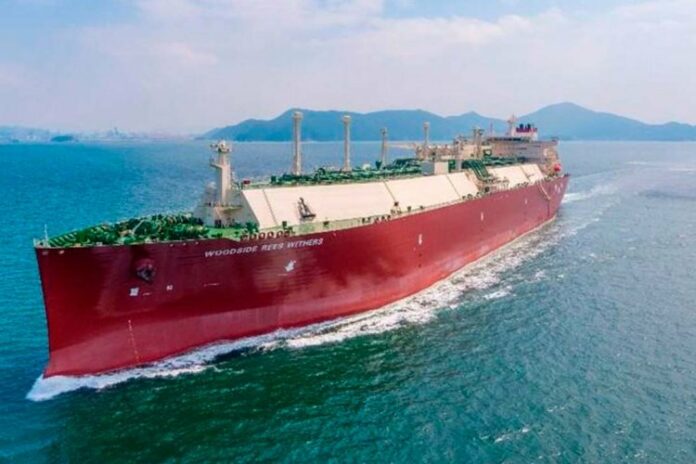
The cargo of approximately 75,000 tonnes of LNG (100 million cubic meters of natural gas) was delivered on 27 November 2022 to the Gate Terminal located on Maasvlakte in Rotterdam, and will contribute to natural gas supply in Northwest and Central Europe.

Woodside Executive Vice President Marketing & Trading Mark Abbotsford said the company was pleased to have concluded the trade at a time when Europe is in urgent need of alternative sources of gas to replace Russian pipeline supplies.

He said:

“Events over the course of 2022 have shown that the world cannot take reliable and affordable supplies of energy for granted, particularly as we strive to decarbonise.

“At such times it is more important than ever that buyers and sellers work together to flexibly respond to market dynamics. Our relationship with Uniper is an example of such cooperation.

“The delivery of a North West Shelf LNG cargo to Europe also highlights the role that Australian LNG can play in supporting global energy security.”

Uniper’s Director LNG Andreas Gemballa said:

“We continue to work on securing the much needed gas supply into Europe from reliable sources like Australia and thus helping to strengthen security of supply during the ongoing crisis triggered by the Russian war.

“In addition to bringing online floating storage and regasification units in Germany, we are contracting LNG from diversified sources into existing and new regasification capacity in Europe. Woodside as a reliable supplier is helping us to bring additional LNG to Europe.” 

First Type 26 Frigate to enter the water for the first time

0

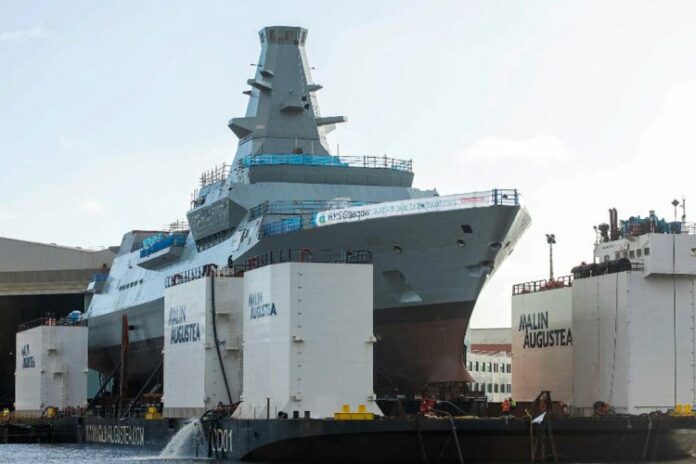
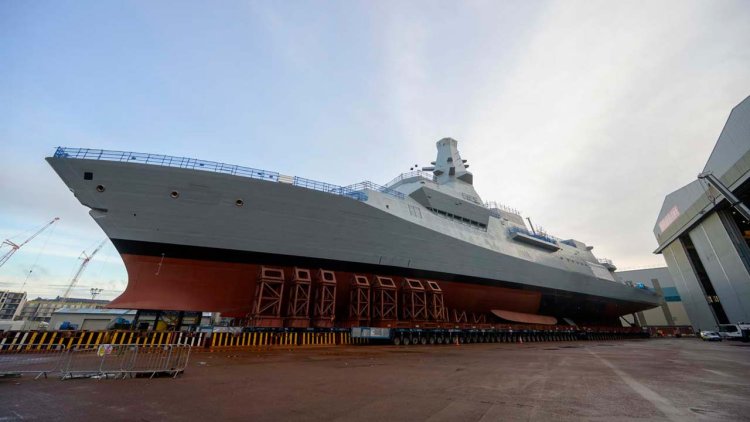
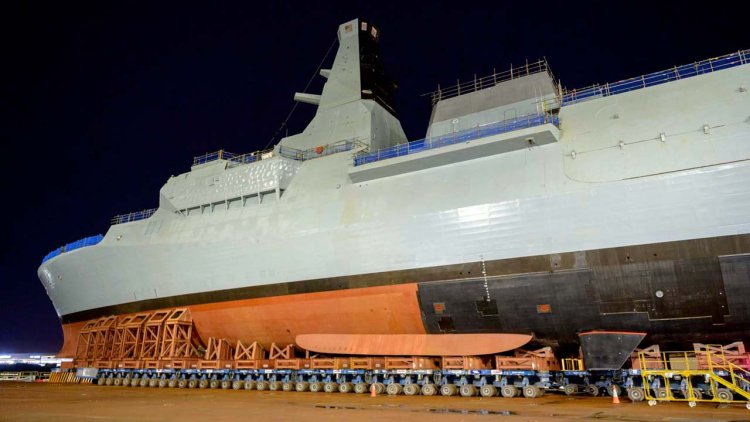
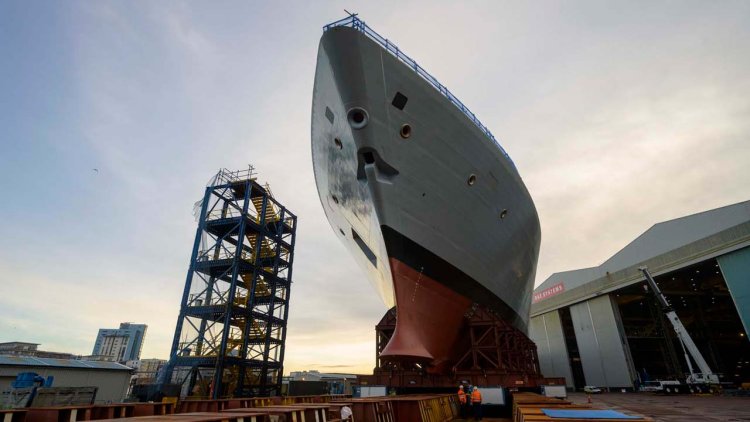
Over the coming days, the ship, currently weighing nearly 6,000 tonnes, will undertake a series of complex manoeuvres that will move her from BAE Systems’ Govan shipyard, onto a barge before being towed down river to a deep-water location in the West of Scotland.

Once in position, the float off will involve the base of the barge being slowly submerged over a number of hours until HMS GLASGOW fully enters the water. She will then return to BAE Systems’ Scotstoun shipyard further along the Clyde, where she will undergo the next stages of outfit before test and commissioning.

Ben Wallace, Secretary of State for Defence, said:

“HMS GLASGOW entering the water for the first time marks a major milestone for the Type 26 programme which supports thousands of highly skilled jobs in Scotland and more across the wider UK supply chain.

“We’re continuing to invest in the British shipbuilding industry to maintain the Royal Navy’s cutting-edge ability to defend our nation, while strengthening our partnership with allies.”

David Shepherd, Type 26 Programme Director, BAE Systems, said:

“Seeing HMS GLASGOW in the water for the first time will be a proud and exciting moment for the thousands of people involved in this great endeavour. She will soon transfer to our Scotstoun yard in Glasgow where we look forward to installing her complex systems and bringing her to life.”

The BAE Systems engineers involved in the float off of HMS GLASGOW have been specially trained using the 3D visualisation suite which gives engineers access to a full digital twin of the ship. They will monitor the ship closely throughout all stages of the process ensuring that the transition is safely managed. The float off process will also be supported by engineers from Defence Equipment & Support, the MOD delivery agent, as well as members of the Royal Navy. 

The float off process is a more modern, efficient and low risk way for a ship to enter the water compared to the previous dynamic launches. The process is well proven, having been used for the five Offshore Patrol Vessels built by BAE Systems in Glasgow, the last of which was delivered to the Royal Navy in 2020.

HMS GLASGOW has been under construction since steel was cut in 2017. The second and third ships, HMS CARDIFF and HMS BELFAST, are currently in build in Govan. The build process for each ship involves its structure being completed in Govan; skilled teams of fabricators and steelworkers construct the units before they are assembled into the forward and aft blocks which are joined together before the ship departs. In Scotstoun, the ship’s outfit is completed and the complex systems are set to work before test and commissioning takes place. HMS GLASGOW will be delivered to the Royal Navy in the mid-2020s.

Earlier this month, the Ministry of Defence awarded BAE Systems a £4.2 billion contract to build a further five Type 26 City Class frigates for the Royal Navy, sustaining 4,000 jobs across BAE Systems and the wider UK maritime supply chain.

Despite Ukraine invasion, Faroe Islands re-establishes fishing agreement with Russia

0

“The Faroe Islands are totally right to extend their existing fishing agreement with Russia,” the North Atlantic archipelago’s minister of fisheries Arni Skaale told the Jyllands-Posten daily.

He added however that the islands, which are not part of the European Union, condemned “all form of war — also the war in Ukraine” after Russian forces invaded in February.

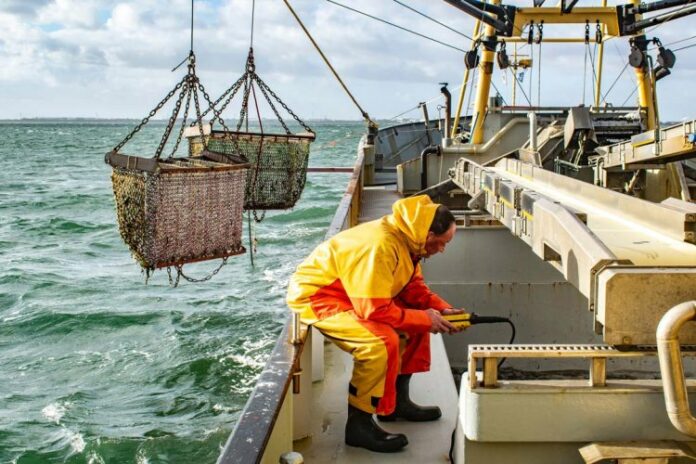
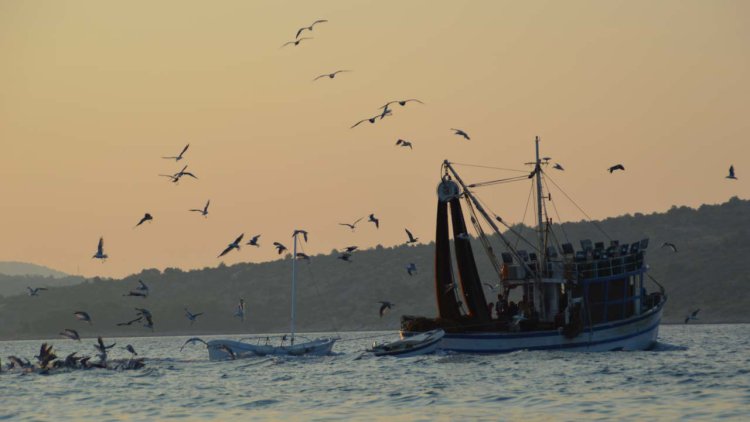
The agreement with Russia has existed since 1977. It lays out catch quotas for cod, haddock, whiting and herring in the Barents Sea north of Russia for Faroese fishermen, and in waters off the coast of the Faroe Islands for Russian fishing boats.

The agreement has been renegotiated every year. But after Russia’s invasion of Ukraine, it has been hotly debated and met with opposition both from the opposition, internally in the Faroese government and from Danish politicians.

Arguing against the agreement, Associate Professor in economics at the University of the Faroe Islands, Hans Ellefsen, has previously said that it is not something that seriously threatens the Faroese economy in general if the agreement with Russia is terminated.

This is because, as previously mentioned, the agreement is a form of exchange agreement, and that Faroese trawlers can in principle themselves fish what the Russians fish today in Faroese waters, if the industry is restructured. 

On May, 2022, The Faroe Islands parliament has unanimously passed a bill authorizing sanctions against Russia and Belarus.

The government of the Faroe Islands said it condemns Russia’s armed attack on Ukraine, and confirmed that its own sanctions would be similar to those of the European Union and other “likeminded partners” that are trying to compel Russia to stop its aggression and withdraw its armed forces from Ukraine. Because the Faroe Islands are outside of the E.U., sanctions implemented by the bloc were not legally binding for the country. The new bill was necessary to provide the legal framework needed to implement sanctions.

Through the new sanctions, the Faroes prohibits Russian vessels from entering its ports, but the ban not applies to fishing boats.

Sources: IntraFish, The Fishing Daily, Barron’s, SeafoodSource