-9.1 C
New York
Home Blog Page 371

Bureau Veritas to certify major commercial floating wind project in Korea

0

Bureau Veritas in partnership with the Korean Register (KR) has been appointed to lead the project certification of Bada Energy’s Gray Whale 3, a major floating offshore wind farm project in Ulsan, Republic of Korea, that will be a key component of the country’s renewable energy strategy.  

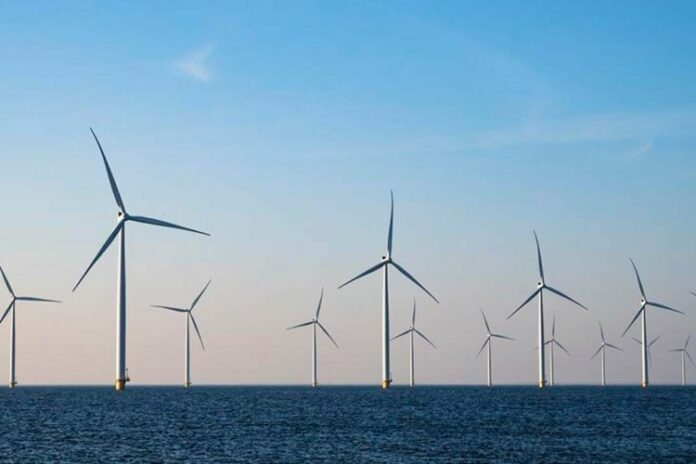
Gray Whale 3 floating offshore wind farm is a product of a partnership between Corio Generation (“Corio”), a portfolio company of the Green Investment Group, and TotalEnergies, a global multi-energy company. Under the plan, a floating offshore wind farm is being built 70 km off the coast of Ulsan, at a water depth of 150 metres. The project aims to be in operation by the end of 2026 and will have a grid connection with a capacity of approximately 500 MW.

As an independent third party, Bureau Veritas will provide project certification services. This covers a conformity assessment of the complete floating offshore wind farm and conformity assessments related to design, manufacturing, transportation, installation, and operation, including a review of the Front End Engineering Design (FEED).

Laurent Leblanc, Senior Vice President Technical & Operations at Bureau Veritas Marine & Offshore, said:

“This project is unique. The floating offshore wind industry is at an important crossroads, and it is an honour to be a trusted partner to one of the first commercial projects. With our extensive expertise in floating foundation technology, Bureau Veritas is well positioned to support wind farm initiatives and shape trust in both fixed and floating wind energy. Building on our experience in marine-related industry, we are proud to help Bada, Corio and TotalEnergies manage risks as they implement new solutions to develop the energy of tomorrow”.
 
Woojin Choi, Co-Representative Director of Gray Whale 3, commented:

“The project certification will enable us to carry out the floating offshore wind project in accordance with domestic and international standards. This way we can ensure the reliability and stability of the project, allowing us to contribute in strengthening the competitiveness of Korea’s offshore wind technology industry by making the project an example of outstanding practice.”

Yongsok Lee, Executive Vice President of Korean Register (KR), said:

“As a cooperator with Bureau Veritas, we are pleased to participate in this Floating Offshore Wind Farm project in our country. We eagerly anticipate that both two classification societies will be able to maintain a close cooperative relationship through the project execution. KR will endeavour to provide all necessary support for Corio-TotalEnergies with BV in order to make this project a real success.”
Damen and NIBC increase vessel financing fund

0

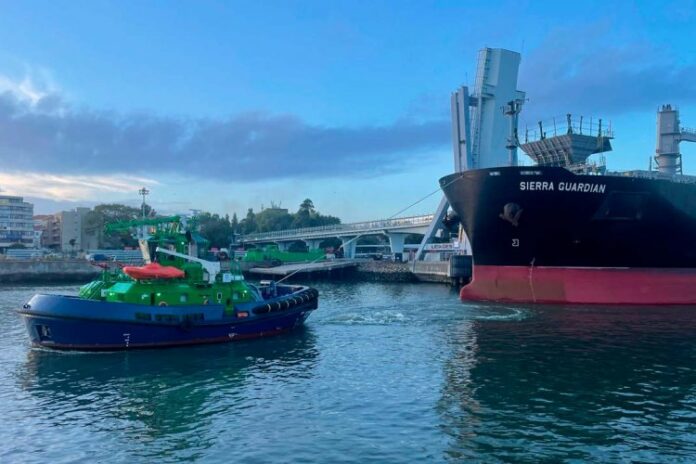
NIBC Bank N.V. and Damen Financial Services celebrate their extended co-operation that enables an increase of the financing facilities for Damen vessels. 

Their continued and increased partnership was agreed recently. Offering financing possibilities, the partners aim to accelerate emission reductions in the maritime industry.

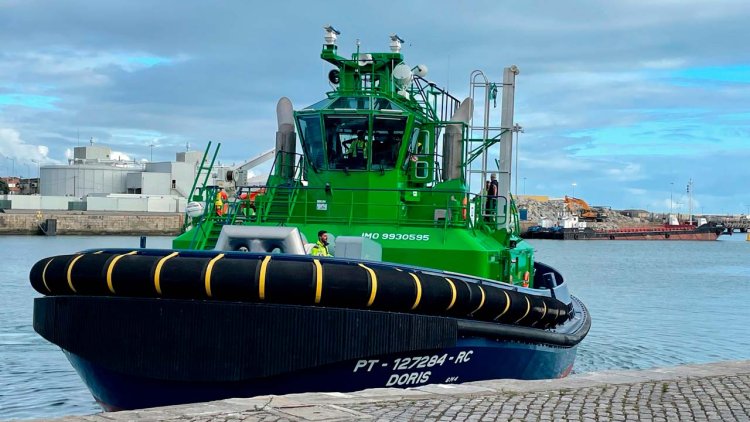
Financial lease or operational lease options allow operators in the maritime industry to renew or extend their fleet. In the highly competitive sector of offshore, harbour and inland operations, the capital investment to acquire new vessels is complicated for operating companies. Damen Shipyards offers financing possibilities to their clients, enabling them to purchase the advanced and efficient tools for maritime operations that Damen supplies. Financing is specifically available for workboats like tugs, fast crew suppliers, multicast, small ferries and barges.

Damen is serving clients with financing possibilities for clients to purchase vessels for more than a decade now. This has resulted in a strong track record, both towards financial institutions as well as towards maritime companies. Lease contracts from Damen always include a buy-back guarantee. Should a company not succeed in their operations, the vessel can perform profitable with another client. By participating in the financial risk of a clients’ operation, Damen clearly expresses to be sure about the possibilities for their clients to operate efficiently using Damen vessels.

Financial or operational lease solutions for customers of Damen Shipyards contribute to the energy transition in the maritime industry. Damen delivers sustainable workboats for offshore (wind) energy and hybrid or full electric tugs for port activities and other operations. Increased financing facilities with partner NIBC Bank N.V. enable Damen to help more clients in providing finance for their fleet renewal or fleet extension. Damen ships and technology contribute to efficient operations and a reduction of the ecological footprint of the maritime industry.

GAC involved in Greece’s first LNG ship-to-ship transfer

0

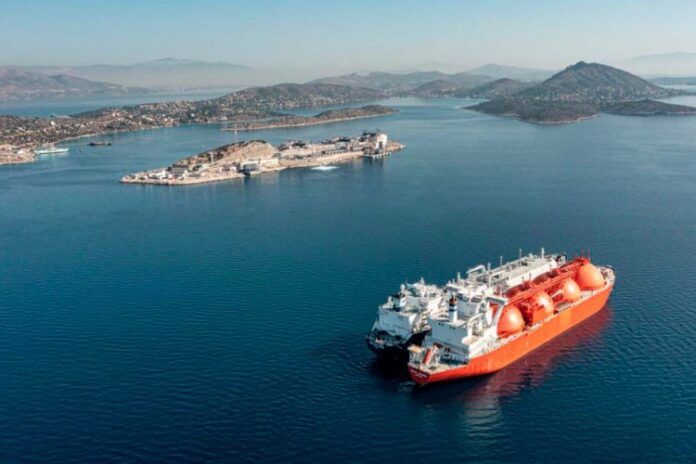
Approximately 140,000 m³ of LNG was transferred from Hoegh Norway’s tanker Arctic Princess to GasLog Athens, a new Floating Storage Unit (FSU). 

The fully-loaded FSU is now ready to supplement Greece’s winter energy demands by topping up the Mediterranean country’s Revithoussa LNG Terminal, which is owned by Greece’s Hellenic Gas Transmission System Operator (DESFA).

To support the historic transfer of fuel, GAC Greece acted as the official husbandry agent for GasLog Athens, as well as the charterers’ agent for Arctic Princess and her cargo. In addition, the office’s Project Logistics Department imported six special fenders from China and the United Kingdom, as well as organising land and sea transportation, storage and warehousing, their inflation, mobilisation, fitting, demobilisation and their safe return.

The installation of the new FSU was implemented in record time, following close coordination between DESFA and the Hellenic Ministry of Environment and Energy, the Ministry of Maritime Affairs & Insular Policy and the Regulatory Authority for Energy.

In a statement, DESFA Chief Executive Officer Maria Rita Galli said the start of the FSU’s operation in Revithoussa was the result of exemplary cooperation, under pressure, by all involved:

“We are satisfied that through our high technical expertise and our network, we are contributing significantly with yet another infrastructure to ensuring the country’s security of natural gas supply for the coming winter while, at the same time, we are further strengthening the strategic role that the LNG Terminal of Revithoussa plays in the wider region of Southeast Europe.”

George P. Fragos, GAC Greece’s Shipping Operations Manager, says:

“It was a major milestone for GAC to play a role in the first-ever LNG STS transfer in Greek waters. Everything went smoothly, and we are looking forward to supporting similar operations with our blend of shipping and logistics services in the future.”

Socrates Zorbas, GAC Greece’s Project Logistics and Assistant General Manager, adds:

“Arrangements for the fenders were meticulously planned and executed in strict compliance with all safety and security measures.”

The addition of FSU GasLog Athens at Pachi is one of the steps being taken to shore up Greece’s LNG supply and improve its local energy security. A number of strategic measures have already been implemented to ensure electricity demand is met this winter, including encouraging Greek residents to reduce electricity consumption during peak hours and introducing local subsidies.

VARD secures contract for one cable laying vessel for Prysmian Group

0

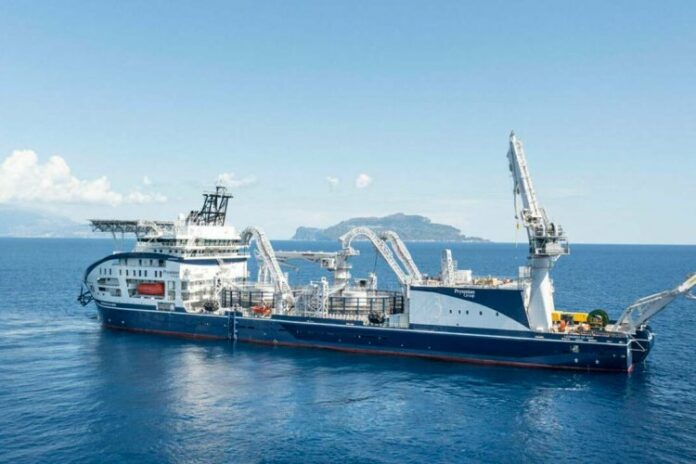
VARD has secured a new contract for the design and construction of one Cable Laying Vessel for Prysmian Group in Italy. The contract value amounts to approximately euro 200 million.

The new vessel will be very similar to Leonardo da Vinci, which was delivered from VARD to Prysmian in 2021. 

Valerio Battista, CEO Prysmian Group, stated:

“The development of smart and sustainable power grids infrastructure is key to enable the energy transition, and submarine cables are an essential component. As global leader we are fully committed to technology innovation and we are happy to partner with a worldwide leader in the construction of vessels like Fincantieri and Vard to improve also our installation capabilities.”

Pierroberto Folgiero, CEO of Fincantieri, said:

“The complexity of such a ship fully demonstrates Fincantieri’s ability to ensure its customers technological excellence, constant innovation and commitment to sustainability. Indeed, the highly demanding context in which the vessel will operate, both in terms of environment and hi-tech requirements, will enhance the sophisticated latest generation onboard systems. We are therefore particularly pleased to serve Prysmian – once again – with a successful project in a sector such as the cabling one, while supporting energy transition, which will attract investments in the near future”.

The new vessel is especially designed for advanced subsea operations. As Leonardo da Vinci, the cable layer features deep water installation capabilities for depths of more than 3,000 meters and the highest cable loading capacity in the market. The cable layer is developed to perform complex installation operations, supported by a variety of burial systems, including heavy-duty ploughs, and state-of-the-art positioning and seakeeping systems, coupled with a reduced environmental footprint.

The vessel is designed by Vard Design in Ålesund, Norway. The hull will be built at Vard Tulcea in Romania, while the final outfitting, commissioning and delivery will be carried out by one of VARD’s shipyard in Norway. The Group’s high technology subsidiaries are also involved in the project through deliveries of equipment and solutions. VARD is a part of the Fincantieri Group.

The cable layer is scheduled for delivery in Q1 2025.

Technical information

  • Length of approximately 170 meters and a beam of about 34 meters.
  • Cable installation equipment including carousels of 7,000 and 10,000 tonnes.
  • State-of-the-art DP3 positioning and seakeeping systems.
  • Bollard pull in excess of 180 tonnes.
  • Maximum transit speed will exceed 16 knots.

Fugro wins survey deal at US offshore wind project

0

Community Offshore Wind, a joint venture between RWE Renewables and National Grid, has awarded Fugro an offshore survey contract to support site appraisal and concept design activities in the New York Bight.

Survey work will commence this year with the majority being executed in 2023, detailing geophysical and environmental conditions within the 510 km2 lease area. 

This accelerated project schedule will help Community Offshore Wind reduce the levelised cost of energy and realise the site’s offshore wind potential, which has an estimated capacity of 3 GW, enough to power 1.1 million US homes.

Operating from a local port, Fugro is dedicating two vessels to the project. Survey teams will utilise hull-mounted sensors to generate full-coverage surface and subsurface Geo-data over the lease area to a nominal depth of 15 m below the seafloor. While deeper subsurface Geo-data will still be required in targeted areas for foundation engineering, Fugro’s survey approach will enable Community Offshore Wind to commence a geotechnical programme ahead of standard development schedules. Survey Geo-data and consultancy services for the project will be delivered through Fugro’s regional centre of expertise for offshore wind, located in Norfolk, Virginia.

Douglas Perkins, Community Offshore Wind’s President stated:

“We know just how important data collection in our lease area is to all local, fishing, maritime, environmental, and tribal stakeholders. As the leading offshore survey company, Fugro brings experience and an innovative approach to the US market to collect data critical to the optimisation of site layout and programme flexibility while minimising impacts to the natural environment. This collaboration is another step forward in designing a project with the best available science and incorporating feedback from a wide net of stakeholders.”

Céline Gerson, Fugro’s Group Director Americas added:

“We are thrilled to be working with Community Offshore Wind on their landmark project to deliver clean, affordable energy to customers in the Northeast. Fugro is fully engaged in moving offshore wind forward in the US and this contract serves to strengthen our leading position in the market. Drawing on regional expertise and advanced technology, we will deliver on the trust shown to us, adding value to the development through efficient, high quality Geo-data acquisition, analysis and advice.”

This award was already partly included in Fugro’s 12-month backlog as per September 2022.

Equinor submits PDO for the Irpa gas discovery

0

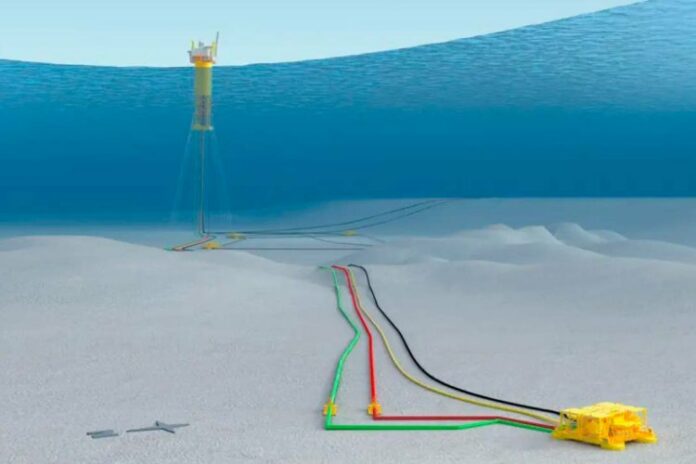
On behalf of the Irpa partnership, Equinor has submitted a plan for development and operation (PDO) for the Irpa gas discovery, formerly known as Asterix, to the Norwegian Minister for Petroleum and Energy.

The development will ensure activity and stable gas deliveries from Aasta Hansteen until 2039.

“This is a good day—the development of Irpa will contribute to predictable and long-term deliveries of gas to customers in the EU and the UK,” says Geir Tungesvik, Equinor’s executive vice president for Projects, Drilling and Procurement.

The Irpa discovery, formerly known as Asterix, was proven in 2009 and is in deep water in the Norwegian Sea, 340 kilometres west of Bodø. Expected recoverable gas resources are estimated at approximately 20 billion standard cubic metres, equivalent to 124 million b.o.e. or the consumption of nearly 2.4 million British households over a period of seven years.

The gas will be phased into existing infrastructure over Aasta Hansteen and transported to the Nyhamna gas processing plant via Polarled. From there, gas will be transported via the Langeled pipeline system to customers in the UK and continental Europe.

“The development shows that near-field exploration and utilisation of existing infrastructure provides good resource utilisation on the Norwegian continental shelf,” says Grete Birgitte Haaland, senior vice president for Exploration and Production North. “Irpa will maintain existing jobs at Aasta Hansteen, at the supply base in Sandnessjøen, at the helicopter base in Brønnøysund and at the operations centre in Harstad”.

The development will have a total cost of NOK (Norwegian Krone) 14.8 billion in 2022-NOK, and the field is scheduled to come on stream in the fourth quarter of 2026. There will be joint production from Irpa and Aasta Hansteen through 2031 and then Irpa will continue to produce until 2039.

The development also has good social profitability. In 2020 and 2021, Aasta Hansteen operations created jobs equivalent to over 300 person-years, directly and indirectly.

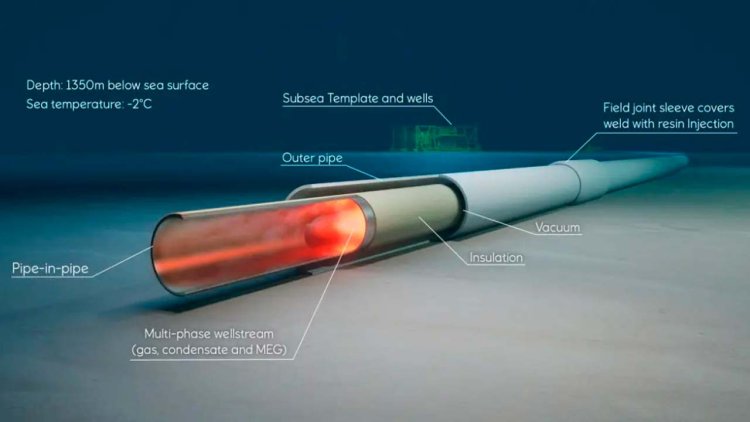
“During the project period, there will also be local and regional deliveries, although the Irpa project is largely dependent on international specialist suppliers who can operate in water depths of 1350 metres,” says Hogne Pedersen, project director for Irpa. “It has been challenging to develop Irpa. Deep water and low temperatures on the seabed have necessitated the qualification of innovative new technology for pipelines, but good support in the partnership and increased demand for gas have made an investment decision possible”.

The discovery will be developed with three wells and an 80-kilometre pipeline to the Aasta Hansteen platform. As the only planned deepwater development in Norway, the technical solution will contribute to new competence development in the industry.

Arctic carbon conveyor belt discovered

0

Researchers find new transport route for carbonaceous material from productive Arctic marginal seas to the deep sea

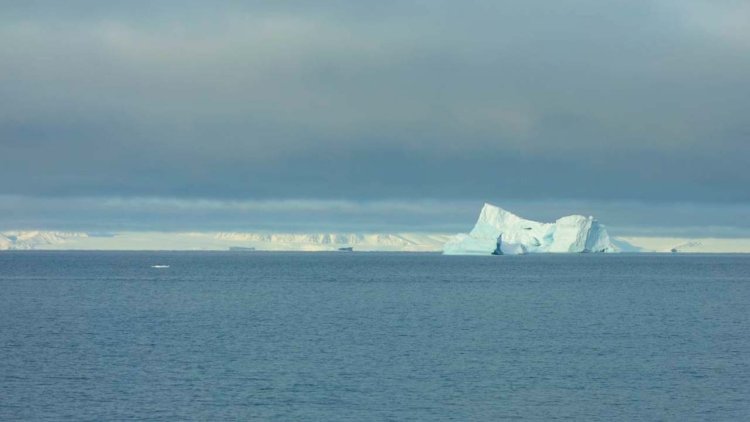
Every year, the cross-shelf transport of carbon-rich particles from the Barents and Kara Seas could bind up to 3.6 million metric tons of CO2 in the Arctic deep sea for millennia.

In this region alone, a previously unknown transport route uses the biological carbon pump and ocean currents to absorb atmospheric CO2 on the scale of Iceland’s total annual emissions, as researchers from the Alfred Wegener Institute and partner institutes report in the current issue of the journal Nature Geoscience.

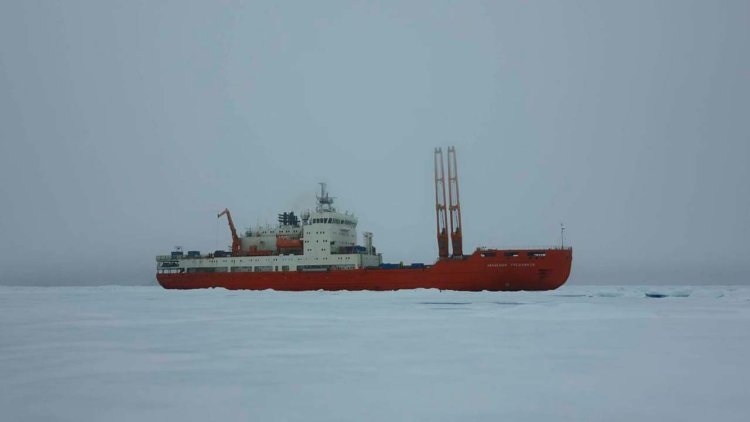
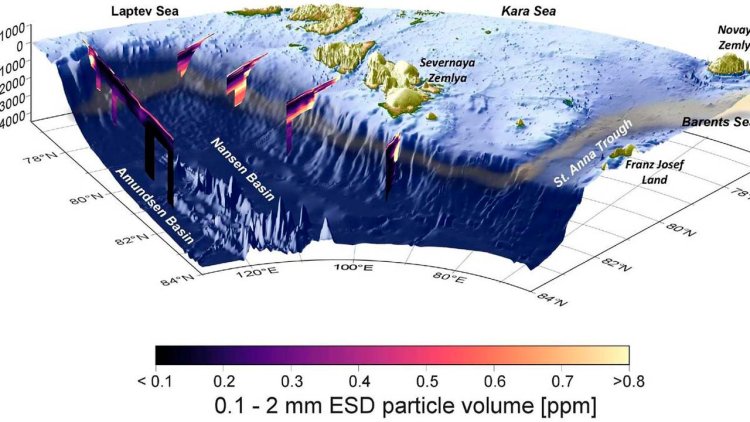
Compared to other oceans, the biological productivity of the central Arctic Ocean is limited, since sunlight is often in short supply – either due to the Polar Night or to sea-ice cover – and the available nutrient sources are scarce. Consequently, microalgae (phytoplankton) in the upper water layers have access to less energy than their counterparts in other waters. As such, the surprise was great when, on the expedition ARCTIC2018 in August and September 2018 on board the Russian research vessel Akademik Tryoshnikov, large quantities of particulate – i.e., stored in plant remains – carbon were discovered in the Nansen Basin of the central Arctic. Subsequent analyses revealed a body of water with large amounts of particulate carbon to depths of up to two kilometres, composed of bottom water from the Barents Sea. The latter is produced when sea ice forms in winter, then cold and heavy water sinks, and subsequently flows from the shallow coastal shelf down the continental slope and into the deep Artic Basin.

“Based on our measurements, we calculated that through this water-mass transport, more than 2,000 metric tons of carbon flow into the Arctic deep sea per day, the equivalent of 8,500 metric tons of atmospheric CO2. Extrapolated to the total annual amount revealed even 13.6 million metric tons of CO2, which is on the same scale as Iceland’s total annual emissions,” explains Dr Andreas Rogge, first author of the Nature Geoscience study and an oceanographer at the Alfred Wegener Institute, Helmholtz Centre for Polar and Marine Research (AWI). 

This plume of carbon-rich water spans from the Barents- and Kara Sea shelf to roughly 1,000 kilometres into the Arctic Basin. In light of this newly discovered mechanism, the Barents Sea – already known to be the most productive marginal sea in the Arctic – would appear to effectively remove roughly 30 percent more carbon from the atmosphere than previously believed. Moreover, model-based simulations determined that the outflow manifests in seasonal pulses, since in the Arctic’s coastal seas, the absorption of CO2 by phytoplankton only takes place in summer.

Understanding transport and transformation processes within the carbon cycle is essential to creating global carbon dioxide budgets and therefore also projections for global warming. On the ocean’s surface, single-celled algae absorb CO2 from the atmosphere and sink towards the deep sea when aged out. Once carbon bound in this manner reaches the deep water, it stays there until overturning currents bring the water back to the ocean’s surface, which takes several thousand years in the Arctic. And if the carbon is deposited in deep-sea sediments, it can even be trapped there for millions of years, as only volcanic activity can release it. This process, also known as the biological carbon pump, can remove carbon from the atmosphere for long periods of time and represents a vital sink in our planet’s carbon cycle. The process also represents a food source for the local deep sea fauna like sea stars, sponges and worms. What percentage of the carbon is actually absorbed by the ecosystem is something only further research can tell us.

The polar shelf seas harbour other largely unexplored regions in which bottom water is formed and flows into the deep sea. As such, it can be assumed that the global influence of this mechanism as a carbon sink is actually much greater. 

“However, due to the ongoing global warming, less ice and therefore less bottom water is formed. At the same time more light and nutrients are available for the phytoplankton, allowing more CO2 to be bound. Accordingly, it’s currently impossible to predict how this carbon sink will develop, and the identification of potential tipping points urgently calls for additional research,” says Andreas Rogge.

Lhyfe and Saint Nazaire Port to develop offshore renewable hydrogen

0

Hydrogen is able to draw on the strong momentum driven by the national strategy for the development of carbon-free hydrogen in France, and as will offshore wind power, this energy source will be called upon to play an increasingly important role in the French and European energy mix.

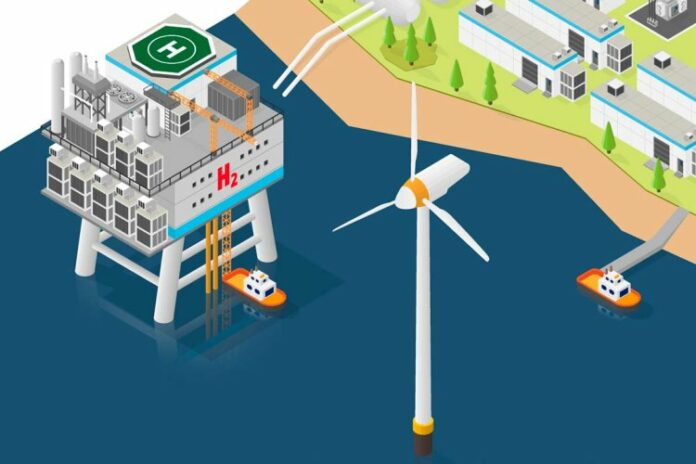
At the end of September in the Saint Nazaire dock basins, Lhyfe launched its Sealhyfe project to deliver the world’s first offshore renewable hydrogen production prototype, which will have a capacity of 1 MW and will be connected to a floating wind turbine.

Lhyfe already operates a renewable hydrogen production facility employing water electrolysis, and is planning to set up similar onshore facilities throughout Europe. The Company is considering the idea of developing and operating offshore renewable hydrogen production platforms on existing fixed structures or on fixed-position or floating foundations, and is ramping up its research and development investments for the development of offshore renewable hydrogen production as close as possible to offshore energy sources. By 2030-2035, the offshore sector could represent additional installed capacity of the order of 3 GW for Lhyfe.

Nantes ‒ Saint Nazaire Port is strongly committed on many fronts to energy transition in Greater Western France. The Port Authority is focussing on the energy sources of tomorrow and is studying the possible deployment scenarios for the hydrogen sector within its port ecosystem, with the ambition of making Nantes ‒ Saint Nazaire the first major port facility for hydrogen on France’s Atlantic Seaboard.

Supported by their converging visions of the future, Nantes ‒ Saint Nazaire Port and Lhyfe have naturally chosen to combine their efforts and areas of expertise in order to identify, to understand and to assess the conditions for the establishment of a supply chain associated with offshore hydrogen production.

This collaboration is intended to identify the port areas and facilities capable of accommodating R&D prototypes and being utilized to try out innovative solutions. The partnership also focusses on the identification of the industrial requirements involved in the construction of the equipment to be used to produce offshore hydrogen on a mass scale, and on the port infrastructures necessary for the production, launching and integration of those future items of equipment. Lastly, the two parties will deliberate together on how best to bring ashore the renewable hydrogen mass-produced at sea, so as to define the requisite industrial and logistical requirements for the reception and injection of the gas into the land-based network.

Matthieu Guesné, Chief Executive Officer and founder of Lhyfe, said:

“The development of offshore hydrogen production is the next major challenge awaiting us. Following the integration and inauguration of our Sealhyfe platform at the Saint Nazaire port facility, we are going to pursue our collaboration with this port facility, which possesses a great deal of related expertise, to accelerate the development of solutions that will make it possible to decarbonize mobility and industry on a massive scale, in all coastal regions.“

Olivier Trétout, Chair of the Management Board of Nantes ‒ Saint Nazaire Port, said:

“Over the course of several years now, energy transition has become a reality at the Port of Nantes ‒ Saint Nazaire. We are confronted by climate and energy challenges that require us to speed up our actions and to rapidly identify new solutions. Green hydrogen is a sector of the future in which we have great faith, as do many of the Regional Community’s industrial and institutional players.“

NYK signs MoU with JERA for cooperation in transporting fuel ammonia

0

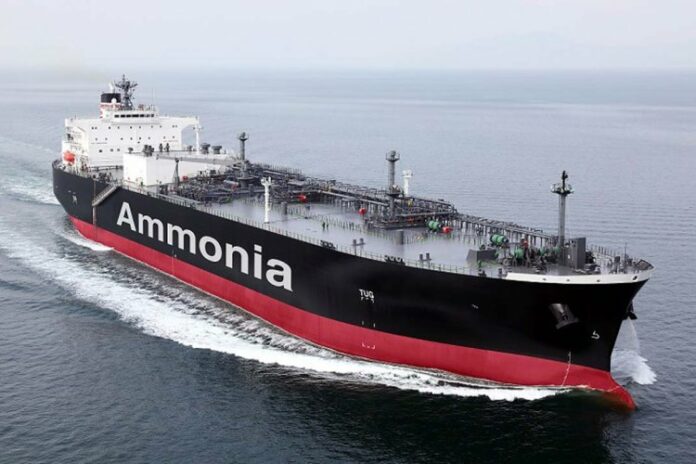
On November 21, NYK and JERA Co., Inc. signed a memorandum of understanding (MoU) to study the transportation of fuel ammonia. 

The study will include examining the transport of fuel ammonia to the Hekinan Thermal Power Plant, where JERA aims to begin using fuel ammonia in commercial operations in the late 2020s.

In order to procure fuel ammonia in large volume for power generation at a lower cost, it is necessary to increase the size of ships for transportation. The MoU provides for the two companies to jointly study the development of enlarged fuel ammonia carriers and the establishment of a safe transportation system. Specifically, the MoU stipulates that the following items will be studied:

  • Development of fuel ammonia carriers suitable for domestic thermal power plants and receiving terminals
  • Establishment of a system for transporting and receiving fuel ammonia
  • Implementation and operation of ammonia-fueled propulsion systems for vessels
  • Working with related parties to formulate rules for the reception of fuel ammonia

Since 2021, NYK has had a long-term GHG reduction target of net-zero emissions by 2050 for its oceangoing shipping business, and the company is working to establish a value chain for fuel ammonia, which does not emit carbon dioxide (CO2) when combusted. In establishing a new value chain ahead of the rest of the world, the standardization of carriers and the formation of rules such as laws and regulations are indispensable to realize large-scale transportation of fuel ammonia.

For the standardization of carriers, NYK will utilize its in-house resources, including its Project Engineering Team, to study and develop the most appropriate hull design from the concept stage.

As for the formation of rules such as laws and regulations, NYK will promote an approach to related parties based on the knowledge obtained through the development and social implementation of the company’s ammonia-fueled ammonia gas carriers (AFAGC) and ammonia-fueled tugboats. The development of the AFAGC and the ammonia-fueled tugboat were both selected as recipients of the Green Innovation Fund Project of the New Energy and Industrial Technology Development Organization (NEDO).

RightShip and Veson Nautical announce a new collaboration

0

The Veson IMOS Platform lets charterers make informed decisions about the type of vessel they would like to use for their cargo while allowing ship owners to share the capability of their fleets.

From 22 November 2022, subscribers to the integration will be able to access the following RightShip data as part of Veson’s core chartering solution, VIP Chartering, as well as its pre-trade market analysis solution, VIP Trade Hub:

  • Safety Score
  • GHG Rating
  • Inspection status of a vessel

Within VIP Chartering, Veson clients subscribed to the integration can utilise the integration to create warnings and alerts for vessel ratings that do not fit the organisation’s specific requirements. Charterers either receive a warning or are unable to fix voyages that are outside of rating parameters, helping to protect them from wasted time or errors and standardising the pre-fixture process.

Within VIP Trade Hub, Veson clients can set minimum GHG Rating and Safety Score parameters to search for a specific subset of vessels in a particular geographic location. With the ability to search and sort vessels by rating information, users can filter out vessels that don’t fit their requirements and make better-informed, more environmentally conscious pre-fixture decisions.

Tarun Mehrotra, RightShip’s Chief Strategy Officer, said: 

“The collaboration with Veson means our customers are able to access insights in a timely manner, as we enable the industry to chart a course towards a zero-harm future. We’ll be more transparent with data than ever before, continuously improving the quality, as the need for accurate ESG transparency becomes ever more prevalent.”

RightShip joins several other leading digital providers in the maritime space who have been strategically selected to seamlessly integrate with the Veson IMOS Platform as part of the Veson Partner Network.

Eric Christofferson, Chief Product Officer at Veson, said:

“RightShip provides a significant value add to our client community, enabling them to add vessel rating information produced by RightShip directly into their chartering decision-making process within the Veson IMOS Platform. This further delivers on our desire to allow users to reference data where and when they need it in their workflow.”

Josh Luby, Group Product Manager at Veson said:

“Providing freight charterers with the necessary tools and data to efficiently assess the market and take action is core to VIP Trade Hub and chartering workflows. Having the RightShip GHG Rating, Safety Score and crew welfare information available to them at the very start of this process means they can quickly act on a market opportunity with the confidence that the selected vessel will meet their organisational standards.”