-15.1 C
New York
Home Blog Page 368

Vår Energi signs offshore accommodation contract with Floatel International

0

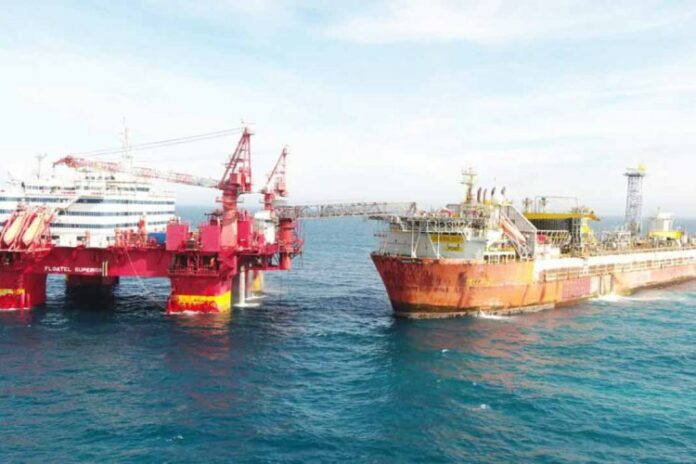
Vår Energi repeats the 2021 success and secures Floatel Superior for the 2023 High Activity Period (HAP).    

The 2023 HAP kicks off in May and Vår Energi returns to Floatel International for support. This week the contract for Floatel Superior was signed. The rig will be conncted to Balder FPU and be used as living quarters. 

VP Modifications Projects in Vår Energi, Inge Bjørkevoll explains:

“The 2021 campaign was a great success. Connecting two floaters proved to be a complex but manageable solution thanks to the good cooperation and the common will-to-win mentality between Vår Energi and the suppliers involved. And you don’t change a winning plan.”

The Balder FPU (floating production unit) plays a crucial role in the long-term commitment to increase recovery and production from the Balder field in the North Sea. The vessel was initially intended to retire in 2011, and in order to operate until 2030, the ship will have to go through an upgrade program.   

The HAP 2023 scope includes upgrades to some of the key production support systems, surface protection, structural reinforcements, work environment upgrades and maintenance campaign.  

The Balder FPU upgrade is a part of the growth strategy for the Balder Area in the North Sea. By 2030 the Balder FPU production capacity will be replaced by Jotun FPSO – scheduled to arrive on the field Q3 2024.     

The Vår Energi ASA has contracted Floatel Superior for 13 weeks with a four-week extension option. 

QatarEnergy, ConocoPhillips sign long-term supply agreement of Qatari LNG

0

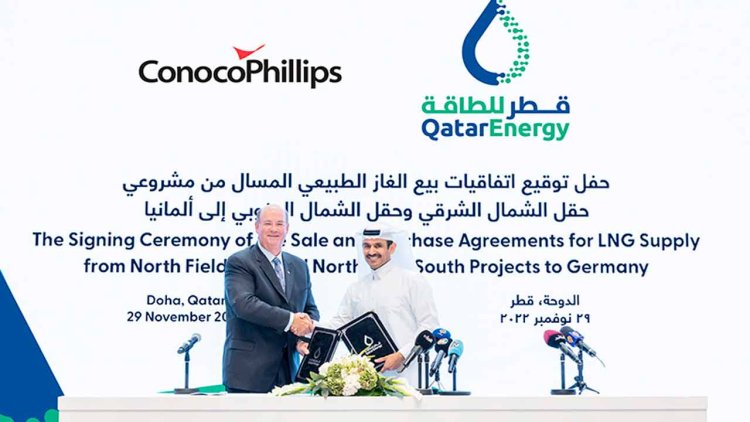
Pursuant to the two SPAs, a ConocoPhillips wholly owned subsidiary will purchase the agreed quantities to be delivered ex-ship to the “German LNG” receiving terminal, which is currently under development in Brunsbüttel in northern Germany, with deliveries expected to start in 2026.

The LNG volumes will be sourced from the two joint ventures between QatarEnergy and ConocoPhillips that hold interests in Qatar’s North Field East (NFE) and North Field South (NFS) projects.

The SPAs were signed today by His Excellency Mr. Saad Sherida Al-Kaabi, the Minister of State for Energy Affairs, the President and CEO of QatarEnergy, and Mr. Ryan Lance, the Chairman and CEO of ConocoPhillips, at a special event held at QatarEnergy’s headquarters in Doha in the presence of senior executives from both companies.

Speaking at the signing ceremony, His Excellency Mr. Saad Sherida Al-Kaabi said:

“These agreements are momentous for several reasons. They mark the first ever long-term LNG supply to Germany with a supply period that extends for at least 15 years, thus contributing to Germany’s long-term energy security. 

They also represent the culmination of efforts between two trusted partners, QatarEnergy and ConocoPhillips, over many years, to provide reliable and credible LNG supply solutions to customers across the globe, and today, to German end-consumers.”

His Excellency Minister Al-Kaabi added:

“Germany is the largest gas market in Europe, with significant demand in the industrial, power, and household sectors, and we are committed to contribute to the energy security of Germany and Europe at large. The agreements we are about to sign today are a further manifestation of this commitment, which is reinforced through the sizeable investments we have made and continue to make along the entire gas value chain encompassing production capacity increases in Qatar and the Golden Pass LNG export project in the United States. Such investments also include the execution of the largest LNG ship building program in the history of the energy sector, as well as securing long-term commitments in LNG receiving infrastructure in several European countries.”

On his part, Mr. Ryan Lance, the Chairman and CEO of ConocoPhillips said:

“QatarEnergy and ConocoPhillips are excited for the opportunity to responsibly and securely supply world markets with LNG from the Qatari expansion projects.” 

“These agreements will provide an attractive LNG offtake solution for our new joint ventures with QatarEnergy and position the joint ventures as reliable sources of LNG supply into Europe.” 

ConocoPhillips’ partnership in the North Field LNG Expansion Projects is made up of a 3.125% share in the NFE project and a 6.25% share in the NFS project, which are planned to commence production in 2026 and 2027, respectively. 

New kind of tropical cyclone identified in the Indian Ocean

0

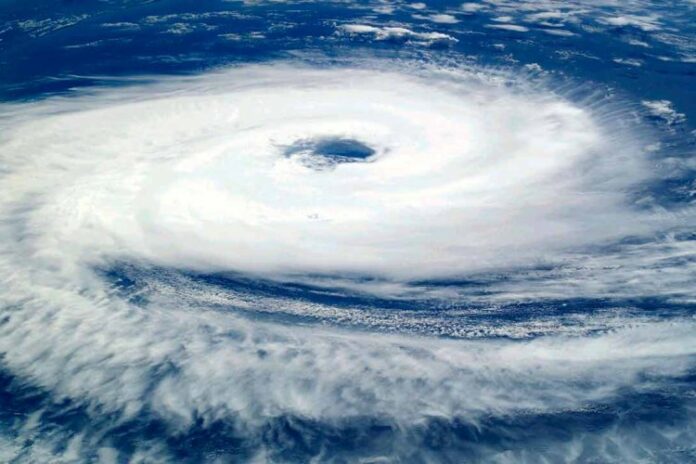
The experts’ search for the trigger mechanisms of the Indian Ocean Dipole has led to the discovery of the new type of atmospheric tropical cyclone forming in the South-East Tropical Indian Ocean (SETIO) that they call SETIO Cyclone.

The study, published in the Journal of Southern Hemisphere Earth Systems Science, will be presented at the Australasian Meteorological and Oceanographic Society (AMOS) annual conference in Adelaide (November 28–December 1).

The Indian Ocean Dipole (IOD) is a coupled atmosphere-ocean interaction in the tropical Indian Ocean that strongly affects the climate and rainfall variability of surrounding countries including Australia.

Flinders graduate Dr. Ankit Kavi and his Ph.D. supervisor Associate Professor Jochen Kaempf say the newly described cyclones comprise westerly equatorial wind bursts and north-westerly winds along Sumatra west coast.

They found that SETIO cyclones are short-lived weather-like events that develop frequently during austral winter/spring and operate to maintain a warm surface ocean in the region.

“Dramatic changes happen in some years when SETIO cyclones fail to develop, and ambient winds trigger the appearance of cold seawater in a vast area strongly disturbing both winds and rainfall patterns over the Indian Ocean,” says Associate Professor Kaempf.

“In the natural sciences, it is of uttermost importance to identify so-called trigger processes, such as SETIO cyclones, that link the cause to an effect.

“This is a rare new discovery that sheds new light into the functioning of the IOD.”

Associate Professor Kaempf hopes that this work will attract future research funding to investigate the formation of SETIO cyclones in more detail as to improve the forecasting of the IOD.

The article, “Synoptic-scale atmospheric cyclones in the South-East Tropical Indian Ocean (SETIO) and their relation to IOD variability,” has been published in the Journal of Southern Hemisphere Earth Systems Science.

Stena Line expands its Ireland-France ferry service

0

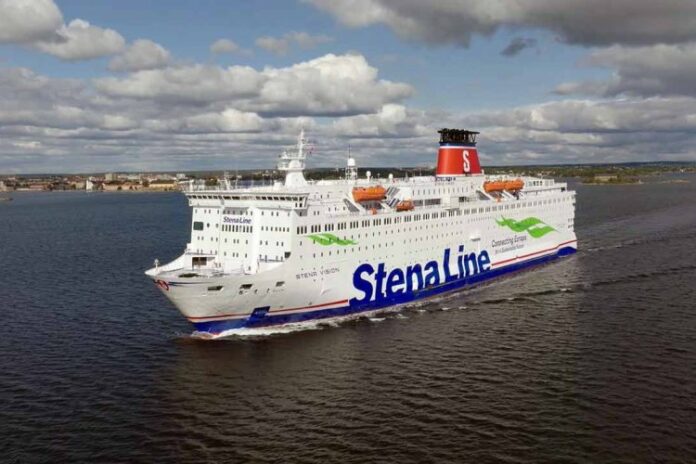
With the addition of Stena Vision to its Ireland-France route, Stena Line will provide a significant increase in capacity alongside its existing vessel on the route, Stena Horizon.

The added vessel is due to set sail on its new route in June and brings with it space for 1,300 passengers and with 485 passenger cabins it offers the widest selection of cabins across all of the company’s ferries.

Paul Grant, Irish Sea Trade Director at Stena Line, says:

“Ahead of what is expected to be a busy summer in 2023, we will be doubling our sailing frequency and tripling our passenger capacity for tourists on our Rosslare – Cherbourg service as well significantly increasing freight capacity. We’ve seen increased demand for more services and bigger vessels and are pleased to announce that from next June we will have 12 sailings weekly on the shortest and most frequent direct service between Ireland and France. We are delighted to offer more options and choice for our customers with this significant addition to our Irish Sea fleet.”

Stena Vision is an addition to today’s RoPax vessel on the route, meaning a 100% increase in passenger sailings for the Swedish company. Stena Line will be the only ferry operator offering departures and arrivals in both directions on the Rosslare – Cherbourg for six days every week.

Stena Vision will come fresh from the Baltic Sea, where she is operating on the busy Swedish/Polish Karlskrona to Gdynia route. It will be replaced by Stena Line’s new larger E-Flexer Stena Ebba early next year. Starting next year, the Gdynia-Karlskrona route will be operated by three ferries – Stena Estelle, Stena Ebba and Stena Spirit, giving Stena Line the most efficient use of ships, crews and providing freight customers and passengers with an optimal schedule and capacity.

LNG vessel Coralius makes 500th safe and successful bunkering

0

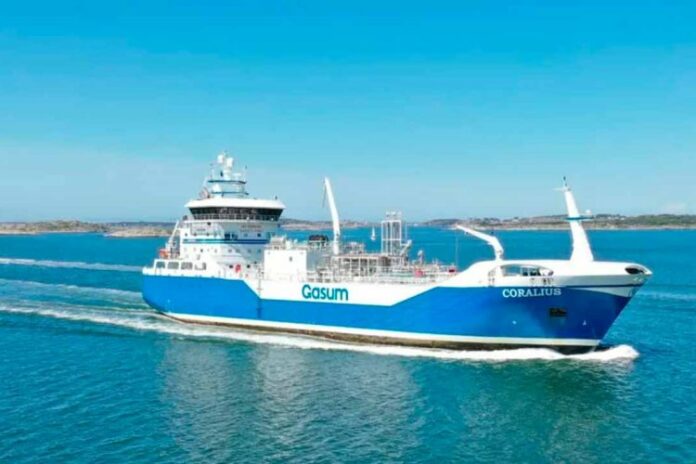
Over the last five years Coralius has safely and successfully bunkered 109,567 mt of LNG to a vast array of vessels – oil tankers, car carriers, shuttle tankers, dry cargo carriers, cruise ships, expedition vessels, ferries.

Coralius made its maiden bunkering in September 2017 and is owned by Anthony Veder and Sirius Shipping. At the time of commissioning, Coralius was the first of its kind, a purpose built LNG bunker vessel.

The 1A Ice Classed Coralius was designed specifically to safely discharge large quantities of LNG to its receiving vessel in a short period of time. The flat working deck is especially engineered for safe side-by-side operations.

Coralius itself is completely powered by LNG. Compared to other marine fuels, LNG drastically cuts both sulphur oxide (SOx) and nitrogen oxide (NOx) emissions and lowers carbon dioxide (CO2) emissions which makes it currently the most viable alternative fuel for reducing emissions.

The LNG the Coralius has bunkered thus far has saved up to 50 000 mt CO2 when compared to the same amount of bunker oil (MGO) being used by vessels.

EU Commission announces carbon reduction plans for fisheries

0

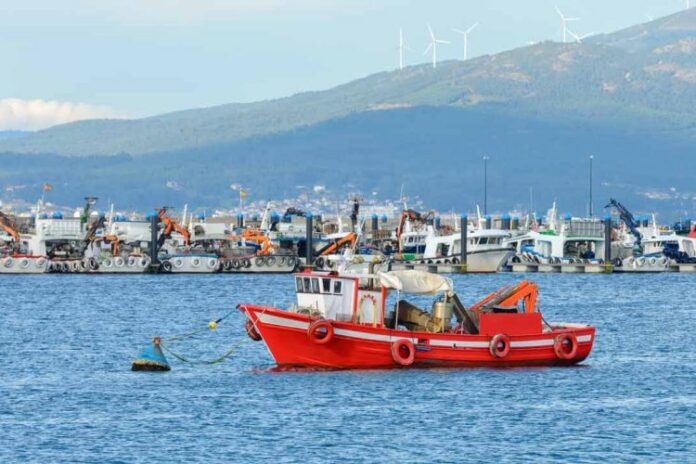
The rise in fuel prices as a result of the war in Ukraine is having ‘catastrophic consequences’ on EU fisheries, to the point of threatening the sector’s ‘viability’, European fisheries Commissioner Virginijus Sinkevičius told the EU-27 ministers at the Agrifish EU Council.

Each time marine diesel goes up by €0.10, the profitability of the EU’s fisheries sector decreases by an estimated €188 million – half the cost of the ships’ operations – according to the Commission’s estimates.

Though the sector was able to benefit from the swift rapid release of state aid and the European Maritime Affairs, Fisheries and Aquaculture Fund (EMFAF) to fend off fuel price increases, Sinkevičius believes the solution lies in remedying the sector’s dependence on fossil fuels.

“We need a strategic and systemic transition to ensure the resilience of our sector. This is essential if we are to achieve our Common Fisheries Policy (CFP) objectives and ensure a viable and sustainable business,” said the Commissioner.

Greek agriculture minister Georgios Georgantas said that the consequences are also “catastrophic from a socio-economic point of view for small-scale fishermen”, which make up a sizeable part of the sector.

However, price increases are taking an even heavier toll on larger, more fuel-intensive vessels.

“Small-scale fishermen do not go very far out to sea, have lighter boats with light fishing techniques (small nets, longlines),” Green MEP Caroline Roose told EURACTIV.

“The big boats that are suffering the most from this crisis must therefore make efforts as a priority to consume less and adapt their fishing techniques,” she added.

Technological innovation, according to the Commission, is how the fisheries sector will move away from its reliance on fossil fuels. Initiatives that aim to modernise the sector have already been launched in the EU.

In Brittany, the first French electrically-powered oyster barge was inaugurated in July.

The vessel “is powered by two 70 kW electric motors and has two 40 kWh batteries,” Yannick Bian, the shipyard’s manager, told Ouest France following the project’s launch.  Soon the vessel “will be able to be fitted with a hydrogen kit”, he added.

At the same time, there is an increasing number of hybrid ships running on diesel-electric engines, with some in Dutch waters boasting carbon emission reductions of up to 60% compared to diesel engines.

But despite these efforts and significant improvements on the energy efficiency front in recent years, progress remains too marginal.

“There is not enough awareness, not enough coordination” between the various players, said Sinkevicius.

To accelerate and boost the fishing industry’s decarbonisation, the Commission presented three other areas of focus.

Besides fostering technological innovation, the Commission calls for a “strong commitment” from all stakeholders, including companies, NGOs, fishermen, engineers, and boat manufacturers, as well as easier access to finance and a qualified workforce.

On 7 November, the Commission opened the consultation phase with all the stakeholders to gather feedback on a future coordinated action at the EU level to support and provide a greener perspective to the fisheries sector.

France welcomed the initiative, said the Secretary of State for the Sea, Hervé Berville, who himself advocates for a “decarbonisation shock”.

The energy transition will make it possible to “develop the local economic fabric and fight against illegal fishing” he said, noting that these issues are “exacerbated” in the French overseas territories.

Moreover, Berville pointed to the current Common Fisheries Policy and the EAGF being insufficient to address the EU’s ageing fisheries fleet, as 65% of boats are more than 25 years old.

Also in favour of the initiative is Spanish agriculture minister Luis Planas, who said the proposal will be made a priority for when his country takes over the six-month EU Council presidency in the second half of 2023.

“It will not happen overnight,” warned Sinkevicius, noting that the proposal will allow us to “emerge stronger” from this crisis and achieve the objectives of the Green Deal.

Source: Euravtiv

Maritime supply chains need urgent investment to boost resilience to future crises

0

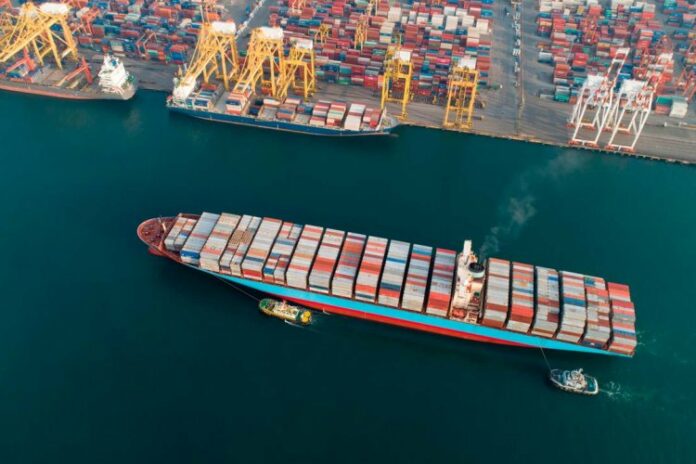
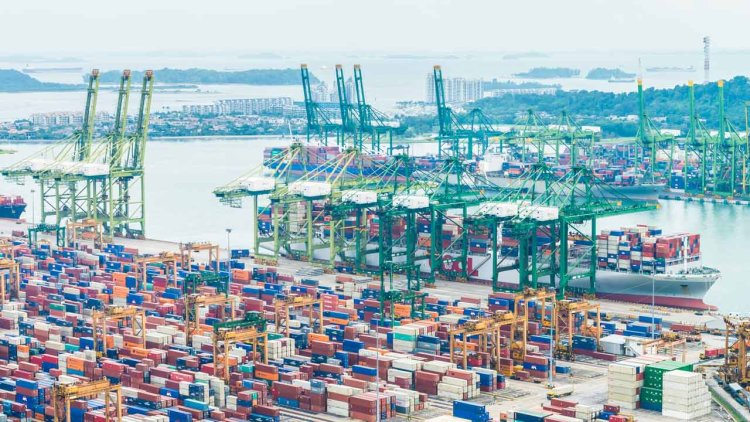
UNCTAD in its flagship “Review of Maritime Transport 2022” has called for increased investment in maritime supply chains. Ports, shipping fleets and hinterland connections need to be better prepared for future global crises, climate change and the transition to low-carbon energy.

The supply chain crisis of the last two years has shown that a mismatch between demand and supply of maritime logistics capacity leads to surges in freight rates, congestion, and critical interruptions to global value chains.

Ships carry over 80% of the goods traded globally, with the percentage even higher for most developing countries, hence the urgent need to boost resilience to shocks that disrupt supply chains, fuel inflation and affect the poorest the most.

“We need to learn from the current supply chain crisis and prepare better for future challenges and transitions. This includes enhancing intermodal infrastructure, fleet renewal and improving port performance and trade facilitation,” UNCTAD Secretary-General Rebeca Grynspan said. “And we must not delay the decarbonization of shipping,” she added.

Investment is needed in maritime transport systems to strengthen global supply chains

Logistics supply constraints combined with a surge in demand for consumer goods and e-commerce pushed container spot freight rates to five times their pre-pandemic levels in 2021, reaching a historical peak in early 2022 and sharply increasing consumer prices. The rates have dropped since mid-2022 but they remain high for oil and natural gas tanker cargo due to the ongoing energy crisis.
Dry bulk freight rates increased due to the war in Ukraine and related economic measures, as well as the prolonged COVID-19 pandemic and supply chain disruptions. An UNCTAD simulation projects that higher grain prices and dry bulk freight rates can lead to a 1.2% increase in consumer food prices, with higher increases in middle- and low-income countries.

“If there is one thing we have learned from the crisis of the last two years it is that ports and shipping greatly matter for a well-functioning global economy,” said Shamika N. Sirimanne, director of UNCTAD’s technology and logistics division. “Higher freight rates have led to surging consumer prices, especially for the most vulnerable. Interrupted supply chains led to lay-offs and food insecurity.”

UNCTAD calls on countries to carefully assess potential changes in shipping demand, develop and upgrade port infrastructure and hinterland connections while involving the private sector. They should also bolster port connectivity, expand storage and warehousing space and capabilities, minimize labour and equipment shortages.

Many supply chain disruptions can also be eased through trade facilitation, notably through digitalization, which cuts waiting and clearance times in ports and speeds up documentary processes through e-documents and electronic payments.

Key global indices
More investment required to cut carbon footprint of maritime transport

The report shows that between 2020 and 2021 total carbon emissions from the world maritime fleet increased by 4.7%, with most of the increases coming from container ships, dry bulk and general cargo vessels.

The report also raises concern over the increasing average age of ships. By number of ships, the current average age is 21.9 years, and by carrying capacity 11.5 years. Ships are ageing partly due to uncertainty about future technological developments and the most cost-efficient fuels, as well as about changing regulations and carbon prices.

Investments in new ships that reduce greenhouse gas emissions will be hampered by surging borrowing costs, a darkened economic outlook and regulatory uncertainties.

UNCTAD calls for more investment in technical and operational improvements to cut the carbon footprint of maritime transport. These include switching to alternative, low or zero-carbon fuels, optimizing operations, using on-shore electricity when in ports and equipping vessels with energy-efficient technology.

The report also calls for a predictable global regulatory framework for investing in decarbonization and increased support for developing countries in the energy transition. It further underlines the urgent need to adapt ports to the impacts of climate change, especially in the most vulnerable nations.

UNCTAD urges the international community to ensure countries that are most negatively affected by climate change – and have contributed the least to its causes – are not negatively affected by climate mitigation efforts in maritime transport.
Measures to protect competition needed in the face of market consolidation

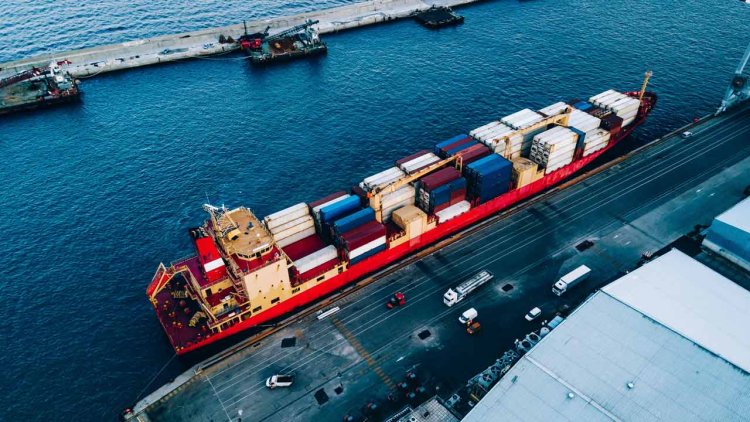
The report says the container shipping sector has been transformed by horizontal consolidation through mergers and acquisitions. Shipping carriers have also pursued vertical integration by investing in terminal operations and other logistics services.

Between 1996 and 2022, the top 20 carriers increased their share of container-carrying capacity from 48% to 91%. And over the past five years, the four largest carriers increased their market shares to control more than half of the global capacity.

The number of companies that provide services to importers and exporters fell in 110 countries, notably in small island developing states, where at times a duopoly of just two carriers dropped to a monopoly of one.

Market consolidation results in reduced competition, constrained supply, and can lead to market power abuse and higher rates and prices for consumers.

Ship oversizing also raises concern. Between 2006 and 2022, the size of the world’s largest container ships more than doubled from 9,380 twenty-foot equivalent unit (TEU) to 23,992 TEU. The size of the largest ship in each country almost tripled, thus ships grew faster than the volumes of cargo to fill them.

UNCTAD calls on competition and port authorities to work together respond to industry consolidation with measures to protect competition. The report urges stronger international cooperation on cross-border, anticompetitive practices in maritime transport, based on the UN Set of Competition Rules and Principles.
Global maritime trade expected to slow

According to the report, international maritime trade bounced back significantly in 2021 with an estimated growth of 3.2% and overall shipments of 11 billion tons. This is an improvement of 7 percentage points compared to the 3.8% decline in 2020.

Regional maritime transport figures

Africa’s maritime trade in 2021 increased by 5.6% over 2020.

Asia remained the world’s leading maritime cargo handling centre in 2021, accounting for 42% of exports and 64% imports.

Latin America and the Caribbean saw a 3% increase in maritime trade in 2021.

For 2022, UNCTAD projects global maritime trade growth to moderate to 1.4%. And for the period 2023-2027, it is expected to expand at an annual average of 2.1%, a slower rate than the previous three-decade average of 3.3%.

Offshore wind farms change marine ecosystems, study shows

0

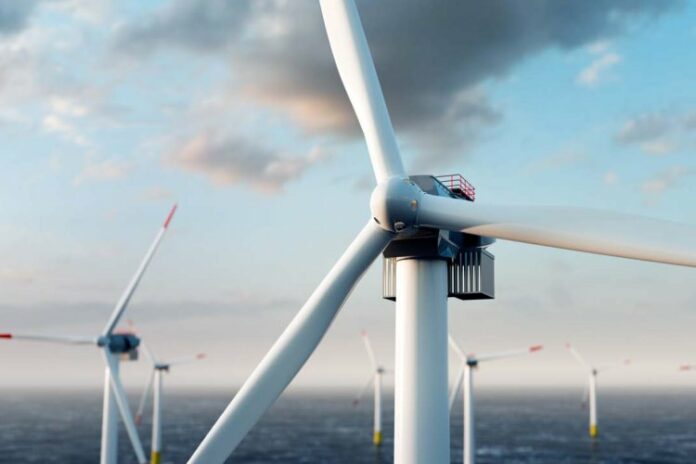
The expansion of offshore wind farms in the North Sea is making progress. But the consequences for the marine environment they are built in have not yet been fully researched. 

Scientists at the Helmholtz-Zentrum Hereon have already provided valuable insights into the effects of wind farms in past studies.

In their latest publication, they now show that large-scale wind farms can strongly influence marine primary production as well as the oxygen levels in and beyond the wind farm areas. Their results were published in the journal Communications Earth & Environment.

Different wind conditions and currents, more precipitation and a changing surface climate: the effects of offshore wind farms in the North Sea are diverse and not yet fully researched. Some of them are already occurring, others are still to be expected due to the steady expansion of wind turbines into large-scale wind farms. In order to better understand them and to fill remaining knowledge gaps, a team of researchers from the Hereon Institute of Coastal Systems—Analysis and Modeling is working on different key elements of the problem.

For example, Nils Christiansen’s team proved that wake turbulences—air vortices caused by wind turbines—change the flow and stratification of the water beneath them. But the climate just above the sea surface is also being permanently changed, as another team led by Dr. Naveed Akhtar was able to show.

The latest study, led by Dr. Ute Daewel, now confirms that these impacts also lead to an altered spatial distribution of marine ecosystem components. This includes the distribution of nutrients, phyto- and zooplankton as well as biomass in the sediment, the food basis for many bottom-dwelling organisms.

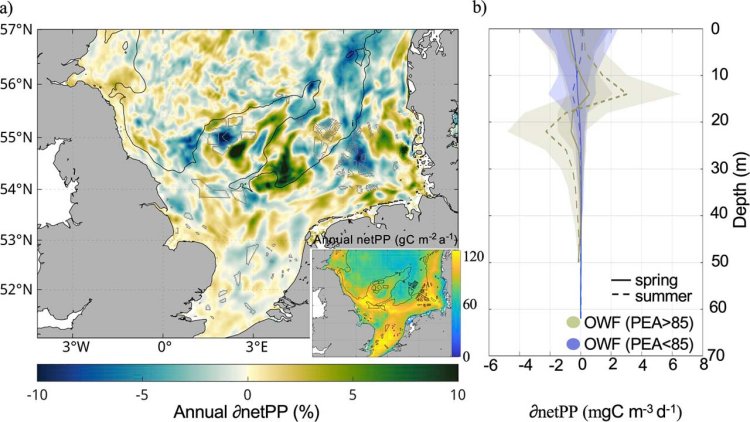
In the model study, the team assumed the planned large-scale offshore wind farms in the North Sea. For deeper marine areas, the researchers thus found that the amount of biogenic carbon in the sediment would increase locally by 10% and the oxygen concentration, in an area where it is already very low, could decrease even further.

In addition, the already proven wind changes would lead to a local modification of the primary production of phytoplankton by up to +/- 10%. And this not only in the wind farm areas themselves, but also distributed throughout the southern North Sea. This means that even if the total production in the region changes only very slightly, there is a spatial redistribution of production. This also has consequences for the distribution of zooplankton—the food basis for many fish species. Fish early life stages in particular are often dependent on the availability of zooplankton “at the right time in the right place.”

A spatial and temporal restructuring of zooplankton distribution can influence these process chains and thus positively or negatively affect the amount of fish available. The small change in primary production would therefore have a lasting impact on the entire food web in the southern North Sea.

“Our results show that the extensive expansion of offshore wind farms will have a significant impact on the structuring of marine coastal ecosystems. We need to better understand these impacts quickly and also take them into account in the management of coastal ecosystems,” concludes Ute Daewel.

Annual mean response of net primary productions (netPP) to atmospheric changes due to offshore wind farms. a Relative change in annual averaged net primary production for 2010 (OWF-REF). Black contour line indicates potential energy anomaly (PEA) of 85 J m−3 roughly separating seasonally stratified from mixed areas; gray polygons indicate location of considered offshore wind farms (insert: annual average of netPP simulated for 2010). b Vertical profiles of change (mean and standard deviation) in netPP inside the offshore wind farm areas; blue: less stratified and mixed areas (PEA < 85 J m−3); green: stratified areas (PEA ≥ 85 J m−3) (solid lines: spring; dashed lines: summer). (OWF: simulation experiment considering offshore wind farms; REF: reference simulation).

Credit: Communications Earth & Environment (2022). DOI: 10.1038/s43247-022-00625-0

Sangomar FPSO construction phase completed

0

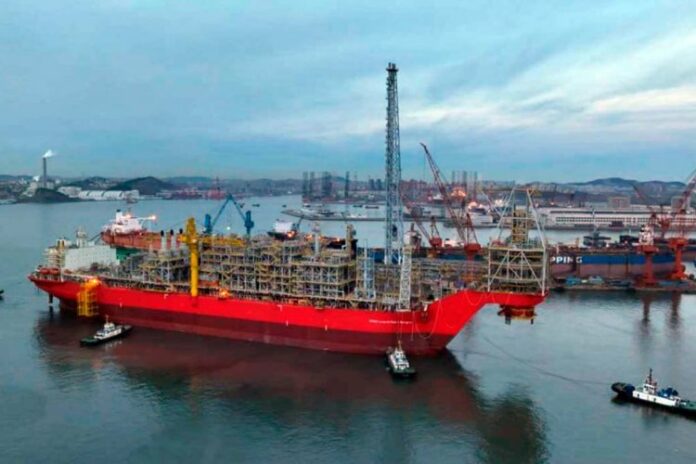
Woodside Energy has passed another important milestone for the Sangomar Field Development Phase 1 with the completion of the construction phase for the floating production storage and offloading (FPSO) facility which will be deployed at the field offshore Senegal.

Woodside awarded the contract for supply of the FPSO to MODEC, Inc in 2020. Hull and marine works, external turret and topsides module installation and conversion work on the vessel were completed by COSCO Shipping Heavy Industry (Dalian) Co., Ltd. 

The topsides modules were fabricated by both COSCO and by BOMESC Offshore Engineering Company Ltd. in Tianjin, and the external turret mooring system was fabricated by Penglai Jutal Offshore Engineering Heavy Industries Co., Ltd (PJOE).

Woodside Energy CEO Meg O’Neill acknowledged the achievements of MODEC, COSCO, BOMESC and PJOE in completing the fabrication and conversion works.

She said:

“The Chinese yards achieved excellent safety performance throughout this phase of construction, logging more than 16 million hours of complex construction work without a lost-time injury event.

“The construction teams also successfully navigated the challenges posed by pandemic-related travel and logistical restrictions throughout 2021 and 2022, ensuring the FPSO remained on schedule for start-up at the Sangomar field in late 2023.”

The vessel is now being relocated to Keppel Offshore & Marine Ltd.’s Tuas Shipyard in Singapore. Keppel will complete topsides integration and support pre-commissioning and commissioning activities for the FPSO.

The FPSO is a converted Very Large Crude Carrier and has been named after Senegal’s first president, Leopold Sédar Senghor. It will have a capacity to produce 100,000 barrels per day of oil.

The Sangomar Field Development Phase 1 is currently around 70% complete and will be Senegal’s first offshore oil project. The development includes the FPSO, 23 wells and supporting subsea infrastructure, designed to allow the tie-in of subsequent phases.

Woodside is operator and has an 82% participating interest in the project, with PETROSEN holding the remaining 18%. 

Damen, Caterpillar and Pon Power to develop methanol powered tugs

0

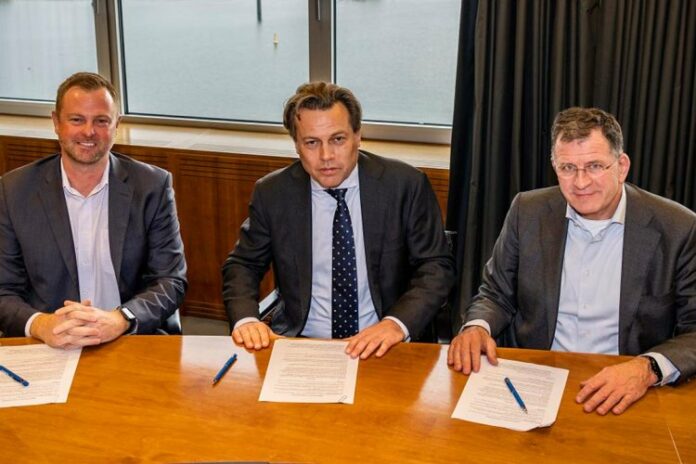
On 28 November, Arnout Damen of Damen Shipyards, Derrick York of Caterpillar Inc and Kees-Jan Mes of Pon Power signed a Memorandum of Understanding (MoU) for the joint development of a series of dual-fuel methanol / diesel powered tugs. 

This follows Damen’s recent delivery of its first, all-electric RSD-E Tug 2513, Sparky, to Ports of Auckland, New Zealand, continuing its commitment to becoming the world’s most sustainable shipbuilder. Damen’s long-term strategy to achieve this includes offering a full range of sustainable tugboats featuring both zero emission electric and carbon neutral methanol powered vessels.

The methanol ready CAT 3500E series dual-fuel pilot engines will be delivered to Damen by Pon Power in 2024 when the process of integration and testing will begin. This will be a complex undertaking involving integrating the engines with all aspects of the ship’s control, monitoring, ventilation and other systems and will take place in close cooperation with the classification societies. The aim is to have methanol powered vessels to be series production-ready in 2026. 

Damen’s strategy is to offer fully-electric models offering bollard pulls of 40, 60 and 80 tonnes respectively and methanol-fueled models with 60, 80 and 100 tonnes bollard pull. Electrically-powered tugs are ideal for zero emission operations in harbors and terminals where low cost electricity can be easily accessed between assignments via onshore infrastructure. With its greater energy density than batteries, methanol delivers increased energy storage capacity, making it suited for longer duration operations while remaining CO₂ neutral. All the vessels will be equipped with a standard Emission Reduction System developed and delivered by Damen Sustainable Solutions B.V.

Joost Mathôt, Director of Products at Damen’s Workboats division, said:

“We’re delighted to be working with Caterpillar on this ground-breaking project. It is of mutual benefit to all the parties involved to begin operating the pilot engines as soon as possible, so that we can experience what it means to use methanol as a fuel in a maritime environment. We are very happy to be continuing our longstanding partnerships and are very confident that together we will be able to offer our end customers the sustainable solutions they are asking for, in the near future.”  

“For Damen, the introduction of methanol-fueled propulsion systems is the logical next step in our drive towards low-emission propulsion right across our product range and an integral part of our drive to become the world’s most sustainable shipbuilder.” 

Brad Johnson, Vice President and General Manager Caterpillar Marine, added:

“Our collaboration with Damen Shipyards Group and Pon Power brings together immeasurable expertise that allows us to learn together and innovate to address the great challenge of the energy transition. This is an exciting technical challenge to tackle, but most importantly, it fosters our industry’s goal to reach sustainable, low carbon operations.”