-2.8 C
New York
Home Blog Page 348

Antarctic tourism: Should we worry about damage to the ice and ecosystems?

0

So are all those tourists going to damage what is often considered the last untouched wilderness on the planet? Yes and no. The industry is well run. Tourists often return with a new appreciation for wild places. They spend a surprisingly short amount of time actually on the continent or its islands.

But as tourism grows, so will environmental impacts such as black carbon from cruise ship funnels. Tourists can carry in microbes, seed and other invasive species on their boots and clothes—a problem that will only worsen as ice melt creates new patches of bare earth. And cruise ships are hardly emissions misers.

How did Antarctic tourism go mainstream?

In the 1950s, the first tourists hitched rides on Chilean and Argentinian naval vessels heading south to resupply research bases on the South Shetland Islands. From the late 1960s, dedicated icebreaker expedition ships were venturing even further south. In the early 1990s, as ex-Soviet icebreakers became available, the industry began to expand—about a dozen companies offered trips at that time. By the turn of this century, the ice continent was receiving more than 10,000 annual visitors: Antarctic tourism had gone mainstream.
What does it look like today?

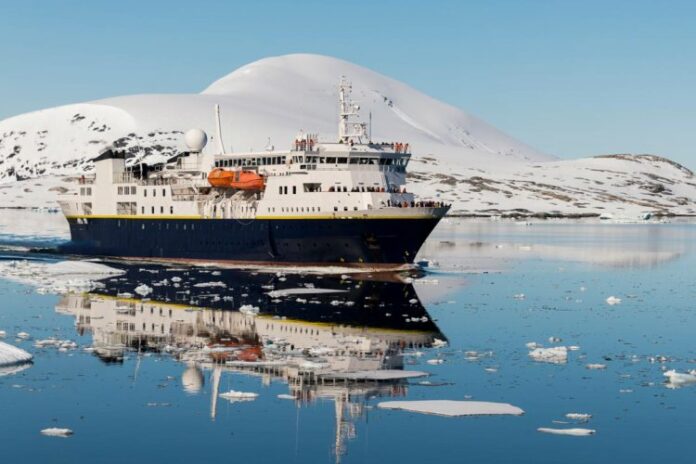
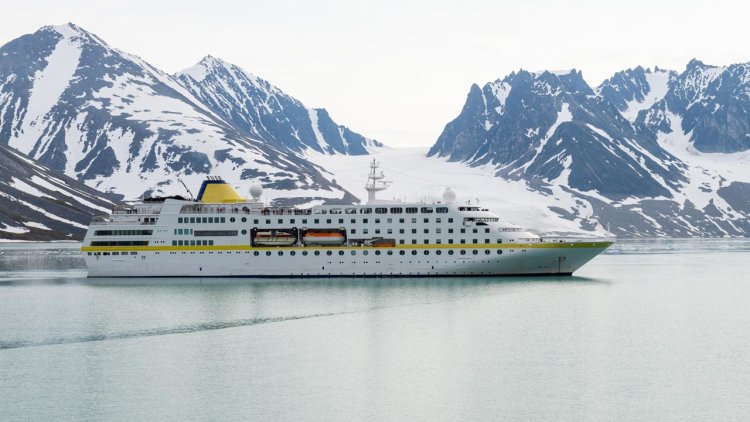
Most Antarctic tourists travel on small “expedition-style” vessels, usually heading for the relatively accessible Antarctic Peninsula. Once there, they can take a zodiac boat ride for a closer look at wildlife and icebergs or shore excursions to visit penguin or seal colonies. Visitors can kayak, paddle-board and take the polar plunge—a necessarily brief dip into subzero waters.

For most tourists, accommodation, food and other services are provided aboard ship. Over a third of all visitors never stand on the continent.

Those who do set foot on Antarctica normally make brief visits, rather than taking overnight stays.

For more intrepid tourists, a few operators offer overland journeys into the continent’s interior, making use of temporary seasonal camp sites. There are no permanent hotels, and Antarctic Treaty nations recently adopted a resolution against permanent tourist facilities.

As tourists come in increasing numbers, some operators have moved to offer ever more adventurous options such as mountaineering, heli-skiing, underwater trips in submersibles and scuba diving.

Is Antarctic tourism sustainable?

As Antarctic tourism booms, some advocacy organisations have warned the impact may be unsustainable. For instance, the Antarctic and Southern Ocean Coalition argues cruise tourism could put increased pressure on an environment already under significant strain from climate change.

In areas visited most by tourists, the snow has a higher concentration of black carbon from ship exhaust, which soaks up more heat and leads to snow melt. Ship traffic also risks carrying hitchhiking invasive species into the Southern Ocean’s vulnerable marine ecosystems.

That’s to say nothing of greenhouse gas emissions. Because of the continent’s remoteness, tourists visiting Antarctica have a higher per capita carbon footprint than other cruise-ship travellers.

Of course, these impacts aren’t limited to tourism. Scientific expeditions come with similar environmental costs—and while there are far fewer of them, scientists and support personnel spend far more time on the continent.

Antarctic tourism isn’t going away—so we have to plan for the future
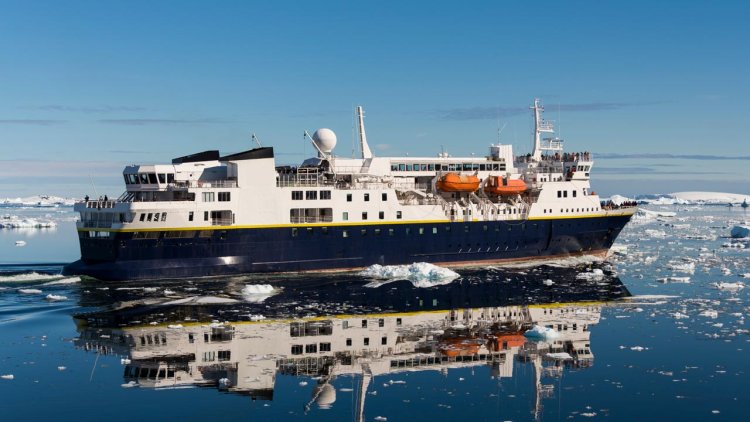
Are sustainable cruises an oxymoron? Many believe so.

Through its sheer size, the cruise industry has created mass tourism in new places and overtourism in others, generating unacceptable levels of crowding, disrupting the lives of residents, repurposing local cultures for “exotic” performances, damaging the environment and adding to emissions from fossil fuels.

In Antarctica, crowding, environmental impact and emissions are the most pressing issues. While 100,000 tourists a year is tiny by global tourism standards—Paris had almost 20 million in 2019—visits are concentrated in highly sensitive ecological areas for only a few months per year. There are no residents to disturb (other than local wildlife), but by the same token, there’s no host community to protest if visitor numbers get too high.

Even so, strong protections are in place. In accordance with the Antarctic Treaty System—the set of international agreements signed by countries with an Antarctic presence or an interest—tourism operators based in those nations have to apply for permits and follow stringent environmental regulations.

To avoid introducing new species, tourists have to follow rules such as disinfecting their boots and vacuuming their pockets before setting foot on the ice, and keeping a set distance from wildlife.
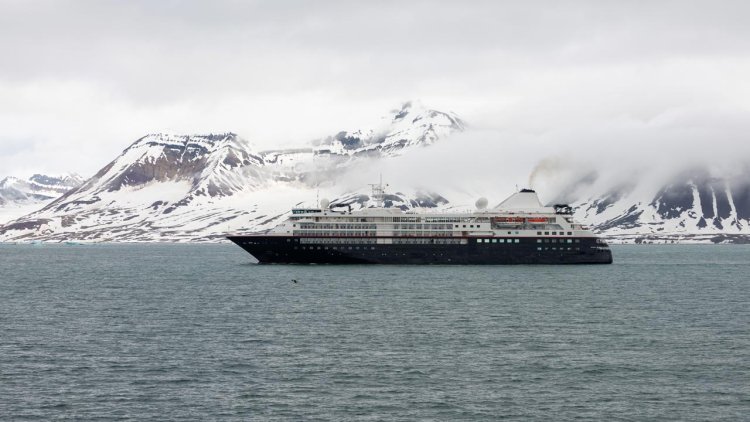
Almost all Antarctic cruise owners belong to the International Association of Antarctica Tour Operators, the peak body that manages Antarctic tourism.

For the first time this year, operators have to report their overall fuel consumption as part of IAATO’s efforts to make the industry more climate-friendly. Some operators are now using hybrid vessels that can run partly on electric propulsion for short periods, reducing carbon dioxide emissions.

Returning from the ice: the ambassador effect

Famed travel writer Pico Iyer recently wrote of his experience in the deep south of the world. The visit, he said, “awakens you to the environmental concerns of the world … you go home with important questions for your conscience as well as radiant memories”.

Iyer isn’t alone. This response is widespread, known in the industry as Antarctic ambassadorship. As you’d expect, this is strongly promoted by tourism operators as a positive.

Is it real? That’s contentious. Studies on links between polar travel and pro-environmental behaviour have yielded mixed results. We are working with two operators to examine the Antarctic tourist experience and consider what factors might feed into a long-lasting ambassador effect.

If you’re one of the tourists going to Antarctica this summer, enjoy the experience—but go with care. Be aware that no trip south comes without environmental cost and use this knowledge to make clear-eyed decisions about your activities both in Antarctica and once you’re safely back home.

Source: The Conversation 
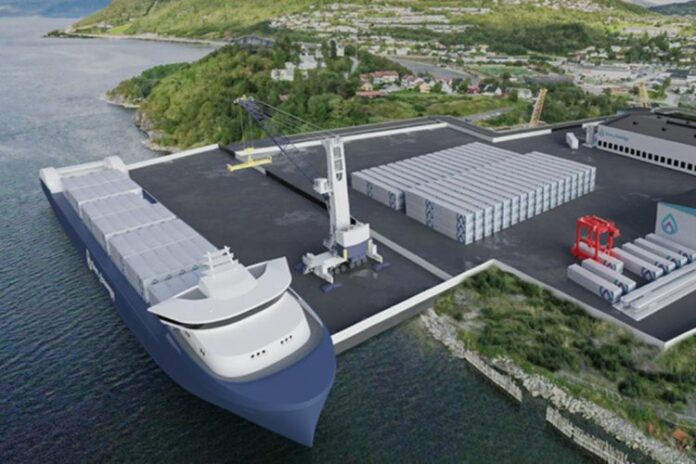
Gen2 Energy and SEFE Group sign an agreement for the potential supply of green hydrogen

0

Gen2 Energy and SEFE Securing Energy for Europe (“SEFE”), via its subsidiary SEFE Marketing & Trading (SM&T), are discussing a long-term delivery and offtake of containerised compressed hydrogen. 

The hydrogen will be supplied from Gen2 Energy’s planned production facilities in Norway directly to customers in Germany and North-West Europe. The target is to secure an agreement for an initial volume from Gen2 Energy’s first production facility in Mosjøen as well as explore further cooperation of mutual interest. Expected commencement of delivery will be late 2025 or in 2026.

SEFE is one of Europe’s largest energy companies with global footprint and main business areas focused on global sourcing, trading and sales, transportation and storage of natural gas and LNG. With the agreement, SEFE is aiming to supply customers with hydrogen at a time when the value chain and the infrastructure in Germany and Europe are still at an early stage of development.

Dr. Egbert Laege, Managing Director of SEFE, said:

“The agreement is of tremendous strategic importance to the SEFE Group. The project with Gen2 Energy advances SEFE in its role as an enabler of the energy transition in Germany and Europe. We are thrilled by the progress made with Gen2Energy for supplying our markets in North-West Europe with green hydrogen”.

Gen2 Energy is a Norwegian company dedicated to developing, building, owning and operating an integrated value chain for green hydrogen. The company targets to have a portfolio of large-scale production facilities for hydrogen powered by renewable electricity, and a distribution network ensuring safe and effective delivery to domestic customers and customers in Northern Europe.

Jonas Meyer, CEO in Gen2 Energy, said:

“We are very pleased to sign this agreement with SEFE Group. Hydrogen will be a core component of the future energy mix and key part of the path to net-zero. Gen2 Energy works diligent to supply Europe with green hydrogen from Norway, and the agreement with SEFE fits well into our long-term ambition. “

The compressed hydrogen will be delivered in specially designed containers and transported by dedicated ship from the Gen2 Energy’s production sites along the Norwegian coastline to port(s) in Germany, Netherlands and/or UK.

The parties aim to agree on a Sales Purchasing Agreement within the next 6 months.

Port of Leith becomes first mainland Scottish port to offer shore power

0

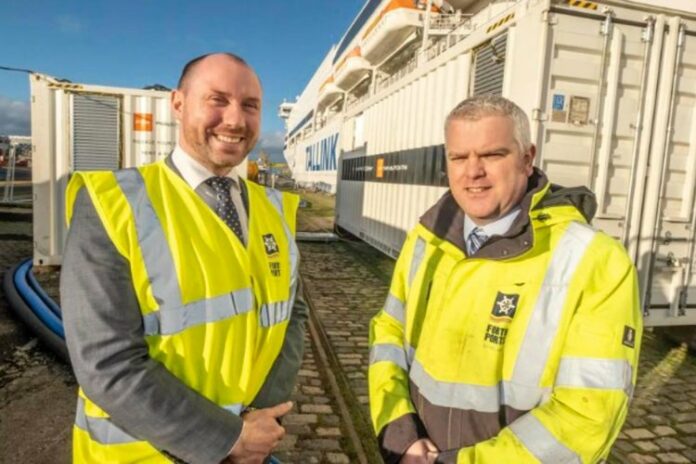
The Port of Leith has become the first large mainland commercial port in Scotland to provide a shore power connection, reflecting Forth Ports’ commitment to reducing its own carbon footprint as well as that of its customers.

The Victoria 1, which is currently being provided by the Scottish Government to accommodate Ukrainian refugees, is the first vessel to receive this connection within the Imperial Dock in the Port of Leith. By switching to shore power, the vessel is now able to switch off all of its fossil fuel powered generators, and with Forth Ports’ electricity being provided through non fossil fuel generation, this is a significant step forward on the journey to net zero for the port.

The electrical network in the port has been extended and integrated to the vessel’s systems though a PSW Power & Automation shore power transformer. This setup is being further developed in the port’s Harbour Berth where it will be offered to offshore construction vessels which use Leith as their home port. This further expansion will be online later this month.

The Port of Leith is currently undergoing a major transformation to create Scotland’s largest renewable hub, including the development of a new deep water outer berth which will also be shore power enabled.

David Webster, Director of Energy at Forth Ports said:

“As a business we are committed to reducing the emissions from our operations and we are encouraging shipping to do the same. This major civil engineering project to introduce shore power in Leith is a significant milestone for our business in Scotland and we are pleased that the Victoria 1 is now powered by mains electricity. We look forward to offering shore power to our other vessels visiting the port in 2023.”

Minister with special responsibility for refugees from Ukraine, Neil Gray, said:

“Scotland has legislated for some of the world’s most ambitious climate change targets and we will be a net zero nation by 2045. This is a great example of business taking action that will benefit us all. We’re grateful for the work undertaken by Forth Ports to make this happen. The MS Victoria is providing safe accommodation for displaced people from Ukraine and it’s an added bonus that it is now powered by mains electricity.”

Aker Solutions wins Rosebank FPSO contract from Altera Infrastructure

0

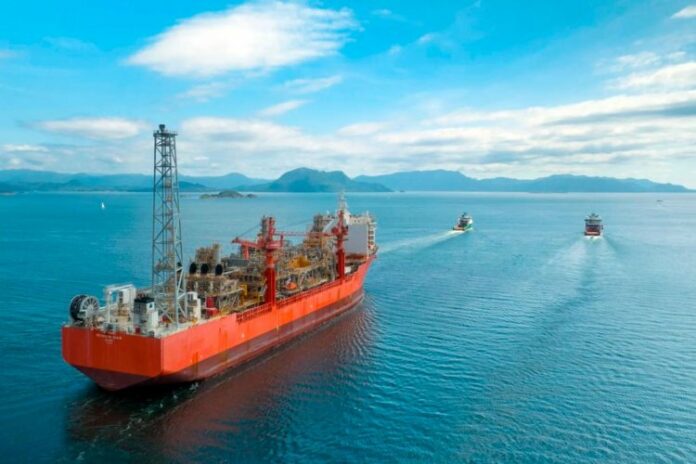
Aker Solutions has been awarded a substantial contract from Altera Infrastructure for the complete upgrade of the Petrojarl Knarr floating production storage and offloading vessel (FPSO) to be redeployed at Equinor’s Rosebank field development, offshore UK. 

The selected development concept for the Rosebank field includes redeployment and reuse of the existing Petrojarl Knarr FPSO owned by Altera.

The work will be performed in a joint venture (JV) with Drydocks World-Dubai, and the upgrade will take place at the company’s yard in Dubai, UAE. The Engineering, Procurement and Construction (EPC) contract is a combination of work with new build, demolition and life extension (hull, marine systems and topsides) required for the FPSO to be kept on the field for 25 years without drydocking. The detail design will be done in Norway by Aker Solutions in collaboration with Citec Norway AS, ABB Norway AS, OneSubsea Processing AS.

The EPC work is planned to start up during the first half of 2023 and is scheduled to be completed at end-2025. 

Sturla Magnus, executive vice president and head of Aker Solutions’ topside and facilities business, said:

“We are pleased to have been selected by Altera Infrastructure for this important field development project by Equinor and partners at Rosebank. We will execute this project together with our long-standing partner Drydocks World-Dubai, and we are looking very much forward to continuing our long-term relationship. Collaboration and partnerships are core to Aker Solutions’ strategy and to how we work. It also enables us to handle capacity in the most safe and efficient way, with a strong focus on solutions that reduce emissions.”

Aker Solutions expects to book an order intake of around NOK 2.5 billion related to this contract in the first quarter of 2023 in the Renewables and Field Development segment, pending final investment decision and regulatory approvals. This order intake would reflect Aker Solutions part of the JV’s scope.

ABS and HD Hyundai sign agreement on broad-reaching autonomous projects

0

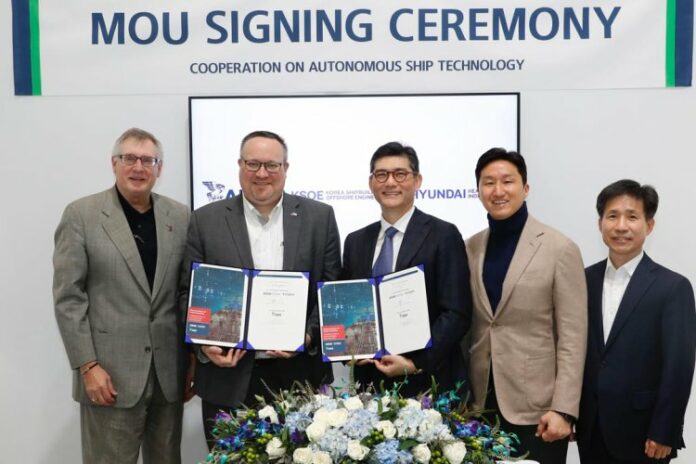
ABS and HD Hyundai signed a comprehensive memorandum of understanding (MoU) to continue working together on industry-leading autonomous projects. 

Building on shared efforts to expand the development of autonomous navigation technology into critical vessel machinery and safety systems, the organizations met again at the Consumer Electronics Show (CES) in Las Vegas to finalize the agreement covering four areas:

  • Artificial Intelligence-based Autonomous Machinery Health Management Function (HiCBM)
  • Artificial Intelligence-based Autonomous Safety Management Function (HiCAMS)
  • Artificial Intelligence-based Autonomous LNG Fuel Gas Supply System (Hi-GAS+ SMART FGSS)
  • Artificial Intelligence-based Smart LNG Boil-off Gas Management System (Hi-GAS+ AI CHS)

Christopher J. Wiernicki, ABS Chairman, President and CEO, said:

“This is an exciting time for innovation and technology breakthroughs in maritime, and we are looking forward to continuing to evolve industry solutions with HD Hyundai to drive more efficient operations and advances in safety, addressing the challenges of today and those in the future.”

The scope of the MoU builds on the previous Strategic Framework Agreement that the companies signed at the 2022 CES. Under that agreement, ABS worked with HD Hyundai subsidiaries, Avikus and Korea Shipbuilding and Offshore Engineering (KSOE). There were several major achievements including the demonstration of technology developed by Avikus, enabling the 180,000 cbm liquified natural gas (LNG) carrier, Prism Courage, to sail in autonomous mode, under direct supervision, for roughly half of its voyage across the Pacific Ocean.

Wiernicki said:

“The Prism Courage voyage was a milestone for the entire shipping industry and demonstrated the potential of artificial intelligence and autonomous functions to contribute to safe navigation at sea.”

Ki-sun Chung, President and CEO of HD Hyundai, said:

“HD Hyundai is one of the most advanced companies in developing and commercializing autonomous navigation technology. We are excited to expand our work with ABS, a leader in the industry in supporting autonomous projects. Through this agreement with ABS, we expect to further advance autonomous vessel technology that will support autonomous engine room operations as well as safety management.”

NPD awards contracts to Fugro and Enviros

0

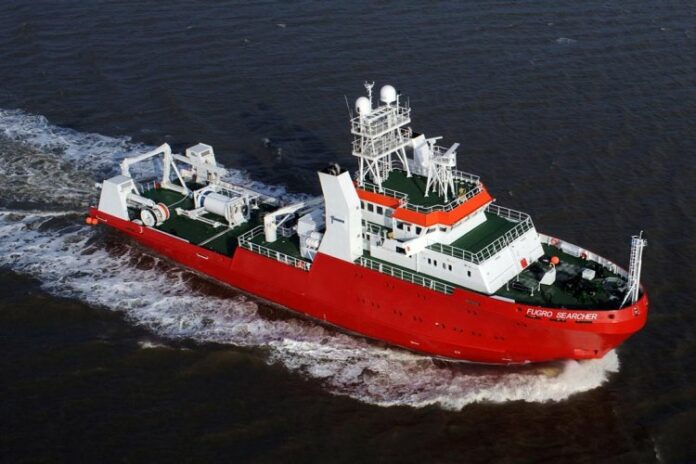
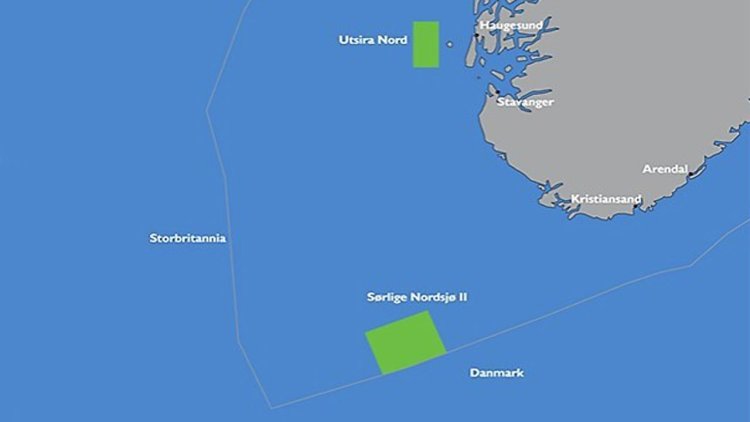
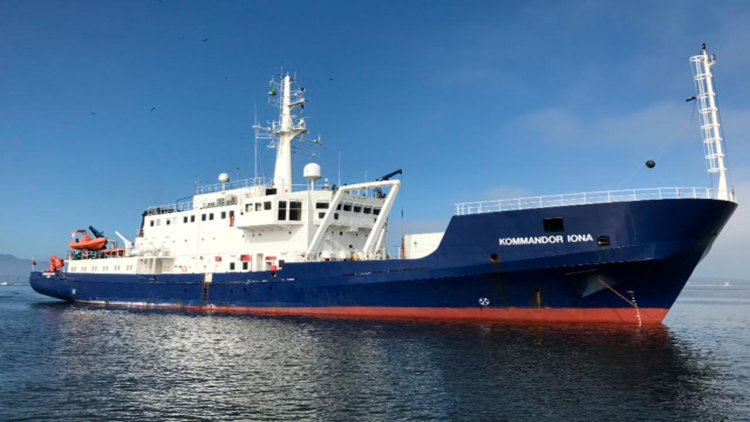
Fugro has been awarded the contract for the Sørlig Nordsjø II area, while Enviros will map Utsira Nord. The respective vessels to be used are the Fugro Searcher and the Kommandor Iona.

The companies will acquire seven different measurements.

“MBES (multibeam echosounder) delivers key data sets for bathymetry, acoustic backscatter and water column data. We will also collect 2D high-resolution seismic, sub-bottom profiler echo-sounder (SBP), side-scanning sonar (SSS) data, as well as magnetometer data,” according to geophysicist Lars Jensen, who is managing the project for the NPD.

The NPD received the assignment last year to conduct subsurface surveys in the two areas, which have been opened for applications for renewable energy production. Fugro mapped parts of Sørlige Nordsjø II last autumn.

The 2023 fiscal budget includes targeted funding to complete the subsurface surveys in these two areas. According to the plan, this will take place from late April to early September.

Thousands of wells have been drilled on the Norwegian shelf, but the focus has not been aimed at the layers directly below the seabed. It is precisely these upper 100-200 metres that are of interest for the wind power companies:

“These are the layers where the wind turbines will be placed, and that’s why we need to know more about the geological and geotechnical properties here. Seabed conditions on the Norwegian shelf are complex and vary between different locations, which is why detailed examinations are needed,” Jensen explains.

The geological challenges include shallow gas, large boulder blocks that fell to the seabed when the ice melted, channels, sinkholes, landslides and faults as well as soft and ‘weak’ deposits that extend down into the depth.

“A good factual basis is crucial for sound management of these resources, and this mapping project is an important step towards developing offshore wind on the Norwegian shelf,” says Arne Jacobsen, Assistant director for Technology, analyses and coexistence.

“The NPD has many years of experience and extensive knowledge when it comes to operating and acquiring seismic data from the oil and gas industry. It’s positive that this experience can be used to help support the energy transition.”

Project Errai: terminal for intermediate storage of CO2 selected

0

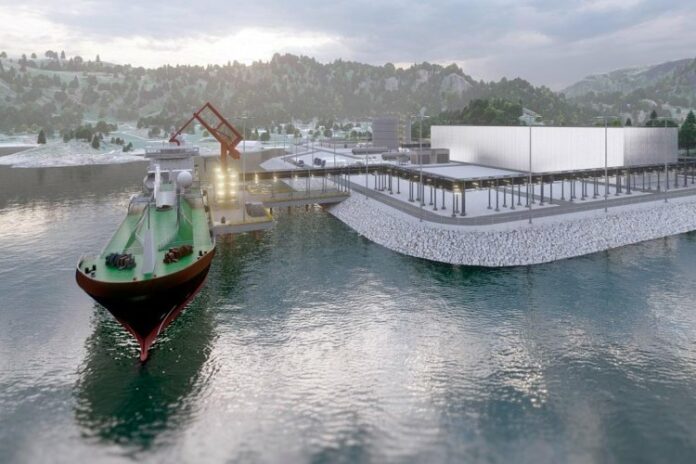
Horisont Energi has entered into an option agreement with Haugaland Næringspark to locate the land- based CO2 terminal for the Errai carbon capture and storage project to Gismarvik in Rogaland, where Haugaland Næringspark has one of Norway’s largest industrial areas. 

The infrastructure is already in place in the area, with access to fibre, electricity, water, and sewage, and a large harbour basin with deep-sea quay ideal for the Errai project. The CO2 terminal will receive CO2 from both European and Norwegian customers, including from the planned CO2 terminal in the Port of Rotterdam.

Errai is the first commercial CO2 storage project in Norway, and it can have a major impact on the development of the carbon market in Europe. The project is a collaboration between Horisont Energi and Neptune Energy.

Bjørgulf Haukelidsæter Eidesen, Managing Director of Horisont Energi, says:

“We are pleased to announce this agreement with Haugaland Næringspark after a thorough process to find a suitable site for this large carbon capture and storage project. This will be an exciting contribution to the work of developing new green industry and infrastructure in Rogaland. We see increasing demand for CO2 storage in Europe and we will build up a European value chain in the market for carbon capture and storage. This can play a key role in the transition to net zero emissions.” 

In addition to the onshore terminal for intermediate storage and the quay facility, the Errai project will also include an associated offshore reservoir for permanent storage of CO2.

Odin Estensen, Neptune Energy ́s Managing Director of Norway and UK, says:

“This is an important step for the development of large-scale carbon capture and storage and paves the way for a value chain that is crucial for reaching the climate target of net zero emissions by 2050. We look forward to leveraging both our oil and gas operations capabilities as well as our significant experience from the operating carbon capture and storage activities.”

The Errai project is a key contributor to Neptune ́s goal of storing more than carbon is emitted from the production and use of its sold products by 2023.

Horisont Energi and Neptune Energy have already applied to the Ministry of Petroleum and Energy for storage of CO2 in the announced area on the Norwegian continental shelf. The award of a licence from the Ministry of Petroleum and Energy is expected to be announced during the first half of 2023. The project will be in operations in 2026.

The planned CO2 terminal at Gismarvik will have a design that meets the requirements of the EU taxonomy regarding environmental issues and safety. Errai can store between four and eight million tonnes of CO2 per year, with the possibility of storing more in later phases of the project. Horisont Energi recently announced that E.ON will store more than 1 million tonnes of CO2 annually in Errai.

The CO2 terminal with the planned offshore infrastructure represents new industrial opportunities for Haugaland Næringspark and other industries in Haugalandet.

Tiril Fjeld, general manager of Haugaland Næringspark, says:

“It is a pleasure to start the year by consolidating Haugalandet and Rogaland as the centre of the green shift in Norway. This agreement means that the region now has an important part of the infrastructure for CO2 capture and storage. The establishment does not require the largest areas in the business park but is of great importance to decarbonise and restructure existing industry and to facilitate new industrial establishments and jobs. We are really looking forward to the cooperation and look forward to the dialogue with industry players who with this news see even more opportunities with us.”

Equinor and RWE to cooperate on energy security and decarbonization

0

Equinor and RWE have agreed to work together to develop large-scale value chains for low carbon hydrogen.

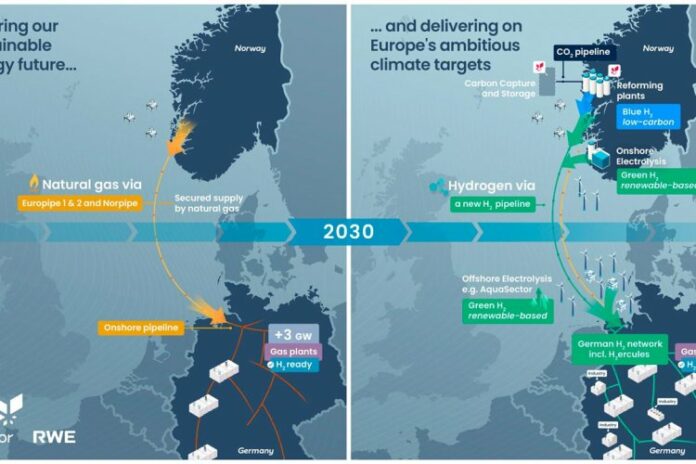
The partners aim to replace coal fired power plants with hydrogen-ready gas fired power plants in Germany, and to build production of low carbon and renewable hydrogen in Norway that will be exported through pipeline to Germany.

On 5 January, the two companies signed a memorandum of understanding (MoU) to jointly develop large-scale energy value chains, building on the partnership between Norway and Germany and the long-term relationship between Equinor and RWE. 

The cooperation has these main building blocks:

  • Construction of new gas power plants (CCGTs), contributing to Germany’s phase-out roadmap for coal. Equinor and RWE will jointly own the CCGTs which initially will be fueled with natural gas and then gradually use hydrogen as fuel with the ambition of fully to be run on hydrogen when volumes and technology are available.
  • Building production facilities in Norway to produce low carbon hydrogen from natural gas with CCS. More than 95 percent of the CO2 will be captured and stored safely and permanently under the seabed offshore Norway.
  • Export of hydrogen by pipeline from Norway to Germany.
  • Joint development of offshore wind farms that will enable production of renewable hydrogen as fuel for power and other industrial customers in the future.

Anders Opedal, Equinor’s CEO and president, says:

“Through this collaboration we will strengthen the long-term energy security for Europe’s leading industrial country while at the same time offer a viable route to a necessary energy transition for hard to abate industries. The collaboration has the potential to develop Norway into a key supplier of hydrogen to Germany and Europe. This is a unique opportunity to build a hydrogen industry in Norway where hydrogen also can be used as feedstock to domestic industries.”

Dr. Markus Krebber, CEO of RWE, says:

“In order to make progress in the conversion from fossil fuels to hydrogen, there is an urgent need for a rapid ramp up of the hydrogen economy. Blue hydrogen in large quantities can make a start, with subsequent conversion into green hydrogen supply. This is exactly what we are driving forward with our partnership – providing the industries with relevant quantities of hydrogen. In addition our planned investments into hydrogen-ready gas-fired power plant will ensure security of supply in a decarbonized power sector.” 

ClassNK issues world’s first AiP for ammonia floating storage barge

0

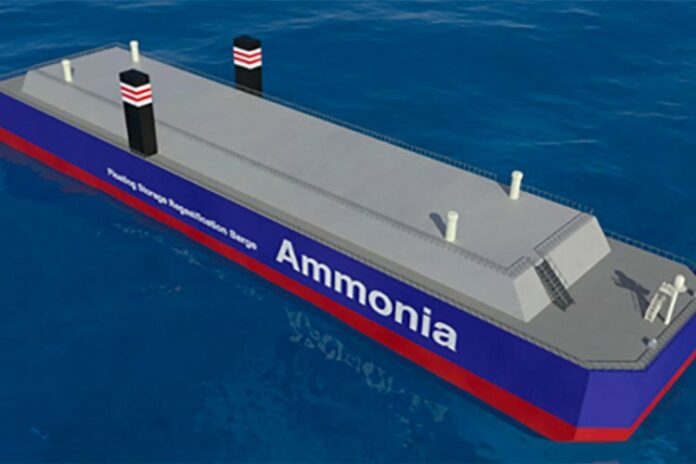
ClassNK has issued an Approval in Principle (AiP) for an ammonia floating storage and regasification barge (A-FSRB) jointly developed by NYK Line, Nihon Shipyard Co., Ltd. (NSY), and IHI Corporation (IHI).

Ammonia, which does not emit CO2 during combustion, has attracted attention for its use in thermal power plants and other applications as a potential fuel for decarbonization, while the development of onshore facilities for storage and regasification is a challenge. The A-FSRB jointly developed by NYK Line, NSY, and IHI this time is an offshore floating facility that can receive and store ammonia that has been transported via ship as a liquid, warm and regasify ammonia according to demand, and then send it to a pipeline onshore. 

According to three companies, the A-FSRB offers the advantages of shorter construction time and lower costs in comparison to the construction of onshore storage tanks and regasification plants. In fact, the A-FSRB is expected to speed up the adoption of fuel ammonia and contribute to its wider use as a lower-environmental-impact next-generation fuel.

ClassNK carried out the design review of the A-FSRB in line with its Part PS of Rules for the Survey and Construction of Steel Ships and Guidelines for Floating Offshore Facilities for LNG/LPG Production, Storage, Offloading and Regasification. 

Currently, there are no international regulations for floating storage and regasification facilities when the cargo is ammonia, and it is expected that the unique requirements of ammonia will have to be reflected in the design. Therefore, the companies and ClassNK conducted a comprehensive risk identification of various contingencies and worked to identify technical issues from the initial study stage. 

The risk identification was conducted using the gap analysis method, which identified differences between conventional ships and offshore floating facilities (heavy oil, LNG, etc.) and evaluated the impact of such differences. Based on its review and the risk identification results, ClassNK issued the AiP for the A-FSRB.

SHI speeds up development for nuclear power plant on the sea

0

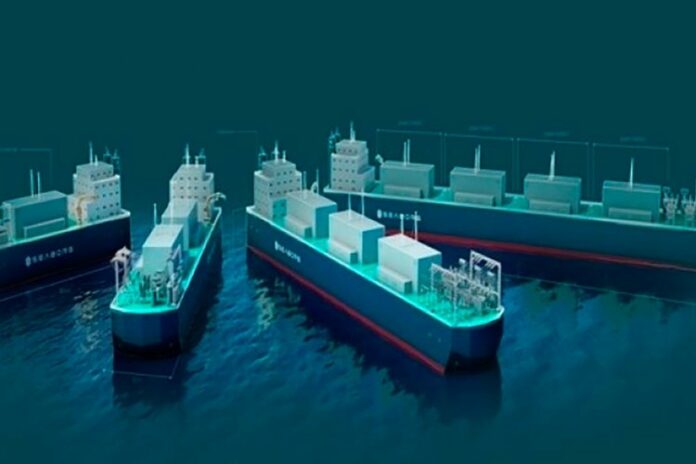
CMSR Power Barge is a new concept power generation facility that supplies electricity and thermal energy produced by using compact molten salt reactor (hereinafter, ‘CMSR’) technology. 

CMSR Power Parge is a fusion of nuclear power and shipbuilding techonology and it has less constraints for site selection and facility condition. It takes only about two years to build and costs less.

CMSR Power Barge, developed by SHI, can be equipped with two to eight 100MW CMSRs in accordance with demand for power production. It is a ‘nuclear power plant on the sea’ with steam turbine generators and transmission/distribution facilities in the floating body. 

SHI signed a business agreement with CMSR developer, Seaborg, in January last year to develop floating nuclear power plant products. SHI plans to commercialize it by 2028 after completing detailed design of all power generation facilities.

Seaborg is doing business activities for developing countries that lack constant electricity.

SHI expects CMSR Power Barge to expand demand not only as an alternative demand for existing fossil fuel power generation facilities, but also as an electricity and thermal energy source for industrial heating systems, hydrogen production, and seawater desalination facilities.

“We will continuously develop technologies for floating nuclear power plants, which will lead a new market”, said Yeo Dong-il, head of marine design at SHI.