-2.8 C
New York
Home Blog Page 347

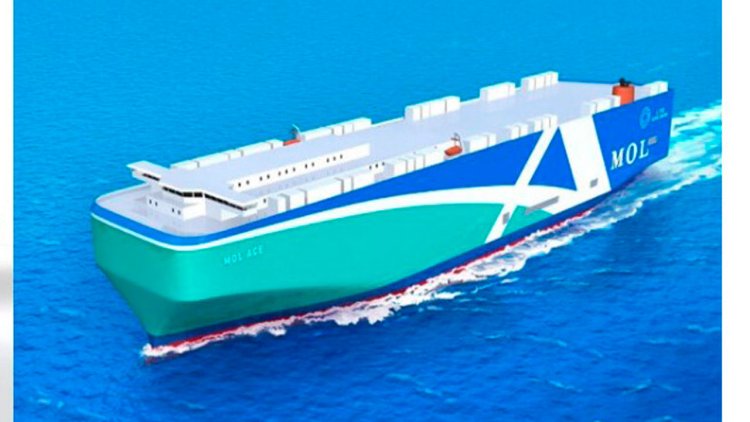
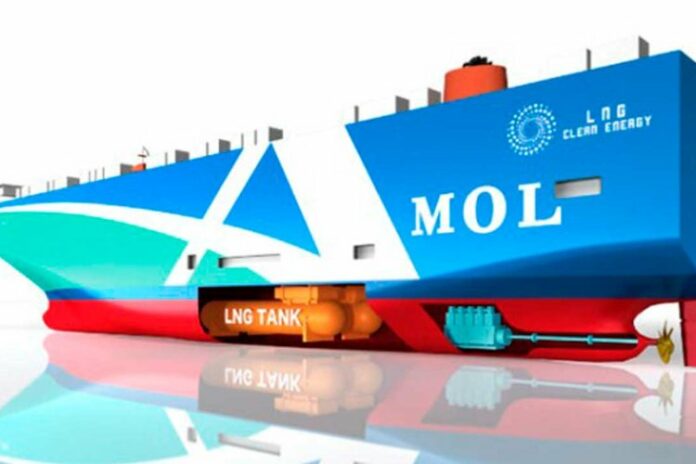
MOL announces new series name and hull color design for LNG-fueled car carriers

0

Mitsui O.S.K. Lines has decided on a new series name and a new hull color design for its car carriers, which are primarily fueled by environment-friendly liquefied natural gas (LNG). 

MOL has ordered a total of eight 7,000-unit capacity LNG-fueled car carriers, which will be delivered in succession between 2024 and 2025, and will also adopt the new series name and new hull color design.

The new name – the “BLUE” series – embodies the MOL Group Corporate Mission “From the blue oceans, we sustain people’s lives and ensure a prosperous future”, and simply conveys the group’s wish for the vessels to “pass on to the future the beauty of the various blues of the earth, sky, sea, and trees.”

The new hull color design boldly expresses the evolution of MOL’s unified global brand for its car carrier services, MOL ACE by designing a new shape for the letter “A”, the motif of MOL ACE.

The bow is turquoise blue, creating a fusion of green, which has a strong environmental image, and blue, which is MOL’s brand color, and expresses the MOL Group’s ongoing commitment to address environmental issues. The blue color from the stern to the bow is the same used in the previous “FLEXIE” series to represent the inheritance of good old traditions.

Equinor awarded 26 new production licences on the Norwegian continental shelf

0

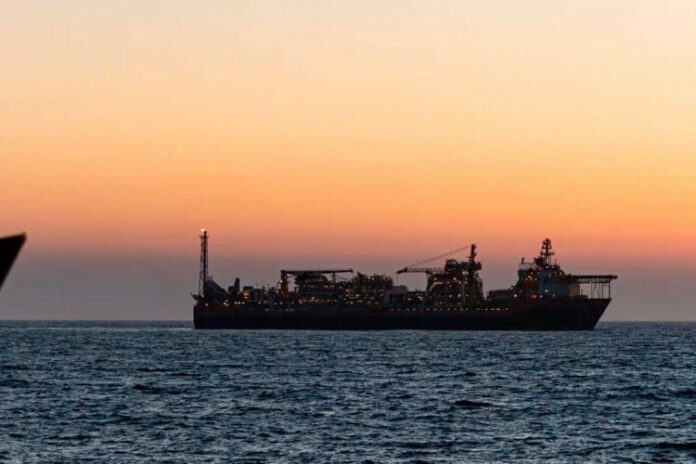
Equinor has been awarded 26 new production licences by the Ministry of Petroleum and Energy (MPE) in the 2022 Award in Predefined Areas (APA) – 18 licences as operator, and eight as partner.

“The APA rounds are important, and we are very pleased with today’s awards,” says Jez Avery, Equinor’s senior vice president for subsurface in Exploration & Production Norway.

The production from existing oil and gas fields will decline, and continued exploration and replenishment is essential to maintaining long-term, important energy deliveries from Norway. Our analyses show that active exploration activity is the most important single measure to ensure continued value creation towards 2030, and beyond.

The production licences are divided as follows:

16 in the North Sea, nine in the Norwegian Sea, and one in the Barents Sea.

In 2023 the company plans to participate in 25 exploration wells, most of them around existing infrastructure.

“Around 80 percent of the exploration wells will be drilled in known, mature areas. Discoveries near existing infrastructure require less volume to be commercially developed, and can be quickly put on stream and with low CO2 emissions. We thus maximize the value creation from existing infrastructure that has been developed over a long period on the NCS,” says Averty,

“Exploration is essential to our ambition to transform the NCS from and oil and gas province to a broad energy province. New gas volumes will be key to enabling the development of new value chains for hydrogen for Europe,” Averty adds.

San Antonio Terminal Internacional receives new cranes

0

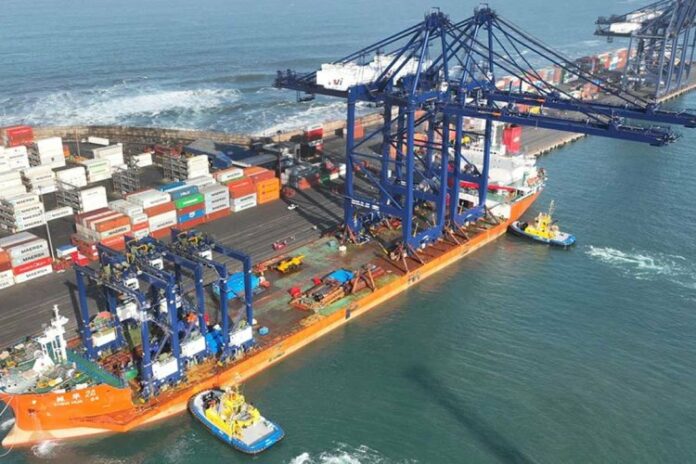
The two new Ship-to-Shore (STS) Super Post Panamax and two electric Rubber Tyred Gantry (RTG) cranes arrived on board the Zhen Hua 24.

“We have designed a detailed plan to receive and implement this new equipment, which will allow us to continue improving our efficiency in serving foreign trade. We are already planning unloading and installation: we will be the only terminal in Chile capable of simultaneously handling two Super Post Panamax vessels (366 m long and 51 m wide),” said STI’s CEO, Rodrigo Galleguillos. Once these new cranes begin operating, STI’s annual container throughput capacity will be 1.6 million TEUs.

The new equipment will be unloaded in the next few days. A team of Chinese professionals traveled especially to Chile to support the process of commissioning the cranes, which also includes training.

As part of this modernization project, the old Paceco STS cranes, in operation since 1997, will be dismantled in the next few days. 

Elgueta explained, adding that coordination is underway with the Port of San Antonio and the Navy:

“We are working with an expert company and a special plan to ensure that the process is carried out safely, protecting people and the environment. It will be done in short timeframes, while continuing operations at our terminal.”

Scrapping has no impact on the environment and the scrap metal will be reused. The dismantling process will take about 20 minutes. During this time, a loud noise may be heard near the terminal, which is normal given the scope of the operation.

STI is investing US$66 million to extend the terminal’s concession to 2030 and modernize its assets.

Campbell Shipping renews Fleet Xpress contract

0

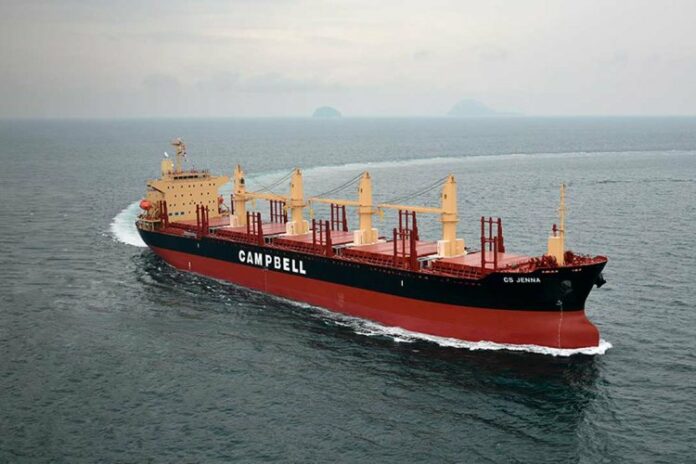
Bahamas-based ship-management group Campbell Shipping has extended its relationship with Inmarsat, a world leader in global, mobile satellite communications, with an agreement that adds Fleet Care and Fleet Secure Endpoint to its existing 12-vessel Fleet Xpress solution. 

Campbell Shipping will now be able to carry out remote maintenance, support and repairs, and comprehensive network protection, on top of fast, reliable and extensive global coverage already provided by Fleet Xpress.

These industry-leading performance characteristics were key to Campbell’s decision to migrate its fleet of dry-bulk carriers to Fleet Xpress from Fleet Broadband in 2018. With vessels often sailing in areas of the Southern Hemisphere, the Fleet Xpress combination of highspeed Ka-band plus continuous L-band back-up delivers the bandwidth and stability to keep business operations online 24/7 and allows crew to remain in contact with friends and family on shore.

Michael Dean, IT Vessel Manager, Campbell Shipping, said:

“We opted to renew our contract with Inmarsat based on its extensive coverage and our positive experience working with the company so far. Ever since the upgrade to Fleet Xpress, our ships have been better connected, with crew enjoying more stable access to communication and entertainment services on board. Now, thanks to Inmarsat’s value-added applications, we can also rest assured that vessel equipment and networks are in safe hands.”

By enabling round-the-clock remote support from Inmarsat engineers, Fleet Care will prove especially valuable when Campbell’s vessels are operating in isolated stretches of ocean where physical access by service technicians would be difficult. As well as helping keep critical communication systems in working order and thereby promoting safer, more efficient operations, the fully managed maintenance programme provides cost transparency, with a fixed monthly fee replacing more costly annual services.

Meanwhile, amid growing concerns over maritime cyber-attacks and malware, Fleet Secure Endpoint will provide Campbell with continuous protection of all online endpoints on the vessel network, automatically monitoring, identifying and blocking threats as they arise.

Logan Murray, Sales Manager, Inmarsat Maritime, said:

“Campbell Shipping has shown itself to be a forward-thinking ship manager that understands the importance of reliable connectivity – both for business operations and crew welfare. We are delighted to renew our long-standing relationship with the company and look forward to helping it reap the additional rewards of remote maintenance and robust cyber security.”

Vestdavit tackles weighty task with innovative davit for Esvagt’s green SOV newbuild

0

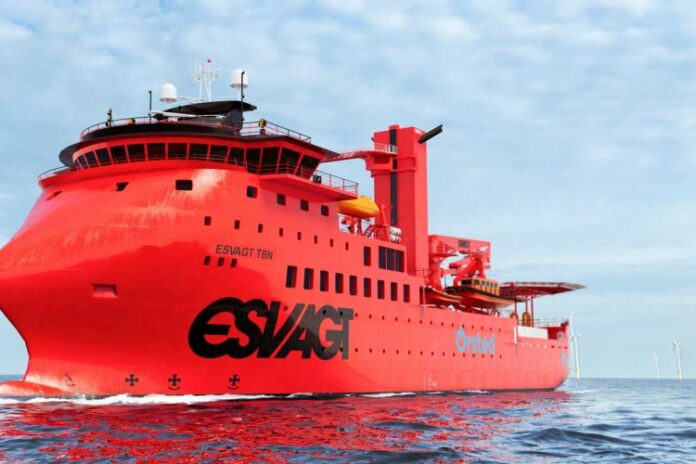
Earlier this year, Danish shipowner Esvagt announced the order at Turkey’s Cemre Shipyard of the world’s first SOV to operate on green fuels under a joint newbuild project with compatriot offshore wind operator Ørsted.

Powered by batteries and dual-fuel engines, the 93-metre long vessel will be capable of sailing on renewable e-methanol produced from wind energy and biogenic carbon, leading to a significant annual reduction of CO2 emissions. The SOV is lined up to work at Hornsea 2 – the world’s largest offshore wind farm – off the UK’s east coast after scheduled delivery in late 2024.

Vestdavit is now participating in this ground-breaking project to decarbonise offshore wind operations after being selected by Esvagt to provide a total of five davit systems for the vessel – two large FF-30000 dual-point workboat davits featuring a unique solution for flexible hook distance, as well as a pair of L-3500 liferaft davits and one PLRH-5000 davit for fast rescue craft.

The FF-30000 system, with heavyweight lifting capacity of 25,000 kilograms, has been specially adapted from an existing Vestdavit design to handle Esvagt’s newly in-house developed Safe Transfer Boat 15 (STB15), a workboat that is longer, wider and heavier than existing such craft used in the offshore wind sector.

The STB15 has a length of 15 metres, versus the industry standard of 12 metres, and is intended to provide a more stable and comfortable working platform for technicians servicing wind turbines, thus giving operational benefits.

“But the greater dimensions and weight of this workboat pose handling challenges for existing davits to ensure that personnel and equipment can be deployed safely and reliably under variable sea conditions,” says Vestdavit’s Sales and Business Development Director, Bjørnar Dahle.

“Therefore, Vestdavit was required by the client to devise a more suitable technical solution based on the basic design and shape of an existing davit, while working within the structural and practical constraints of the ship design, which meant clearing several obstacles to find a workable concept.”

The solution was to adapt the so-called F-frame (FF) system that comprises a large frame with no structure behind or underneath the daughter craft, which allows for greater flexibility in the shape and volume of the boat being handled, with the main structure aft/forward of the boat.

In addition, the FF-30000 has two lifting points for dual-point lifting of the daughter craft with a dual-winch system consisting of two winches each with autonomous tension function so they can operate independently of each other.

“This dual-point lifting functionality permits a wider weather window as the vessel can still launch and recover daughter craft even in rough sea conditions,” Dahle explains.

But he says probably the smartest and most impressive feature of the system is the flexible hook distance function whereby the aft lifting wire can be adjusted forward to cater for smaller boats with a narrower hook distance.

Sembcorp completes third zero-emission battery-powered Ropax ferry for Norled

0

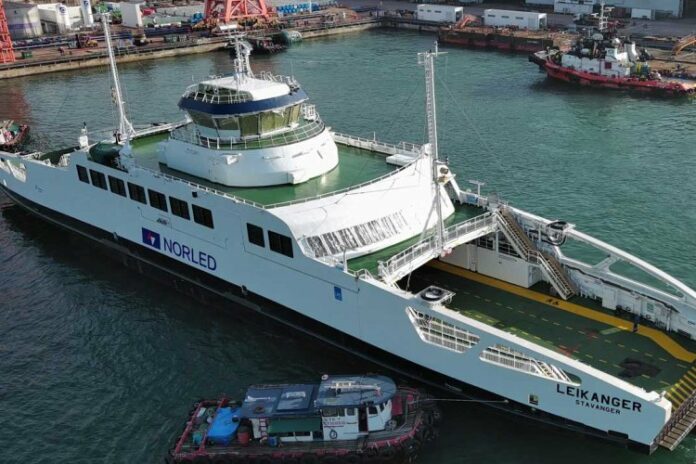
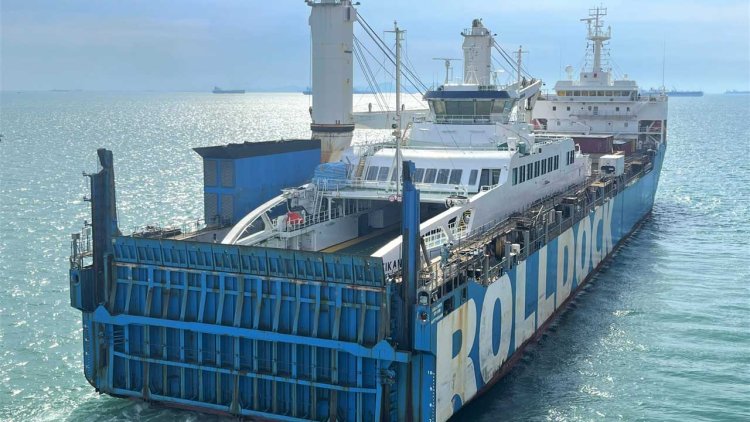
Sembcorp Marine Ltd marked the sailaway of the final unit of three identical fully battery-operated roll-on/roll-off passenger (“Ropax”) ferries, following the vessel’s handover to Norwegian ferry operator Norled AS.

The vessel, Leikanger, marks the third and final Ropax unit built for Norled by the Group, following the handover of the sister vessels Hella and Dragsvik, which sailed off in March and July last year.

Constructed based on a proprietary design developed by Sembcorp Marine’s wholly-owned subsidiary, LMG Marin AS (“LMG Marin”), Leikanger incorporates environmentally-friendly features. Similar to the sister ferries, Leikanger runs on lithium-ion batteries charged by hydro-electric energy power. The vessel is also able to operate in hybrid mode utilising combined battery-diesel power as an alternative.
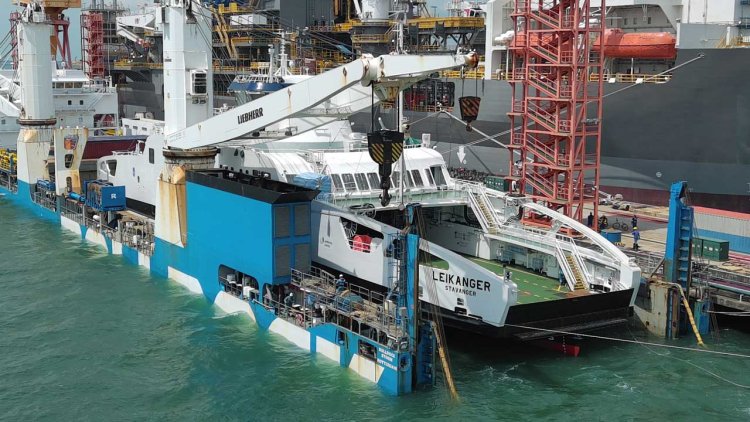
Leikanger is also designed with a focus on safety and comfort for passengers and crew. The vessel is equipped with capabilities for optimal performance and enhanced energy efficiency, with innovative features such as quick-connection shore charging plugs, auto-mooring and auto-cross capabilities, efficient hull, propulsion and heat recovery systems, as well as minimised hotel and auxiliary load solutions.

The ferry will be deployed on Norled’s shortsea Hella-Vangsnes-Dragsvik connections in Norway, joining the first sister unit Hella, which commenced service in May 2022, and second sister vessel Dragsvik, which started operations in December 2022. With a service speed of 10 knots, the 82.4-metre long multi-deck, double-ended ferry has the capacity to carry 300 persons, as well as 80 cars or a combination of up to 10 cars and 10 trailer trucks.

These three zero-emission Ropax ferries will further advance Norled’s objective of driving the green shift towards sustainable ferry operations and decarbonisation in the marine industry.
LMG Marin Managing Director Mr Torbjorn Bringedal said:

“We are pleased that our proprietary zero-emission Ropax vessel design and innovative hydro-electrification technology have been successfully integrated into the development of Norled’s three battery-operated ferries built by the Group. Custom-designed to fulfill Norled’s sustainability, safety and operational requirements, these Ropax ferries will further enhance Norled’s strategic positioning as a leading operator of sustainable ferry services.”

Mr Tan Heng Jack, the Company’s Head of Specialised Shipbuilding, said:

“Our close partnership with Norled has enabled us to successfully complete the triple Ropax newbuilds. We join Norled in celebrating the successful completion of Leikanger with zero lost-time incident and its sailaway for deployment in Norway, together with sister vessels, Hella and Dragsvik, to enhance Norled’s green fleet operations.”

Mr Wong Weng Sun, Sembcorp Marine President & CEO, said:

“Sembcorp Marine continues to advance environmental sustainability through developing industry-leading solutions to drive the global transition towards cleaner energy solutions and maritime decarbonisation. The successful completion of the final unit of Norled’s series of three zero-emission Ropax ferries is a validation of our green innovation capabilities and proven expertise in delivering sustainable solutions for the offshore, marine and energy industries.”

World’s first AiP of a high wave offshore solar farm system design

0

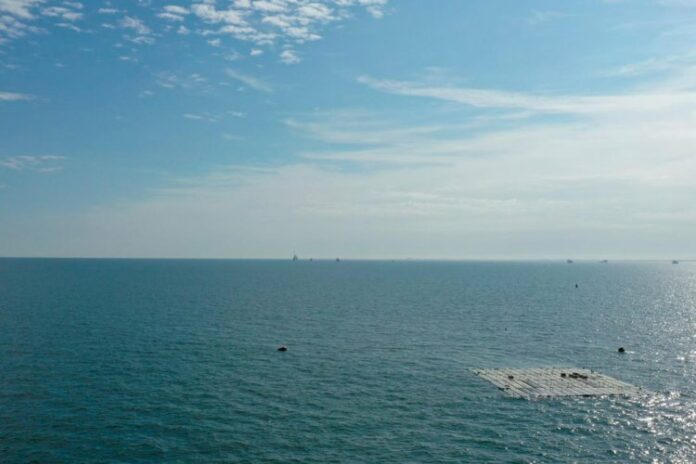
Bureau Veritas has delivered an Approval in Principle to Oceans of Energy, a market leader in offshore solar farms, for their system design of a high wave offshore solar farm system.

The farm currently installed has a size of 0.5 MW. It has a unique design: rather than heavy structures above sea, which are normally used for offshore technology, the offshore solar farm system is lightweight. It uses the sea surface directly as support, like a waterlily resting on the water surface. In order to withstand high waves and rough seas, it uses an innovative system combining rigid and flexible structures that allows it to ride on waves.

Such a novel system had not been used before in offshore high wave application, nevertheless, the system has recently entered its 4th year of successful operation in high waves. Since its deployment, the system has withstood many heavy storms, with waves up to 9.9 metres high. The system was successfully basin-tested with 13-metre-high waves. Over the last couple of years, Oceans of Energy has worked closely with Bureau Veritas on the Approval in Principle of their offshore solar farm system.

The Approval in Principle includes all aspects and products needed for the production of an Offshore Solar Farm system. This includes Oceans of Energy’s design base, the designed floaters, the mounting of the solar panels, scale model testing reports and mooring system design. The rough North Sea conditions were used in the reviewed tests on the system and load cases determined all the structural calculations that had to be fulfilled.

Allard van Hoeken, founder and CEO of Oceans of Energy, said:

“Oceans of Energy is very proud to receive this Approval in Principle as we realize it is a testimony of sound engineering, a feasible and sound concept choice and a recognition as a leading technology with a promising future. It is of great reassurance to our stakeholders that the design of the floating farm and mooring system have been reviewed and approved by Bureau Veritas.”

Laurent Leblanc, Senior Vice President Technical & Operations at Bureau Veritas Marine & Offshore, commented:

“We have extensive experience in the marine and offshore market that helps us to provide relevant and efficient support to pioneers such as Oceans of Energy. Our mission of “shaping a better maritime world” is all about enabling these innovative solutions that support society’s new demands and aspirations. We would like to congratulate Oceans of Energy for this AiP and we look forward to collaborating on the next steps of their venture.”

Hybrid well boat Bakkafossur added to Bakkafrost Faroe Islands fleet

0

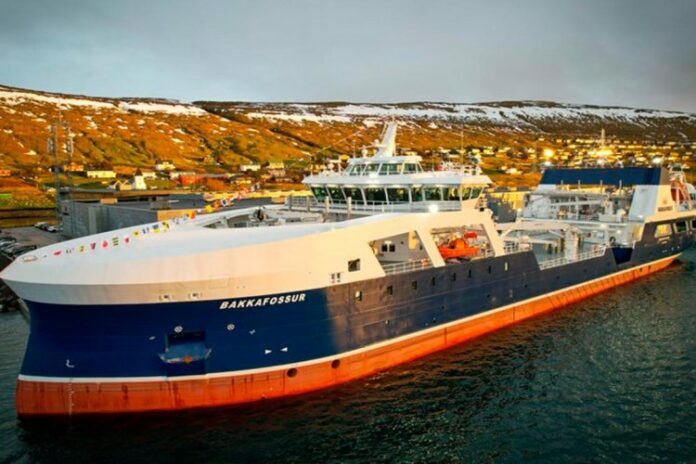
On Saturday the 7th of January 2023, one of the largest well boats in the global aquaculture industry – the 109-metre Bakkafossur – was added to the Bakkafrost Faroe Islands fleet.

A reception at the headquarters at Glyvrar with the Bakkafrost board members and senior management, Aksel V. Johannesen, prime minister of the Faroe Islands and other government representatives welcomed the ship and its crew members to the Faroe Islands, after making the journey from the Sefine Shipyard in Turkey, where the construction of the highly technological vessel commenced in the summer of 2020 and was completed in December 2022, when Bakkafrost took delivery of the vessel.

Bakkafossur can carry up to 1,000 tonnes of live salmon and is regarded as a huge upgrade to secure sustainable operations in the future. In addition to the five diesel-electric engines, the vessel is equipped with large batteries, ensuring an approximately 20% increase in energy efficiency. The strategic placement of the engines on the top deck secures the opportunity for a swift change to sustainable energy solutions when such are available on the market.

Equipped with reverse osmosis technology for de-salination of water with a production capacity of 6,000 tonnes of freshwater a day, Bakkafossur adds significant freshwater treatment capacity to Bakkafrost’s operations in the Faroe Islands. Treating salmon with freshwater is an efficient way to rinse the gills, restore gill health and ensure more robust and healthy growth. In addition, Bakkafossur will be equipped with an FLS sea-lice removal system, increasing biosecurity in line with Bakkafrost’s sustainability strategy.
Bakkafossur is also prepared for offshore farming.

In his speech at the reception, CEO of Bakkafrost Regin Jacobsen said:

“We need to see an increase in the supply of sustainable protein. Aquaculture and salmon farming in particular is regarded as one of the best solutions for sustainable food production when considering sustainability in the broadest sense. The Faroe Islands offer many opportunities – thus it is of vital importance that the will, skills and regulations facilitate the utilization of these opportunities. With Bakkafossur, we take a huge step towards both offshore farming and more sustainable operations.

Our vision for the Faroe Islands is to increase our production output significantly to increase the general supply of sustainable ocean food, contributing to the sustainable transformation of the world’s food system.”

Keppel O&M secures S$130m offshore substation contract

0

Keppel Offshore & Marine Ltd (Keppel O&M), through its wholly-owned subsidiary Keppel FELS Limited (Keppel FELS), has secured a contract from an international renewable energy company for the construction of an offshore substation (OSS) worth approximately S$130 million.

Keppel O&M’s work scope comprises the engineering, procurement, construction, testing and commissioning for the complete substation. The OSS will have a capacity of 600 MW and is scheduled to be completed during 2025. When completed, the OSS will be deployed in an offshore wind site in the Asia Pacific region.

Mr Tan Leong Peng, Managing Director (New Energy/Business), Keppel O&M, said:

“We are pleased to strengthen our track record in offshore wind solutions. As we extend our footprint and deepen our expertise in the offshore renewables industry, Keppel O&M is well-placed to support the growing demand for offshore wind solutions and contribute towards the global energy transition.”  

Keppel O&M is strengthening its foothold across the value chain of offshore renewables. It is currently building a HVDC converter station for offshore wind farms in the German sector of the North Sea, two OSSs for an offshore wind farm, as well as the first wind turbine installation vessel in the United States. In 2021, it delivered two OSS projects, which are now operational in Taiwan.

The above contract is not expected to have a material impact on the net tangible assets or earnings per share of Keppel Corporation Limited for the financial year of 2022.

Marlink completes migration of UNI-TANKERS’ fleet to its hybrid network

0

The Danish shipping company UNI-TANKERS selected Marlink as an expert partner to support its digital transformation, combining hybrid high-throughput connectivity with cloud-data access, remote IT support, and proactive cyber security to improve performance and operational safety.

UNI-TANKERS operates a fleet of approximately 40 owned and chartered oil and chemical tankers, and its customers include some of the world’s best-known producers, refiners, and manufacturers.

Marlink has equipped all vessels owned by UNI-TANKERS with future-proof smart network solutions, combining the full potential of global VSAT, L-band backup, and global 4G connectivity, together with a range of digital solutions including CyberGuard and ITLink IT solutions. Through its XChange platform Marlink will deliver a fully managed service including network management and secure file transfers between ship and shore.

Using the smart routing capabilities of the XChange platform, UNI-TANKERS’ vessels will be able to send and receive data on the most appropriate channel and process data onboard at the edge of the network. Remote IT support is enabled via ITLink while Marlink’s CyberGuard Threat Detection solution provides a proactive layer of security to business and crew communications. Unified Threat Management (UTM) with next-generation firewall functions has also been recently implemented.

Marlink’s hybrid network solution will enable UNI-TANKERS to further enhance its operations, including high volume data transfer to and from its vessels for safe and efficient navigation as well as compliance with prevailing vetting and inspection regimes.

Michael Hust, IT Manager at UNI-TANKERS, said:

“UNI-TANKERS’ business is built on high-quality service and long-term relationships, and the safe operation of our vessels has the highest priority of both the company and our people. Partnering with Marlink has enabled us to take our fleet operations to a new level increasing both operational flexibility and safety which in turn enables us to deliver an even higher level of service to our customers.”

Tore Morten Olsen, President, Maritime, Marlink, said:

“We are delighted to have completed this successful migration of the UNI-TANKERS fleet to Marlink’s smart hybrid network, a process that relied on close co-operation and a commitment to quality. We look forward to fully service UNI-TANKERS’ global operations with the best-in-class network solution.”