-7.3 C
New York
Home Blog Page 335

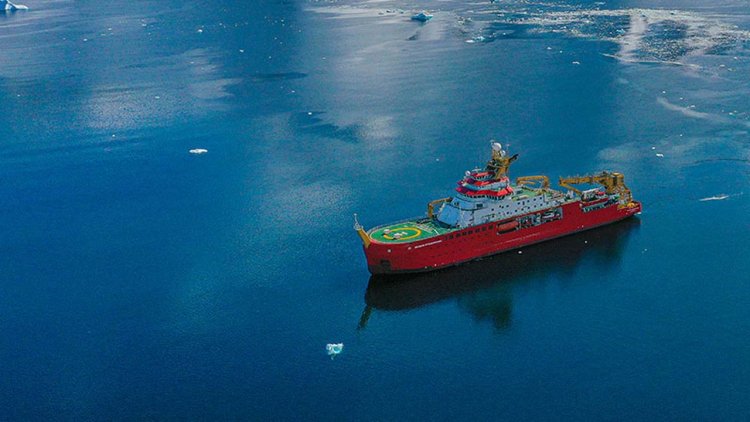
RRS Sir David Attenborough begins polar science trials

0

A team of 30 national and international scientists, engineers and technical staff will depart the Falkland Islands today (31 January) for almost two months of science capability trials – the first to test the ship’s science capabilities in deep polar waters.

The team will run a range of scientific equipment and systems, several for the first time to test equipment covering physical oceanography, chemistry, and marine biology. They will also work collaboratively to test out the large laboratory facilities to do multidisciplinary research.

The ship has been operating in and around Antarctica since December, delivering key personnel and cargo to British Antarctic Survey’s research stations. As part of getting the ship fully operational for science, these trials will allow the team on board to use science equipment for the first time around Antarctica.

Dr Sophie Fielding, Science Capability Coordinator for RRS Sir David Attenborough, is co-leading the polar science trials. She says:

“This is a really exciting milestone moment for the ship. It’s our chance to work collaboratively with scientists, engineers, technicians and ship’s crew to test all the new and exciting science capability we have. There are winches that will allow us to sample animals that live on the sea floor, deeper than we’re ever done before and new equipment to enable us to sample trace metals in the ocean using a dedicated clean chemistry system.

“We are carrying out these trials to test all science equipment and or systems to make sure they all work successfully, and we’re looking forward to putting the ship’s science capability through its paces and doing some cutting edge science at the same time.”
Dr Yvonne Firing from National Oceanography Centre is on board for the the polar science trials. She says:

“It is exciting to be on the new ship, and to be able to contribute to its first measurements of Southern Ocean temperature, salinity, and currents. I’m looking forward to working with everyone on board to prepare the RRS Sir David Attenborough to be a great platform for oceanography, one that complements the rest of the UK research fleet and extends our capability to make climate-quality measurements and new discoveries to the polar oceans again.”

Dr Amber Annett is from University of Southampton. She is part of the team on board and says:

“This ship is a fantastic resource for the UK polar community. My NERC-funded research project RaCE:TraX brings together scientists from the UK and abroad to study the supply of iron to the ocean. This essential micronutrient limits marine productivity in large areas of the Southern Ocean, so better understanding how it is supplied to this region will help us predict how the marine ecosystems and carbon drawdown will respond to the changing ocean as the climate warms. Our work will set up and test the world-class clean chemistry facilities of the RRS Sir David Attenborough, which are a great asset for the marine science community.”

British Antarctic Survey (BAS) operates the RRS Sir David Attenborough, which is owned by UKRI-NERC. It provides a platform for the UK polar community to do research in the Polar Regions.

The trials are another critical milestone in the commissioning of the ship. Prior to these, the ship completed science capability trials around the UK and ice trials in Antarctica during the 2021/22 field season.
ABL Group awarded Jansz-Io Compression project contract

0

Part of the original development plan for the Chevron Australia-operated Gorgon Project, the Jansz-Io Compression project involves the construction and installation of a 27,000-tonne normally unattended floating field control station offshore western Australia.

In addition, the development includes approximately 6,500 tonnes of subsea compression infrastructure, at 1,350 metres water depth, and a 135-kilometre-long submarine power cable linked to Barrow Island.

ABL’s Australian operations has been awarded the contract to act as marine warranty surveyor to oversee the safe delivery of transportation & installation (T&I) operations across four work packages. The work packages relate to the offshore installation, construction and marine transportation operation of the field control station and high-voltage power and communication transmission system, plus marine transportation of other high value and general project cargo.

ABL in Australia, headquartered in Perth, will manage the project, with collaboration from ABL offices in Asia and Europe to resource on-site attendance locally across the project’s global value chain.

Kervin Yeow, country manager of ABL in Australia, says:

“This is the second major MWS award for ABL in Australia recently, reflecting our recognised capability and track-record in supporting large Australian energy infrastructure construction and decommissioning projects.”

The subsea gas compression technology utilised at the Jansz-Io field will enhance the recoverability of natural gas from the field and maintain supply to the gas processing facilities on Barrow Island, ensuring Gorgon continues to deliver vital natural gas to customers in Western Australia and Asia for decades to come.

Alex Harrison, Group MD – Energy services, adds:

“We are delighted to be continuing to support Chevron here in Australia and to be working on yet another of their critical development projects.”

MEO Group migrates entire fleet to Marlink’s smart network solution

0

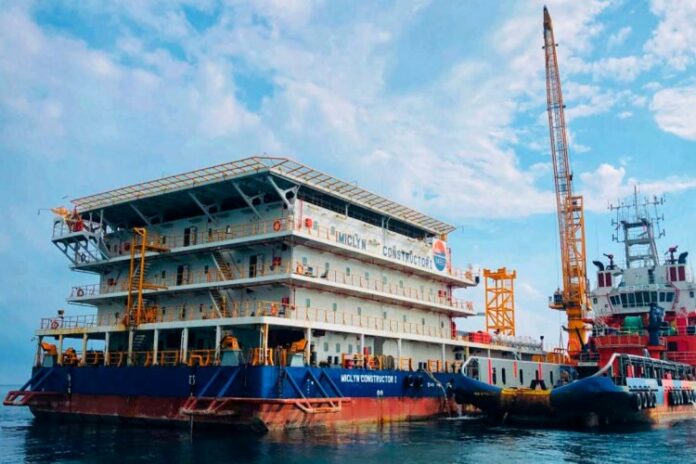
Marlink is implementing a fleet-wide migration of its smart managed network solution for global operator Miclyn Express Offshore (MEO Group) to support the Group’s ongoing digitalisation program. 

Marlink will outfit 102 vessels of MEO Group with its Sealink VSAT solution, providing high throughput connectivity to the fleet of vessels. Personnel on transfer and vessel crews can utilise connectivity for welfare purposes. The company will accelerate its digitalisation strategy with enhanced data transfer to optimise its fleet operations and improve operational efficiency.

Using its XChange management platform, Marlink will deliver a fully managed service including network settings and secure file transfers between ship and shore. Using the smart routing capabilities of the XChange platform, MEO Group vessels will be able to send and receive data on the most appropriate channel and process data onboard at the edge of the network.

With operations in Asia Pacific, Middle East and Africa, MEO Group are pioneers in the oil and gas, renewables and marine civil construction industries. Trusted by the world’s biggest energy companies, the Group offers a diverse range of vessels from crew boats, offshore support vessels through to specialised vessels services as well as project transportation solutions for project that require a full-service solution.

Marlink has designed and built intelligent network solutions around customer needs for more than 30 years, providing trusted global coverage through an unrivalled satcom and terrestrial hybrid network. Deploying managed services, enables Marlink to proactively take responsibility for system integration, handling critical data and managing service priorities.

Darren Ang, CEO of MEO Group, said:

“As a global operator with a diverse fleet, we recognised the need to consolidate our communications with a provider with the capability to deliver connectivity and manage services wherever our vessels sail. Marlink’s VSAT solution and XChange platform proved their worth at the first time of asking, giving us the confidence to embark on this roll-out to deliver enhanced crew communications and enable digitalised fleet operations.”

Tore Morten Olsen, President, Maritime, Marlink, said:

“Marlink has worked in the specialist offshore sector for many years and we pay close attention to the particular needs of owners and operators in delivering business and crew connectivity. Operators like MEO trust our managed hybrid solutions to provide the quality and functionality required to support their digitalisation and improve their business efficiency.”

Climate Fund invests €10 million in Norsepower

0

Norsepower’s products save significant amounts of fuel and can enable emissions reductions measured in the millions of carbon dioxide tonnes during the next decade.

Shipping emissions are a major climate challenge. Approximately 2.5% of global annual greenhouse gas emissions are generated by shipping, and shipping accounts for 13.5% of the EU’s total GHG emissions. Shipping emissions are projected to grow without further action, therefore, the development and scale-up of emissions-reducing solutions for the shipping sector is crucial.

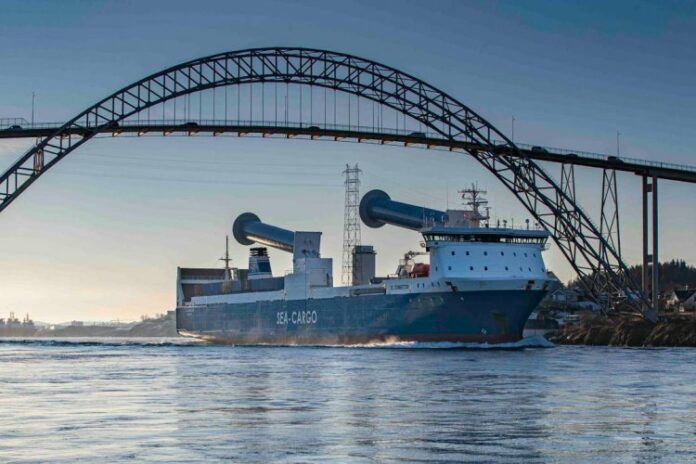
Norsepower reduces emissions by providing ships with wind-powered propulsion using the company’s proprietary rotor sail. Depending on the wind conditions, Norsepower’s product can reduce the vessel’s fuel consumption by 5–25%, which generates a significant reduction in shipping emissions.

”The future of shipping is emission free, and Norsepower’s technology for cutting fuel costs and greenhouse gas emissions is a part of that future”, says Norsepower’s CEO, Tuomas Riski. ”Norsepower is an ambitious growth company and the Climate Fund’s investment accelerates the scale-up of our production considerably from what we could have achieved with organic growth alone. The involvement of a state entity also lends us credibility abroad.”

”The reduction of shipping emissions is an important step on the way to carbon-neutral logistics and transport.Like many others, this climate challenges requires several parallel solutions. Norsepower’s rotor sails are an immediately available solution, especially for emissions-intensive ocean tankers. The Climate Fund’s investment accelerates the product’s scale-up on the market and thus also its emissions reductions”, says Paula Laine, CEO of the Finnish Climate Fund.

LedaFlow Technologies forms a carbon capture and storage research consortium

0

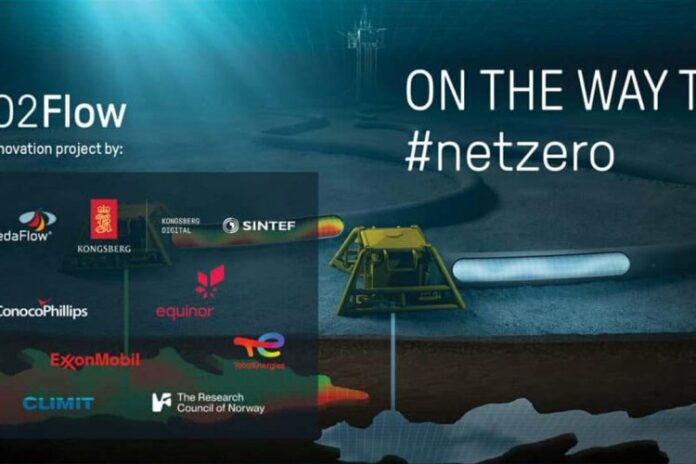
LedaFlow Technologies has formed a research consortium with energy companies ConocoPhillips, TotalEnergies, Equinor, and ExxonMobil Technology & Engineering, as well as sub-suppliers Kongsberg Digital, SINTEF Industry, and SINTEF Energy Research, to enhance its multiphase transport simulator technology for transport and injection of CO2.

The consortium, called the CO2Flow project, aims to analyse opportunities for safe transport and injection of CO2, both with and without impurities, to accelerate carbon capture and storage (CCS) technology development. The consortium also aims to contribute to accelerating the global deployment of CCS as the partners can put project results into industrial use and benefit from the improved functionalities through more optimal design and reliable operation.

Accurate simulations will enable reduced design margins and decreased investment costs of CO2 transport and injection systems while maintaining operational safety. Precise predictions are also essential for energy and cost-efficient operations and will help minimize risk through simulations of various operational scenarios.

Building on Kongsberg Digital’s commercialization model success which has been in place for LedaFlow since 2010, Kongsberg Digital will deliver world-class industrial software in a secure, user-friendly, and reliable way which can also be deployed on digital twins to operate assets.

The consortium’s research partners SINTEF Industry and SINTEF Energy Research will provide access to world-class resources and information regarding multiphase flow modelling as well as experimental facilities with CO2 flow competence. Equinor, TotalEnergies and SINTEF Energy Research have been collecting experimental well data for CO2 injection in the DeFacto flow loop since 2016. The experimental data has been shared with the consortium for model improvement.

By harnessing the resources and data available through the four participating energy companies, LedaFlow Technologies gains access to a vast range of organizations with net zero ambitions.

“Together, our aim is to qualify LedaFlow technology for industrial use by securing simulation accuracy and robustness. The goal is to drive down the design and associated costs for CCS operations and accelerate its broader implementation within the energy mix. This contributes to make cleaner energy more affordable”, says Jan Gerhard Norstrøm, Managing Director at LedaFlow Technologies DA. 

LedaFlow Technologies’ mission is to utilize the expertise of its partners to ensure the continuous development of LedaFlow products and bring to the industry the best available tool for multiphase flow simulation.

LedaFlow development was initiated in the early 2000s by ConocoPhillips, TotalEnergies, and SINTEF with the ambition to develop a simulator closer to actual physics for oil and gas applications. Since 2017, under the leadership of TotalEnergies, thanks to the CO2FACT JIP (a CLIMIT Demo project), the CO2 transport module has been developed bringing LedaFlow at the forefront of CO2 research. It is now providing industry with the simulator software needed to make CCS a reality.

The project is supported by the CLIMIT Programme – Norway’s national program for research, development, and demonstration of carbon capture and storage (CCS) technology.

Minesto initiates collaboration with local tidal site developer in the Philippines

0

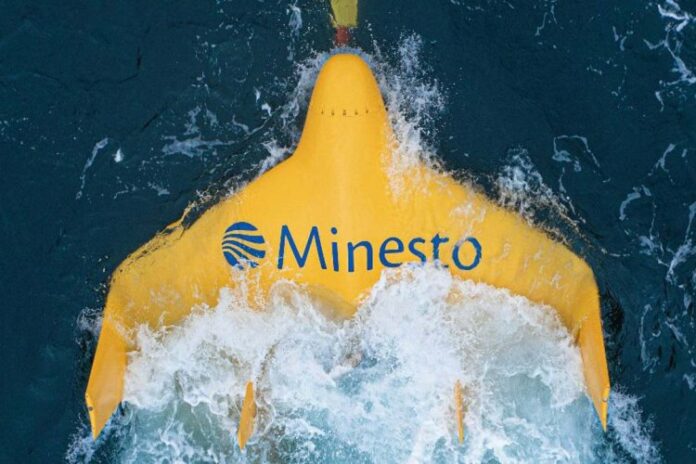
Minesto signs a collaboration agreement (MoU) that outlines goals, roles, and responsibilities of a strategic collaboration with experienced Philippines-based tidal project developer, Poseidon Renewable Energy Corporation.

The Philippines is one of the largest markets for deployment of tidal and ocean current energy farms and the need for renewable electricity is increasing with both economic development and new ambitious goals for increased share of renewables in the energy mix.

In late 2022, changes in legislation were made to facilitate and promote a shift in the energy mix towards more renewable energy development with higher foreign investment involvement. Leveraging on the legislation improvement, Minesto has signed a Memorandum of Understanding with Filipino tidal site developer, Poseidon Renewable Energy Corporation, with the intention to collaborate on establishing tidal energy with Minesto’s technology in the Philippines.

In addition to extensive market-leading experience in tidal site identification and development in the Philippines, Poseidon Renewable Energy Corporation is also very well-connected in key local areas. The tidal site developer holds several existing site permits and is locally well-established in areas of specific interest for tidal energy generation. This creates a mutual opportunity to shorten time-to-market and project risks related to environmental consenting and permitting.

“We believe that the experience, local commitment, and entrepreneurial spirit of Poseidon Renewable Energy Corporation makes them a perfect match with Minesto and our ambition to lead tidal energy build-out in one of the world’s largest tidal energy markets in Southeast Asia,” comments Dr Martin Edlund, CEO of Minesto.

Salvador Tan, CEO of Poseidon Renewable Energy Corporation says, “Ocean energy has been largely untapped in the Philippines despite the apparent potential of the power source because of the scarcity of available technologies. Minesto and Poseidon will soon change that and finally unlock the promising ocean power.”

Neptune Energy commences production at Cygnus 10th gas well

0

Neptune Energy and its partner, Spirit Energy, today announced production has commenced from the 10th well at its operated Cygnus gas field in the UK southern North Sea, unlocking additional supplies for UK homes and businesses.

With the start-up of production from the 10th well, the Neptune-operated Cygnus gas facility is now capable of producing enough natural gas to meet the needs of approximately 2 million UK households, underlining the important contribution of Cygnus to UK energy security.

Cygnus also has one of the lowest carbon intensities on the UKCS, at ~4kg of CO2/boe1.

Neptune Energy’s UK Country Director, Alan Muirhead, said:

“Bringing the 10th Cygnus well online is an important milestone for the field and supports additional supplies of lower carbon gas for UK homes and businesses.

“Domestic production has a crucial role to play in supporting energy security in this country and Neptune has increased gas supplies to the UK from our operated assets in the UK and Norwegian North Seas.”

The drilling operation was carried out by Borr Drilling’s Prospector 1 jack-up rig, the first in Borr’s fleet to be equipped with technologies that reduce carbon and nitrogen emissions from operations by up to 95%, and particle matter emissions by more than 85%.

Neptune has now commenced drilling on the 11th well on the Cygnus field, which is expected to begin production in Q2 this year.

Aker BP awards TechnipFMC a contract for three tie-ins in the North Sea

0

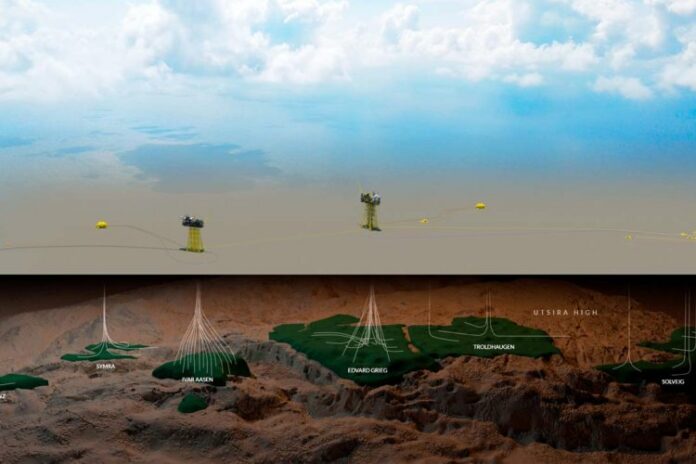
TechnipFMC is awarded a contract for three field developments at the Utsira High in the North Sea. 

The three fields will be tied back to the Edvard Grieg and Ivar Aasen production platforms.

The team from TecnipFMC has for the past two years been conducting the FEED phase for the Symra, Solveig phase 2 and Troldhaugen projects. So, we’re delighted to be able to continue the good cooperation through the construction and installation phase, said Stine Kongshaug McIntosh, VP Projects Execution for Edvard Grieg and Ivar Aasen in Aker BP.

The three developments will be bundled into one joint project in the execution phase, named Utsira High Project. Utsira High Project will develop recoverable resources of 124 million barrels oil equivalent. Drilling will commence in third quarter 2025, while production start-up is scheduled for first quarter 2026 for Solveig and Troldhaugen, and first quarter 2027 for Symra.

Solveig Phase 2 and Troldhaugen will be tied back to Edvard Grieg, while Symra will be tied back to Ivar Aasen for a partial processing before final processing at the Edvard Grieg platform.

Edvard Grieg was designed and built as a field centre with the capacity to be a host platform for new fields in the vicinity. Edvard Grieg is also the host platform for the Solveig field (phase 1) and for test production from the Troldhaugen discovery. The Ivar Aasen field was a coordinated development with the Edvard Grieg field. Oil and gas from Ivar Aasen are transported to the Edvard Grieg platform for final processing.

All producing fields on the Utsira High will be operated with electrical power from shore. Hence the CO2 emissions from the production phase will be very low.

It is expected that more than 60 per cent of value creation from the Utsira High Project will be in Norway, and secure around 10.000 FTE’s.

-This represents a relative high share of domestic content for a development project on the Norwegian Continental Shelf, said Stine Kongshaug McIntosh.

Fabrication and testing will take place in Bergen, Stavanger, Kongsberg, Horten and Orkanger, among other locations. Engineering work will be performed out of Lysaker and Kongsberg.

Maersk unveils its new Southeast Asia to Australia network

0

The network’s configuration has been reimagined after a careful review that drew on insights from customers and exemplifies Maersk’s commitment to continuous improvement. It is inspired by the hub and spoke model, resembling a bicycle wheel with delivery routes (the spokes) converging on a single hub. 

Although the worst of the disruptions seen during the COVID-19 pandemic have eased, some will persist, and new challenges will emerge. Maersk’s investment in the new network provides a substantial buffer to mitigate the impacts of disruptions.

My Therese Blank, Maersk’s Head of Oceania Exports, said:

“Ocean transport is key to the Australian economy, and we are overly excited to bring improved supply chain solutions to our customers. This year marks our 30th anniversary in Australia and we are grateful for the strong local relationships and the trust from our customers over the past three decades. During the COVID-19 pandemic we have made significant investments in our network in Oceania to keep the supply chain moving. With the introduction of our new Australia/Southeast Asia network we will restore reliability and flexibility of our Australian customers supply chain. Our new network also offers a superior Australia costal connection to enable domestic trade routes and multimodal transport options for our customers in Australia.”

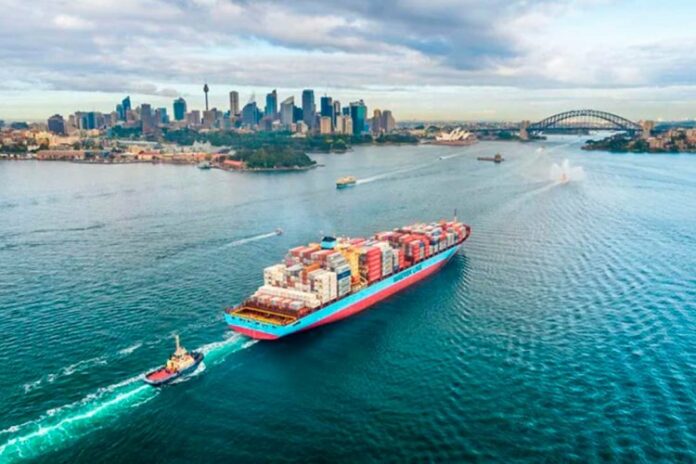
The three services that comprise the new network will connect the five main Australian ports of Adelaide, Brisbane, Fremantle, Melbourne, and Sydney to the world via the ports of Singapore and Tanjung Pelepas in Malaysia. They are the Greater Australia Connect (GAC), the Eastern Australia Connect (EAC) and the Western Australia Connect (WAC).

The new services will replace the Cobra and Komodo services and will ensure critical connections to key international services are maintained. They simplify and connect customers’ end to end supply chain, while also future-proofing Australia’s international and domestic cargo connection.

Ioanna Prassou, Maersk’s Network & Market Manager of Oceania Imports, said:

“What has been a fundamental change on the design of the network is that we have put ourselves into our customers’ shoes. The primary principle guiding us throughout this process was the impact on the customer and how, as their trusted logistics partner, we can proactively foresee potential risks and eradicate them. This new network will ensure we achieve exactly that – improving the reliability of our services and provide better protection in the event of disruptions.”

Hrishikesh Milind Bapat, Head of Ocean Fulfilment, Australia Market for Maersk, said:

“We are really looking forward to activating this new and improved network, which puts our customers at the centre and delivers on our promise to them. It will also demonstrate agility and care in how we connect and simplify our customers’ supply chains.”

The first sailings under the new network are scheduled for March 2023.

Equinor and Vår Energi withdraw from Barents Blue

0

Horisont Energi enters into partnership with Fertiberia to join the Barents Blue project. Simultaneously Vår Energi and Equinor withdraw from the projectas the cooperation agreement expires on 31th January 2023.

The previous partners Equinor and Vår Energi leaves the project as the cooperation agreement expired on 31 January.

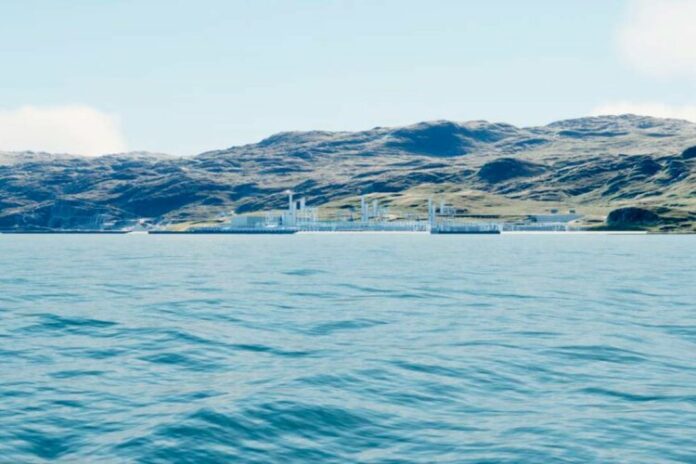
The Barents Blue concept is to make ammonia from natural gas from the Barents Sea, capture the CO2 and store it under the seabed.

The Polaris CO2 storage under the Barents Sea was selected as the CO2 storage solution for the Barents Blue project, and it has had the same partners as for the Barents Blue project.

Vår Energi EVP Project Development & SCM, Atle Reinseth says:

We have great faith in the Barents Sea as a petroleum province. However, after thorough assessment of the project and our overall portfolio, we have concluded that it is no longer appropriate to proceed with the Barents Blue concept. Development of the proven resources in the region, including Goliat, Alke and Lupa, will require an export solution with greater capacity than what we deem realistic within the scope of the project. We would like to thank Equinor and Horisont Energi for the collaboration and wish the operator all the best in further maturing Barents Blue.

Grete Tveit, senior vice president Low carbon solutions, in Equinor, says:

“We are pleased to see that Horisont Energi will continue to mature the Barents Blue project with a new partner and build on the progress and experiences from our partnership. I wish to thank the Barents Blue operator Horisont Energi and our partner Vår Energi for the collaboration we have had in the project.”

Vår Energi remains steadfast in its ambitions for the Barents Sea, with continued exploration, further development of the Goliat field and efforts to establish an optimal solution for gas exports. 

Vår Energi EVP Exploration & Production, Rune Oldervoll explains:

“Our goal is to establish an export solution for gas in the Barents Sea with the capacity to both utilise proven resources, as well as contribute to a larger area solution for further development and value creation in the region. Cooperation between the players in the region and the authorities is the key to this. Establishing sufficient export capacity can give new momentum to our northernmost petroleum province, increase value creation on land and strengthen the energy supply to Europe in the long term.”

Equinor remains positive to explore gas supply solutions from Hammerfest LNG to the Barents Blue project following the changes in the partnership.

Equinor has several hydrogen and CCS projects in different phases in Norway and in other markets. In Norway, the Northern Lights CO2 transport and storage project, part of the Longship project, is already under construction and on track to be ready to receive CO2 in 2024.

Recently, Equinor and RWE announced that the companies have agreed to work together to develop large-scale value chains for low carbon hydrogen, with a production facility in Norway and an export pipeline to Germany.

By 2030, Equinor has an ambition that 50 per cent of the company’s gross investments will be dedicated to renewables and low carbon solutions, such as CCS and hydrogen.