-6.7 C
New York
Home Blog Page 334

Accelleron signs Turbo MarineCare agreement with AMCL

0

Accelleron Turbo Systems (Hong Kong) Ltd has signed a Turbo MarineCare™ agreement with Associated Maritime (Hong Kong) Co. Ltd., for the long-term provision of turbocharging servicing for ten A175-L turbochargers on five AMCL operated vessels.  

AMCL is both the owner of the largest VLCC fleet in China and manager of the world’s leading VLCC fleet. The company was one of the forerunners in introducing VLCCs to the Asia-Pacific region. The deal represents the first time a company under the China Merchants Group has signed a long-term turbocharger servicing agreement with Accelleron and signifies the first step in a strategic business partnership between the two companies.

Under the Turbo MarineCare™ service agreement, Accelleron will provide fixed-price turbocharger servicing using original spare parts with continuous warranty for a duration of five years to ensure the safe operation of the vessels. AMCL will also gain access to Accelleron’s intuitive digital platform, Loreka which provides users with 24/7 access to easy-to-interpret fleet-wide turbocharger health indicators with accompanying advisories provided by Accelleron experts.

Ship operators are under increasing pressure to reduce operating costs and emissions. As such, safeguarding the reliability of the ship’s machinery and preventing costly vessel downtime is a top priority, alongside having financial predictability. Through the new Turbo MarineCare™ Agreement, Accelleron will provide peace of mind with guaranteed turbocharger servicing coverage to five AMCL vessels, inclusive of all spare parts, labor, and transport, based on a fixed service agreement price. This removes fluctuations in lifetime turbocharger maintenance cost by eliminating the risk of unexpected expenses arising during a service event.

Under Turbo MarineCare™, AMCL will have a single point of contact at Accelleron who will coordinate all maintenance activities, with only one purchase order and invoice issued for each servicing event. This will significantly reduce the administrative burden for AMCL.

Associated Maritime (Hong Kong) Co. Ltd, said:

“Ensuring the continuous uptime of our fleet is of immense importance. The service that Accelleron offers is very much aligned with our business objectives of protecting vessel uptime and digitalization. We will use the digital platform to monitor the health status of all turbochargers under maintenance contract and ensure that turbocharger maintenance events are proactively undertaken under the guidance and expert services provided by Accelleron.”

Jin-woo Seong, General Manager at Accelleron Turbo Systems (Hong Kong) Ltd, added;

“Although contractually this is a deal forged between supplier and customer, the relationship between Accelleron and AMCL is more like a business partnership. We are honored to provide our turbocharging maintenance service to AMCL vessels for the first time, with a shared vision between Accelleron and AMCL and a strong relationship. We hope that this is a long-lasting business partnership and the fleet size under the maintenance agreement with Accelleron expands even further in the future.”
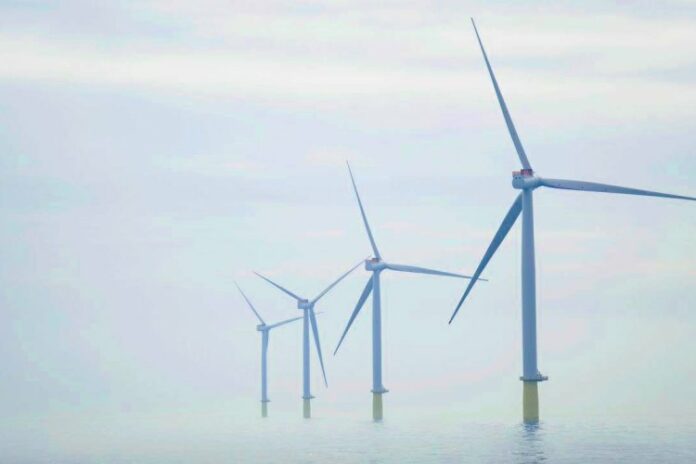
 

Equinor and SSE Renewables carry out scoping work on potential 4th phase of Dogger Bank D

0

Equinor and SSE Renewables each own 50% of the proposed Dogger Bank D development.

The Dogger Bank D proposal would require a new development consent order to progress into construction and could add an additional 1.32 GW in fixed-bottom offshore wind capacity to the 3.6 GW already in construction with phases A, B and C of the project.

Dogger Bank D would be located in the eastern zone of the Dogger Bank C lease area, more than doubling the utilisation of existing acreage. The project’s progression remains subject to agreement with The Crown Estate.

The developers will release an initial scoping report in late March outlining ongoing work to explore the technical feasibility of deploying latest-available technology to bolster the UK’s renewable energy capacity. There are two options being explored for the energy generated by the offshore windfarm: a grid connection and/or green hydrogen production.

The first would see power from Dogger Bank D connecting to a grid connection in Lincolnshire, where National Grid is installing new network infrastructure in response to the UK Government’s ambitions to generate 50 GW of offshore wind by 2030.

The second option being considered by the developers is the use of electricity produced by offshore wind to generate green hydrogen at a dedicated electrolysis facility in the Humber region. The facility, if developed, could become the UK’s largest green hydrogen project and, subject to supportive Government policy and supply chain alignment, could contribute to the UK Government’s green hydrogen ambitions.

VP Dogger Bank at Equinor, Halfdan Brustad, said:

“Optimising the Dogger Bank C lease area with an additional phase, Dogger Bank D, is in-line with Equinor’s strategy to further develop offshore wind projects in clusters such as the North Sea. We are pleased to continue our collaboration with our partners, SSE Renewables, and work together to mature the technical scoping of this project. Both the grid offtake and green hydrogen production options from Dogger Bank D would contribute to the UK’s net zero ambitions and emphasise Equinor’s ability to deliver a broad energy offering to the UK.”

Paul Cooley, Director of Offshore Wind, SSE Renewables, said:

“At SSE Renewables we’re focussed on delivering and building a homegrown energy system for the UK that is cheaper, cleaner and more secure. That’s why we’re taking action to develop more of the new offshore wind energy needed to radically increase renewable generation. We’re already building the world’s largest offshore wind farm at Dogger Bank, and now with our established partners Equinor we’re delighted to unveil plans to develop a potential fourth phase of the project, Dogger Bank D. We’re looking forward to working together to bring this project to the attention of key stakeholders.”

Dogger Bank Wind Farm Project Director, Oliver Cass, said:

“We’re in the early stages of looking at the technical feasibility of the grid and also hydrogen options for a potential fourth phase of Dogger Bank Wind Farm, and we’re looking forward to working with local, national and regional stakeholders over the coming months as we progress the project.

“Not only is this project a great opportunity to generate more affordable green energy for UK consumers and increase the resilience of our energy networks, it would also build on the economic and social legacy started by the first phases of the project which have created and supported thousands of UK jobs and resulted in more than £1 million being invested in coastal communities.”

The first three phases of Dogger Bank Wind Farm known as A, B and C are located more than 130 km off the Yorkshire coast and will generate enough renewable energy to power six million UK homes. A joint venture between SSE Renewables, Equinor and Vårgrønn*, SSE Renewables is leading on Dogger Bank construction and delivery while Equinor will operate the wind farm on completion.

Equinor and SSE Thermal are currently collaborating to accelerate the decarbonisation of the Humber, the UK’s largest and most carbon-intensive industrial region, through low-carbon projects such as Keadby 3 Carbon Capture Power Station, Keadby Hydrogen Power Station and Aldbrough Hydrogen Storage.

As part of the Zero Carbon Humber initiative, in which Equinor and SSE Thermal are both members, hydrogen transmission and storage infrastructure are planned in the Humber linked to the East Coast Cluster CO2 transmission and storage system. The green hydrogen option at Dogger Bank D could benefit from leveraging the low-carbon hydrogen value chain being advanced, including the hydrogen pipeline infrastructure and network of potential customers.

New Baleària innovative fast ferry will feature Wärtsilä propulsion solutions

0

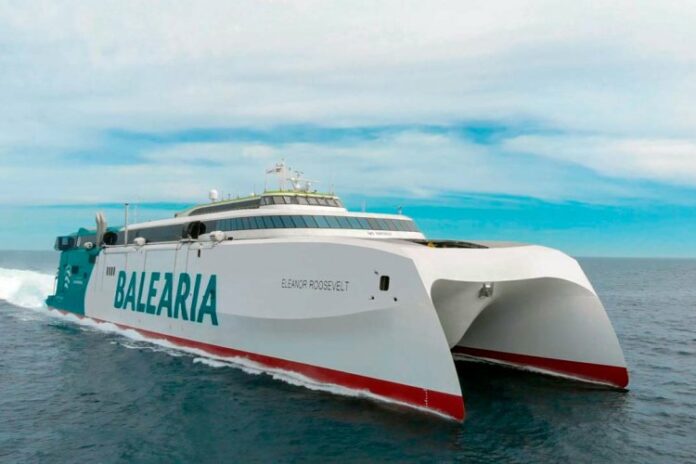
The ship, the ‘Margarita Salas’, is being built at the Astilleros Armon Gijon yard in Spain on behalf of the Spanish shipping company Baleària. It will have the same dimensions as its sister-vessel, the ‘Eleanor Roosevelt’, which at 123 metres is currently the longest High-Speed ferry in the world in operation. The order was included in Wärtsilä’s order book in April 2022.

While the dimensions of the two ships will be the same, the new vessel’s Wärtsilä engines will have ten percent greater power and increased efficiency. Also, the latest-generation WXJ Wärtsilä waterjets will deliver even better performance. Overall, the ‘Margarita Salas’ will feature optimised speed and capacity and, like the ‘Eleanor Roosevelt’, will operate on LNG fuel.

“This new ship will combine the most competitive features of the Eleanor Roosevelt with a series of innovations in its design and engineering to enhance the customer experience,” says Mr. Pablo Garcia, New Builds Project Manager at Baleària.

“It is an honour to have been selected as the integrated drivetrain package supplier for this state-of-the-art vessel. We have been able to offer superior technical performance, the best power-to-weight ratio, the best overall equipment efficiency, and enhanced integration support. This represents a value proposition that will make this new ferry superbly efficient,” says Jesus Puelles, General Manager Sales Spain Wärtsilä.

The Wärtsilä scope includes four Wärtsilä 31DF dual-fuel engines operating primarily on LNG fuel, four Wärtsilä WXJ steerable-reversible inboard hydraulic waterjets with Protouch propulsion control system, and two LNGPac fuel storage and supply systems. LNG is currently the cleanest and most mature marine fuel available within the industry’s decarbonisation focus.

The IMO Tier III compliant Wärtsilä 31DF is the most powerful engine in its class and features outstanding efficiency. The diesel version of the Wärtsilä 31 has been recognised by Guinness World Records as being the most efficient diesel engine in the world.

The axial flow of the Wärtsilä waterjets reduces the installation footprint by an average of 25 percent compared to conventional systems. Furthermore, the propulsion system will enable the vessel to reach a service speed of 35 knots.

Port of Tallinn and Utilitas Wind to cooperate on the development of offshore wind farms

0

Port of Tallinn and Utilitas Wind have signed a Memorandum of Understanding with the aim of accelerating the development of offshore wind energy in Estonia and the Baltic States. 

According to Valdo Kalm, the CEO of the Port of Tallinn, cooperation with Utilitas signifies the port’s growing role in the development of renewable energy in the Baltic Sea region. 

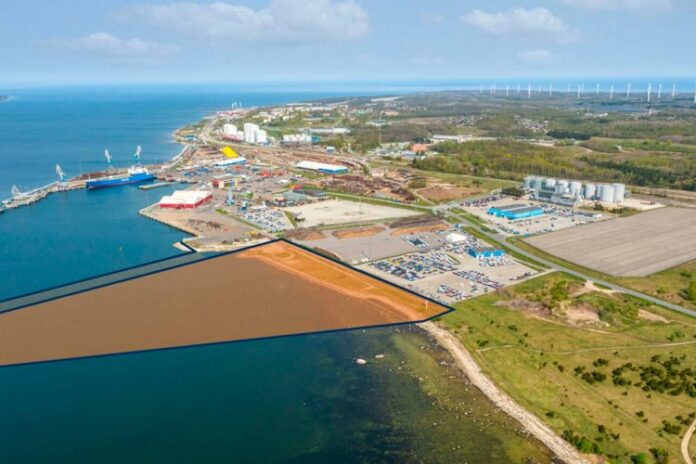
“Port of Tallinn has set an objective to become the leading offshore wind farm operator in the Baltic and Northern European region. To this end, we have decided to invest up to EUR 53 million to build a new quay in Paldiski South Harbour,” said Kalm.

Rene Tammist, board member of Utilitas Wind, believes that cooperation with the Port of Tallinn will create better opportunities for the faster construction of offshore wind farms. 

“Cooperation between strategically important sectors is of key importance to ensure that new generation capacities are built as soon as possible, bringing down the price of electricity and ensuring our energy independence through domestic production. Offshore wind farms are the best possible solution to achieve this goal,” said Tammist.

Due to the favorable location of Paldiski South Harbour, the construction of the new 310-metre quay with a 10-hectare backland area will create preconditions for Port of Tallinn to become an important partner in the construction and subsequent maintenance of offshore wind farms in the Baltic Sea region. The new quay will ensure the capacity of the port to receive offshore construction and supply vessels for the construction of offshore wind farms and the transport of wind turbine components. The large rear area beyond the quay allows various preparations for the manufacture and storage of generators and wind turbine blades before being loaded on a ship.

One of the opportunities for cooperation between the Port of Tallinn and Utilitas is the development of the Saare-Liivi offshore wind farm. The Saare-Liivi offshore wind farm developed by Utilitas Wind is located in the Gulf of Riga and scheduled to be completed in 2028. The first stage of development includes installing approximately 80 wind turbines with a total capacity of 1,200 MW, with an expected annual electricity production of over 5 TWh. Cooperation between Utilitas Wind and Port of Tallinn will allow for the maximal use of local expertise and labour in order to create synergy between the needs of the local communities and the development of the energy business.

New partnership to take Norwegian offshore wind to the next level

0

The three companies, all leading Nordic and European renewable, and industrial companies, bring together substantial knowledge of offshore maritime operations and renewable energy project development and execution in Norway and worldwide.

By forming a partnership, the group aims to take part when Norway realizes its goal of increasing renewable energy production from offshore wind with a foundation in Norwegian industry and R&D, creating both jobs and growing the Norwegian economy.

CIP has teamed up with Norwegian pension fund KLP as a strategic co-investor ensuring a strong anchor point and contribution to Norwegian society in the decades to come.

Norway has a clear target of reaching net zero by 2050 and has committed to establishing 30 GW of offshore wind power by 2040. The majority of Norwegian offshore wind potential are at water depths requiring floating wind projects. The first tender round in 2023 includes the Utsira Nord area which will initially offer 1.5GW of capacity. The objectives stated publicly by the Norwegian government are to develop a competitive Norwegian supplier base, technology hub and industry around floating offshore wind.

By entering the partnership, the three companies aim to combine their considerable expertise in developing, financing, and constructing renewable assets to successfully enter the Norwegian floating offshore market. Together they have broad experience from similar projects in Northern Europe and the rest of the world combined with a strong local presence, local knowledge, and ambitions to contribute to development of local value chains and industry.

“Investments in Norwegian offshore wind are in line with KLP’s long term strategy for sustainable investment. As a large Norwegian institutional investor, we are eager to help develop new sources of renewable energy that we expect will deliver attractive returns to our owners, mainly Norwegian public sector entities and their employees. We have for a number of years been a limited partner in CIP’s funds and we have strong confidence in them as a partner. With the addition of the other members of the consortium we think the group has a strong combination of technical, industrial, and financial capabilities. KLP has a goal of investing at least six billion Norwegian kroner in “green” investments annually. With this investment we hope to boost our initiatives to a new level,” says KLP’s CFO, Aage Schaanning.

Mitsubishi Shipbuilding and INPEX complete ammonia bunkering vessel study

0

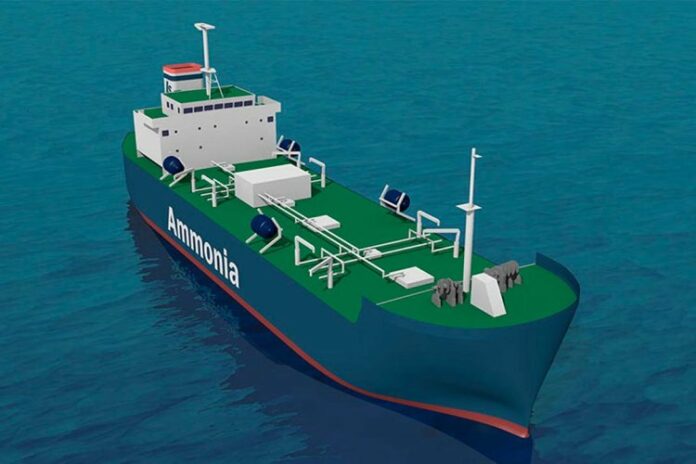
Mitsubishi Shipbuilding has recently completed a conceptual study for an ammonia bunkering vessel capable of supplying ammonia fuel to ships. 

This study involved joint investigations with INPEX CORPORATION, which boasts abundant achievements and experience in the energy supply chain, in order to respond to increasing demands for ammonia-fueled ships.

Since ammonia does not emit carbon dioxide (CO2) when burned, it is expected to be utilized as a stable source of clean energy in the future, and is getting attention as a fuel that will greatly contribute to the reduction of greenhouse gas emissions in the maritime industry.

Mitsubishi Shipbuilding has made use of its ample knowledge of the design and production of multi-purpose liquefied gas carriers, which are capable of transporting ammonia, in furthering conceptual considerations for a highly flexible ammonia bunkering vessel having enough tank capacity, ship maneuverability, and bunkering equipment that ensures compatibility with various ammonia-fueled vessels expected to be served.

Mitsubishi Shipbuilding will carry out further technical investigations, and with the cooperation of the maritime-related companies involved and the like, will set its sights on the commercialization of this vessel. Moreover, in order to contribute to customer needs in terms of the whole value chain, Mitsubishi Shipbuilding will continue to put efforts into developing various types of ships.

Vineyard Wind and Shoreline Offshore to build CTV terminal on Popes Island

0

Under the terms of the agreement, Vineyard Wind will provide $750k in funding through its Industry Accelerator Fund, which is co-managed by the Massachusetts Clean Energy Center (MassCEC), to support the acquisition of two floating barges to meet the berthing needs of Vineyard Wind and future developers.  

The barges will be located on the northern side of Pope’s Island, which is fully protected by the New Bedford Hurricane Barrier, and help developers work during both the construction and operations and maintenance phases of the different projects. In addition to the barges, Shoreline Offshore will upgrade its existing facilities, including the addition of fuel tanks and other infrastructure needed to serve New Bedford’s multiple maritime industries.

Vineyard Wind CEO Klaus S. Moeller said:

“We’re proud to partner with the Quinn family on a unique project that meets the evolving needs of both commercial fishing and offshore wind. By expanding the capability of this site, we not only secure a great location for our vessels, we also are improving facilities that can serve other fishing vessels and increase fueling capacity of the harbor – a win-win for both of New Bedford’s vitally important industries.” 

Once installed, the floats will be able to berth up to six CTVs and meet the specifications of the offshore wind industry, with access to a fueling station, potable water, ramp, and full security. This project will also increase fueling capacity in the New Bedford Harbor, which is currently limited to one terminal.

Charles Quinn, President of Quinn Fisheries, who has been working within New Bedford’s commercial fishing industry for more than 35 years, said:

“This project provides the capacity for the offshore wind industry to efficiently utilize the New Bedford Harbor while also ensuring New Bedford’s commercial fishing industry can continue operating within the New Bedford Harbor with little to no interruptions. By expanding space through increased berthing spaces and increased fueling capacity, we’re supplying two key components that both industries need, so that both can flourish.”

Jennifer Downing, Executive Director of the New Bedford Ocean Cluster, said:

“The New Bedford Ocean Cluster is committed to ensuring local businesses are included in the development of the offshore wind industry in New Bedford. News of this project is particularly exciting because we’re seeing a longstanding family business in New Bedford entering a new market and contributing to the growth of offshore wind, but also a project that will demonstrate the economic benefits of commercial collaboration between two port industries.”

Jennifer Daloisio, CEO of MassCEC, said:

“The investment from the Vineyard Wind Accelerator Program in the Shoreline Offshore facility represents yet another great example of the advancement of the offshore wind supply chain in the Commonwealth. This project will leverage additional MassCEC funding recently announced for the expansion and improvement of port facilities to serve offshore wind.”

Shoreline Offshore is currently working on final designs and permitting for the fuel terminal and expects it to be installed and operational by April 2023.  The company is also committed to contracting as much of this local infrastructure project as possible to local companies and has already retained the services of local companies in the planning of this project.

Vineyard Wind, an 800-megawatt project located 15 miles off the coast of Martha’s Vineyard, will generate electricity for more than 400,000 homes and businesses in the Commonwealth of Massachusetts, create 3,600 Full Time Equivalent (FTE) job years, save customers $1.4 billion over the first 20 years of operation, and is expected to reduce carbon emissions by more than 1.6 million metric tons per year, the equivalent of taking 325,000 cars off the road annually. 

Vineyard Wind will begin delivering clean energy to Massachusetts in 2023.

Fugro’s QuickVision® allows Heerema to accurately position wind turbines

0

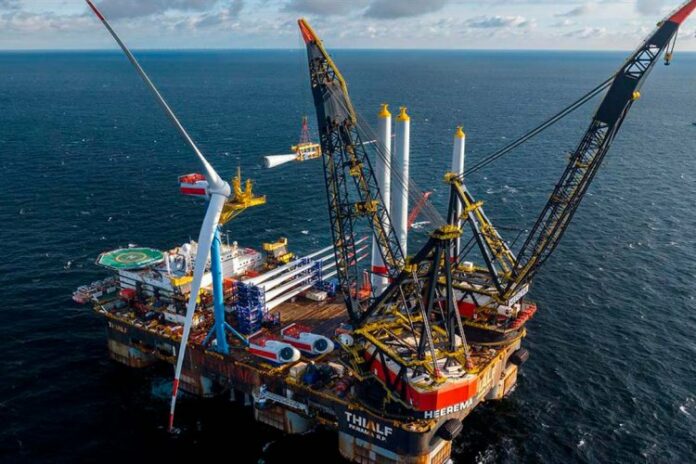
Using a novel floating Rotor-Nacelle Assembly (RNA) installation method, Heerema is installing wind turbines with the blades already pre-assembled on deck, onto the tower fixed on the foundation.

Fugro’s QuickVision® technology allows Heerema to position the RNA remotely and efficiently within strict tolerances, whilst reducing personnel risks traditionally associated with offshore installation operations.

“The QuickVision® system gives us that extra certainty required to install the RNA on the tower whilst removing the need to have engineers visually observing under the load,” says Sándor Hötte, Senior Installation Engineer at Heerema. 

The largest technical challenge for Heerema when using a floating installation vessel is managing the relative motion between the suspended load in the vessel’s heavy lift crane and the top of the fixed foundation tower. Fugro’s QuickVision® technology provides real-time information from the camera system ensuring precise monitoring of the lifting, positioning, and lowering phases of the installation process, allowing Heerema to position the RNA with an accuracy of less than 2 cm.

“With this project for Heerema, we have taken the next step in offshore wind installation support, adding RNA installations to our survey capabilities and expanding the applications for QuickVision®,” says Sjoerd Butter, Product Owner Vision Technologies at Fugro. 

The Arcadis Ost 1 is a 257 MW wind farm and will generate enough green energy to power the equivalent of up to 290,000 households. The installation campaign started in October 2022 and final commissioning is planned in 2023.

Ship-aH2oy project gets EU funding

0

With 17 partners from 7 European countries, the project aims to introduce high-temperature solid oxide fuel cells (SOFC) and liquid organic hydrogen carrier (LOHC) technology for marine use.

In combination with efficient heat integration, this will result in a scalable, safe, and sustainable power and heat generation system on board ships.

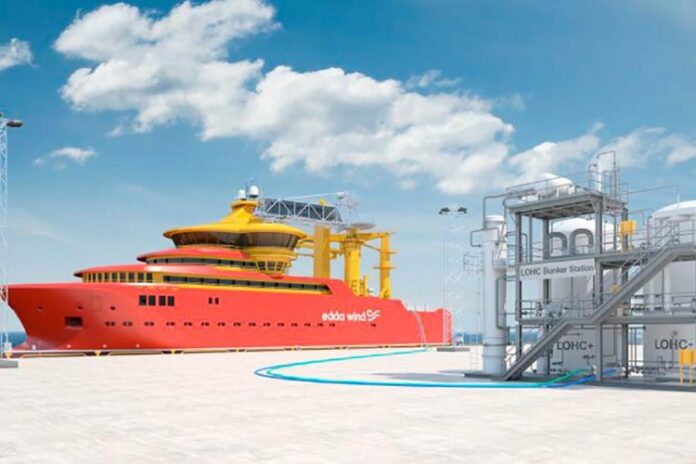
To demonstrate the technology, a 1 MW hydrogen power system, consisting of a fuel cell module and a hydrogen release unit, is intended to be installed onboard a new service operation vessel (C/SOV).

Edda Wind is a market leading C/SOV operator. Their new fleet of C/SOVs for offshore wind operations are all designed with spare room for the future installation of hydrogen power systems up to 3 MW.

“We are thrilled to be a part of Ship-aH2oy and to have the opportunity to demonstrate this cutting-edge technology onboard one of our vessels. With the support from EU and our excellent consortium partners, we are ready to take the next step toward zero-emission maritime operations for offshore wind farms,” says Kenneth Walland, CEO of Edda Wind.

At a later stage, the project will also include a replication study for integrating the power system on board a passenger ship operating on coastal waters. The implementation and demonstration will prove that the concept developed during the project is scalable beyond the 3 MW level.

Liquid organic hydrogen carrier (LOHC) adds a new way of handling hydrogen onboard ships in contrast to the established technologies. Instead of using gaseous or liquid hydrogen, hydrogen is chemically bound to a carrier.

The carrier chosen in this project is an industrially available thermal oil, benzyl toluene, which can be used to store and transport large amounts of hydrogen within the existing fossil fuel infrastructure. This LOHC solution also significantly increases the safety onboard as the carrier oil is non-explosive.

A hydrogen release unit onboard the ship releases the hydrogen from the LOHC into the fuel cell. The waste heat from the SOFC will be recovered for the hydrogen release unit as well as the ship’s heating needs. In this way, a high system efficiency can be achieved. In combination with the safety and handling advantages of LOHC, this makes it a very promising emission-free fuel.

“The use of liquid organic hydrogen carrier technology in this project is a potential game-changer for the maritime industry’s accelerated transition to clean energy. The LOHC solution applied enables a superior safe and efficient way to store and transport hydrogen, proven in stationary systems. We are thrilled to bring this innovative tech on the water and start testing it as main power for the vessel, demonstrating its capabilities in this groundbreaking project,” comments Øystein Skår, General Manager at Hydrogenious LOHC Maritime.

Seven Seas Grandeur floated out in Ancona

0

The float out ceremony was held at the Ancona shipyard for “Seven Seas Grandeur”, the third luxury cruise ship that Fincantieri is building for Regent Seven Seas Cruises, the luxury line for Norwegian Cruise Line Holdings Ltd. The delivery is scheduled for November of this year.

Like the first two vessels of her class “Seven Seas Grandeur” is 55,500 gross tons with accommodation for only 746 passengers, with among the highest staff-to-guest ratio in the industry. She is built using the very latest in environmental protection technologies, while the interiors are particularly sophisticated, with every attention paid to the guest experience.

Besides Regent Seven Seas Cruises, to which Fincantieri delivered “Seven Seas Explorer” (2016) and “Seven Seas Splendor” (2020), Norwegian Cruise Line Holdings Ltd. operates Norwegian Cruise Line’s (NCL), which will receive other five Prima Class ships from Fincantieri, and Oceania Cruises, for which the Group has in its orderbook two new-generation cruise ships which will start the Allura-class.