-7.3 C
New York
Home Blog Page 336

Deltamarin participates into Socatra sail conversion project

0

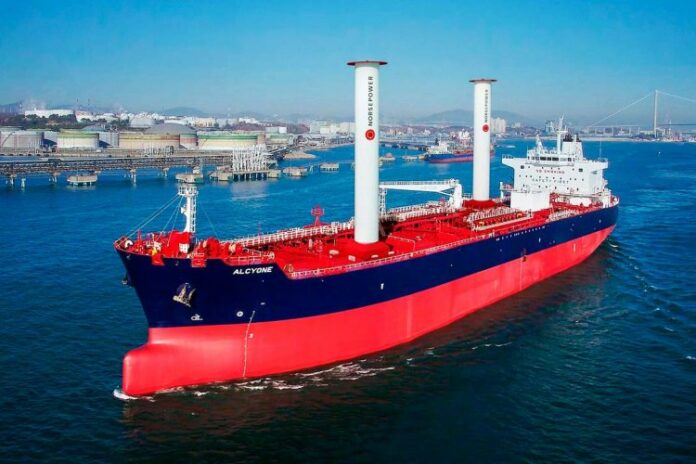
Deltamarin and Socatra have signed a contract for a conversion basic design package for installing two Norsepower rotor sails onboard the 50,000dwt Chemical/Product tanker Alcyone.

Deltamarin will carry out a full class approval design package for the conversion, including naval architectural, structural, structural analysis, deck outfitting, machinery and electrical works. All the necessary modifications to the existing vessel will be carried out with the aim of class approval from the selected class society.

The signed contract is a good continuation of previous similar projects that Deltamarin has done for both existing ships and new constructions. 

The increase in decarbonisation technologies and clean technology solutions indicates a clear shift towards efficient and environmentally friendly operations, and enables progress towards emissions reduction goals, such as minimising fuel costs, enabling carbon regulatory compliance and improving IMO Carbon Intensity Indicator (CII) ratings.

Houlder completes liquid hydrogen vessel design and related studies for Shell

0

Design and engineering consultancy, Houlder, has recently completed a major design project for Shell International Trading and Shipping Company Limited (“Shell”): the development of a concept design for a 20,000m3 liquid hydrogen (LH2) carrier. 

Houlder collaborated with Shell on the statement of requirements, ensuring that both parties were aligned on vessel specifications. The team then conducted a feasibility study for fuel and powering arrangements, and also undertook concept general arrangement, hull design and powering, and structural design work.

The concept design was verified and optimised using Computational Fluid Dynamics (CFD) analysis. Houlder recently enhanced its hydrodynamics, computer simulation and technical data analysis capabilities through the acquisition of Seaspeed Marine Consulting.

In addition, Houlder recently completed related work for Shell on hydrogen containment systems and carried out a ship piping and instrumentation review for ships carrying hydrogen as a cargo or as a fuel.

Jonathan Strachan, Director – Ship Design & Engineering at Houlder, commented:

“These are very cool projects, both literally and metaphorically, with liquid hydrogen clocking in at -253°C. It is always a privilege to design pioneering vessels that have the potential to drive the energy transition forwards. And it’s become part of Houlder’s DNA. We look forward to collaborating with Shell on future pioneering projects.” 

HST Marine orders four offshore wind crew transfer vessels

0

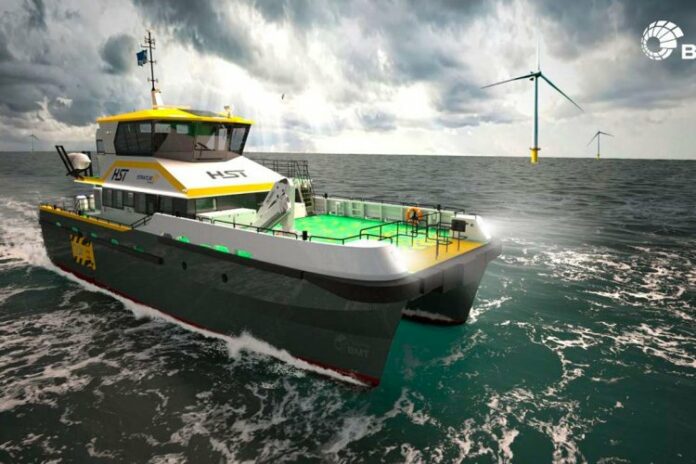
Strategic Marine is forging into the burgeoning green maritime space with an order for four hybrid StratCat 27 (SC27) Crew Transfer Vessels (CTVs) for a new customer, Purus Wind’s HST Marine.

The inaugural order for parallel hybrid SC27s will see the four vessels being delivered in the first and second quarters of 2023. If the options for two additional vessels are exercised, the additional pair will be delivered in third quarter 2023.

Acquired by low-carbon maritime energy transportation and infrastructure systems provider Purus Marine earlier this year and now under its offshore wind business Purus Wind, HST Marine has been expanding its current fleet of vessels rapidly with a quick succession of hybrid CTV orders in particular. Purus Wind provides CTV and commissioning/service operation vessels (C/SOVs) to its customers and will also be expanding its fleet of hybrid C/SOVs.

The BMT-designed StratCat 27 is well-suited to meet the needs of the rapidly developing offshore renewables sector and Strategic Marine’s build-to-stock programme gives it an advantage in meeting tight delivery schedules amid global supply chain challenges.

Mr Tom Nevin, CEO of HST Marine and Business Head of Purus Wind says:

“We are excited to be working with Strategic Marine on this new project and look forward to these new vessels joining our fleet soon.”

The hybrid ready StratCat 27 design was launched in May 2021 and has already seen wide interest from the offshore wind industry, where solid operational capabilities and a reduced environmental footprint are key requirements.

Strategic Marine’s Chief Executive Officer, Mr Chan Eng Yew says:

“We are delighted to have won this order with HST for our first hybrid StratCat 27 which will serve the demanding European offshore wind sector.

“The confidence shown in ordering our new design demonstrates Strategic Marine’s growing reputation for producing reliable, high-quality vessels designed to our customers’ requirements that meet stringent delivery demands.”

The 27-metre vessel was designed for optimal operational efficiency across a wide range of loading conditions, with a hull form that maximizes waterline length and reduces emissions and fuel consumption. A maximum speed of 26 knots enables operators to transport customers quickly and efficiently.

Accommodations and bridge deck layout have been refined with feedback from vessel operators and customers. Post-Covid, real-world adaptations have been made to reduce the risk of infectious disease on operations, meeting Bureau Veritas biosafety notations.

Meanwhile, cabin design has been optimized for improved comfort and workflow, with ample storage space, comfortable sleeping areas and business class seating for 24 offshore service/industrial personnel and three crew members.

The vessel’s bridge deck layout has been enhanced to give improved visibility from the helm and an ergonomic layout to increase comfort for the bridge crew.

In line with the stringent environmental demands of the market, the vessel also features a Green Passport.

Strategic Marine’s recent collaboration with Sea Forrest Power Solutions and Danfoss Power Solutions builds on this increasingly popular design with a retrofittable hybrid power option for vessels delivered without the systems installed at delivery.

The parallel hybrid system enables a reduction in main engine hours and maintenance costs, significant reduction in vessel noise and vibration and, depending on the vessel’s operational profile and charging facilities, can significantly cut the vessel’s operational carbon footprint.

In recognition of this, Strategic Marine has specially designed a unique logo that will denote this and other future hybrid-powered vessels in its range.

Developers join forces with the Carbon Trust to decarbonise and scale up sustainably

0

The developers design, build and operate wind farms globally, including across Europe, North America and Asia, and collectively represent around a quarter of global installed capacity. 

They will work in collaboration with the Carbon Trust as part of the new Offshore Wind Sustainability Joint Industry Programme to develop the first industry-backed methodology and guidance to measure and address the carbon emissions associated with offshore wind farms throughout their lifecycle, including emissions from the manufacturing of materials and installation of wind farms.

The aim of this work is to help the global offshore wind industry scale as sustainably as possible and continue its important contribution towards meeting the world’s Net Zero target by 2050 and limiting the most extreme impacts of climate change. A standardised methodology will ensure the scale of installation needed is delivered in a low carbon way and encourage comparability across developers and assets.

This programme is the fifth addition to the Carbon Trust’s renewable energy innovation platform which consists of a portfolio of R&D activities including the Offshore Wind Accelerator (OWA), the Floating Wind Joint Industry Programme,  the Integrator and the Offshore Renewables Joint Industry Programme.

By the end of 2021, 55GW of offshore wind capacity was installed globally, with over a third of this being installed within 2021. However, according to the IEA, an additional 70-80GW will need to be installed every year from 2030 in order to achieve Net Zero by 2050.

As demand for renewable energy grows, the offshore wind industry needs to scale up rapidly to meet this level of ambition, and this must be done in a sustainable way. Building on the decarbonisation efforts at an individual wind farm level, a collaborative industry effort will be key to creating a consistent approach to account for carbon impacts, increase transparency of supply chain emissions and accelerate engagement across the value chain. This will support the delivery of the scale of installation needed, with the benefit of a strong understanding of lifecycle carbon emissions. 

While offshore wind energy generation has a significantly lower carbon impact than fossil fuels, the sector must also work collaboratively to de-couple its own value chain from carbon and resource-intensive models of production, deployment and operation, addressing key hotspots such as steel, cement and fuels. 

Jan Matthiesen, Director, Offshore Wind at the Carbon Trust said:

“Global climate targets cannot be met without stepping up renewable energy generation, and offshore wind is particularly crucial to the world’s transition away from fossil fuels. Our experience working with the industry through various joint industry projects is proof that collaboration is key. Over the last fourteen years, we have been focused on scaling up the offshore wind market through our Joint Industry Programmes, such as the Offshore Wind Accelerator and the Floating Wind Joint Industry Programme.”

“Now it’s time to turn our attention to supporting innovation and scaling up sustainably in order to create a more resilient and competitive industry. We are delighted to be collaborating with such a global set of developers, whose collective voice has the potential to take the industry to the next level.”

The first project delivered as part of the Offshore Wind Sustainability Joint Industry Programme will:

  • Develop the first standardised methodology to enable developers to calculate the lifecycle emissions of their offshore wind assets, including their upstream supply chain emissions, the construction phase and the operation phase.
  • Engage with the industry to improve data quality and availability and promote greater supply chain transparency.
  • Identify key carbon emission drivers and hotspots in the offshore wind value chain and wind farm life cycle. 

The programme officially kicks off in January 2023 with the methodology expected to be released for use across the industry by 2025. 

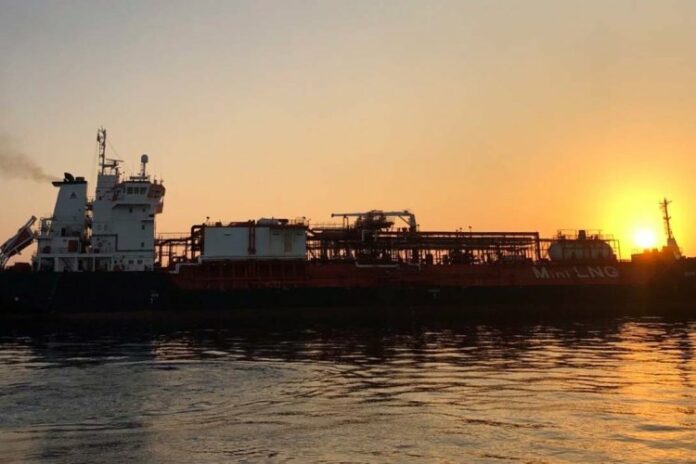
Titan acquires two small scale LNG carriers for bunkering capability retrofit

0

Titan has acquired two small scale LNG carriers – the Seapeak Unikum and Seapeak Vision – from Seapeak, the Canadian gas transportation company formerly known as Teekay LNG Partners. 

The vessels will be retrofitted to ensure suitable LNG bunkering capabilities, enabling them to both transport and bunker LNG, liquefied biomethane (LBM), and in the longer-term hydrogen derived e-methane (e-LNG). 

Both sister vessels have a cargo capacity of 12,000 cubic metres (cbm) and are 152m in length by 19.8m in width. The two vessels will join Titan’s fleet in March this year. They will operate in the Mediterranean and Northwestern Europe and will cater for increased demand for LNG and LBM (bio-LNG) in these regions.

The vessels and the retrofit are financed by Sole Shipping Group through a long-term bareboat charter leasing structure. Sole Shipping Group is a major European provider of financial leasing structures. Titan was advised on this transaction by Endegeest Consulting BV.

Titan’s expanding fleet already includes a mix of owned and chartered vessels. Furthermore, Titan has an ambitious newbuild program consisting of Titan Krios and Titan Hyperion designs. The two new additions to the fleet allow Titan to deliver fuel to a wider range of LNG-powered vessels, including all container ships. Before operations begin, the LNG carriers will be retrofitted to improve LNG bunkering capabilities and to meet Titan’s quality standards. After the upgrades, the vessels will be able to load at all major LNG terminals and perform ship-to-ship bunkering and loading operations.

Thanks to its cargo conditioning capabilities, the vessels are also capable of doing more complex projects, including gas-up cool-down operations and commissioning parcels. On top of this, the cargo tanks are made of stainless steel, making them compatible with propylene, ethylene, and ammonia. 

Douwe de Jong, fleet development director at Titan, commented:

“Retrofitting these ships so that they can trade and bunker LNG, LBM, and in the longer-term hydrogen derived e-methane, offers Titan even more flexibility in its clean fuel operations. The team is currently specifying the upgrades and finding a suitable shipyard for the retrofit work.” 

Niels den Nijs, owner and CEO of Titan, added:

“A Solid double digit EBITDA in 2022 has allowed us to make this additional investment in our fleet. This decision aligns with Titan’s ambitious growth strategy in Europe and the Mediterranean. We look forward to continuing to work with our partners, like Sole Shipping Group, to expand our fleet to support our LNG and LBM distribution targets and serve our customer’s long-term demand.”

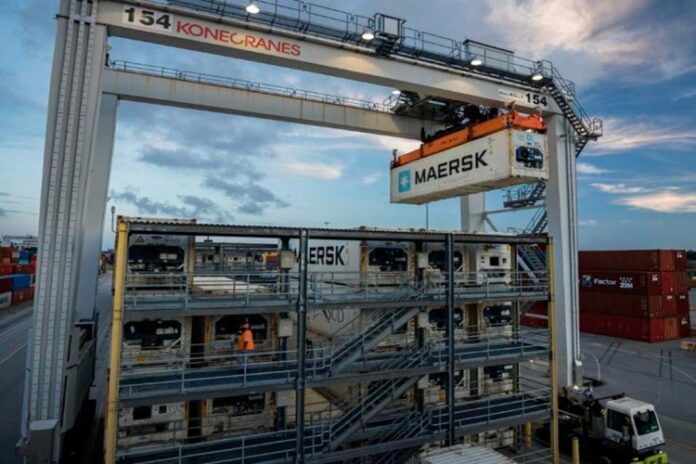
Georgia Ports expanding refrigerated container capacity

0

The Georgia Ports Authority is increasing chilled cargo capacity to stay ahead of anticipated growth in demand.

GPA Executive Director Griff Lynch said:

“Expansion among our cold storage partners in the Savannah market will drive greater volumes of chilled cargo crossing our docks. While the Port of Savannah already accommodates the most refrigerated containers on the South Atlantic and Gulf coasts, enhancing our on-terminal capacity will better support the jobs and opportunity sparked by private investment.”

Private chilled and frozen warehouse space in Savannah is set to grow by 11 percent in 2023 to more than 2.2 million square feet.

At its meeting Tuesday, the GPA board approved construction of seven additional refrigerated container racks at the Port of Savannah. The $6.2 million project will grow the number of slots for cold cargo to 3,506 at Garden City Terminal, counting chassis plug-ins. Savannah’s Ocean Terminal provides another 368 refrigerated container plugs.

Chilled and frozen products handled at the Port of Savannah range from proteins such as poultry and seafood to blueberries, avocados, citrus, stone fruits and onions, among other commodities. GPA’s fastest growing cold chain exports in 2022 were poultry, beef, fish fillets, candy and frozen vegetables. Top performing chilled imports were grapes, vegetables, fish fillets, potatoes and candy.

GPA Board Chairman Joel Wooten said:

“Serving the U.S. Southeast via Savannah reduces overland transportation costs to vital markets such as Atlanta, and ensures perishable goods reach customers faster and fresher. The growing population of our region, combined with expansions in port and private infrastructure are strengthening Savannah’s position as a perishable supply chain gateway.”

In other business at the GPA board meeting, Lynch reported that vessel service had returned to normal operations, with no backlog.

Additionally, Lynch reported that four new ship-to-shore cranes are slated to arrive at the Port of Savannah on Feb. 9. The cranes are large enough to handle vessels with a capacity of 20,000+ twenty-foot equivalent container units.

The cranes are destined for Container Berth 1 at Garden City Terminal, which is currently under renovation. When berth improvements are complete in July, the Port of Savannah will be able to serve seven ships simultaneously.

Georgia’s deepwater ports and inland barge terminals support more than 561,000 jobs throughout the state annually, and contribute $33 billion in income, $140 billion in revenue and $3.8 billion in state and local taxes to Georgia’s economy.

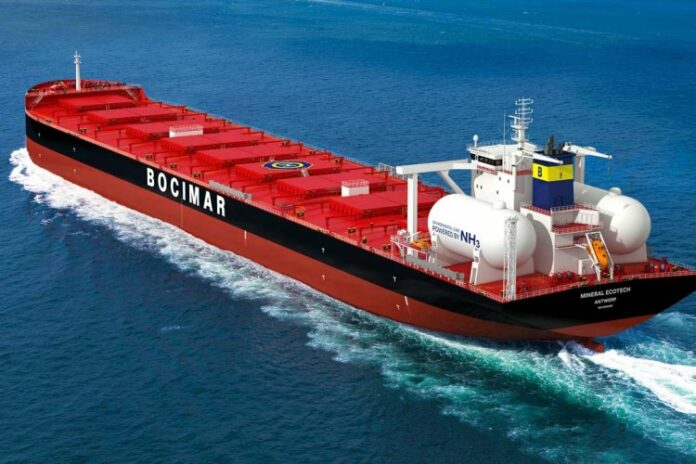
WinGD and CMB.TECH co-develop large ammonia-fuelled engine

0

Swiss marine power company WinGD and Belgian shipping and cleantech group CMB.TECH have signed an agreement on the development of ammonia-fuelled two-stroke engines. 

The companies aim to install the ammonia dual-fuel X72DF engine on a series of ten x 210,000 DWT bulk carriers to be built at a Chinese shipyard in 2025 and 2026.

Under this joint development project, CMB.TECH will support WinGD in establishing its ammonia-fuelled engine concept for a large bore engine. CMB.TECH has significant insight into alternative fuels and builds, designs, owns and operates large marine and industrial applications that run on hydrogen and ammonia.

Both WinGD and CMB.TECH believe that ammonia will play a significant role in the decarbonisation of the maritime industry. The series of large bulk carriers powered by WinGD’s ammonia engines will be the first of its kind and proof that large sea-going vessels can be powered by zero-carbon fuels.

CMB CEO Alexander Saverys said:

“We believe that ammonia is the most promising zero-carbon fuel for deep sea vessels. Our intention is to have dual-fuel ammonia-diesel engines on our dry bulk vessels, container vessels and chemical tankers. Collaborating with WinGD on the development of the first ammonia-fuelled two-stroke engines for our fleet is a pioneering partnership on the road to zero emissions in shipping.”

WinGD CEO Klaus Heim said:

“This project is a significant step in accelerating our ammonia technology roadmap for a zero-carbon future. Having CMB.TECH’s input into the engine development will be invaluable given their alternative fuel expertise and their ship operator’s perspective on how an engine concept is implemented and ultimately operated. The project is an opportunity to widen the roll-out of ammonia technology across our portfolio, in line with our previously stated timeframe of introducing the first engine concept in 2025.”

These newest engines in WinGD’s X-DF portfolio will add ammonia capability to the proven technology of WinGD’s X engines. They will be based on the X92B engine, whose market-leading fuel efficiency makes it an ideal starting point for developing large bore ammonia-fuelled engines.

The development project with CMB.TECH is one of several projects WinGD is carrying out with shipowners and engine builders to ensure that dual-fuel ammonia two-stroke engines will be available as the global fleet prepares to adopt green fuels to meet long-term decarbonisation targets.

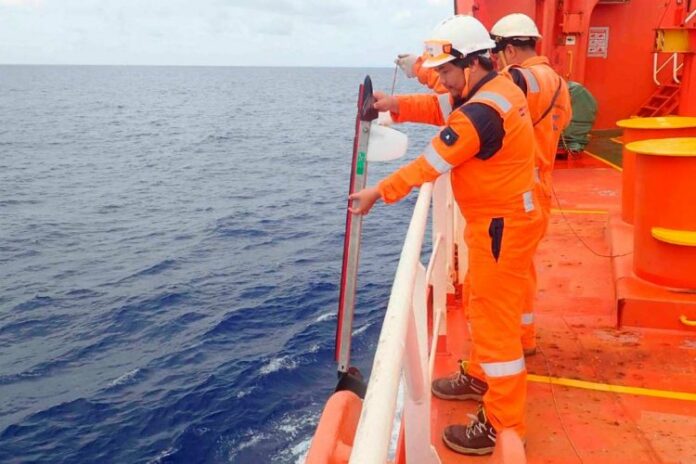
Klaveness expands roll-out of semi-autonomous hull cleaning solution

0

After a successful pilot of Shipshave’s solution onboard four vessels over 2021-22, Klaveness Combination Carriers (KCC) has confirmed an order for purchasing a further five latest generation Shipshave ITCH models. 

The decision was made after analyzing the fuel performance of the four vessels operating a Shipshave ITCH, which showed improvements in fuel efficiency between 2-5%. A close collaboration with Klaveness Ship Management (KSM), the crew aboard the vessel and Shipshave’s engineers has been essential for further developing the solution to become a fleet-wide tool for KCC. 

KSM’s Head of Projects and Business Transformation Martin Wattum, comments:

“The friction force from the vessels’ hulls is the major resistance factor from the operation of deep-sea vessels. Biofouling of the hull greatly increases this resistance, resulting in higher carbon emissions. In addition, there is also a potential biodiversity risk when transferring alien biomass from the vessels’ hulls across oceans into vulnerable regions. Shipshave ITCH helps us to maintain fouling-free vertical sides of the hulls and delivers on both challenges and we look forward to rolling out the solution to the full CLEANBU fleet.”

Eirik Eide, Chief Commercial Officer at Shipshave, says:

“KCC was the very first pilot user of our ITCH and has played a significant role in our further developments. Simplifications and improvements are the result of top collaboration between the tripartite structure of the User, Supplier and Buyer. We believe innovation is well nurtured this way. Shipshave, and early mover KCC, has worked well together. We are very happy to supply KCC with a solution aiding in their pursuit of very ambitions sustainability goals. The savings obtained using ITCH makes an impressive ROI.”

APM Terminals Mumbai facilitates India’s first export of AVGAS 100 LL aviation fuel

0

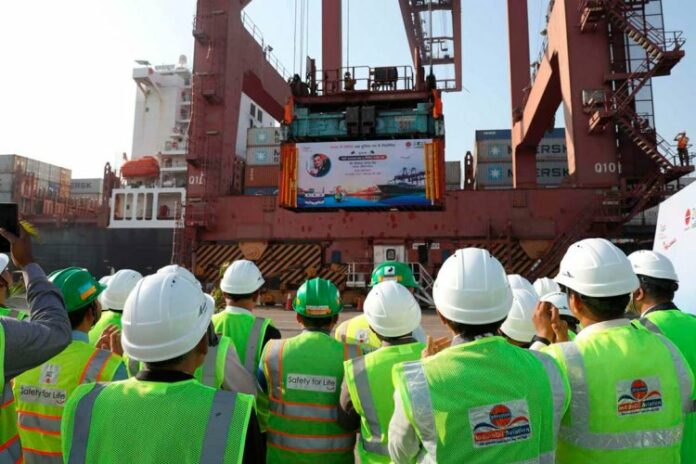
APM Terminals Mumbai has partnered with the IOCL [Indian oil Corporation Ltd.] to export the first ever consignment of AVGAS 100 LL aviation fuel from India. 

AVGAS 100 LL is an aviation fuel used in training aircraft.

IOCL has produced the fuel in India since September 2022, however this is the first time that AVGAS 100 LL is being exported from India. The container, carrying 80 barrels of AVGAS 100 LL, was loaded safely onto the MV Sofia, a Maersk service Vessel. The export event was flagged off by Mr. Shrikant Vaidya, CMD of IOCL, IRS Unmesh Wagh, Dy Chairman of JNPA, and Sunay Mukerjee, COO of GTI in presence of the senior officials of IOCL, Jawaharlal Nehru Port Trust and GTI. IOCL appreciated the stringent safety and operational guidelines followed by GTI to smoothly evacuate the container.

Mr. Sunil Kumar Nagdawne, Deputy General Manager Aviation IOCL Western Region mentioned:

“The team at IOCL is extremely thankful to GTI for all the support and cooperation provided during this momentous event. The close coordination amongst all the teams to ensure a safe and smooth export of the hazardous commodity from the terminal is remarkable. Truly world class experience and we as customer are delighted with your service.”

Mr. Sunay Mukerjee, Chief Operating Officer at GTI mentioned:

“We, at GTI are extremely humbled and honoured to be a part of Government of India’s vision of Atmanirbhar Bharat and the Make in India initiative by facilitating the first consignment of AVGAS 100 LL export from our terminal. We are thankful to IOCL to choose our terminal for this historic milestone. We are committed to serve our customers by turning around their cargo safely and swiftly at our terminal.”

Partners will develop an industrial estate on ArcelorMittal’s Ghent site

0

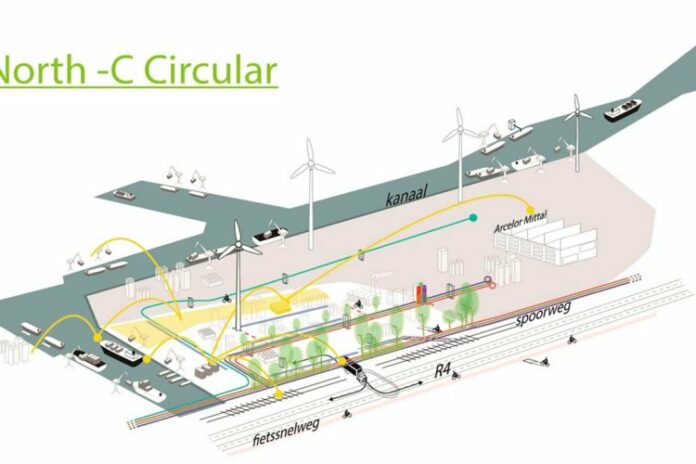
North Sea Port, ArcelorMittal Belgium and all the port companies have committed themselves to a climate-neutral port by 2050. This will be achieved by reducing CO2 emissions and further developing the circular economy. To this end, the North-C Circular industrial estate is being developed in Ghent.

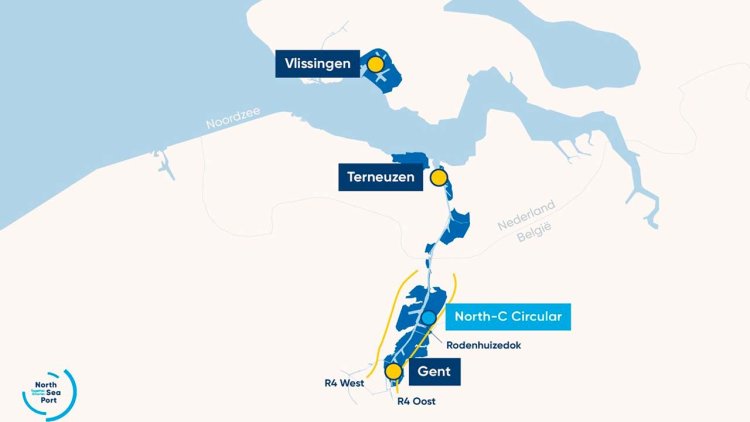
The development of the North-C Circular industrial estate is a joint initiative by North Sea Port and ArcelorMittal Belgium. Together, they will develop an industrial estate on the right bank of the Ghent-Terneuzen Canal in Ghent. The site lies between Rodenhuizedok, the port ring road R4 and the ArcelorMittal Belgium site. It is part of the port area that is designated for companies based in the seaport and along the waterways. The intention is to prepare this 150-hectare site for construction, install basic infrastructure like utilities, provide access by road, rail and water and move in companies geared towards circular activities.

A brownfield covenant is being drawn up for the entire site between North Sea Port, ArcelorMittal Belgium and the Flemisch government. On 40 hectares of this site there are historic dredging sludge depots that are impeding the immediate development of the site. The covenant will enable this underutilised land to be transformed into an industrial estate in a comprehensive and structured manner and its use extended. The accompanying forest compensation will be carried out as much as possible in the vicinity.

When work on the industrial estate is completed, it will be ready to accommodate economic activities focused on reducing CO2 emissions, the energy transition from fossil to renewable raw materials, the circular economy and partnerships with companies in the surrounding area. These companies will then contribute to making the port and ArcelorMittal Belgium climate-neutral.

“After all, North Sea Port is supposed to be a climate-neutral port by 2050. By as early as 2025, the port wants to capture 3 million tons of CO2 for storage and reuse. And by 2030, it wants to emit half the current amount of CO2 as interim step to complete elimination by 2050”, says North Sea Port CEO Daan Schalck.

In addition, by 2025 the port wants to have 150 hectares of land ready for circular projects. By that date, the port also wants to attract 10 circular activities with innovative technologies or processes that can enable sectors like chemicals and steel to make the transition to a climate-neutral port.

“ArcelorMittal Belgium is passionate about sustainability and circularity and is playing an absolute pioneering role within industry in terms of the climate transition”, says CEO Manfred Van Vlierberghe. 

ArcelorMittal Belgium is working hard to implement an action plan to reduce CO2 emissions by 35% by 2030 (compared to 2018) and to be climate-neutral by 2050. This action plan consists of three axes.

The first is to further improve resource and energy efficiency.

The second is to embrace hydrogen as a reducing agent. ArcelorMittal Belgium has two blast furnaces that primarily use carbon to draw oxygen from the iron ore. One blast furnace will be replaced by an installation that uses natural gas and hydrogen to reduce iron ore. This investment consists of a DRI (Direct Reduced Iron) installation and two electric smelting furnaces.

The third and final axis of the action plan is the development of ‘Smart Carbon concepts’ in the heart of the circular economy. ArcelorMittal Belgium is replacing fossil carbon with green and circular carbon: using waste wood from container parks as part of the Torero project is an example of this. ArcelorMittal Belgium is active in the field of Carbon Capture and Utilization (CCU). For instance, the Steelanol installation will convert steel gases into 80 million litres of sustainable ethanol per year. For the purposes of Carbon Capture and Storage (CCS), ArcelorMittal Belgium is working with the Belgian gas network operator Fluxys and North Sea Port on a study into liquefying CO2 and building a CO2hub.

“The development of North-C Circular is an essential step in the further development of these Smart Carbon concepts”, concludes CEO Manfred Van Vlierberghe.