-2.8 C
New York
Home Blog Page 274

Wallenius Wilhelmsen orders four dual-fuel vessels

0

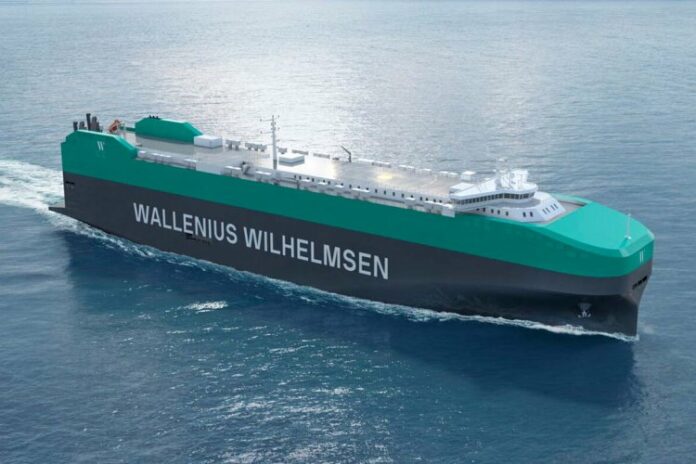
The first of the four 9,350CEU methanol-capable and ammonia-ready vessels, designated as ‘Shaper Class’, will be delivered from the second half of 2026 from Jinling Shipyard (Jiangsu).

All vessels are designed to support Wallenius Wilhelmsen’s trading pattern and have a high degree of flexibility, allowing a variety of cargo compositions.

The ability to install ammonia propulsion provides future optionality to choose future green fuel types in line with Net Zero ambitions.

Lars Ekren, Senior Manager – Newbuildings and Conversions, said the process of developing its new design started over 1.5 year ago and the Newbuidlings team has been working in close collaboration with the designer (Delta Marin) and internal & external stakeholders during this period, to ensure the vessel design meets of safety requirements and is well suitable for our future short term & long-term operational needs.

Lars Ekren said:

“Energy efficiency & reducing GHG emissions is a top priority, and a lot of effort has put into ensuring the new vessels will significantly contribute to meeting our emission reduction targets.”

Wallenius Wilhelmsen signed a biofuels contract with ExxonMobil in June, in which the energy giant will supply fuel containing 30% biofuels and 70% conventional fuels.

In Q2, the shipping company – which opened the Orcelle Terminal in Zeebrugge in May – reported $477m EBITDA and $396m operational cash flow.
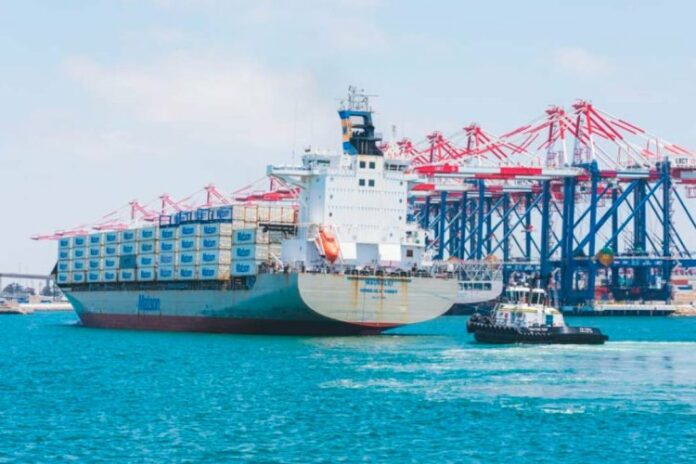
Port of Long Beach awarded $2.72 million security grant

0

As a recipient of the agency’s Port Security Grant Program, the Port of Long Beach will use the funding to modernize its core security network, strengthen existing security systems and enhance resiliency and business continuity in the event of a disaster.

Officials welcomed the grant announcement as an opportunity to improve the Port’s ability to prepare for, respond to and recover from large-scale emergencies.

“This grant will strengthen our ability to protect the workforce and critical infrastructure responsible for moving cargo valued at more than $200 billion annually,” said Port of Long Beach CEO Mario Cordero. “We thank the Department of Homeland Security for helping enhance the security and resiliency of our operations in the event of an emergency.”

The $2.72 million grant awarded to the Port of Long Beach will be divided across four projects:

  • Maintenance for closed-circuit television and wireless security systems, including more than 750 cameras keeping watch across the Port.
  • Support for existing security access control systems and information-sharing platforms connecting commercial agencies and law enforcement agencies at the federal, state, and local levels.
  • Expansion of a cloud-based resiliency network in the event of terrorism, a cybersecurity attack, a natural disaster or other emergency outages.
  • Modernization of the Port’s core security network to protect the integrity of the systems monitored by its security headquarters, the Joint Command and Control Center.

As the premier U.S. gateway for trans-Pacific trade, the Port handles trade valued at $200 billion annually and supports 2.6 million jobs across the United States, including 575,000 in Southern California. 

SHI ammonia fuel supply system receives AiP

0

Ammonia is expected to be used as a ship fuel for decarbonization since it does not emit CO2 when combusted. 

Meanwhile, adequate safety measures are imperative as it has been pointed out that ammonia is toxic to humans and corrosive to materials. ClassNK has been involved in projects aiming for zero-emission ships using ammonia fuel in terms of safety assessment, and has issued its “Guidelines for Ships Using Alternative Fuels” as a necessary standard to minimize the risks related to ammonia fuelled ships for the ships, crews, and environment by stipulating requirements for installation, controls, and safety devices.

ClassNK carried out a review of a conceptual design of the system developed by SHI based on the part C of its “Guidelines for Ships Using Alternative Fuels”. Upon confirming they comply with the prescribed requirements, ClassNK issued the AiP.

Dong-Joo Kim, Head of Shipbuilding Sales Engineering Team, Samsung Heavy Industries said:

“We are happy to collaborate with ClassNK in this important design development and believe this AiP award demonstrates SHI’s readiness for the new ammonia shipping market that is coming from global decarbonization demands.”

Masaki Matsunaga, Corporate Officer / Director of Plan Approval and Technical Solution Division, ClassNK said:

“It is a great honor to be involved in the SHI’s initiatives to expand industry options for greener shipping by conducting safety assessment on its ammonia fuel supply system, which has resulted in AiP. ClassNK remain committed to supporting to realize innovative solutions for decarbonization of shipping.”
 

Russian navy fires warning shots at cargo ship in Black Sea

0

The incident comes after the collapse of a deal that ensured exports of Ukrainian grain could continue.

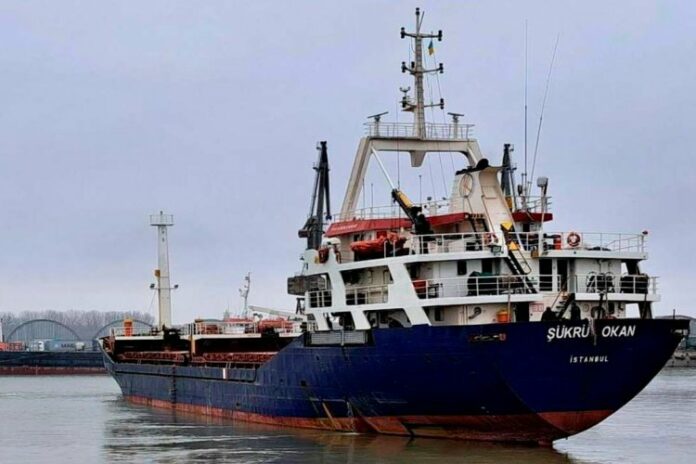
“In order to force the ship to stop, warning shots were fired with light automatic weapons from a Russian warship,” the ministry said on Telegram.

According to Moscow, the captain of the Palau-flagged vessel, the Sukru Okan, had not responded to an order to stop for “an inspection concerning the transport of prohibited goods”. There were no reports of any damage or casualties.

International shipping data showed the cargo ship had been in the south-western region of the Black Sea, near the coast of Bulgaria, and appeared to suggest it was heading towards the Romanian port Sulina, which is close to the border with Ukraine.

The news of the encounter comes just as Ukraine begins registering ships willing to use a safe “humanitarian corridor” it is trying to establish in the Black Sea, with a view to allowing trapped cargo ships to finally set sail.

It is not yet clear if Russia will acknowledge or respect the plan.

The river port of Izmail, in the Odesa region, has become one of the main exit routes for Ukrainian agricultural products since Moscow terminated the agreement on grain exports.

In mid-July, Moscow terminated the agreement that had allowed Ukrainian grain to leave the country’s southern ports since last summer, despite the blockade put in place by Russia.

A few days later, on 19 July, Moscow warned that any ship travelling to or from Ukrainian ports would be considered a potential target. Kyiv reacted the next day by saying the same would apply to Russian ships.

Since then, the number of attacks in the Black Sea has increased on both sides and the Russian army has struck Odesa, a major port in southern Ukraine, as well as the river ports of Izmail and Reni on several occasions, attacks denounced by Kyiv as a means of hindering its exports.

Ukraine hit the Russian port of Novorossiysk and several Russian ships in the Black Sea, including an oil tanker.

SMIT Salvage successfully transfers all oil from decaying FSO Safer to safe modern tanker

0

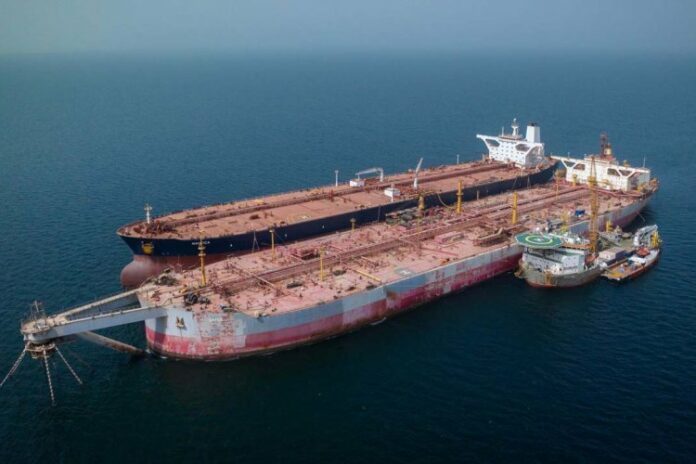
During this United Nations (UN) coordinated operation, over 1.1 million barrels of oil was successfully transferred to a safe modern tanker moored alongside the FSO Safer. The successful completion of this complex operation has averted a major disaster that would have had huge humanitarian, environmental and economic consequences.

Peter Berdowski, CEO Boskalis, said:

“I am very pleased that we have succeeded in removing the oil from the FSO Safer and transferring it to a modern double hulled tanker. With our salvage activities, we have once again averted a potential environmental disaster of unprecedented proportions. Thanks in part to the efforts of the Dutch Ministry of Ministry of Foreign Trade and Development Cooperation and over two years of preparations by Boskalis, we were able to successfully execute this complex operation on behalf of the United Nations. I would like to compliment our salvage experts in particular for successfully carrying out the work under very challenging conditions in the Red Sea.”

Leading up to the transfer of the oil, the salvage team executed several preparatory activities. After the Boskalis multipurpose support vessel Ndeavor arrived at the site of the FSO Safer in late May, the salvage team conducted a thorough inspection of the vessel and its cargo. In addition, various measures were taken to ensure a safe working environment. Preparations were then made to transfer the oil to the Very Large Crude Carrier (VLCC) purchased by the UN. The VLCC was moored alongside the FSO Safer on 23 July with the support from two Smit Lamnalco tugs, and oil screens were installed on the bow and stern between the two tankers as a precautionary measure. Following this mooring operation, oil transfer pipes were connected between the FSO Safer and the VLCC on 25 July and hydraulic pumps were installed to transfer the oil to the VLCC.

The remaining activities of SMIT Salvage include the cleaning of the tanks which is expected to take approximately one week. The FSO Safer will be prepared for transport to a green scrapping yard under the responsibility of the UN.

Windar Renovables to manufacture Windanker OWF transition pieces

0

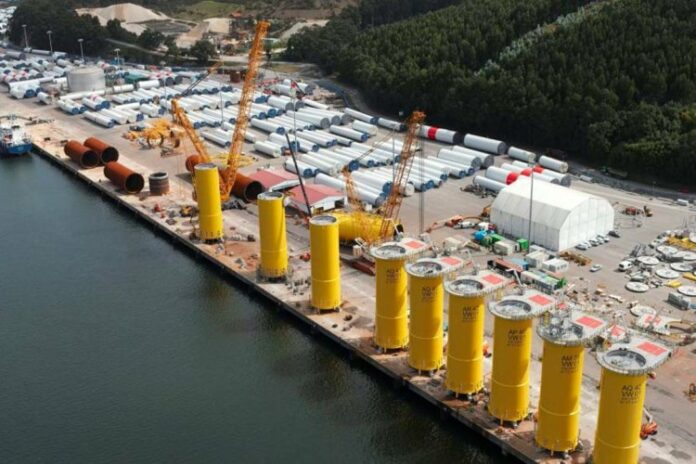
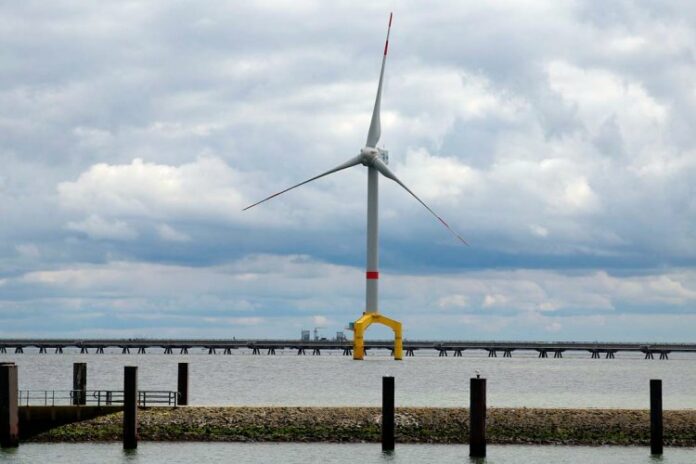
Windar Renovables has signed an agreement with Iberdrola to manufacture 21 transition pieces for the Windanker offshore wind farm in German waters. This is the sixth project of this type of foundation to date.

The production will be carried out at the Avilés facilities, with the collaboration of a large number of Spanish suppliers in the manufacture of the secondary structure, which will be integrated in the Port of Avilés, prior to its shipment to Germany.

The manufacture of the 21 transition pieces will require more than 450,000 hours of work, generating 400 jobs. Production is scheduled to start at the end of 2024 and deliveries are expected to be made by the end of summer 2025 approximately. Each of these elements will have a maximum height of 17 metres, a diameter of 8 metres and a weight of 400 tonnes.

Windanker, which will be located in German waters, will have a capacity of 315MW, including new generation turbines with a unit capacity of approximately 15 MW, and part of the electricity generated will be allocated to power sales contracts once it is commissioned in 2026.

Windanker will strengthen the Baltic Hub, which will add more than 1,100 MW of installed capacity, also comprising Windar’s previously built Wikinger and Baltic Eagle projects.

With this new contract, Windar positions itself as a global leader in the manufacture of these offshore substructures and strengthens its relationship with Iberdrola for more than 9 years, adding to the contracts previously awarded for offshore wind farms in the United Kingdom, Germany, France and the United States.

Windar Renovables is also currently involved in the manufacture of this type of substructures for other large Iberdrola offshore wind farms. Baltic Eagle, in German waters, whose last shipment took place last June (50 pieces), Vineyard Wind I (62 pieces) off the coast of Massachusetts, United States, and East Anglia 3, United Kingdom (95 pieces).

For Orlando Alonso, Windar Renovables Executive President, “Iberdrola’s new order demonstrates the high-quality of our products and the reliability of our processes. It also confirms our forecasts that we expect a strong activity growth in the sector, for which Windar Renovables is reinforcing its corporate structure and is working to increase its capacities to respond to this challenge and continue to deserve the trust of such important customers”.

Crowley, Port of San Diego celebrate groundbreaking for all-electric tugboat charging station

0

Joined by key partners and community stakeholders, the ceremony marked a significant step forward in the industry’s journey to decarbonization and reduce emissions in the San Diego community. 

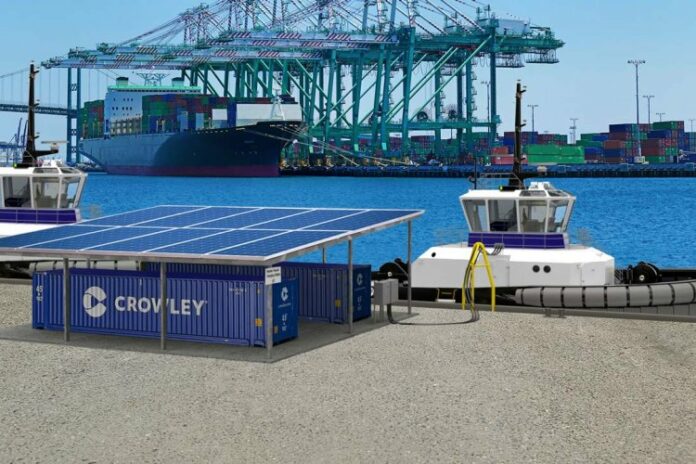
The charging station is a microgrid charging facility that will allow vessels to recharge quickly while reducing peak loads on the community energy grid. It is equipped with two containerized energy storage systems provided by Corvus Energy, a leading supplier of reliable energy solutions in the maritime sector. The station is designed to operate on off-peak hours from the community’s energy grid, and it includes a solar power array to support renewable energy use. The technology is also designed to support other electric equipment and vehicle operations, if needed.

Each energy container will house battery modules with storage capacity of almost 1.5 MWh, for a total capacity of 2,990 kW. The station will be equipped with battery monitoring system, HVAC and firefighting and detection technology.

Matt Jackson, vice president of advanced energy for Crowley, said:

“Building a sustainable, zero-emission port of the future requires pioneering new and innovative technology, as well as a commitment to partnerships so we can meet the needs of our communities, customers and people.”

Chairman Rafael Castellanos, Port of San Diego Board of Port Commissioners, said:

“Their commitment to sustainability in the maritime industry directly aligns with our own efforts and goals to reduce emissions and improve public health in our communities while also supporting efficient and modern maritime operations.”

The eWolf and its shoreside solar charging station are the result of a partnership among Crowley, the San Diego County Air Pollution Control District, the California Air Resources Board, the Port of San Diego, the U.S. EPA and the U.S Maritime Administration. 

GE Vernova’s Offshore Wind business and ORE Catapult sign new research collaboration

0

The Offshore Renewable Energy (ORE) Catapult and GE Vernova’s Offshore Wind business have announced the signing of a new research collaboration, building on the success of their previous ‘Stay Ashore’ programme.

The £4m agreement paves the way for a multi-year collaboration between GE Vernova and ORE Catapult to create a dedicated research programme to help drive down the Levelised Cost of Energy (LCOE) for the global offshore wind market with reliable, enhanced, sustainable, and demonstrated technologies. The partnership will focus on enhancing turbine performance and improved operations and maintenance through smart technological solutions.

The previous programme, Stay Ashore, successfully brought GE and ORE Catapult teams together, and has provided UK businesses, from micro-SMEs to large companies, with the opportunity to collaborate and develop products and services aimed at extending the life of offshore wind components.

Stay Ashore delivered solutions for wind turbine digital twins and used data analytics to inform turbine operations and maintenance. The real-time data from over 70 operational wind turbines, together with virtual physics-based models for the turbine, were used to generate a cloud based digital twin covering models for a multitude of wind turbine components and systems.

From robotic crawlers and new drone and sensor technologies, to cutting edge digital analysis tools, the Stay Ashore programme supported UK SMEs in the development of further new products and services which have subsequently leveraged nearly £2m in funding and/or investment.

Moving forward, this new agreement will focus on some of the biggest challenges facing the industry in the future large-scale deployment of offshore wind and use applied research to enable the development of key innovations.

Andrew Jamieson, Chief Executive of the Offshore Renewable Energy (ORE) Catapult, said:

“This new collaboration is a hugely exciting development for the sector and will allow us to build on the fantastic work we have already seen come through the previous research programme carried out with our colleagues at GE Vernova.

“By combining knowledge and research capabilities in this way, we can help innovative UK companies to develop some of the cutting-edge technological solutions that can help them support the continued growth of the UK offshore wind sector, while also opening up opportunities to export their skills and services to new global markets.”

Vincent Schellings, Chief Technology Officer of GE Vernova’s Offshore Wind business, said:

“We are pleased to be able to build on our collaboration with ORE Catapult. They are an important partner in helping us to understand how we can use innovation to continue to make offshore wind as efficient, reliable, and sustainable as possible, both in the UK and globally.”

PortsToronto launches canadian debut of WasteShark aquadrone

0

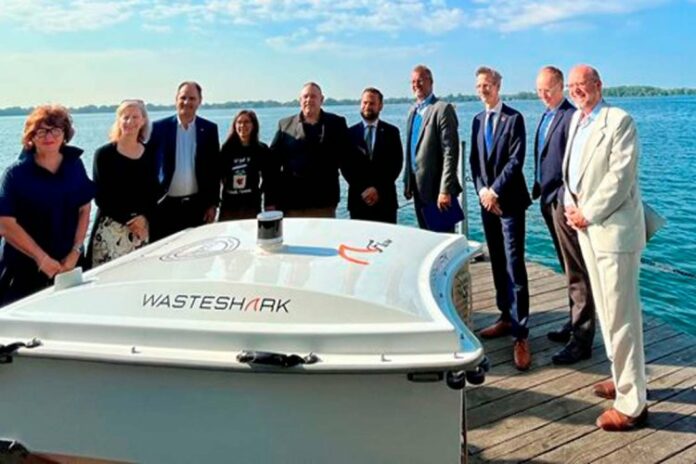
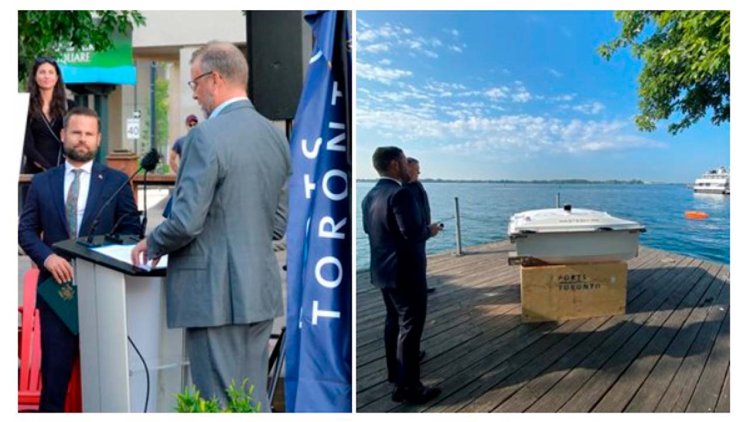
As part of PortsToronto’s larger Trash Trapping Program, two new WasteSharks, Ebb and Flow, will join PortsToronto’s network of Seabins in capturing floating debris and small plastic pollution from the surface of the water.

This pilot was made possible through a grant initiative supported by the Ministry of Foreign Affairs of the Netherlands, which supports demonstration projects, feasibility studies, or investment preparation projects that contribute to the United Nations’ Sustainable Development Goals (SDGs).

The WasteShark aquadrone is designed to collect floating debris from aquatic environments and operates in a similar fashion to a Roomba-like vacuum in a home. A versatile tool, the WasteShark can operate manually by remote control and can be programmed to operate autonomously along a prescribed route using an online dashboard. With a 180-litre capacity, the robot can collect and remove 1100-lbs of waste daily from the aquatic environment. 

Based out of the Outer Harbour Marina, Ebb and Flow will troll problem areas for debris collection throughout the Toronto Harbour and waterfront, collecting debris and contributing to important data collection as part of PortsToronto’s research partnership with the University of Toronto Trash Team and their International Trash Trap Network.

RJ Steenstra, President and CEO, PortsToronto, said:

“The WasteShark aquadrone is the latest addition to our successful Trash Trapping Program, which has removed hundreds of thousands of pieces of plastic pollution and debris from the Toronto Harbour and Lake Ontario since 2019. These aquadrones offer exciting new capability within our network of trash trapping devices in the Toronto Harbour, allowing a nimble response to floating debris that will complement the Seabins already deployed along the waterfront.”

Dr. Chelsea Rochman, U of T Trash Team, said:

“The Seabins are a fantastic tool for removing small litter items, including microplastics, and we are excited to pair them with WasteSharks that are more geared toward larger items – such as plastic bags, plastic bottles, and single-use cups. This new data will complement the trash trap data we currently collect, contributing important information to inform upstream solutions for preventing litter from reaching our waterfront in the first place.”

Fast Facts

  • With a 180-litre capacity, each WasteShark can collect and remove 1100-lbs of waste daily from the aquatic environment. 
  • The WasteShark can operate both manually and autonomously for up to six hours.
  • The WasteShark can collect floating debris, small plastic pollution and vegetation from the surface of the water.
  • Vegetation can act as a filter, capturing microplastics in the water.
  • Researchers estimate that 10,000 metric tonnes of waste enter the Great Lakes each year, much of it plastic.
  • A common occurrence in urban waterways, floating debris comes from a variety of sources – including overflowing or windblown trash bins at the water’s edge, storm water runoff and industry.
  • Anthropogenic (originating from human activity) debris, and microplastics in particular can harm wildlife and contaminate drinking water, and negatively impact public enjoyment of cherished shared water resources. 
  • Since 2019, the Trash Trapping Program has removed hundreds of thousands of small pieces of plastic pollution from the Toronto Harbour, moving the needle toward cleaner water in Lake Ontario.
  • To view detailed data, results and mitigation strategies identified during the 2022 research season, please consult the U of T Trash Team’s website.

Norvic Shipping adds eco-friendly ultramax to expanding fleet

0

Norvic Shipping has taken delivery of an energy efficient ultramax vessel on a long-term charter

Commenting on the acquisition, AJ Rahman, Group Chairman and CEO of Norvic Shipping, said:

“Acquiring dry-bulk vessels on lengthy charters is part of Norvic’s strategy to expand our long-term fleet, ensuring we meet increased demand from our customers for efficient ships.”

“Norvic employs an active management approach to fleet trading, keeping in mind vessel utilization and performance. We put great focus on fuel and voyage efficiency and have an accomplished and qualified team of operators who proactively work towards reducing our impact on the environment.

“Alongside building our own modern fleet, we work with our network of vessel owners to provide customers with choices around how they can meet their ambitions, including access to ships with a higher CII/EEXI rating, or, over time, those that can use alternative fuels.”

The arrival of Norvic Copenhagen is the first of three energy efficient vessels that the organization will add to its fleet this year. In the coming months, the company will also take delivery of two 40,000 dwt handysize vessels – to be named Norvic Houston and Norvic Singapore respectively – from Onomichi Shipyard in Japan.