1.3 C
New York
Home Blog Page 275

Reygar supports HST Marine fleet decarbonisation

0

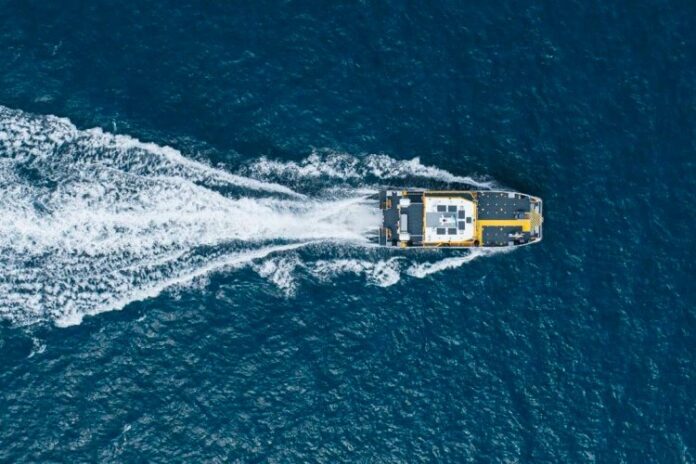
HST Marine currently has four hybrid CTVs in operation with three more soon to enter service, all of which have BareFLEET installed. These vessels are a mix of both controllable and fixed pitch propeller systems that take power from either a high-efficiency electric motor or the main engine, allowing them to operate near silently and with zero emissions in electric only mode.

Christopher Monan – Chief Operations Officer of HST Marine said:

“We recognise the value of gathering and sharing accurate performance data from our vessels. It supports the company in winning new contracts and enables us to build lasting customer relationships. We have seen reductions in main engine operation of around 50% on our hybrid vessels, which has the holistic benefits of lowering fuel consumption, emissions and noise when in harbour, as well as lengthening service intervals. Being able to demonstrate these efficiency gains with clear and concise performance data is of utmost importance to nurture trust with both new and existing charterer clients, whilst also providing them with essential evidence for their own environmental reporting.”

New features, developed by Reygar within the BareFLEET technology package, allow HST Marine to closely monitor the performance of hybrid vessels including, for example, a breakdown of electric versus diesel power consumption whilst carrying out different tasks offshore. BareFLEET also monitors the electrical power consumption of the hybrid drive, with specific usage and performance statistics now included alongside conventional diesel engine performance data. These features enable HST Marine to evaluate the environmental performance of hybrid CTVs against conventional vessels and to make adjustments for further improvement.

Chris Huxley-Reynard, Managing Director of Reygar, said:

“The team here is delighted to be supporting HST Marine on its mission to decarbonise offshore marine transportation. The transition to hybrid CTVs is an important step towards zero emission targets for the industry as a whole and we have recently delivered a number of BareFLEET systems for new hybrid vessels. It is hugely satisfying to see the technology performing well for HST Marine, providing their teams with the data they need both onboard and onshore.”

HST Marine, a wholly owned subsidiary of Purus Wind, part of Purus Marine, has worked closely with Reygar since its first vessels went operational some five years ago and has used BareFLEET on all new fleet additions since. The company continues to expand its hybrid CTV fleet with seven new Damen FCS 2710 and three Damen FCS 3210 vessels on order, all of which will be fitted with BareFLEET as standard.

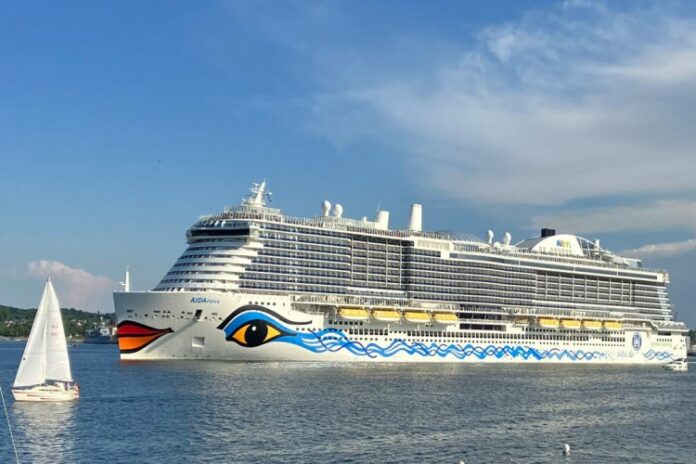
AIDA fleet to be fully equipped with Starlink by October 2023

0

The four rates Onboard Chat, Social Media Flat, Internet Flat and Premium Internet Flat build on each other and cover the entire range of communication needs: Options range from onboard chat among fellow travelers to prioritized high-speed Internet connections via VPN. 

Frank Bönsch, Vice President Guest Commerce, said:

“We want our guests, employees and staff to feel at home on board our AIDA ships. The collaboration with Starlink is another important step in the right direction. Whether chatting, posting or working – with the new, simple offers, people are guaranteed to find the right rate for them.”  

By pre-booking on myAIDA guests currently receive a 20% discount on the selected rate for the entire voyage. The Internet Flat and Premium Internet Flat rates can also be booked on board on a daily basis. Social Media Flat and the Onboard Chat are valid for the duration of the voyage. Our crew also benefits from the best possible Wi-Fi experience at sea. For them, the social media services will continue to be free of charge, allowing them to stay in unlimited contact with their loved ones back home. 

The Onboard Chat will be available in the AIDA app starting this fall. This lowest-priced option allows communication within a group or with individual fellow passengers. 

Until the new Internet rates are introduced, guests traveling on ships already equipped with the new access band service will benefit from a Starlink special offer with increased data volumes in the Internet packages.

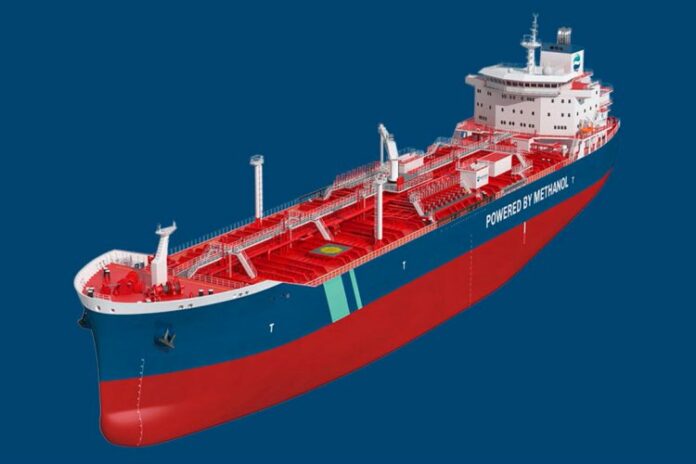
Hafnia orders dual-fuel methanol chemical IMOII MR Newbuilds

0

Together with Joint-Venture partner “Socatra of France”, Hafnia has concluded an order for four 49,800 deadweight dual-fuel Methanol Chemical IMOII Medium-Range (MR) Newbuilds, constructed out of Guangzhou Shipyard International (GSI), in China.

In 2023, Hafnia took delivery of two of its four Liquified Natural Gas (LNG) dual-fuel LR2 Product Tankers – the Hafnia Languedoc and Hafnia Loire, also built out of GSI, with the two remaining vessels to be delivered up to 2024. The Hafnia Languedoc and Hafnia Loire are both on a Time-Charter agreement to TotalEnergies.

The increasing momentum in green methanol-fueled vessels highlights its ability as a cleaner marine fuel, with a future-proofed and proven net-zero pathway, furthering Hafnia’s ambitions in meeting the IMO’s 2050 targets.

The use of green methanol onboard eliminates local pollutants, including SOx and Particulate Matter (PM), cuts NOx emissions by 60%, and reduces CO2 emissions by close to 100% on a tank-to-wake basis versus conventional marine fuels.

Three of these four vessels will be delivered in 2025, with the fourth delivered in 2026. All four vessels are fixed via Time-Charter to TotalEnergies shipping entity CSSA for a multi-year period.

On confirming this new order, Søren Steenberg Jensen – Head of Asset Management says, “Given the time it takes to build a vessel and the time it takes actually to start moving the needle on carbon emissions, it is important to act now and take proactive steps in decarbonizing the maritime industry.

It does, however, require partnerships with Charterers, to make the financials work. The cost of the new fuels’ technologies, if unsupported by long-term contracts, will have most owners refrain from taking the financial risk of the future fuel’s technology alone on otherwise already expensive assets.

We are very proud to be partnering with long-standing customer TotalEnergies, who are very committed in actively driving this transition with us.”

This deal marks the second time Hafnia partners with TotalEnergies in taking joint steps to develop low-carbon shipping solutions.

Jerome Cousin, Senior Vice President of Shipping at TotalEnergies, says,

“As the IMO just decided new ambitious targets to decarbonize shipping, TotalEnergies is mobilized to enable the development of low carbon shipping. The dual-fuel methanol propulsion of the chartered MR tankers will offer highly valuable fuel flexibility and the actual capability for TotalEnergies to steer the decarbonization of its shipping activity, in line with the Company’s ambition. We are also very pleased to expand the relationship with Hafnia, and its French partner Socatra to benefit from their expertise and deliver safe, low carbon, and efficient shipping services.”

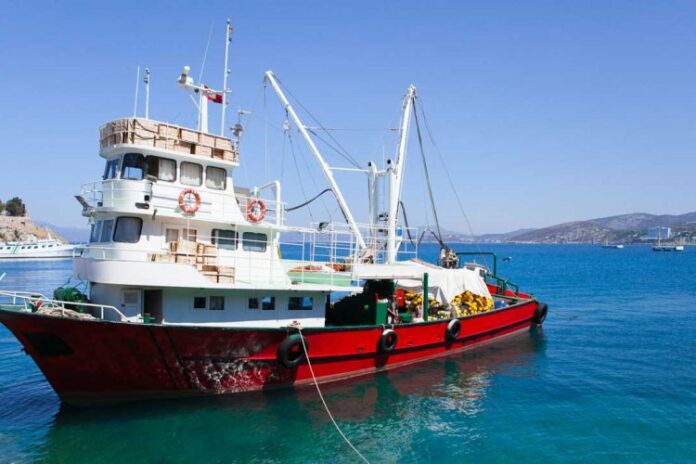
The EU and UK reach three agreements on fisheries management

0

The EU-UK Specialised Committee on Fisheries (SCF) reached three agreements for better fisheries management between the EU and UK.

The agreements include:

  • a mechanism for voluntary transfers of fishing opportunities between the EU and UK
  • common guidelines for notifying management measures to the other party
  • improvements to the management of four shared stocks (lemon sole, witch, turbot and brill)

Commissioner for Environment, Oceans and Fisheries, Virginijus Sinkevičius, said:

“These agreements demonstrate that the EU and UK can work effectively together under the framework of the EU-UK Trade and Cooperation Agreement. These agreements will improve the sustainable management of our shared fishing stocks and support both our fleets. It demonstrates the success of our work together to normalise our new fisheries relationship and sets a strong basis for continued cooperation on shared management challenges.”

The establishment of a mechanism for voluntary in-year transfers of fishing opportunities between the EU and UK will help fleets on both sides accommodate the distribution of their fishing opportunities to their specific operational needs. This mechanism will allow for several rounds of in-year transfers based on proposals from the industry. The mechanism is based on the principles of the interim system for quota exchanges in place since 2021, which has proven to work well for both parties. This agreement is unique among the EU’s relations with external fisheries partners, and follows the principles applied for quota swaps internally within the EU. 

The parties also made important advancements in the management of four shared stocks: lemon sole, witch, turbot and brill. The EU and UK adopted a recommendation setting out a new framework for setting Total Allowable Catches (TACs) for these four stocks, after scientific advice from the International Council for the Exploration of the Sea (ICES) stated that the previous management approach entailed sustainability risks. This framework includes new TACs for these stocks in the Channel and Skagerrak, and associated EU and UK quota shares for these TACs.

The joint guidelines for notifications of management measures are another important milestone. Both the EU and UK now have to notify the other party of all management measures they take in their respective waters that may impact the vessels of the other party. These guidelines provide clarity to this process, including on timelines for notification, standardised content of notifications and on the engagement on notifications.

Coral reefs benefit from reduced land-sea impacts under ocean warming

0

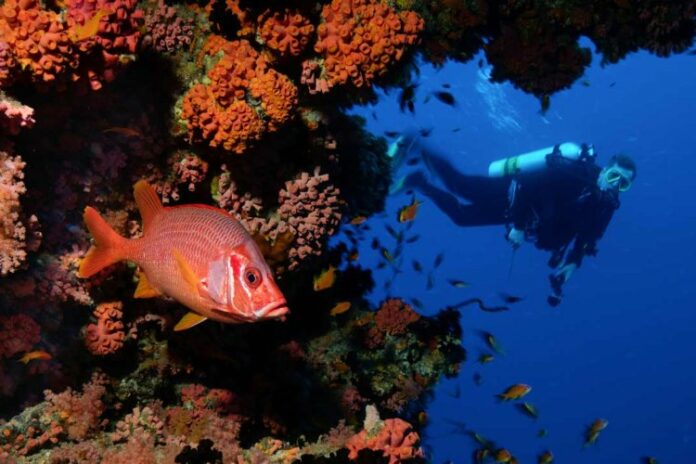
Coral reefs are among the most productive and biologically diverse ocean ecosystems on Earth. Many local human communities depend on tropical coral reefs for cultural practices, fisheries, and coastal protection. Unfortunately, coral reefs are threatened by the combined effects of local human impacts and global climate change. 

New research published in Nature demonstrates that integrating land and sea in coastal ocean management supports the continued persistence of coral reef ecosystems in our changing climate. The study was led by NOAA’s Pacific Islands Fisheries Science Center and Bangor University in the United Kingdom. 

“Our research finds that simultaneously reducing local land- and sea-based human impacts benefits coral reef ecosystems under ocean warming,” says Dr. Jamison Gove, a research oceanographer with the science center and co-lead of this study.

Land-Sea Connections

Human population density is four times higher in coastal areas than the rest of the world. This means that most human activities, development, and infrastructure are concentrated along the shoreline. In these areas, land-based impacts include wastewater pollution and urban runoff—a significant contributor to increasing coral disease and reducing coral growth and reproduction. They combine with sea-based impacts, like fishing pressure, to fundamentally disrupt coral reefs.

The research was conducted in the Hawaiian Islands, where 85 percent of people live within a few miles of the coast. But Hawaiʻi also has long stretches of remote coastline that remain undeveloped. This gradient in human population and coastal development makes it an ideal location to test how differences in local land-sea human impacts influence coral reefs over time.

The team of researchers used 20 years of high-resolution data on local human impacts and repeated underwater surveys of corals and reef fish from the same reefs to detect and document ecosystem change.
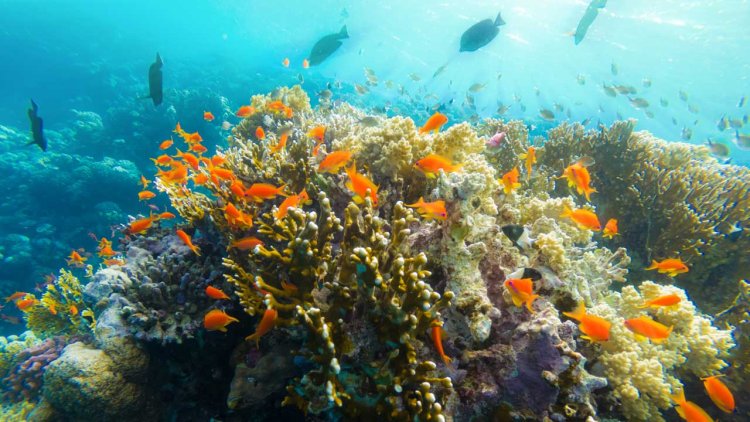
They discovered that on some surveyed reefs, coral cover increased over time—a positive indicator of reef ecosystem health—whereas on others, it decreased. The study showed that the difference between these opposing trajectories in reef health was their local conditions. Reefs with the lowest levels of land-based impacts and increased fish populations (particularly herbivorous fish that primarily feed on algae), had a positive trajectory in coral cover. Land-based impacts that impact coral include wastewater pollution, nutrient input, and urban run-off.

“Integrated land-sea management has been the guiding paradigm of coral reef conservation for decades, but evidence of its efficacy above either approach in isolation remains wanting and difficult to test,” says Dr. Gareth Williams, Associate Professor at Bangor University’s School of Ocean Sciences and co-lead of the study. “We generated the detailed and local-scale data needed to test how different combinations of land- and sea-based human impacts influenced reefs over time.”

An Unprecedented Event

As the global climate continues to change, there continues to be an increase in record-breaking events. Hawaiʻi is no exception. In 2015, the strongest marine heatwave recorded in Hawai‘i took place. A marine heatwave can have devastating effects on coral reef ecosystems. Corals have a symbiotic relationship with microscopic algae that produce their primary food source and give them their green, blue, and purple colors. During a marine heatwave, heat-stressed corals can lose their algae, appearing white or “bleached.” Prolonged coral bleaching can result in coral starvation and coral death.

“The 2015 marine heat wave in Hawai‘i was unprecedented in the region—nothing comes close in more than a century of recorded temperature data. As a consequence, many reefs experienced severe bleaching and extensive coral death,” says Dr. Gove. “But to our surprise, we found that coral cover was unchanged at nearly 20 percent of the reefs in our study. Which raises the question: Why did some reefs fare better than others despite experiencing similarly extreme levels of heat stress?” 
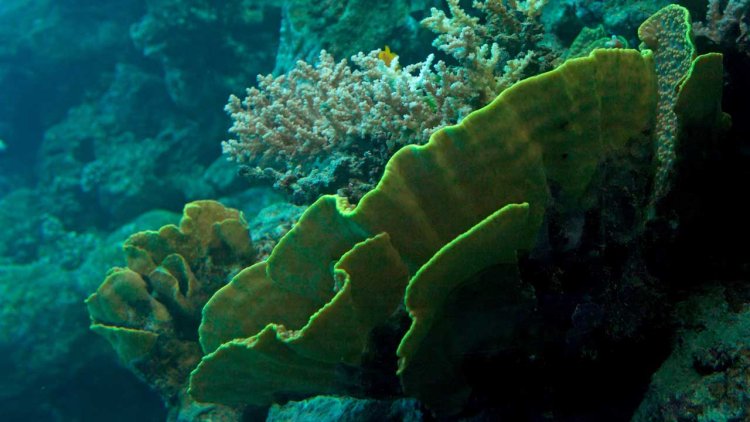
Once again, the researchers found that local land-sea conditions mattered. Reefs with the lowest levels of land-based stressors and increased fish populations had reduced coral loss during the marine heatwave.

“The study provides a detailed and more nuanced understanding of how land- and sea-based stressors combine to influence coastal ecosystems,” says Gerry Davis, a resource manager and lead of the Habitat Conservation Division at the Pacific Islands Regional Office. “This information is key for developing locally relevant and targeted management actions.”

A Path to Recovery

The researchers also assessed the influence of local conditions on coral reef ecosystem health for 4 years following the 2015 marine heatwave. They measured how much of the reef floor was covered by organisms that build reefs by depositing calcium carbonate, specifically hard corals and encrusting algae that help cement the reef together. Collectively known as reef-builders, these organisms represent an indication of ecosystem recovery following a major disturbance.

Again, the researchers found that local land-sea conditions influenced reef ecosystem health. Reefs with the highest cover of reef-builders had the lowest levels of wastewater pollution and had abundant populations of herbivorous fish known as “scrapers.”

Scrapers, which primarily are parrotfish (uhu) in Hawaiʻi, are an aptly named group of reef fish as they literally scrape the reef with their teeth while eating. “Uhu not only help remove algae that can smother corals, but they also clear space for the settlement and growth of reef-builders,” says co-author Dr. Greg Asner, Director of Arizona State University’s Center for Global Discovery and Conservation Science. “They are extremely important for coral reef recovery following a marine heatwave.”
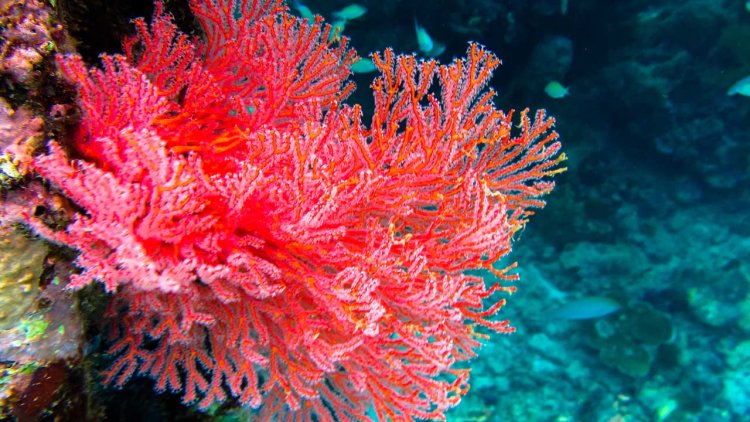
The researchers then compared various possible outcomes for coral reefs based on different management scenarios. They found that coupling land- and sea-based resource management led to a positive outcome. It resulted in a far greater probability of a reef having a high cover of reef-builders 4 years after the marine heatwave than if either land or sea were managed in isolation.

“The notion that land and sea are interconnected is deeply rooted in indigenous Hawaiian stewardship practices,” says Dr. Gove. Traditional Hawaiian resource management stretched from the mountains (mauka) to the sea (makai) and was inclusive of the entire watershed, or ahupuaʻa. “Our findings support the need for reintegrating both land and sea within coastal ocean management, akin to long-standing indigenous management of island ecosystems.” 

Brian Neilson, the Administrator for the Hawaiʻi Division of Aquatic Resources and a co-author of the study says, “This research highlights that a place-based, community-driven, and multi-agency effort is needed to effectively manage and conserve our coral reefs in Hawaiʻi now and into the future.”

Saipem: awarded offshore contract for BGUP project in Libya

0

Saipem has been awarded a new contract by Mellitah Oil & Gas B.V. Libyan Branch, a consortium formed by National Oil Corporation of Libya and Eni North Africa, for the development of the Bouri Gas Utilisation Project (BGUP), worth approximately 1 billion USD.

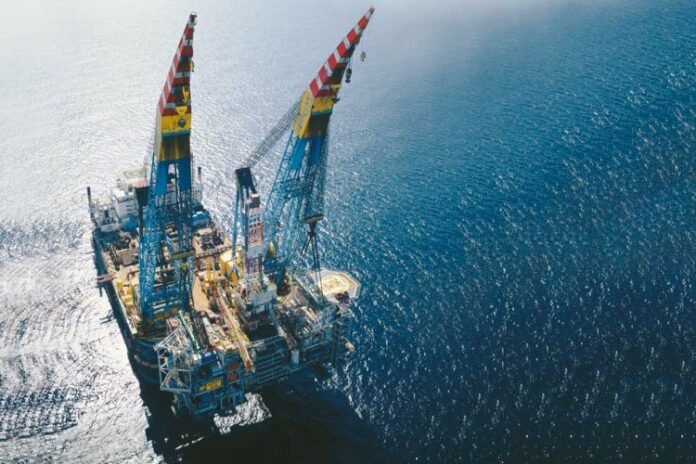
Saipem will undertake revamping of the platforms and of the facilities of the Bouri gas field, which lies in water depths between 145 m and 183 m, offshore the Libyan coast. The contract entails the engineering, procurement, construction, installation and commissioning (EPCIC) of an approximately 5,000-ton Gas Recovery Module (GRM), onto the existing DP4 offshore facility, together with the laying of 28 km of pipelines connecting the DP3, DP4 and Sabratha platforms.

The main lifting operations will be executed by the semi-submersible crane vessel Saipem 7000. With this award, Saipem confirms its commitment and competitive positioning offshore Libya. The completion of the project will make an important contribution to reducing CO2 emissions in Libya.

Pursuant to Article 6 of the Consob Regulation on related party transactions, Saipem informs that the above transaction qualifies as a “related party transaction”, since Eni S.p.A. jointly controls both Saipem and Mellitah Oil & Gas B.V.

Philippines says ‘promise’ to remove grounded warship a figment of China’s imagination

0

The Philippines maintains a handful of troops aboard the World War Two-era Sierra Madre at the Second Thomas Shoal, known by Manila as Ayungin shoal, which is located inside its 200-mile exclusive economic zone (EEZ).

China on Monday accused the Philippines of reneging on a promise made “explicitly” to remove the ship, which Manila grounded in 1999 to bolster its territorial claims in one of the world’s most contested areas.

“The Philippine government will never enter into an agreement where we will abandon our sovereign rights and jurisdiction over the Ayungin shoal,” Jonathan Malaya, National Security Council assistant director general, told a press conference.

“For all intents and purposes, it is a figment of their imagination,” Malaya said, challenging China to produce evidence of the promise.

China’s embassy in Manila said it had no comment.

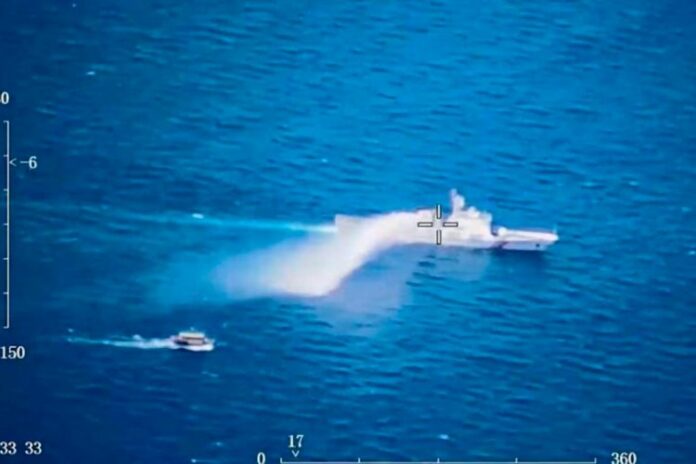
China and the Philippines have been embroiled for years in on-off confrontations at the shoal, the latest on Saturday. The Philippines accused China’s coast guard of using water cannon to impede a resupply mission to the Sierra Madre.

The Philippines was “committed to maintain” the rusty ship on the shoal, Malaya said, adding it was “our symbol of sovereignty in a shoal located in our EEZ”.

An EEZ gives a country sovereign rights to fisheries and natural resources within 200 miles of its coast, but it does not denote sovereignty over that area.

The Philippines won an international arbitration award against China in 2016, after a tribunal said Beijing’s sweeping claim to sovereignty over most of the South China Sea had no legal basis, including at the Second Thomas Shoal.

China has built militarised, manmade islands in the South China Sea and its claim of historic sovereignty overlaps with the EEZs of the Philippines, Vietnam, Malaysia, Brunei and Indonesia.

Jay Batongbacal, a maritime expert at the University of the Philippines, said control of the Second Thomas Shoal was not only strategic for China but it could be “another ideal place to build a military base.”

Source: Reuters

Damen delivers ultra shallow draft vessel to Bohlen & Doyen Bau GmbH

0

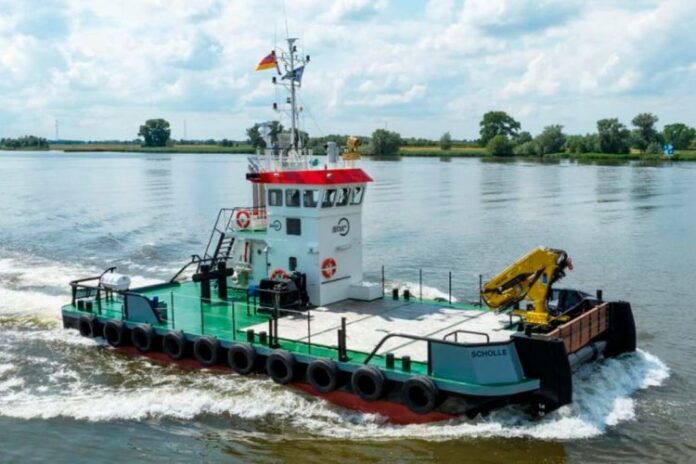
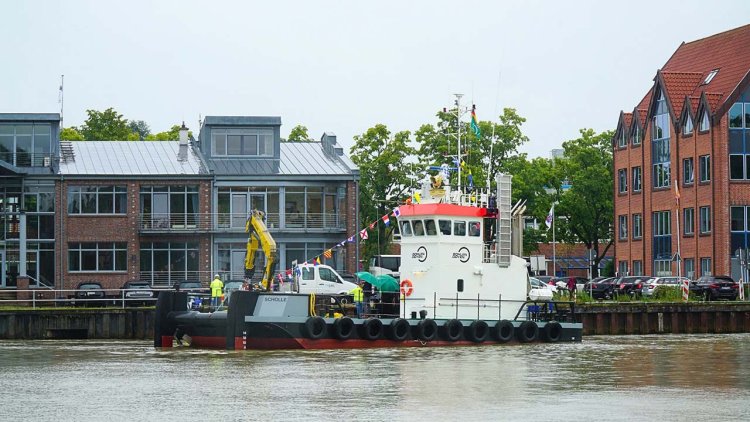
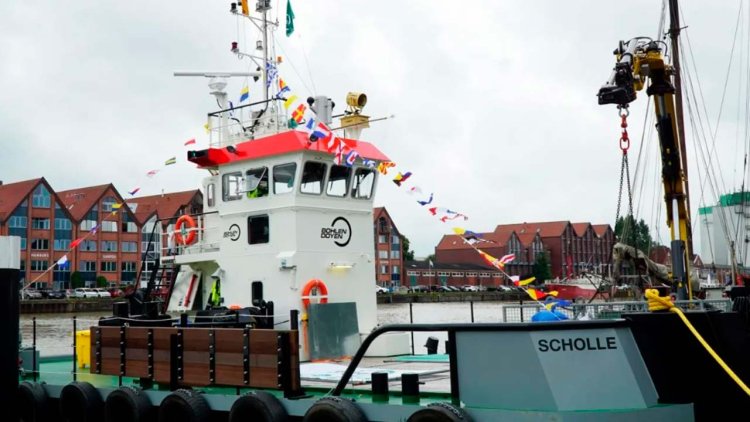
Just one month after the contract was signed, Damen has delivered a new Multi Cat 1908 SD (shallow draught) to the German energy infrastructure construction company Bohlen & Doyen Bau GmbH, a subsidiary of Friedrich Vorwerk. 

The 19.4-metre vessel has been bought for use on a multi-year project supporting transmission system operator TenneT on its offshore grid connection systems in the North Sea. Bohlen & Doyen’s new acquisition will be used for a wide variety of support tasks in the coastal waters of Germany, including pushing and pulling barges, supplying fuel and water, transporting equipment and personnel to and from the working areas, and utilising its crane across multiple scenarios. Its minimum draught of just one metre will enable it to access waters that very few other vessels can safely reach. Not for nothing are Damen’s Multi Cats known as the Swiss Army knives of the workboat world.

The German-flagged Multi Cat 1908 SD is specially designed to operate in shallow waters, with an operational draft between 1.0 and 1.2 metres. In addition to the standard specification, Bohlen & Doyen requested a towing hook, a wooden bulwark between the pushbows and additional lashing points. A cooling radiator has also been added to enable the generator to provide power while the vessel is beached. To further optimise the vessel for its role it has been equipped to use Panolin GreenMarine biodegradable hydraulic oil to allow it to operate in the Wadden Sea.

The rapid delivery was possible due to Damen Shipyards Hardinxveld having a series-produced vessel in stock, ready for delivery following any adjustments required by the customer. With the hulls fabricated at Damen Shipyards Koźle in Poland, it is a 100% European-built ship.

“We are very pleased to add this ultra shallow draft vessel to our fleet, providing us with an even wider range of applications in our hydraulic engineering department”, said Tim Hameister, CFO of Bohlen & Doyen. “In particular, the very short delivery time and the quick implementation of our special requests by Damen Shipyards Hardinxveld convinced us.”

“Bohlen & Doyen has been active in energy infrastructure construction for over 70 years,” says Damen Sales Manager North-West Europe Joschka Böddeling, “and we are very pleased that they have come to us for their first vessel in a long time. We are confident that they will find it a valuable addition to their asset portfolio, capable of undertaking a wide range of activities wherever there is water.”

Hapag-Lloyd partners with DB Schenker to decarbonise supply chains

0

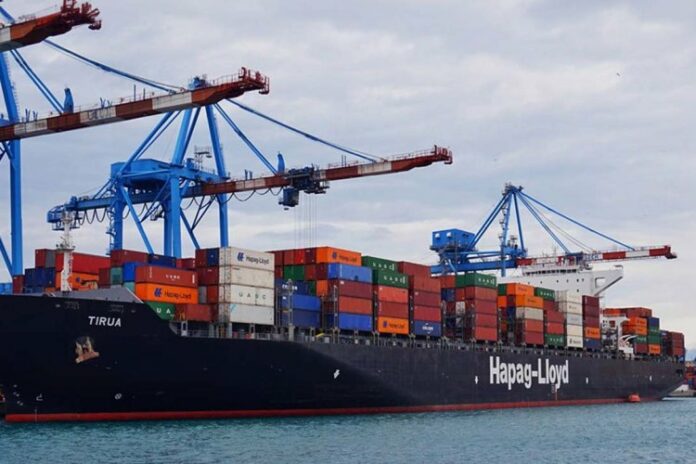
Hapag-Lloyd has entered into a partnership with DB Schenker for the purpose of decarbonising supply chains. Following the launch of “Ship Green” in May, the renowned logistics provider has selected Hapag-Lloyd’s sustainable transport solution as part of its sustainability initiatives.

By end of 2023, DB Schenker plans to claim approximately 3,000 metric tonnes of carbon dioxide equivalent (CO2e) emissions avoidance. This is based on at least 1,000 tonnes of pure biofuel.

“We are excited about this new partnership with DB Schenker as we share the common goal of making logistics more sustainable. Collaborations like these set a clear signal in the industry and are another example of a step-by-step approach to further decarbonise supply chains”, said Henrik Schilling, Managing Director Global Commercial Development at Hapag-Lloyd.

“I am very pleased that together with Hapag-Lloyd we are setting another example for sustainability in our industry. This partnership further enlarges our global biofuel offer in ocean freight. With this commitment we are one step closer to our goal of becoming carbon-neutral”, said Thorsten Meincke, Global Board Member for Air & Ocean Freight at DB Schenker.

First of three new crew boats launched for Nakilat Svitzer Wijsmuller

0

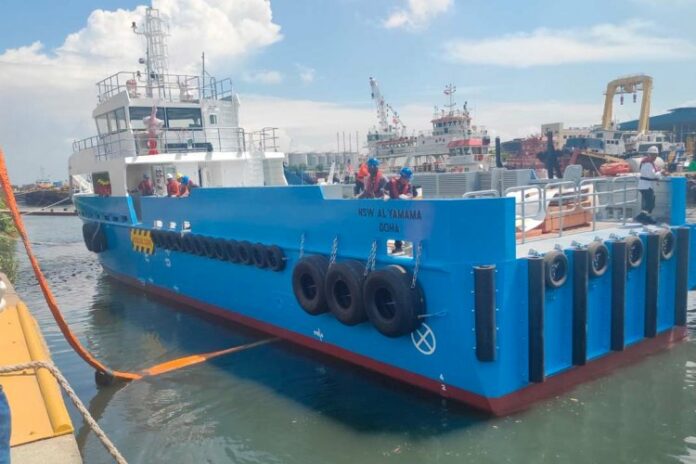
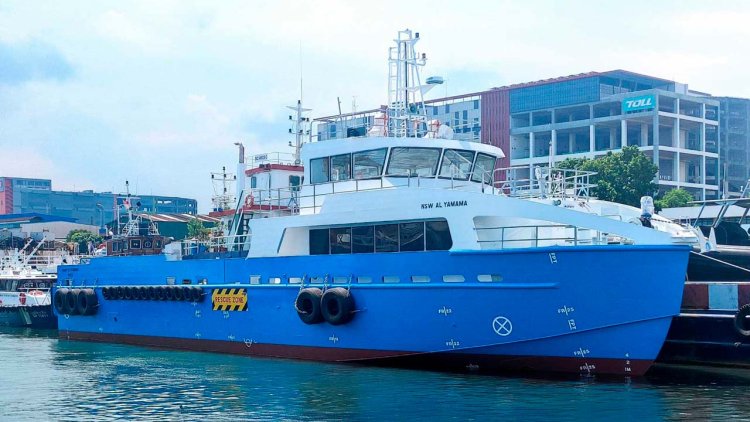
NSW Al Yamama,the first of three new Incat Crowther 33 crew boats designed for Nakilat Svitzer Wijsmuller (NSW), has been officially launched in Singapore by shipbuilder Lita Ocean. NSW Al Yamama,with its homeport of Doha, and her two sister vessels will serve as wellhead maintenance vessels for QatarEnergy in the Middle East.

Designed specifically for the transfer of special maintenance personnel and equipment, the three BV-classed vessels can transport 40 people at speeds of up to 24 knots in safety and comfort. The vessel’s main deck features generously spaced passenger seating, a spacious officers’ lounge with refreshment center and two bathrooms. Al Yamama’s large deck cargo can hold up to ten tonnes of payload, ensuring the vessel can perform the dual role of transporting personnel and crucial equipment for QatarEnergy.

Sleeping quarters for seven crew are located in the hull alongside a large lounge, mess and bathroom. The vessel’s elevated wheelhouse ensures the captain has an excellent line of sight for day and night operations from both forward and aft-facing helm positions.

The vessel is powered by a pair of Caterpillar C32 main propulsion engines and three Caterpillar C4.4 generator sets.

Commenting on the project, Grant Pecoraro, managing director of Incat Crowther USA said the launch of NSW Al Yamamaby Lita Ocean was an important milestone in the project.

“It’s great to see the first Incat Crowther 33 now in the water and we’re confident NSW Al Yamamawill soon begin many years of successful service for NSW,” said Mr Pecoraro.

“This project has again demonstrated the effectiveness of Incat Crowther’s proven design approach, technology, and experience.  NSW Al Yamamais the result of a true collaborative design process between our team of expert naval architects and engineers, Lita Ocean and NSW.  We’re now looking forward to working with Lita Ocean to launch and deliver the remainder of the new fleet,” said Mr Pecoraro.