-9 C
New York
Home Blog Page 211

Vitol Bunkers takes delivery of first biofuel barge in Asia

0

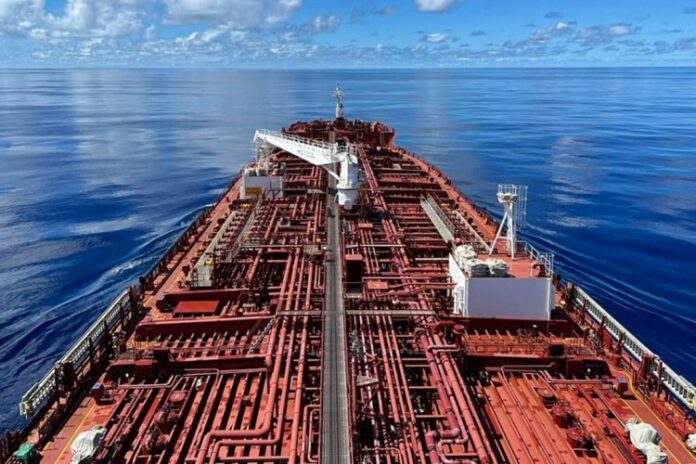
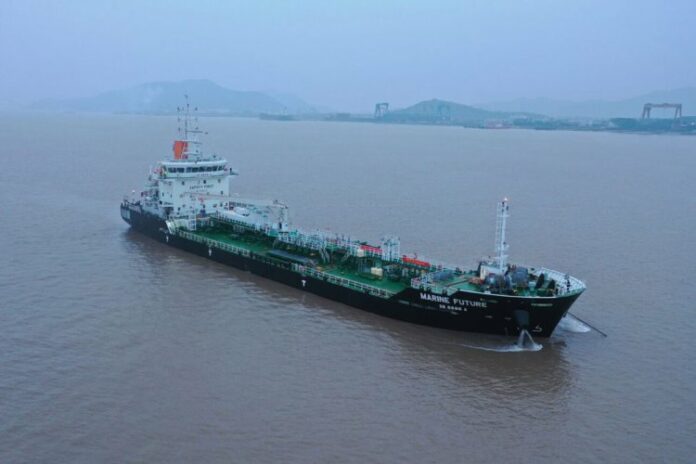
The addition of this specialised IMO type 2 notation bunker tanker to the V-Bunkers fleet will uniquely make it possible to supply biofuel blends including B24, B30 and up to B100, depending on customer specifications.

Built in China, Marine Future is 102.6m in length and has the capacity to carry about 7,000 MT of biofuels.

The current fleet of bunker tankers in Singapore are classified as ‘oil tankers’ and are therefore restricted to a maximum of 25% bio component in biofuel blends. This new bunker tanker has no such restriction, hence can deliver bunker fuels consisting of 100% bio component (B100).

Biofuels are a key pathway for the hard-to-abate shipping sector to mitigate emissions. Biofuel sales in Singapore reached 520,000 tonnes in 2023 according to the Maritime and Port Authority of Singapore (MPA), representing a material increase on the prior year where volumes were 140,000 tonnes.

“We are delighted to now be able to offer our maritime customers the option to take up to 100% bio component bunker fuel here in Singapore and play our part in advancing the port’s decarbonisation efforts. Should there be demand, this vessel can also be re-configured in future to supply methanol” said Mike Muller, head of Vitol Asia.

Unifeeder completes agreement for two additional methanol-powered vessels

0

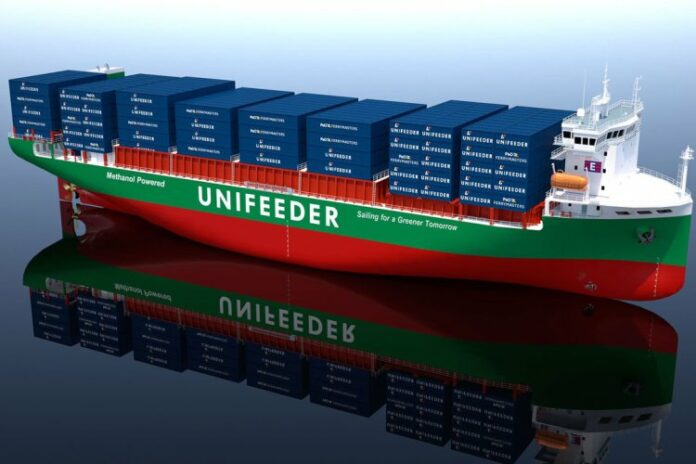
Unifeeder Group has successfully completed a long-term charter agreement for two additional methanol-capable container feeder vessels. This follows the agreement for two initial vessels announced in October 2023, underscoring the group’s commitment to greener shipping solutions.  

The latest agreement is in partnership with German-based ship owning group Elbdeich Reederei and Norwegian shipowner MPC Container Ships (MPCC), who are responsible for one vessel each. The 1250 twenty-foot equivalent unit (TEU) vessels, scheduled for delivery in 2026, will be deployed on Unifeeder’s European network.

The addition of these new vessels reinforces the group’s ongoing efforts to reduce emissions across its network. Simultaneously, Unifeeder is enhancing fuel efficiency throughout the fleet while increasing the utilization of biofuels in its conventional vessels.

In alignment with its parent company, DP World, Unifeeder collaborates with industry partners to address the challenge of renewable methanol supply. This requires off-take commitments to establish production at the scale needed to replace conventional fossil fuels within the industry.

Jesper Kristensen, Group CEO of Unifeeder Group, said:

“Building upon our commitment to methanol-powered vessels last year, this marks another significant stride towards the green transformation of our fleet and operations. We anticipate the vessels to enter into operation in the next two years, advancing our steadfast commitment to sustainable solutions. We offer our customers alternatives that align with their sustainability journeys while making meaningful progress towards our own ambitious decarbonization goals.”

The investment in the two new additional ships further supports Unifeeder Group’s ambitious decarbonization plan. Surpassing the industry average, Unifeeder has committed to a 25 per cent reduction of emissions by 2030 and to reach net-zero by 2050 with no new fossil greenhouse gas emissions. It aims to achieve this by emphasizing fuel-efficient practices, regular maintenance and refitting processes of the existing fleet and fostering a culture of learning and collaboration, sharing best practices across markets to drive effective carbon reduction strategies.

Unifeeder Group is part of DP World Marine Services, which announced in December 2023 it had reduced its carbon footprint by more than 16% in 2023 from its 2019 baseline of 2,118 ktCO2e by creating efficiencies across its operations. DP World also joined the First Movers Coalition, setting a target for 5% of its marine power to come from zero-emissions fuels by 2030, marking its commitment to decarbonization – a sentiment echoed by the Unifeeder Group.

RWE offshore wind power for first Thyssenkrupp electric melter

0

Thyssenkrupp Steel and RWE have signed a long-term Power Purchase Agreement (PPA) to supply green electricity to the first direct reduction plant at the Duisburg location with electrically powered melters. 

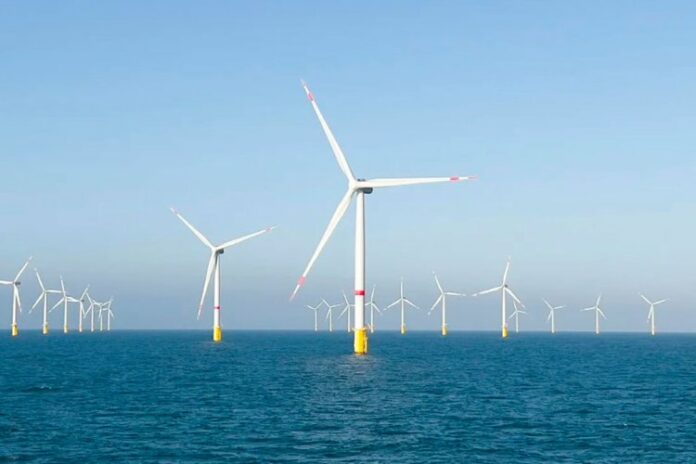
The contract, with a term of 10 years, provides for a delivery volume of 112 GWh per year. The electricity will be generated at RWE’s Nordsee Kaskasi offshore wind farm, 35 kilometers off the coast of Heligoland. This means offshore wind energy will make a significant contribution to supplying the energy for the tkH2Steel transformation project in future, and will help in achieving climate goals. Additional contracts with green electricity producers will be required to fully supply the system with green electricity.

In conjunction with the two electrically operated melters, the direct reduction plant will be integrated into Europe’s biggest iron and steel plant as a technologically new plant combination. The direct reduction plant which is 100% hydrogen-capable produces directly reduced iron (DRI), referred to as sponge iron, from iron ore. The DRI is melted into hot metal using CO2-free electricity in the two identical melters. With a capacity of 2.3 million metric tons of regeneratively produced hot metal per year, up to 3.5 million metric tons of CO2 emissions can be avoided annually. 

The partnership with RWE is an important building block in the company’s energy strategy, as part of the tkH2Steel transformation project, with the goal of sustainable steelmaking. This strategy envisages successively increasing the requirement for electricity generated from renewable sources, and thus paving the way for carbon-neutral production.

Dr Arnd Köfler, Chief Technology Officer at thyssenkrupp Steel, explains:

“Renewable energy is a core element in our transformation strategy alongside the use of regeneratively produced hydrogen – a separate public call for tenders is currently underway for this. The cooperation with RWE is the first step towards meeting the renewable electricity requirements in the tkH2Steel project. By concluding this PPA, we are taking one step further on the path to carbon-neutral production.”

Ulf Kerstin, Chief Commercial Officer of RWE Supply & Trading, also welcomes the cooperation:

“We are delighted that we can support thyssenkrupp Steel in decarbonizing steel production. With our Growing Green investment and growth campaign launched in 2021, we are further expanding our green electricity portfolio in Germany and making a significant contribution to the success of the energy transition. Kaskasi is our sixth wind farm in the German North Sea and the next farms are already under development. The North Sea cluster will create a further 1.6 gigawatts of offshore wind power in the coming years. “

Armada Technologies announces contract with CoolCo for a hull air lubrication installation

0

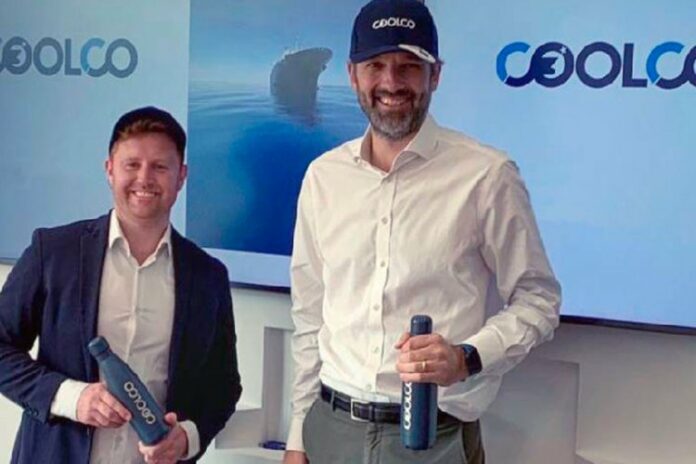
Armada Technologies has announced its collaboration with Cool Company Ltd (CoolCo), a leading LNG carrier company, as they jointly work towards a more sustainable future.

Under this partnership, Armada will design, engineer, procure, and provide support for the installation and commissioning of its innovative air lubrication system on a CoolCo vessel scheduled to dry dock in 2024. Once commissioned, CoolCo will conduct sea trials and provide documentation to Armada, following ISO or ITTC guidance, to measure the system’s performance.

Armada CEO Alex Routledge expresses excitement about the pilot program, stating,

‘We are delighted to introduce our advanced passive air lubrication system (PALS) to the maritime industry through this collaboration with CoolCo. Our PALS, which utilizes tailored bubble production design for each ship’s characteristics, including speed, draft and weather conditions, eliminates the need for continuously running compressors. Conducting sea tests with CoolCo will enable us to optimize the system even further using our machine learning algorithms’.

New digital service cuts cost and time of planning wind turbine decommissioning

0

ReWind automatically generates a decommissioning plan, such as where and how the blades can be recycled, based on data provided by the user.  The pilot ran from June to October 2023 and included seven customers who added 55 projects in seven countries for a total of 7,830 MWs modeled. By using ReWind, customers saved an estimated 1,985 workdays and €680,000 compared to current non-digital solutions.  The companies who took part in the pilot included Ørsted, SSE, and Energia.

Presenting a credible plan for the decommissioning process has become a pre-requisite for the bidding process of many wind auctions, as the industry looks to improve the lifecycle of turbines. Currently, decommissioned wind turbines are often buried underground. As more turbines reach their end of life, this issue is set to escalate.  WindEurope estimates that 25 thousand tonnes of wind turbine blades will have to be recycled by 2025, and 52 thousand tonnes by 2030.

“The wind power industry will encounter serious reputational and credibility challenges if it cannot find a sustainable solution to turbine decommissioning,” said Matthew Geraghty, ReWind Founder, DNV.  “As the industry matures, presenting an end-of-life plan is becoming essential to the commissioning process, and our pilot demonstrates that taking a digital approach saves times and money,” added Geraghty. 

ReWind provides a platform for the tools and resources needed to manage and plan the end-of-life processes for their wind farms effectively. The service facilitates a more sustainable approach to wind energy development and supports customers in achieving their sustainability goals.  Input from ReWind’s customers has led to significant enhancements, including expanding its scope beyond decommissioning to support various applications like bidding and repowering, extending services to offshore projects, and improving detail in turbine modeling and cost calculations.

Johan Schoovonen, pilot customer and Senior Circularity Specialist at Ørsted, said:

“We joined ReWind as we saw exciting potential in this new service from DNV. ReWind’s easy to use, market leading decommissioning and recyclability software provides material breakdown assessments of our windfarms along with automated decommissioning cost assessments. We believe this industry leading platform can enable us to calculate the residual value of our assets and maximize the circularity of our projects, whilst unlocking significant time savings.”

DNV’s ReWind team is now looking to expand beyond the pilot and is calling for companies to pay closer attention to the full lifecycle of their projects.

“The results of the ReWind pilot are highly encouraging, and I urge other stakeholders in the industry to work with us to further improve circularity,” said Geraghty.

Axpo and SGV plan hydrogen passenger vessel on Lake Lucerne

0

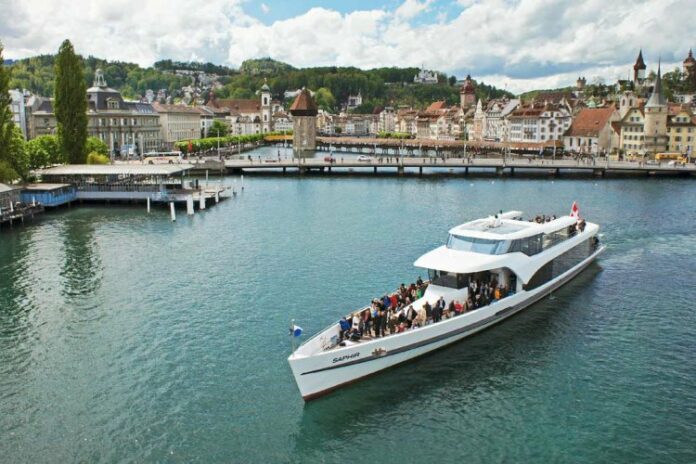
Axpo is participating in the H2Uri company in Bürglen, central Switzerland. The regionally produced hydrogen will be used to power a passenger vessel on nearby Lake Lucerne, operated by the Lake Lucerne Navigation Company (SGV) AG, it was announced today. In addition to Axpo and SGV, EWA-energieUri and AVIA Schätzle are also involved in the project. 

The country’s largest green hydrogen plant at the Reichenau hydropower plant in Domat/Ems near completion. Now another plant is to follow at Bürglen in the Swiss canton of Uri, with hydrogen production expected to commence in 2025. Among other benefits, the plant’s production will be used to power the first hydrogen passenger vessel on Lake Lucerne. 

Swiss shipbuilders Shiptec AG, pioneers in hydrogen mobility on inland waterways, are responsible for the planning, authorisation and conversion of the vessel, which belongs to the Lake Lucerne Navigation Company. 

SGV Managing Director Stefan Schulthess said:

“Conversion of the MS Saphir to a hydrogen fuel cell system will be completed by autumn 2025. This will enable us to reduce CO2 emissions.”

The project is supported by Switzerland’s Federal Office of Transport (FOT).

For Axpo, as well as its partners AVIA Schätzle, EWA-energieUri and SGV, the project is an important step towards decarbonisation. The sustainably produced hydrogen from the region also fulfils SGV’s environmental requirements. 

Axpo CEO Christoph Brand said:

“Even if hydrogen is still a young technology the project shows that there is also potential for the targeted use of green hydrogen in Switzerland. Thanks to our local roots and expertise in renewable energies, we can do pioneering work here.” 

Preparatory work at the Bürglen hydropower plant for the hydrogen production plant has already begun. Commissioning is planned for the beginning of 2025. When in operation, the facility on the EWA-energie Uri site in Bürglen will produce up to 260 tonnes of green hydrogen a year and have a capacity of 2 MW. 

EWA-energieUri CEO and Chairman of the Board of Directors of H2Uri AG, Werner Jauch, said:

“In order to secure this innovative project on a broader basis, we’re delighted to welcome two additional partners in Axpo and SGV. They both have valuable expertise and exciting sales channels.”

AVIA Schätzle Executive Board member Alexander Streitzig said a hydrogen refuelling station is also planned in Uri and that the company is looking forward to expanding its energy source portfolio with green hydrogen.

Ørsted and Incheon City sign MoU to establish world-class offshore wind power industry

0

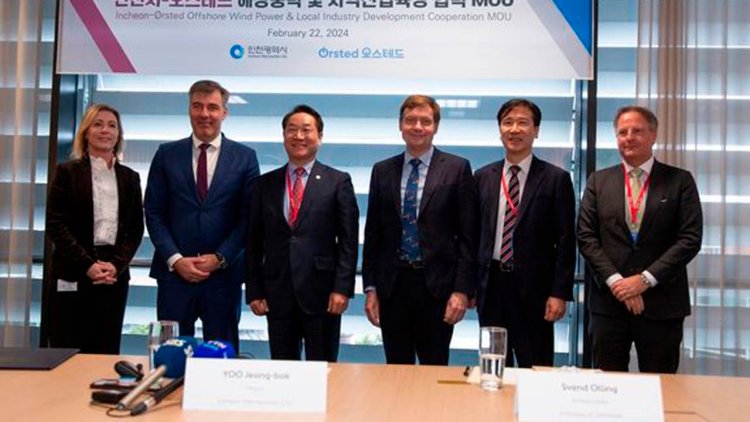
Ørsted has signed a memorandum of understanding (MoU) with Incheon Metropolitan City, Korea, to cooperate on developing a world-class offshore wind power industry in the region. 

Through this collaboration, Incheon City will provide administrative support, including enhancing local awareness and understanding, and establish policies and infrastructure for offshore wind, while Ørsted will leverage its more than 30 years of experience to develop its projects into an exemplary model that will be of mutual benefit to local residents, businesses, and suppliers.

On behalf of the Ørsted Group, Thomas Thune Andersen, Chair of Ørsted’s Board of Directors, signed the agreement together with Yoo Jeong-bok, Mayor of Incheon, at a ceremony at Ørsted’s offices in Greater Copenhagen in Denmark. The event was attended by Lars Aagaard, Danish Minister for Climate, Energy & Utilities, Kim Hyung Gil, Korean Ambassador to Denmark, and Svend Olling, Danish Ambassador to Korea.

Thomas Thune Andersen, Chair of the Board of Directors of Ørsted A/S, says:

“Ørsted will work closely with the City of Incheon to launch a new offshore wind industry and boost local economic development in the region. We have a strong track record working with Korean suppliers in our global portfolio over the past decade. We’ll build on this legacy of collaboration with our Incheon project, which will lead the way for a thriving offshore wind industry by generating reliable renewable energy, attracting long-term investments, and creating jobs.”

Yoo Jeong-bok, Incheon Metropolitan City Mayor, says:

“Offshore wind is a powerful means of achieving decarbonisation and a new industry that can grow sustainably. I expect that today’s agreement with Ørsted will help revitalise our local economy, boost the supply chain, and become a great opportunity for the growth of offshore wind power projects that benefit the region and the growth of our local industry.”

Scorpio Tankers announces MOU licensing FOWE fuel-saving devices for entire fleet

0

Scorpio Tankers Inc. has signed a non-binding Memorandum of Understanding to install the Fowe Eco Solutions Ltd. (“FOWE”) fuel emulsion systems across its entire fleet. 

The terms of the licensing agreement will require no material upfront costs for the Company and is expected to result in an overall reduction of at least 3% in fuel costs and 100,000 tons of carbon emissions annually.

Mr. Emanuele Lauro, Chairman and CEO of the Company, commented,

“In terms of financial and environmental benefits, the FOWE system stands out for its clear and immediate advantages. Requiring little in the way of initial investment and eliminating the need for installation downtime, the FOWE solution presents an ideal pathway to reducing operating expenses and curbing greenhouse gas emissions.”

Mr. Dean Mihalic, CEO of FOWE added,

“Recent tests conducted at the Alfa Laval Test and Training Centre in Aalborg, Denmark, indicate potential fuel savings of up to 6.3% for boilers and 8.7% for marine four-stroke engines. Our technology produces a permanent emulsion with no additives, resulting in cleaner and more complete combustion and significantly lower greenhouse gas emissions. We are pleased to have reached this stage with Scorpio Tankers, our anchor customer and trusted partner throughout the testing and development process.”

The final licensing agreement is subject to customary documentation and closing conditions, and it is expected to be signed within the first quarter of 2024.

Woodside to sell 15.1% Scarborough interest to JERA

0

Woodside has executed a binding sale and purchase agreement with JERA for the sale of a 15.1% non-operating participating interest in the Scarborough Joint Venture (JV) for an estimated total consideration of US$1,400 million. This comprises the purchase price of approximately $740 million, and reimbursement to Woodside for JERA’s share of expenditure incurred from the transaction effective date of 1 January 2022. 

Completion of the transaction is expected in the second half of 2024.

Woodside and JERA have also entered into a non-binding heads of agreement for the sale and purchase of six LNG cargoes on a delivered ex-ship basis per year for 10 years commencing in 2026 from Woodside’s global portfolio.

A non-binding agreement for new energy collaboration including potential opportunities in ammonia, hydrogen, carbon management technology and carbon capture and storage was also signed to support common decarbonisation ambitions.

Woodside CEO Meg O’Neill welcomed the broadened strategic relationship with JERA:

“Woodside welcomes Japan’s largest utility, JERA, into the Scarborough Joint Venture. This builds on a long history of collaboration, starting in 1989 with LNG sales from the North West Shelf to JERA’s parent companies Tokyo Electric and Chubu Electric. JERA’s participation in the Scarborough Joint Venture, which will also include LNG Japan, is a further demonstration of the importance of the project to Japanese customers and confidence in longterm demand. Scarborough is a world-class project which will provide reliable energy for our customers in the Asian region, including in Japan.

LNG continues to be an important energy source for Japan and one which supports the country’s decarbonisation ambitions. In Australia, the Scarborough Energy Project will provide local jobs and contracting opportunities and deliver tax revenue to State and Federal Governments. We are also looking forward to exploring new energy and business opportunities alongside JERA. These have the potential to further our shared ambitions to develop new energy value chains between Australia and Japa.”

Yukio Kani, JERA Global CEO and Chair said:

“Solving the world’s energy issues requires deep collaboration to tackle challenges one by one with reliable partners. I am grateful for the open and engaging dialogue I have had with Woodside CEO Meg O’Neill. I look forward to further developing our relationship with Woodside, a global player in LNG, and to promote new initiatives to achieve decarbonisation.”

Completion of the Scarborough equity transaction is subject to conditions precedent including Foreign Investment Review Board approval, National Offshore Petroleum Titles Administrator approvals, Western Australian Government approvals and satisfaction of requisite financing approvals.

The transaction also includes an option for JERA to acquire a 15.1% non-operating participating interest in the Thebe and Jupiter fields as well as a non-binding agreement that outlines a long-term collaboration to pursue opportunities for additional feed gas and joint investment in offshore gas fields for future tieback to the Pluto LNG facility via Scarborough infrastructure. A non-binding agreement has also been signed for Woodside to provide carbon management services to assist JERA to meet its obligations associated with its share of carbon emissions from the Scarborough Joint Venture.

Following completion of the sale of equity to JERA, Woodside will hold a 74.9% interest in the Scarborough Joint Venture and remain as operator.

Stockholm Norvik Port gains status in EU network

0

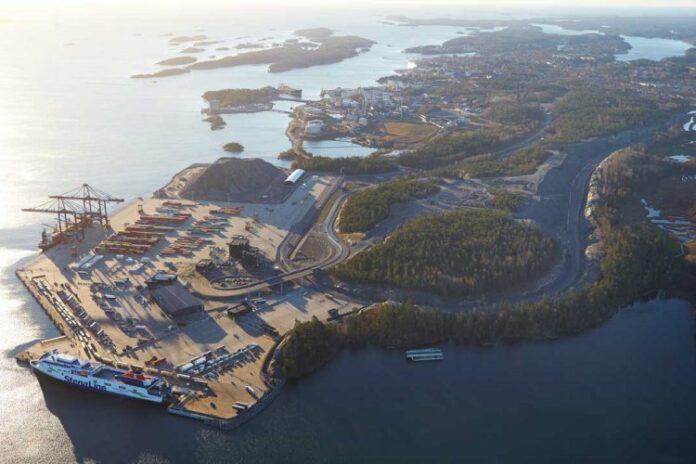
Stockholm Norvik Port has recently been designated comprehensive status following the proposal of an agreement on the EU regulations for development of the Trans-European Transport Network (TEN-T).

Being part of the EU transport network and gaining comprehensive status makes it, among other things, possible to apply for EU funding. This gives Stockholm Norvik Port greater potential to continue to develop as a node for sustainable transport and to become a leading energy hub.

At the end of December the European Commission welcomed the political agreement reached between the European Parliament and the Council on the regulation underpinning the trans-European transport network (TEN-T). The new TEN-T regulation, which likely will enter into force in April 2024, means among other things a change in status for a number of Baltic Sea ports. Stockholm Norvik Port will now have comprehensive status. 

Ports of Stockholm, together with customers and collaborative partners, will now be able to apply for and be awarded EU funding to further strengthen Stockholm Norvik Port’s infrastructure and offer at the best possible location in the Baltic Sea. This is important for growth, will create jobs in the region, and will make it easier for companies to act more sustainably.

“It is a very welcome decision that Stockholm Norvik Port will now have this status within the EU transport network. In our development projects it is important to have the possibility to apply for external funding and this decision gives us additional power to maintain and develop Stockholm Norvik’s position as a state-of-the-art port for the future,” explains Magdalena Bosson, CEO Ports of Stockholm.

The EU Trans-European Transport Network is an instrument for the development of a high-quality continuous, efficient, multimodal transport infrastructure over the entire EU. It encompasses railways, inland waterways, local shipping routes and roads that connect urban nodes, maritime and inland ports, airports and terminals. According to the agreement, the status of a port within the TEN-T network will in the future also be assessed on its contribution to the energy transition and not only on the basis of freight volumes and passenger numbers.

“It is very positive that the EU will make this change and confirm how important the ports are to energy transition. Ports today are more than just part of the transport infrastructure. Stockholm Norvik Port has a potential to be a strategic hub and partner when it comes to the development in the Greater Stockholm region within areas such as innovation and the transition of society to sustainable energy systems. The European ports, especially the Baltic Sea ports, are likely to play a decisive role in energy transition in Europe,” concludes Jens Holm, Chair of the Board of Ports of Stockholm.

The European Commission’s proposal to revise the existing Trans-European Transport Network (TEN-T) Regulation from 2013 was presented as part of a package for efficient and green mobility. In the new proposal the EU wants to specifically increase the proportion of transport by railway, local shipping routes and inland waterways, with the aim of achieving a more sustainable transport system structure and reduce the negative impacts of transport. The revised TEN-T Regulation is aimed at creating a defined basis for the development of the EU’s transport infrastructure from now until 2050.