-9 C
New York
Home Blog Page 212

Napop integrates hydrogen and fish farming in Norway

0

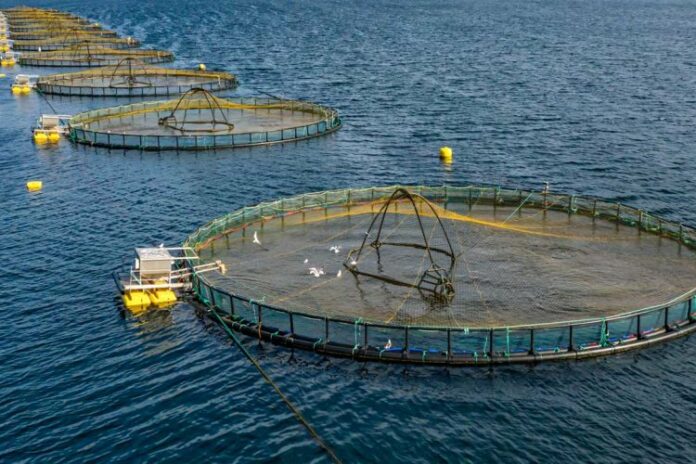
A small company in Norway has been awarded permits to produce 6,000 tonnes of fish in a recirculating aquaculture system (RAS) combined with a 6 MW electrolysis plant that will use green energy to split water into hydrogen and oxygen.

NAPOP (Not A Part Of the Problem) was founded in 2021 and rents and sells “energy station” generators and heaters – catalytic thermal combustion (CTC) units – that run on hydrogen. It is also seeking to build its own hydrogen production plants.

It will get a significant proportion of its energy for the combined RAS and hydrogen electrolysis plant in Åkrestrømmen, Rendalen in eastern Norway from solar power and is focused on ensuring that all value streams from the electrolysis process are utilised.

It has formed a subsidiary, VIRIDIH2, to realise the fish farm concept, called VIRIDIH2-PISCI.

NAPOP says that the oxygen produced in hydrogen production can be used directly as a raw material in fish farming, and so can heat from the electrolyser. As with the hydrogen production, all side streams from the fish farm will be utilised.

“We see VIRIDIH2-PISCI as a product based on a standard which can be adapted to different regions and locations,” said NAPOP chief executive Terje Paulsen.

“The first facility will be established in Rendalen (VIRIDIH2-PISCI Mistra) where we now have the necessary aquaculture licences. This will be followed by a facility that will be adjacent to the outlet of the Krøderen (a lake to the northwest of Oslo).

“Production of fish on land requires capacity for temperature regulation as well as large amounts of oxygen. The hydrogen will be used not least in our own technology which is used in NAPOP CTC heating centres as well as in our energy stations which use hydrogen for the production of electrical energy.”

Aage Bjørn Andersen, chief executive of VIRIDIH2, said:

“We must think circularity in everything we do. It includes secondary resource management where the two solutions are about abolishing what we traditionally have called waste as well as emissions. It is precisely this that is the pillar of our strategy.”
Two new pilot boats to join the marine fleet working on the Rivers Forth and Tay

0

The investment in the vessels to work on the busy waterways will see the arrival next year of the next generation of pilot boats built by Holyhead Marine.

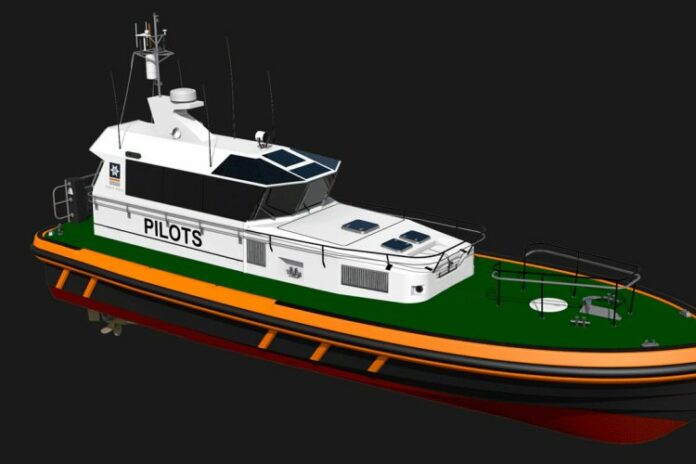
Pilot boats are important vessels on the river as they transport maritime pilots to the ships that need guided safely into port through the lock gates in Leith and Grangemouth, to a berth at a quayside in Dundee or Rosyth or to one of the deep-water anchorages in the River Forth. As the statutory river authority for the Forth and Tay, Forth Ports marine team operate over an area of 280 square miles of navigable waters.

The two pilot boats have been designed in Scotland by Camarc Design and will be built this year by Holyhead Marine in Wales. The pilot boats are 16.6 metres long and are the most advanced boats in operation with an updated hull design and engines offering increased efficiency. In the future, the engines would be capable of operating on HVO fuel (Hydrotreated Vegetable Oil) which could result in a C02 emission reduction of up to 90%. 

Alan McPherson, Chief Harbour Master for Forth Ports’ Scottish operations, said:

“It is important that we invest in our marine fleet to deliver the best service for river users and at the same time, decarbonise our vessels using the very latest engine technology. The Rivers Forth and Tay are two of the largest and busiest waterways in the UK with thousands of vessels using the rivers each year, ranging from very large offshore drilling rigs in Dundee, to container vessels heading to Grangemouth and cruise liners sailing into both rivers. We look forward to receiving the new pilot boats next year.”  

Forth Ports currently has 5 pilot boats and 11 tugs operating across the River Forth and Tay.

The first Norsepower Rotor Sail to be fitted on Baltrader’s new cement carrier

0

The German Federal Ministry for Digital and Transport (BMDV) supports the project with NaMKü funding.

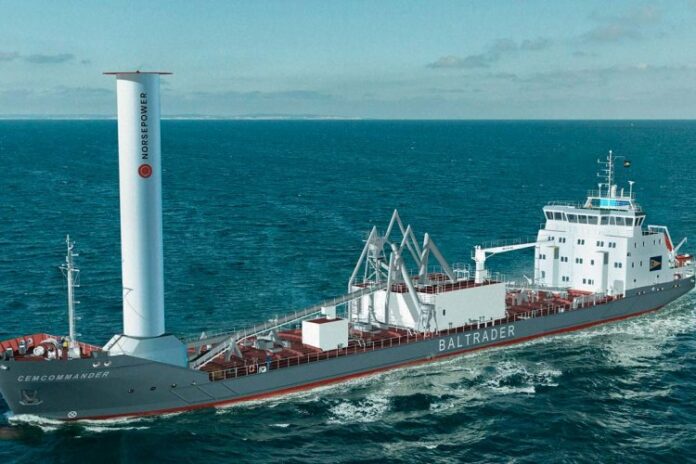
Baltrader Capital GmbH & Co. KG, Hamburg, and Norsepower, the leading global provider of auxiliary wind propulsion systems, have signed a contract concerning the delivery of one 24m x 4m sized Norsepower Rotor Sail™ in summer 2024. The product will be fitted on the newest cement carrier of the Baltrader fleet, M/V CEMCOMMANDER. It is going to be delivered from Jiangsu Zhenjiang Shipyard (Group) Co. Ltd. and ecological ship design was made by SDC Ship Design & Consultants GmbH, Hamburg. 

The Norsepower Rotor Sail™ is a radically modernised version of the Flettner Rotor. It uses the ship’s electric power to actively rotate the cylinder-shaped rotor on the deck, producing powerful thrust. The product meets the funding objectives by saving fuel and thus enabling emission reductions of up to 14 percent. Wind-assisted propulsion systems like Norsepower Rotor Sail™ make a direct contribution to climate protection on the way to carbon-neutral shipping.

M/V CEMCOMMANDER will fly a European flag and shall be commercially operated by Baltrader Schifffahrtsgesellschaft mbH & Co. KG. In charge of the vessel’s technical management is BRISE Bereederungs GmbH & Co. KG, which is acting as technical manager for the whole Baltrader fleet. The wind propulsion system will be classified by Bureau Veritas and the ship will get the WPS2 class notation. 

The installation of the Norsepower Rotor Sail™ is supported by the funding Directive “Sustainable Modernisation of Coastal Vessels” (NaMKü) of the German Federal Ministry for Digital and Transport. This Directive supports measures to improve the energy efficiency of coastal vessels.

Kai-Erik Clemmesen, the Managing Director of Baltrader / BRISE, commented:

“We are looking forward to seeing our latest newbuilding being fitted with a Norsepower Rotor Sail™. This proven technology will help to make a fuel-efficient state-of-the-art cement carrier even more economical and environmentally friendly. We thank Norsepower for the good cooperation to let this project become a reality.”  

Tuomas Riski, the CEO of Norsepower, commented:

“We welcome Baltrader as our new customer! With the data collected and verified from eight ships already, Norsepower can guarantee that the performance criteria of the funding directive of NaMKü will be met. The Norsepower Rotor Sails™ will help to reduce the carbon footprint of the supply chain of the cement sector.”

Jukka Kuuskoski, the Chief Customer Operations Officer of Norsepower, added:

“We are very happy to support the decarbonisation of Baltrader operations with the innovative Norsepower Rotor Sail™ installation on the M/V CEMCOMMANDER. We appreciate the dedication and excellent cooperation spirit of the Baltrader / Brise team and look forward to the installation of their first unit.”

WinGD and Mitsubishi Shipbuilding agree ammonia fuel supply system

0

Swiss marine power company WinGD and Japanese shipbuilder and technology developer Mitsubishi Shipbuilding Co., Ltd. have completed the initial design of an ammonia fuel supply system (AFSS) for vessels powered by WinGD’s X‑DF‑A ammonia-fueled engines.

The AFSS design is the first result of a wide-ranging partnership announced last year that will develop solutions for ammonia engines and fuel systems that can be applied across a range of vessel designs. The project will now proceed to the detailed design phase, ensuring that ammonia capability is available to ocean going vessel operators ahead of regulatory requirements to reduce greenhouse gas emissions.

As well as the fuel supply system – including a fuel valve unit, fuel conditioning and all related piping – the concept includes several features to enable the safe use of ammonia as a marine fuel. These include an ammonia catching system as well as purging and venting arrangements.

Manabu Kawakado, Head of Marine Engineering Centre, Mitsubishi Shipbuilding Co., Ltd. said:

“Our partnership with WinGD has made rapid progress in less than a year since we launched the cooperation. Concluding the initial AFSS design at this stage puts us in a strong position to offer a complete fuel system to ship operators as demand for carbon-free ammonia fuel grows over the coming years.”

Sebastian Hensel, Director R&D, WinGD said:

“At present, our primary focus is on advancing the technology of our clean-fuel solutions including our ammonia-powered X-DF-A engines, with the first delivery expected in Q2 2025. This collaboration will make sure that the auxiliary systems and integration capability are in place to apply our engine designs, and developing the fuel supply system concept is a crucial step in bringing ammonia fuel capability to the marine market.”

Under the partnership, WinGD will develop X-DF-A engines at appropriate sizes for a range of vessel designs, providing the shipbuilder with the specifications for installing the engines and the requirements for all auxiliary fuel systems. Mitsubishi will design the vessels, set performance parameters for the engines and further develop its existing AFSS for use with WinGD’s ammonia engines.

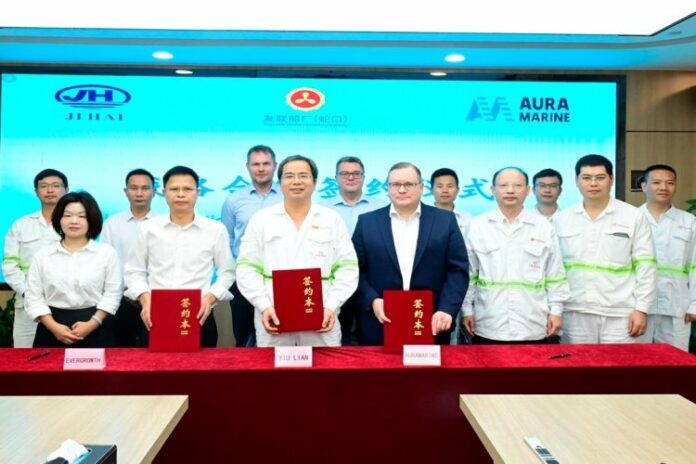
Auramarine signs agreement with Yiu Lian Dockyards and Guangzhou Jihai

0

Auramarine Auramarine, the provider of fuel supply systems for the marine, power and process industries, has signed a cooperation agreement with Yiu Lian Dockyards (Shekou) Co., Ltd. and Guangzhou Jihai Shipping Material Co. Ltd. in order to drive the implementation and uptake of methanol dual fuel systems as a viable and available new fuel to support the shipping industry in improving its sustainability and meeting decarbonisation targets.

Following the growth and opportunity of methanol as a future fuel, Auramarine will collaborate with Guangzhou Jihai to deliver an efficient, one-stop service to Yiu Lian Shipyard.  This will include the integration of methanol supply units, bunker stations, deep well pumps, fuel tank instruments, PV valves, gas detection and leak detection, instrument air control systems, SS Links ESD systems, water glycol heat exchange, MFSS system debugging and training. 

Guangzhou Jihai will carefully select the most reliable and cost-effective brands across various sectors for integration. And it will also leverage its geographical advantages to deliver efficiency improvements and cost reduction, acting as an important intermediary, providing process co-ordination, logistical support and capital guarantee to ensure smooth cooperation between the three parties.  As Yiu Lian Shipyard’s prioritized provider of methanol fuel supply systems and related infrastructure, Auramarine will also provide technical support and collaboration.

Commenting on the development, John Bergman, CEO, Auramarine, said:

“We are excited to embark on this tripartite cooperation with Yiu Lian Dockyards and Guangzhou Jihai to promote the development and adoption of methanol as a viable new fuel to comply with environmental regulations, reduce carbon emissions and meet industry decarbonisation targets. This initiative underscores Auramarine’s commitment to collaborating with industry stakeholders to develop sustainable solutions in the maritime industry. Together, we aim to set new standards for green shipping, making a positive impact on the environment and the industry as a whole.” 

Yiu Lian Shipyard is committed to researching various alternative energy supply systems, carbon reduction, and on-board emission reduction measures, and has rich experience in related renovation. As a leading representative of China’s renovation shipbuilding industry, Yiu Lian Shipyard has become the preferred choice for a number of major shipowners’ methanol renovation projects.

Guangzhou Jihai has worked in partnership with Yiu Lian Shipyard, providing efficient and effective services for many years.

Galveston LNG Bunker Port joins SEA-LNG coalition

0

Galveston LNG Bunker Port (GLBP) has joined SEA-LNG – further enhancing the industry coalition’s LNG supply infrastructure expertise and global reach, while giving GLBP access to the latest LNG pathway research and networking opportunities.

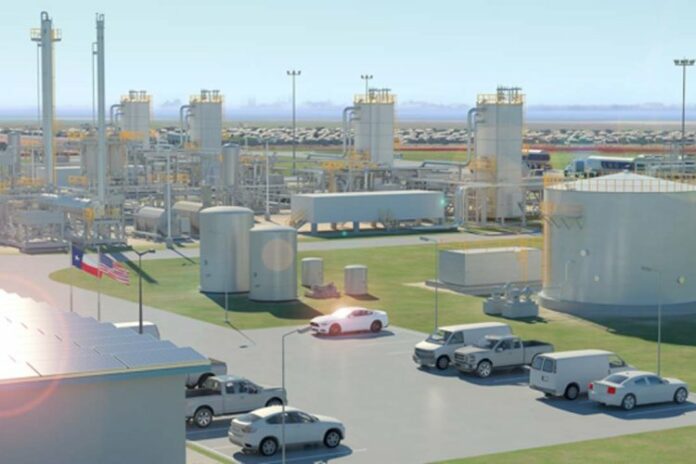
GLBP was announced in September 2023 and will develop, construct and operate the US Gulf Coast’s first dedicated facility supporting the fuelling of LNG-powered vessels, expected to be operational late-2026.

The shore-based LNG liquefaction facility will be located on Shoal Point in Texas City, part of the greater Houston-Galveston port complex, one of the busiest ports in the USA. This is a strategic location for cruise ship LNG bunkering in US waters, as well as for international ship-to-ship bunkering and cool-down services. GLBP will offer cost-effective turn-key LNG supply solutions to meet growing demand for the cleaner fuel in the USA and Gulf of Mexico.

Commenting on joining SEA-LNG and on the GLBP project, Jonathan Cook, Pilot CEO said:

“With an initial investment of approximately $180 million, our LNG bunkering facility will supply a vital global and U.S. trade corridor with cleaner marine fuel. We recognise that SEA-LNG is a leading partner and a key piece of the LNG bunkering sector, and will give us access to insights and expertise across the entire LNG supply chain.

“LNG supports environmental goals and human health by offering ship operators immediate reductions in CO2 emissions and virtually eliminating harmful local emissions of sulphur oxides (SOx), nitrogen oxides (NOx) and particulate matter.”

Chairman of SEA-LNG Peter Keller said:

“We’re proud to welcome another leading LNG supplier to the coalition and are looking forward to a mutually beneficial relationship. With every investment in supply infrastructure in the US and worldwide, the LNG pathway’s head start increases. Global availability, alongside bio-LNG and e-LNG development, makes LNG the practical and realistic route to maritime decarbonisation.

“All alternative fuels exist on a pathway from grey, fossil-based fuels to green, bio or renewable fuels. Green fuels represent a scarce resource and many have scalability issues, so we must start our net-zero journey today with grey fuels. LNG is the only grey fuel that reduces greenhouse gas emissions, well-to-wake, so you need less green fuel than alternatives to improve emissions performance,” Keller continued. 

LNG bunkering infrastructure can deliver LNG and carbon-neutral bio-LNG today, as well as e-LNG, as and when it becomes available, to existing LNG-fuelled vessels with no modifications required. These net-zero fuels can be dropped in and blended with grey LNG at any ratio. As a result, GLBP and SEA-LNG recognise that LNG offers a practical, incremental pathway to net-zero shipping. 
 

EDGE Group and Fincantieri launch multi-billion euro joint venture

0

EDGE and Fincantieri have entered into a term sheet aimed at creating a joint venture (JV) to capitalise on global shipbuilding opportunities with a focus on the manufacturing of a broad range of sophisticated naval vessels. 

EDGE will hold a 51% stake in the venture, which has a commercial pipeline valued at approximately 30 billion euros, with management direction provided by Fincantieri. The Abu Dhabi-based JV will be awarded prime rights to non-NATO orders, especially leveraging on the attractiveness of UAE G2G arrangements and export credit financing packages, along with a number of strategic orders placed by select NATO member countries.

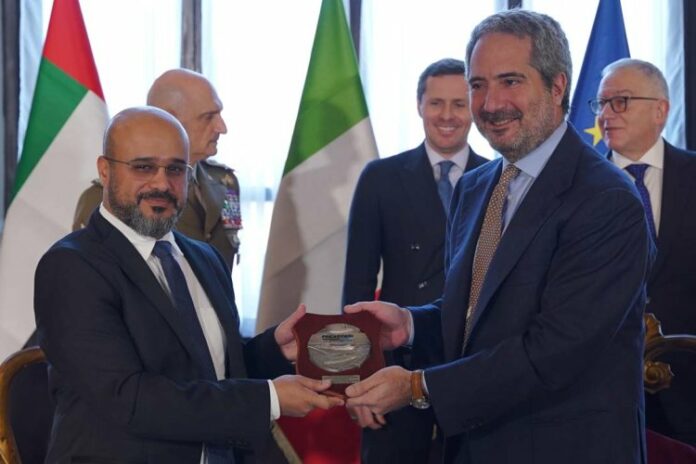
At Palazzo Marina, Rome, Italy, in the presence of Matteo Perego di Cremnago, Undersecretary of State for Defence, Admiral Enrico Credendino, Chief of the Italian Navy, Lieutenant General Luciano Portolano, Italian Secretary General of Defence/National Armaments Director, and, for Fincantieri, of General Claudio Graziano, Chairman, and of Dario Deste, General Manager of the Naval Vessels Division, the term sheet to create the JV was formalised through the signatures of Hamad Al Marar, Managing Director and CEO of EDGE Group, and of Pierroberto Folgiero, CEO and Managing Director of Fincantieri.

This agreement grants the JV strong cooperation to market its products with the Navy of different countries in the world, underlining its global ambition and commitment to developing joint intellectual property and future designs. This strategic agreement significantly enhances EDGE’s ability to design and build frigates and other large vessels, broadening its range of operations and marking a crucial advancement in the diversification of its maritime solutions portfolio. The JV also harbours ambitions to develop an underwater program for mid-size submarines. The incorporation of the JV is subject to a series of conditions precedent, customary for an agreement of this kind.

Hamad Al Marar, EDGE Group Managing Director and CEO, said:

“Through this transformative joint venture with Fincantieri, we are not just expanding EDGE’s diverse capabilities in shipbuilding but setting a new benchmark for collaboration and knowledge exchange in the global maritime industry. This partnership embodies our commitment to innovation, leveraging Fincantieri’s unmatched expertise to explore opportunities in the global market. This venture is a testament to our strategic vision of growth through collaboration, promising a future of technological advancements and enhanced naval defence solutions.”

The JV will concentrate on sales, commercial operations, and engineering for design and service, taking charge of developing shared intellectual property and retaining exclusive rights to all future designs. Furthermore, the JV will set up a dedicated design authority, opening up opportunities for highly skilled Emiratis, and drawing in international expertise to support this innovative and strategic initiative.

Pierroberto Folgiero, Fincantieri Group CEO and Managing Director, said:

“We are honoured and eager to join forces with EDGE Group with the aim of creating a unique industrial platform able to address with maximum entrepreneurship and distinctive competencies the sizable market opportunities originated in UAE and from UAE to the international markets”.

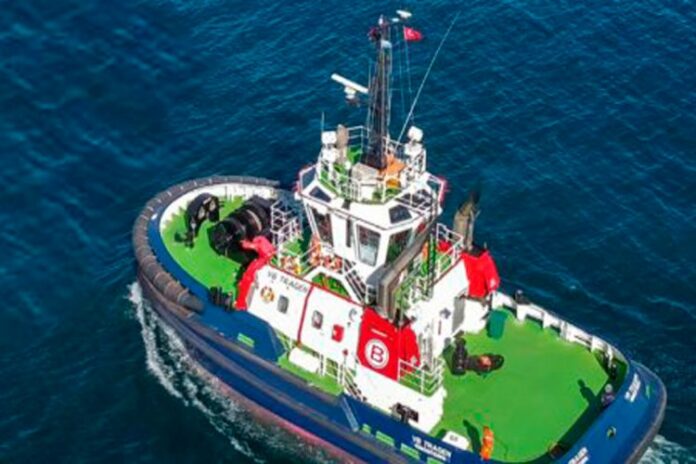
Boluda boosts its fleet in Germany with the arrival of the VB TRAGEN

0

Boluda Corporación Marítima, through Boluda Towage, its business division dedicated to providing international maritime towing and salvage services, has added the VB TRAGEN to its fleet.

This new vessel will support Boluda Towage’s services in its LNG (Liquefied Natural Gas) operations in Germany, joining the powerful fleet of tugboats that the company has on the German coast.

VBT RAGEN belongs to the RAmparts 2400-SX category and is specially built to offer maximum efficiency in all types of maritime operations.

Measuring24.4m LOAexcludingfenders,withamouldedbreadth of 11.25m,mouldeddepthof4.38m and maximum operating draft of approximately 5.25m,the twin Z-drive VB TRAGEN can achieve an impressive bollard pull of at least 80 tonnes and a free running speed of 12.5knots.

With accommodation for a crew of up to six, the tug’s tank capacities include 74,200 ltrs of fuel oil and 10,800 ltrs of fresh water. Its main fire fighting pump is driven by a clutched flexible coupling in front of the port side main engine and provides approximately 2700m3/hour to tackle blazes. 

Boluda has once again placed its trust in the Sanmar shipyard in Turkey for the manufacture of this new vessel.

Completion of GTA infield pipelay scope

0

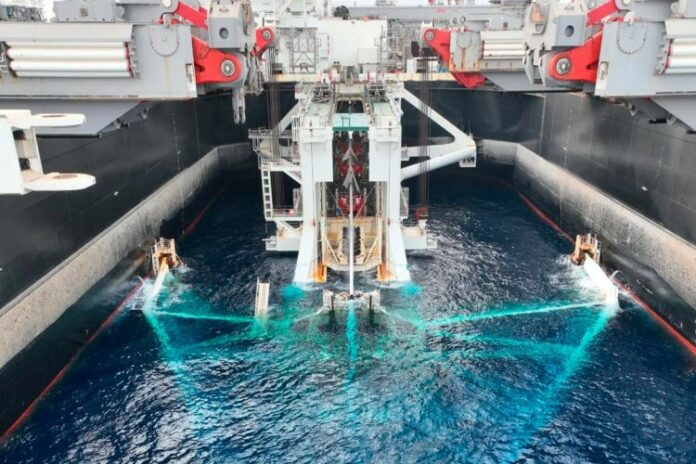
Two months after arriving in the field, production crew welded, scanned and field joint coated the final piece of pipe for the second 16-inch export gas line.

Safely landed in a 2-metre target box at 2400 metre water depth, the pipeline will be recovered in J-mode configuration to install the termination assembly. To make this happen, the vessel aft has been fitted with a bespoke J-mode frame with a 1000-tonne load capacity. Designed, built and installed on board in only eight weeks by our engineering and fabrication teams, it typifies Allseas “can do” mentality.

The pipelay scope comprises approx. 75 km of 16-inch export lines and 10 km of 10-inch CRA infield lines, some of the pipeline infrastructure exceeding 2700 metres water depth at the deep end! To meet our own ambitious production rate, the main firing line and double jointing facilities on Pioneering Spirit  have run in parallel throughout the campaign. Pioneering Spirit  will conclude the offshore works by installing the six outstanding flowline termination assemblies.

Allseas Project Manager Laurent Beghin says,

“Our Agile approach was key to a quick and efficient start to the project and decision-making process throughout the offshore campaign. Thanks to great collaboration between the onshore and offshore teams, we’ve overcome all challenges faced during the project preparation and execution phases and met all milestones without delay.”

First modules arrive for Scarborough Energy Project

0

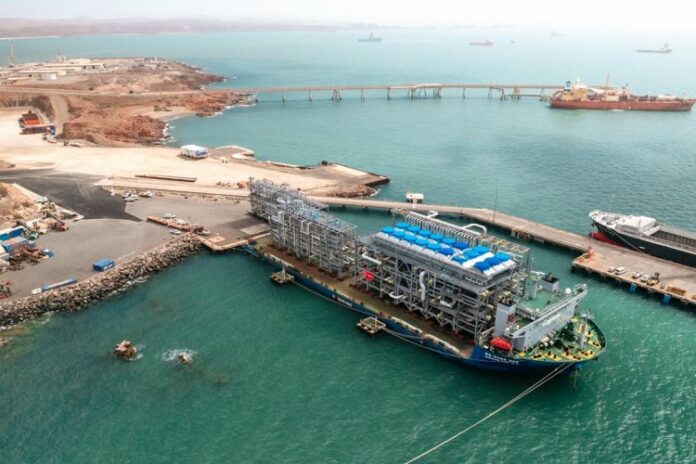
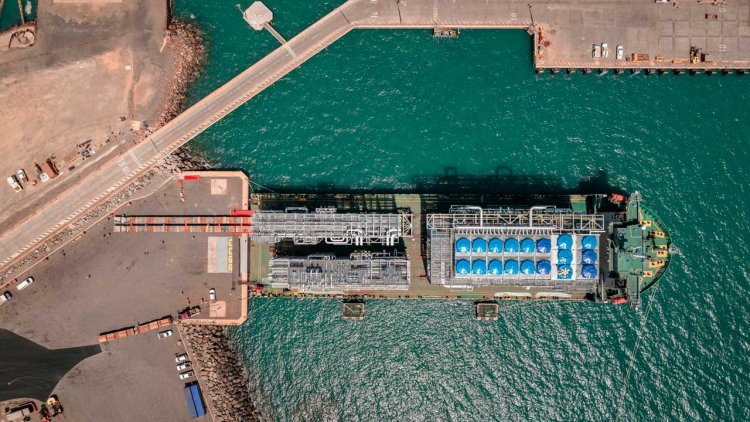
The first three Pluto Train 2 modules for the Scarborough Energy Project have arrived in Karratha, Western Australia, marking a significant milestone for the project.

The modules, fabricated by Bechtel in Indonesia, weigh a combined total of more than 4,000 metric tonnes. The modules are three of a total of 51 that will be shipped to site from the module yard to form Pluto Train 2.

Pluto Train 2 will be the second Liquefied Natural Gas (LNG) production train at the existing Pluto LNG onshore facility and will process gas from the offshore Scarborough development.

Bechtel was selected by Woodside Energy to execute the engineering, procurement and construction of Pluto Train 2, with construction activities beginning in November 2021.

Pluto Train 2 will have an LNG processing capacity of approximately 5 million tonnes per annum (Mtpa). Additional domestic gas infrastructure will be installed at the Pluto LNG facility to increase domestic gas capacity to approximately 225 Terajoules per day.

Up to 3 Mtpa of LNG will be processed at the existing Pluto Train 1 following modifications to accommodate Scarborough’s lean gas.

Woodside CEO Meg O’Neill said the delivery of the first Pluto Train 2 module was a key milestone towards the delivery of the Scarborough Energy Project, which will help meet the growing demand for the low-cost, lower-carbon, reliable energy the world needs today and into the future.

“The safe and timely arrival of the module is testament to the hard work and dedication of the Woodside team and our lead contractor Bechtel.

“With the Scarborough Energy Project sitting at more than 55% complete, we are making significant progress across all scopes of work and look forward to receiving the remaining modules on site throughout 2024,” she said.

The Scarborough Energy Project is targeting first LNG cargo in 2026.