-3.4 C
New York
Home Blog Page 140

Italy tests new generation midget submarines of Qatar

0

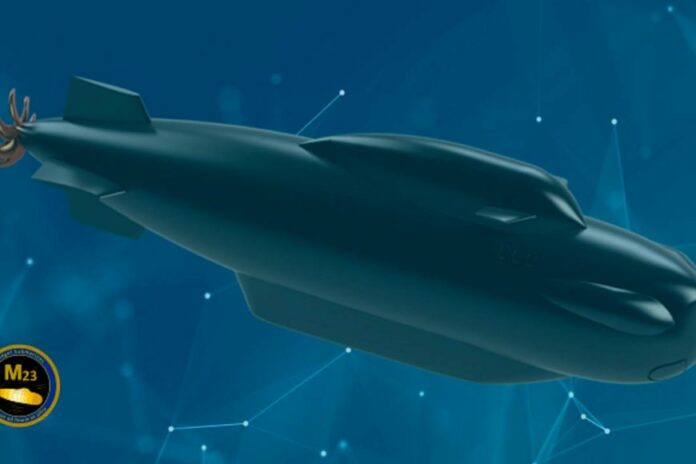
Sources at Naval News reported that the submarine, captured on camera during a sea trial, is being tested off the coast near La Spezia, Italy.

Fresh details of Qatar’s new submarines have been revealed at the MSPO International Defence Industry Exhibition in Poland. The two submarines for the Qatari Emiri Navy are being built by M23 SRL in Bergamo, Italy. The exhibition included a model of the C-Series design, the first time it has been shown in public.

The M23 C-Series submarine has also been observed being tested at La Spezia, the physical and spiritual home of Italian naval special forces. The port has a long and storied tradition of midget submarine construction, both for the nation’s special forces and export. 

The submarines were contracted in January 2020 under a deal associated with Italy’s main defence shipbuilder, Fincantieri. The agreement described “the supply of cutting-edge naval vessels and submarines.” Now it is becoming clearer what those submarines will be.

The submarines have been constructed at Ciserano, Bergamo, far inland, 100 km (60 miles) east of Milan. They will have been transported by 250 km (150 miles) road to the coast. The physical confines of the  factory in Ciserano, together with the need to transport the submarine by road, limits the size of the submarine. 
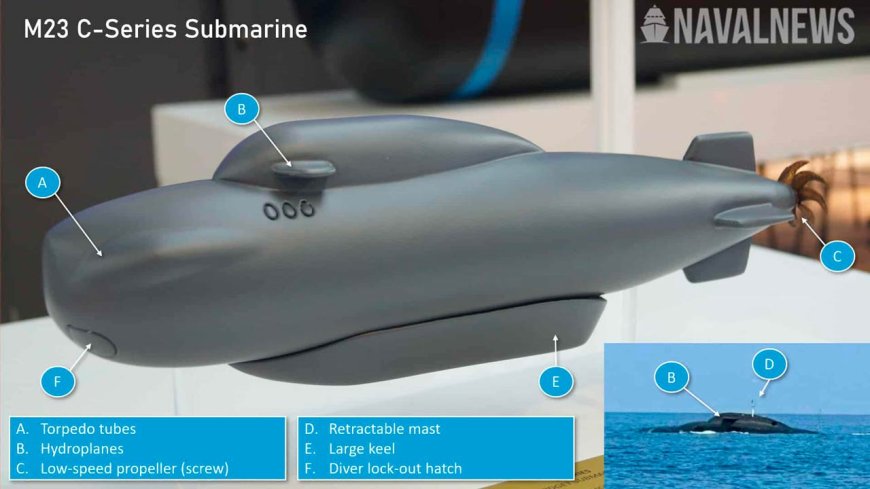
Previous images of the submarine, reported by us in May 2021 provided some hints to the submarine’s capability. As built, the submarine has a slick superstructure and sliders keel not seen on the previous illustrations. This superstructure is typical of the boats designed by famed naval architect Giunio Santi. Despite its differences, it is clear that the previously shown design is closely related to what we are seeing in the latest model, and in the water.

Santi began building submarines in the 1970s and gained a reputation  for high quality and innovation. He pioneered air-independent power (AIP) in the 1980s and developed all-new submarine construction techniques. More recently he built an experimental dry combat submersible (DCS) for the U.S. Navy SEALs. 

The submarine has an overall length of 23 meters (75 feet) and a width of 5 meters (16 feet). It can dive to 200 meters (650 feet) and reach speeds of 12 knots. The crew of 6 can be accompanied by a further 6 passengers, typically special forces combat swimmers. These can lock out of the submarine through a special hatch to conduct covert operations. 

While relatively short, its fatter beam gives it an overall size comparable to a typical 30 meter (100 foot) submarine. Comparable types, in size terms, include the Iranian Ghadir Class (actually the North Korean Yono design) and the Italian built Cos.Mo.S MG-110. 

The M23 design is comparatively heavily armed, with two torpedo tubes housed under the casing. These can house standard 553mm (21 inch) heavyweight torpedoes. The submarine can also carry Murena smart sea mines and launch loitering munitions. 

Source: Naval News
Helm Operations and Caterpillar collaboration to share workboat engine data

0

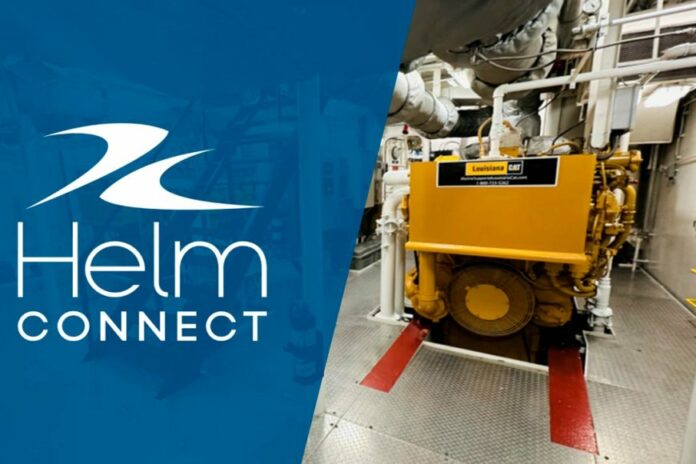
Combining the strengths of Helm CONNECT’s fleet management software and Caterpillar’s engine technology, this collaboration sets a new standard for informed decision-making and operational efficiency in the maritime industry.

The new collaboration addresses the maritime industry’s increasing demand for accurate and real-time engine data. By integrating Caterpillar’s engine data into Helm CONNECT, operators gain access to crucial information such as engine hours and fuel burn data directly within the Helm CONNECT platform. This supports proactive decision-making and empowers operators to make informed choices. It also enhances maintenance schedules, boosts fuel efficiency, and ensures compliance with environmental regulations, empowering operators with comprehensive, data-driven insights.

To start benefiting from this collaboration, vessel operators need a Helm CONNECT subscription, a Cat® Customer Value Agreement (CVA) with a Cat dealer, and assets connected via Cat Product Link.

Paul Cyr, Manager of Partnerships, said:

“This collaboration is a significant advancement for the maritime industry, and we are beyond excited about this new collaboration. Customers benefit from the combined strengths of two industry leaders: Caterpillar’s robust digital marine technology and Helm Operations’ innovative Helm CONNECT software. Together, they set a new benchmark for maritime operations, paving the way for a more efficient and data-driven future.” 

Steven Tibbets, Director of Product Support, Caterpillar Marine, said:

“We are pleased to bring this data integration together and collaborate with Helm to support customers in meeting their business objectives. Caterpillar’s engine data will be seamlessly integrated with Helm CONNECT, meeting customers’ requests for access to engine data.”

Finnlines to launch a new freight service from Finland to Sheerness, UK

0

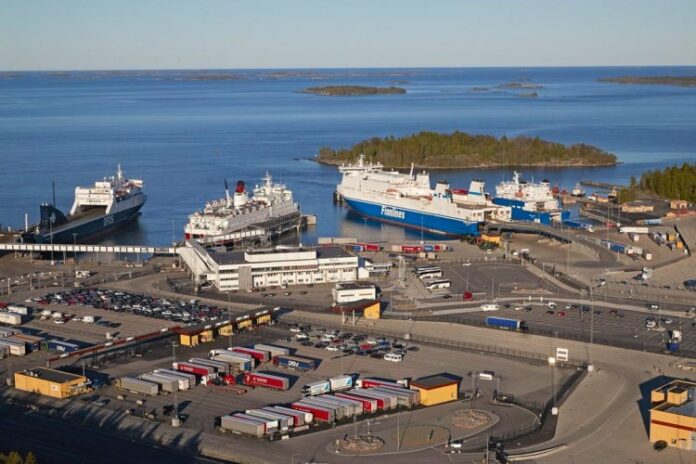
Finnlines is set to launch a new freight service from Finland to London Medway located in Sheerness, with further connections available to Belgium, Spain, and Ireland. The first arrival will take place on 23 September 2024. The new service is part of Finnlines’ strategy to improve service sustainability and route network, and it will be operated with three Finneco-class vessels calling London Medway once a week.

As part of its strategy to expand its route network, improve service reliability, and offer a sustainable alternative to its customers, the freight and passenger shipping company Finnlines is making a significant change to its services in the UK. Starting in September, Finnlines will launch a new freight service from Finland to London Medway, with further connections available to Belgium, Spain, and Ireland. The new connection will provide customers with shorter transit times and increased cargo capacity. Customers can access the entire Finnlines and the Grimaldi Group network via Zeebrügge and Antwerp, which provides expanded business opportunities.

London Medway is located on the Isle of Sheppey in Kent, with a short sea connection to the Continent. The infrastructure in the port is well-developed with a rail network and a direct access to the motorway. Its proximity to London, the UK’s largest commercial hub, makes it an ideal gateway for businesses seeking to expand in this critical region.

The service will be operated by three Finneco-class hybrid ro-ro vessels, each with a cargo capacity of 5,800 lane metres, equivalent to around 400 trailers. The innovative vessel layout enables faster and more efficient loading and unloading operations besides enhanced flexibility to load any type of cargo, long, heavy up to a height of 7 metres.

To reduce emissions, the vessels are equipped with many advanced technologies such as air lubrication, a high-powered battery bank and solar panels.

“Finnlines continues to strengthen its services by increasing cargo capacity for the UK service. Furthermore, the launch of our new service from Sheerness secures an important trade route between England and the Continent, further solidifying our position in the market. We are constantly improving our services to our customers and looking for new growth opportunities,” says Merja Kallio-Mannila, Finnlines’ Commercial Director.

London Medway is managed by the Peel Ports Group, a leading port operator and full-service logistics provider. The terminal is equipped to handle a wide range of cargo types, including automotive, steel, wood, forestry, and project cargo, as well as offering facilities for ro-ro cargo.

“Location is everything and as a port, London Medway’s proximity to the nation’s capital and distribution networks means it is perfectly placed to connect importers and exporters with their markets. We expect this new service will be popular with both established and emerging markets, which are seeing strong growth in the South-East of the UK, and in particular forest products which are in high demand. London Medway also handles a vast array of cargo including automotive, steel and ro-ro, so we expect a wide variety of commodities to be transported on Finnlines’ versatile fleet, placing the port as a key interchange between Scandinavia and Iberian markets,” says Richard Goffin, Port Director for Peel Ports Group, London Medway.

QatarEnergy inaugurates the “Rex Tillerson”

0

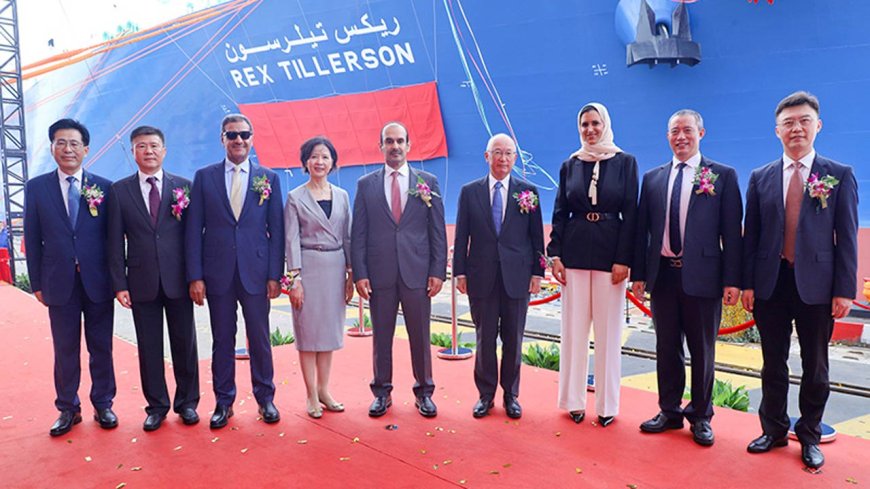
The “Rex Tillerson” was named after the former Chairman and CEO of ExxonMobil as a tribute to his life-long accomplishments in the energy sector.

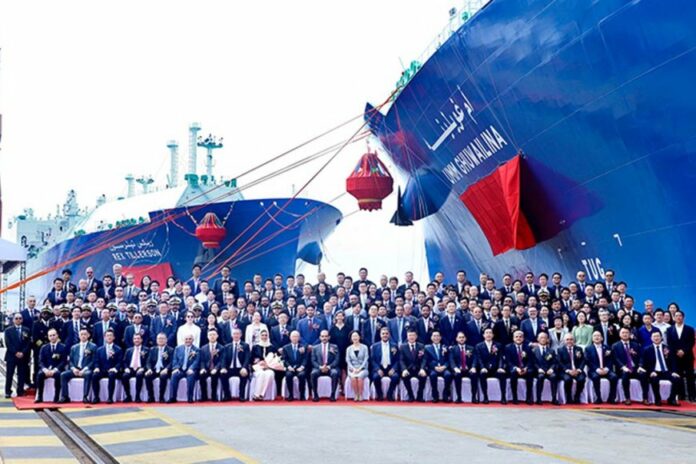
The traditional naming ceremony was held at the Hudong-Zhonghua Shipyard in the Chinese city of Shanghai and was attended by His Excellency Mr. Saad Sherida Al-Kaabi, the Minister of State for Energy Affairs, the President and CEO of QatarEnergy. 

Also in attendance at the ceremony were Sheikh Khalid bin Khalifa Al-Thani, the CEO of QatarEnergy LNG, Ms. Jia Haiying, Member of the Party Leadership Group and Chief Financial Officer of China State Shipbuilding Coproration (CSSC), Mr. Chen Jianliang, the Chairman of Hudong-Zhonghua Shipbuilding, Mr. Takeshi Hashimoto, the President and CEO of Mitsui O.S.K. Lines, Mr. Zhu Bixin, the President of China COSCO SHIPPING Corporation Limited, QatarEnergy’s first Chinese shipowner, and senior executives from QatarEnergy and QatarEnergy LNG.

Marking this historic event, His Excellency Minister Saad Sherida Al-Kaabi said:

“Mr. Tillerson’s legacy will always be remembered in Qatar and around the world, particularly for his wisdom, warmth, and sincerity, which drove one of the oldest Qatari relationships with international oil companies towards greater prosperity. We are grateful for Rex’s friendship and partnership with Qatar, and his long-lasting marks on the global energy industry.”

“This event embodies our commitment to meet the world’s growing need for cleaner energy and to be part of the global economic development for decades to come. As the first ship in our new LNG fleet, the Rex Tillerson will undoubtedly play a significant role as she carries Qatari-produced LNG to many receiving terminals across the globe. It is our honor to name the first vessel in Rex Tillerson’s name as a tribute to his life-long accomplishments and as a symbol of a special friendship.”

On this occasion, Mr. Rex Tillerson said: 

“During my almost 42-year career with ExxonMobil Corporation, one of the highlights was working with Qatar to develop its LNG trade. Under the wise leadership of His Highness the Father Amir Sheikh Hamad bin Khalifa Al Thani, and the continuing wise leadership of His Highness the Amir Sheikh Tamim bin Hamad Al Thani, Qatar has become the largest exporter of liquefied natural gas to the world.”

In addition to the Rex Tillerson, QatarEnergy also celebrated the naming of a second vessel – “Umm Ghuwailina”. The 2 vessels are part of 12 conventional-size LNG vessels contracted with the Hudong-Zhonghua Shipyard – all equipped with the latest maritime technology ensuring optimal operational efficiency and compliance with the most stringent environmental regulations reflecting QatarEnergy’s commitment to sustainability and environmental stewardship. 

The two vessels, set to be delivered ahead of their contracted delivery schedule, are under long-term charter by QatarEnergy Trading (QET).

The vessels are equipped with state-of-the-art dual-fuel engines, generators, and boilers to further reduce both fuel consumption and emissions.

ONE, HMM and Yang Ming confirm the alliance partnership

0

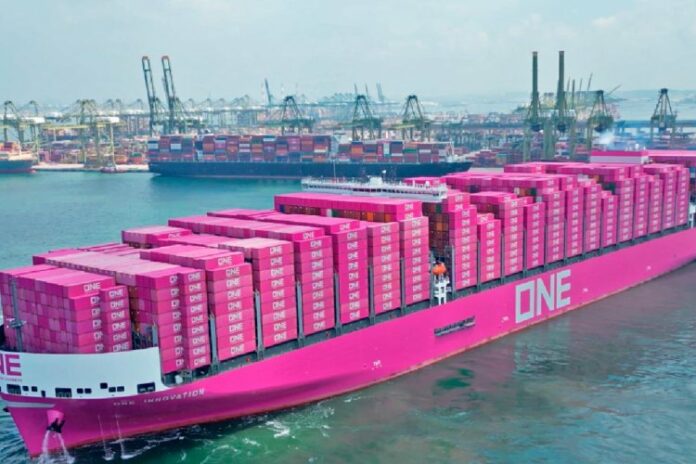
Ocean Network Express, HMM and Yang Ming Marine Transportation (“Yang Ming”) have announced that the three companies will continue to cooperate closely under the new alliance name Premier Alliance, effective for five years from February 2025. 

The cooperation is comprised of mainline services across the major East – West Tradelines: Asia – North America West Coast, Asia – North America East Coast, Asia –  Mediterranean, Asia – North Europe, and Asia – Middle East. 

Jeremy Nixon, CEO of ONE, said:

“We are very pleased to announce that our strategic partnership with HMM and Yang Ming in the East-West trades will be further continued. The close network collaboration that exists between the three companies will be further strengthened and enhanced under this new collaboration starting from February 2025. Collectively this new tripartite alliance will offer strong, reliable and highly dependable end-to-end direct port container services to its customers on both the Transpacific and Asia-Europe trades.” 

Dr. Feng-Ming Tsai, Chairman of Yang Ming, stated:

“The continuous collaboration with HMM and Ocean Network Express not only reflects the deep trust and shared vision among the three companies within the industry, but also underscores our unwavering commitment to delivering great value and broad coverage for our customers. Through the cooperation of Premier Alliance, Yang Ming will continue to drive innovation, enhance service quality, and bring more competitive solutions to our customers. We are confident about the future and look forward to achieving even greater success together.”

Mr. Kyung Bae Kim, CEO of HMM said:

“It is very pleased to continue alliance cooperation with Ocean Network Express and Yang Ming Marine Transportation, which is proving longstanding partnership among three lines until now as well as in the future. We believe close cooperation under Premier Alliance would provide stable and competitive service network to our customers in East-West Trade.”

The 2025 Transpacific trade service products had been introduced earlier by ONE in March 2024. As a continuation of this announcement, a comprehensive update for all services for the major trade lanes will be announced separately.

Reducing emissions from the Troll field

0

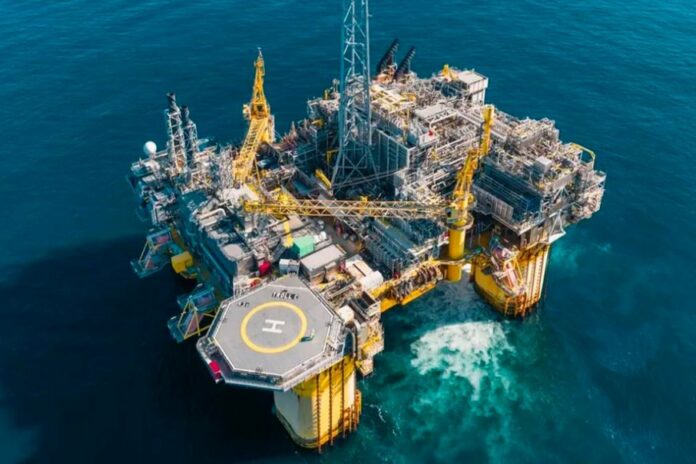
This is in line with the plan for development and operation (PDO) for Troll West electrification (TWEL), which was approved by Norwegian authorities in 2021.

“Troll B and C electrification marks an important milestone in the efforts to halve the emissions from our operations by 2030. The project reduces CO2 emissions by the equivalent of those from 125,000 fossil-fuelled cars,” says Geir Tungesvik, executive vice president for Projects, Drilling & Procurement.

The power to Troll B and C comes from Kollsnes, northwest of Bergen. From here it runs through a new electro building shared by the Troll and Oseberg fields out to Troll B in a 132 kV power cable, and from there to Troll C.

The project has installed new modules on Troll B and C that adjust the voltage to the systems on board. The processing systems and other energy-intensive systems on both platforms are now driven by electricity, except for the large export compressors, which are still gas-powered.

“Troll West electrification has generated substantial business activity for Norwegian suppliers. Over 70 percent of the investments in the project have gone to companies in Norway. I am very pleased that we, along with our partners and suppliers, have succeeded in executing the project in a safe and effective manner,” Tungesvik says.

The CO2 reduction is equivalent to about half a percent of Norway’s total annual emissions. NOx emissions from the field are also reduced by around 850 tonnes per year. Gas burned in turbines to provide energy on the platforms can now be exported and more efficiently used in Europe.

“We have made several new discoveries in the Troll and Fram area in recent years. Thanks to Troll B and C electrification we can develop and produce these resources with very low emissions. The Troll area will continue to deliver large volumes of low-carbon, high-value energy for many years to come,” says Kjetil Hove, Equinor’s executive vice president for Exploration & Production Norway.

The TWEL project is continuing to fully electrify the Troll C platform so that all power needs are met with electricity from land. The measure will cut annual emissions by another 200,000 tonnes of CO2. Overall, this will help cut almost four percent of the total emissions from oil and gas production, around one percent of total emissions in Norway.

Infrastructure at Kollsnes and the cable to the platform are designed for a possible future full electrification also of Troll B.

The Troll A platform (Troll East) was the first platform to be powered from shore on the NCS, and has been electrified since start-up in 1996.

Sanmar chooses Auramarine’s methanol supply system for the methanol fuelled tugs

0

Sanmar Shipyards has chosen Auramarine, the global provider of fuel supply and auxiliary systems for the marine, power and process industries, as its supplier for methanol supply systems on two large dual-fuelled methanol tugs. 

The tugs are based on the RAsalvor 4400-DFM design by Robert Allan Ltd., measuring 44 metres in length, with the capability to operate in some of the harshest environments in the world. They will serve Canada’s Trans Mountain Expansion Project (TMEP) and will escort tankers from the harbour limits of Vancouver to the open Pacific Ocean through the commercial shipping lanes of the Salish Sea.

The revolutionary vessels, which will be the most powerful escort tugs in Canada, capable of achieving a massive 120 tonnes of bollard pull, are scheduled to enter service in 2025. They will also provide significant environmental and ecological benefits through reduced greenhouse gas emissions and underwater radiated noise, which protects the Salish Sea’s resident Killer Whales.

Commenting on the development, John Bergman, CEO, Auramarine said:

“We are very pleased to work with Sanmar Shipyards, which is one of the leading tugboat builders in the world. We are delighted to be part of this unique project and are committed to supporting our clients on their decarbonisation journey. Auramarine’s tailormade design always ensures that our customers are provided with optimum solutions for their specific ship types and fleet requirements.” 

Hakan TUNÇ, Engineering Director at Sanmar Shipyards, continued:

“Sanmar Shipyards, together with Auramarine, is contributing to a sustainable shipping industry with the world’s first large purpose-built dual fuel methanol escort tugs. This is a great opportunity for both companies to accelerate their decarbonisation journeys, innovate and build something totally new to support the industry going forward.” 

Saipem launches XolarSurf floating PV project in Norway

0

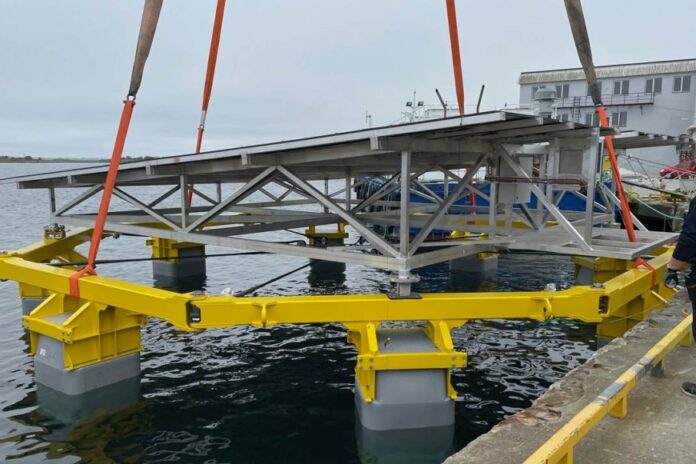
The XolarSurf prototype floater, created in collaboration with the Norwegian manufacturer Kystteknikk and other subcontractors, was lifted and launched at sea at Kystteknikk’s facilities in Dyrvik, on the island of Frøya, at the mouth of the Trondheim fjord in Norway.

Design to withstand waves up to 8m, this represents the first full-scale test and a key milestone in the readiness of the product. The prototype is expected to remain at sea for about one year, during which its performance and production capacity will be monitored.

XolarSurf is a modularized floating solar technology developed by Moss Maritime, Saipem’s Norwegian subsidiary specialized in design and engineering services for the offshore energy as well as other ocean-based sectors. A full industrialization process has been conducted to exploit the cost reduction associated to repeated and scalable production.

This solution can produce electricity from solar panels mounted on floaters specifically designed for marine environments. Its design grants significant flexibility as it is formed by “islands”, each one consisting of several smaller floaters providing a safe space for the photovoltaic panels. Each floater may generate up to 35–45 kWp of installed power.

The prototype is a result of several years of development, engineering, model and component testing in laboratories as well as full-scale testing of critical marine operations relevant to the installation of an offshore floating solar park, with a joint effort by Saipem, Moss Maritime, and Equinor that have combined their commitment and expertise.

XolarSurf represents a new frontier in the floating solar segment, capable of being installed in any coastal or offshore location, even under harsh environmental conditions. It offers an optimal solution for hybrid projects, such as offshore wind farms, both fixed and floating. This technology is particularly suited for locations with limited access to land, remote areas, stand-alone grids, and can provide electricity to the growing aquaculture industry, both near shore and for new planned offshore installations. The modular design of XolarSurf allows it to be easily relocated to new sites or expanded in its existing location.

Jumbo Offshore completes TP T&I scope at Yunlin Offshore Wind Farm

0

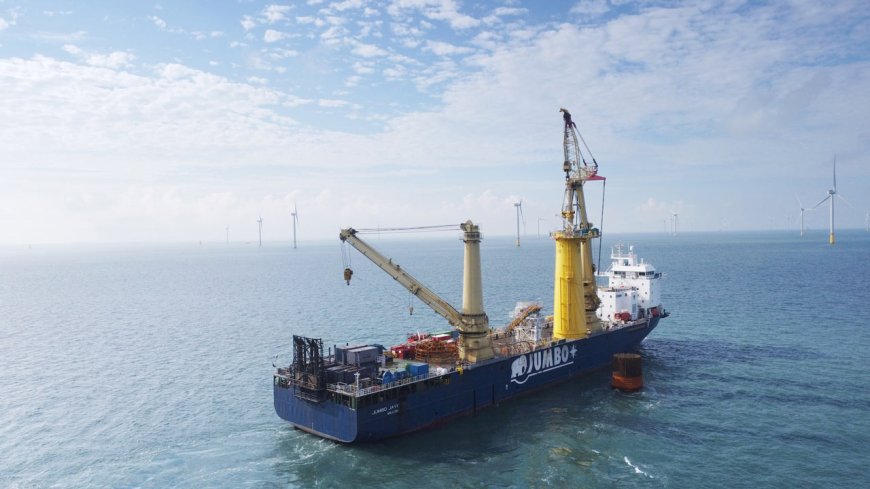
Jumbo Offshore has completed its TP (transition piece) T&I (transport & installation scope) on the Yunlin Offshore Wind Farm (OWF) in Taiwan under a contract with Yunneng Wind Power Co., Ltd. For its role on the project, Jumbo Offshore deployed its DP2 Heavy Lift Crane Vessel Jumbo Javelin. 

Prior to undertaking the project, Jumbo Offshore carried out extensive project preparations to ensure a smooth, reliable project execution. 

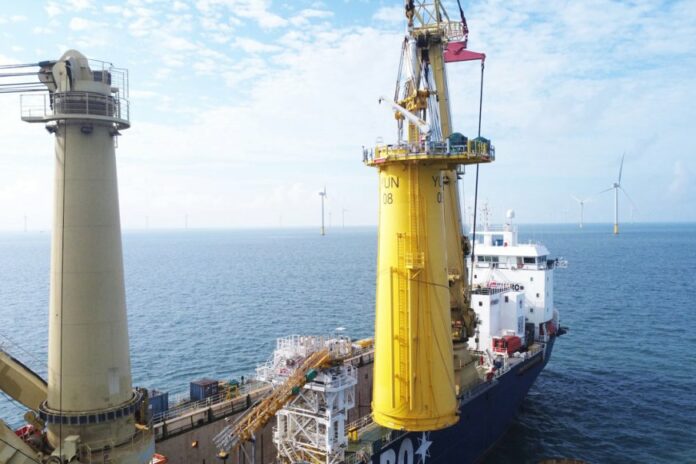
Following this, Jumbo Javelin was outfitted in a project-specific set-up. This included the Jumbo Fly-Jib modular crane boom extension. This feature can be mounted on a Jumbo J-Class vessel to increase the lifting height. With this, the vessel was provided with the capability to lift the 27 m high TPs.

Jumbo Javelin performed the final TP installation on Friday, August 23. The vessel was loaded out with TPs in Kaohsiung, transporting up to four 450t TPs at one time. In total, Jumbo Javelin transported and installed 80 TPs during the project. 

Jumbo Offshore completed its scope ahead of schedule, contributing to the client’s target of completing the OWF before the end of 2024 and maintaining an excellent QHSE record and safety culture during the project execution. 

Water depths at the Yunlin OWF vary between 7 and 35m. The shallower water location are not suitable for installation in DP mode. Therefore, Jumbo Offshore switched between installation on DP and installation on anchors, making full use of the vessel’s versatility. 

The Yunlin OWF is located in the Taiwan Strait, between 8 and 17 km from the coast of Taiwan. Covering an area 82km2, the OWF comprises 80 WTG (wind turbine generators), able to provide up to 640 MW clean electricity, sufficient to power 600,000 Taiwanese households.

ABB and Seafjord Energy introduce pioneering e-bunker vessel concept

0

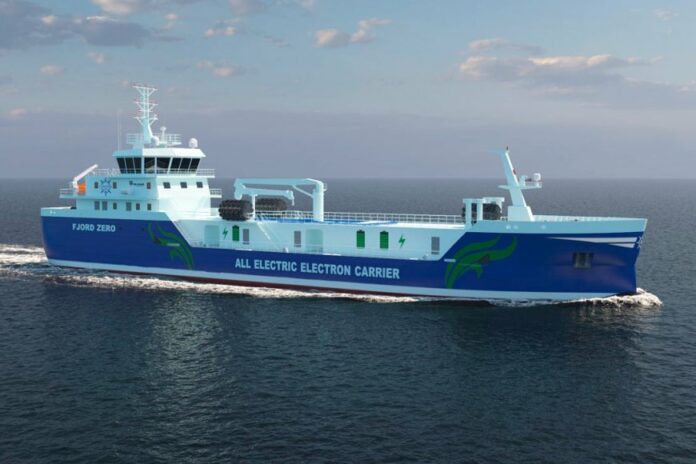
ABB’s power and propulsion solution was chosen by SeaFjord Energy, a Swedish innovator in marine energy solutions, for a pioneering e-bunker vessel concept that offers a new way of supplying energy to ships at sea, in fjords or in ports. 

The vessel concept, developed in collaboration with FKAB Marine Design and Bureau Veritas, a French company specialized in testing, inspection and certification, will feature a large battery pack capable of providing renewable energy where traditional shore power infrastructure is less accessible, such as remote fjords and offshore locations.

The e-bunker vessel can be charged through a shore connection or draw energy directly from a wind farm, utilizing ABB’s charging system. ABB’s technology is envisioned to be used for charging other vessels at sea, with the e-bunker designed to deliver up to 50 megawatts of power to ships of different sizes, from small to large.

The vessel design benefits from two ABB Dynafin™ propulsion units to maximize propulsion efficiency and responsiveness in all operational situations. Maximum propulsion efficiency is crucial for a concept of this kind as it minimizes the energy required to power the vessel, thereby making more energy available for charging other ships. ABB Dynafin™ propulsion’s combined motion of the wheel and blades generates propulsion and steering forces simultaneously, enabling ground-breaking operational efficiency and precision for ships. Additionally, the propulsors integrate seamlessly with ABB’s Onboard DC Grid™ power system platform, enhancing the vessel’s overall performance.

The Onboard DC Grid™ is a modular and highly customizable power system platform that enables simple, flexible and functional integration of energy sources and loads. Its versatility is well suited to meet the e-bunker’s operational requirements.

PEMS™ is the core of the vessel’s combined power and control system, ensuring optimal use of the vessel’s total power resources in a safe, energy-efficient and environmentally friendly manner. ABB’s solution optimizes energy use and flow onboard, as well as towards the vessels bunkering from it.

“ABB is excited to collaborate on this groundbreaking design. Our electric power and propulsion system enables maximal efficiency both for transmission and propulsion, which means that a larger part of the carried energy can be used by bunker customers,” said Marcus Högblom, Head of Passenger segment, ABB Marine & Ports.

“This is the world’s first e-bunker vessel which will provide electric power to ships in fjords, ports and offshore. This development is a significant step towards a more sustainable maritime sector,” said Elias Magnusson, COO, SeaFjord Energy.

“We are pleased to support the development of this innovative e-bunker vessel, advancing sustainable maritime solutions while maintaining high safety and environmental standards,” said Herman Spilker, Vice President of North Europe Zone at Bureau Veritas Marine & Offshore.

“FKAB is glad and grateful to be part of this e-bunker design, and that we got the question from Seafjord Energy to take part from day one to develop their idea together. This project is the first-of-its-kind and perfectly in line with innovative projects that FKAB likes to take part in,” said Andreas Hagberg, Head of Sales and Marketing at FKAB Marine Design.