2 C
New York
Home Blog Page 139

Trelleborg partners with Arkas Holding for advanced fleet modernization initiative

0

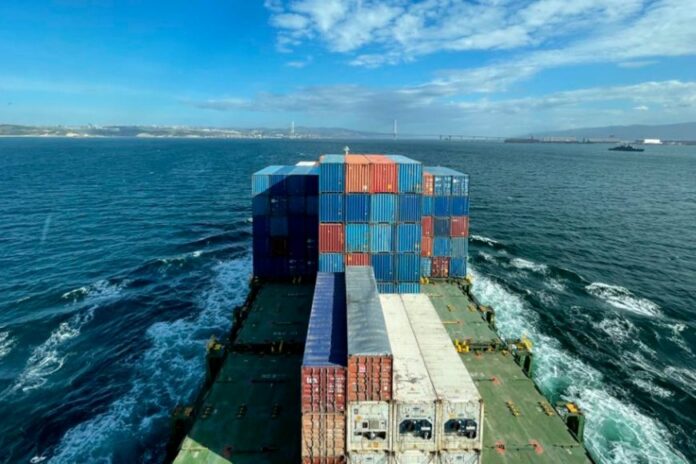
As part of the collaboration, Trelleborg supplied its TSX5 shaft power meters, to be integrated into the Arkas fleet performance software, allowing real-time performance monitoring and improvements in ship operational efficiency.

Arkas Holding embarked on a comprehensive fleet modernization project aimed at ship performance monitoring across its extensive fleet of vessels, enhancing operational efficiency, reducing carbon emissions and meeting compliance requirements. The collaboration commenced with Trelleborg delivering 5 shipsets of TSX5 for Energy Efficiency Existing Ship Index (EEXI) compliance, setting the stage for an extended collaboration covering an additional 37 vessels.

This integration of Trelleborg’s TSX5 propels Arkas Holding closer to its vision of a modernized fleet with superior operational efficiency, as well as compliance with the Carbon Intensity Indicator (CII) regulations, adopted by The International Maritime Organization (IMO) to reduce carbon emissions in the shipping industry to net zero by or around 2050.

Trelleborg’s TSX5 system offers a comprehensive suite of features, including real-time monitoring of shaft power, shaft torque, and shaft RPM, as well as over-torque alarm and cumulative power recording. It ensures compliance with EEXI rules when fitted with a ShaPoLi alarming device, and is an essential device required for any ship performance software. TSX5, when combined with fuel flow measurement and speed/distance data, provides vessel operators with actionable insights and recommendations to enhance energy efficiency across the fleet, thereby resulting in reduced operational costs, a reduction in carbon emissions, and a positive impact on the bottom line.

“Trelleborg is proud to have partnered with Arkas Holding in their fleet modernization project,” said Richard Hepworth, Business Unit President, Trelleborg Marine and Infrastructure. “Our solution has enabled Arkas Holding to monitor their fleet’s performance in real-time, allowing them to make data-driven decisions to improve operational efficiency and reduce carbon emissions. This collaboration highlights the pivotal role of advanced ship technology in shaping a more sustainable and profitable future for the maritime industry.”

With Trelleborg successfully concluding the delivery of the final batch of shaft power meters, the equipment is slated for installation across the Arkas fleet later in 2024. Additionally, Trelleborg also supplied SafePilot P3, Safe Captain, and CAT ROT for the entire container fleet. 
Wärtsilä and Royal Caribbean Group sign Lifecyle Agreement

0

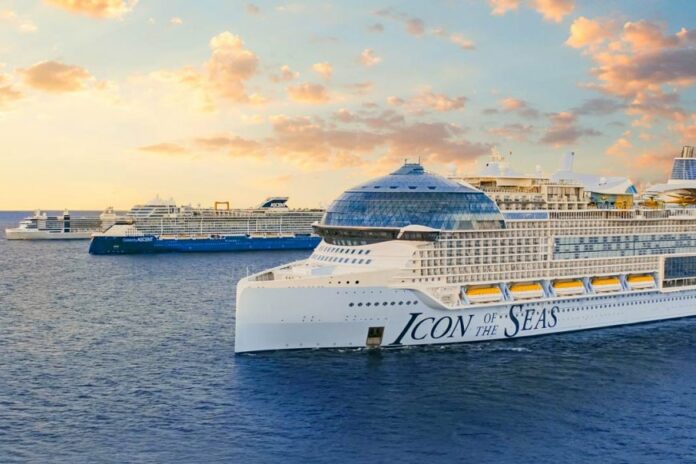
The agreement is designed to optimise the performance, reliability and availability of the ships’ engines to ensure the highest level of operational efficiency to support and accelerate Royal Caribbean’s sustainability goals.

“This agreement is a testament to the mutual efforts and dedication of both the Royal Caribbean Group and Wärtsilä teams. It not only solidifies our exemplary long-term partnership but also elevates our collaboration to new heights. Together, we are committed to achieving the highest operational reliability and meeting the strictest sustainability and decarbonisation standards in the cruise industry,” comments Roger Holm, President of Wärtsilä Marine & Executive Vice President at Wärtsilä Corporation.

Installing the right technological solutions onboard is a crucial first step towards achieving the cruise industry’s goal of net-zero operations. However, ensuring these solutions perform optimally throughout their entire lifetime is essential. Wärtsilä’s Lifecycle Agreements provide this assurance and highlight the importance of collaboration in addressing the industry’s goals.

“Collaborations, with longtime partners like Wärtsilä, serve as a cornerstone in our joint efforts to accelerate reliable and sustainable operations and future initiatives. It provides a solid framework for sustained collaboration and will have a meaningful impact on ensuring our fleet’s sustainable operations, which is vitally important for us and our industry,” says Palle Laursen, Executive Vice President and Head of Marine for Royal Caribbean Group.

This framework decreases the risk of unplanned maintenance and costly downtime, and improves performance to save fuel and reduce emissions, allowing the ships to perform optimally while remaining regulatory compliant.

The contract covers both scheduled and unscheduled maintenance, as well as Wärtsilä’s Expert Insight service, delivered through Wärtsilä’s global Expertise Centres. Wärtsilä Expert Insight leverages AI technology for predictive maintenance helping to improve asset efficiency and reduce both operating costs and emissions.

The agreement with Royal Caribbean Group also includes implementing a performance-based model. This means that gains, resulting from best operation and maintenance practices, will be shared between Royal Caribbean Group and Wärtsilä.

Danish offshore wind farms Vesterhav Nord and Vesterhav Syd inaugurated

0

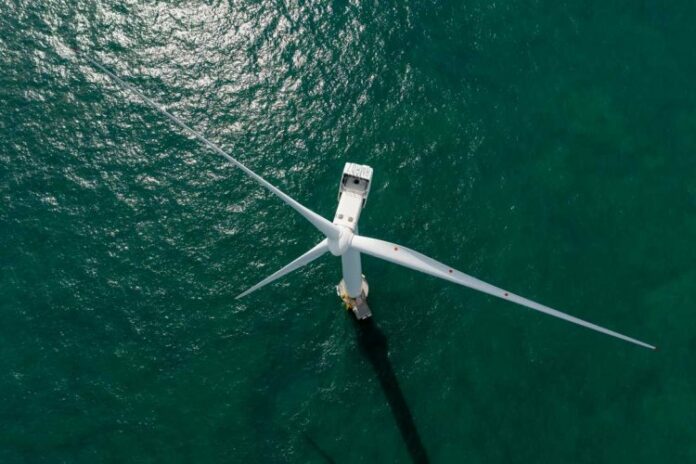
Danish Minister of Environment, Magnus Heunicke, Vattenfall’s Head of Wind Helene Biström and Country Manager for Vattenfall Denmark Anne Mette Traberg, have officially inaugurated the two wind farms Vesterhav Nord and Vesterhav Syd. 

The two, almost identical  wind farms, are located off the Danish west coast and consists in total of 41 wind turbines, each with a capacity of 8.4 MW. Both farms are entirely within Danish waters with the turbines placed between 5.5 to 10 kilometres from the shore.

“We’re excited to welcome Vesterhav Nord and Vesterhav Syd to our offshore wind portfolio. By investing in additional offshore capacity, we’re making a tangible impact on Denmark’s energy independence while benefiting the local community. The Vesterhav projects will also help balancing the Danish electricity system as a whole. These new wind farms reinforce our commitment to delivering fossil-free energy and driving the transition towards a fossil-free future,” says Helene Biström, Head of Business Area Wind at Vattenfall.

“The opening of these two wind farms strengthens Vattenfall’s presence in Denmark, bringing our total offshore wind capacity to 1.5 GW. This reflects our ongoing commitment to the offshore wind industry in Denmark and across Europe. Vesterhav Nord and Vesterhav Syd are also making a positive difference in the local community by creating jobs and supporting the regional economy. We are very pleased with what we have accomplished, together with our suppliers and the regional government”, says Anne Mette Traberg, Country Manager, Vattenfall Denmark.

Revolutionize fishing with Naoned digital twin project

0

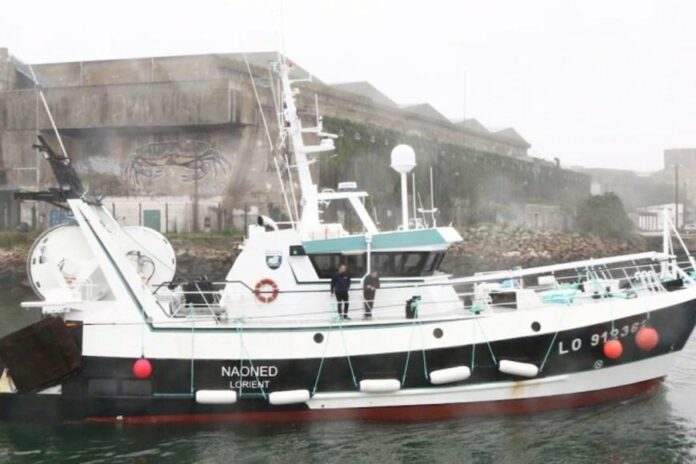
Aseine trawler named Naoned, which Lorient company APAK operates has been hauled out to be outfitted with sensors to measure all aspects of its fishing trips and gather data before a refit of new propulsion, battery pack, and other technology later in the year. The goal is to build a digital twin of the vessel.

A digital twin is a computer-based model that uses sensors, data, and a predictive model to help manage fishing operations. Hook and Net Mag shared that the digital twin for Naoned will allow the company to compare its current performance with the low-emission hybrid propulsion that will be fitted later this year as part of the HYBA project. The project is led by the Brittany Fisheries Committee and managed by Vectura Systems, with the involvement of Coprexma, a naval architect, and a host of other local companies.

The vessel operates in various fisheries, including pelagic and demersal trawl fishing and seine netting across the various fishing seasons. Once the data is accumulated after the refit, they can precisely compare the differences in performance between before and after and show where savings can be made.

Naoned was built in 1999 by Piriou, a shipyard leader in constructing and repairing mid-size vessels. The 76-foot vessel, originally known as the Gloire a Marie III, was built for owners in Boulogne-sur Mer, but then sold in 2017 by Lorient company APAK and outfitted for seine netting as Naoned. APAK has since added newer vessels to its fleet. Naoned was selected for the HYBA project because it is the oldest and has the most available space on board to accommodate a battery pack.

Eric Guygniec, APAK’s owner, told Hook and Net Mag, “This transition is a major challenge. Whatever the advantage in fuel consumption, this will enable us to reduce our carbon footprints and make substantial savings. With an annual fuel consumption of 450,000 liters, a 10% reduction in consumption represents a savings of €45,000 (about $50,000).”

Guygniec hopes to see a reduction between ten to twenty percent as the battery pack and other technology impact the energy peaks and enable more economical operation as the hybrid propulsion with an IMO Tier III engine. He noted, “Although we focus on trawling, the versatility of this vessel allows us to measure a large number of parameters and collect a whole bunch of very precise information.”

Marinelec Technologies developed the analytical econometric technology, and the data will engage with other environmental, sea state, operational, and operating conditions factors. Ventura System will also bring decarbonization experience to the project. Sebastian Berthebaud, CEO and engineer with Vectura, told sources, “If we manage to create a real digital twin of the vessel in partnership with the research team at IMT Atlantique in Nantes, calibrated by machine-learning algorithms, we will be able to truly optimize the energy consumption of commercial vessels – we are talking here about 25-meter vessels for fishing, but also passenger vessels, tugs, and more.”

Though the HYBA project on the Naoned has been delayed due to the closure of the Bay of Biscay fishery, fishermen from Sete and Grau du Roi have taken the trip to Brittany to inspect the vessel. Berthebaud noted that this project opens the possibility for Mediterranean trawlers to implement hybrid technology into their day boat fishing vessels.

Source: National Fisherman

UECC embarks on renewed fleet expansion with addition of ex-Höegh car carrier

0

United European Car Carriers (UECC) is expanding its fleet with an additional car carrier 

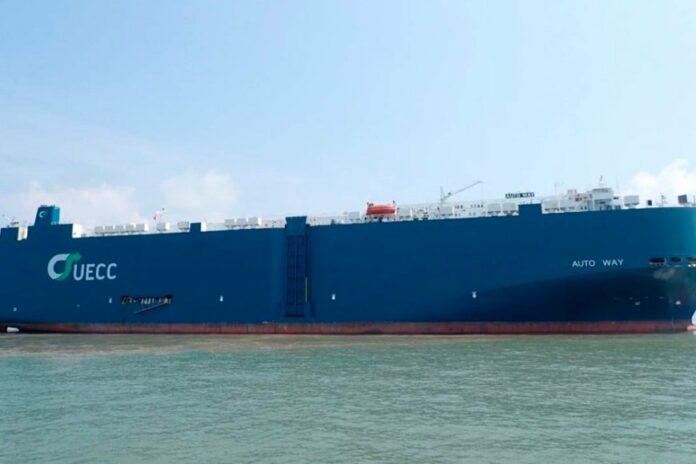
It follows the recent acquisition by UECC’s joint owner Wallenius Lines of the 2006-built Höegh Chiba from Höegh Autoliners, with the vessel renamed Auto Way and fixed on a long-term charter with UECC for deployment on the North-South trade route from end-October this year.

“UECC has been successful in attracting new contractual volumes from both existing and new customers that has resulted in an increased capacity requirement on this route,” says UECC’s COO Per Christian Mørk.

“The addition of another vessel will enable us to increase both cargo capacity and sailing frequency, as well as expand this network with additional ports in co-operation with our customers to provide tailor-made services.”

The ports of Cuxhaven, Germany and Efesan, Turkey will now be added to the North-South route that is the largest trading loop operated by UECC and therefore absorbs the largest number of vessels, with four ships currently plying the route on an eight-day sailing frequency covering eight ports in Germany, Belgium, the UK, Spain, Italy, Greece and Turkey.

The capacity boost will increase the number of UECC vessels operating on the route to five, now taking in 10 ports, to further enhance the high regularity of its operations on the major regional service between northern and southern Europe.

The Auto Way, with capacity of 6000 CEU, was chosen due to the flexibility of its deck configuration with the ability to transport breakbulk cargoes as well as a wide range of rolling HH equipment, providing flexible capacity for UECC customers, according to Mørk.

“By adding a vessel, we are demonstrating our clear ambition to improve our services to current and future partners. Furthermore, we see future growth potential based on market requirements, both in the shorter and longer term,” he says.

Wallenius Lines’ CEO Erik Nøklebye states: “The purchase from Höegh Autoliners is in line with the strategy of being actively engaged in this shipping segment through innovation, design, building, management of and investing in both used and new tonnage, offering direct support to our partner companies.”

The latest vessel addition increases the size of UECC’s fleet to 14 owned and chartered units as it eyes further fleet expansion, with another vessel addition on the cards later this year, to meet increasing market demand for sustainable maritime transport after earlier investments in five dual-fuelled/multi-fuelled LNG and battery hybrid newbuilds.

Mørk says the company intends to operate the Auto Way with a significant proportion of biofuels, as is the case with other vessels in its fleet, as it seeks to minimise environmental impact and mitigate costs exposure for its customers by cutting their Scope 3 emissions amid new green regulations, notably the EU Emissions Trading System (EU ETS) and FuelEU Maritime.

Triple celebration for Explora Journeys as Explora II is delivered

0

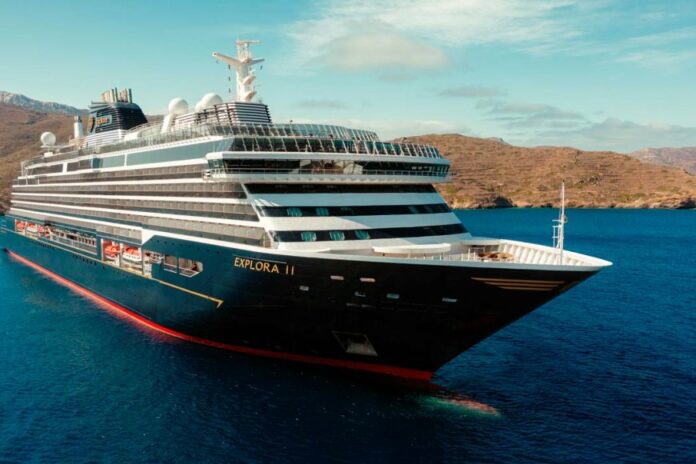
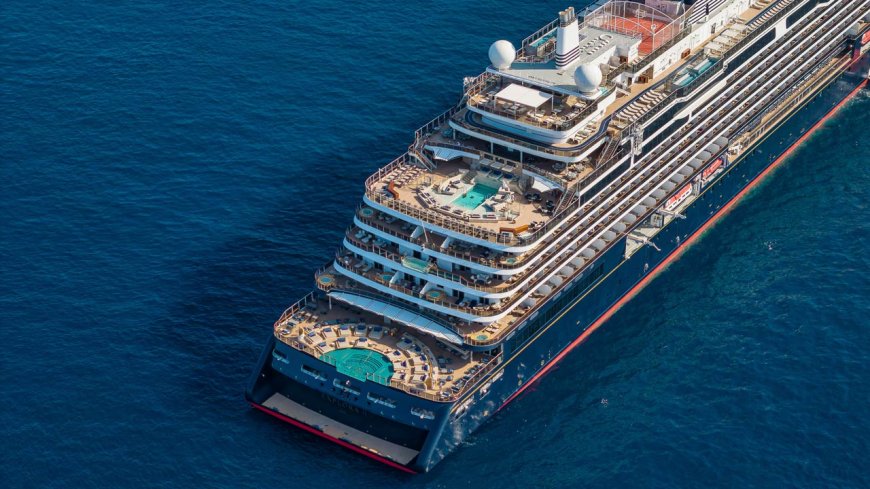
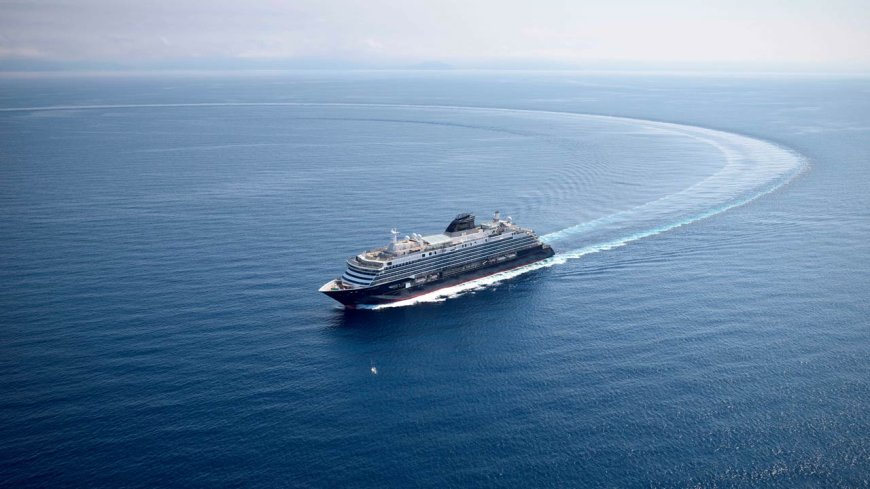
The Cruise Division of the MSC Group and Fincantieri has celebrated three significant events in Genoa related to the Explora Journeys fleet, the luxury lifestyle brand recently launched by the MSC Group: the delivery of EXPLORA II, the coin ceremony for EXPLORA III, and the steel cutting for EXPLORA IV.

Edoardo Rixi, Deputy Minister of Infrastructure and Transport, said:

«Explora Journeys ships represent the ultimate expression of naval engineering and design. Fincantieri’s contribution was fundamental in the realisation of this innovative ships, which meet the highest expectations of quality and reliability, further consolidating Italy’s position among the global leaders in the shipbuilding industry».

Pierfrancesco Vago, Executive Chairman of the MSC Group’s Cruise Division, commented:

 “These vessels represent a combination of innovation and sustainability and are part of an important expansion plan for our new European luxury brand. They also strengthen our long-term partnership with Fincantieri, which began 10 years ago and currently includes the delivery of four more ships by 2028, in addition to the six already delivered to date. The construction of the Explora Journeys ships plays a crucial role both locally, boosting the shipbuilding sector and the economy of Genoa and Liguria, and nationally, ensuring significant economic and employment benefits for the entire country.”

Pierroberto Folgiero, Chief Executive Officer and General Manager of Fincantieri, said: 

«The partnership with MSC, consolidated through the construction of the iconic Explora Journeys ships, demonstrates Fincantieri’s leadership in the luxury cruise segment. Together with the MSC Group, we continue to set new standards of excellence and sustainability for the global cruise industry by pioneering technologies that will drive the boundaries of innovation even further. This is the ‘Made in Italy of talent’, which we aim to bring into the future technologically, accelerating our efforts to modernize shipyards and enhance the domestic craftmanship in our Country by creating the high-skilled workforce of the future».

The event celebrated three key moments in maritime tradition and, above all, in the construction of the Explora Journeys fleet, which currently includes six ships, with the first delivered in July 2023. All vessels are built in Italy by Fincantieri, with a total MSC investment exceeding 3.5 billion euros, of which around 500 million euros was allocated for EXPLORA II. This investment has an economic impact of over 15 billion euros on the country, with significant downstream effects and the creation of thousands of jobs. The construction of each ship requires over seven million work hours and provides employment for an average of 2,500 people for two to three years.


Shipping banks provide cheaper loans to greener shipping companies, but not greener ships

0

While banks offer cheaper loans to shipping companies with strong climate records, they do not extend these benefits to individual low-carbon ships.

This gap suggests that current financing practices may not effectively promote the adoption of greener technologies in shipping.

Key Insights:

  • Company-Level vs. Ship-Level Financing: Banks reward companies with good climate scores, but loan terms for individual ships do not reflect their carbon efficiency. This disconnect could undermine efforts to reduce emissions.
  • Poseidon Principles’ Impact: Despite their goal to improve transparency, the Poseidon Principles have not yet led to lower financing costs for ships with lower carbon emissions.
  • Stranded Assets Risk: With a significant portion of the fleet still using fossil fuels, there is a growing risk of stranded assets as climate regulations tighten, potentially leading to financial losses.

Marie Fricaudet, lead author, said:

“While lenders recognise the need for decarbonisation, they aren’t yet incentivising more carbon-efficient ships through better loan terms.”

Dr. Sophia Parker, co-author, said:

“The data shows that banks are making decisions on a corporate basis rather than evaluating individual ships’ carbon performance. This needs to change.”

The study emphasises the need for stronger regulations that link loan terms directly to the carbon performance of both companies and individual ships. Voluntary initiatives alone are insufficient to drive the necessary change in the industry.

Read the full study on the ScienceDirect website.

Saipem awarded an offshore EPC contract in Qatar

0

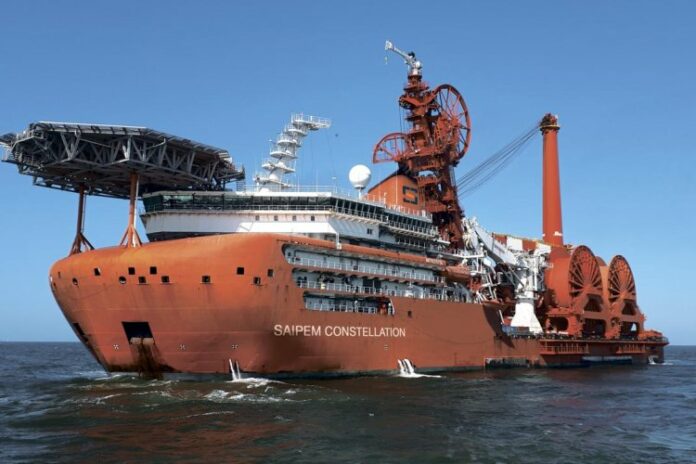
Saipem has been awarded an offshore EPC contract by QatarEnergy LNG for the Combined COMP3A & COMP3B of the North Field Production Sustainability Offshore Compression Program, aimed at sustaining the production of the North Field offshore natural gas reservoir, located offshore the north-east coast of Qatar. 

Saipem’s scope of work encompasses the engineering, procurement, fabrication and installation of six platforms as well as approximately 100 km of corrosion resistance alloy rigid subsea pipelines of 28’’ and 24’’ diameter, 100 km of subsea composite cables, 150 km of fiber optic cables and several other subsea facilities.

This important contract follows the EPC package for the North Field Production Sustainability Offshore Compression Complexes Project – [COMP 2], awarded to Saipem in October 2022 and currently being executed.

This project further consolidates Saipem’s position and track record in Qatar.

ABB permanent magnet shaft generator technology to power 15 LNG carriers for Qatar Energy

0

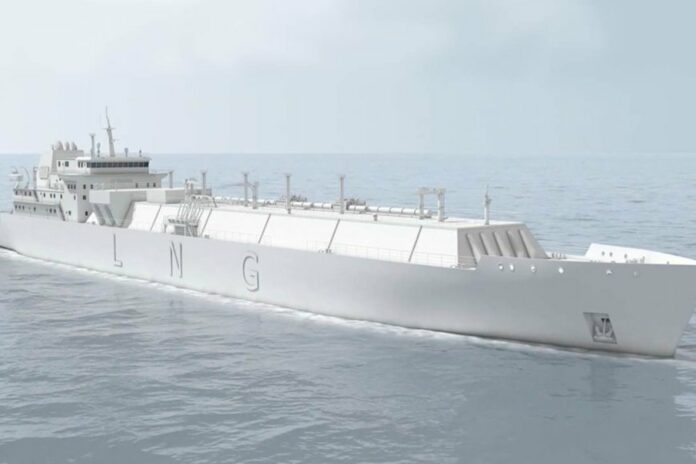
The 174,000-cbm capacity ships are due delivery between mid-2026 and August 2028 to multiple leading owners serving the supply chain needs of charterer Qatar Energy. Representing SHI’s the largest fleet of LNG project involving permanent magnet shaft generator systems, the contract is also the South Korean yard’s single largest ever order for LNG carriers.

ABB permanent magnet shaft generator technology enhances operational efficiency of vessels by utilizing the power from the shaft and main engine, resulting in better fuel economy compared to getting the power from high-speed, fuel-intensive auxiliary engines.

In addition, the permanent magnet shaft generator is optimized for converter control, enabling better efficiency than either induction or electrically excited synchronous machines can offer at full and partial load. According to ABB’s estimation, this helps to cut ship fuel costs by up to 4 percent. Working with ABB’s advanced ACS880 Converter and Control System with D/C Link, the technology can increase fuel efficiency by a further one percent.

Integrating the technology with power, control and automation across multiple ship functions enhances energy efficiency and helps reduce emissions as a result. This aligns with the International Maritime Organization’s decarbonization targets, using measures like the Energy Efficiency Design Index (EEDI), the Energy Efficiency Existing Ship Index (EEXI) and the Carbon Intensity Indicator (CII) of ships.

“The scale of this order suggests that key LNG stakeholders now recognize permanent magnet shaft generator system benefits that are widely accepted by owners in the container ship, oil tanker and bulk carrier markets,” said Michael Christensen, Global Segment Responsible for Cargo, ABB Marine & Ports. “The agreement further strengthens our position in the cargo segment and emphasizes our commitment to helping the shipping industry enhance fuel efficiency, reduce costs and reduce emissions in line with environmental regulations. We look forward to working with Samsung and Qatar Energy during implementation and beyond.”
 

KOTUG awarded contract by ROS for delivery of E-Pusher to power emission free sand transport

0

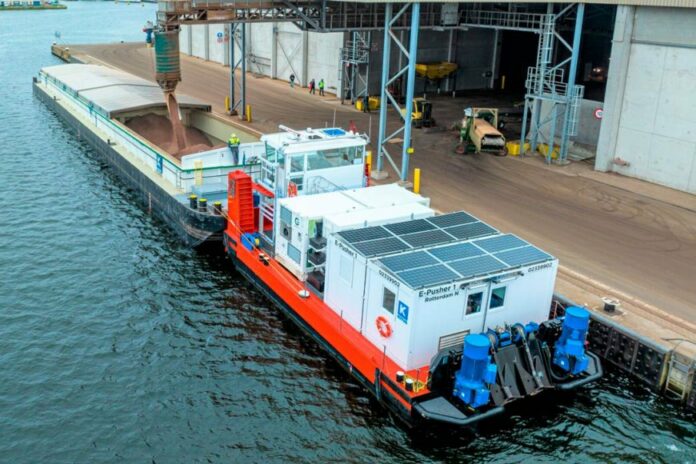
KOTUG has received an order from Rotterdam-based sand handling and transport specialist, ROS, for the delivery of a fully electric pusher tug. 

The KOTUG E-Pusher, in combination with barges, will enable seamless, zero-emission transport of sand, from loading at the Maasvlakte to unloading in Rotterdam, with further distribution via electric trucks.

The fully electric E-Pusher, developed by KOTUG, is scheduled for completion in May 2025. The entire emission-free system—from transshipment to final delivery—is expected to be fully operational by August 2025.

This initiative represents a major milestone for the region, as ROS has been transitioning to zero-emission transport with previous investments in electric cranes for sand handling and the creation of  a dedicated charging hub for electric trucks in Schiedam. The next step involves establishing a 1-megawatt fast-charging station for the new electric pusher tug, which will be one of the first of its kind in Rotterdam, accelerating the city’s journey toward emission-free inland navigation.

The E-Pusher is a modular and scalable electric pusher tug. The E-Pusher Series comprises three models (S, M and L) ranging from 9 to 22 meters in length, with a maximum draft of 0.8 to 1.35 meters, resulting in a draft 30% less than conventional pusher tug designs. The swappable energy containers encompass Stage V diesel, (Bio)gas, Hydrogen, and battery solutions.

The E-Pusher series embodies state-of-the-art technology and cutting-edge propulsion systems, establishing a new standard in emission-free navigation. The vessels are equipped to eliminate harmful emissions, including carbon dioxide (CO2), sulphur oxides (SOx), nitrogen oxides (NOx), and particulate matter (PM).

Ard-Jan Kooren, CEO and President of KOTUG:

 “We are proud to contribute to this groundbreaking emission-free transport chain for ROS, further demonstrating KOTUG’s commitment to sustainable innovation in the maritime industry. The E-Pusher is a key part of our strategy to decarbonise inland shipping, and we are excited to partner with ROS and Jansma to make zero-emission transport a reality in Rotterdam.”

This initiative is poised to set new standards for sustainable shipping in the region, catering to the growing needs of government bodies, municipalities, and large construction companies while paving the way for a future-ready, zero-emission transport network.