2 C
New York
Home Blog Page 138

Excelerate’s FSRU to get Wartsila reliquefaction system

0

Wärtsilä Gas Solutions, part of technology group Wärtsilä, will supply reliquefaction systems for retrofit installation onboard floating storage regasification units (FSRUs) owned by Excelerate Energy, the world’s largest FSRU operator. 

The retrofit project will improve the environmental footprint of Excelerate Energy’s FSRU operations. The order is expected to be booked by Wärtsilä latest in Q4 2024.

The system to be delivered is Wärtsilä Gas Solutions Compact Reliq Double units, which is based on the reversed Brayton cycle technology. It is designed to reliquefy boil-off gas and return them back to the cargo tanks, thus eliminating emissions and saving cargo at the same time. The system is also fitted with the latest technology and applications to minimize maintenance and operational costs for the operator.

“We are committed to reducing the environmental footprint in all our operations, and this project is a substantial part of that commitment. We are very pleased to partner up with Wärtsilä Gas Solutions for this project, as their unmatched experience in reliquefaction systems, state-of-the-art technology, and all-round project engineering capabilities make them the ideal partner for us,” said David Liner, COO at Excelerate Energy.

“As a market leader in types of cryogenic gas applications, Wärtsilä Gas Solutions has demonstrated to the market for many years that we have the technology to contribute to greener shipping operations. We are, of course, very proud to be partnering with an industry-leader such as Excelerate Energy, which is a strong testament to our capabilities in delivering quality, commercial value and environmental benefits to our clients,” commented Walter Reggente, VP Wärtsilä Gas Solutions.
Svitzer places order to build the world`s first battery electric methanol tug

0

The 6MWh battery-powered tug will be deployed in Gothenburg and provide zero-emission services across a quarter of Svitzer’s operations in the port.

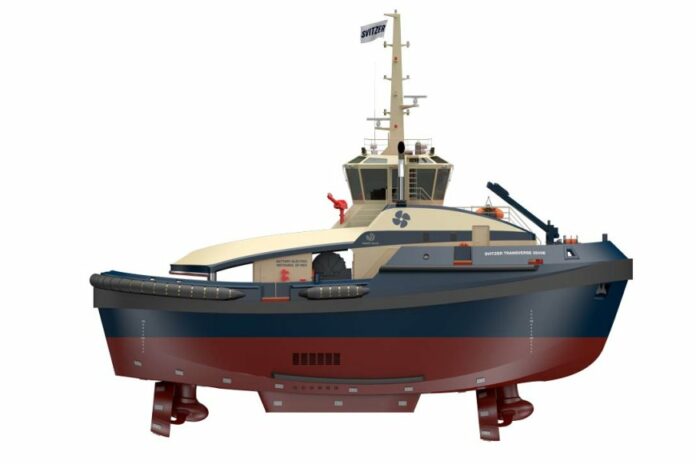
Svitzer has signed a contract with the Turkish shipyard Uzmar to build a world-first battery-methanol tug. The tug will be based on Svitzer’s innovative TRAnsverse tug design and feature a 6MWh battery supported by dual fuel methanol engines for back-up and range extension.

The escort duty tug is expected to conduct more than 90% of its operations using its battery-electric powertrain and conduct up to 25% of Svitzer’s work in the port of Gothenburg. Svitzer’s innovative TRAnsverse tug design will allow the battery-powered tug to operate more efficiently than internal combustion engine powered tugs of a traditional design.

Designed in collaboration with naval architect, Robert Allan Ltd, the tug will feature an overall length of 34.9 meters, providing substantial stability and capacity. It will deliver an impressive bollard pull ahead of 85 tonnes and utilise escort steering and braking forces rated at 150 and 200 tonnes, respectively, measured at 10 knots. With a gross tonnage of approximately 806 tonnes and powered by a 6MWh battery system, the tug will be capable of achieving speeds of up to 14 knots.

Continuing developments in alternative power technologies convinced Svitzer that the combination of battery power and methanol engines can ensure both safe, efficient and reliable operations in a location with the right availability of these two power sources.

With an aim to become the world’s most sustainable port, the Port of Gothenburg was considered the perfect location for the new tug. The port is making significant investments to provide the necessary shore power charging options, and methanol is already being bunkered at the port. As such, Gothenburg has all the ingredients for safe and stable operation of the tug for many years to come.

Kasper Nilaus, CEO of Svitzer, said:

 “Applications for battery solutions are constantly expanding, and we see it becoming an important power option in the sustainability transition. This battery tug will bring a new dynamic to our operations. There will not be a one-size-fits-all solution for us to meet our ambitious decarbonisation targets, and equipped with this new power technology we have yet another option for how to significantly reduce emissions across the many global ports and terminals we operate in. In this way, we continue to develop our strategies for fleet-wide decarbonisation while constantly ensuring sustainable, safe and reliable marine services to Svitzer customers.”

Gareth Prowse, Head of Decarbonisation at Svitzer, commented on the contract:

“The launch of a first-of-its-kind newbuild project with our partners at Uzmar Shipyard is a significant milestone for our decarbonisation ambitions. We are proud of the work we have done with our technology suppliers and engineering consultants to develop the tug to this point. The battery electric tug will mean we can deliver our services to customers in the Port of Gothenburg with significantly lower carbon emissions, and still to the highest operational and safety standards.”

A. Noyan Altug, CEO of Uzmar, commented:

“Our close working partnership with Svitzer on planning and developing this newbuild project will see our shipyard deliver one of the most advanced tugs in the global fleet using new technologies and specifications. At Uzmar, we recognise the importance of reducing carbon emissions in the maritime sector, and we are fully aligned with Svitzer’s ambitious decarbonisation strategy. This project represents a significant step forward in that journey. By integrating cutting-edge technologies and sustainable practices, we are not just building a tug; we are helping to shape the future of green maritime operations. For Svitzer, our expert team will continue to deliver sustainable building excellence.”

Alfa Laval secures major order for ballast water management system replacements

0

Strict regulations and frequent controls are driving shipping companies to ensure their ballast water treatment systems are fully operational to avoid high costs, downtime, and potential business losses.

As the majority of the world fleet is now equipped, the BWMS retrofit market is nearing saturation. Many suppliers have reduced their commitment to customers or exited the market entirely, leading to a lack of support and upgrade options as regulations evolve. This is especially challenging when the systems purchased are not functioning properly.

Over the past two years, Alfa Laval has replaced more than 250 systems from 30 different manufacturers, and the orderbook for replacement continues to grow.

“With the consolidation of the BWMS market, we see a growing need for replacing installed BWMS systems”, says Tobias Doescher, Head of Global Sales, Business Development and Marketing, Alfa Laval PureBallast. “We have been contacted by an increasing number of shipowners and ship management companies worldwide who are experiencing issues that their current supplier cannot resolve. We are happy to step in and support our customers with cost-efficient and sustainable solutions.”

Alfa Laval has experience replacing systems using electrochlorination (EC) and UV technology. The replacement projects are handled professionally by a thorough onboard assessment of the existing system by a qualified expert. This comprehensive evaluation determines necessary replacements and identifies components that can be reused, resulting in substantial cost savings for clients. The replacement process is customized for each customer, providing them peace of mind in meeting BWMS compliance. 

“The success of this offering validates the way Alfa Laval has chosen to work – partnering for the entire lifecycle of ballast water management equipment rather than being a one-time supplier,” says Peter Sahlén, Head of Alfa Laval PureBallast. “While other suppliers are exiting the market, we are investing in our experts, actively following the regulations, and offering new services to facilitate compliance. We have even launched our new PureBallast 3 Ultra, developed based on years of customers´ feedback.”

Saipem awarded a new offshore contract in Saudi Arabia

0

Saipem has been awarded a new offshore contract, under the existing Long-Term Agreement (LTA) with Saudi Aramco, for the development of the Marjan field in Saudi Arabia. 

The award follows the completion of the bidding procedure, and the occurrence of the usual preliminary conditions requested by the client.

Saipem’s scope of work involves the engineering, procurement, construction and installation of wellhead platforms’ topsides, wellhead platforms’ jackets, tie-in platform jacket and topside, rigid flowlines, submarine composite cables and fiber optic cables.

Saipem will deploy its local offshore fleet, including state-of-the-art dynamic positioning vessels, its advanced welding technology and will leverage on its renowned engineering expertise. Furthermore, the fabrication activities will be executed at the Saudi fabrication yard Saipem Taqa Al-Rushaid Fabricators Co. Ltd (STAR), located in Dammam, further enhancing the local content and developing the capabilities of the local industry.

This important contract, at the backdrop of the recent awards by Saudi Aramco to Saipem, reinforces company’s long-standing presence in the Kingdom of Saudi Arabia.

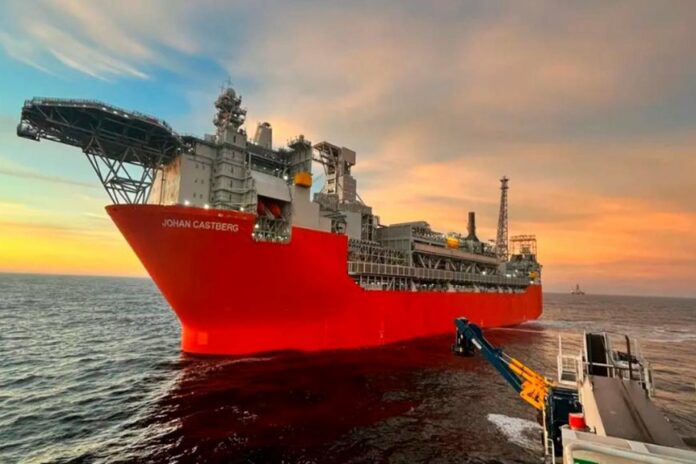
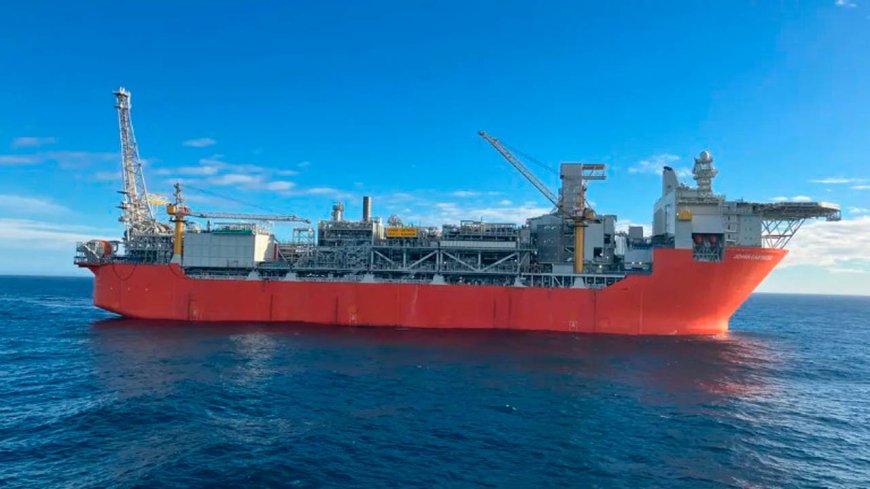
Johan Castberg anchored on the field

0

The hook-up of the FPSO to the subsea facilities, preparing it for production start-up towards the end of the year, will now start.

“This is an important milestone for Equinor and its partners Vår Energi and Petoro.Johan Castberg strengthens Norway’s role as a reliable, long-term energy supplier. The field will create great value for society, and long-term ripple effects and jobs. I would like to thank everyone who has contributed,” says Trond Bokn, Equinor’s senior vice president for project management control.

Johan Castberg is a large oil field with estimated recoverable volumes of between 450 and 650 million barrels. The field will produce for 30 years, and at its peak, Johan Castberg may produce 220,000 barrels per day. The field development concept includes 30 wells distributed across ten subsea templates and two satellites that will now be tied back to the FPSO. So far, 13 of these wells have been drilled, and drilling operations will continue into 2026.

Johan Castberg is located 240 kilometres northwest of Hammerfest. The field has a supply and helicopter base in Hammerfest and an operations organisation in Harstad.

“Johan Castberg is important for our development plans in Northern Norway. When the field comes on stream, a new province will be opened for oil recovery in the Barents Sea. This provides new opportunities for the exploration for and development of new discoveries in the area. Working with our partners we are already maturing five discoveries towards a possible tie-in to Johan Castberg,” says Grete Birgitte Haaland, Equinor’s senior vice president for Northern Norway.

The Norwegian supply industry has accounted for more than 70 percent of the total deliveries to the Johan Castberg project. In the operating phase, 95 percent of deliveries are expected to come from Norwegian suppliers. The North Norwegian content is estimated at about 40 percent, and every third Johan Castberg employee lives in Northern Norway.

DNV awards AiP to HD Hyundai for 80K CBM electric propulsion Liquefied Hydrogen Carrier

0

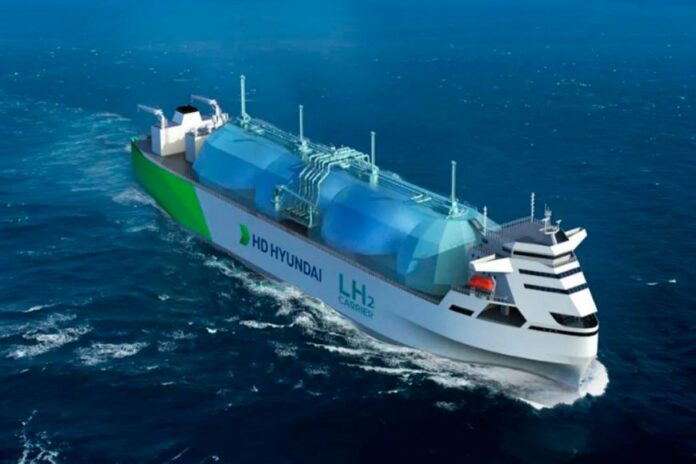
DNV has awarded an Approval in Principle to HD Korea Shipbuilding & Offshore Engineering (HD KSOE) for its electric propulsion liquid hydrogen (LH₂) carrier design concept that could enable 80,000 cubic metres of LH₂ storage and transport. The AiP awarding ceremony will take place at Gastech, Houston.

This milestone forms part of a broader collaboration involving industry leaders, HD KSOE, Woodside Energy (Woodside), Hyundai Glovis, and Mitsui O.S.K. Lines (MOL), aimed at developing an integrated maritime transportation value chain for large scale liquid hydrogen.

The vessel is equipped with HD Hyundai’s new large liquid hydrogen tanks featuring advanced vacuum insulation and an electric propulsion system with Hydrogen Dual Fuel HiMSEN engines, allowing flexible fuel use between diesel and hydrogen. The newly developed hull design and cargo handling system is targeted to provide greater operational efficiency and commercial flexibility.

The AiP from DNV verifies that HD KSOE’s electric propulsion LH₂ carrier design concept complies in principle with the safety, environmental, and technical standards necessary for the safe and efficient transport of LH₂. As part of this AiP project, DNV also conducted detailed and comprehensive Hazard Identification (HAZID) and Environmental Impact Identification (ENVID) studies, which are crucial for evaluating and mitigating potential risks associated with the design and operation of the electric LH₂ carrier.

Chang Kwang-pil, Chief Technology Officer of HD KSOE said:

“This AiP from DNV is a crucial validation of our commitment to developing a reliable and cost-effective LH₂ carrier, Achieving this goal requires collective effort across the LH₂ shipping value chain, and we are committed to driving progress through continuous collaboration and innovation.”

Julie Fallon, Executive Vice President Technical & Energy Development from Woodside stated:

“We have made clear progress in the pursuit of developing cost-effective and flexible large-scale liquid hydrogen shipping supply chains to support our customers’ needs, thanks to the investment and collaborative effort of all parties involved.”

Tae Woo Kim, Senior Vice President of Shipping Business Division from Hyundai Glovis, continued:

 “Through the collaboration with industry leaders across the LH₂ value chain, resulting in an AiP from DNV, we, as a ship owner, have gone through the process of identifying hazards, assessed risks and reviewed prevention and mitigation measures. This process will collectively guide and help us to better protect lives and cargo, and the ship itself.”

Jotaro Tamura, Managing Director of MOL (Asia Oceania), Senior Management Executive Officer of Mitsui O.S.K. Lines noted:

 “We are very pleased with the progress made in the development of the LH₂ carrier since we joined the project in February 2024. We would like to use our technical and operational knowledge, cultivated through many years of shipping experience, to continuously contribute towards establishment of a hydrogen supply chain.

Vidar Dolonen, DNV Regional Manager for Korea & Japan, added:

“The AiP is another vital step towards building a global hydrogen economy, through safer and more efficient long distance transport of LH₂. DNV is honoured to be involved in this project and to support the development of cutting-edge energy solutions.”

AtoB@C Shipping takes delivery of Aquamar

0

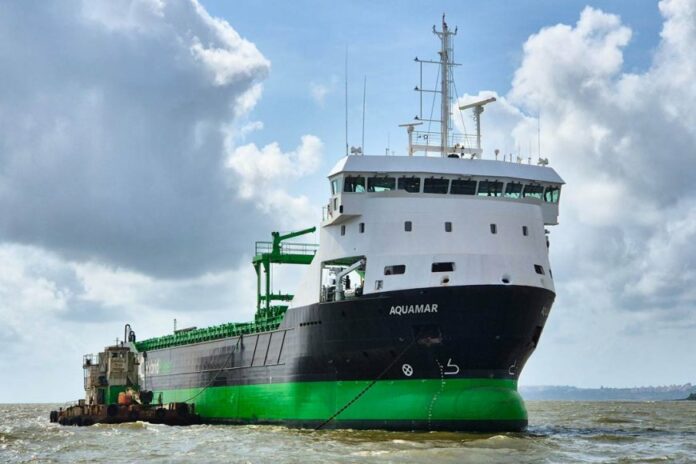
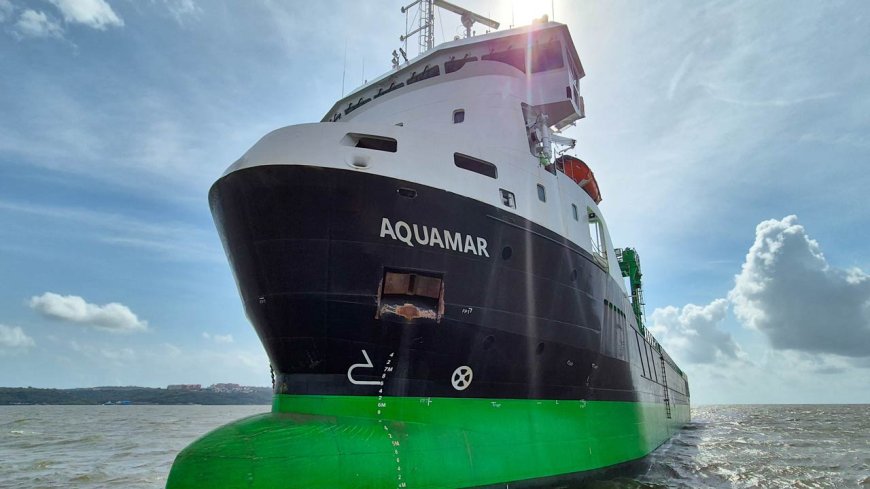
AtoB@C Shipping, a subsidiary of ESL Shipping, has on 17th September taken delivery of Aquamar, the fourth plug-in hybrid newbuilding within a single year, showcasing the company’s commitment to modernising its operations and reducing its environmental impact.

Aquamar is designed with hybrid propulsion and shore power connectivity, aligning with the latest advancements in maritime technology. With a deadweight tonnage of 5,350 and ice class certification, the vessel is equipped for efficient and sustainable operations. Integrating battery technology allows for emission-free and quiet port visits, significantly decreasing CO2 emissions by nearly 50% compared to the current generation of vessels.

The shipyard launched the fifth vessel, Maximar, on 5 September and outfitting of the vessel continues ahead of delivery later this year.

AtoB@C Shipping has ordered twelve 5,350 dwt plug-in hybrid vessels from Chowgule & Company. One vessel will be delivered every quarter until the autumn of 2026.

Fish farm solar energy pioneer will bring power to the people

0

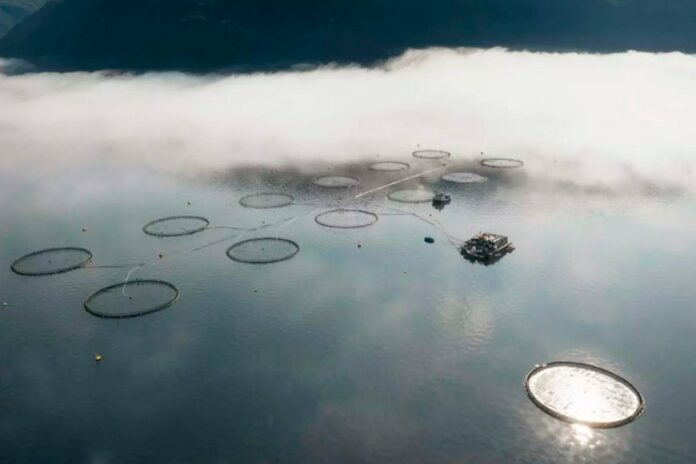
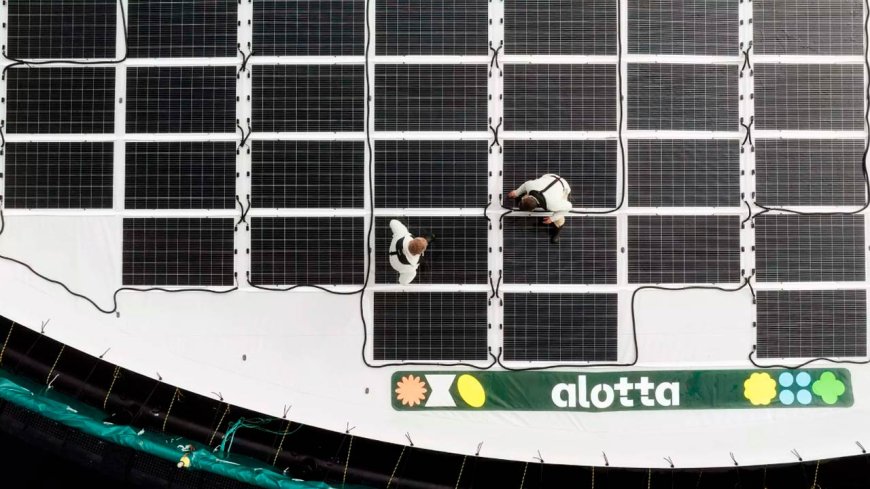
Since its inception in 2020, Ålesund-based Alotta has focused on the aquaculture industry, using redundant net pen float collars to support flexible solar panels. Moored at fish farms, the floating solar stations make it possible to replace the use of diesel generators and reduce emissions.

Now, the company is expanding its activities and intends to become a leading global player in decentralised renewable energy.

“It has been an adventure so far. Our growth has opened up a global space of opportunities for the company that our former identity did not embrace,” said Alotta chief executive Kari-Elin Hildre.

Alotta said its work with the aquaculture industry had proved the significant potential of its solutions. Alotta can completely, or partially, replace fossil power in areas where there is limited access to renewable alternatives, including island communities with limited land area and power infrastructure.

Worldwide, there are over 1,000 inhabited islands with a total population of more than 65 million. These islands, known as small island developing states (SIDS), typically rely on imported fossil energy sources for their electricity, said Alotta.

Decentralised, renewable energy solutions are crucial for meeting future energy needs, without hindering economic growth and welfare. Alotta said its solutions will not only provide electricity to homes, schools, and hospitals but also create opportunities for development while preserving the vulnerable ecosystems and natural environments that these communities depend on.

“For island communities, this means more than just electricity – it means independence, and sparks hope for a sustainable future,” said Alotta founder Jan Erik Våge Klepp.

Alotta has a strategic partnership with global aquaculture supplier AKVA Group, among others, and raised NOK 30 million (£2.1m) in a funding round in February from impact investor Norselab and industrial investment company Umoe, which holds a 30.3% stake in the company.

Klepp said Alotta is expanding into new markets and finalising agreements with international clients.

“We are commencing installations at several sites in Norway and are in final negotiations with clients in other parts of the world,” he added.

Source: FishfarmingExpert

Konecranes wins order for 5 advanced hybrid RTGs from Taiwan terminal

0

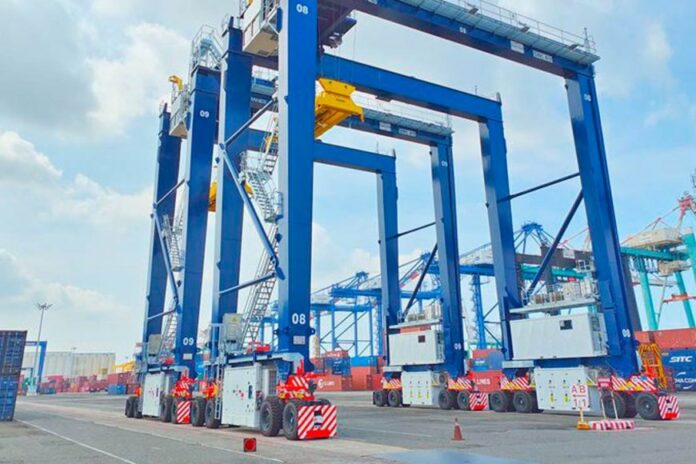
In Q3 2024, CMA CGM Kaohsiung Terminal Co. Limited ordered five hybrid Konecranes Rubber-Tired Gantry (RTG) cranes for its container handling operations at the main port in Taiwan. The cranes will be delivered in mid-2025 with the most sophisticated set of container handling Smart Features ever delivered in the country.

“CMA CGM uses Konecranes container handling equipment all over the world. This new order will ensure a long and productive future for their container handling operations in Taiwan, and it underlines the strength of our relationship and their confidence in our technology. Our modern container handing technology continues to generate interest wherever it is implemented,” says Jerry Fann, Sales Director, Port Solutions, Konecranes.

The Konecranes hybrid RTGs utilize a battery for all operations and capture braking energy back to the battery, extending the pure electric operation time. A small diesel genset is used to charge the battery. This combination of diesel and electric power significantly reduces fuel consumption and emissions for cleaner and more economical operation. Each machine is fitted with an ergonomic cabin and four Smart Features that raise efficiency and reduce operator fatigue.

Auto-Steering creates virtual rails for the RTG to help the operator keep the crane on a straight drive path. Auto-Positioning places the spreader over the correct container slot. Stack Collision Prevention monitors the container stack with laser scanners whenever the trolley is in motion, slowing down the trolley when the spreader or container approaches a container target slot. Finally, Auto-TOS (Terminal Operating System) Reporting counts each crane’s moves, maps the position of every container and interfaces directly with the TOS.

This order is part of Ecolifting™, Konecranes’ vision to increase its handprint – meaning the beneficial environmental impact that can be achieved with our product and service portfolio – while reducing customers’ carbon footprints. From eco-optimizing diesel drives, to hybridization and fully-electrified fleets, we will continue to do more with less. 

A strong focus on customers and commitment to business growth and continuous improvement make Konecranes a material handling industry leader. This is underpinned by investments in digitalization and technology, plus our work to make material flows more efficient with solutions that decarbonize the economy and advance circularity and safety.

MOL, Chevron to install first rigid sails on LNG carrier

0

Japan’s Mitsui OSK Lines Ltd (MOL) and Chevron will carry out the first wind-assisted propulsion installation on an LNG carrier.

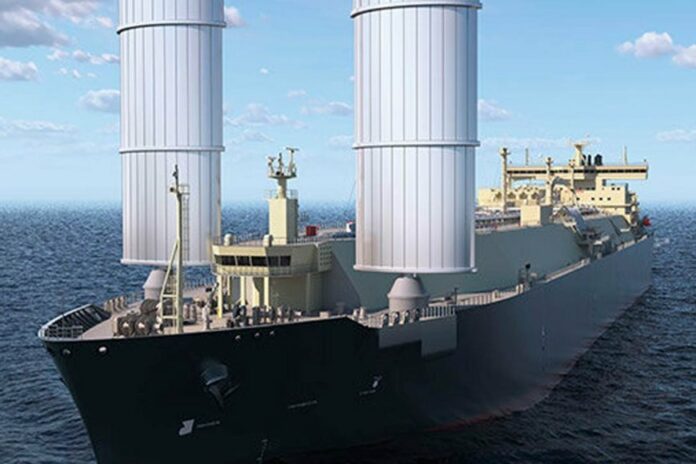
Mitsui O.S.K. Lines and Chevron Shipping Company LLC have announced an agreement to install Wind Challenger, a hard sail wind-assisted ship propulsion system developed by MOL and Oshima Shipbuilding together, to a new build LNG carrier under long term charter from MOL Encean Pte. Ltd. to Chevron Asia Pacific Shipping Pte. Ltd. This vessel will mark the world’s first LNG carrier equipped with Wind-Assisted Ship Propulsion Systems.

The vessel is under construction at the Geoje Shipyard of Hanwha Ocean Co., Ltd. and is scheduled for delivery in 2026. In August 2024, MOL obtained an approval in principle by Nippon Kaiji Kyokai (Class NK) – a first for an LNG carrier with a Wind-Assisted Ship Propulsion System. The Chevron chartered vessel will be the first application.

Wind Challenger will help reduce fuel consumption and GHG emissions by using its unique telescopic sails.

In addition to the robust design of Wind Challenger itself, additional safety measures include a fully enclosed navigation bridge and a lookout station on the vessel’s fore deck to further enhances visibility.

For tradability, the installation position of the Wind Challenger aims to minimize impact on the existing design of membrane type LNG Carriers. It will enable the retention of the existing mooring arrangement unchanged and thereby minimize impacts on ship shore compatibility, together with limited impact on the vessel’s windage area.

“We’re proud to partner with MOL in Wind Challenger’s industry-first LNG installation,” said Barbara Pickering, President of Chevron Shipping Company. “This is another example of using novel approaches in hard-to-abate sectors to reduce carbon intensity in our LNG fleet.”

Takeshi Hashimoto, President and CEO of Mitsui O.S.K. Lines., said,

“With the understanding and cooperation of Chevron, we are delighted to be able to extend the Wind Challenger Project to LNG carriers in addition to the two delivered Wind Challenger-equipped bulkers and other ongoing projects. Achieving GHG reduction in the maritime transport of LNG, which is increasingly in demand worldwide as a transition fuel, is a very important mission for us. This project will undoubtedly be a significant milestone towards achieving ‘net zero GHG emissions by 2050’, a medium to long-term goal of the Mitsui O.S.K. Lines Group, as stated in our “Environmental Vision 2.2″.”