-0.4 C
New York
Home Blog Page 133

Hoppe Marine and Metis cooperate in the field of cloud-based real-time fleet optimization

0

Hoppe Marine GmbH (Germany) and Metis (Greece) have entered into a strategic cooperation in the field of onboard Data Acquisition. 

More specifically the cooperation ensures the seamless integration of Hoppe’s data collection systems with the Metis cloud-based performance management platform. This partnership aims to expand the use of high-frequency data analytics in vessel performance management, offering customers greater flexibility for real-time monitoring and strategic decision-making.

The agreement was formalized during the SMM exhibition, with Panos Theodossopoulos (CEO, Metis) and Hauke Hendricks (Head of Sales, Hoppe Marine) representing their respective companies. Hauke Hendricks emphasizes: 

“Hoppe’s strength, the precise data collection on board and its transmission for further processing on land, together with Metis platform offer our customers a great overall package to get large amounts of data optimally processed for further decision making!”

“This partnership is fully aligned with our telemetry-first approach and underscores our belief that collaboration is key to driving innovation and transparency across the maritime sector. In addition to our in-house technology and expertise we are commercially partnering with Hoppe, which through its accurate onboard data collection system will allow us to scale and extend our market reach, offering at the same time more flexibility to our customers.” said Panos Theodossopoulos, CEO, Metis.

Both companies look forward to leveraging their combined strengths to provide state-of-the-art maritime technology solutions.
 

Fugro awarded first floating lidar project offshore Gippsland for Ørsted

0

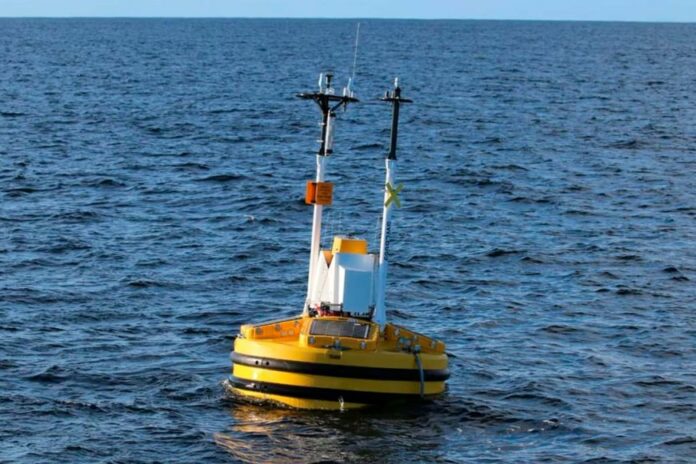
Fugro’s advanced SEAWATCH® Wind Lidar Buoy will measure wind, wave, current and meteorological parameters to help assess the viability of Ørsted’s wind farms located off Gippsland, Victoria.

High quality metocean data will be transferred in real time to give the client early insight into site conditions, followed by monthly reports. Fugro’s local presence and supply chain is leading the delivery of the turnkey solution, which also includes equipment supply, installation, operations and maintenance.

Quick, safe and easy to deploy, the SEAWATCH® Wind Lidar Buoy captures high accuracy measurements of wind speed and direction up to 300 metres above sea level. The system was the first to gain a Stage 3 rating in line with the Carbon Trust roadmap for the commercial acceptance of floating lidar technology. This certifies its suitability as a source of wind speed data for investment decisions for offshore wind farm development.

Albert Quan, Ørsted’s Head of Market Development for Australia commented

 ‘This is a key step in getting our Gippsland project development well and truly underway. By developing a deep understanding of the metocean conditions, we will be able to design a world class project to maximise the amount of green energy and value delivered for Victoria.

Simon Foster, Service Line Manager, Metocean, Pacific:

“We are excited to partner with Ørsted on this project. The Ørsted vision is a world that runs entirely on green energy; this aligns perfectly with Fugro’s purpose to create a safe and liveable world. Our extensive track record in collecting metocean data across Australia and globally ensures that we are well-equipped to contribute valuable insights to this project.”

KPI OceanConnect collaborates with WAN HAI Lines on its first biofuel delivery in Singapore

0

KPI OceanConnect has announced the successful delivery of B24 biofuel to WAN HAI Lines’ container vessel, WAN HAI 510, on the 7th of October in Singapore, with SK Energy International as the physical supplier of the fuel. Building on the long-standing partnership with KPI OceanConnect, the deal marks the first biofuel delivery of WAN HAI Lines. 

The ISCC certified biofuel will support WAN HAI Lines to meet its sustainable development goals by providing GHG emissions reductions of up to 20%, when compared to conventional fuel oil. The delivery is a first step for WAN HAI Lines in realising a tailored alternative fuels strategy, developed in partnership with KPI OceanConnect. 

KPI OceanConnect has enabled biofuel deliveries in more than 100 ports worldwide, working in collaboration with customers and bunker suppliers to aggregate demand and supply biofuel that meets specific standards. Demand for biofuel bunkering is expected to more than double in 2025 due to the emissions reduction pathways biofuels offer, enabling compliance with tightening environmental regulations in the short-term. 

Jesper Sørensen, Head of Alternative Fuels and Carbon Markets at KPI OceanConnect, commented:

 “WAN HAI Lines has been a long-standing partner of KPI OceanConnect, and we are proud to have facilitated its first biofuel delivery. With our robust expertise in biofuel bunkering and global reach, we are able to support clients in progressing their alternative fuel strategy.

“Partnerships will lead the way forward to reaching net zero targets, bringing much needed expertise, knowledge and confidence in decision-making. At KPI OceanConnect, we are committed to playing an active role in aggregating demand and connecting bunker suppliers with buyers to build up the global low-carbon fuel infrastructure and meet growing demand.”

WAN HAI Lines added:

“We are very proud to announce our first biofuel supply in collaboration with KPI OceanConnect at the port of Singapore. 

“Adopting biofuels is a key strategy in our efforts to accelerate the transition towards decarbonisation and achieve our company’s emission reduction goals. We extend our gratitude to KPI OceanConnect for their professionalism in fulfilling our needs. WAN HAI Lines remains committed to collaborating with our partners and stakeholders to drive continuous progress in our sustainability journey.”

Deltamarin and ESL Shipping collaborate on innovative methanol-fueled multipurpose vessels

0

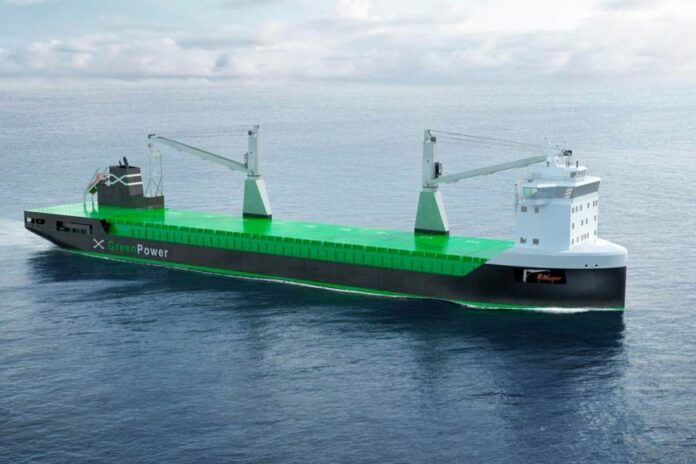
Deltamarin has partnered with ESL Shipping in the development of methanol-fueled multipurpose vessels, designed to meet diverse logistical needs across global shipping routes. 

Deltamarin has worked closely with ESL Shipping on the concept design of the new vessels and, under the new contract, will continue to provide support throughout the entire design lifecycle until the project’s completion.

The vessels are optimized for key trade routes on the Baltic Sea region and transatlantic crossings, with the flexibility to operate on large lakes in the United States and Canada. They are designed for exceptional adaptability, capable of transporting practically any type of cargo, including containers, bulk materials, project cargo, timber, and paper products.

Their innovative design features an accommodation block at the bow, allowing long project cargo to extend over the stern, further highlighting the vessel’s adaptability. By integrating tweendecks to maximize capacity, the vessels can transport a variety of mixed cargo when needed. Their flexible design enables the vessels to respond to evolving logistical demands while ensuring operational efficiency, with the capability to operate using alternative fuels from day one.

This project marks an excellent continuation of our longstanding partnership with ESL Shipping, following successful collaborations such as the Haaga and Viikki general dry cargo ships, which were awarded by the Clean Shipping Index (CSI) for their exceptional environmental performance and innovative design features. The new vessels continue to stand out due to their one-of-a-kind design and exceptional versatility, further strengthening our shared commitment to delivering innovative and sustainable solutions in the global shipping industry.

Jumbo installs wind assisted propulsion to Jumbo Jubilee in latest decarbonisation move

0

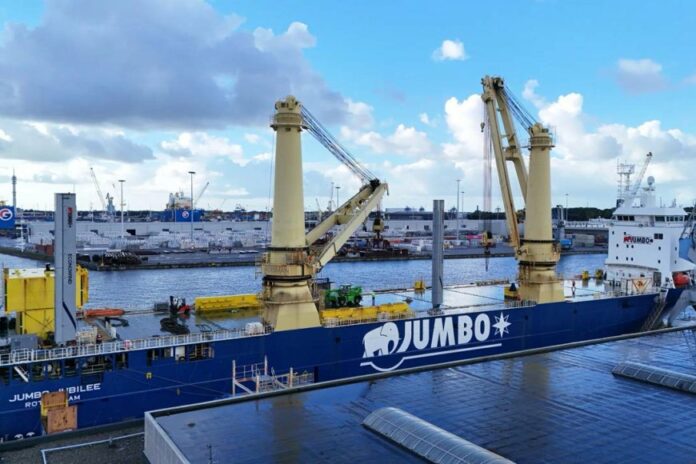
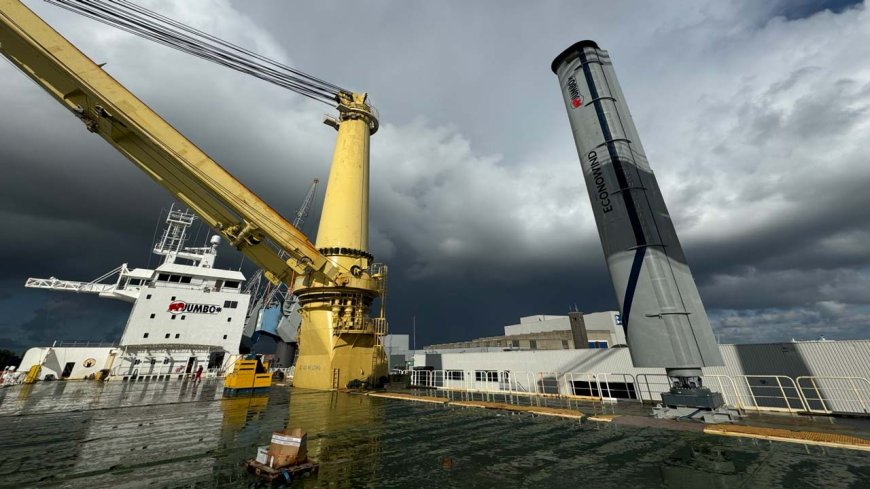
Jumbo has announced the successful installation of two mechanical sails to Heavy Lift Vessel (HLV) Jumbo Jubilee. 

Jumbo is committed to advancing sustainable heavy-lift shipping with innovative energy-saving and decarbonisation initiatives across its fleet, says Jumbo Maritime CEO Daan Kornneef. 

“The installation of these mechanical sails on Jumbo Jubilee is a testament to our commitment to decarbonise and innovate. While there’s always more work to be done, initiatives like this propel us closer to a greener maritime industry. We’re proud of our team’s continued efforts in making Jumbo a leader in sustainable shipping.” 

The company’s approach is to apply multiple fuel-saving solutions to a single vessel, thereby making possible the measurement of each technology’s contribution to the overall picture.

Examples already applied to Jumbo Jubilee include an efficiency boosting propeller coating, AI powered anti-fouling monitoring system and an eco-control system. This latest move, the installation of two Econowind ventofoils, will assess the impact of WASP on the vessel’s efficiency.

Jumbo Technical Manager Andres Cassanova explains,

“While not fully optimised for our vessel type, these sails will help us to gather valuable insights on real-world fuel savings and explore further optimisations that will allow Jumbo to reduce its environmental footprint even more.”

The relatively small footprint of the sails makes them an ideal solution for installation on a heavy lift vessel, where space is required for project cargoes. Additionally, the sails are flexibly mounted on a customised frame engineered in-house by Jumbo structural engineer Estelle Bongers. With this, the sails can be moved, or even transferred to another vessel should additional space be required for cargo. 

The installation of the ventofoils follows application of an anti-fouling coating on the ship’s propeller to maintain efficiency, as well as the introduction of an AI powered anti-fouling hull coating monitoring system. 

This innovative system captures a wide range of date including vessel speed, geographical position, as well as sea water temperature and other environmental conditions and parameters. This allows the system to make predictions and provide notifications when there is a risk of accelerated fouling. 

This means that Jumbo can perform an inspection and undertake maintenance in advance of a decrease in fuel efficiency. It also means the system can be maintained using less aggressive methods, ensuring its preservation for longer durations between dockings. 

A further measure is the installation of an eco-control system to the vessel.

“This can be viewed as a type of intelligent cruise control,” explains Andres. “It allows us to set a fuel consumption or maximum speed limit. With this, the eco-control system takes over and, based on RPM and propeller pitch, is continually adjusting to ensure optimally efficient performance, minimal fuel consumption and emissions.”

With these significant technologies installed to the Jumbo Jubilee, Jumbo expects to achieve fuel savings. A crucial factor in this, says Technical Superintendent Patrick Feddes, is collaboration.

“If you want to reduce your environmental footprint, it’s not only down to one part of the company. It’s a team effort between those on board the ships and those on shore. The technologies play an important supporting role in creating energy savings, but a significant factor is awareness and cooperation throughout the various departments of the organisation.” 

Casanova: “It’s the years of technical expertise, in-house engineering and strong teamwork that drive sustainable innovation from desk to deck.” 

Vard to build one tailor-made Commissioning Service Operation Vessel

0

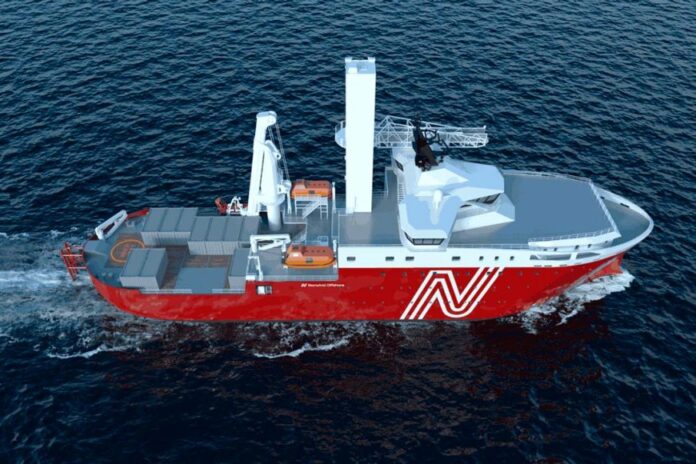
Vard, Norwegian subsidiary of the Fincantieri Group and one of the major global designers and shipbuilders of specialized vessels, has signed a new contract for the design and construction of one tailor-made Commissioning Service Operation Vessel (CSOV) for Navigare Capital Partners.

This contract, established in close collaboration with Norwind Offshore, is a continuation of Vard’s long-standing relationship with the two parties and represents the first option to be exercised from the agreement signed in March 2024. In addition to this contract, Vard and Navigare Capitals have also agreed on two new options where the first one can be declared later this year, and the second one in 2025.  

The new unit, based on the VARD 4 19 design, will be delivered in the second quarter of 2027 from Vard’s shipyard in Vung Tau, Vietnam. Tailor-made to support offshore wind farm operations, this vessel will be the sixth CSOV that Vard has delivered to Norwind Offshore, in addition to an Energy Construction Vessel and the conversion of a Platform Supply Vessel (PSV) to a Service Operation Vessel (SOV).  

The 85-meter-long vessel, with a beam of 19.5 meters, will be equipped with advanced technological systems, including a height-adjustable motion-compensated gangway with an elevator system, a 3D crane, and a height-adjustable boat landing system, ensuring superior operability and logistical efficiency. The vessel will also feature advanced battery solutions, emphasizing Vard’s commitment to sustainable operations. Capable of accommodating 87 personnel, the vessel is designed for both safety and comfort, creating a highly efficient working environment for global offshore wind farm activities.

Pierroberto Folgiero, CEO and Managing Director of Fincantieri, commented:

 “We are proud to strengthen our partnership with Norwind Offshore and Navigare Capital Partners through this contract. It underscores Fincantieri’s commitment to sustainable innovations in the offshore wind sector, an area where we continue to invest and excel. The advanced technology and tailor-made solutions embedded in this vessel highlight our dedication to operational efficiency and environmental responsibility, crucial elements as we contribute to the global energy transition.”

Norway plans $3.3 billion floating wind subsidy cap

0

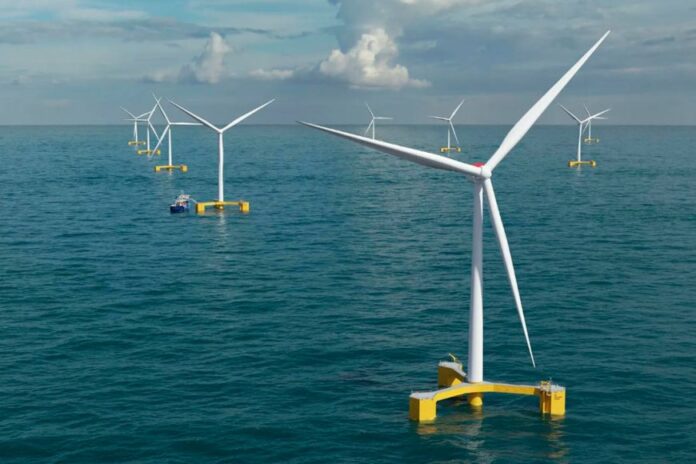
“Norway has enormous potential for floating offshore wind on its continental shelf, but because the technology is still immature and expensive, government support is needed to speed up development”, Energy Minister Terje Aasland said.

The expected cost of building floating wind farms has soared as inflation hit turbine makers and other suppliers, leading developers to seek significant government support.

Norway’s 2025 budget proposal on Monday kept the subsidy offer unchanged from a mid-term agreement reached in June, despite some expectations from industry it could be increased.

The government said the current calculations are based on a reference project of around 500 MW megawatt (MW) in size, the government said.

ts budget document said how much offshore wind capacity will be realised within the financial framework will depend on factors including further cost developments, project maturity and the bidding companies’ return requirement.

At least 13 consortia and individual bidders have expressed an interest in the tender, which initially focuses on Utsira Nord off the coast of southern Norway near Haugesund, which is divided into three sites with a combined capacity of up to 2.25 gigawatts (GW).

In a consultation on the planned subsidy scheme that closed on Sept. 6, most of the respondents said the underlying future power prices and cost assumptions used by the government for the fledgling technology were unrealistic.

Government estimates pegged the need for subsidies at up to 1.42 crowns/kWh, but several consortia said an award last month for a floating offshore wind farm in Britain, equivalent to 2.7 crowns per kilowatt hours (kWh), offered a helpful benchmark for projects elsewhere.

Source: Reuters, Reporting by Nora Buli

Damen delivers rocket landing platform to Blue Origin

0

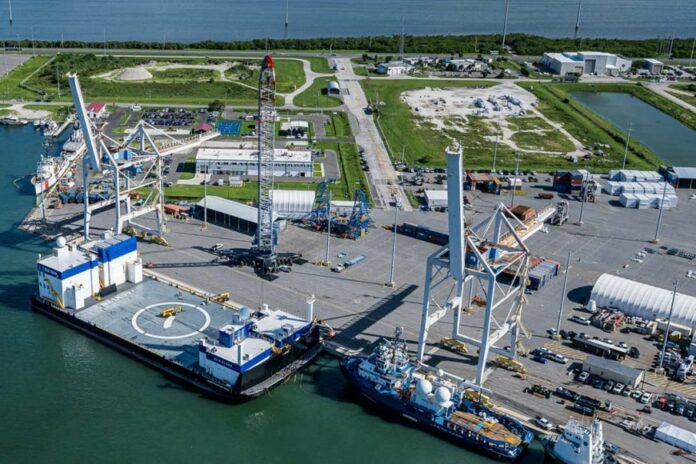
On September 4, the vessel arrived at its home port in Cape Canaveral, Florida, where it will support Blue Origin’s aerospace operations.

The vessel – called Jacklyn – will be deployed as a sea-based landing platform for Blue Origin’s New Glenn rocket programme. The vessel will serve as a solid and secure platform for rocket recoveries.

Speaking after the Jacklyn’s arrival at Cape Canaveral, Damen’s Area Manager North America Marnix Brouwer said,

“We are proud to be able to contribute to this groundbreaking space mission. We thank Blue Origin for the trust placed in the team here at Damen. We wish Blue Origin all the success with the New Glenn space programme.”

LNG-fuelled vessels accelerate to 6% of the global fleet

0

Once the order book is taken into account, this number increases to 4% by vessel numbers or 6% by deadweight tonnage (DWT). Almost every day brings new announcements of fleet owner investments in LNG-fuelled vessels.  

Numbers have grown from 21 LNG-fuelled vessels in operation in 2010, many of them smaller ships operating regionally, to 590 in operation globally today, including the world’s largest container ships twice the size of any operating in 2010. With a further 564 on order, the total number of LNG-powered vessels in operation by the end of 2028 will be 1,154. Added to these are 772 LNG carriers in operation, with a further 341 on order at the end of 2023. This means that over 2,000 of the world’s 60,000 largest vessels are LNG-powered. In addition, according to DNV, LNG dual-fuel vessels make up one third of the new build order book. If DWT is used, the LNG-powered fleet in operation and on order of 142.5Mt DWT represents 6% of the world’s total 2,224 Mt DWT.

Peter Keller, Chairman, SEA-LNG, said: 

“It is gratifying that LNG is finally gaining favour amongst so many shipowners. LNG is the only practical and realistic alternative fuel pathway available today – even for those shipowners that may also be considering other such pathways. While we have always said that a basket of fuels will be required for shipping to meet the 2050 emissions reduction targets, the rationale for the LNG pathway remains unchanged. The LNG pathway using liquefied biomethane and eventually hydrogen-based e-methane currently provides the only viable option to making progress towards 2050, starting with immediate carbon reductions, now. LNG also continues to help solve critical local emissions and health related environmental concerns”.

LNG has virtually zero SOx and particulate matter emissions, up to 95% reduction of NOx emissions, and up to a 23% reduction in GHG emissions. The environmental benefits are compelling.  With continued collaborative engineering efforts across the value chain, methane slip will be eliminated for all engine technologies within the decade. Today, 2-stroke diesel cycle engines account for approximately 75% of the LNG-fuelled vessel order book. These engines have effectively eliminated slip already. For low-pressure engine technologies where methane slip remains a challenge, manufacturers have already cut the levels of slip from low-pressure 4-stroke engines by more than 85% over the past 25 years.

In support of this expansion in LNG dual fuel vessels, LNG bunkers are currently available in 185 ports, with an additional 50 being added next year. The bunkering vessel fleet has increased from a single vessel in 2010 to 60 in operation today, with a further 13 on order and significant interest in the maritime community to continue to invest in these needed assets. This expanding infrastructure is immediately ready for liquefied biomethane (bio-LNG) as it scales, and eventually e-methane (renewable synthetic or e-LNG), providing ship owners and operators with the confidence that vessels ordered today are future proofed for 2050 and beyond. The use of liquefied biomethane as a marine fuel can reduce GHG emissions by up to 80% compared to marine diesel on a full well-to-wake basis. When produced from the anaerobic digestion of waste materials, such as manure, methane that would otherwise be released into the atmosphere is captured, resulting in negative emissions of up to -190% compared with diesel.

The recognition of the LNG pathway and the growth in the asset base is positioning LNG to play a significant, long-term role in maritime decarbonisation.  

Bureau Veritas integrates VeriSTAR Green with OrbitMI to streamline emissions compliance

0

Bureau Veritas Marine & Offshore (BV) has announced the integration of its advanced emissions compliance platform, VeriSTAR Green, with OrbitMI’s own maritime intelligence platform, to simplify emissions reporting for shipping stakeholders and enhance environmental performance. 

The integration, successfully piloted with Unitized Ocean Transport Limited as an agent only, marks a significant milestone in harnessing the power of cutting-edge technology to support regulatory compliance. 

The integration of VeriSTAR Green with OrbitMI aims to support shipping stakeholders by streamlining reporting processes and ensuring transparency among all parties involved. This collaboration has created an intuitive and simple to use platform which reduces time, costs, and the risk of penalties, allowing companies to focus on improving their environmental performance and advancing the maritime industry’s decarbonization objectives.

As a cloud-based solution, VeriSTAR Green provides automated emissions data collection, verification, and monitoring, helping shipowners and operators meet stringent regulatory requirements for greenhouse gas (GHG) emissions, including the International Maritime Organization Data Collection System (IMO DCS), Carbon Intensity Indicator (CII), Energy Efficient Design Index (EEDI), UK-MRV regulations, European Union Emissions Trading System (EU ETS), and FuelEU Maritime. 

By facilitating accurate and timely emissions reporting, the integrated solution enhances operational efficiency while offering ongoing support for statutory compliance and third-party verification, including emissions statements for shipowners and charterers.

Leveraging OrbitMI’s real-time data collection and monitoring capabilities, the solution ensures seamless, automated performance data transfers, significantly improving data quality and minimizing manual input. Recognizing that no “one-size-fits-all” solution exists, this collaboration emphasizes a combination of tailored options for the maritime sector, which has been proven by the successful completion of the pilot with Unitized Ocean Transport Limited (UOT) as an agent only. 

Argyris Chachalis from UOT, a fully owned subsidiary of Performance Shipping Inc. (Nasdaq: PSHG), said:

 “As a ship manager, we are required to collect performance data for our regulatory compliance workflow. By utilising OrbitMI with the integration to VeriSTAR Green, we can streamline this process with accurate and validated data in an effective and automated way.”

Ali Riaz, CEO at OrbitMI, said:

“Integration with VeriSTAR Green enhances data transparency and efficiency for our clients, supporting their compliance, sustainability, and operational goals. By extending intelligent connected workflows from ship to shore and to regulators, we simplify reporting processes, reduce manual workloads, and save time. This allows our clients to focus on leveraging data to improve efficiency, profitability, sustainability, and safety, while letting employees concentrate on critical tasks like problem-solving, forecasting, and client interactions.”

This partnership aligns with BV’s vision to support the shipping industry and simplify the complexities of digitalization. As part of this strategy, BV recently launched MOVE, a smart hub designed to enhance digitalization for maritime stakeholders. MOVE includes solutions such as Connect Your System, which facilitates seamless data sharing between class, clients, and partners, reinforcing the digital ecosystem that underpins VeriSTAR Green.

Laurent Hentges, Vice President – Digital Solutions & Transformation at Bureau Veritas Marine & Offshore said:

“This integration between VeriSTAR Green and OrbitMI represents a significant milestone in our efforts to support the maritime industry’s decarbonization objectives. By enhancing data transparency and automating emissions reporting, we are supporting shipowners navigate the increasingly complex regulatory landscape more efficiently. This solution not only reduces operational burdens but also empowers maritime stakeholders to focus on their sustainability goals, with reliable and validated data at their fingertips.”