0.5 C
New York
Home Blog Page 132

First-of-a-kind tidal dragon farm in the Faroe Islands moves forward

0

In the North Atlantic, leading ocean energy developer Minesto is moving forward with the pioneering build-out of a tidal energy site. 

Following the successful utility-scale installation of the Dragon 12 in Vestmanna and corresponding interest by various parties in the technology, Minesto assigns strategic advisor Ernst & Young (EY) to the unique Dragon Farm Project, with focus on investments.

In the Faroe Islands, Minesto is part of one of the most ambitious energy transition schemes worldwide, where tidal energy can play a significant role in achieving 100% renewable energy by 2030. After months of running a pilot program with two Minesto Dragon kites (Dragon 12 and Dragon 4) connected to the power grid, the technology has reached another milestone. As an initial step towards the proposed 200 MW build-out, the Hestfjord Dragon Farm moves forward in a first 10 MW-phase.

In order to support the project and handle interest from various parties in the technology, Minesto has engaged internationally recognized advisory firm EY to provide hands-on support related to project financing and industrial partnerships. The collaboration has a global scope, with an initial focus on the first tidal energy build-out in the Faroe Islands – The Hestfjord Dragon Farm (10+20 MW).

“Scaling-up of the technology by initiating the Hestfjord Dragon Farm build-out is a major milestone for Minesto in providing commercial-scale tidal energy. It’s of great value to have support of the EY team to help in discussions with various interested parties when it comes to financial and/or commercial partnerships,”, said Dr Martin Edlund, CEO of Minesto.

The site development activities in Hestfjord are ongoing and include resource modelling and assessment, detailed site optimisation, grid connection, environmental assessments, and monitoring. In addition, recent upgrade of local onshore electric distribution grid will be able to accommodate the needs of the Hestfjord tidal farm.

In the next phase, the permit and license applications will be completed, and an investment consortium will be formed to undertake the final site development and installation work.

Singapore and Shandong ink agreement for green and digital shipping corridor

0

The Maritime and Port Authority of Singapore (MPA) and the People’s Republic of China’s Shandong Provincial Transport Department have signed a memorandum of understanding (MoU) to establish the Singapore – Shandong Green and Digital Shipping Corridor (GDSC).

Mr Teo Eng Dih, Chief Executive, MPA, and Mr Gao Hongyan, Deputy Director, Shandong Provincial Transport Department, signed the MoU at the 25th Singapore – Shandong Business Council meeting held in Singapore. The signing was witnessed by the co-chairmen of the Singapore – Shandong Business Council, Mr Chee Hong Tat, Minister for Transport and Second Minister for Finance, and Mr Zhou Naixiang, Governor of Shandong Provincial Government.

The Singapore – Shandong GDSC will tap the growing trade and shipping volumes between the two economic centres, supported by their strong research and innovation ecosystems, to drive the adoption of green and digital solutions and growth of the maritime industry between Singapore and the Bohai and Yellow Sea region.

Singapore is the world’s largest bunkering hub and busiest transshipment seaport, and Shandong is a coastal province which hosts a key cluster of ports and shipyards along China’s coastline including Qingdao Port, which is among the world’s busiest container ports. Shandong is also China’s second most populous province, after Guangdong, with approximately 101 million people. Shandong has the third largest provincial economy in China with a GDP of 9.2 trillion RMB (approximately 1.7 trillion SGD) and GDP growth of 6% in 2023.

Under the MoU, MPA and the Shandong Provincial Transport Department will work with various stakeholders, including maritime administrations, port operators, maritime companies, institutes of higher learning, and shipyards, to promote digital and low-carbon initiatives for shipping. Focus areas include exploring collaboration in emerging technologies, training in safe handling of alternative fuels, knowledge sharing on shore power technologies, exchange of digital information to facilitate port clearances, and sharing of standards and best practices.

This MoU marks the second GDSC between Singapore and China following the Singapore – Tianjin GDSC established in 2023.

New sensors to listen for autonomous underwater vessels in real time

0

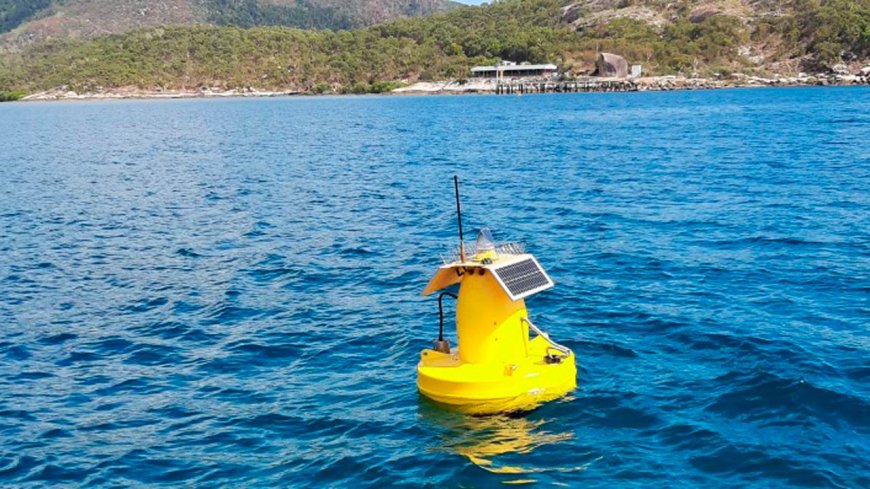
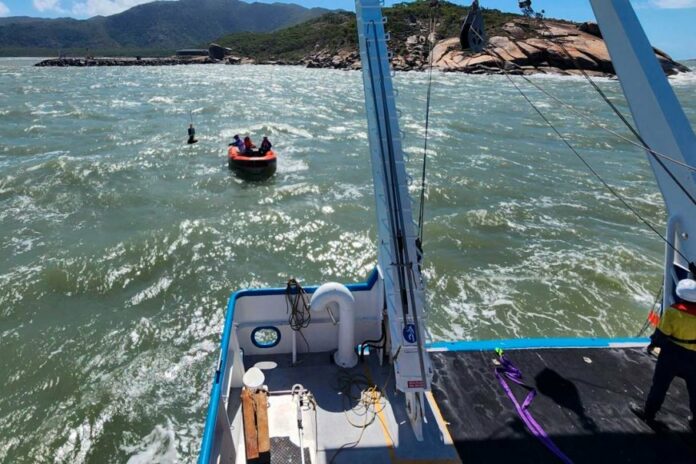
A suite of cutting-edge new sensors installed at AIMS’ ReefWorks tropical marine technology test ranges are expected to be able to provide live information to future test range users about currents, turbidity and vessels and marine mammals in the vicinity.

While satellite data provides a wealth of information about the world, it cannot really tell us what is happening beneath the surface of the ocean in real time. This makes testing and operating uncrewed vessels, particularly autonomous underwater vessels (AUVs), challenging.

The new sensors, acquired by AIMS with the support of the Queensland Government, include a frame fitted with a hydrophone, a smart mooring that measures waves and currents and surface buoys that measure turbidity.

ReefWorks Systems Engineer Vic Grosjean said the hydrophone could detect the different acoustic signatures of marine mammals such as dugongs, dolphins and whales, as well as identify different types of vessels and uncrewed platforms.

“At this stage we still need to retrieve the mooring to download the data it collects but, in not-too-distant future, we expect it will be able to provide live passive acoustic monitoring of both our inshore test range and our Davies Reef,” he said.

“This live data will be an important environmental management feature and has some exciting potential applications.”

ReefWorks’ newly acquired smart mooring has an acoustic doppler velocimeter (ADV) that sits in the water column to measure currents.

“Typically, our current sensors sit on the ocean bed, but at our inshore test range it would get buried in sediment quite quickly,” Mr Grosjean said. “We will avoid this because the ADV is suspended in the water column in one of the deepest areas of our inshore test range.”

Understanding currents in real time would inform decisions about where and when to launch small underwater vehicles and would help to quickly pinpoint and retrieve uncrewed systems that had lost contact with its operators before they start to drift.

Mr Grosjean said the smart mooring also measured wave activity on the range.

During the deployment of the hydrophone and ADV, two buoys with turbidity sensors that had been deployed a few months previously were retrieved to measure the amount of sedimentation on the ReefWorks inshore test range.

“The data collected will help guide the construction of the new wharf to minimise sedimentation impacts,” he said.

China rolls off world’s largest floating offshore wind turbine

0

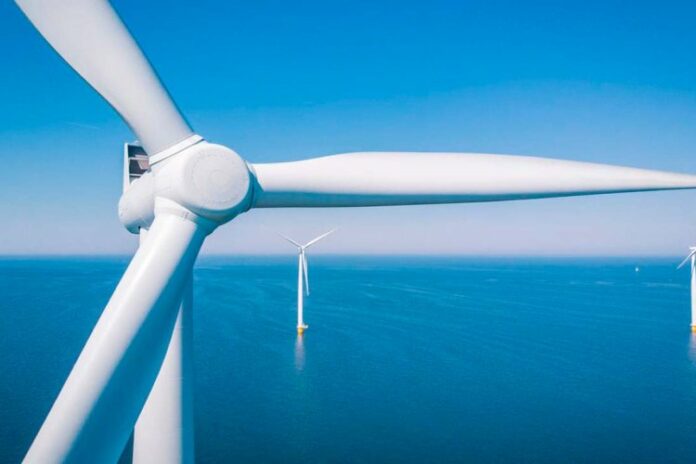
The world’s most powerful floating offshore wind turbine, with a generating capacity of 20 megawatts, has rolled off the production line in Yancheng city, east China’s Jiangsu Province, according to the country’s leading train maker CRRC Corporation Limited (CRRC).

The wind turbine, independently developed by China, features a wind wheel with a diameter of 260 meters and a swept area of 53,100 square meters, roughly the size of seven standard soccer fields.

The turbine can generate 62 million kWh of electricity annually, enough to power about 37,000 households, saving 25,000 tonnes of coal while cutting carbon dioxide emissions by 62,000 tonnes.

With its semi-submersible floating platform and mooring system, enhanced by smart control and sensing technologies, the turbine extends wind power’s reach into deeper waters, ensuring stable operation.

“Floating offshore wind turbines are a key technological trend shaping the future of wind energy development,” said Wang Dian, deputy general manager of CRRC Qi Hang New Energy Technology Co., Ltd.

The turbine offers customizable options for various water depths, providing optimized solutions for deep-sea wind power resources.

China’s renewable energy sector is gaining traction as the government strives to increase the proportion of electricity from non-fossil fuels in its energy structure. In 2023, the country’s renewable energy capacity surpassed that of thermal power for the first time to constitute more than half of the country’s installed power generation capacity.

Source: businesstoday.com.my

Anthony Veder launches two VentoFoils sails onboard of Ethylene carrier

0

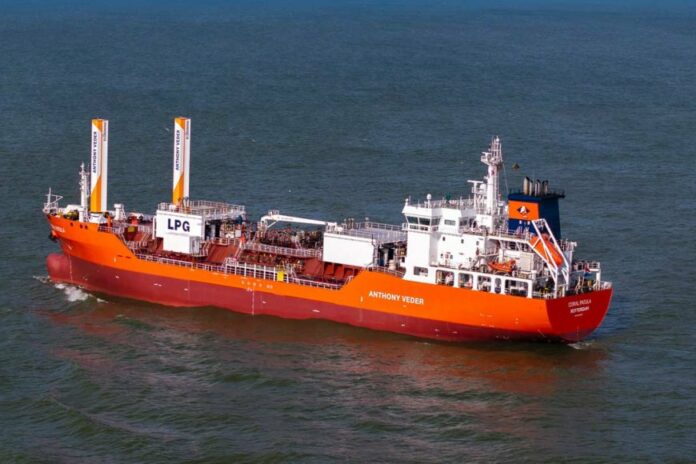
Anthony Veder announces the launch of two VentoFoils sails onboard of Ethylene carrier Coral Patula, delivered by Econowind. 

Later this year sister ship Coral Pearl will be equipped with two similar sails. By retrofitting existing gas carriers the company unlocks the potential of wind propulsion as a sustainable solution for the maritime industry. 

Björn van de Weerdhof, Commercial and Sustainability Director at Anthony Veder shares:

‘In our sustainable roadmap, we have set the ambitious target of becoming a net-zero emitter by 2035. Achieving this goal requires action today. While we focus on optimizing the design of newbuilds and running those on (bio-) LNG, we are equally committed to enhancing the efficiency of our existing fleet. This allows us to reduce our carbon footprint immediately. Wind-assisted propulsion is a key step in this effort, and our collaboration with Econowind reflects the strength of our partnerships. Additionally, we are exploring other solutions such as propulsion train optimization and joint action we can take with or customers such as lower speeds through Just in Time arrival and making use of shorepower. 

Rens Groot, Chief Operations Officer at Econowind is proud of this fast-track project:

‘Anthony Veder conducted a thorough analysis before selecting the VentoFoils, including an advanced business case calculation balancing benefits and realistic costs. This allowed us to see key advantages, such as speed increases for gas carriers, where VentoFoils help offset engine power limitations. Meeting the tight timeline was possible due to Anthony Veder’s experienced team in project execution and dry dockings. They showed leadership by being the first to implement wind-assisted propulsion on a gas carrier. This vessel is set to achieve substantial fuel savings and CO2 reductions with an attractive payback period.’

By retrofitting 2 Ethylene carrier in its fleet with Econowind VentoFoils, Anthony Veder will be using wind energy to significantly reduce fuel consumption of vessels. The system is designed to work alongside existing engines, providing a boost in propulsion through the power of wind. Based on IMO wind conditions, we anticipate fuel savings of around 5%, with the potential of more than 10% in optimal wind conditions. By using less fuel, the company not only cuts down on the energy bill, but more important on greenhouse gas emissions. 

Scarborough Energy Project completes trunkline installation

0

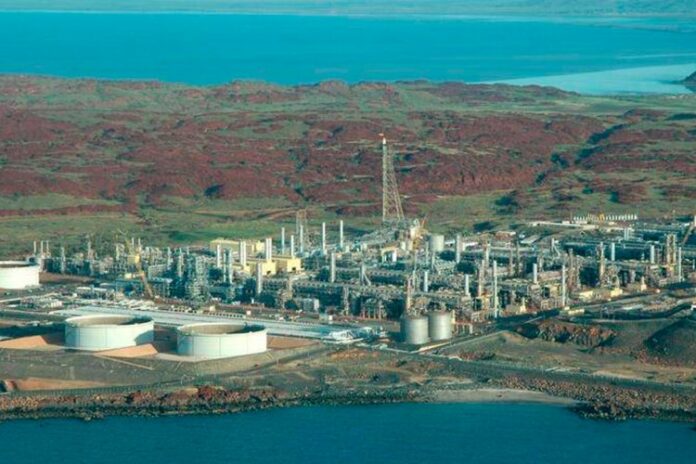
Woodside has announce the successful completion of the installation of the Scarborough Energy Project trunkline.

The installation of the trunkline took around 12 months to complete with numerous teams and contractors contributing to the successful work program.

Woodside Executive Vice President & Chief Operating Officer Australia Liz Westcott said the trunkline was a critical piece of infrastructure for the Scarborough Energy Project, requiring installation by specialised vessels and expert teams.

“The completion of installation is a significant accomplishment, reflecting the dedication of all involved in achieving this project milestone.

“With the last components of the trunkline in place, the focus will be maintained on safely executing the remaining project scopes to support the targeted first Scarborough LNG cargo in 2026.

“The Woodside, Saipem and sub-contractor teams are to be congratulated on their outstanding delivery of this key element of the project.”

The Scarborough Energy Project is more than two-thirds complete and is set to help meet demand for the lower carbon and reliable energy the world needs today and into the future. This includes up to 225 terajoules a day of domestic gas supply into the Western Australian market.

This world-class project is expected to generate more than A$50 billion in direct and indirect taxes for Australia’s economy, more than 3000 jobs during the construction phase and create or sustain almost 600 jobs on average during operations.

Rijeka Gateway to be fully powered by renewable electricity

0

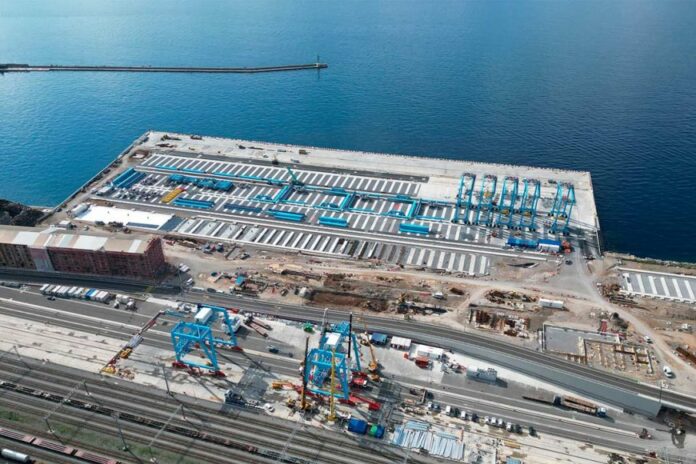
Rijeka Gateway, the largest project in the logistics sector in Croatia, has secured electricity from renewable energy sources for the operation of its container terminal. This will reduce CO2 and other harmful gas emissions significantly. 

The terminal in Rijeka – a joint venture between APM Terminals and ENNA Group – will be the most advanced in the Adriatic region, with most of its equipment electrified and largely remotely operated. When fully operational, the terminal will directly create 300 jobs for professionals of various profiles.

The contract for the use of renewable electricity has been active since the beginning of construction and will continue during the terminal’s operational phase. Renewable energy is sourced from solar and wind power, and ENNA Next – a supplier of electricity – issues green certificates to ensure that the entire supply comes from renewable sources.

“ENNA Next is pleased to begin cooperation with Rijeka Gateway in supplying renewable energy. As one of the leading energy suppliers in Croatia, we purchase renewable electricity from over 800 producers in Croatia and Germany. In addition to standard electricity and gas products, we pay special attention to developing renewable energy sources for our customers,” says Nenad Ukropina, board member of ENNA Next.

“We have launched several initiatives that can help us become one of the most sustainable terminals in this part of the world. One of these initiatives is the use of renewable energy sources. As a large consumer of electricity, we believe that using sustainable energy sources is a vital step in achieving the terminal’s long-term sustainability,” says Peter Corfitsen, CEO of Rijeka Gateway.

Rijeka Gateway is also working on a number of other fronts to protect the environment. The terminal will be equipped, for example, with a highly efficient water management and drainage system that eliminates the possibility of marine pollution. Light pollution will also be reduced, with automated lighting systems ensuring that inactive parts of the terminal will not be illuminated when not in use.

Additionally, several measures will be introduced to keep noise levels below the legally permitted limits. These include a system that supplies ships with electricity from shore, reducing the need to run ship engines. All cranes at the terminal will use soft landing technology to reduce container loading noise. And new types of sound signals will be used throughout the terminal, replacing traditional beeping with less intrusive white noise.

“From the inception of this project, we wanted Rijeka Gateway to be more than just a generator of economic prosperity for Rijeka, the rest of Croatia and the region. We want to be a good neighbour, doing everything we can to minimize the terminal’s impact on the environment and the local community while creating jobs and sustainable growth opportunities,” says Peter Corfitsen, CEO of Rijeka Gateway. 

Ukraine confiscated a large dry cargo ship that was illegally exporting agricultural products from Crimea

0

Ukraine has confiscated a cargo ship that illegally called at the ports of the temporarily occupied Autonomous Republic of Crimea.

The press service of the State Border Guard Service of Ukraine reported on this.

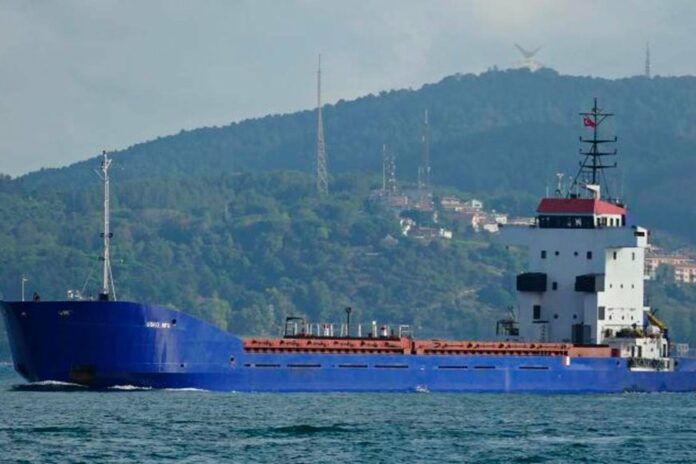
It is reported that the USKO MFU cargo ship flying the flag of Cameroon, which illegally entered the ports of temporarily occupied Crimea to carry out commercial activities, was detained in the Odesa region by the Sea Guard of the State Border Guard Service of Ukraine together with other law enforcement officers.

The State Border Guard Service details that it happened in July 2024.

It is reported that in 2023 and 2024, the vessel repeatedly docked at the seaport of Sevastopol and loaded agricultural products, particularly for a Turkish company.

To disguise the crime, the captain occasionally turned off the vessel’s GPS tracker and entered false information into the log of routes and berths.

According to the court’s decision, the vessel has now been transferred to the ownership of the state of Ukraine.

The captain of the USKO MFU, a citizen of Azerbaijan, is accused of violating the procedure for entering the occupied territories with the aim of harming state interests.

The State Border Guard Service emphasizes that any operations in Crimea or the Sea of Azov ports violate international norms and Ukrainian legislation.

On October 8, Militarnyi reported that the Russians had attacked a civilian cargo ship in the Pivdennyi port in the Odesa region.

The Russian attack damaged the ship Paresa, which was flying the flag of St. Kitts and Nevis.

About 6,000 tons of Ukrainian corn were on board, to be shipped to Italy the next morning.

Source: Militarnyi

Maersk names latest vessel of its dual-fuel methanol fleet Alexandra Mærsk in Felixstowe

0

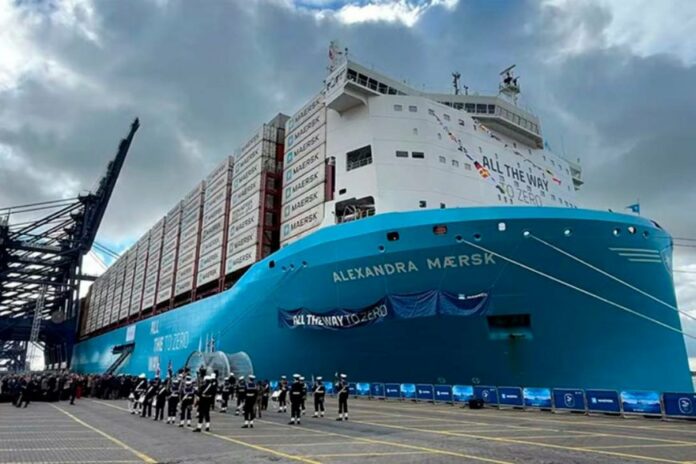
UK’s Maritime Minister Mike Kane, representatives of the IMO, customers and Maersk employees joined the festive event at the Port of Felixstowe, UK. Elaine Condon, Director of People & Culture at Primark, is the godmother of the ship, representing the close logistics and sustainability partnership between Maersk and its customer Primark.

“Alexandra Maersk” is the sixth vessel in Maersk’s owned fleet being able to sail on methanol in its main and auxiliary engines. It is the fifth ship in a series of 18 large dual-fuel methanol vessels scheduled for delivery in 2024 and 2025. Each can carry more than 16,000 standard containers (TEU).

Mike Kane, UK’s Maritime Minister, said:

“It’s a privilege to join the naming ceremony for the ‘Alexandra Maersk’ – one of the first container vessels to run on green methanol. This is exactly the kind of innovation we need to deliver a greener, cleaner maritime sector which is better for people and for our planet. Delivering greener transport is one of our top priorities and we will do so by reducing harmful greenhouse gas emissions and investing in alternative fuels and technologies.”

Paul Marchant, CEO of Primark, said:

“We are committed to reducing the impact we have on the environment across our entire operation, including our supply chain. Through our partnership with Maersk we have started to introduce green fuel alternatives, such as Biofuel, when shipping our products. By using Maersk’s ECO Delivery Ocean product and replacing fossil fuels with green fuel alternatives on Maersk’s cargo ships, we are reducing greenhouse gas (GHG) emissions in our ocean shipping.  This is a really important step for us at Primark as it supports our ambition to halve our carbon emissions across our value chain by 2030.”

Maersk’s ECO Delivery Ocean is based on reduced GHG emission fuels like bio-diesel which is used on vessels across the Maersk fleet, and now also green methanol which our newest vessels like “Alexandra Maersk” are capable of sailing on.

Vincent Clerc, CEO of A.P. Moller – Maersk, said:

“It’s great to see customers like Primark taking action and partner with us to decarbonise ocean transport. True progress in the green transformation requires collective effort. To accelerate the transformation, we need the International Maritime Organization help closing the price gap between green and fossil fuels to make the green choice the best choice for all. Last weeks IMO meeting on that matter was a step in the right direction, but much work remains in the coming months. We remain hopeful and continue to do all in our power to progress the green transition of shipping.”

The new methanol enabled ships are at the core of Maersk’s ambitious decarbonisation plans as low emission methanol can reduce the greenhouse gas (GHG) emissions by 65% to 90% compared to conventional fossil fuels such as bunker oil (depending on the feedstock and production process of the methanol, calculated on a life cycle basis).

Following the tradition of naming Maersk vessels after members of the founding family, “Alexandra Maersk” is named after Alexandra Mærsk-Møller (1868-1953) who was an older sister of Mr. A.P. Møller, the founder of A.P. Moller – Maersk.

RWE to realise 4 GW offshore wind projects off the German coast together with TotalEnergies

0

RWE and TotalEnergies agreed to jointly develop two large offshore wind projects off the German coast with a total capacity of 4 gigawatts (GW). To this end, TotalEnergies will acquire a 50% equity stake in both projects from RWE. When RWE was awarded the sites, in the latest offshore wind auction in Germany in August, it was announced that the two companies would explore the possibility of developing the projects together.

Sven Utermöhlen, CEO of RWE Offshore Wind:

“We are delighted to welcome TotalEnergies onboard as our partner in the delivery of these large-scale offshore wind projects in our home market of Germany. As a trusted partner in our Dutch offshore wind project OranjeWind, TotalEnergies shares our ambition to further drive the growth of offshore wind energy to accelerate the energy transition in Germany and beyond. Our RWE teams will bring their many years of experience and in-depth knowledge of the offshore wind industry to successfully develop and build the two wind farms.”

Olivier Jouny, SVP Renewables at TotalEnergies:

“We are pleased to strengthen our ties with RWE, a key player in renewables and our partner in OranjeWind project in the Netherlands. This new partnership contributes to our integrated development in the German electricity market, the largest in Europe, and will enable TotalEnergies to provide green electrons to decarbonize the country’s electricity and industry.”

Located approximately 110 to 115 kilometres north-west of the German island of Borkum, the sites N-9.1 and N-9.2 are large enough to accommodate offshore wind farms with a total capacity of 2,000 megawatts each. Investment decisions are expected to be taken by 2027 (N-9.1) and 2028 (N-9.2), respectively. Subject to the necessary permits and confirmation of grid connection, offshore construction could start in 2029 and 2030, with full commissioning planned for 2031 and 2032 respectively.

RWE already operates 19 offshore wind farms, including six off the German coast. The company is also currently building four large offshore wind farms: the Sofia offshore wind farm (1.4 GW) in the UK, the Thor offshore project (1.1 GW) in Denmark and the OranjeWind offshore wind farm (795 MW) in the Netherlands together with TotalEnergies, as well as the Nordseecluster with a total capacity of 1.6 GW north of the island of Juist in Germany. RWE aims to triple its global offshore wind capacity from 3.3 GW today to 10 GW by 2030.