-0.4 C
New York
Home Blog Page 134

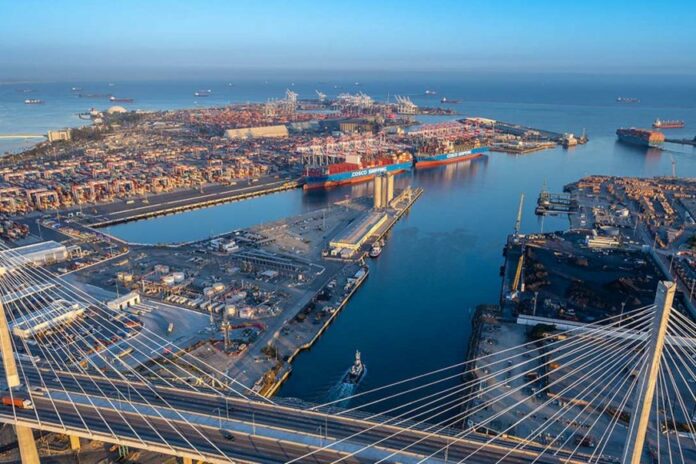
New bill permits construction of offshore wind manufacturing terminal at Port of Long Beach

0

Assembly Bill 2235 will reduce costs and accelerate the timeline to complete the proposed Pier Wind project, which would be the largest facility of its kind in the United States and would help California meet its goals for renewable energy sources.

“We now have the ability to plan and build Pier Wind in a way that is smarter, faster and more cost-effective, thanks to Gov. Newsom, Assembly Speaker Robert Rivas, Senate President Pro Tem Mike McGuire and Assemblymember Josh Lowenthal guiding this critical legislation to approval,” said Port of Long Beach CEO Mario Cordero. “I would also like to thank our labor partners from the International Longshore and Warehouse Union and the State Building and Construction Trades Council of California for collaborating with us to ensure the future success of this important project. Pier Wind will help the state meet climate goals, create jobs and economic opportunities for local communities, and establish a new green energy industry along the West Coast.”

“Thank you to our state leadership for creating a pathway that will allow us to expedite the design and construction of Pier Wind, unlocking thousands of good paying jobs in California,” said Long Beach Harbor Commission President Bonnie Lowenthal. “The Port of Long Beach is the ideal location for this project, given our connections to robust transportation networks and our access to the state’s largest manufacturing base and construction and marine workforce.”

AB 2235 allows the Port to use alternative construction delivery methods to design and build Pier Wind. In addition to creating new green energy jobs in Southern California, Pier Wind would enable other sectors of the supply chain to create jobs supporting the manufacturing, assembly, operations and maintenance of offshore wind projects on the West Coast. The Port of Long Beach sponsored the bill, which was approved in August by the state Senate and Assembly.

“Offshore wind is a key component of California’s clean energy future,” Assemblymember Lowenthal said. “The governor’s signature on AB 2235 brings our state one step closer to achieving clean, sustainable energy delivery in our beautiful state. The Pier Wind project is an important extension of the smart growth efforts at our ports and will dramatically increase good paying jobs, improve air quality, and mitigate negative impacts to the surrounding Long Beach communities. Additionally, AB 2235 will contribute to economic growth in California and keep us on the right track to achieve our environmental goals. I look forward to continuing to partner with the governor, my colleagues, and all of the stakeholders that are working to build California’s offshore wind infrastructure.”
 
“The Pier Wind project presents an exciting opportunity for California to realize its potential as a leader in the U.S. offshore wind market,” said Chris Hannan, president of the State Building and Construction Trades Council of California. “The signing of AB 2235 will allow alternative delivery methods for the efficient construction of needed port infrastructure leading to an untapped clean energy source while creating thousands of high-quality construction jobs for Southern Californians thanks to a project labor agreement with the Port of Long Beach.”

Pier Wind would allow for the staging, storage and assembly of some of the world’s largest offshore wind turbines, standing as tall as the Eiffel Tower. The fully assembled turbines would be towed by sea from the Port of Long Beach to wind lease areas 20 to 30 miles off the coast in Central and Northern California to help the state and federal government meet their renewable energy goals.
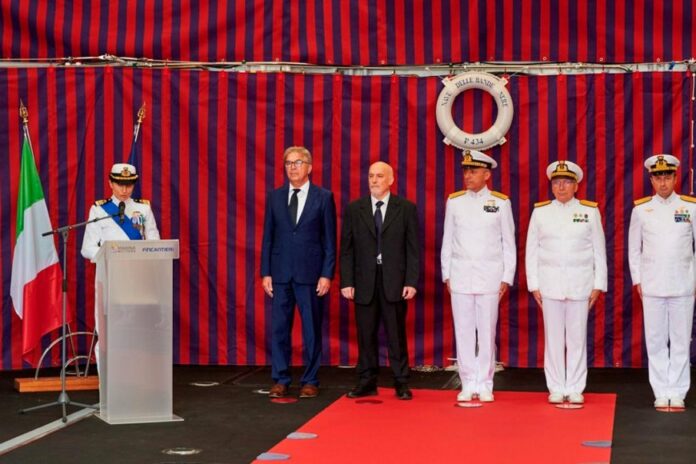
Fincantieri delivers the fourth PPA “Giovanni delle Bande Nere” in Muggiano

0

The ceremony was attended, among others, by Vice Admiral Andrea Gueglio, Director of Italian Navy Military Personnel Directorate, by Admiral Chief Inspector Giuseppe Abbamonte, Director of the Naval Armaments Directorate – NAVARM, and Mr. Joachim Sucker, OCCAR Director, welcomed by Attilio Dapelo, Senior Vice President Operations Naval Vessels Division, and Antonio Quintano, Director of the Integrated Shipyard of Riva Trigoso-Muggiano.

This vessel, the first of the class in “full” configuration, is part of the renewal plan of the operational lines of the Italian Navy vessels, approved by the Government and Parliament under the aegis of OCCAR (Organisation Conjointe de Cooperation sur l’Armement, the international organization for cooperation on arms).

PPA characteristics:

The PPA is a highly flexible ship with the capacity to serve multiple functions, ranging from patrol with sea rescue capacity to Civil Protection operations and first line fighting vessel. There are different configurations of combat system: starting from a “light” version for the patrol task, integrated for self-defence ability, to a “full” one, equipped for a complete defence ability. The vessel is also capable of operating high-speed vessels such as RHIB (Rigid Hull Inflatable Boat) up to 11 meters long through lateral cranes or a hauling ramp located at the far stern.

• 143 meters long overall
• Speed more than 31 knots
• 171 persons of the crew
• Equipped with a combined diesel and gas turbine propulsion plant (CODAG) and an electric propulsion system
• Capacity to supply drinking water and electrical power to land

The PPA ships are built at the Integrated Shipyard of Riva Trigoso and Muggiano with deliveries expected until 2026.

BERG Propulsion OpWind® to optimize operations for sail and engine combustion

0

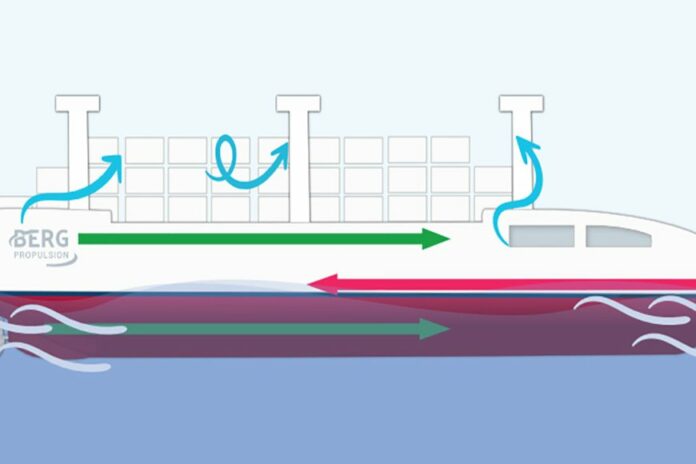
BERG Propulsion has unveiled the OpWind® software system to help crews combine the operation of sails and propellers in the most efficient way in all sea conditions.

OpWind automatically ensures that engine efficiency can be optimized with respect to propeller rpm and blade pitch angle when wind propulsion is also used to propel a vessel. The approach saves even more fuel than would otherwise be the case.

The system automatically senses any sail contribution to propulsion based on a vessel’s operation data and measured parameters, continuously and automatically adjusting propeller pitch and speed to maximize the efficiency of the combined operation of propeller and sails.

The BERG Propulsion OpWind system has been developed from the Swedish company’s existing Dynamic Drive technology to compare detailed theoretical information and calculations about operating with propellers and sails against measured values on-board the vessel, said Chief Technology Officer Emil Cerdier.

“OpWind is a more advanced system than Dynamic Drive and can be implemented on any ocean-going vessel fitted with any type of sails to identify optimal operating actions,” said Cerdier.

“Savings from reduced fuel consumption will depend on the vessel configuration and its operating profile, as well as on how large the sails are, but they will be considerable,” he added. “Efficiency gains will be available whether it is a newbuilding or retrofit project.”

The system can be run in several modes with settings either to keep a desired maximum speed, maximum fuel consumption or a constant propeller thrust. It is also possible to use the propeller for onboard power generation while in sailing mode.

BERG can also provide a Marine Information Display to visualize performance as part of the system.  A constant vessel speed setting will automatically reduce engine propulsion power when sails contribute to forward thrust. With a feathering propeller design it is also possible to shut down one or two main engines depending on vessel configuration, to further reduce fuel and maintenance costs.

BERG Propulsion has received an initial order for systems to be used in sail/engine combined operation from a major vessel operator.

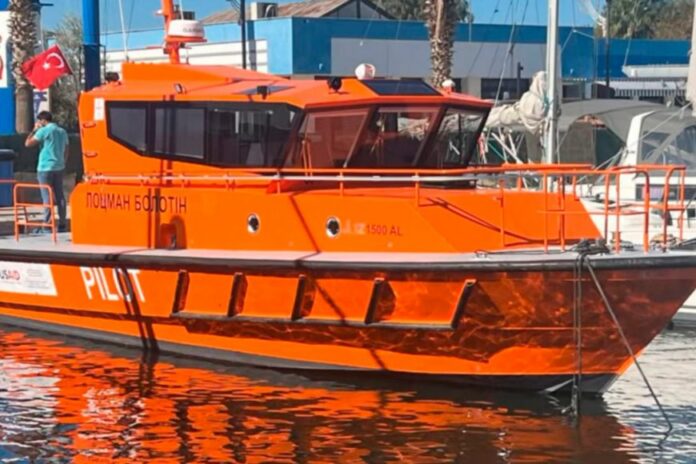
A pilot boat built for Ukraine was tested in Turkey

0

The Ukrainian Sea Ports Authority reported on this.

The boat was built at a Turkish shipyard in Izmir with funding from the United States Agency for International Development (USAID) as part of the Economic Support for Ukraine project.

It is noted that this is the first of two boats built at a Turkish shipyard.

Sea trials of the second boat for Ukraine are scheduled for next month.

The USAID project’s Economic Support for Ukraine project provides for the purchase of a total of three new pilot boats for USPA.

The Ukrainian Sea Ports Authority reminded that on May 2, they received the first pilot boat built by the Ukrainian company UMS Marine as part of this project.

In July, the United States donated 4 patrol boats to the State Border Guard Service of Ukraine.

Patrol boats are needed to protect Ukraine’s coastline, ports, and rivers.

The vessels are optimized for the mission in Ukraine and equipped with modern navigation, control, and video surveillance systems.

Ukrainian border guards also received patrol boats from the European Union as part of the project “Together with the EU to Secure Borders.”

These were UMS-425 CC boats manufactured by UMS. They can accommodate a crew of four and are equipped with life jackets and an echo sounder used to determine the depth of water under the vessel.

Source: Militarnyi

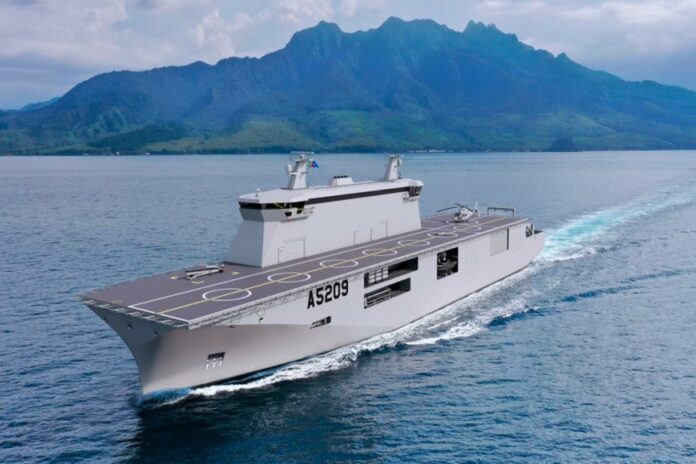
Damen holds joint keel laying ceremony for Portuguese Navy’s Multi-Purpose Ship

0

Damen Shipyards Group held a joint steel cutting and keel laying ceremony at Damen Shipyards Galati in Romania. The event simultaneously marked two significant milestones in the construction of an innovative Multi-Purpose Ship for the Portuguese Navy.

The event was hosted by Damen Chief Commercial Officer Jan-Wim Dekker and attended by honourable guests, the Portuguese Minister of National Defence, Nuno Melo and the Chief of Portuguese Naval Staff, Admiral Gouveia e Melo. The Chief Guests carried out the steel cutting and keel laying of the vessel.

The contract for the ship was signed by the two parties in November last year following a tender process. The project is funded by the European Union’s Recovery and Resilience Facility (RRF) that is part of NextGenerationEU (the economic recovery package to support EU member states affected by the COVID-19 pandemic).

Chief of Portuguese Naval Staff Admiral Gouveia e Melo, said,

“This is a ship with a revolutionary concept that was conceived by the Portuguese Navy. It is a multi-domain ship, specifically in the air, surface, and subsurface components. It can carry out numerous and varied missions, such as scientific research and experimentation related to drones and robotics, as well as support in emergency and disaster situations.

“It represents a significant advantage in construction, operation, and maintenance costs, with an open modular architecture that allows for quick adaptation according to the missions and tasks assigned to it.” 

The Multi-Purpose Ship forms part of Damen’s Support Ship range. The range, spanning 7000-9000 tons, applies proven, standard solutions where possible to ensure fast, reliable and cost-effective construction.

Considering a concept presented by the Portuguese Navy, Damen has cooperated closely with its client in the development of a vessel to meet its specific requirements The ship, the NRP Dom João II, offers unrivalled versatility, with capabilities spanning scientific and technological research, search & rescue, emergency relief, as well as maritime safety and environmental & meteorological monitoring.

In acknowledgement of the growing importance of drones and autonomous technology in emergency relief and surveillance, the Multi-Purpose Ship is capable of transporting and launching Unmanned Underwater Vehicles (UUV), Unmanned Surface Vehicles (USV) and Unmanned Aerial Vehicles (UAV). For the latter, this includes a 94 x 11 metre flight deck.

The 107-metre vessel features 650m2 deck space, suitable for the transportation of up to twelve TEUs. These can be used to house mission-specific modular systems such as hospitals, hyperbaric chambers and ROV equipment, as required. 

To facilitate oceanic exploration and research, the Multi-Purpose Ship will feature both state-of-the-art laboratory facilities and accommodation for scientific personnel.

Minister of Portuguese National Defence Nuno Melo said,

 “The vast maritime area under Portuguese jurisdiction represents a big part of the Exclusive Economic Zones of all European Union Member States. Safeguarding this domain is essential, particularly as we face growing strategic competition in the North Atlantic. It is imperative that we strengthen our capabilities to address these threats and secure the resources of our seabed, which are of critical strategic value.

“The future Multifunctional Ship is a key element in responding to these challenges. By incorporating advanced technologies such as robotic aerial, surface and subsurface systems, alongside artificial intelligence, we are positioning ourselves at the forefront of maritime innovation. This ship will not only enhance the effectiveness and safety of our operations at sea, but it will also contribute across various sectors, from environmental monitoring to fisheries enforcement and scientific research.”

Damen Chief Commercial Officer, Jan-Wim Dekker said,

“We are proud to have been selected to build this spectacular vessel for the Portuguese Navy. The cutting of steel and keel laying at Damen Shipyards Galati represent major steps forward in the construction of this Multi-Purpose Ship that will enable the Portuguese Navy to undertake the most demanding missions and at the same time the ability to perform research activities in the deepest areas of the ocean. It also underlines Damen’s firm relationship with the Portuguese Navy and shows a further example of European defence industry cooperation.”

NRP Dom João II is scheduled for delivery in year 2026, whereupon she will join two other Damen-built vessels, the 122-metre-long NRP Bartolomeu Dias and NRP D. Francisco de Almeida.

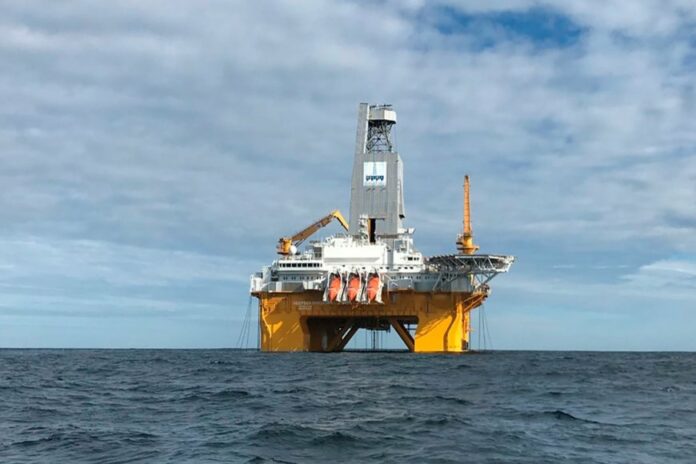
Delineation of discovery in the Norwegian Sea

0

The well, situated around 12 kilometres west of the Skarv field, was drilled to confirm the size of the previous discoveries made in 2022 in 6507/2-6 (Storjo East and Kaneljo in Jurassic and Cretaceous reservoir rocks, respectively).

Preliminary estimates place the size of the discoveries between 2 and 8.7 million standard cubic metres (Sm3) of recoverable oil equivalent in the primary exploration target. This corresponds to around 13-55 million barrels of oil equivalent.

In the secondary exploration target, the preliminary estimate is between 1.3-1.8 million Sm3 of recoverable oil equivalent, which corresponds to around 8-12 million barrels of oil equivalent.

Aker BP is the operator of production licence 261 with Wintershall Dea(Harbour Energy) as the other licensee. The licensees will consider tying the discoveries back to existing infrastructure in the area.

Before drilling well 6507/2-7 S, the operator’s resource estimate for the primary exploration target was between 2.6-10.3 million Sm3 of recoverable oil equivalent, while the secondary exploration target had estimated resources of 0.9-1.5 million Sm3 of recoverable oil equivalent.

The primary exploration target for well 6507/2-7 S was to prove gas in reservoir rocks in the Tilje Formation in the Lower Jurassic. The secondary exploration target was to prove gas in reservoir rocks in the Middle Jurassic (the Garn Formation) and in reservoir rocks in the Upper Cretaceous (Lysing Formation). In the primary exploration target, well 6507/2-7 S encountered gas in the Tilje Formation, which is 133 metres thick, 43 metres of which in sandstone rocks with moderate to poor reservoir quality. The gas/water contact was not encountered.

In the secondary exploration target in the Garn Formation, well 6507/2-7 S encountered a 30-metre gas column in sandstone rocks totalling around 14 metres with poor reservoir quality. In the other secondary exploration target, well 6507/2-7 S encountered a gas column of around 8 metres in the Lysing Formation in sandstone rocks totalling 65 metres with very good reservoir quality. The gas/water contacts were not encountered in any of the formations. Extensive data acquisition and sampling have been carried out.

A successful production test was conducted in technical sidetrack 6507/2-7 S T2 in the upper part of the Tilje Formation. The maximum production rate was 300,000 Sm3 of gas per flow day through a 20/64-inch nozzle opening.

Appraisal well 6507/2-7 S was drilled to a vertical depth of 5098 metres and a measured depth of 5140 metres below sea level, and was terminated in the Åre Formation from the Lower Jurassic age.

Water depth at the site is 340 metres. Appraisal well 6507/2-7 S has been temporarily plugged.

The appraisal well was drilled by the Deepsea Nordkapp rig, which will proceed to production licence 932 where Aker BP ASA is the operator.

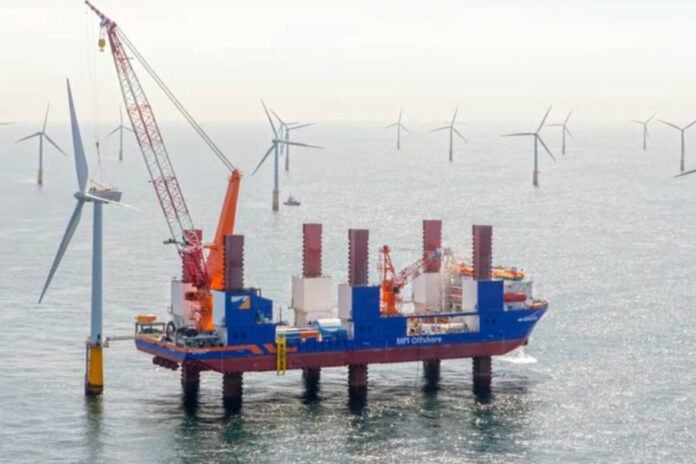
Vattenfall expands offshore maintenance capacity with Van Oord contract for turbine servicing

0

This contract will provide guaranteed availability of the vessel for several months each year, primarily during the peak maintenance season from early March to late October. With an option to extend beyond the initial term, this partnership marks a substantial step forward in Vattenfall’s operational efficiency.

“We are pleased to announce this contract and look forward to growing our relationship with Van Oord as a trusted partner,” said Pavlo Malyshenko, Head of Offshore Generation at Vattenfall. “By ensuring the availability of the MPI Resolution, we anticipate significant improvements in our operations and maintenance (O&M) activities when it comes to main component replacements.”

Arnoud Kuis, Managing Director Offshore Energy at Van Oord: “Van Oord recognises the importance of strategic partnerships, and we are proud that we are selected again as trusted partner by Vattenfall, to maintain their European offshore wind portfolio. This new long term frame agreement for heavy maintenance, succeeding the previous 4-year frame agreement, ensures continuous utilisation of our MPI Resolution in this growing O&M market.”

Wind turbines have rotating components and inevitably experience wear and tear over time, necessitating both scheduled and unscheduled maintenance. The increased availability of the MPI Resolution will contribute to availability improvement of Vattenfall’s offshore turbines and ultimately increasing fossil-free electricity generation from its existing assets.

MPI Resolution will be tasked with servicing Vattenfall turbines of up to 5 MW in size across Northern Europe and UK. 

Atlantic Shores Projects 1 and 2 construction and operations plans approved

0

Atlantic Shores Offshore Wind (Atlantic Shores) has received Construction and Operations Plan (COP) approvals from the Bureau of Ocean Energy Management (BOEM) for Atlantic Shores Projects 1 and 2, which combined will generate enough renewable energy to serve more than 1 million New Jersey homes. 

Joris Veldhoven, Chief Executive Officer, Atlantic Shores Offshore Wind, said:

“Securing these critical approvals enables New Jersey’s first offshore wind project to start construction next year and represents meaningful progress in New Jersey achieving 100% clean energy by 2035. We are grateful to the Biden-Harris administration, our agency partners at the U.S. Department of the Interior and BOEM, New Jersey Governor Phil Murphy, and all our federal and state agency partners who helped deliver this moment for Atlantic Shores.” 

Atlantic Shores Projects 1 and 2 represent 2,800 megawatts (MW) of safe, reliable renewable power at unmatched scale and maturity. Atlantic Shores Project 1 is New Jersey’s first offshore wind project and COP approval will enable the near-term creation of thousands of in-demand jobs and acceleration of billions of dollars in supply chain investments being made in the Garden State. Atlantic Shores Project 2 will build on this first-mover success and drive economic growth across the state over the next decade.  

Governor Phil Murphy said:

 “Offshore wind will strengthen our state’s economy through supply chain investments and good-paying, union jobs. Thanks to the Biden-Harris Administration clearing the way for this milestone, we are one step closer to achieving 100% clean electricity by 2035.” 

Ed Potosnak, Executive Director of the New Jersey League of Conservation Voters, said:

“We’re excited that New Jersey’s first offshore project has moved one step closer to construction. Responsibly developed offshore wind is a critical component in a clean energy future — which will fight climate change, create union jobs and improve the air quality in overburdened communities. Children from Newark to Jersey City to Camden will be able to breathe just a little easier once the renewable energy from offshore wind comes online, and we look forward to working with Governor Murphy and our state Legislature to make the promise of clean energy a reality.” 

Captain Paul Eidman, Fisherman, said:

“Offshore wind isn’t just a new way to harness energy; it’s an opportunity for us fishermen to protect our waters and create a sustainable future for both our industry and the environment. Embracing this clean energy means ensuring our oceans thrive for generations to come.”  

QatarEnergy LNG awards McDermott EPCI contract

0

McDermott has been awarded an engineering, procurement, construction and installation (EPCI) contract by QatarEnergy LNG for the North Field South (NFS) Offshore Pipelines and Cables Project. This new contract is in addition to the awards received by McDermott earlier for the NFS Pipelines FEED, the NFS Jackets EPCI, and the NFXP Topsides and Pipelines which included the NFS Topsides.

The NFS infrastructure is designed to supply feed gas for two additional LNG trains and is part of the North Field Expansion Project (NFXP), which will help increase the total LNG production in the State of Qatar from the current 77 million tons per annum (MTPA) to 142 MTPA.

“McDermott is unique in Qatar in that we have been operating and supporting the offshore energy industry since its early developments in the 1990s. Consequently, we have a long history within the energy sector there and have followed its growth from that time until today,” said Mike Sutherland, McDermott’s Senior Vice President, Offshore Middle East. “We look forward to continuing to work closely with QatarEnergy LNG to contribute to the completion of this strategic offshore development.”

“We’re honored to once again receive the trust of QatarEnergy and QatarEnergy LNG to deliver some of their largest and most strategically important projects,” said Neil Gunnion, McDermott’s Qatar Country Manager and Vice President Operations. “McDermott is now responsible for all of the offshore infrastructure associated with Qatar’s massive North Field Expansion, with the execution done predominantly in Qatar. Between our main execution center in Doha and our QFAB fabrication facility in Ras Laffan, we are able to deliver complex offshore projects for Qatar, in Qatar.”

The scope of the contract comprises EPCI of almost 250 kilometers of offshore and onshore gas pipelines connecting five new offshore wellhead platforms with two new onshore LNG trains in addition to subsea composite power and control cables. The project will be managed from the McDermott Doha office with in-country fabrication support from the QFAB fabrication yard, and will be installed with McDermott’s inhouse marine assets.

Van Oord completes FSRU jetty at Wilhelmshaven in Germany

0

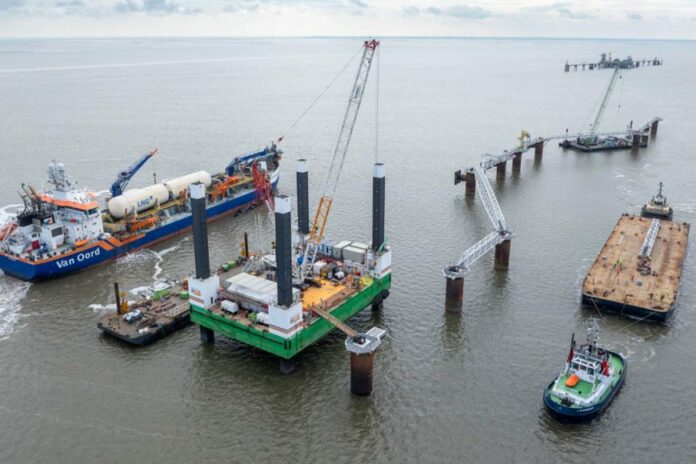
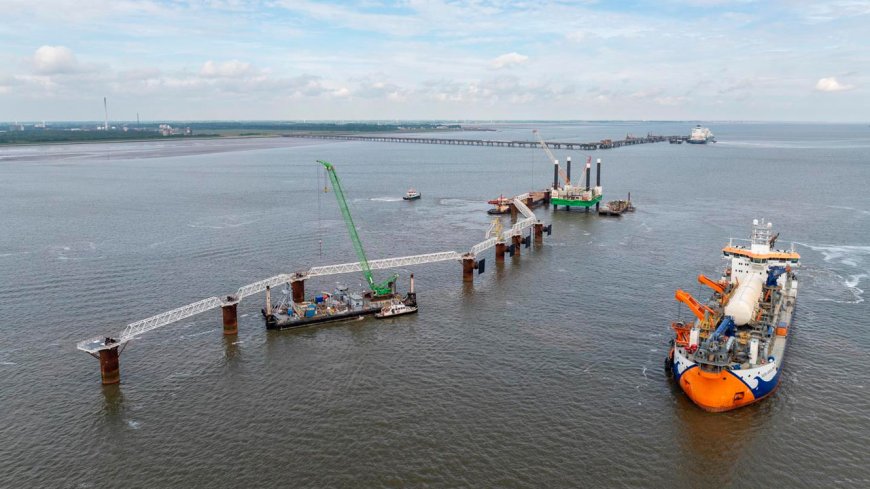
The project was managed by FSRU Wilhelmshaven GmbH, a joint venture between ENGIE and TES. By leveraging its experience in dredging, infrastructure and offshore energy, the client and Van Oord developed a tailor-made integrated solution for the project. In order to expedite the process, monopiles, mainly used for offshore wind turbines, were used as the foundation for the new 600-metre-long jetty. 

Van Oord was responsible for the procurement and construction of the FSRU jetty. In total, Van Oord installed 10 monopiles, including scour protection to prevent erosion. The foundations were then equipped with platforms, catwalks and furniture. The trailing suction hopper dredger Vox Apolonia was then deployed to dredge the berth pocket and turning basin to the required depth. This vessel runs on Liquefied Natural Gas (LNG), a more sustainable alternative to Marine Gas Oil (MGO), reducing sulphur, particulate, and nitrogen dioxide emissions.

Stan Aarts, Project Director, said:

‘We are incredibly proud of this achievement. The project is a perfect example of Van Oord’s Marine ingenuity. Our project team’s expertise and dedication, combined with our cutting-edge equipment, allowed us to develop a custom integrated marine infrastructure solution that addressed our client’s challenge and successfully construct this jetty.’

Meeting the growing energy demand makes it crucial to have energy facilities that are both efficient and safe. Van Oord is dedicated to offering safe and efficient solutions that provide and protect such infrastructure. Construction of this FSRU was one of the priority projects backed by Germany’s LNG Acceleration Act, passed in May 2022. This law aims to plug the supply gap and bolster Germany’s security of supply when it comes to energy.