4.4 C
New York
Home Blog Page 130

Van Oord awarded contract for nature restoration projects in the Netherlands

0

Both projects will be carried out on behalf of Rijkswaterstaat, the Netherlands’ department of public works. With these projects, Van Oord will be helping to improve water quality and achieve the objectives of the European Union’s Water Framework Directive. 

The EU’s Water Framework Directive came into effect in 2000 and is aimed at achieving and maintaining good ecological and chemical status in all surface waters and groundwater by 2027 at the latest. Both the Ierst and Lake Kleine Noorder IJplas projects involve measures arising from the Water Framework Directive. Rijkswaterstaat has combined the two projects into a single tender, referred to as the ‘Knierst’ tender, which it has awarded to Van Oord.  

To improve water quality in the North Sea Canal area, Van Oord will construct more than 700 metres of nature-friendly embankments along Lake Kleine Noorder IJplas in Amsterdam. The embankments will consist of double rows of stakes filled with brushwood and willow branches. These structures will create sheltered areas in the shallows that are a safe and attractive habitat for plants, birds and fish.  

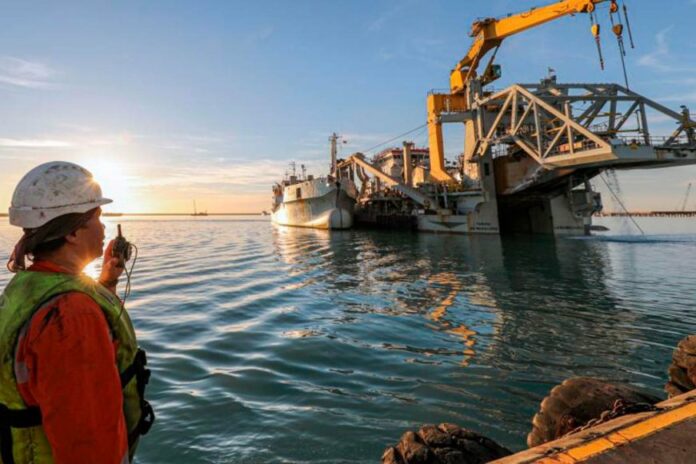
One of Rijkswaterstaat’s key requirements is that the equipment used during the projects must be zero-emission. Van Oord is a leader in emission-free operations and deploys advanced electric earthmoving equipment and zero-emission crane vessels, all in an effort to reduce overall nitrogen emissions in the building sector. During construction of the nature-friendly embankments, Van Oord will be deploying electric earth-moving and transport equipment, thus meeting the requirement to carry out at least 70% of the work with zero-emission equipment. 
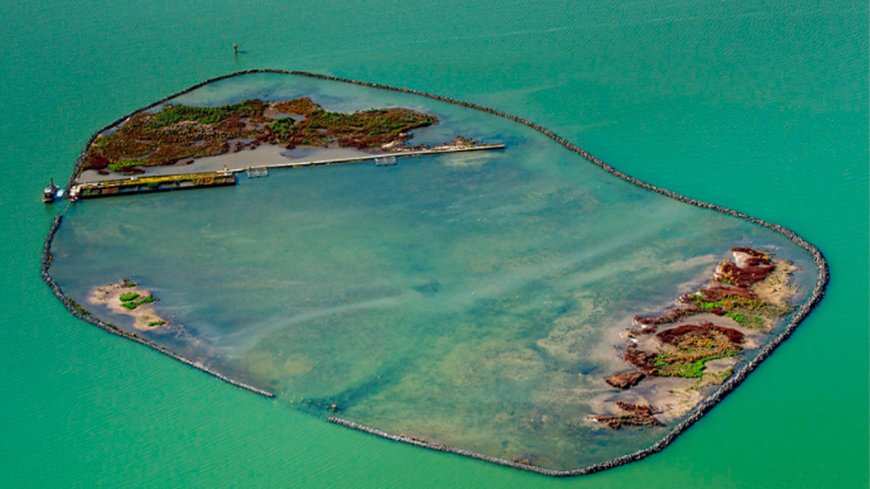
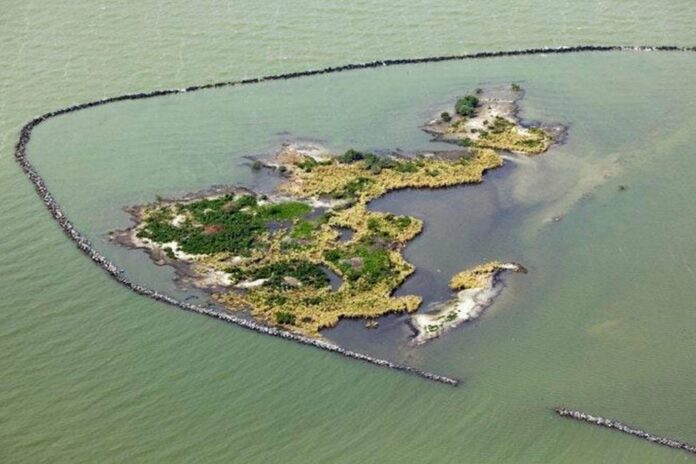
The second project that forms part of the tender award is the restoration of Ierst, an island that serves as a nature sanctuary in Lake Markermeer. This artificial island was created in 2013 as a trial, but erosion has caused most of it to disappear. The restoration work will focus on increasing elevation on the island and developing sheltered underwater zones for fish. These futureproof sheltered zones will be created by constructing an encircling brushwood dam within the existing rock dam on the island, leaving openings for fish to pass in and out. The brushwood dam will be filled with material dredged during waterway maintenance, as this is a sustainable way to reuse natural materials.   

Olga Huizing, Commercial Manager of Dredging & Infra at Van Oord, said: 

‘One of Van Oord’s sustainability pillars is empowering nature and communities. As a marine contractor, we have gained considerable experience and expertise when it comes to marine ecosystem health. We are therefore delighted that Rijkswaterstaat has selected Van Oord to execute these nature restoration projects. The fact that we can carry out most of the work using our zero-emission equipment is icing on the cake and supports the sustainability targets of both Rijkswaterstaat and Van Oord.’
Germany and Norway propose to strengthen the protection of underwater infrastructure

0

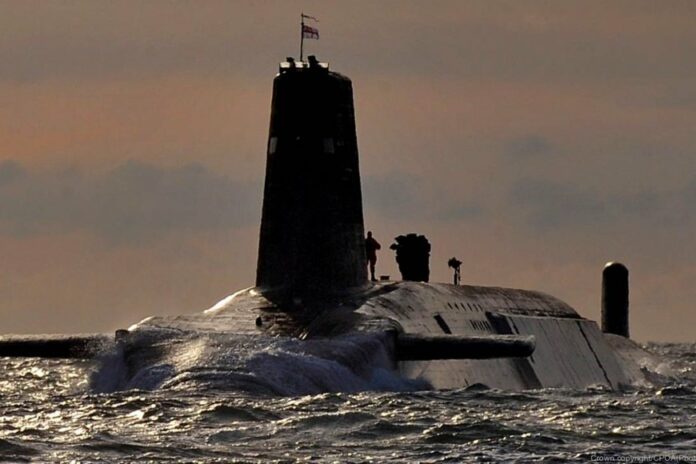
Norwegian Defense Minister Bjørn Arild Gram and his German counterpart Boris Pistorius agreed to this on October 17, 2024, on the sidelines of the NATO Defense Ministers meeting in Brussels.

Hartpunkt reported on this.

The two ministers signed a declaration on a proposal to further strengthen NATO’s role in protecting critical undersea infrastructure in the vast maritime areas of the Alliance’s responsibility.

“Germany and Norway are determined to move this important work forward. The Alliance has vast maritime areas in the Black, Mediterranean, Atlantic, and North and Baltic Seas. They are full of underwater infrastructure that ensures the safe transportation of energy and communications. That is why we must continue to work closely together,” Norwegian Defense Minister Bjørn Arild Gram stated.

“Hybrid attacks on critical undersea infrastructure pose a significant threat to our economy, communications, and energy supply. Norway and Germany have come up with concrete joint proposals to build on this initial initiative and further strengthen NATO’s role in protecting critical undersea infrastructure,” German Defense Minister Boris Pistorius noted.

NATO has recently opened a new Maritime Centre for Security of Critical Undersea Infrastructure (CUI) to protect thousands of kilometers of undersea cables and pipelines. This center ensures interoperability between Allied forces. It assists the UK Allied Maritime Command in making decisions, deploying forces, and coordinating activities. The center achieved initial operational capability in May 2024.

Norway and Germany also propose to establish five regional CUI centers for five maritime areas: the Baltic Sea, the North Sea, the Atlantic Ocean, the Mediterranean Sea, and the Black Sea.

One or more Allied partners could operate these five centers. They are designed to monitor underwater infrastructure and share expertise on the local underwater environment.

Norway offers to host a CUI center for the High North. Germany is ready to assume responsibility in the Baltic Sea.

In June 2024, Russian civilian vessels were suspected of spying on North Sea infrastructure.

According to Belgium’s security and intelligence services, Russian civilian vessels are spying on North Sea infrastructure. The study found that non-military Russian vessels have been spying on pipelines and cables in the North Sea for years, and this is happening on a much larger scale than previously reported.

Source: Militarnyi

Philippines awards certificates to three offshore wind energy projects

0

The Philippines’ Department of Energy has awarded certificates of confirmation of commerciality to three offshore wind projects in the country, totalling a capacity of 1.65 GW. 

The projects include the 450 MW Frontera Bay wind power project and the 1.2 GW Guimaras Strait Project Phase I and Phase II (two phases of 600 MW each). The consortium has said they will propose the projects for the Philippines’ first offshore wind auction, which is scheduled for 2025. The projects will all be fixed-bottom technology.

The Philippines aim to bring the share or renewables in the power generation mix to 35% by 2030 and 50% by 2040. Renewables represented 22% of the Philippine’s power mix in 2022, of which 10% from geothermal, 9% from hydro,and 1% each from wind, solar and biomass. The country possessed 427 MW of onshore wind capacity (and no offshore wind) at the end of 2023.

Jan De Nul builds new container quay at port of Valencia

0

The maritime contractor will carry out the works in a joint venture with Acciona Construcción and Grupo Bertolín. In her evaluation, the port authority appreciated the circular use of dredged material.

Jan De Nul has been working in the port of Valencia for many years and is now once again the preferred partner to build the new quay, which should eventually create 5,000 jobs in the port city. 

In its evaluation, the port authority appreciated Jan De Nul’s environmental approach that minimises the impact on nature and the surroundings. They plan to reuse as much of the 25 million cubic metres of dredged material for the quay construction as feasible. This approach leaves virtually no need to transport in additional soil.

The new quay will have an area of 137 hectares and there will be a quay wall of over 1,900 metres. The works will take 58 months, just under five years. This will allow the port of Valencia to handle an additional five million containers per year, on top of its current capacity of seven million. 

The new quay will be able to serve the latest generation of MEGAMAX vessels with a length of up to 430 metres and more than 24,000 containers on board. To do so, it can rely on a state-of-the-art design and high-tech equipment, fully electric and powered by renewable energy. 

Yves Van Aken, Area Director at Jan De Nul Group, said:

“The port of Valencia entrusting us with this significant contract, in partnership with Acciona Construcción and Grupo Bertolín, is a testament to the quality work we’ve delivered here for decades. We’re proud to contribute to the region’s economic growth through this innovative project, and to once again play a key role in a development that prioritizes sustainability and electrification.”

Four Damen Combi Freighter 3850s ordered by new customer Reederei Bernd Sibum

0

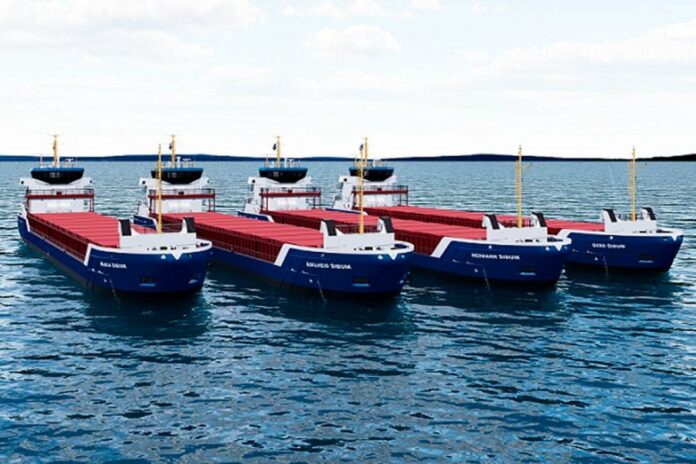
These vessels, scheduled for delivery in early 2026, are hybrid ready, designed to enhance the sustainability, efficiency, and lifespan of Reederei Bernd Sibum’s fleet.

As a first-time customer of Damen, Reederei Bernd Sibum, based in Haren, Germany, initially sought feedback from current operators of the CF 3850. The company was impressed by the vessels’ operational efficiency and positive performance testimonials from other customers.

The four Combi Freighter 3850 vessels feature an enhanced design platform, offering a 30% improvement in fuel efficiency. They are hybrid ready, fully capable of running on biofuels and can be equipped with wind-assist technology, placing them at the forefront of sustainable shipping solutions.

The vessels are also equipped with a set of batteries used by the bow thruster for peak shaving and port operations. To further boost efficiency and reduce emissions in the future, they are prepped for a battery-powered propulsion system and an upgraded shore power connection. This preparation allows for these adaptations to be made without the need for major conversions or significant downtime.

Built to the highest standards at Damen Yichang Shipyard in China, the vessels are designed and engineered in Drachten, the Netherlands. From this location, Damen also provides comprehensive warranty support, delivered by dedicated Service Engineers. Upon delivery, they will serve in the northwest European short sea shipping market, where fleet renewal is essential to meet evolving operational demands. The CF 3850 complies with the latest IMO regulations and port state requirements, ensuring it remains adaptable to emerging technologies and future environmental standards.

“Our company has a long tradition of collaborating with shipyards to design vessels that meet market needs – a practice we’ve upheld across generations and for over 70 years,” says Bernd Sibum, Managing Director of Reederei Bernd Sibum. “As a result, we have always built ships that have finally found their market.

“We’re delighted to partner with Damen Shipyards Group on the construction of four new vessels, advanced versions of the CF 3850 model, with a strong focus on energy efficiency and emission reduction. Together, we’ve ensured these ships are future-proofed to adopt upcoming innovations as soon as they are ready for the shipping market.”

“This investment is a major step toward decarbonisation, but we now also urge ports and the broader shipping industry to develop and implement the necessary shore-based infrastructure. We are confident these vessels will set a new market standard, both now and in the years to come.”

“We greatly appreciate the trust that Reederei Bernd Sibum has placed in us to support the renewal of their fleet,” says Remko Bouma, Commercial Director of Damen Cargo Vessels. “We strongly believe the hybrid ready CF 3850 will serve and sustain their business and the short sea market well into the future. These reliable and modular vessels represent a smart investment in the future of sustainable shipping. We build them to last.” 

Damen Cargo Vessels, located in Drachten, the Netherlands, specialises in the construction of standardised designs for combi freighters, tankers, and container feeders. The company builds ships both in stock and to customer specifications, delivering high-quality vessels for the short sea trading market. 

Germany acts to ensure level playing field and data security in wind energy

0

The German Economy and Energy Ministry has issued a five-point Action Plan to address current challenges to the European and German wind energy supply chain. 

The Action Plan recognises the need to correct unfair competition between European wind energy suppliers and their international competitors. It also pledges to address cyber and data security risks stemming from non-European wind turbines.

The EU wants to increase its wind energy capacity from 220 GW today to 425 GW by 2030 and 1,300 GW by 2050. As things stand nearly all the wind turbines built in Europe today are European wind turbines – produced by European manufacturers and assembled in Europe.

But there is a very real risk that the expansion of wind the EU wants will be made in China, not in Europe. Chinese wind farm manufacturers are now winning first orders in Europe. In this context the German Ministry for Economy and Energy (BMWK) today issued a five-point Action Plan.

The BMWK concludes that there is currently no level-playing field between European wind and solar manufacturers and their international competitors. It stresses the urgent need to restore fair competition and defend Europe’s and Germany’s wind energy industry.

This comes on the back of the European Commission’s decision in April 2024 to start an investigation in Chinese wind turbine suppliers under the EU Foreign Subsidies Regulation (FSR). The BMWK statement stresses the importance of this ongoing investigation. And asks the EU to make full use of its trade defence measures, such as anti-subsidy and anti-dumping measures, where necessary.

Source: Evwind

Wärtsilä to supply the cargo handling and fuel gas supply systems on six new MGCs

0

Wärtsilä Gas Solutions, part of technology group Wärtsilä, has been contracted to supply the cargo handling and fuel gas supply systems for six newbuild medium-sized gas carrier (MGC) vessels, which again strengthens the company’s market-leading position in this sector.

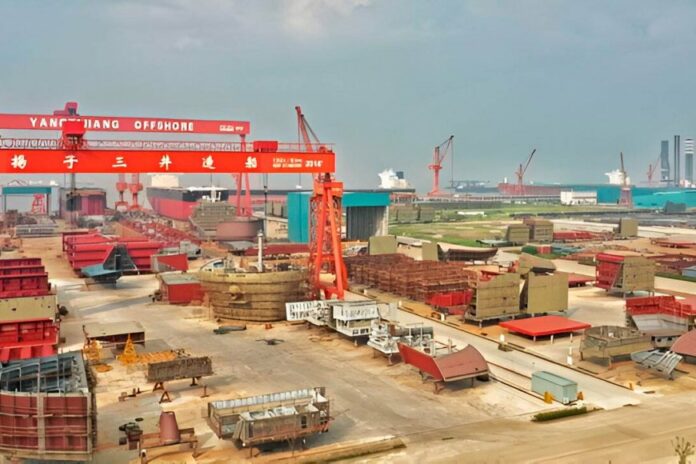
The new vessels are built at the Jiangsu Yangzi-Mitsui (YAMIC) Shipbuilding yard in China for a Japanese shipowner. The order was booked by Wärtsilä in Q3 2024.

The ships will transport and operate with liquefied petroleum gas (LPG). The Wärtsilä solutions are designed to ensure the ships’ safe and efficient operation with LPG cargo and fuel.

“We have worked closely with the YAMIC yard earlier, and we are pleased to continue this good relationship. This order is an important endorsement of the strong position that Wärtsilä’s cargo handling and fuel gas supply systems have established with this category of vessels,” commented Barry Yang, Sales Manager, Wärtsilä Gas Solutions, China.

The YAMIC yard is a joint venture between Yangzijiang Shipbuilding Group and Mitsui E&S Shipbuilding. The Wärtsilä equipment is scheduled for delivery to the yard commencing in April 2025.

Damen Naval brings Alfa Laval on board for Anti-Submarine Warfare Frigate Project

0

Damen Naval has contracted Alfa Laval Benelux to deliver Fuel Oil Separators, cleaning tables, the Oily Bilge Water Separators and ILS deliverables for the Anti-Submarine Warfare (ASW) Frigates for the Royal Netherlands Navy and Belgian Navy.

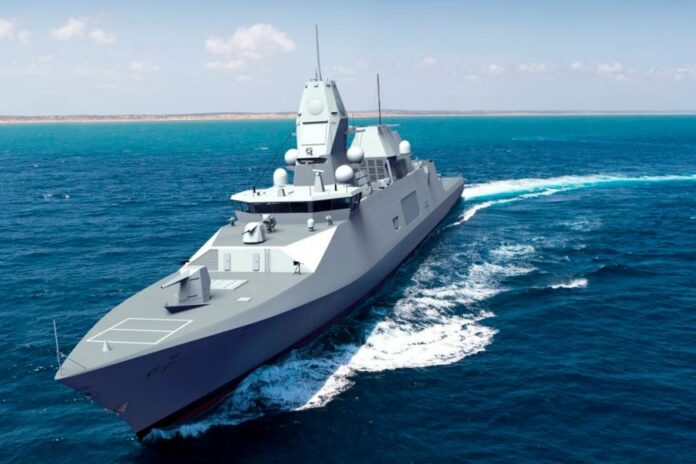
In June 2023, Damen Naval was awarded the contract to design and build four ASW frigates, two for The Netherlands and two for Belgium. In September, the Dutch government announced plans to increase the national Defence budget, and the Dutch Ministry of Defence presented the Defence Whitepaper 2024 revealing plans to order additional frigates. The ASW frigates will replace the current Karel Doorman Class multipurpose frigates. While they can be deployed for multiple tasks, the emphasis will be on anti-submarine warfare. 

“We are delighted to welcome another Dutch partner on this prestigious project,” said Damen Naval Director of Corporate Strategy & Innovation Richard Keulen. “This project is unique because we are building identical frigates for two different NATO partners. Projects such as these are crucial for the Dutch naval shipbuilding industry, and we want to make sure to involve as many Dutch suppliers as possible.” 

Alfa Laval Benelux will supply the frigates with skid-built Fuel Oil Separators suitable for different fuel types. A cleaning table shall be provided for cleaning of the Fuel Oil Separator parts. The Oily Bilge Water Separator (PureBilge) is a fully automated centrifugal separation system that cleans oily water effectively at sea. The Oily Bilge Water Separator unit shall be skid built, complete with interconnecting pipes and electrical cabling. 

In addition to the ASWF project, Damen Naval and Alfa Laval are also collaborating on the Combat Support Ship being built for the Royal Netherlands Navy and the F126 frigates that Damen Naval is designing and building for the German Navy. 

“We are excited and looking forward starting this project with strict demands in shock and noise levels with Damen Naval and extend our successful corporation,” says Head of Marine Division Benelux David van Luijtelaar. “Thanks to our extensive experience with defence and security projects, we are well-prepared, and several parts of our organisation will contribute to this project.” 

Iberdrola and Masdar complete wind turbine installation at Baltic Eagle offshore wind farm

0

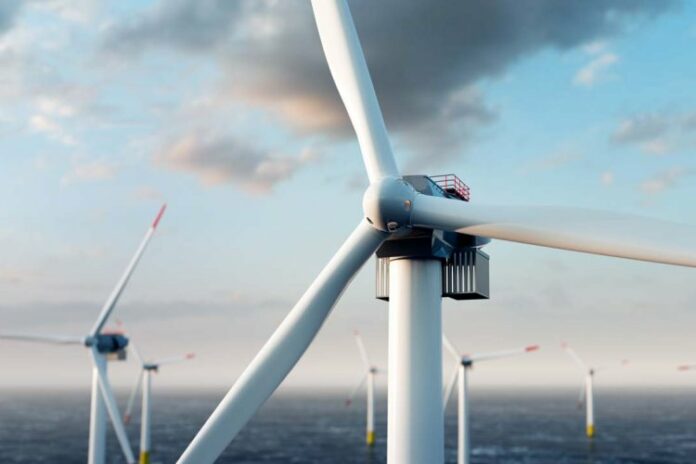
Turbine installation has been successfully completed at the 476 MW Baltic Eagle offshore wind farm, a joint venture between Iberdrola, a world leading clean energy company, and Abu Dhabi Future Energy Company – Masdar, the UAE’S clean energy powerhouse.

When fully operational, Baltic Eagle will supply around 475,000 households with renewable energy while reducing carbon dioxide emissions by about 800,000 tons per year. 

The 50 installed wind turbines, each with a unit capacity of 9.53 MW, were supplied by Vestas and installed by the shipping company Fred Olsen Windcarrier.

Baltic Eagle is the second of Iberdrola’s three major wind farm projects in Germany, along with Wikinger (350 MW, in operation) and Windanker (315 MW, in planning). Collectively, these offshore wind farms form Iberdrola’s Baltic Hub. 

Baltic Eagle is Masdar’s first project with Iberdrola, its first in Germany and resulted in the company’s largest ever euro-denominated financing. 

“The completion of turbine installation at the Baltic Eagle wind farm is an important milestone in what is a record year for Iberdrola’s offshore wind activity. With this project, Iberdrola is on track to have nearly 5,000 MW of offshore capacity globally by the end of 2026.” said Ignacio Galán, Iberdrola’s Executive Chairman.

“Once fully operational, Baltic Eagle, the second offshore wind farm in our Baltic Hub, will make a considerable contribution to Germany’s energy transition, providing homegrown clean energy to almost half a million homes, whilst reducing emissions. 

“This landmark milestone has been reached thanks to the strong partnership forged with Masdar, who share our vision of harnessing offshore wind energy to accelerate green energy security in Europe. It has also been made possible by the expertise and tireless com-mitment of the teams on site.”

HE Dr. Sultan Al Jaber, UAE Minister of Industry and Advanced Technology, Chairman of Masdar, and COP28 President, said:

“The installation of the fiftieth and final turbine of the Baltic Eagle offshore windfarm marks an exciting milestone. With the project progressing according to schedule, Baltic Eagle is set to power 475,000 German households with clean, renewable energy. This achievement also strengthens Masdar’s partnership with Iberdrola, driving significant expansion in our offshore wind portfolio and advancing the global energy transition. Our collaboration, underscored by the €15 billion agreement signed at COP28 in the UAE, reaffirms our joint commitment to helping to triple global renewable energy capacity by 2030.”

Masdar’s Chief Executive Officer, Mohamed Jameel Al Ramahi said:

 “Today’s announcement is an important landmark in the progress of Baltic Eagle, the project which launched our partnership with Iberdrola in July last year and brought together two companies with long histories of pioneering clean energy. Offshore wind is a vital technology for the energy transition and Masdar looks forward to a long and fruitful relationship with Iberdrola that will deliver more transformative utility-scale projects, supporting the journey to net-zero in Europe and beyond.”

By 2026, Iberdrola’s Baltic Hub will have a total capacity of more than 1.1 GW and trigger investments of around €3.7 billion. The Baltic Eagle offshore wind farm is an important building block in the integrated growth strategy that Iberdrola is pursuing in the core German market. In the field of sustainable energy solutions, the company strives to work with key players in the German economy to support them in achieving their climate goals with market-based solutions.

A key element of this is Iberdrola’s strategic partnership with Masdar. Masdar and Iberdrola signed a partnership to jointly invest in Baltic Eagle in July 2023. At COP28, the two compa-nies announced a further €15 billion agreement to explore the joint development of off-shore wind and green hydrogen projects in key markets such as Germany, the UK, and the US.

Masdar has a long-standing commitment to advancing offshore wind projects across the globe. It is aiming for a renewable energy portfolio capacity of 100GW by 2030, supporting the target set in the historic UAE Consensus to triple global renewables capacity by the end of this decade.

In 2025, France will start financing work on a new-generation aircraft carrier

0

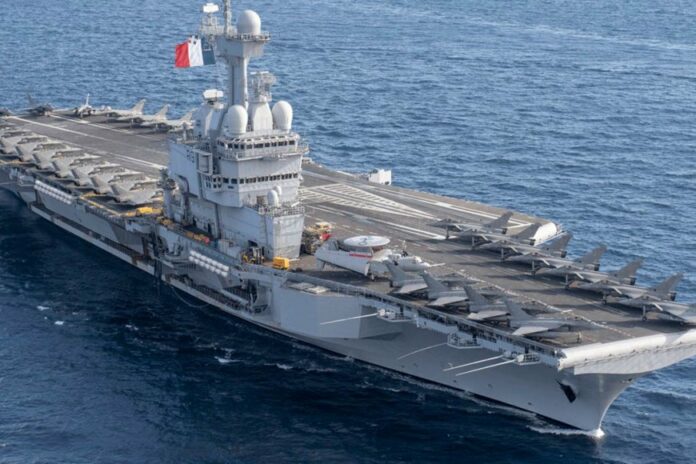
In 2025, France will start financing work on a new-generation aircraft carrier for the national navy under the PA NG program.

Opex360 reported on this.

French Defense Minister Sébastien Lecornu shared this during a French Parliament’s Defense Committee hearing.

The PA NG program has already begun to some extent, given that in April, Porte Avions (a joint venture between Naval Group and Chantiers de l’Atlantique) announced an order for “long lead time services.”

“The services relate to the ship’s nuclear propulsion, namely boiler rooms, containment chambers, and steam energy conversion,” the Directorate General of Armaments explained to the media.

The PA NG program is currently at the detailed preliminary design stage, which should be completed by the end of 2025.

Only after the launch and implementation are ready can development and production contracts be announced.

PA NG will be the largest warship ever built in Europe. It will have a displacement of 80,000 tons (5,000 more than originally envisioned) and a length of 310 meters.

This size requires launching a colossal project at the Toulon naval base. The project aims to obtain 10 to 15 hectares in the harbor to build the infrastructure for the future ship.

Two years ago, in October 2022, the French Naval Group presented a scale model of a new-generation nuclear aircraft carrier. According to the project, the carrier will have two nuclear reactors from TechnicAtome and be powered by three propeller shafts.

The new aircraft carrier is to accommodate 32 new-generation fighters, up to three E-2D long-range radar detection deck aircraft, and several drones.

The ship will be commissioned in 2038 and transferred to the fleet a year before that, after its launch in 2036.

Source: Militarnyi