4.4 C
New York
Home Blog Page 129

MacGregor launches a new free of charge digital Carbon Calculator

0

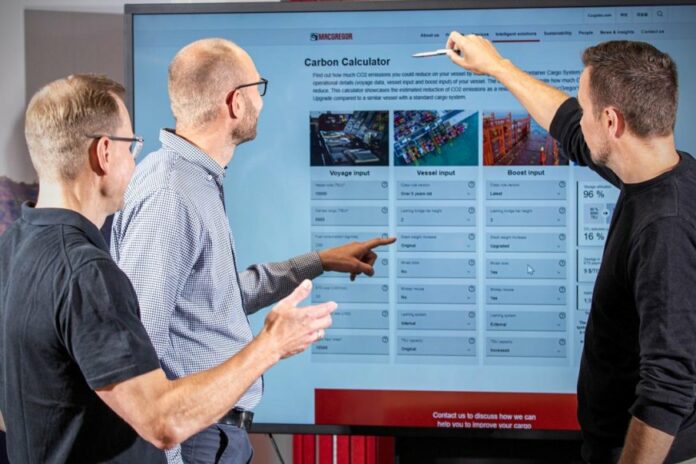
MacGregor, part of Cargotec, has launched a new free of charge digital Carbon Calculator to help container shipping companies estimate the carbon dioxide emissions they can eliminate by upgrading their onboard container cargo system with MacGregor Cargo Boost.

By maximising container-carrying capacity on board existing ships, the Cargo Boost solution has been shown to increase average cargo system utilisation from conventional rates of 80% to 90%, or even 100%. Across a 10-vessel fleet this can increase capacity by the equivalent of an additional ship. At no cost, the MacGregor Carbon Calculator offers owners a straightforward tool to estimate the emissions-reducing potential of Cargo Boost in advance.

The new calculator allows users to enter details of the vessel, the existing container cargo system and changes with Cargo Boost implemented, and operational details of a voyage. Offering full transparency, it estimates the impact of upgrading in terms of the percentage CO2 reduction per twenty-foot equivalent unit (TEU), savings in Emissions Trading Scheme (ETS) payments and fuel costs in US dollars per TEU, as well as additional revenue in USD.

“Maximising cargo intake will always be one of the key drivers of container ship efficiency,” says Magnus Sjöberg, Senior Vice President, Equipment Solutions Division, MacGregor. “Doing so not only increases vessel earnings but also cuts fuel consumption per cargo tonnage carried, thereby minimising greenhouse gas emissions and associated emissions taxes such as ETS payments.”

This is the principle behind MacGregor Cargo Boost, the impact of which shipping companies can now determine per ship and by fleet using our innovative Carbon Calculator tool.

Wärtsilä to optimise performance and reliability of seven Capital Gas LNG Carrier

0

Technology group Wärtsilä has signed a five-year Lifecycle Agreement covering seven 174,000 m3 LNG Carrier vessels operated by Capital Gas Ship Management (“Capital Gas”). 

By applying Wärtsilä’s Operational Support service and performance optimisation services, the agreement will deliver enhanced reliability, greater efficiency, minimised climate impact, and operational certainty for the vessels. The seven ships are powered by WinGD X-DF two-stroke, dual-fuel main engines. The order was booked by Wärtsilä in Q3 2024.   

In today’s legislative and economic environment, shipowners and operators are increasingly looking for support in maximising efficiency and use of their assets. For LNG Carriers in particular, which have limited opportunities for unscheduled stops and downtime, they are specifically looking to safeguard the reliability of their vessels.

The agreement with Wärtsilä will help Capital Gas to optimise the operations and maintenance of these seven vessels more effectively through 24/7 expert remote support and guidance for troubleshooting and maintenance using specialist diagnostic tools. It will allow Wärtsilä experts to directly monitor the vessels’ systems and employ advanced diagnostic tools to support the crew with troubleshooting activities and rapid fault resolution. Furthermore, the agreement will help Capital Gas minimise OPEX and lifecycle costs by enabling preventive interventions that can avoid the need for later expensive repairs and on-site visits.

“The agreement’s combination of technology, high-quality spare parts delivery, and the expert support from Wärtsilä’s Expertise Centres, as well as its global network of workshops and qualified engineers will deliver the operational reliability and certainty that we need to maximise the uptime of these vessels,” says Miltos Zissis, Managing Director, Capital Gas Ship Management Corp.

Wärtsilä and Capital Gas have established a close working relationship over the last few years. In June 2022, the two companies signed an agreement to partner in developing a Fleet Decarbonisation Programme, a tailored version of Wärtsilä’s Decarbonisation Service initiative. The programme is designed to develop an optimal means for achieving the greenhouse gas reduction targets set by Capital Gas.

“The future of the marine market is becoming more and more complex which is why we are pleased to continue to support Capital Gas with its sustainability goals. Our agreement has been tailored to meet the specific needs of Capital Gas; to optimise performance and reliability and ensure these vessels can deliver value throughout their lifecycle,” explains Rajeev Janardhan, Sales Manager, Two-Stroke Engine Lifecycle Solutions, Wärtsilä Marine.

DEME awarded inter-array cable and secondary steel contract for Oranjewind Offshore Wind Farm

0

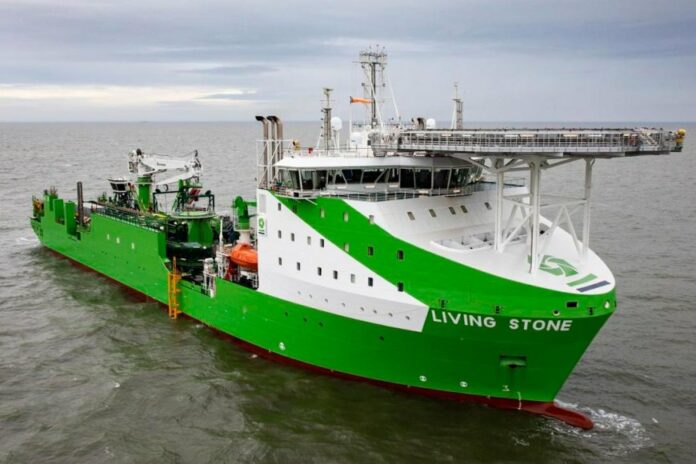
DEME has been awarded a substantial contract to carry out the transport and installation works for the inter-array cables and secondary steel for the OranjeWind offshore wind farm in the Netherlands. 

DEME will transport and install a total of 114 km of inter-array cables, which will connect all 53 foundations to the offshore substation in the Dutch North Sea. The extensive scope includes all the engineering, preparation and supporting activities, ensuring that DEME will deliver a complete solution to RWE and TotalEnergies.

Pre-sweeping will be conducted at the wind farm, situated 53 km from the Dutch coast, before cable installation in areas with significant sand waves to ensure the cable is buried at the required target depth. At the offshore substation and crossings of existing assets, the cables will be stabilised with rock. The secondary steel scope includes the transport and installation of boat landings, access platforms and internal platforms at the monopile foundations.

“This latest contract award highlights DEME’s ability to provide a comprehensive range of solutions to the offshore wind industry. With our diverse offshore fleet and specialised equipment, we are well positioned to successfully deliver this project, while working closely with the RWE and TotalEnergies joint venture. Additionally, the project will benefit from DEME’s extensive experience in cable installation, particularly given the dynamic seabed environment at the wind farm location. We are also excited to collaborate with RWE and TotalEnergies, two leaders at the forefront of advancing the energy transition through innovative solutions,” says Philip Scheers, General Manager Subsea Power Cables at DEME.

Scheduled to start in the second half of 2026, DEME will deploy offshore and cable installation vessels, a hopper dredger and fallpipe vessel, as well as additional supporting equipment.

This is the fourth cable project DEME has been awarded in recent months. DEME won two contracts from Prysmian for the engineering and installation works for TenneT’s IJmuiden Ver Alpha and Nederwiek 1 offshore grid systems in the Netherlands. As well as this, a consortium consisting of DEME and Hellenic Cables, won a major contract for the supply and installation of the highvoltage subsea cables for the Princess Elisabeth Island in the Belgian North Sea.

Damen delivers first of three Combi Freighters 3850 to Reederei M. Lauterjung

0

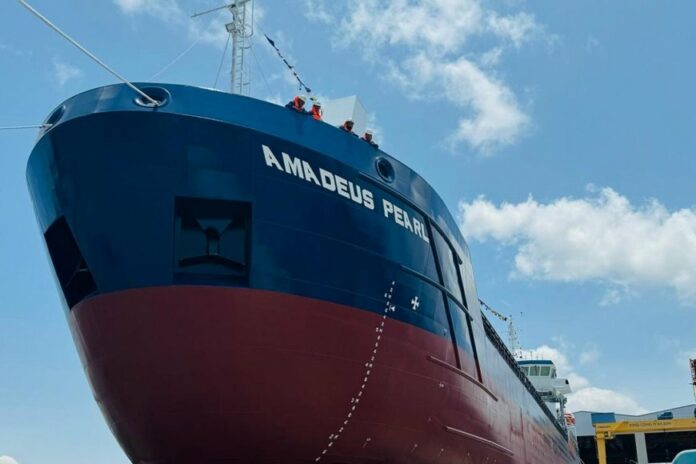
Damen has delivered the first of three Combi Freighters (CF) 3850 that it is building for Reederei M. Lauterjung at the Ba Son Shipyard in Vietnam. Following the delivery, the vessel set sail on its maiden voyage, transporting cargo from South East Asia en route to Europe. 

On arrival, the vessel, named MV Arion, will enter into a charter agreement with Amadeus Schiffahrts- und Speditions, a subsidiary of HGK Shipping, where it will operate under the name Amadeus Pearl. 

The CF 3850 is a next generation vessel. It combines Damen’s years of experience in the cargo transportation sector with cutting-edge innovation, leading to an optimised, efficient performance suited to the modern short sea operation. 

In addition to being the first Damen vessel delivered to Reederei M. Lauterjung, the CF 3850 is the first vessel Damen has delivered as part of its collaboration with the Ba Son Shipyard. Damen began the cooperation with the Vietnamese yard to create the additional capacity required to meet the growing demand for cargo vessels. 

Engineered in Drachten, the Netherlands, the vessels are constructed to the same, high quality design and specifications, using the same components and equipment wherever they are built. Damen is currently constructing a further seven CF vessels at the Vietnam yard, including two more for Reederei M. Lauterjung.

Following the delivery, Damen and Reederei M. Lauterjung signed a contract, on the 18th October, for a fourth CF 3850 vessel, to be built at Damen Yichang Shipyard in China. This latest order will offer a 30% increase in fuel efficiency.

Damen will construct the vessel with the capability to run on biofuels, as well as batteries for peak shaving and port operation. Additionally, it will be hybrid-ready, prepared for conversion to full electric in the future with a minimum of downtime. 

Speaking of the delivery, Reederei M. Lauterjung Managing Director Kay Lauterjung said,

“Damen has delivered the first vessel we have ordered punctually and to a high standard of quality. We are very pleased with the way the vessel is performing on her maiden voyage. We are also very happy with the cooperation, both with the Vietnamese yard and with Damen. The collaboration between our teams has been very positive and we look forward to continuing to develop our relationship in the future.”

Damen’s Commercial Director Cargo Vessels Remko Bouma said,

“We are very pleased to deliver the first vessel Damen has built for Reederei M. Lauterjung. The CF 3850 is also the first to be delivered as part of our cooperation with the Ba Son Shipyard in Vietnam. I’m looking forward to seeing the vessel in operation, demonstrating that the proven, standard CF 3850 design can be constructed to the same, high standards at yards around the world. 

“At the same time, we are delighted to have been entrusted by Reederei M. Lauterjung to build a further CF vessel. We appreciate our growing relationship with this respected, family business, which has proven to be of great mutual benefit. With the feedback and input they have provided to us, Reederei M. Lauterjung have helped us to significantly evolve the design of the vessel. This will be clearly visible in their latest order, which will operate with increased sustainability in full preparation for the future.”

Trafigura and Meroil S.A. create a joint venture company

0

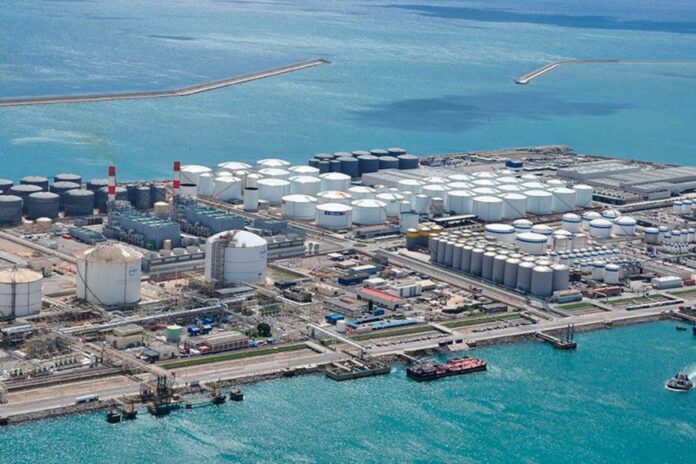
Trafigura has completed the acquisition of 50 percent of the shares in Meroil Tank S.L. (“Meroil Tank”) from the oil operator Meroil S.A., for an undisclosed sum. This follows receipt of the applicable regulatory approvals.

Meroil Tank will now operate as a 50:50 joint venture company with assets that include 356K m³ of refined oil products storage infrastructure within the port of Barcelona. The company will continue to serve its current as well as future customers to store refined oil products including gasoil, gasoline and jet fuel, as well as biofuels.

“We are delighted to join forces with Meroil, a prominent logistics provider and wholesale fuel operator in Barcelona,” said Jamie Torrance, Global Head of Distillates for Trafigura. “The asset is integral for the import of refined products and biofuels in the region; offering advanced logistics and flexibility to our current and future customer base. We look forward to working with the Meroil team on the further development of the terminal’s logistics, while staying attentive to the market’s evolution towards low-carbon fuels.”

“We appreciate the opportunity to work with a world-leading company in the oil trading sector; this collaboration will significantly enhance the development of our business in Spain,” said José Luís Porté, President of Meroil.


China’s largest offshore wind farm goes into operation

0

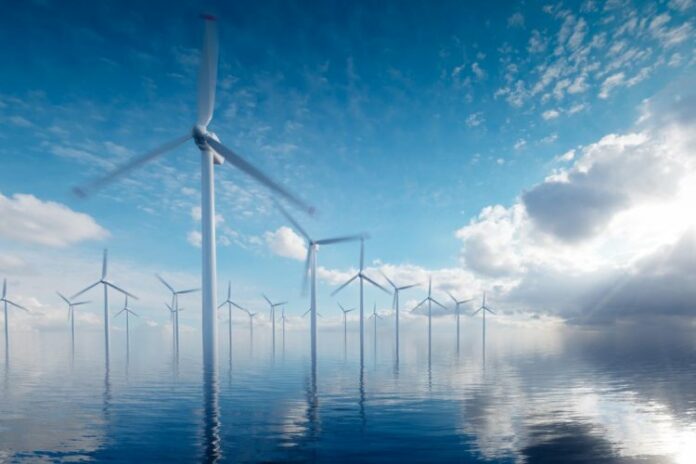
China’s largest affordable offshore wind farm went into operation and achieved grid-connected power generation with a full capacity, its operator State Power Investment Corporation Limited (SPIC) said Friday.

The 450-megawatt project consists of 53 wind turbine units installed in the waters 28 kilometers off the coast of Rushan City in east China’s Shandong Province, with a total installed capacity of 1.5 million kilowatts. 

“For a large-scale offshore wind farm with large-capacity generator sets, our teams have followed the principles of using sea areas economically, saving construction costs and minimizing cable losses, and tackled technical problems with the use of 66 kV submarine cables throughout the farm to collect the electricity generated by each wind turbine. We have also designed and manufactured a modular offshore booster station in an innovative way, saving 190 hectares of sea use and 20 percent of construction cost for the station,” said Chen Lizhi, president of Shandong offshore wind power company with SPIC.

The farm can generate 4.5 billion kilowatt-hours of green electricity a year, saving 1.4 million tons of standard coal, and cutting emissions of ash, carbon monoxide and other waste gases by about 4.25 million tons annually.

Wärtsilä and Qatar Shipyard Technology Solutions sign MoU

0

Technology group Wärtsilä and Qatar Shipyard Technology Solutions signed a Memorandum of Understanding (MoU) on 30 September 2024. 

The MoU paves the way to formalise the cooperation between the two companies and ensures that vessels calling at Qatar Shipyard Technology Solutions for repairs, maintenance, or retrofit projects involving 2-stroke / 4-stroke engines, and propulsion equipment receive the optimal level of service support.

At the MoU signing event, Mr. Jos J.A.A. Goris, Chief Executive Officer, Qatar Shipyard Technology Solutions highlighted that:

“This agreement with Wärtsilä further enhances the technical capability and enables our shipyard to provide a specialised suite of engine and propulsion solutions and services to serve the local and international clients safer, faster and better.”

The MoU encompasses maintenance and repair services, specialised maintenance services including upgrades and the latest eco-friendly reconditioning technology, decarbonisation and retrofit projects, like 2-stroke radical de-rating services, the dual-fuel conversions, cooperation on engineering services and training, using Wärtsilä’s Land and Sea Academy facilities.

Wärtsilä and Qatar Shipyard Technology Solutions will also collaborate on providing ship owners and operators with subject matter expertise on all available options for decarbonising their operations, including feasibility studies on sustainable fuel retrofit and conversion projects, and hybrid propulsion solutions.

In addition, the MoU with Wärtsilä will enable Qatar Shipyard Technology Solutions to enhance its service offerings to vessel owners of modern LNGC Carriers. These vessels, equipped with advanced dual-fuel 2-stroke main engines and 4-stroke auxiliary engines, will benefit from Wärtsilä’s renowned expertise in marine maintenance, covering both engine types, enabling Qatar Shipyard Technology Solutions to provide vital support and exceptional service to its clients.

“Shipping is in the process of a rapid transition to more efficient and sustainable operations. For this transition to be successful, collaboration and partnerships between maritime stakeholders is essential. By working together, the services we deliver to owners and operators are of premium quality. This agreement with Qatar Shipyard Technology Solutions is one more important step along this path,” comments Stefan Wiik, Vice President, Parts and Field Service, Wärtsilä Marine.

The longstanding relationship between Wärtsilä and Qatar Shipyard Technology Solutions provides solution for clients in both local and international markets. This is in terms of access to proven Wärtsilä products and systems and through the delivery of services and solutions at the award-winning Qatar Shipyard Technology Solutions’ world-class facilities located at the Erhama Bin Jaber Al Jalahma shipyard complex.

Wärtsila to supply cargo handling system for four new VLAC vessels

0

Wärtsilä Gas Solutions, part of technology group Wärtsilä, continues to strengthen its position as a market-leading supplier of advanced cargo handling systems. The latest contract is for four new 93,000 m3 capacity Very Large Ammonia Carrier (VLAC) vessels being built for Greek owner Naftomar.

The contract has been placed by the Korean shipyard, Hanwha Ocean Co (formerly Daewoo Shipbuilding and Marine Engineering), and was booked by Wärtsilä in Q3 2024.

Wärtsilä’s cargo handling systems are modern and proven technology and a result of decades of pioneering work in gas solutions. With safety and efficiency as priorities, they are also designed to contribute to reducing operating costs and GHG emissions as well as to an improved vessel EEDI.

“We are very happy to work with Wärtsilä again. Through our previous collaborations, we can be confident these systems are the best possible choice for these vessels,” says Mr. Lee, Team Leader of Basic Design Team, Hanwha Ocean Co.

“We have a long and positive relationship with Hanwha and have recently finalised the delivery of equipment for 12 vessels for them. We are also pleased to renew our relationship with Naftomar. These repeat orders give a clear indication of the confidence our customers have in the Wärtsilä cargo handling systems, and are the reason behind our unparalleled market position,” comments Patrick Ha, Sales Manager, Wärtsilä Gas Solutions.

The Wärtsilä equipment is scheduled for delivery to the yard commencing in Q1 2025.

“K” LINE to trial Inmarsat Maritime’s new bonded network service NexusWave

0

Kawasaki Kisen Kaisha, Ltd. (“K” LINE) and Inmarsat Maritime, a Viasat company, has announced that “K” LINE will conduct a trial of Inmarsat Maritime’s new bonded network service NexusWave on “K” LINE’s fleet.

NexusWave ​​seamlessly integrates multiple high-speed networks in real time to enable high-speed, always-on ship-to-shore communications, thereby enhancing digitalization of ship operation and environmental response, as well as the welfare of seafarers.

Launched in May this year, NexusWave is a unique bonded multi-dimensional network, designed to offer high-speed connectivity, unlimited data, global coverage, and ‘secure by design’ infrastructure for office-like and home-like experiences. The service integrates globally reliable Global Xpress (GX) Ka-band, low-Earth orbit (LEO) services, and as-available coastal LTE service – enhanced by an L-band layer for resiliency, to deliver fast, always-on connectivity. NexusWave also features enterprise grade firewall security.

Akihiro Fujimaru, Managing Executive Officer of “K” LINE, said:

“In recent years, there has been an increase in data transmission to enhance safety and quality. As such, we require connectivity services that are fast, reliable and global. Furthermore, high-speed internet connectivity will greatly contribute to reforms to onboard workstyles and automated ship navigation. Maintaining connections with family and friends is quite crucial for preserving the well-being of our crew. NexusWave promises to fulfil these needs well into the future, especially with the anticipated service launch of the high-capacity ViaSat-3 Ka-band satellites. This technology will also bolster our digitalisation initiatives moving forward”

Ben Palmer OBE, President of Inmarsat Maritime, commented:

“We are honoured that a leading global shipping operator has chosen to trial NexusWave on its fleet. Our partnership with “K” LINE is focused on delivering robust and reliable connectivity solutions that support its operational success and meet “K” LINE’s long-term strategic needs. Its early adoption of our high-capacity global service highlights the strategic foresight of “K” LINE’s commitment to leveraging advanced technology to sustain and enhance its competitive edge.”

US Army is testing cargo drones

0

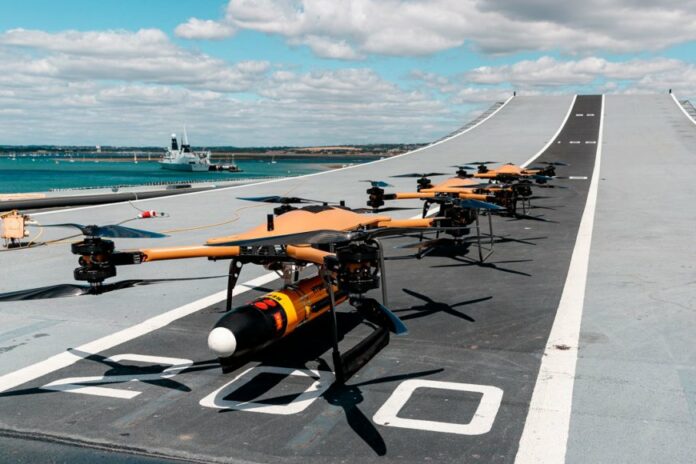
This is reported by the Breaking Defense media outlet.

“We’re going to have to figure out how to resupply dispersed formations,” Brigadier General Shane Upton, director of the Cross-Functional Logistics Group, said in a statement to Breaking Defense.

“The Pacific Ocean, by its very nature, necessitates this. There’s no other option, if you start deploying firepower for multinational task forces on a chain of remote islands, I’ll have to provide them with ammunition. And we may not be able to make traditional C-17 or C-130 deliveries there,” he added.

To evaluate given options, the service sent out a request for information from industrial companies on their heavy drone options. Out of the 24 companies that submitted proposals, the army selected two drones for testing next year.

The names of the drones selected for testing have not been disclosed. However, it is known that they can carry approximately 450 kg of cargo over a distance of 550-740 km.

The plan is to use these two different drones to work in tandem with maritime drones to explore the logistics opportunities in the Pacific and other parts of the world.

“We are looking at the possibility of sharing them. … None of the solutions we develop for the Army will be for the Pacific ocean alone, they have to work in Europe as well,” stated General Shane Upton.

As part of the test, the cargo drone transportation will also be compared to a project to install a remote control kit on CH-47 Chinook helicopters.

“The money they’re giving us, it’s a huge amount of money, but you have to be able to buy things and still scale them to your needs. We need smaller, more mobile boats. We need the drones that can move cargo. And you can’t spend $50, $60, or $70 million on one drone to do that,” the general added.

Source: Militarnyi