0.5 C
New York
Home Blog Page 131

Iberdrola and Masdar complete wind turbine installation at Baltic Eagle offshore wind farm

0

Turbine installation has been successfully completed at the 476 MW Baltic Eagle offshore wind farm, a joint venture between Iberdrola, a world leading clean energy company, and Abu Dhabi Future Energy Company – Masdar, the UAE’S clean energy powerhouse.

When fully operational, Baltic Eagle will supply around 475,000 households with renewable energy while reducing carbon dioxide emissions by about 800,000 tons per year. 

The 50 installed wind turbines, each with a unit capacity of 9.53 MW, were supplied by Vestas and installed by the shipping company Fred Olsen Windcarrier.

Baltic Eagle is the second of Iberdrola’s three major wind farm projects in Germany, along with Wikinger (350 MW, in operation) and Windanker (315 MW, in planning). Collectively, these offshore wind farms form Iberdrola’s Baltic Hub. 

Baltic Eagle is Masdar’s first project with Iberdrola, its first in Germany and resulted in the company’s largest ever euro-denominated financing. 

“The completion of turbine installation at the Baltic Eagle wind farm is an important milestone in what is a record year for Iberdrola’s offshore wind activity. With this project, Iberdrola is on track to have nearly 5,000 MW of offshore capacity globally by the end of 2026.” said Ignacio Galán, Iberdrola’s Executive Chairman.

“Once fully operational, Baltic Eagle, the second offshore wind farm in our Baltic Hub, will make a considerable contribution to Germany’s energy transition, providing homegrown clean energy to almost half a million homes, whilst reducing emissions. 

“This landmark milestone has been reached thanks to the strong partnership forged with Masdar, who share our vision of harnessing offshore wind energy to accelerate green energy security in Europe. It has also been made possible by the expertise and tireless com-mitment of the teams on site.”

HE Dr. Sultan Al Jaber, UAE Minister of Industry and Advanced Technology, Chairman of Masdar, and COP28 President, said:

“The installation of the fiftieth and final turbine of the Baltic Eagle offshore windfarm marks an exciting milestone. With the project progressing according to schedule, Baltic Eagle is set to power 475,000 German households with clean, renewable energy. This achievement also strengthens Masdar’s partnership with Iberdrola, driving significant expansion in our offshore wind portfolio and advancing the global energy transition. Our collaboration, underscored by the €15 billion agreement signed at COP28 in the UAE, reaffirms our joint commitment to helping to triple global renewable energy capacity by 2030.”

Masdar’s Chief Executive Officer, Mohamed Jameel Al Ramahi said:

 “Today’s announcement is an important landmark in the progress of Baltic Eagle, the project which launched our partnership with Iberdrola in July last year and brought together two companies with long histories of pioneering clean energy. Offshore wind is a vital technology for the energy transition and Masdar looks forward to a long and fruitful relationship with Iberdrola that will deliver more transformative utility-scale projects, supporting the journey to net-zero in Europe and beyond.”

By 2026, Iberdrola’s Baltic Hub will have a total capacity of more than 1.1 GW and trigger investments of around €3.7 billion. The Baltic Eagle offshore wind farm is an important building block in the integrated growth strategy that Iberdrola is pursuing in the core German market. In the field of sustainable energy solutions, the company strives to work with key players in the German economy to support them in achieving their climate goals with market-based solutions.

A key element of this is Iberdrola’s strategic partnership with Masdar. Masdar and Iberdrola signed a partnership to jointly invest in Baltic Eagle in July 2023. At COP28, the two compa-nies announced a further €15 billion agreement to explore the joint development of off-shore wind and green hydrogen projects in key markets such as Germany, the UK, and the US.

Masdar has a long-standing commitment to advancing offshore wind projects across the globe. It is aiming for a renewable energy portfolio capacity of 100GW by 2030, supporting the target set in the historic UAE Consensus to triple global renewables capacity by the end of this decade.
In 2025, France will start financing work on a new-generation aircraft carrier

0

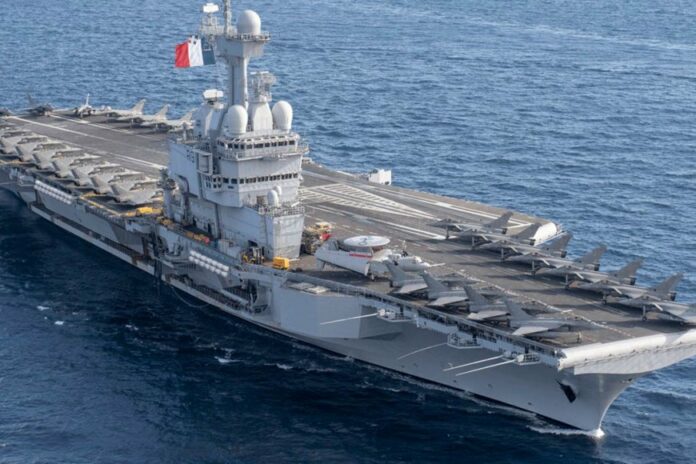
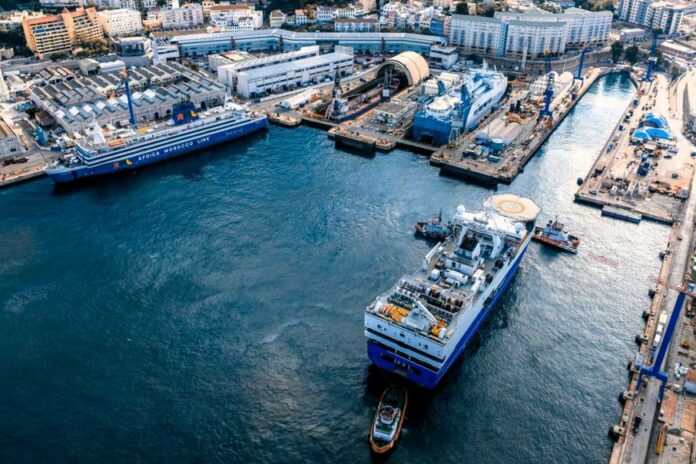
In 2025, France will start financing work on a new-generation aircraft carrier for the national navy under the PA NG program.

Opex360 reported on this.

French Defense Minister Sébastien Lecornu shared this during a French Parliament’s Defense Committee hearing.

The PA NG program has already begun to some extent, given that in April, Porte Avions (a joint venture between Naval Group and Chantiers de l’Atlantique) announced an order for “long lead time services.”

“The services relate to the ship’s nuclear propulsion, namely boiler rooms, containment chambers, and steam energy conversion,” the Directorate General of Armaments explained to the media.

The PA NG program is currently at the detailed preliminary design stage, which should be completed by the end of 2025.

Only after the launch and implementation are ready can development and production contracts be announced.

PA NG will be the largest warship ever built in Europe. It will have a displacement of 80,000 tons (5,000 more than originally envisioned) and a length of 310 meters.

This size requires launching a colossal project at the Toulon naval base. The project aims to obtain 10 to 15 hectares in the harbor to build the infrastructure for the future ship.

Two years ago, in October 2022, the French Naval Group presented a scale model of a new-generation nuclear aircraft carrier. According to the project, the carrier will have two nuclear reactors from TechnicAtome and be powered by three propeller shafts.

The new aircraft carrier is to accommodate 32 new-generation fighters, up to three E-2D long-range radar detection deck aircraft, and several drones.

The ship will be commissioned in 2038 and transferred to the fleet a year before that, after its launch in 2036.

Source: Militarnyi 

Armada and Gibdock sign MoU for hull air lubrication installations

0

Gibdock Shipyard and Armada Technologies Ltd. are pleased to announce the signing of a Memorandum of Understanding (MoU) to explore the integration of Armada’s proprietary air lubrication system, the Passive Air Lubrication System (PALS), into vessels serviced by Gibdock. This agreement marks a significant step towards enhancing energy efficiency and reducing harmful emissions in the maritime industry.

The collaboration aims to leverage the strengths of both organisations to provide more energy-efficient solutions for vessels. Armada Technologies, known for its innovative PALS System, which reduces fuel consumption and operating costs, will work closely with Gibdock to explore the business opportunities and technical feasibilities of installing the system on vessels being repaired by Gibdock.

According to the terms of the MoU, Gibdock and Armada Technologies will jointly explore potential installations of PALS on vessels, under license from Armada Technologies. This cooperation includes technical and commercial support from Armada to ensure successful implementation.

“Signing this MoU is a significant milestone in our mission to promote sustainable shipping practices,” said Simon Gillett, CEO of Balaena Ltd, Gibdock’s owners. “We are excited to collaborate with Armada Technologies to continue to bring innovative, energy-efficient solutions to our clients.”

Armada Technologies’ CEO, Alex Routledge, added:

“PALS has the potential to transform the way vessels operate, making them more environmentally friendly and cost-effective by using less fuel. We look forward to working with Gibdock to offer our second-generation system to more vessels.”

MAWANI, HPA and HPC forge new collaboration

0

Saudi Ports Authority (MAWANI), Hamburg Port Authority (HPA), and HPC Hamburg Port Consulting (HPC) have signed a pivotal Memorandum of Understanding (MOU) during the IAPH World Port Conference in Hamburg. 

This strategic cooperation will propel innovations in port operations, port development, and workforce capacity building. By harnessing their combined strengths, the parties are set to drive meaningful transformation in global port management.

Each partner brings distinct capabilities to the table: MAWANI’s expertise in large-scale port management, HPA’s focus on port strategy and digitalization, and HPC’s deep knowledge of global project and innovation management in the maritime sector. Together, they will unlock synergies that aim to build smarter, greener and more resilient ports.

Through the MOU, the Parties have expressed their intent to promote best practices by regularly exchanging knowledge, expertise and best practice solutions. The focus will be on developing approaches to port management, building capacity, and driving technological advancements within the maritime sector.

Lennart Kinau, HPA Board Member, emphasized the significance of digital integration in modern port operations:

“As global trade evolves, ports must adapt with intelligent, data-driven systems. This partnership strengthens our position at the forefront of digital transformation, allowing us both to enhance efficiency and governance in port management as well as to achieve new levels of sustainability along critical trade routes like the East-West corridor.”

With its ambition to strengthen its role as a leader in the logistics sector, MAWANI views this collaboration as key to building connected and sustainable infrastructure across key global trade routes. Saudi Arabia’s ports are vital to international trade, particularly across Asia and Europe, and the MOU allows the Kingdom to leverage cutting-edge technologies to enhance efficiency and connectivity.

With a history of executing complex port development projects worldwide, HPC plays a pivotal role in ensuring that this collaboration delivers tangible results. HPC’s extensive experience in digital transformation, coupled with its knowledge of sustainability practices, makes it a key driver of this alliance.

Nils Kemme, CEO of HPC, highlighted HPC’s role in shaping the future of ports:

“HPC has successfully delivered transformative port projects in over 130 countries for nearly half a century. This MOU builds on that legacy by focusing on the next generation of port solutions—automated systems, and smart digital platforms that redefine how ports operate and minimize environmental impact. We are excited to collaborate with MAWANI and HPA to push the boundaries of what modern and sustainable ports can achieve.”

Moving forward, the Parties will collaborate to develop actionable strategies. The focus will be on creating an agile, resilient port network that embraces technological innovations such as port AI, automated logistics, and advanced data-driven solutions. Regular knowledge exchanges and collaborative initiatives will ensure this partnership continuously adapts to the latest advancements in global maritime logistics.

WinGD introduces LPG ‘pre-fit’ option for operators aiming for ammonia trade

0

The ‘pre-fit’ solution will be of particular interest to vessels under construction for the anticipated global trade in ammonia, which will also be capable of transporting LPG.

Named X-DF-P for the propane that is LPG’s primary component, the solution will be released to enable first engine deliveries in 2027, when operators are likely to be considering in detail their anticipated balance between the LPG and ammonia trades. The engine, designed and optimised for ammonia fuel, will offer reliable and efficient running on LPG, with a minor modification preparing it to run on ammonia at a later date.

WinGD Vice President R&D Sebastian Hensel said:

“This development highlights our continuous innovation in support of smarter sustainable ship power solutions. Our X-DF-A ammonia engine is already enjoying wide uptake amongst bulk carriers and gas carriers; the X-DF-P offers a valuable intermediate step for gas carrier operators who are keen to participate in the emerging ammonia trade but are uncertain about the timing and impact on vessel engines and fuels.”

The ammonia trade worldwide is expected to grow significantly thanks to the chemical’s properties as an efficient energy carrier, which make it a viable medium in which to transport hydrogen from distant renewable energy production sites to areas of demand across the globe. The X-DF-P package will also enable operators using ammonia fuel to decide to use LPG in the future.

WinGD’s X-DF-A engine has already received multiple orders from operators planning to participate in the trade through the construction of multi-gas carriers, very large gas carriers or dedicated very large ammonia carriers. Its injection system can be adjusted for LPG with only minor modifications, while the material requirements of the two fuels mean that similar components can be used for each.

Engine sizes under development are those typically used by trade-relevant vessels, including 52- and 62-bore.

W&O signs multi-year supply framework with Damen Naval for F126 frigates

0

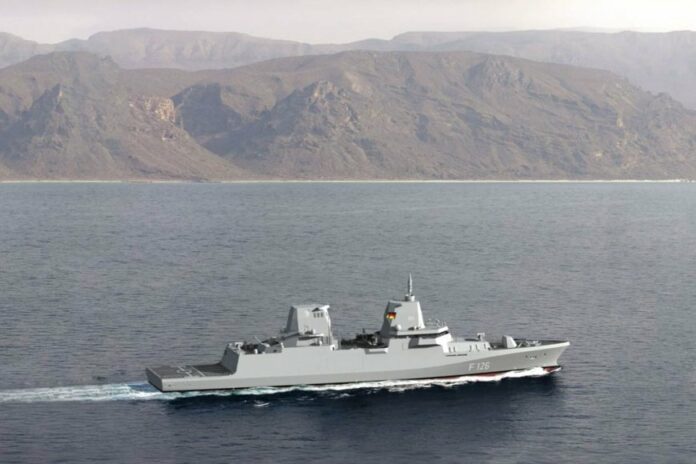
W&O Europe, supplier of valves, actuation, and instrumentation to the global maritime industry, has announced a framework agreement with Damen Naval to supply manual valves, filters, and other specialized instrumentation for the Frigate Class 126 construction program. The four F126 frigates are being built by Damen Naval for the German Navy at shipyards in Hamburg, Kiel and Wolgast.

W&O Europe joins an international group of companies from across Europe that are working cooperatively on the project. W&O Europe’s project team, based in the Netherlands, will work closely with Damen Naval’s design and engineering teams to provide technical expertise and advice on product selection for the new Frigate program. 

Providing advice on product selection to ensure the supply of the correct products for the project, ensures essential operational safety and mitigates against the risk of downtime. W&O Europe will partner with Damen Naval to assure that all the products supplied by W&O and installed on the vessels will be fully compliant with the required standards and, if necessary, be shock and vibration tested. 

Commenting on the agreement, Kristof Adam, Managing Director, W&O Europe said:

 “The W&O project team in Europe has many years of experience in Navy projects executed in different European countries. Damen Naval and their customers have very high standards of quality for the products they require, and we are proud that they have placed their trust in W&O as a reliable partner for the F126 Frigate project. We look forward to working with Damen Naval and their contractor partners to provide technical support and to ensure smooth and safe delivery of the correct products fit for purpose and installation.”

The F126 Frigate Project is a multi-year construction project for European multi-purpose combat ships. The W&O team will apply their technical expertise and experience working on military specified projects to ensure the efficient and reliable supply of valves, filters and instrumentation to the project.
 

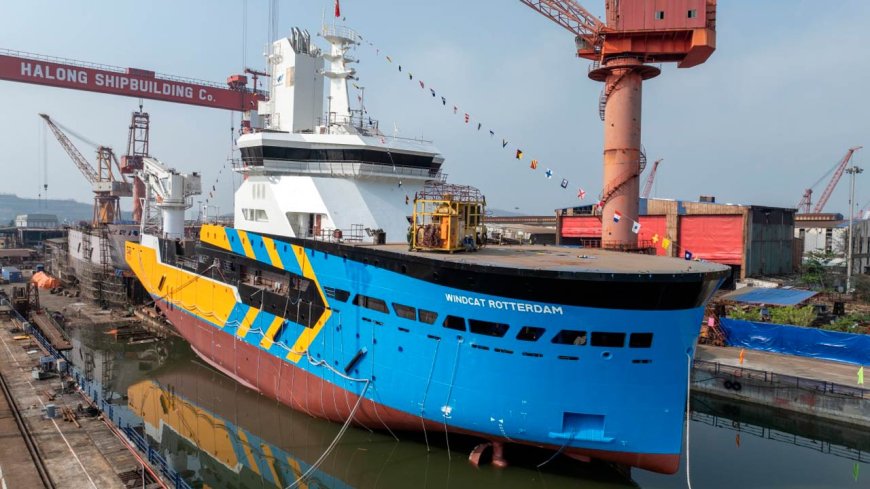
Windcat’s first CSOV launched by Damen

0

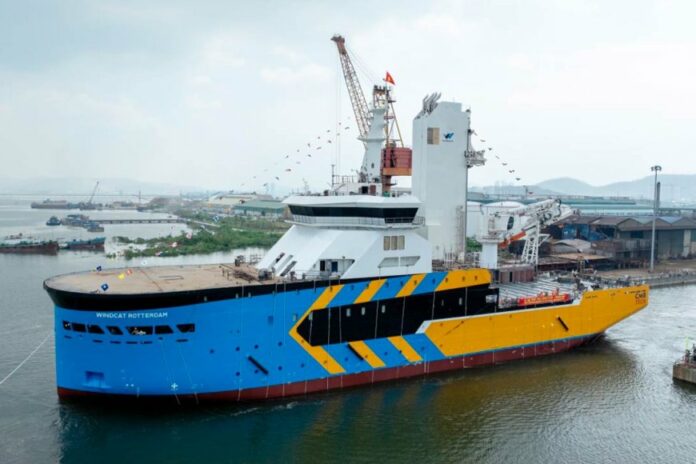
The launch marks the inauguration of Windcat’s ‘Elevation Series’ of future-proof offshore wind farm maintenance and support vessels, which have been designed in close collaboration with Windcat and CMB.TECH.

The launch ceremony took place on 12 October at Ha Long Shipyard in Vietnam, where Damen is constructing all six CSOVs. With this first CSOV in the water, Damen will continue with its outfitting and commissioning operations to prepare the vessel for delivery in Q2 2025.

Damen, Windcat and CMB.TECH first announced their intention to develop and build a series of offshore wind farm support vessels together back in 2022. After an initial contract for two ships, Windcat increased the order to six vessels, with the last contract being signed mid-2024.

Talking shortly after the launch of this widely anticipated first example of ‘Elevation Series’ CSOV, Windcat Managing Director Willem van der Wel said:

“We have been working with Damen towards this day for some years now and to see the first CSOV glide into the water was truly a special moment. We are excited for this first vessel to hit the water today and look forward to introducing this game-changing vessel to the world next year.”

Compared to earlier designs of offshore wind farm support vessel, this CSOV represents advances in efficiency, performance and comfort. The 87-metre long vessel is designed around best in class offshore performance, with various new technologies on board to achieve this. The vessel will accommodate up to 120 people on board, remaining at its offshore location to provide in-field technical and maintenance support for up to 30 days at a time. Particular attention has been given to provide offshore personnel with the most comfortable conditions to live and work during their time on board.

“We are especially proud of the efficiency gains that this vessel is expected to deliver,” added Damen Sales Manager Benelux Joost van der Weiden. “The hybrid-electric propulsion system coupled with an efficient power distribution system means that there will be no need to run a backup diesel generator and the vessel will never use more power than necessary. And we have optimized the thruster configuration, enhancing the dynamic positioning during transfer operations. All in all, we expect innovations like these to add up to substantial reductions in fuel consumption and, therefore, emissions.”

Reducing CO2 emissions further, the Damen / Windcat / CMB.TECH cooperation has taken a proactive stance on the subject of future fuels. The consequence of this is that, thanks to CMB.TECH’s dual fuel hydrogen technology, the entire series of six vessels will be able to use hydrogen as a fuel, increasing this hydrogen use as the energy market progresses. 

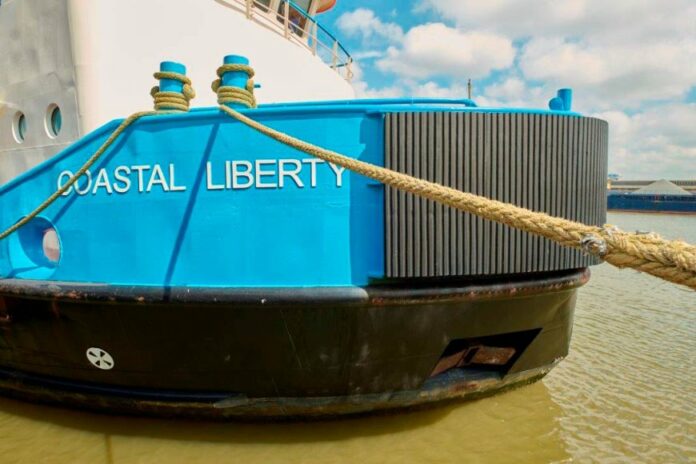
OSV Coastal Liberty operates on green hydrogen in the German Wadden Sea

0

With the clear aim of minimising the environmental impact of its activities and driving forward the energy transition, the shipping company has decided to switch to green hydrogen as its main source of energy.

End of February 2024 the refitted OSV received class certification by DNV for its newly installed hydrogen system on board. eCap Marine, contracted by Offshore Service Gesellschaft mbH, engineered the system enabling the vessel to operate without producing any emissions using hydrogen and batteries. 

Over two years, eCap Marine developed a containerized system featuring two Ballard FCwave (2x200kW) fuel cells, a maritime battery system from Lehmann Marine, a fire extinguishing system, tank units, a custom power management system, and all necessary cooling and safety equipment. 

Lars Ravens, Managing Director of eCap Marine, states that this kind of system is a unique installation on board a seagoing ship and scalable up to megawatt-sized designs for larger commercial ships and longer voyages as well as smaller inland vessels.

The green hydrogen for the installed fuel cells will be produced locally and sustainably, using offshore wind power on a electrolyser hydrogen plant a few kilometers from the vessel’s berth that was installed simultaneously to the fuel cell project. The electrolyser is designed to expand in case of a higher demands. 

eCap Marine designed the three swappable high pressure tank systems with the focus on safety, and in alignment with the rules and regulations resulting to the transport of the units between the vessel and the electrolyser by truck. eCap’s Head of Projects Frederike Engels confirms that switching, disconnecting and reconnecting the hydrogen tanks is very easy and safe, taking just a few minutes due to the toolless design and standard connections for crane and truck.

For the vessel’s crew the new system means reduced vibrations on board and a more direct propulsion allowing immediate response to the propeller shafts. Jochen Kaufholt, CEO of Offshore Service Gesellschaft, describes the Coastal Liberty a first of its kind and a flagship for the maritime energy transition in Europe. 

TotalEnergies expands global LNG bunkering footprint

0

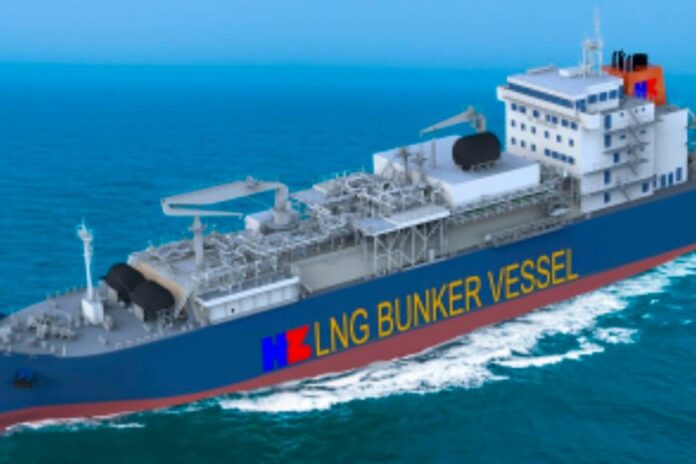
This new vessel will expand the Company’s global presence in bunkering hubs. In particular, this additional vessel might be deployed in Oman, where the Company is developing the Marsa LNG project with the objective to provide LNG to the shipping sector in the Gulf.

The vessel, owned by Ibaizabal, will supply LNG to a wide range of vessels (containerships, tankers, large cruise ships, ferries) at TotalEnergies’ LNG bunkering hubs and meet the highest technical and environmental standards.

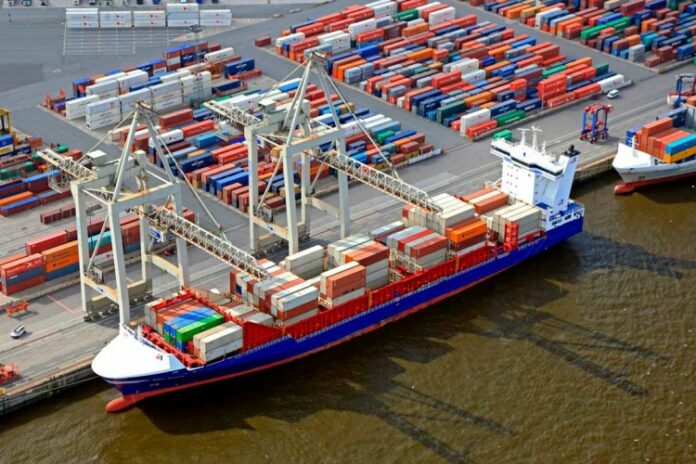
Used as a marine fuel, LNG is an immediately available transition fuel that reduces greenhouse gas (GHG) emissions in the shipping sector by around 20%. It also significantly improves air quality by reducing nitrogen oxides (NOx) emissions by up to 85%, and it almost completely eliminates (by 99%) sulfur oxides (SOx) and fine particules. These benefits are particularly impactful when ships are at berth, improving the quality of life for port cities and communities in coastal areas.

This new vessel, currently being constructed by Hudong–Zhonghua Shipbuilding in China, will be delivered by the end of 2026 and will join TotalEnergies’ current fleet of three deployed LNG bunker vessels: the Gas Agility, which has been positioned in the Port of Rotterdam, the Gas Vitality, operated in the Port of Marseille and the Brassavola located in the Port of Singapore.

“We are very proud of this agreement with Ibaizabal, which reinforces our position as a main player in LNG bunkering” said Louise Tricoire, TotalEnergies Senior Vice President, Aviation and Marine Fuels. “With new LNG-fuelled vessels coming on stream at a rapid pace, we are committed to playing our part in responding to the sector’s increasing demand for this fuel which can help global shipping meet its decarbonization ambitions.”

Mr Jorge Zickermann, CEO Ibaizabal Group, said, “Ibaizabal is honoured to be chosen to carry out this Project as it falls within our strategy of decarbonizing the maritime industry, together with a leading company in the LNG field, while enhancing the already long-term relationship in shipping with TotalEnergies.” 

First-of-a-kind tidal dragon farm in the Faroe Islands moves forward

0

In the North Atlantic, leading ocean energy developer Minesto is moving forward with the pioneering build-out of a tidal energy site. 

Following the successful utility-scale installation of the Dragon 12 in Vestmanna and corresponding interest by various parties in the technology, Minesto assigns strategic advisor Ernst & Young (EY) to the unique Dragon Farm Project, with focus on investments.

In the Faroe Islands, Minesto is part of one of the most ambitious energy transition schemes worldwide, where tidal energy can play a significant role in achieving 100% renewable energy by 2030. After months of running a pilot program with two Minesto Dragon kites (Dragon 12 and Dragon 4) connected to the power grid, the technology has reached another milestone. As an initial step towards the proposed 200 MW build-out, the Hestfjord Dragon Farm moves forward in a first 10 MW-phase.

In order to support the project and handle interest from various parties in the technology, Minesto has engaged internationally recognized advisory firm EY to provide hands-on support related to project financing and industrial partnerships. The collaboration has a global scope, with an initial focus on the first tidal energy build-out in the Faroe Islands – The Hestfjord Dragon Farm (10+20 MW).

“Scaling-up of the technology by initiating the Hestfjord Dragon Farm build-out is a major milestone for Minesto in providing commercial-scale tidal energy. It’s of great value to have support of the EY team to help in discussions with various interested parties when it comes to financial and/or commercial partnerships,”, said Dr Martin Edlund, CEO of Minesto.

The site development activities in Hestfjord are ongoing and include resource modelling and assessment, detailed site optimisation, grid connection, environmental assessments, and monitoring. In addition, recent upgrade of local onshore electric distribution grid will be able to accommodate the needs of the Hestfjord tidal farm.

In the next phase, the permit and license applications will be completed, and an investment consortium will be formed to undertake the final site development and installation work.