6.4 C
New York
Home Blog Page 128

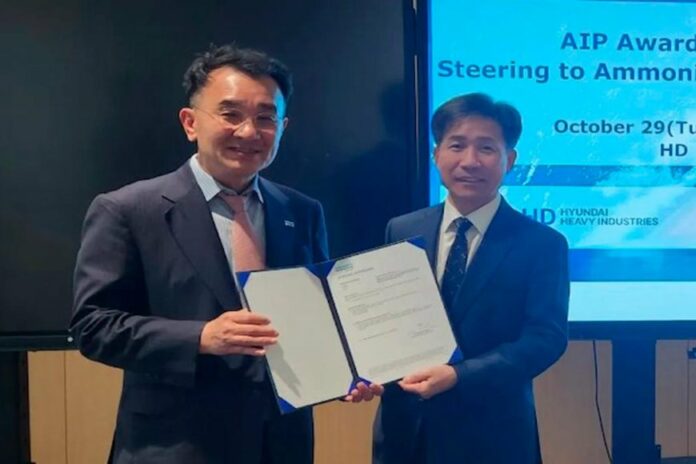
DNV grants AiP to HD Hyundai Heavy Industries for ammonia DF large container vessel

0

The project focused on developing cutting-edge designs to enhance safety, including an optimized ammonia tank design, advanced fire safety systems, enhanced ammonia release mitigation system and boil-off gas (BOG) handling systems. These innovations could play an important role in building confidence in the safe and efficient use of ammonia as a marine fuel.

Ammonia is toxic at low concentrations, corrosive, and emissions from combusted ammonia may contain a high amount of nitrous oxide (N2O), a powerful greenhouse gas. And even small leaks could potentially create a large toxic zone, endangering personnel. On container ships, where the upper deck is a safe working zone, an ammonia leak could pose a serious risk. This means, establishing safety design criteria to manage these risks is crucial for the wider commercialization of ammonia-fueled ships.

To this end, fuel pipe leakage scenarios were defined and quantitatively analyzed through gas dispersion analyses. Consequently, it was confirmed that, with conventional systems, foreseeable small leakages occurring at connections within the ammonia piping system can form toxic areas with dangerous ammonia concentrations throughout the entire weather deck, highlighting the need for effective mitigation measures. The result showed that hazardous areas were significantly reduced by the enhanced ammonia release mitigation system, enabling not only safer enclosed spaces but also safer working areas across the entire weather deck of the vessel.

Seung-ho Jeon, SEVP, CTO of HD HHI commented,

“The AiP reflects HD HHI’s dedication to developing sustainable, innovative solutions like ammonia-fuelled vessels, which will play a key role in reducing emissions and shaping the future of shipping.”

Vidar Dolonen, DNV Regional Manager Korea and Japan, stated:

“This AiP highlights the importance of safety in moving the maritime industry along the path to decarbonization. There are many aspects to building out zero carbon fuels in shipping, and it’s essential that we have them all in place for ammonia to truly establish itself in the marine fuel market. But with new technological solutions, alongside rigorous safety procedures, ammonia reach its full potential as one of the most promising green fuels. DNV is proud to support these advancements from HD HHI as we continue on this journey to an even more sustainable maritime industry.”
Ørsted and Van Oord install innovative and scalable oyster structures in the North Sea

0

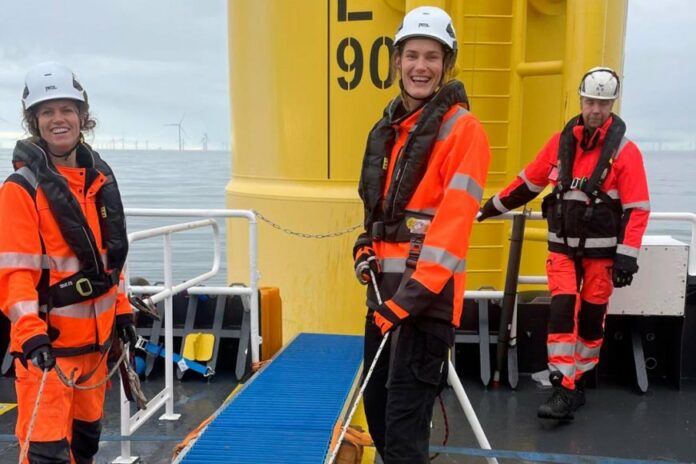
Ørsted and Van Oord’s initiative Ocean Health, have installed innovative Droppable Oyster Structures in the Borssele 1&2 offshore wind farm. 

Droppable Oyster Structures are easily portable reef structures that have adult oysters attached to them. These oysters reproduce by producing larvae, which will then colonise and ultimately form oyster reefs in the wind farm. The new installation method is an easy and affordable way to introduce oysters on a large scale, thus contributing to biodiversity in offshore wind farms. Installation of these oyster structures marks an important milestone in Ørsted’s and Van Oord’s mission to restore the oyster population in the North Sea.  

Ørsted and Van Oord have been working for quite some time to reintroduce the European flat oyster in the North Sea. Until now, oysters were deposited primarily on large, heavy oyster structures that had to be installed using a crane, a very expensive process. The partners are now testing a new and innovative concept: Droppable Oyster Structures (DOS), easily portable oyster structures that can be installed by manually placing them on the seabed from the deck of a small vessel. That means that transport and installation can be incorporated into regular maintenance activities carried out in the wind farm. The method promises to be a vast improvement in terms of ease of installation, cost-effectiveness and scalability. An underwater camera will be used to monitor the structures and oysters over time with a view to assessing the method’s effectiveness and its impact on the local ecosystem. 

Some 150 years ago, roughly 20% of the Dutch North Sea seabed was covered with large-scale oyster reefs. Today, wild oyster reefs have virtually disappeared from the North Sea, along with the valuable ecosystem services that they once provided. Those services include filtration, resulting in improved water quality, and the provision of habitats, food and shelter to numerous fish and shellfish species, which promotes biodiversity. 

Public authorities and conservation organisations have identified the European flat oyster as a key species in efforts to restore and improve the North Sea ecosystem. Offshore wind farms provide hard substrate and undisturbed seabed, making them highly suitable locations for restoring the flat oyster population in the North Sea. The adult oysters being introduced on the structures function as a source of larvae, which will then colonise the rock present at the site and will eventually grow into oyster reefs. This is how renewable energy and nature conservation can go hand in hand.  

Karin Bilo, Senior Marine Ecologist at Ørsted: ‘The oysters were placed on the scour protection around the turbines during maintenance at the wind farm today. We’ll be using an underwater camera to check precisely where the structures have landed and how the oysters are faring. In the years ahead, we expect we’ll see the oysters slowly growing into reefs in the wind farm. This new method moves us significantly closer to meeting our goal of restoring the oyster reefs. Working with Van Oord made it possible to take an innovative concept from the drawing board to the North Sea. And that’s precisely because all of the parties involved are determined to speed up the process of restoring nature in the North Sea.’

Nienke Oostenbrink, Product Owner Ocean Health at Van Oord: ‘We are pleased to join forces with Ørsted and proud of this important step in our shared ambition to bring the European flat oyster back to the North Sea. With this innovative pilot in offshore wind farm Borssele 1&2, we are gathering valuable insights into the effectiveness of this recovery method and its scaling-up potential. Offshore wind farms offer opportunities for creation and restoration of marine ecosystems, which is why we are developing and testing efficient and effective solutions for biodiversity restoration in these areas, with which we can make an impact on a large scale in European seas.’

KOTUG and Maritalia S.A. secure major marine services contract for bp’s project

0

After a thorough and competitive tender process, KOTUG International B.V. (‘KOTUG’) and its local Senegalese partner Maritalia S.A. have been selected by bp and its project partners, Kosmos Energy, and National Oil Companies Société des Pétroles du Sénégal (PETROSEN) and Société Mauritanienne Des Hydrocarbures (SMH), to provide the marine services to the Greater Tortue Ahmeyim (GTA) project.

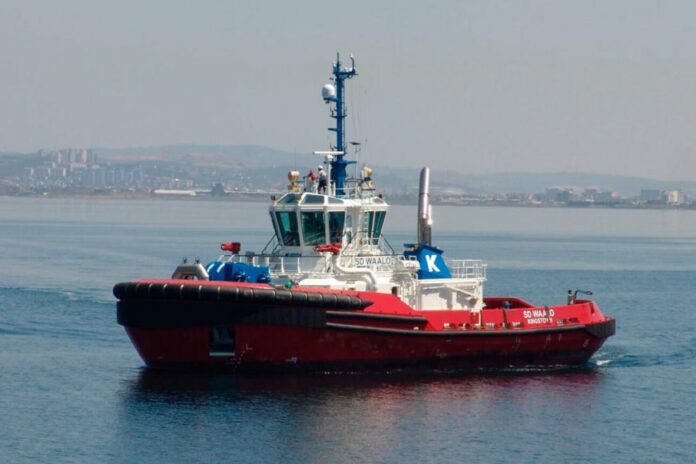
KOTUG and its local partner, Maritalia S.A. (KOTUG Senegal), have secured a long-term fixed-term contract, with extension options, to provide marine services to one of Africa’s deepest subsea developments, located on the maritime border between Mauritania and Senegal. KOTUG will deploy four RAstar 32m azimuthing stern drive (ASD), IMO Tier-III compliant tugboats to support the offshore Hub Terminal, FLNG and FPSO operations, while Maritalia S.A. will fulfill local content requirements.

KOTUG Senegal is fully committed to developing and optimising local content, contributing to the employment and training of Mauritanian and Senegalese nationals. This initiative includes collaboration with local suppliers and the utilisation of local goods and services. A significant investment will be made in a technical knowledge transfer plan, where selected local candidates will be recruited, educated and trained intensively. These candidates will be trained to progress through the ranks until all positions on board the vessels are held by local crew, including all officers.

Ard-Jan Kooren, President and CEO of KOTUG:

 “We are honoured to be selected for this prestigious project and to partner with Maritalia S.A. to provide essential marine services for the Greater Tortue Ahmeyim gas project. This supports our extensive track record of operating for (F)LNG projects and we are proud to add another (F)LNG project to our existing portfolio. This collaboration not only underscores our commitment to delivering world-class marine solutions but also highlights our dedication to fostering local talent and contributing to the sustainable development of the Mauritanian and Senegalese economies. By investing in local knowledge and skills, we aim to create long-lasting value and ensure that our operations benefit the communities we serve.”

Alioune dit Ali NDIAYE, President of the Board of Maritalia S.A.:

“We are thrilled to collaborate with KOTUG International on the Greater Tortue Ahmeyim project. This partnership underscores our commitment to the development and empowerment of local talent in Senegal and Mauritania. By focusing on local content, we aim to create significant opportunities for local employment and capacity building, ensuring that the benefits of this project are shared with our communities. Together, we will foster a sustainable and prosperous future for our region.”

The Greater Tortue Ahmeyim gas project will produce gas from an ultra-deepwater subsea system and FPSO, which will process the gas. The gas will be exported through a ~35km pipeline to an FLNG facility, where it will be transferred to LNG carriers.

European Space Agency launches the DECARDIS project to optimize ship-port operations

0

The European Space Agency (ESA) has initiated a new flagship project, Decarbonization through the Digitalization in Shipping (DECARDIS), together with optimization platform company Awake.AI, technology leader ABB and shipping company Wallenius Marine. 

The consortium, funded by ESA and led by Awake.AI, will collaborate on a port call optimization solution, which focuses on helping ships cut greenhouse gas emissions by overcoming inefficiencies in the ship-port interaction.

Despite huge strides in smart ship technology and high levels of port automation, relationships between port and ship systems lack transparency, with data on voyage and berth management often confined to closed platforms. Ships told to proceed without delay frequently face a wait on arrival in port, having used more fuel and generated additional emissions.

DECARDIS project seeks to develop an integrated and interoperable solution to join up decisions on ship routing and speed with just-in-time arrival at the berth. It foresees the world’s first solution to optimize an entire voyage and port calls, rather than just a portion of it. Adopted at a global level, DECARDIS partners estimate that such a solution could help achieve significant emission reductions.

This is highly significant for an industry pressed by International Maritime Organization targets to reach net-zero greenhouse gas emissions by or around 2050 and EU 2030 Climate Target Plan proposal to reduce emissions by at least 55 percent by 2030, compared to 1990 levels.

The DECARDIS project aims to integrate the voyage optimization solution of the ABB-Wallenius Marine collaboration called OVERSEA with port optimization solutions offered by Awake.AI in an interoperable solution. Users will access this interoperable voyage and port call optimization solution through a web-based interface that is compatible with existing onboard solutions.

OVERSEA users will draw on both an advanced digital solution and support from center experts to reach decisions on optimizing vessel operational performance, cut bunker cost and reduce emissions.

“With the OVERSEA collaboration, we are establishing a smart fleet support service which enhances efficiency”, said Jesper Lögdström, Head of Performance Management Center, Wallenius Marine. “We aim to give crews and shore personnel a common understanding of data and support them with insights and actionable recommendations to improve vessel operational performance. Transparency and close collaboration with clients will be crucial to succeed.”

Last year Awake.AI completed its first ESA demonstration ‘Smart Port Marketplace’ project, enabling the automation of buying and selling of port services and products.

“Together with ABB and Wallenius Marine, we have a joint vision to the industry: what if no ship ever had to rush to wait. Every ship would always sail at their optimal speed and take the optimal route,” said Karno Tenovuo, CEO, Awake.AI. “By combining the technologies Awake.AI has for port call optimization and ABB and Wallenius Marine have for the voyage optimization, we can make this vision a reality.”

The project is part of ESA’s call on maritime decarbonization, which is aimed at supporting the development of sustainable space-based services and applications that address challenges related to the decarbonization of the maritime industry. Additionally, the call seeks to assist the maritime sector in adapting to and complying with new European and international regulatory frameworks.

“The maritime sector is undergoing a profound transformation to meet decarbonization targets. DECARDIS is a prime example of how space data combined with digitalization can be leveraged to transform the sector with immediate effect, and without compromising performance,” said Nil Angli, Maritime Lead at ESA Space Solutions.

Stena Line marks significant milestones in build of NewMax ships

0

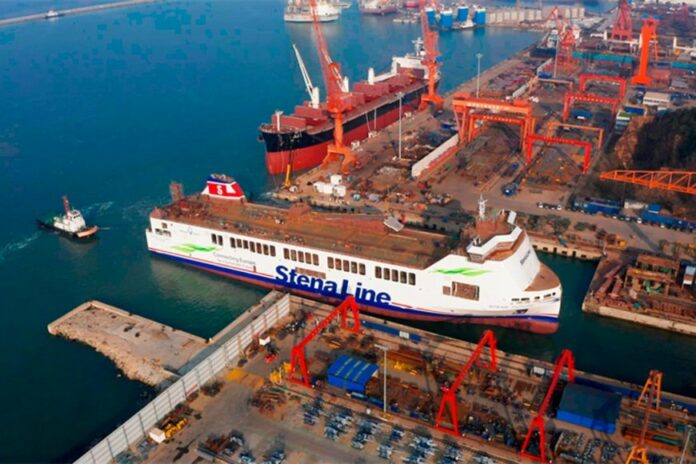
Stena Line has reached another milestone in the build of its NewMax ships – launching Stena Futura into the water and laying the keel of the second ship, to be named Stena Connecta.  

Last week, Stena held a joint ‘launch’ and ‘keel-laying’ ceremony at the China Merchants Jinling Shipyard, Weihai, celebrating the release of Stena Futura into the water for the first time, and the laying of the keel for Stena Connecta, which marks the beginning of the build.

Once operational, Stena Connecta and Stena Futura will enhance freight capacity by 40% on the Belfast-Heysham route in response to an increase in customer demand for services between Northern Ireland and Great Britain. 

The two NewMax hybrid vessels will play a key role in Stena Line’s journey to sustainable fuel as they will both be able to operate on methanol fuel. They will also be enhanced with built in technologies that will be able to utilise both battery propulsion and shore power, when available. Stena Line is working closely with methanol suppliers, ensuring future volumes of e-methanol and fulfilling their strategic ambition of shifting to renewable fuels and cutting 30% of its CO2 emissions by 2030.

​Niclas Mårtensson, CEO Stena Line said,  

“It’s exciting to witness the progress of our new ships, to future-proof our fleet and set new industry standards to be part of the solution to climate change. These new vessels are the first RoRo ships equipped with a multi hybrid solution, enabling them to operate on battery, biofuel, and methanol. This not only complies with upcoming regulations but also reduces our CO2 emissions, aiding our customers in achieving their scope 3 targets.”

“Stena Futura and Stena Connecta will provide a crucial link across the Irish Sea, meeting the continued growth and demand from freight customers on this route. We’re confident that the increased capacity will be well-received by the market when we welcome Stena Futura to the Irish Sea in Autumn 2025.”

Japanese consortium produces design concept for eco-friendly VLCC

0

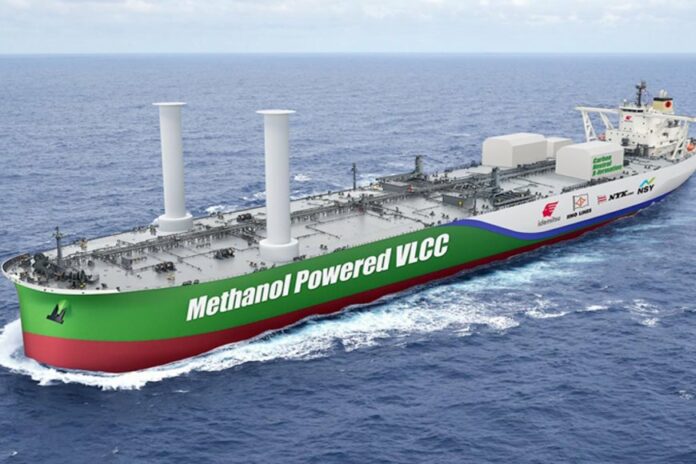
Idemitsu Tanker, IINO Kaiun Kaisha, NYK, and Nihon Shipyard have announced that the consortium the companies established on 26 January 2024 for the joint research and development of an eco-friendly very large crude oil carrier (VLCC) has produced a design concept for Japan’s first Malacca Max type VLCC to use methanol as alternative fuel.

To provide power while sailing, the vessel will be equipped with a shaft generator and the latest dual-fuel main engine that can use methanol and heavy oil as fuel. A wind propulsion system will be optional.

As a result, the Vessel can achieve a CO2 reduction of more than 40% compared to the reference line against the Energy Efficiency Design Index (EEDI) regulation, clearing Phase 3 (reduction of more than 30% compared to the reference line), which will apply from 2025.

Methanol is expected to contribute to the International Maritime Organization’s (IMO) greenhouse gas (GHG) emission reduction strategy by reducing CO2 emissions by approximately 15% compared to the use of conventional fuel oil. In addition, the use of green methanol, such as bio-methanol produced from biomass and synthetic methanol (e-methanol) produced using hydrogen from renewable energy sources and captured CO2, makes it possible to reduce CO2 emissions to net zero.

The four companies, which play a leading role in Japan-based energy transportation, will conduct further studies based on the design concept in order to achieve the international shipping goal of becoming carbon neutrality by 2050. Furthermore, the companies will aim for strategically phased shipbuilding orders for this next-generation eco-friendly VLCC and allocate vessels to crude-oil transport for Japanese refineries as soon as possible.

Joint study by Idemitsu Kosan and Mitsubishi Corporation on low-carbon ammonia

0

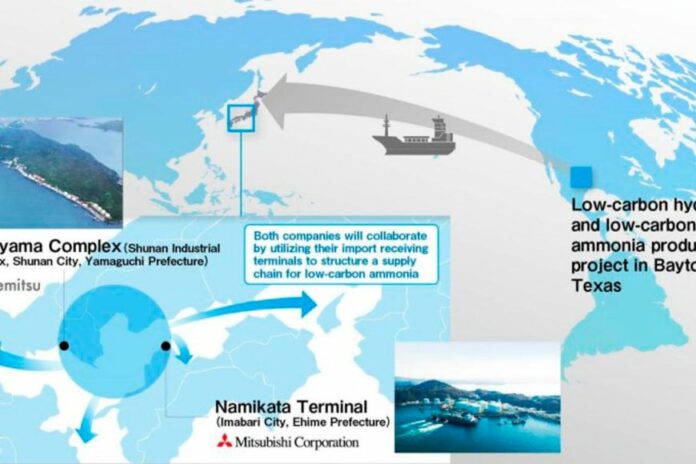
Idemitsu Kosan and Mitsubishi Corporation (“MC”) have agreed to jointly study the efficient operation of clean ammonia carriers and transshipment terminals, participation in ExxonMobil’s planned low-carbon hydrogen and low-carbon ammonia production project in Baytown, Texas, USA, as well as the offtake of ammonia. 

This planned project will produce virtually carbon-free hydrogen with approximately 98% of carbon dioxide (CO2) removed and low-carbon ammonia. Final investment decision is expected in 2025 and is subject to necessary regulatory permits. This project aims to start production of low-carbon hydrogen (approximately 900,000 tons per year) and low-carbon ammonia (over 1 million tons per year) by 2029 and is expected to be the world’s largest of its kind.

Idemitsu has established an ammonia import and receiving terminal utilizing the existing infrastructure at its Tokuyama Complex in Shunan City, Yamaguchi Prefecture, and aims to jointly introduce over 1 million tons of ammonia as fuel and raw materials by 2030 in cooperation with neighboring companies in the Shunan Industrial Complex.

In February of this year, Idemitsu’s Tokuyama Complex conducted a demonstration of ammonia combustion in naphtha cracking furnace that is currently in commercial use, the first of its kind in Japan, and in May, Agency for Natural Resources and Energy, METI adopted the “Ammonia supply base in the Shunan region, pipeline development in the region, and combustion facility study project” together with the 3 companies in Shunan Industrial Complex as part of the Government’s Hydrogen Supply Infrastructure Development Project. In order to be a pioneer in strengthening the competitiveness of domestic industrial complexes, Idemitsu is working with industries, government and academia to make the entire region carbon neutral.

MC is assessing the partial conversion of its LPG terminal (Namikata Terminal) in Imabari City, Ehime Prefecture, into an ammonia terminal. MC is preparing to build a hub terminal that will supply approximately 1 million tons of ammonia annually to various industrial applications such as electricity, transportation and chemicals by 2030. In April 2023, MC and potential customers in the Shikoku and Chugoku regions agreed to establish “Council for utilizing Namikata Terminal as a Hub for introducing Fuel Ammonia,” and have been discussing measures to handle ammonia, operate the terminal efficiently and expand demand. Taking advantage of Namikata Terminal’s 40 years of experience as an energy hub, MC is working to develop ammonia so that it can quickly respond to decarbonization demand in the region.

Ammonia does not emit CO2 when burned and can effectively use existing transportation and storage facilities without significant modifications.

As a result, it is expected to contribute to low-carbon and decarbonization in various industries. Idemitsu and MC both plan to supply low-carbon ammonia produced by this project to Japan through their receiving terminals.

ClassNK issues AiP for new membrane-type LNG carrier without filling limits

0

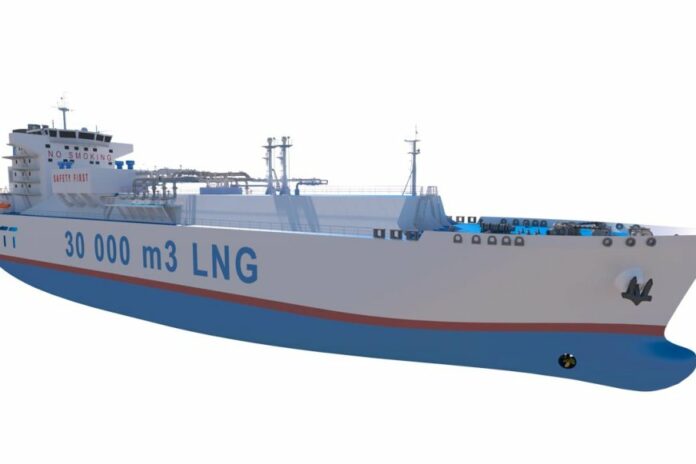
The vessel’s ballast tank design and ballasting operations allow for the elimination of filing limits, enhancing operational flexibility. The AiP demonstrates the feasibility of this design concept.

In LNG carriers with membrane tanks, filing limits are often required based on the strength assessments against sloshing loads, which can pose challenges, especially in feeder transportation.

The LNG carrier developed by GTT has ballast tanks divided into upper and lower sections. During ballasting operations, water is pumped into the upper ballast tanks first to maintain a lower metacentric height (GM) while satisfying the stability requirements, reducing roll acceleration. This helps prevent excessive sloshing loads at any cargo filling level, allowing unrestricted filling levels and eliminating prior filling limits.

ClassNK conducted a design review based on part N of its ‘Rules and Guidance for the Survey and Construction of Steel Ships’, which incorporates the IGC Code. Upon confirming compliance with the prescribed requirements, ClassNK issued the AiP. In assessing the feasibility of the concept, ClassNK identified key conditions and parameters related to ballast tank design and ballasting operations that shipyards and operators should follow during design and operation.
 

South Korea opens bidding for 1.8 GW of wind power

0

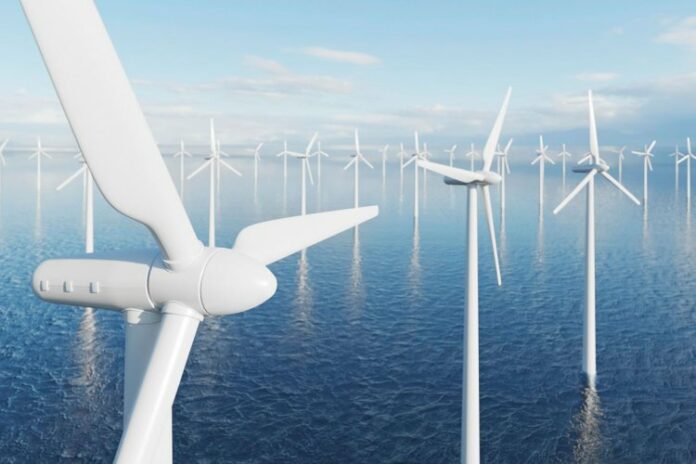
Broken down, 1 GW has been set aside for fixed bottom offshore, 500 megawatts (MW) for floating offshore, and 300 MW for onshore wind.

Deadline for a project depends on its division and capacity. For instance, offshore projects over 300 MW have an implementation period of 78 months.

Earlier, the country’s Ministry of Trade, Industry, and Energy announced the Offshore Wind Power Competitive Bidding Roadmap that aims to strengthen the country’s efforts in expanding renewable energy distribution and strengthening the supply chain.

Under the roadmap, competitive bidding for wind power projects will move up from its initial window in the fourth quarter (Q4) to the second quarter of each year, and the notice of an additional tender will be released in Q4 if needed.

Korea will launch approximately 7–8 GW worth of offshore wind power tenders from the second half of 2024 to the first half of 2026.

Source: Evwind

Wallenius Wilhelmsen enters into five-year agreement with leading equipment manufacturer

0

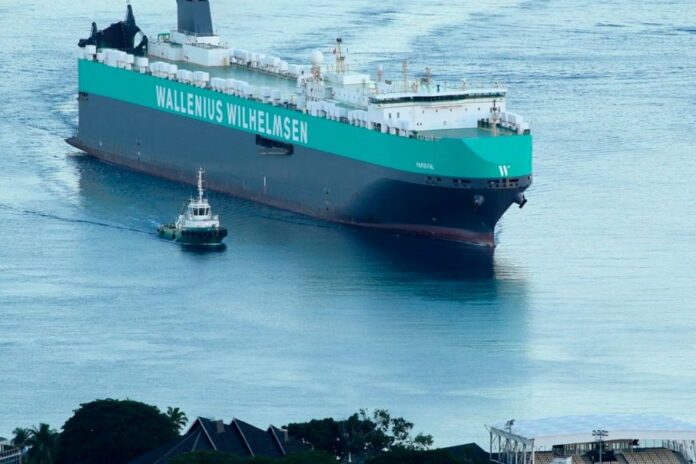
Wallenius Wilhelmsen has entered into a five-year agreement with a leading agriculture, forestry and roadbuilding equipment manufacturer. 

The new multi-year shipping and logistics agreement commences December 1, 2024, and is valued at approximately USD 766 million in total, based on expected volumes over the five-year period. 

Rates are in line with current market levels and the agreement includes a partnership on decarbonization, whereby the customer agrees to pay for the phase-in of green and renewable fuels. 

“Strengthening our long-term partnership with a key high and heavy customer, the agreement reflects the customer’s need to secure predictable long-term ocean capacity and commitment to decarbonizing their supply chain”, says Pia Synnerman, Chief Customer Officer at Wallenius Wilhelmsen. “This renewed agreement complements the existing logistics and digital supply chain scope we currently provide them globally, including our integrated service offering, whereby we manage product and information flows along the entire outbound supply chain, from their factories to ports in destination regions”, says Synnerman. 

The agreement is subject to final documentation.