5.5 C
New York
Home Blog Page 1261

Alliances Raise Overcapacity and Competition Concerns

0

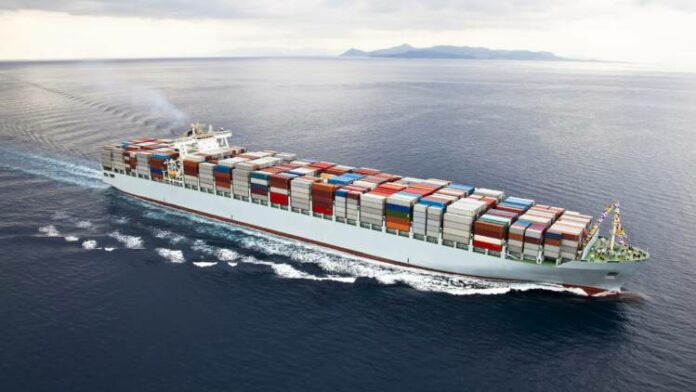
The International Transport Forum has released a report The Impact of Alliances in Container Shipping highlighting the link between alliances and overcapacity, declining schedule reliability and longer waiting times.

Whereas early generations of global alliances that emerged in the mid-1990s provided a vehicle for cooperation between smaller carriers, alliances nowadays are tools for the largest container lines: the three global alliances (2M, Ocean and THE Alliance) that have been operational since April 2017 regroup the eight largest container carriers of the world. These three alliances represent around 80 percent of overall container trade and operate around 95 percent of the total ship capacity on East-West trade lanes, where the major containerized flows occur.

Alliances have allowed carriers to acquire and operate mega-ships, reducing unit costs, and without alliances certain carriers would not have been able to acquire mega-ships. However the report states that as it is the ordering of mega-ships that has fueled overcapacity, there is a link between alliances and overcapacity. Alliances have also made the maritime transport offer more uniform and limited the possibilities of carriers to differentiate themselves. Alliances have contributed to lower service frequencies, fewer direct port-to-port connections, declining schedule reliability and longer waiting times. 

This has increased total transport times and delivery uncertainty for various shippers, leading to higher inventory and buffer costs. Moreover, alliances have proved to be inherently unstable: considering that all major carriers are in alliances, changes in one alliance can have an impact on the whole sector.

Alliances contribute to the concentration of port networks and bigger cargo shifts from one port to another when alliances change port networks. Within ports, the buying power of the alliance carriers can create destructive competition between terminal operators and between other port service providers such as towage companies. This can lower the rates of return on investment for the port industry, result in the decline of smaller container ports and the disappearance of smaller independent terminal operators and towage companies. 

The market share of carrier-dominated terminal operators has increased from 18 percent in 2001 to 38 percent in 2017. This could raise competition concerns if dedicated terminals exclude other carriers and if carriers’ terminal investments raise entry costs that make container shipping a less contestable market.

Alliances frequently exert strong pressure for publicly funded infrastructure upgrades to be undertaken to support the use of megaships, while these expenditures often prove to be uneconomic, either due to shifting demand for port services or the power exercised by the alliances.

Although overcapacity in the liner sector has lowered freight rates, these cost savings are partly offset by a number of additional costs for shippers. Moreover, by limiting shipping options, alliances have frustrated the risk diversification strategies of shippers and freight forwarders.

Alliances could raise competition concerns in what has become a concentrated market. The top four carriers accounted for 60 percent of the global container shipping market in 2018. The market share of the biggest carrier (19 percent) is larger than the market share of any global liner alliance before 2012, which signifies the different character of current alliances. 
Global alliances represent barriers to entry on East-West trades: only the largest companies would be able to compete on price for Asia-Europe services outside an alliance structure. Second, alliances could function as vehicles for collusion between carriers, as they provide carriers with in-depth insights on the cost structures of their competitors. 
The International Transport Forum is an intergovernmental organization with 59 member countries. It is politically autonomous and administratively integrated with the OECD.

Source:maritime-executive
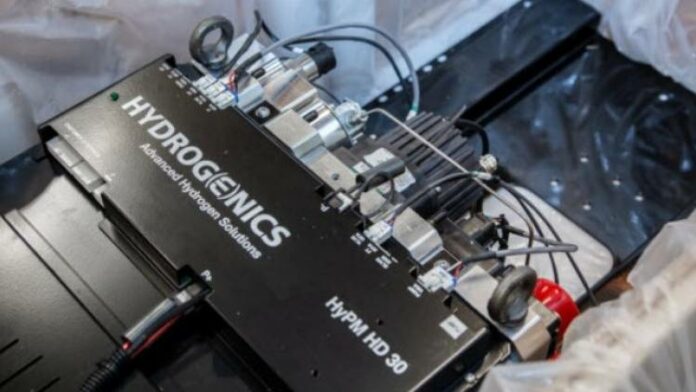
ABB and SINTEF Investigate Hydrogen Propulsion

0

Industrial conglomerate ABB and the independent research organization SINTEF have partnered up to build and test a model fuel cell-powered marine propulsion system. The testbed project at SINTEF's Laboratory at Trondheim will apply a variety of real-world load profiles and operating scenarios with two 30kW fuel cells.

The scaled-down laboratory tests will give more insight into how large, megawatt-sized fuel cell propulsion plants would behave. In addition, the study will examine fuel flow, fuel handling, and methods of bunkering for a hydrogen-powered ship. 

"Finding unknowns and coping with them in a controlled environment, rather than risking surprises on board ship will be central to these trials," said Jostein Bogen, product manager for energy storage and fuel cells at ABB Marine & Ports. "These trials are expected to provide the platform for fuel cells to build on, so that they can take a position in the maritime sector that is competitive with fossil fuels."

The study is using proton exchange membrane (PEM) fuel cells supplied by Hydrogenics, an established manufacturer that has also provided the equipment for Alstom's hydrogen-powered passenger trains. SINTEF is contributing the hydrogen supply and infrastructure, along with its experience in maritime energy systems and fuel cell technology. ABB brings decades of experience in marine propulsion, hybrid power and shipboard electrical systems. 

Hydrogen propulsion's economic competitiveness and emissions profile vary depending upon the source of the fuel. Almost all commercially-produced hydrogen is currently derived from natural gas or coal gas. Due to the carbon dioxide created by the refining process, its well-to-propeller CO2 emissions are higher than those from heavy fuel oil, according to a recent review by DNV GL. By contrast, hydrogen produced using renewable electricity for water electrolysis is nearly emissions-free – but very costly. A recent study by Sandia National Laboratories, the U.S. Coast Guard and ABS found that renewably-produced hydrogen would cost 15 times as much as diesel for a California ferry operator.

Source:maritime-executive

First Reactor Started on Russia’s Floating Nuclear Plant

0

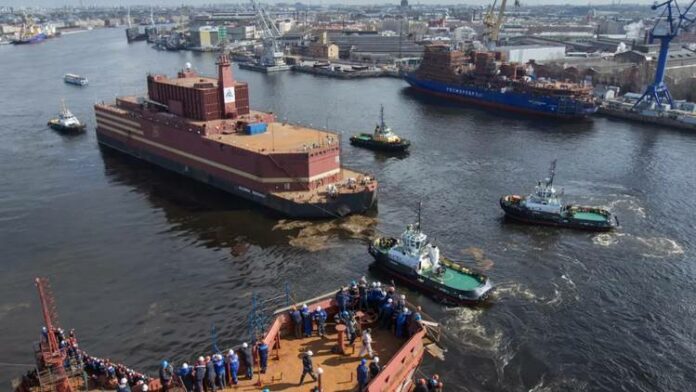
Russia’s floating nuclear power plant, long a controversial dream of the country’s atomic energy industry, has finally become an actual nuclear power plant after its first reactor achieved a sustained chain reaction at its mooring in Murmansk harbor last week.

The physical launch of the reactor unit on the starboard side of the floating power plant Akademik Lomonosov occurred on Friday,” the official was quoted as saying.

The reactor unit reached the minimum controlled power level at 17:58 Moscow time.”

A series of reactor tests will now follow, according to the official, and the second reactor on the port side of the nuclear barge will be brought to minimum power in the coming days.

After the reactor tests, the Akademik Lomonosov will be towed through the Arctic to the far eastern Siberian port of Pevek, a town of 100,000 people in Chukotka, were it is slated to go online in the summer of 2019. The plant is expected to replace the energy supplied by the Bilibino nuclear power plant – the world’s four northernmost commercial reactors – which Rosatom will begin decommissioning in 2021.

For 12 years Russia has been pursuing its audacious experiment in floating nuclear power, fording a river of doubt, economic downturns and environmental outcry – and confounding critics who said the plant was an expensive publicity stunt that was doomed to failure.

Despite dodging such predictions, the plant remains as improbable as ever – a huge, ungainly nuclear solution in search of a problem.

Since its rocky – and often secretive – beginnings in the early 2006, Russia has attempted to sell the plant as a cure-all for energy woes in the world’s more remote regions.

And while the plant has spawned a number of imitation plans in other coutries, it has failed to draw the windfall of orders Rosatom said would justify its $480 million cost. Rosatom officials themselves have conceded that this price tag is too high to bring the floating plant, as designed now, into serial production.

Yet the corporation has done much in recent months to draw back the veils of mystery it draped over the plant through much of its construction. The apprehensive eyes of the world’s media were upon the plant last April when it was finally towed into the open ocean from St Petersburg’s Baltic Shipyard en route to Murmansk.

In October, Rosatom invited Bellona to be the first foreign environmental group to inspect the Akademik Lomonosov at its moorings at Atomflot, Russia’s Murmansk-based nuclear icebreaker port.

Still, the new openness has done little to settle Bellona’s central concerns about Rosatom’s long-range intentions for its floating nuclear power plant. By design, the plant is meant to operate in remote regions. But this very remoteness, Bellona has said, would vastly complicate the rescue operations that would be necessary after an accident, as well as the more routine clearing of spent nuclear fuel from its reactors.

Likewise, visions of Fukushima’s waterlogged reactors have not faded from public memory, and the thought of a nuclear power plant as vulnerable to tsunamis and foul weather as is the ocean-based Akademik Lomonosov strikes an anxious chord among environmentalists.

Rosatom has often said the plant is invulnerable to tsunamis and cites the fact that its water-borne location will give it access to infinite supplies of reactor coolant in the event of an accident.

But environmentalists are skeptical. In the worst-case scenario, the plant might not ride out the waves, but instead be torn from its moorings to barrel inland through buildings and towns until it lands, battered and breached, with two active nuclear reactors on board – well away from its source of emergency coolant.

Rosatom’s best option in that disaster scene would be the 24-hours worth of backup coolant located aboard the barge, which is hardly reassuring.

Still, the whole idea of a floating nuclear plant has piqued curiosity – and competition. Two state-backed companies in China are said to be pursing plans for at least 20 floating nuclear plants, and American scientists have drawn up blueprints of their own.

The company estimates each floating plant will take four years to build, compared with a decade or so for standard land-based nuclear plants. The Sudan Tribune has cited that country’s minister of water resources and electricity as saying the government in Khartoum has a deal to become the first foreign floating plant customer.

Source:maritime-executive

Fincantieri Establishes Chinese Cruise Hub

0

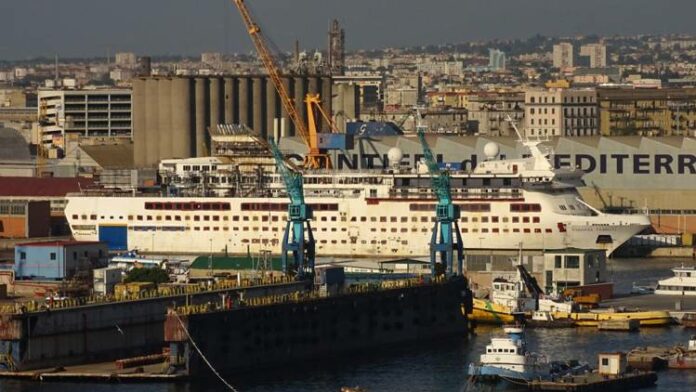
Shipbuilder Fincantieri has officially established a cruise hub in Baoshan, China, focused on its shipbuilding activities in the region.

Fincantieri CEO, Giuseppe Bono, and the District Mayor of Baoshan, Fan Shaojun, signed the contracts for the hub which will initially be used to build the two cruise ships already agreed between Fincantieri, CSSC and Carnival Corporation, the first ever made in China for the local market.

In February 2017, Fincantieri, CSSC and Carnival Corporation signed a binding agreement for the construction of two cruise ships, with an option for additional four, at the Shanghai Waigaoqiao Shipbuilding shipyard. The vessel's design will be tailored for the specific tastes of the Chinese travelers and for the new Chinese cruise brand of the joint venture between Carnival Corporation, CSSC and CIC Capital, which will also operate the units. The first delivery is expected in 2023.

Also in February 2017, the group signed the letter of intent with CSSC and Shanghai City’s district of Baoshan for the development of the supply chain mainly dedicated to cruise activities, as well as shipbuilding and maritime, and a comprehensive agreement on ship repair and conversions with Huarun Dadong Dockyard, a leading Chinese shipyard specialized in ship repair and refitting activities, aimed at serving the cruise ships based in China.

The Baoshan district will provide financing, tax commercial and administrative benefits, land for necessary development and other resources. Fincantieri has supported the district in defining the preferential policies to attract suppliers and will promote the park and develop its supply chain.

The project will allow Fincantieri to be a first mover the development of the high potential market, says the shipbuilder, allowing it to further develop its business and access even the most complex markets, at a favorable time in the cruise sector.

In August this year, Fincantieri and CSSC signed an MOU to extend their existing industrial cooperation to all segments of merchant shipbuilding. As well as the cruise ship joint venture, the companies have several research and development projects underway involving the construction of vessels for the oil and gas industry, cruise-ferries, mega-yachts, special vessels, steel infrastructure, marine engineering and equipment procurement. 

Source:maritime-executive

Offshore wind is ‘golden ticket’ for Ireland

0

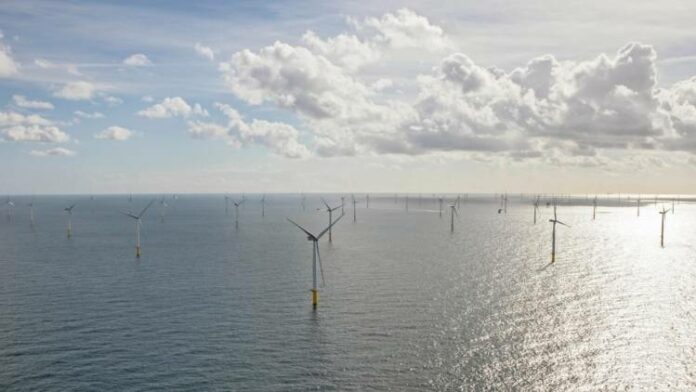
Offshore wind is the only technology with the scale to help Ireland meet future renewable electricity targets, according to a new report.

Dublin will need to add between 400MW and 700MW of green energy every year in the next decade, up from the around 200MW average annual tally delivered to date mainly by onshore wind.

While solar and onshore wind can and will play a role, offshore wind is the only technology with the scale and deployment capacity to meet this demand in full,” said the study by KPMG.

Around 1GW of capacity could be built in the “immediate future” with “clear government support”, according to the report.

An additional 3GW could be deployed in the period 2020-30.

Dramatic reductions in technology prices and improved performance now mean that offshore wind costs a fraction of historic pricing, with a trajectory to hit parity with other technologies in the short to medium term,” added the report, which was commissioned by industry group NOW Ireland.

The study calls on Dublin to set up an offshore wind development committee led by the Department of the Taoiseach to coordinate work in the sector.

Among the policy initiatives required are a “targeted” scheme to support the industry, the inclusion of a technology-specific pot in future capacity auctions and the introduction of a new foreshore licensing act to smooth consenting.

The sector can also deliver a multi-billion euro economic boost the economy, deliver thousands of new jobs and enhance security of energy supply, added the report.

Source:renews

Windtechnik waltzes into Taiwan

0

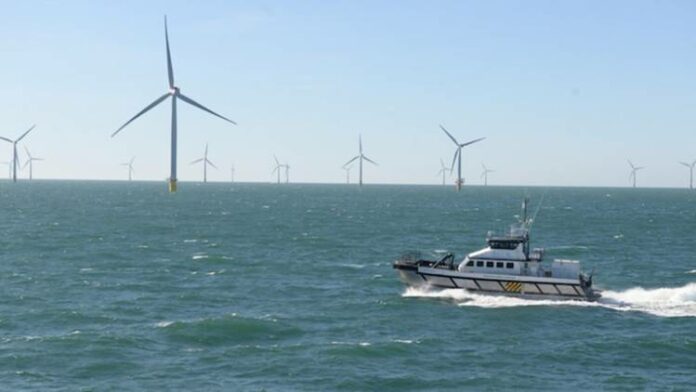
Deutsche Windtechnik is to open a new business unit in Taiwan after winning a maintenance contract for WPD's 640MW Yunlin offshore wind farm. 

The deal covers technical, commercial and QHSE management. It also includes management and provision of logistics and foundation, transition piece and substation maintenance.

A team of 25 mainly Taiwanese technicians will be set up, with training provided in Taiwan and at Deutsche Windtechnik's training centre in Europe. 

The company said discussions are currently being held with Taiwanese universities to secure qualified personnel from the region. 

Staff will include service technicians, HSE managers and administrators, as well as crew for a Taiwanese-built CTV. 

Managing directors Carl Rasmus Richardsen, Hendrik Boschen and Jens Landwehr will lead the team from an office in Taipei.

WPD chief executive Achim Berge Olsen said: “We were able to win strong partners for the construction and operation of the Yunlin wind farm.” 

We have been working together with Deutsche Windtechnik successfully at the German wind farm Butendiek and the Nordergründe wind farm for years, and together we have a real quality advantage in Taiwan.

Richardsen said: “The fact that we are setting up a branch office in Taiwan is also an example of how the expertise we have gained in Germany and Europe is enabling us to accompany larger customers to countries where they want to continue to grow internationally. ”

The trust that our customers are demonstrating through this is definitely a competitive advantage.

Source:renews

TechnipFMC Wins EPC Contract with Egypt’s MIDOR

0

Oil and gas industry company TechnipFMC has signed a major Engineering, Procurement, and Construction (EPC) contract by Middle East Oil Refinery (MIDOR) for the modernization and expansion of their existing complex near Alexandria, Egypt.

Middle East Oil Refinery (Midor), considered to be Africa's most advanced refinery, is a unit of Egyptian General Petroleum Corporation.

This EPC contract covers the debottlenecking of existing units as well as the delivery of new units including a Crude Distillation Unit, a Vacuum Distillation Unit, a hydrogen production facility based on our steam reforming technology, as well as various process units, interconnecting, offsites and utilities.

Starting in 2022, the modernized complex will exclusively produce Euro V products, with a 60% increase in the refinery’s original capacity to 160,000 barrels per day of crude oil.

Nello Uccelletti, President of TechnipFMC’s Onshore/Offshore business, stated: “This award demonstrates our long-standing relationship with MIDOR which started in 2001, with the delivery of their grassroot refinery. Over the years, we have supported our client with studies and engineering services. In 2015, we finalized a joint agreement with SACE to ensure an export credit facility to support a major expansion and modernization project, while carrying out early works including FEED and open book estimate."

Nello said: "We are proud to support our client MIDOR in improving the production quality of their refinery, considered the most advanced of the Mediterranean region and African continent.”

The company is working with MIDOR to complete the remaining conditions precedent to enable project work to commence. The Company will include the contract award in its inbound when all the requirements are fulfilled.

Moreover, in the spirit of cooperation with the Egyptian government, TechnipFMC has also been awarded a contract for the basic design of the Assiut refinery Hydrocracker complex.

Source:marinelink

EDF Sells Stake Dunkirk LNG Terminal

0

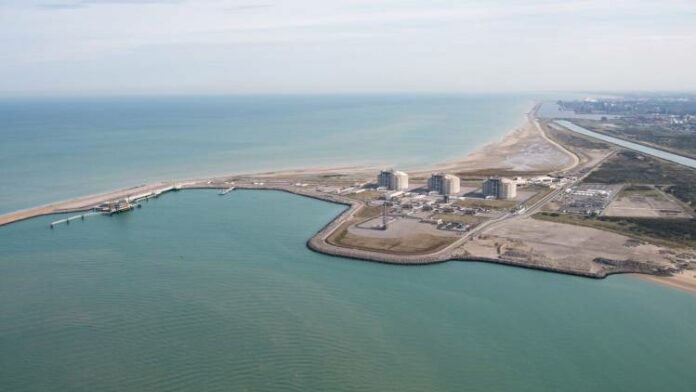
European electric utility company Électricité de France (EDF) group has sold its stake in the Dunkirk  liquefied natural gas (LNG) terminal, after obtained the requisite regulatory approvals.

According to a press release from the  integrated energy company the modalities set out in the press release published on 29 June remain unchanged, the transaction having been made on the basis of an average enterprise value of EUR2.4 billion for the Dunkerque LNG company.

The disposal will contribute to the reduction of the EDF Group’s net financial debt, by EUR1.5 billion.

With the transaction, the Group has now realised EUR9.6 billion of its targeted EUR10 billion asset disposal plan. The objective of finalising the plan by the end of 2018 is confirmed.

A key player in energy transition, the EDF Group is an integrated electricity company, active in all areas of the business: generation, transmission, distribution, energy supply and trading, energy services.

A global leader in low-carbon energies, the Group has developed a diversified generation mix based on nuclear power, hydropower, new renewable energies and thermal energy.

The Group is involved in supplying energy and services to approximately 35.1 million customers, of which 26.5 million in France. The Group generated consolidated sales of €70 billion in 2017. EDF is listed on the Paris Stock Exchange.

Source:marinelink

DSME clinches VLCC order from Hunter Group

0

Daewoo Shipbuilding & Marine Engineering (DSME) has clinched an order from Norway’s Hunter Group to build up to three VLCCs for about $273m.

The contract is for one firm order and two options.

The 300,000-dwt eco-design VLCC will be outfitted with a scrubber from Finland’s Wartsila. Delivery is scheduled for July 2020.

With this latest order, Hunter Group now has eight sister VLCCs under construction at DSME, all outfitted with Wartsila scrubbers.

We are very pleased to have reached an agreement with DSME for the acquisition of one additional vessel at what we consider to be a very attractive price and delivery time,” said Erik Frydendal, ceo of Hunter Group.

Frydendal added that the group is expected to operate a sizable fleet of VLCCs in what he believes “will be a strong tanker market.”

Meanwhile, DSME has won 38 newbuild orders valued at approximately $4.86bn this year, including 12 LNG carriers, 18 large crude oil tankers, seven large containerships and one special vessel.

Source:seatrade-maritime

$300m possible fraud uncovered at Aegean Marine

0

Up to $300m of cash and assets of Aegean Marine Petroleum Network were believed to have been misappropriated through fraudulent activities involving over a dozen company employees, a latest audit committee investigation has found.

The investigation showed that the principal beneficiary of the misappropriation is Fujairah-based OilTank Engineering & Consulting, which entered into a contract with an Aegean subsidiary to oversee the construction of Fujairah Oil Terminal Facility.

It is believed that this contract was used to misappropriate company funds through inflated contracts and fraudulent pricing, and that Oiltank was controlled by a former affiliate of Aegean.

The audit committee also confirmed that New York-listed Aegean had approximately $200m in accounts receivable that arose from purported commercial transactions that occurred in 2015, 2016 and 2017.

The audit committee believes that the receivables were improperly recorded as part of a scheme to facilitate and conceal an extensive misappropriation of company assets channeled to OilTank, but accounted for as transactions with these shell companies. The audit committee has further confirmed that the approximately $200m of receivables are uncollectible and will be written off,” the audit committee stated.

The investigation also uncovered additional actions to defraud the company and/or its subsidiaries, including prepayment for future oil deliveries that were never made. These fraudulent activities appear to have commenced as early as 2010.”

Over a dozen Aegean employees, including members of senior management, were involved in the fraud.

The misconduct occurred in part because the unnamed former affiliate has “exerted significant control over company personnel and assets through various inappropriate means, including threats of economic retaliation and physical violence”, the audit committee said.

In addition, the former affiliate continues to have access to and control over the company’s electronic and physical files.”

There was at least one attempt to permanently delete documents from Aegean’s server through remote installation of data deletion software by a person with administrative access.

Source:seatrade-maritime