4.9 C
New York
Home Blog Page 1262

Five leading port groups promote sustainability through mass-recycling initiative

0

Five of the world’s leading container port operators have jointly undertaken a week-long initiative to promote sustainable resource usage in their respective port and facility networks. During the fifth annual Go Green Initiative, 8,332 employees of DP World, Hutchison Ports, PSA International, Port of Rotterdam and Shanghai International Port Group collected a total of 1,966 kg of aluminium cans and 2,227 mobile phones for recycling.

The choice of two very different waste products for collection and recycling was intentional. Aluminium cans are one of the most recyclable waste items, while mobile phones are e-waste that contain many valuable resources as well as toxic components that can negatively impact both human health and the environment if improperly disposed of. The purpose was to reinforce a simple message among participating employees – that of the need to think twice about the consequences of discarding waste.

Sultan Ahmed Bin Sulayem, Group Chairman and CEO, DP World, said: “As we enter the fifth year of Go Green, our sector is more conscious than ever before about the universal importance of the campaign. This year we saw thousands of volunteers from across our global network committing their time to the campaign. Being green is part of our culture and with our Go Green partners we have demonstrated how collaboration can create social value and lasting impact worldwide. By coming together, we can all make a sustainable difference in the communities in which we operate.”

Hutchison Ports Group Managing Director Eric Ip said: “The annual Go Green initiative provides a great opportunity for major companies in our industry, including Hutchison Ports, to promote sustainability among port workers. This year, teams at 34 of our ports took up the challenge, with many donating any proceeds from recycling to community charities and engaging in fun reuse-themed follow-up activities following the collection. The activities were a rewarding staff-oriented complement to our daily efforts to improve operational sustainability.”

PSA International Group CEO Tan Chong Meng said: “This is the fifth year PSA staff around the world have been involved in this meaningful joint initiative, and we will continue our efforts to expand our green footprint while contributing towards vibrant economies and communities. In addition to the annual green activities undertaken by employees, PSA continually seeks to improve fuel efficiency and reduce greenhouse gases in port operations, by supporting a progressive shift towards electric cranes, LNG trucks and energy-efficient buildings. With cleaner energy sources, emerging new technologies and concerted efforts, we envision a sustainable future for generations to come.”

Port of Rotterdam Authority CEO Allard Castelein said: “Port of Rotterdam is working hard on energy transition and sustainability. With the campaign we aim to increase the awareness of our employees about opportunities to reduce their own ecological footprint. That is why we join initiatives such as Go Green.

Shanghai International Port Chairman Chen Xuyuan said: “Through Go Green, our employees can contribute to the community where we operate. With our fully automated terminal put into use, SIPG is practicing what it has promised, notably in terms of emissions reduction and energy saving. We also continuously encourage our staff to get in the habit of cutting waste, recycling and reusing items, so as to support sustainable operations across all our terminals.

Source:hellenicshippingnews

V.Group puts cyber safety at the heart of shipping’s future with MCERT initiative

0

Last month, representatives from V.Group attended the grand opening of the International Maritime Cyber Centre of Excellence (IMCCE). IMCCE, a new collaboration between Templar Executives and Wärtsilä, is home to the Maritime Cyber Response Team (MCERT), which provides international intelligence feeds, advice, support and real-time assistance on critical cyber security threats to participating members.

During the opening ceremony, guests were given a live demonstration of a simulated cyber-attack on a vessel, and watched as MCERT mitigated and resolved the issue in real time. Guests were also able to see how MCERT disseminates critical information to its members to protect them from ongoing and imminent cyber threats affecting the maritime industry.

As a member of MCERT, V.Group will be part of a larger network within the maritime community who contribute to and benefit from the open sharing of data and security experiences.

Walter Wilson, Group Information Security Manager, V.Group, said: "At V.Group our number one priority has always been the safety of our customers. This is reflected at every touch point of our business, and can be seen in every service we provide, be it the world-class training we provide to our global team of seafarers or the constant iteration and improvement of our fleet cells."

Recent high-profile cyber-attacks have laid bare the scale of the challenge that this issue presents for shipping – some weeks ago, insurer Munich Re warned that losses expected from cyber-attacks are greater than those expected from natural catastrophes.

As we continue to augment our services through integrated technology and data, it’s vital that we stay abreast of best practice when it comes to cyber safety and continue to converge and share information with the rest of the industry. By encouraging transparency and open discussion with partners for collaboration, we can continue to improve the security of our systems and processes, and build resilience to cyber threats in an increasingly digitalised world.

We need to start thinking of cyber security more as cyber safety, and embed it into standard maritime safety culture through action and discipline afloat and ashore. In the same way we teach about closing hatches, we should teach logging off, and in the same way we practice machine maintenance, we should practice vulnerabity management – replacing end of life systems.

Our participation in the MCERT initiative is a promise to our customers that V.Group will always deliver the highest standards of safety and protection for crew and vessels, whatever the source of risk.

Andrew Fitzmaurice, CEO, Templar Executives, commented: “The MCERT team recognise V.Group’s commitment to providing world-class cyber safety for their customers and staff; we are delighted to welcome them as an MCERT member. The MCERT is focused on making the maritime sector a safer place to work and do business through industry collaboration and incident response services.

V.Group’s participation in the MCERT underlines the importance of key maritime players showing leadership on the cyber agenda, not just for their own organisations, but also in helping the entire maritime industry drive towards greater levels of cyber resilience.

Source:hellenicshippingnews

Hess, Exxon Mobil Prep For More Exploration Offshore Guyana

0

Partners Exxon Mobil, Hess Corp. and CNOOC Nexen Petroleum are making progress toward development of the hydrocarbon bounty discovered offshore Guyana.

This month a second exploration vessel, the Noble Tom Madden, arrived to accelerate exploration and appraisal activities on the block starting with the Pluma prospect located 17 miles south of Turbot where we expect to spud in early November,” Hess Corp. CEO John Hess said on the company’s third-quarter earnings call Oct. 31.

The well will target Upper Cretaceous reservoirs, the company said.

So far, the Exxon Mobil-led exploration effort has led to nine discoveries. The latest was announced in August after Exxon Mobil affiliate Esso Exploration and Production Guyana Ltd.’s Hammerhead-1 struck oil, opening a new play type and adding to the prospectivity of the Stabroek Block.

The discoveries, which are expected to lead to a gross production of more than 750,000 barrels of oil per day by 2025, have been among the exploration bright spots for the industry which saw oil and gas companies’ exploration budgets drastically slashed during the market downturn. The success offshore Guyana has also spurred interest from other companies looking to hit oil in the region.

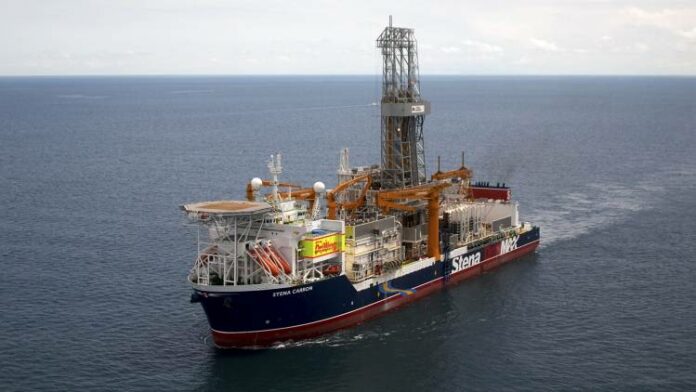
Greg Hill, COO for Hess, said a successful flow test was recently completed at Hammerhead and additional appraisal activities are planned. Plans are for the Stena Carron rig that drilled the well to go to the Canary Islands in Spain for recertification before returning to the block in late December to spud a well on the Upper Cretaceous Amara prospect, which is about 24 miles southeast of the Turbot discovery.

Meanwhile, development of Liza Phase 1—sanctioned in June 2017—is moving ahead. First oil is expected by early 2020 with a nameplate capacity of 120,000 bbl/d of oil, Hill said.

Source:epmag

DNV GL Takes Sustainability Dive Into Future Of The Ocean And Industries That Rely On It

0

How do we manage ocean industries and future opportunities in the Arctic as part of a sustainable future? This and several other pressing questions are part of the report DNV GL has been commissioned to produce for the Center for the Ocean and the Arctic. The newly established Center for the Ocean and the Arctic is based deep within the Arctic circle in one of Norway’s northernmost cities, Tromsø. Their task is to coordinate efforts to chart a course for the sustainable use of the ocean and the Arctic.’

Their mandate also includes working towards the UN’s sustainable development goal #14 on conservation and sustainable use of the oceans. The sustainable development goals are both ambitious and overarching in their targets. The challenge in achieving them is translating the goals into specific targets at a local level.

DNV GL has been entrusted with producing the two first reports; status of a sustainable blue economy in the Norwegian Arctic, and a foresight study analysing the challenges and opportunities associated with developing a sustainable blue economy in the Norwegian Arctic. The reports, due for completion early next year, aim to strengthen knowledge and empower decision-makers as they translate the global sustainable development goals into action.

The ocean has a capacity for significant economic growth, but this must be balanced with regards to threats to ocean health such as overuse, pollution, loss of biodiversity and climate change.

Sustainable management of the ocean and value creation linked to it is at the core of DNV GLs business”, says Bente Pretlove (Program Director, Ocean Space). DNV GL has therefore defined Ocean Space as a key area for further research. A team of experts work to assess how technology, innovation and digitalization can help sustainable growth of the ocean economy. The team has also been entrusted with mapping ocean governance and regulation for the UN Global Compact Action Platform for Sustainable Ocean Business. “In this project, we bring together expertise from Research as well as all of the DNV GL Business Areas”.

Source:dnvgl

EU approves state aid for Lithuanian LNG terminal

0

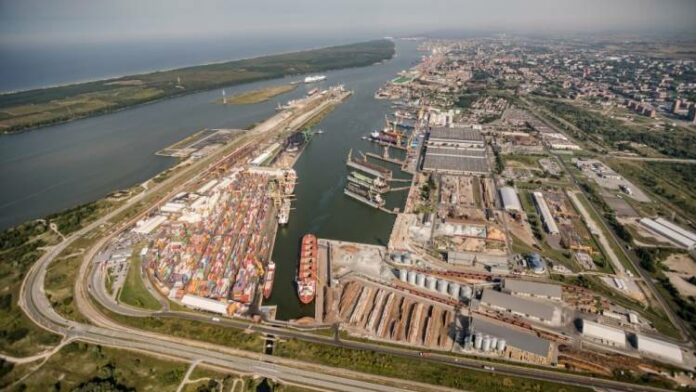
The European Commission has approved the compensation granted by Lithuania to LITGAS for supplying a mandatory quantity of LNG to the LNG terminal in Klaipėda.

Before this approval, in November 2013, the Commission approved an aid scheme to support the construction and operation of an LNG terminal at the Klaipėda seaport in Lithuania.

Since then, the LNG terminal has been proved crucial in the diversification of gas supplies and security of supply in Lithuania.

In June 2018, Lithuania informed the Commission of some changes to the aid scheme approved in 2013, which are the following:

  • To ensure security of supply, the LNG terminal must be kept operational, which needs constant deliveries of LNG and its continuous regasification. So, in January 2016, Lithuania modified the initial scheme and entrusted LITGAS, a liquefied gas supplier with a public service obligation to ensure the supply of a mandatory quantity of LNG to the terminal in Klaipėda;
  • Lithuania introduced a "purchase obligation" where heat and electricity generators were obliged by law to purchase a certain quantity of gas from LITGAS. However, considering the developments on the gas market, Lithuania considers that, as of January 2019, the purchase obligation will no longer be necessary and can be abolished. Thus, LITGAS will sell its gas directly on the market.

The Commission found that these modifications will contribute to enhancing competition on the Lithuanian gas market and has therefore approved both the scheme currently in force for the period from 2016 until the end of the year 2018 and the modified scheme for the period from 2019 until the end of 2024.

According to the EU, the Klaipeda seaport will contribute to the EU's Energy Union goals to reduce energy import dependency by diversifying supply and creating an interconnected EU wide energy market.

The Klaipeda seaport has already received its first LNG shipment from the US, August 2018.

Source:safety4sea

Norway proposes regulation for emissions reduction in the fjords

0

New legislation was released for review aiming to reduce emissions and discharges in the fjords. Namely, the Norwegian Maritime Authority (NMA) proposed even stricter regulations to ensure a better environmental footprint in the area, by cutting emissions.

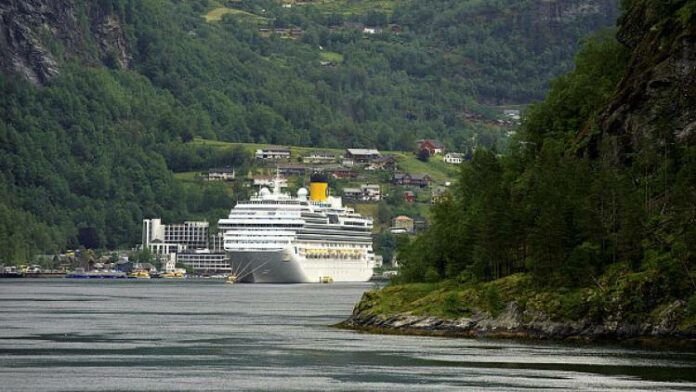
The new legislation for reduced emissions and discharges regard the Nærøyfjord, Aurlandsfjord, Geirangerfjord, Sunnylvsfjord and Tafjord. The proposal includes stricter sulphur requirements for the entire area, stricter requirements for NOx emissions, prohibitions against the discharge of sewage, regulations on the use of scrubbers and requirement for an environmental instruction.

Minister of Climate and Environment, Ola Elvestuen, stated:"The Government wishes to reduce the emissions and discharges from cruise ships. Stricter requirements for ships in the world heritage fjords would be a step in the right direction"

In addition, the NMA suggests that fuel being used on ships in the world heritage fjords must have a sulphur content of maximum 0.10%. What is more, a prohibition against the use of scrubbers in these areas is being proposed, including both open, closed and hybrid systems.

These bans mean that the use of heavy fuel oil in the fjords will not be allowed, and that ships that currently use heavy fuel oil combined with scrubbers will have to use marine diesel instead when sailing in the area.

Regarding scrubbers, NMA said that this technology emits visible smoke emissions, while some systems also generate discharges to sea.

Moreover, the NMA suggested a prohibition against incineration of waste on board ships in the fjords, which will reduce the visible smoke emissions.

The new proposal also sets out the possibility of exemption from the Tier I NOx requirements to be met by 2020 for ships that can document that they will satisfy the strictest NOx requirements (Tier III) by 2022.

Source:safety4sea

Port of Bellingham and Ports America sign a new service contract

0

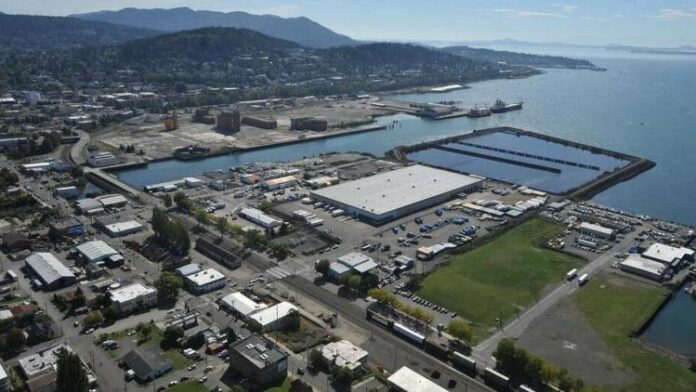
International cargo vessels are expected to arrive at the Bellingham Shipping Terminal on a regular basis as the result of a new service contract between the Port of Bellingham and Ports America, the company said in its press release.

Ports America entered negotiations with the port after several of its shipping customers requested use of the Bellingham Shipping Terminal. Ports America is the largest terminal operator and stevedore in the United States.

Under the terms of the contract, Ports America will have exclusive stevedoring rights for certain types of steel as well as inbound international forest products, metal/aluminum ingots, modules, oversized and project cargoes. Much of the inbound cargo will be stored temporarily at the shipping terminal before it is trucked to Canada as its final destination. The port is in the process of designating the shipping terminal and surrounding areas as a Foreign Trade Zone, where customers can store goods without having to pay United States import duties and taxes.

The port’s three-year service contract with Ports America has options for two additional three-year terms.

The Bellingham Shipping Terminal is a full-service marine terminal with the flexibility to meet a diverse range of business needs. Terminal assets include 1,250 feet of dock space on a deep-water pier, a 550-foot barge pier, 85,000 square feet of covered storage, 40 acres of available land, and access to resources via rail, barge, rafts, trucks, containers and ocean-going vessels.

Ports America, headquartered in Jersey City, N.J., is the largest independent marine terminal operator in North America, providing terminal management and a full suite of stevedoring and related services. Ports America, including its predecessor companies, has more than 86 years of experience operating American seaports. Its current business includes more than 80 terminals in 42 ports in North America, handling containers, roll on/roll off cargo, general cargo and cruise line passengers. As one of the largest employers of maritime labor in North America, Ports America employs more than 12,000 people each day at its operations, including full-time equivalent employees.

Source:portnews

Canada Shares Frigate Repair Contracts Across Three Yards

0

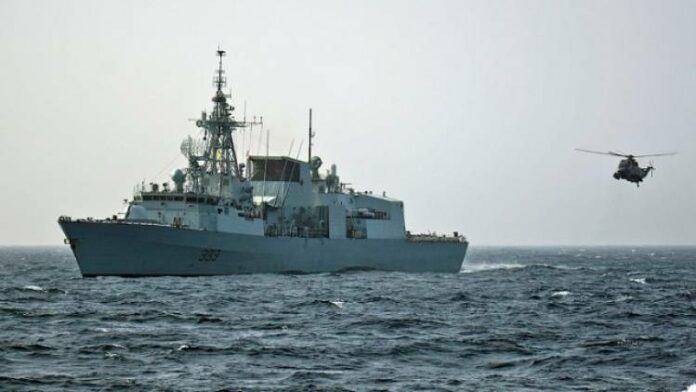
Canada's Public Services and Procurement has spread $7 billion in maintenance and repair contracts for Royal Canadian Navy frigates across three shipyards: Irving Shipbuilding, Seaspan Victoria Shipyards and Davie Shipbuilding.

The contracts cover maintenance for Canada's 12 Halifax-class frigates until the end of their operational life, an estimated 20 years. They will be replaced once the nation's new Surface Combatant ships are delivered.

The Royal Canadian Navy has 12 Halifax-class frigates, commissioned between 1992 and 1996. Seven are stationed in Halifax, Nova Scotia, and five are stationed in Esquimalt, British Columbia. The Navy requires that at least eight of 12 frigates are able to deploy at all times. 

The award news has received mixed reactions, according to The Canadian Press. In Quebec, where Davie Shipbuilding has recently laid off hundreds of workers after completing a resupply vessel in 2017, the award was well received. "There is finally stability," said a company spokesman. 

However, a union spokesman at Irving shipyard said workers could face layoffs as a result of the gap between the completion of the Arctic and Offshore Patrol Ships and the start of the Canadian Surface Combatant program. Maintenance work on the frigates is currently done at Irving.

Details of how the contracts will be shared between the yards are yet to be revealed, but the government's decision has been viewed as politically correct. Prime Minister Justin Trudeau said: "We will continue to work with all the places in Canada that can participate to create good jobs, good products and good ships for Canadians."

Source:maritime-executive

German Shipping Operator Sentenced to Pay $3.2 Million

0

German shipping company MST Mineralien Schiffahrt Spedition und Transport GmbH (MST) pleaded guilty and was sentenced in Portland, Maine, on Friday for obstruction of justice and for maintaining false official records to conceal deliberate pollution from one of its ships, the M/V Marguerita.

The U.S. Department of Justice reports that MST pleaded guilty to one count of violating the Act to Prevent Pollution from Ships and one count of obstruction of justice for using falsified log books to hide intentional discharges of oily bilge waste occurring over a nine-month period during which the ship regularly made port calls in Portland, Maine. U.S. District Court Judge Nancy Torresen sentenced the company pursuant to a plea agreement and ordered it to pay a $3.2 million criminal fine and serve a four-year term of probation during which vessels operated by the company will be required to implement an environmental compliance plan, including inspections by an independent auditor.

MST, a vessel operator based in Bavaria, Germany, was convicted of similar environmental crimes in the District of Minnesota in 2016. That federal case involved the falsification of the oil record book for the M/V Cornelia, which concealed deliberate discharges of oil-contaminated bilge waste, including discharges into the Great Lakes. MST was on probation in the District of Minnesota when it committed the crimes charged in Maine.

According to documents filed in court, MST discharged oily bilge waste from the Marguerita through the use of a so-called “magic pipe” that bypasses required pollution prevention equipment. The discharges violated MARPOL and were not recorded in the vessel’s oil record book.

The case was investigated by the U.S. Coast Guard Investigative Service with assistance from the U.S. Coast Guard Sector Northern New England which conducted the inspection of the ship. The prosecution was handled by Trial Attorney John Cashman and Senior Litigation Counsel Richard Udell of the Environmental Crimes Section of the U.S. Department of Justice, with assistance from the U.S. Attorney’s Office for the District of Maine.

Source:maritime-executive

IMO 2020: Scrubber Installations Are Booming and There’s A Very Good Reason for That

0

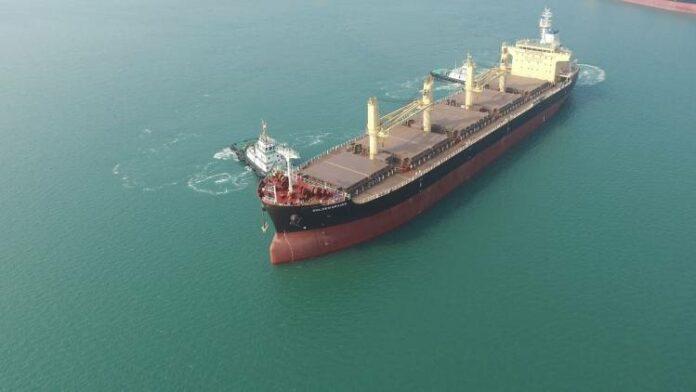
Over the course of the past couple of months, there have been news of mass installations of scrubbers on board entire company fleets, ranging from tankers, to dry bulk carriers and container ships. And there’s a pretty good reason for this, as analysts are suggesting that those vessels will have a competitive advantage over the rest of the fleet, when the IMO 2020 rules come into effect.

In its latest weekly report, shipbroker Intermodal said that “since the IMO’s 2020 global cap on sulphur in marine fuels is coming into force, ship-owners have to decide whether they will operate using emissions compliant fuels, or ensure that emissions are cleaned using an exhaust gas scrubber. We saw that even though scrubber retrofits started slowly, momentum has been building up as owners that are time-chartering their vessels stand to benefit. There are currently reported more than 1,600 ships with confirmed scrubber projects when back in 2015 the number was in the low 200. Most of the recently singed projects are for bulk and oil/chemical ships, with bulk carrier retrofits in first place, oil/chemical tankers in second and containers in third place”.

Intermodal noted that “as per Skandinaviska Enskilda Banken AB’s (SEB) IMO 2020 Report, it is estimated that less than 2,000 vessels will have been fitted with scrubbers by the implementation date, while a significant price delta between HFO and LSGO is also projected, providing the scrubber installed vessels with a significant short-term advantage post 2020. With most reports out there highlighting this advantage one would normally wonder why aren’t more owners rushing to install scrubbers at the moment”.

According to Intermodal’s Oil Products expert, Mr. Apostolos Rompopoulos, we understand that this “wait and see” approach is compounded by the fact that owners pay for scrubbers (CAPEX) and charterers pay for fuel (OPEX), and that if most vessels are operating without scrubbers, charter market prices will largely be set by those vessels factoring in higher fuel costs without a competitive disadvantage. According to the same analysis by SEB, those moving to install scrubbers now will be at a competitive advantage compared to their non-scrubber counterparts in the first few years after the implementation. These first movers will likely be able to charge substantial “freight rate premiums” to account for the fuel related savings while operating the vessel. These premiums are projected to allow for a quick payback on the initial investment as others are focusing on scrubbers.

Rompopoulos added that “we have seen Koch fixing the M/T New Champion (310kdwt, blt ’18 China) from China Merchants Energy Shipping for two years at $29,750/day with an option to upgrade the ship with scrubber installation and increase the daily rate up to $35,000/day. MSI has also calculated that in 2020, the value of the time charter premium for a Capesize vessel fitted with a scrubber will be $12,100/day, for a Panamax vessel it would be $6,800/day, $6,300/day for an Ultramax and $5,100/day for a Handysize. MSI also predicted increased asset values for tankers with scrubbers given that the time-charter premium exists”.
He concluded by noting that “as the 2020 deadline approaches it becomes clearer that vessels with scrubbers will definitely benefit with substantial premiums, while the extend of the period during which these premiums will apply remains key to the competitive advantage the scrubber investment can offer. As far as bigger ships in either sector are concerned, the installation of a scrubber is considered a no brainer for most, while when it comes to smaller sizes things are not as straightforward, with slow steaming slowly but steadily starting to become a topic of interest as a result”.

Source:hellenicshippingnews