5.5 C
New York
Home Blog Page 1259

USCG awards 12th BWMS Type Approval Certificate

0

The US Coast Guard Marine Safety Center issued the 12th Coast Guard Ballast Water Management System type approval certificate to Qingdao Headway Technology Co., for its OceanGuard BWMS.

USCG granted the Certificate after a detailed review of the manufacturer’s type approval application determined the system met the requirements of 46 CFR 162.060.

OceanGuard BWMS consists of filtration with electrolysis during uptake and neutralization during discharge. This approval covers models with maximum treatment rated capacities between 65 m3/h and 5,200 m3/h.

During October, USCG MSC granted the eleventh Ballast Water Management System Type Approval Certificate to Hyundai Heavy Industries, for its OceanGuard BWMS. The tenth Ballast Water Management System Type Approval Certificate was granted to Wartsila Water Systems, for its Wartsila Water Systems. The ninth BWMS Certificate went to BIO-UV Group for its BIO-SEA B BWMS.

So far, Qingdao Headway Technology (People’s Republic of China), Hyundai Heavy Industries (Korea), Wärtsilä Water Systems (England), BIO-UV Group (France), Samsung Heavy Industries Co (Republic of Korea), Techcross (Republic of Korea), Optimarin (Norway), Alfa Laval (Sweden), TeamTec Ocean Saver (Norway), Sunrui (China), Ecochlor (USA) and Erma First (Greece) have won the USCG type approval.
Source:safety4sea

3D classification process applied to naval vessel

0

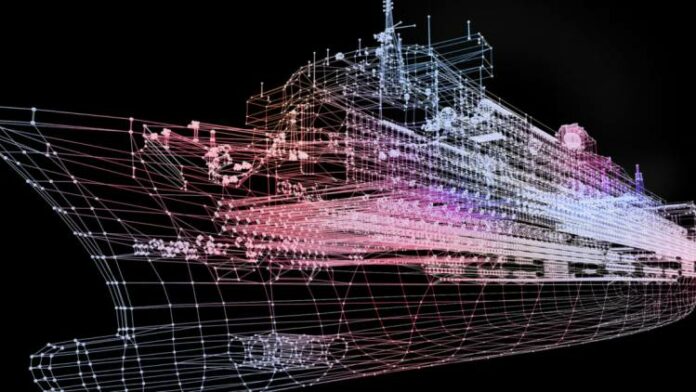
Bureau Veritas, Naval Group and Dassault Systèmes announced that a 3D classification process has been applied to a naval vessel for the first time. This project aims to reduce the time and costs of design review and improve data accuracy and traceability.

The 3D classification process uses a 3D model to exchange digital information, improve collaboration and reduce the number of iterations in the classification design review process for approving a design.

All comments and iterations can be tracked, acted upon, and reviewed in real time.

Commenting on the project, Matthieu de Tugny, COO, Bureau Veritas, Marine & Offshore, noted that 3D classification is able to limit the dependencyon 2D drawings in the design review process.

For his part, Alain Houard, Vice President, Marine & Offshore Industry, Dassault Systèmes, stated:"Today’s shipbuilders must deliver larger, more sophisticated vessels in order to stay competitive in the industry.  3D model-based classification offers a strategic advantage for meeting business challenges in quality, costs, lead time and engineering."

The 3D model integrates with the Bureau Veritas suite of modelling and calculation software tools.

Source:safety4sea

ABS: Guidance on smart function implementation

0

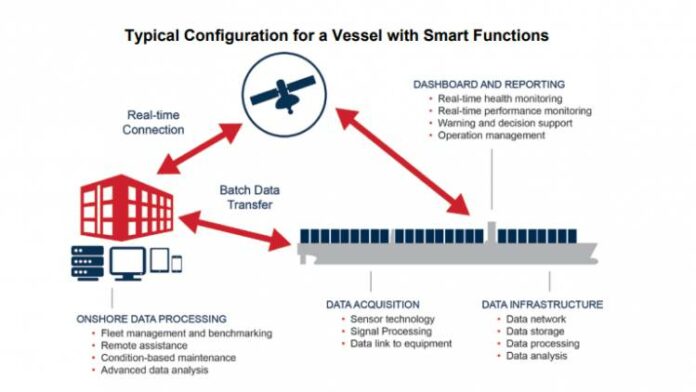
ABS issued guidance providing the marine and offshore industries an actionable framework for owners, operators and equipment manufacturers to take smart steps today in preparation for an environmentally sustainable future. The 'ABS Guidance Notes on Smart Function Implementation' support data infrastructure development, enabling health and performance monitoring, and augmenting vessel operations leading to more informed decisions in support of fast-moving environmental requirements.

"Spurred by increases in connectivity, sensors and data processing, the marine and offshore industries continue to evolve digitally at a very rapid rate while facing increased regulatory challenges…We created this guidance to provide industry with a goal-based approach framed around increased asset health awareness, vessel performance optimization and crew assistance and augmentation, all of which when approached in a smart manner lead to industry sustainability,"…said ABS Chairman, President and CEO, Christopher J. Wiernicki.

The ABS vision for Smart Function implementation is the enablement of improved decision making by all stakeholders, including both crew and shore-based personnel, to better manage vessel operations in the fulfillment of the vessel’s mission.

By implementing smart monitoring, vessel and operational data can be leveraged to assist and augment day-to-day operations, forming the foundation for autonomous operation. This shifts the burden from crews onboard reporting anomalies, to integrated systems that can identify and help resolve problems, moving decisions from ship to shore.

The following goals have been defined for Smart Function implementation:

  • Increase health state awareness in order to enhance safety and asset integrity and to minimize downtime associated with failures and maintenance, via a comprehensive data-driven approach.
  • Operate the vessel optimally to maximize asset efficiency and operational performance in order to reduce fuel consumption, emissions and Operational Expenses (OPEX).
  • Assist and augment crew with vessel operations related to navigation bridge management/practices and compliance reporting in order to:

-Enhance vessel situational awareness and navigation safety
-Reduce crew workload burden and reporting errors
-Reduce potential for human error related incidents

Smart Functions should be implemented in a secure manner without decreasing the vessel’s safety and operability. The implementation of Smart Functions in pursuit of the above goals should not adversely affect the vessel’s primary functions and core system operations.

Source:safety4sea

Port of Rotterdam welcomes ‘polluter pays’ principle

0

On October the 9th, the Transport Committee of the European Parliament adopted the Meissner report on the Port Reception Facilities and gave a mandate to the Rapporteur to start negotiations with the Council to finalize the text of the new law. In light of this, the Port of Rotterdam supports the view that minimization of waste discharges in the sea has plenty of benefits.

The Port of Rotterdam said that it offers waste reception facilities for a waste, including hazardous waste, but the polluter pays principle should be in included in the new law.

Namely, the Port said that both environmentally aware vessels and ports with well-functioning waste facilities should not have to pay for the additional costs that result from unreasonable amounts of waste delivery.

For this, the Port welcomed the European Parliament proposal to enhance the ‘polluter pays principle’ by discouraging the delivery of unreasonable quantities of garbage, including hazardous waste, for a fixed fee.

This proposal gives more incentives to ships to deliver waste generated on board in the ports, while it also encourages ships to reduce the waste at the source, by preventing ships to deliver unreasonable amounts of waste without paying for it.

The Port of Rotterdam also welcomed the exclusion of ships that take part in port related services.

Nevertheless, the Port opposes to the fact that the European Parliament made rebates mandatory for the green management of waste on board of ships.

While encouraging ships to work on sustainable waste management, The Port of Rotterdam believes the decision to give rebates must be taken at port level.

Rebates address the local environmental challenges. In some areas, waste pollution is a great environmental concern while in others it is air quality and emissions. What is more, mandatory rebates do not consider the existence of different business and governance models in ports across Europe, the Port concludes.

Source:safety4sea

MSC earns global certification for Quality Management (ISO 9001:2015)

0

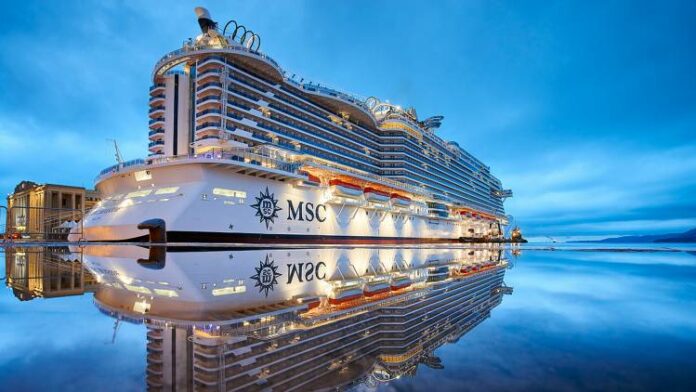
Following an audit process this year, the certification company DNV GL confirmed that all MSC cargo shipping agencies worldwide are now certified to ISO 9001:2015, the business assurance standard related to Quality Management Systems.

MSC has already been awarded the DNV GL Excellence 5 Stars rating – the highest certification for vessel management systems, safety, environment and efficiency.

ISO 9001:2015 recognises that MSC consistently provides services that meet customer and applicable statutory and regulatory requirements, all the while aiming to enhance customer satisfaction through the effective application of a quality management system.

ISO 9001:2015 is set by the International Organization for Standardization (ISO), the worldwide federation of national standards bodies. The ISO develops and publishes standards for a variety of industries with the aim of sharing knowledge, supporting innovation and providing solutions to global challenges.

MSC is continuously growing its container shipping fleet and growing the volume of TEU (twenty-foot equivalent units) carried each year, while improving the environmental performance of its ships.

MSC has also previously earned the following certifications:
 ISO 14001: Environmental Management
 ISO 50001: 2011 Energy Management Systems
 OHSAS 18001: Occupational Health & Safety
 ISO 26000: Corporate Social Responsibility Management

Source:portnews

Rolls-Royce to deliver design and ship equipment for Belgium’s new research vessel

0

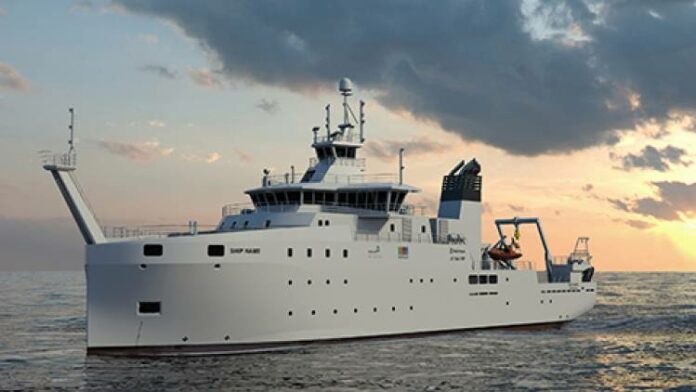
Rolls-Royce has been awarded a contract by the Spanish ship builder Freire to deliver ship design and equipment systems for a new oceanographic research vessel for Belgium. The IMO polar code compliant vessel will be designed to carry out research and survey tasks in the North Sea and its adjacent sea areas, but also in the Mediterranean and more northern areas.

The research vessel will cater for the requirements of the Belgian marine scientific community when performing advanced marine research and education at sea – today and in the coming years. This will include research within the fields of geology and sedimentology, fisheries, biology, chemistry, oceanography (including meteorology). In addition, the vessel will be part of hydrography campaigns.

Asbjørn Skaro, Rolls-Royce, Director Digital & Systems – Marine, said: “Three European countries have now chosen Rolls-Royce as a supplier of design and technology to their new research vessels; Belgium, Norway and the UK. These are all advanced, high-tech vessels that will carry out fundamental research at sea and below the seabed. We are of course honored to be part of such great tasks.

The vessel, which is to replace the current RV Belgica, will be a UT 844 WP design from Rolls-Royce. In addition to ship design, Rolls-Royce will supply the main propulsion system, including side thrusters, Promas integrated propulsion and maneuvering system, power electric system and steering gear. A vital part of the systems delivery is also automation and control systems such as the propulsion control system, Unified Bridge and dynamic positioning (DP).

The project team responsible for the new research vessel is formed by the Belgian Defence, the Belgian Science Policy Office (BELSPO) and the Royal Belgian Institute of Natural Sciences – Operational Directorate Natural Environment (RBINS-OD Nature).

Detailed engineering and construction will take place at Freire’s shipyard in Vigo, Spain and the vessel is scheduled for delivery towards the end of 2020. Rolls-Royce currently has design and system deliveries for two other vessels under construction at Freire Shipyard.

Source:rolls-royce

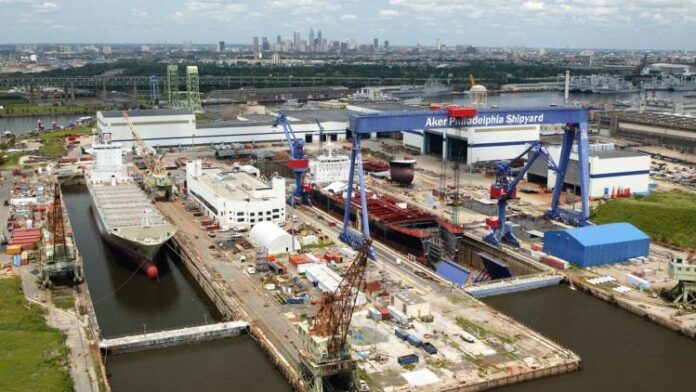
Philly Shipyard Expects “Significant” Losses Through 2019

0

On Monday, American shipbuilder Philly Shipyard said that it posted a net loss of $36 million for the year to date, including a $17 million write-off for the cancellation of two container ships for TOTE Maritime. 

The yard has only one order in its backlog, the second of two container vessels for Matson. About $40 million in shipbuilding activity for that vessel remains, and it is scheduled for completion in the first quarter of 2019. At present, Philly expects that the vessels for Matson will be a loss-making project, with no margin to provide coverage for the yard's overhead costs. 

Philly says that it is searching for options to provide additional work after the second vessel in the series is delivered. Even if it secures orders for new vessels, the firm expects to suffer significant losses in 2018 and 2019.

Philly has several future projects that it hopes to secure. In the long term, the yard is pursuing the Coast Guard's replacement heavy icebreaker contract, with support from Fincantieri. In the near term, it has two main prospects. 

The first would be the construction of two new 50,000 dwt product tankers for operation in the Jones Act trade. The yard and the unnnamed buyer signed a term sheet for the order in July, but have not yet closed on the agreement, pending the successful conclusion of several details (including securing a commitment from a charterer). 

The second is the U.S. Maritime Administration's tender for the new National Security Multi-Mission Vessels, which will replace the maritime academies' current training ships. The RFP response for the NSMMV is due at the end of the month, and MARAD will make its decision by early January, with the contract award to follow shortly thereafter. MARAD has already secured funding for the first vessel in the series from Congress. 

Source:maritime-executive

Russia Revises Northern Sea Route Ice Class Requirements

0

Russia's Ministry of Transport has announced changes to ice navigation criteria for the Northern Sea Route (NSR). New zones with lower ice-class requirements are expected to optimize the placement of icebreakers.

More zones will be added to the seven already defined so that areas of rare ice and clear water are removed from larger zones typically characterized by more ice. The current zoning prevents vessels with weak ice fortifications from entering areas with favorable ice conditions increases cargo delivery time,, reduces the time for geological exploration on the NSR shelf, and violates the rhythm of work of transport vessels in sea ports with year-round navigation such as Sabetta, says the Ministry.

The changes are expected to take effect in May 2019.

In the first eight months of 2018, shipping on the route increased by 81 percent. In 2017, the Northern Sea Route Administration issued 662 permissions to vessels for navigation along the NSR, though only 107 of these for foreign-flagged vessels. During that year, about 10 million tons of cargo was shipped to and from Russian Arctic ports and that volume is due to increase to 80 millions by year 2024. This could significantly strain the capacity of the country’s icebreaker fleet.

Source:maritime-executive

Container Lines and Terminal Operators Sign Blockchain MOU

0

Nine ocean carriers and terminal operators have signed an MOU to form a consortium to develop the Global Shipping Business Network (GSBN), an open digital platform based on distributed ledger technology. 

The participants include ocean carriers CMA CGM, COSCO Shipping Lines, Evergreen Marine, OOCL, and Yang Ming; terminal operators DP World, Hutchison Ports, PSA International and Shanghai International Port; and software company CargoSmart. The new platform will connect all stakeholders, including wacarriers, terminal operators, customs agencies, shippers and logistics service providers to digitize their supply chain.

CargoSmart initiated the formation of the blockchain consortium, and will employ big data analytics, artificial intelligence, Internet of Things and blockchain technologies to develop the system. The first planned application will allow shippers to digitize and organize their dangerous goods documents and automatically connect with relevant parties to streamline the approval process. The application is scheduled to be available in December 2018.

In August, A.P. Moller – Maersk and IBM introduced their global blockchain solution TradeLens, with 94 organizations already participating. The companies announced their joint venture in January this year after collaborating on the concept since 2016. Early adopters include more than 20 port and terminal operators across the globe, including PSA Singapore, International Container Terminal Services Inc, Patrick Terminals, Modern Terminals in Hong Kong, Port of Halifax, Port of Rotterdam, Port of Bilbao, PortConnect, PortBase and terminal operators Holt Logistics at the Port of Philadelphia. They join the global APM Terminals' network in piloting the solution at over 230 marine gateways worldwide.

The following executives signed up for CargoSmart's system development at a signing ceremony at the China International Import Expo in Shanghai on November 6, 2018:

Rodolphe Saadé, Chief Executive Officer and Chairman, CMA CGM
Wang Haimin, Managing Director, COSCO SHIPPING Lines
Matthew Leech, Chief Operating Officer, Port and Terminals, DP World
Lawrence Lee, President, Evergreen Marine Corporation
Ivor Chow, Director – Corporate Finance & Business Development, Hutchison Ports
Andy Tung, Co-Chief Executive Officer, Orient Overseas Container Line
Tan Chong Meng, Group Chief Executive Officer, PSA International 
Yan Jun, President, Shanghai International Port (Group)
Bronson Hsieh, Chairman, Yang Ming Marine Transport Corporation
Steve Siu, Chief Executive Officer, CargoSmart

Source:maritime-executive

James Fisher digs in offshore

0

James Fisher Subsea Excavation has introduced two new ultra-low draft tools for the European offshore wind market.

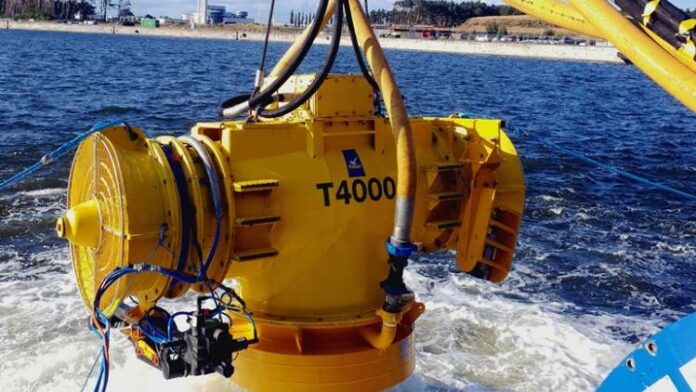
JFSE has launched the T4000 ULD, a reengineered version of the T4000, which offers shallow water excavation. In addition, the company is also offering the SP6000 ULD, which was developed to overcome limitations posed by cranes on smaller shallow vessels.

Both solutions have been designed to offer more localised trenching in shallow water, and can operate operate in water depths from one metre to 300 metres, handling soils ranging from soft sand to clays with shear strength of 300kPa.

FSE technical director Graham Murdoch said: "We are committed to constantly evolving our range, particularly in response to client requirements, a direct result of which is the T4000 ULD. We looked at the fluid dynamics and efficiencies of our equipment and have again satisfied the needs of our clients."

The SP6000 ULD was developed after clients requested a smaller CFE tool to tackle the limitations posed by cranes on some smaller shallow water vessels. JFSE has successfully completed three projects with the new tool since its introduction this year.

Source:renews