5.5 C
New York
Home Blog Page 1258

Van Oord installed reef balls and cages with flat oysters with in North Sea wind farm

0

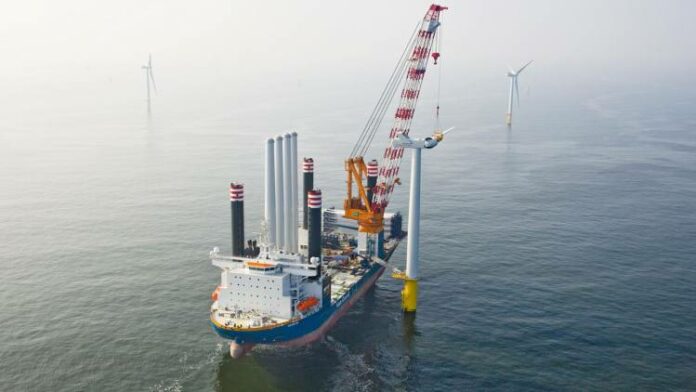
Van Oord installed, in cooperation with the North Sea Foundation, the Natuur & Milieu organisation and Eneco, reef balls and cages containing flat oysters within the Luchterduinen offshore wind farm, 23 kilometres west of the Dutch port city of IJmuiden. The “Rich North Sea” project will investigate how nature conservation and sustainable energy generation can reinforce one another, the company said in its press release.

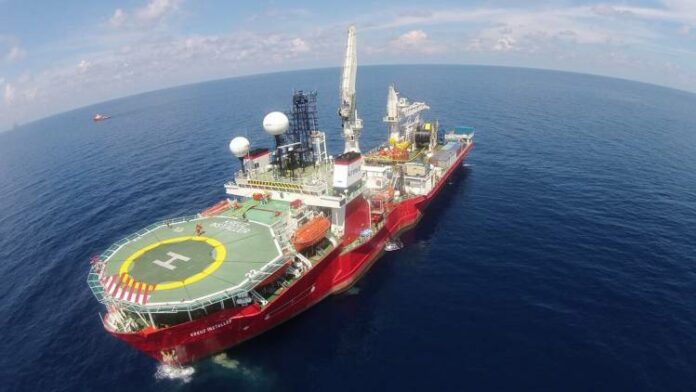
Van Oord’s installation vessel Ham 602 took the reef structures out from IJmuiden and positioned them at a depth of approximately 20 metres within Eneco’s Luchterduinen wind farm. The artificial reef includes reef balls and cages containing adult oysters. The total area for this pilot project is 3 hectares (100×300m).

Until 2022, nature development within the wind farm will be scientifically investigated by Waardenburg Consultants, SAS Consultancy, and Wageningen Marine Research, including using underwater cameras. The aim is to determine whether the oysters grow and reproduce sufficiently, and whether their larvae establish themselves in the vicinity and form a reef. Natural reefs play an important role, filtering water and acting as an attachment point and source of food. Unfortunately, such reefs hardly exist any longer in the North Sea due to human intervention and diseases. During the pilot project, the participating organisations will investigate the optimum underwater conditions to enable nature to thrive within offshore wind farms.

Source:portnews

Celebrity Edge Begins Transatlantic Voyage

0

Celebrity Cruises officially took delivery of Celebrity Edge from the Chantiers de l'Atlantique shipyard in Saint-Nazaire, France this month, and the vessel has now departed on her first Transatlantic voyage.

The 2,900-passenger vessel is the first of four vessels from Celebrity Cruises’ Edge Class. On November 6, she began her transatlantic voyage to her home port at T25 at Port Everglades in Fort Lauderdale, Florida. Her inaugural season will be spent sailing alternating seven-night eastern and western Caribbean cruise itineraries, with her Maiden Western Caribbean voyage departing on December 9, 2018, and her Maiden Eastern Caribbean voyage departing on December 16, 2018. Then, in spring of 2019, Celebrity Edge crosses the Atlantic again to the Mediterranean with a range of seven- to 11-night sailings.

Celebrity Edge marks a turning point in Celebrity’s approach to ship design. From the first sketches, every step was done in 3-D, making Celebrity Edge the first ship to be completely designed in 3-D. 

One of the biggest influences on the design of Celebrity Edge was the desire to make the destination experience more immersive, and the vessel has a unique, outward-facing design that breaks from traditional ship design. The aim is to enable guests to feel more connected with the sea and their destinations.

Ship Specifications

Double Occupancy: 2,918
Crew: 1,320
Guest Decks: 14
Staterooms: 1,467
Tonnage: 129,500
Length: 1,004 feet
Beam: 128 feet
Drauft: 27 feet
Cruising Speed: 22 knots

Source:maritime-executive

Ørsted Completes Acquisition of Deepwater Wind

0

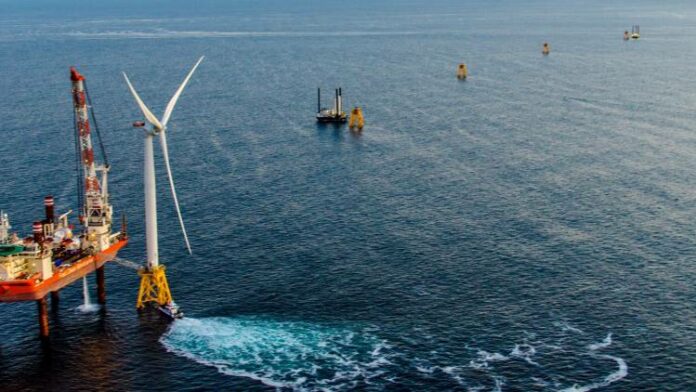
Ørsted has obtained approval by U.S. competition authorities completed the acquisition of a 100 percent equity interest in Deepwater Wind.

Ørsted entered into an agreement with the D.E. Shaw Group to acquire a 100 percent equity interest in Rhode Island-based Deepwater Wind earlier this month at a purchase price of $510 million. 

The two companies’ offshore wind assets and organizations will be merged to become the group with most comprehensive geographic coverage and the largest pipeline of development capacity in the U.S.

Deepwater Wind’s portfolio has a total potential capacity of approx. 3.3GW comprising:

•   Block Island (30MW), the only operational offshore wind farm in the U.S. Block Island comprises five General Electric 6MW turbines with a total capacity of 30MW. The Block Island wind farm, located three miles from Block Island, Rhode Island, came into operation in December 2016.

•   Three offshore wind development projects in Rhode Island, Connecticut, Maryland and New York totaling 810MW of capacity with long-term revenue contracts in place or pending finalization.

•   Approximately 2.5GW of offshore wind development potential across three lease areas in Massachusetts and Delaware. Of this, 1.2GW is developed through an equal joint venture with PSEG, a New Jersey utility.

Ørsted’s current U.S. offshore wind portfolio has a total capacity of approx. 5.5GW comprising:

 •   Development rights for up to 2GW at the Bay State Wind site off the coast of Massachusetts owned in a joint venture with Eversource.

•   Development rights for up to 3.5GW at the Ocean Wind site off the coast of New Jersey.

•   In Virginia, Ørsted will be constructing two 6MW wind turbine positions for phase one of Dominion Energy’s Coastal Virginia Offshore Wind Project. Ørsted has exclusive rights with Dominion Energy to discuss the potential development of up to 2GW of offshore wind capacity.

With the combined organization and asset portfolio, Ørsted will be able to deliver clean energy to the seven states on the U.S. East Coast that have already committed to build in total more than 10GW of offshore wind capacity by 2030.

The name of the new organization is Ørsted US Offshore Wind. It will be represented by a local management team headed by Ørsted US Offshore Wind CEO Thomas Brostrøm, Co-CEO Jeff Grybowski, President and CFO David Hang both from Deepwater Wind, and COO Claus Bøjle Møller from Ørsted.

Source:maritime-executive

C&C Marine Opens Indoor Painting and Robotic Blasting Facility

0

C&C Marine and Repair of Belle Chasse, Louisiana has announced the opening of a new indoor, climate-controlled paint and blast facility. The 80,000 square foot facility can accommodate barges up to 320’x75’x20’ and can blast and paint a standard 30,000 barrel tank barge or two 10,000 barrel tank barges in 7-10 days. The fully enclosed, climate-controlled environment allows for uninterrupted operation year round. 

We modified technology that was being used to blast rail cars and containers and have successfully adapted the process to blast barges,” says C&C Marine and Repair’s owner, Tony Cibilich. The fully automated blasting robots use steel grit as the blast medium, which is blasted uniformly across the surface of the barge.

The facility's enclosure houses two robotic blasters, each with two oscillating nozzles that continuously blast the barge from the top and sides. A separate bottom-blasting robot, outfitted with oscillating nozzles, blasts the bottom surface of the barge. Each blasting robot is capable of blasting at a rate of 2,000 square feet per hour. As a result of the speed and efficiency of the fully-automated robotic blasting system, the time to blast a standard inland hopper barge takes one fourth the amount of time as the traditional manual sand blasting method.

The benefit of blasting and painting in an enclosed, environmentally-controlled facility is tremendous. Not only are you insulated from weather delays and humidity, but you have benefits related to efficiency, cost-savings, employee safety and protection to the environment,” says Cibilich.

The steel grit blast medium also provides a superior surface for paint adhesion and bonding resulting in NACE III inspector verified surface profile readings between 4.5 and 4.8, as opposed to a surface profile reading of 3.0-3.5 from sand or slag medium. The improved profile finish leads to a better paint adhesion to the steel which leads to fewer required paint jobs during the life of the barge.

The new facility represents C&C Marine and Repair’s continued commitment to adopting new technology and employing best practices, particularly as it relates to employee safety and protecting the environment. The indoor facility prevents overspray, contamination and run-off of paint and blast media into adjacent waterways. The facility’s state-of-the-art air filtration system collects and encapsulates over 99% of all airborne particulates associated with the blast and paint process. The steel grit blast particles are continually recycled and reused throughout the blasting process. The result is one of the most environmentally safe blasting alternatives available in the barge and marine industry.

The great thing about this technology is that, in addition to being faster, more efficient, and environmentally safer, it also creates a safer work environment for our employees,” says Mike Wade, C&C's manager of blasting operations. During the blasting process, operators oversee and control operations safely from an air-conditioned control room. Additionally, by eliminating the need to erect scaffolding to perform blasting operations, the dangers associated with manually operating a blasting hose at multiple elevations are eliminated. Finally, the use of non-toxic steel shot blast media offers significant health benefits to the operators and technicians over traditional sand-based blast media.

With the first few barges completed, the new blast and paint facility is another example of C&C Marine and Repair’s continuing commitment to remain a technological leader and innovator in the marine fabrication and repair industry.

Source:maritime-executive

 

Pirate Attack Thwarted West of Yemen

0

On November 3 the Stena Imperial reported a suspected pirate approach while on northbound passage through the Red Sea west of Yemen on her way from Far East to Rotterdam for discharge.

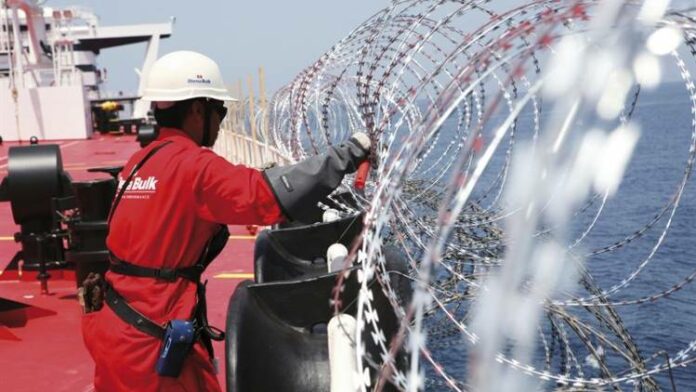
Two suspicious skiffs were found approaching Stena Imperial from the port side at a distance of 1.5 nautical miles. The alarm was raised and the Master and the on board security team mustered on the bridge. Hand flares were fired towards the skiffs as warning shot as they were continuously approaching towards the vessel. Master broadcasted a security message about the attempted attack and also contacted a close by warship. Both skiffs ceased approach after flares were fired from the vessel and passed by the stern. One of the skiffs which passed astern again tried to approach the vessel one more time and once again hand flares were fired. The skiff then slowed down and moved towards another vessel.

Erik Hånell, CEO Stena Bulk, said, “On the whole the pirate situation in the Gulf of Aden has calmed down and there have not been any hijackings for a long time. But when we sail off the coast of Yemen we choose to use guards due to the lawless state prevailing in the country at the moment. This has created the same kind of desperation in the population as we saw in Somalia a number of years ago.”

We are monitoring the situation closely via our security department, which also keeps an eye on the situation in general on the global level. For us it is extremely important to take the measures that are required so that the crew feel safe, and that we at the same time follow the local regulations.

Stena Bulk noted it employs teams of three to four armed guards on board ships passing through a high risk area, including off the coasts of Yemen and Nigeria. The team is under the captain's orders and is not allowed to use its weapons unless the captain has approved.

“The crew on board the Stena Imperial acted in a very professional manner during the incident and worked closely with the security team to resolve the situation as safe as possible,” Hånell said. “We put a very high value on our crew and always make sure that they are provided the proper training to be able to handle all sorts of situations in a calm and professional way. A well trained crew working together with a security company when transiting these areas also makes us as owners feel secure about their safety on board.

Source:marinelink

Höegh LNG’s Höegh Esperanza FSRU Arrives at Tianjing, China

0

Höegh Esperanza, the Floating Storage Regasification Unit (FSRU) unit operated by Norway’s Höegh LNG Holdings, has arrived at the Tianjin LNG terminal in China and started commissioning for FSRU operations.

Höegh Esperanza is currently serving a three-plus-one year FSRU/liquefied natural gas carrier (LNGC) time charter with CNOOC Gas & Power Trading and Marketing, said a press release from the LNG transportation and services provider.

Under the contract, Höegh Esperanza will be utilised in FSRU mode for a minimum period each year, with the balance of the year in LNG carrier mode and/or FSRU mode. The rate structure corresponds to the mode of use, with an anticipated annualised EBITDA contribution when in FSRU mode of approximately USD 33 million.

The FSRU Höegh Esperanza was delivered from Hyundai Heavy Industries in April 2018 and entered the contract with CNOOC in June 2018. This high-specification FSRU has both open and closed loop regasification capability, an import capacity of around 6 million tonnes of LNG per year and storage capacity of 170,000 cubic meters of LNG. It is equipped with a GTT Mark III membrane containment system and dual-fuel diesel-electric propulsion, providing it with full LNGC trading capabilities.

Sveinung J.S. Støhle, CEO & President of Höegh LNG, said: "We are proud to assist CNOOC in enabling China to import more attractively priced LNG. Following an aggressive coal-to-gas switch, China’s LNG imports look to increase by almost 50% in 2018, and the potential for further increases in LNG imports remains significant. Combined with the sale-and-leaseback financing for FSRU #10 secured earlier this year, this FSRU/LNGC contract for Höegh Esperanza with CNOOC reflects Höegh LNG’s commitment to the Chinese market, and our ambition to remain the preferred partner for future LNG import expansions.”

Höegh LNG operates world-wide with a leading position as owner and operator of floating LNG import terminals; floating storage and regasification units (FSRUs), and is one of the most experienced operators of LNG Carriers (LNGCs).

Höegh LNG's vision is to be the industry leader of floating LNG solutions. Its strategy is to develop the business through an extended service offering, with large-scale FSRUs as the main product, and focus on establishing long-term contracts with attractive risk-adjusted returns involving credible counterparts.
 

Source:marinelink

TOP Ships Signs New TC with BP

0

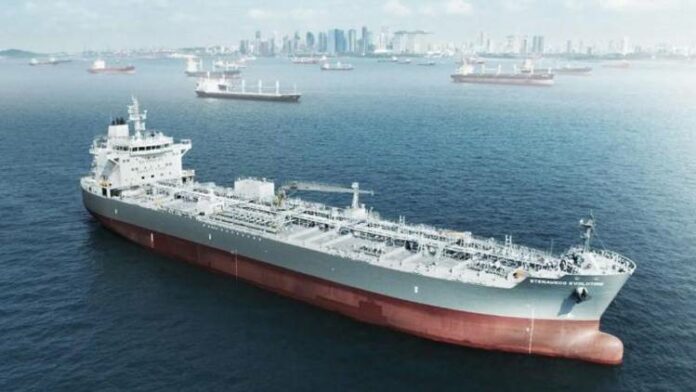
Greece-based ship-owning company TOP Ships announced that it has agreed a new time charter employment contract for 2 years with BP Shipping Ltd for its product/chemical tanker M/T Eco Revolution.

The international owner and operator of modern, fuel efficient “ECO” tanker vessels currently focusing on the transportation of crude oil and petroleum products, said in a press release that the new time charter will commence in January 2019 immediately after the expiry of the present time charter employment contract.

The revenue backlog expected to be generated by this fixture is about $10 million.

The release quoted Evangelos Pistiolis, the President, Chief Executive Officer and Director of the Company, as saying:“This charter is a vote of confidence in our high quality asset strategy and our high quality vessel management. Following this fixture, total gross revenue backlog for the fixed charter period of operating vessels, from June 30, 2018, stands at about $221 million, increasing to about $235 million when adding the 50% of our joint venture vessels.”

Source:marinelink

Saras Invests in New Bunkering Terminal

0

Italian refiner Saras is constructing a ship-refueling terminal at its Sardinia plant and will market a new, cleaner marine fuel ahead of a major regulatory change in 2020.

From January 2020, the International Maritime Organization (IMO) will ban ships from using fuels with a sulphur content above 0.5 percent, compared with 3.5 percent now, in one of the biggest changes in the oil market in decades.

Refineries around the world have been gearing up for the switch by reducing output of high-sulphur fuel and upgrading plants to maximize production of the cleaner, more expensive fuel, which is similar to diesel.

Saras is investing in infrastructure that will allow ships to dock outside its 300,000-barrels-per-day Sarroch refinery in Sardinia to directly load ultra-low-sulphur marine fuel oil (ULSFO), in what is known as bunkering, CEO Dario Scaffardi said.

"Today, bunkering is based mainly on blending. In the Mediterranean you have Malta, where people bring different fuels and blend it. With the new specs, this (blending) will be very difficult to achieve for technical reasons so people like us, who will be able to produce directly the new fuel, will have the competitive advantage," Scaffardi said.

"With a small investment, we will have bunkering infrastructure and a lightering vessel and start selling locally fuels to expand the market."

The company did not disclose the size of the investment.

Saras, one of Europe's most modern refineries which also has a trading desk in Geneva, is developing its own ULSFO that the company will start marketing directly to shippers.

The plant will initially produce 500,000 to 600,000 tonnes of ULSFO per year, he said.

"This is a new line of business and we should be able to adapt to various market needs."

Source:marinelink

Nexans wired into Borssele 1&2 at 66kV

0

Nexans has secured a contract from Orsted to supply and install array cables for the 752MW Borssele 1&2 offshore wind farm complex off the coast of the Netherlands.

The multimillion-euro deal,covers three-phase 66kV copper cables with two cross-sections to connect the 94 turbines together and to the offshore substations. It is part of a new five-year framework agreement between the two companies.

Nexans will also provide fittings and accessories for the project, including T-connectors.

The array wires will be produced at the Nexans plant in Hanover, Germany, for delivery in 2019. Cable accessories will be supplied by Nexans Euromold facility in Erembodegem, Belgium.

Nexans Subsea and Land Systems will complete connection to the turbine bases in 2020.

Nexans Subsea and Land Systems business group senior executive vice president Vincent Dessale said: “The Borssele wind farms will be the first time that Orsted has used Nexans new 66kV cables for its offshore wind farms.

“Operating at this increased voltage will result in lower losses than using array cabling at the normal 33kV and 36kV voltage level.

“Nexans is proud to be the world's only supplier that is currently able to equip this new generation of wind parks with a complete in-house portfolio of state-of-the-art cables and standardised connection solutions suitable for a maximum operating voltage of 72.5kV.“

Borssele 1&2 is located around 23km off the Dutch coast in 14 to 36 metres of water.

It will feature Siemens Gamesa 8MW turbines on foundations supplied by both Sif and EEW SPC. EEW OSB and Bladt will supply 35 transition pieces each, with the remaining 24 to be ordered later this year by Orsted.

Source:renews

Port of Valencia, Port of Montreal join TradeLens blockchain project

0

Valenciaport, one of the largest ports in Europe by volume, and the Port of Montreal, Eastern Canada’s largest container port, have joined Maersk and IBM’s TradeLens project, a technological solution to apply blockchain to the global supply chain.

TradeLens project is a technological solution developed by IBM and Maersk that allows the blockchain to be applied to the global supply chain.

The TradeLens ecosystem currently includes more than 20 port operators and terminals around the world, representing approximately 234 seaports on five continents, including PSA Singapore, ICTSI, Patrick Terminals, Modern Terminals in Hong Kong, Port of Halifax, Port of Rotterdam, Port of Bilbao, PortConnect, PortBase and terminal operators Holt Logistics in the Port of Philadelphia.

On November 5, Valenciaport announced its involvement with the TradeLens project. Valenciaport will be integrated as "Early Adopters", a category which the parties consider themselves of mutual interest so that the technologies that are developed consider Valenciaport as a collaborator from the beginning.

Furthermore, the Port of Montreal joined TradeLens, too, alongside Canada Border and Services Agency (CBSA) as the two newest Canadian members of the global, blockchain-enabled shipping solution.

Sylvie Vachon, President and CEO of the MPA stated that: "We are convinced that joint work on a global scale is part of the key solutions to achieve a better flow of information and goods for the benefit of clients and partners. TradeLens is fully aligned with our objectives and business strategy centred on innovation and efficient shipping."

According to the data collected by the system itself, the use of TradeLens allows to reduce the transit time of a shipment by 40%, which represents an important economic saving.

The developers of TradeLens have indicated that the information contained in this system grows at the rate of one million daily data shipments, surpassing EDI systems used in the common way, in addition to avoid the use of emails, messaging and fax services.

Source:safety4sea