5.5 C
New York
Home Blog Page 1257

UK northeast to seize offshore opportunity

0

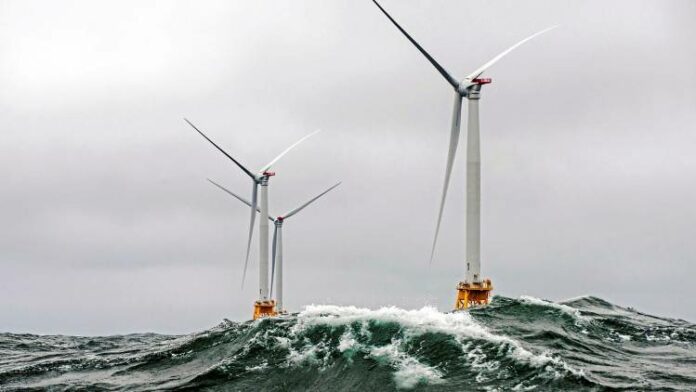
Northeast England is looking to take advantage of export opportunities presented by the development of offshore wind in emerging markets around the globe.

Our costs as an industry have come down and we already have zero-subsidy project in Europe – now the industry is going truly global,” Energi Coast chairman and Tekmar chief executive James Ritchie told delegates at the Offshore Wind North East 2018 conference on Thursday.

During the four-day conference a delegation from Brazilian oil and gas giant Petrobras has been visiting the region, Ritchie said.

The delegation has been meeting with companies working in offshore wind as part of Petrobras' plan to break ground on new developments in South America.

There are also projects in development off south-east Asia, india and the US. You have almost everything you need to build a wind farm between Blyth and the Humber,” Ritchie said.

He said there are 565 companies in the north east that work in subsea or the offshore energy sector.

Source:renews

Damen holds keel-laying ceremony for ‘CEMEX Go Innovation’ at Damen Shipyards Mangalia

0

Damen Shipyards Group recently held a keel-laying ceremony for the CEMEX Go Innovation at Damen Shipyards Mangalia in Romania. The vessel is the first Damen MAD – the next generation of marine aggregate dredgers. The construction of the new vessel is drawing upon collaboration with multiple companies within the Damen Group, as well was with external partners, working together towards the development of a new standard in marine aggregate dredging.

Damen has designed the future-proof vessel for long-lasting durability for operations in North Sea conditions over the coming decades. Particular attention has been paid to sustainability, safety and performance. The MAD will extract sand and gravel from the seabed at up to -55 metres.

During the ceremony, CEMEX Marine Fleet Engineering Manager Mark Williams undertook the traditional role of welding the coins. On this occasion the coins used were a British Pound, a Dutch Guilder and a Romanian Leu, commemorating respectively the regional base of the client, the home country of the shipbuilder and the location of the shipyard. Kurt Cowdery, Director CEMEX Marine Aggregates said, “This is a fantastic investment for the future, allowing us to safely source the materials we need and enabling us to develop and grow in the UK and Europe.”

Damen Area Director Frank de Lange said, “This is an important milestone in the construction of this, the first new Marine Aggregate Dredger. We are very much looking forward to the coming construction and to delivering the vessel to CEMEX next year – and also to seeing CEMEX Go Innovation in action, demonstrating her strong credentials.

The keel-laying is the first to take place since Damen began the operational management of the shipyard now known as Damen Shipyards Mangalia in July this year. The yard, on the Black Sea coast, has three drydocks with a total length of 982 metres and 1.6 kilometres of berthing space. The 48 and 60 metre wide docks provide Damen with the capacity to cater for larger maritime vessels and structures.

Source:hellenicshippingnews

Port of Hamburg: 5G applications pass field test

0

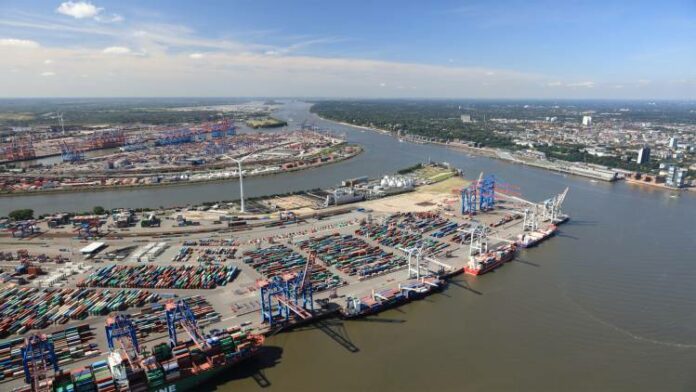
In a world first, the Hamburg Port Authority, Deutsche Telekom, and Nokia are testing new aspects of the 5G standard using various applications in real-world industrial conditions at the Port of Hamburg in Germany. Covering around 8,000 hectares, the Port back in January became a testing ground for reviewing innovative technology and its suitability for rollout in an industrial environment. The field test is being carried out as part of the EU-funded 5G-MoNArch project in Hamburg and is set to run for two years. The goal is to establish a basis for defining further aspects of the 5G standard.

Three case studies using real-life applications demonstrate the reliability of the new standard. In the first, partners have installed sensors on ships belonging to HPA’s subsidiary, Flotte Hamburg GmbH & Co. KG. These sensors transmit movement and environmental data in real time from across large swathes of the Port. In another example, a traffic light has been linked to the mobile network and can be operated remotely by the HPA control center to control traffic as it flows through the Port. Trucks, for example, are guided quickly and safely around the site. In the third example, the new standard makes high data volumes available quickly outside of existing networks, transmitting 3D data to an augmented reality application. Smart glasses use the information to show wearers building data relating to future or former structures in a real environment. In future, this technology will help engineers to monitor or optimize construction planning directly on site at the Port.

The aim of the Port of Hamburg project is to gain evidence that complex mobile applications with many different requirements can work reliably over one single network. Take particularly high data rates or a high volume of sensors, for example. In order to cope with these demands, the mobile network in the test environment is split into special virtual networks known as network slices. Each slice supports a specific requirement. The result? Separate virtual networks that can be used for managing the traffic light system or transmitting environmental data, to name just two. The new architecture is the first of its kind to allow networks to be adapted dynamically and flexibly to the demands of a broad spectrum of applications. 5G really is the intelligent network of the future.

The test bed has given us a glimpse of the huge potential that 5G and, in particular, network slicing will offer,” says Jens Meier, CEO of HPA. “I believe the new standard will form the basis for solving tricky industry challenges and is the last push we need to make a breakthrough in terms of digitalization. I’m proud that the City of Hamburg and the Port of Hamburg are among the first to benefit from this technology.”

Antje Williams, Executive Program Manager 5G at Deutsche Telekom, said: “This EU project is an amazing opportunity to test out key aspects of the new 5G technology together with our customer HPA and develop it in line with the customer’s needs. Not only are the findings from the project useful for the future standardization of 5G, but they also enable us to come up with new and innovative solutions for industry.”

Ports in general need to run smoothly and incredibly efficiently. At the Port of Hamburg, we have demonstrated that 5G can play a big role in this regard. The testing ground is delivering invaluable hands-on experience and data that will help us when implementing future Smart Port concepts using 5G communication networks and technologies like network slicing,” adds Marc Rouanne, head of Mobile Networks at Nokia.

The technological basis for the testing ground is provided by a transmitter installed at a height of over 150 meters on Hamburg’s television tower in January 2018. The stability of the mobile signal is monitored and verified by numerous measurement runs on land and the Elbe river. Industrial applications require a telecommunications network that is reliable and highly secure. Equally so, it must be able to support a large spectrum of applications. As the findings from the 5G testing ground have now demonstrated in practice, network slicing is the way forward.

5G, the next-generation communications standard, carries huge potential for use in an industrial environment. The Hamburg Port Authority (HPA), Deutsche Telekom, and Nokia are happy with developments at the 5G testing ground since it went into operation.

Background to 5G MoNArch

5G is a completely new network concept that integrates fixed-line and mobile communications. However, it’s not solely about making bandwidths ever larger or speeds ever faster. 5G will be used for many diverse applications with very different requirements in terms of speed, response time, security, and capacity. It will play a key role in new applications emerging from the Internet of Things and Industry 4.0. Both the manufacturing and logistics industries in particular can benefit enormously from 5G mobile communications.

The 5G trial at the Port of Hamburg is part of a two-year research project entitled 5G MoNArch (5G Mobile Network Architecture for diverse services, use cases, and applications in 5G and beyond). 5G MoNArch aims to implement concepts for 5G mobile communications architecture in practice. Findings from the deployment of 5G network slicing in a real-world test environment are used to review and improve the underlying concepts.

While the focus in Hamburg is on integrating 5G into transportation and infrastructure management systems, a second testing ground in Turin is looking at multimedia applications. The Horizon 2020 EU Framework Programme for Research and Innovation is funding the 5G MoNArch project as part of phase II of the 5G Infrastructure Public Private Partnership (5G PPP).

Source:hellenicshippingnews

Sweet Success In The Eagle Ford

0

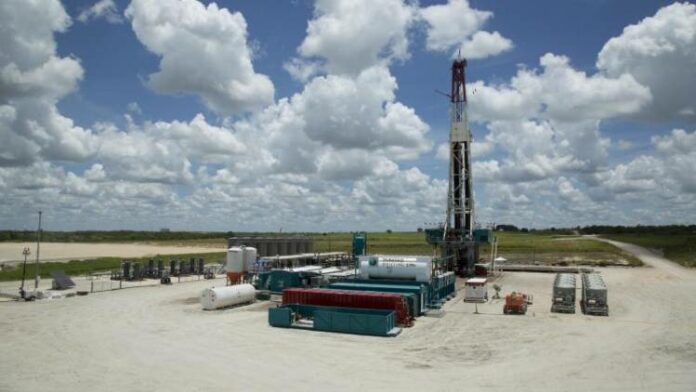
Everyone expected alternative energy to be the big story of the 21st century. However, the successful development of unconventional reservoirs delivered what Greg Leveille, CTO for ConocoPhillips, described as an “energy miracle.” Contributing to that miracle is the resource-rich Eagle Ford Shale and the “enormously important role” it played in shifting the U.S. from the role of energy importer to energy exporter.

Today the U.S. is the world’s largest producer of hydrocarbons at 27.5 million barrels of oil equivalent per day,” said Leveille before a packed crowd at Hart Energy’s DUG Eagle Ford Conference in San Antonio in mid-September. “We are well ahead of Russia, which is just a bit over 20 million barrels of oil equivalent per day.

For evidence of the Eagle Ford’s prolific potential, look to its production history. In a span of roughly five years, production shot from less than 500,000 boe/d in 2010 to 2.5 MMboe/d in early 2015, according to Leveille. While the drop in oil prices caused production to fall to below 2 MMboe/d in 2017, it didn’t stay down for long as production is growing again at a “very rapid pace,” he noted. The Eagle Ford is the one of the top three unconventional oil plays in the U.S., behind the Marcellus Shale and Delaware Basin.

For ConocoPhillips, the Eagle Ford is the company’s first horizontal shale play in its history, holding approximately 210,000 net acres primarily in DeWitt, Karnes and Live Oak counties. The shale play has “some areas with extremely good rock with extremely good reservoir quality, areas where you can get the production that has a cost supply down in the $20 per barrel range,” Leveille said.

Our primary mission as an oil and gas operator is to acquire acreage in those areas with the very best rock,” he said. “We did a fairly good job of doing this in that our 200,000 acres are located mostly in the best part of the Karnes and DeWitt county sweet spots.

The good position, paired with ConocoPhillips’ “relentless focus on lowering cost of supply,” led the company to secure the top spot among Eagle Ford operators. For ConocoPhillips, it is $25/bbl as compared to the $30/bbl-plus cost of supply for other area operators, according to Leveille’s presentation.

Along with an optimal pace of development, four technologies have been key to the company’s success in keeping the costs of supply low for its fields. The company’s “Drilling Execution Efficiency Platform” and the use of digital acoustic sensing to optimize completions are two of the four. The remaining two go far in demonstrating the scientific and experimental approaches that are delivering returns for the company.

Source:epmag

Norway, Newfoundland & Labrador Keep Arctic Exploration Alive

0

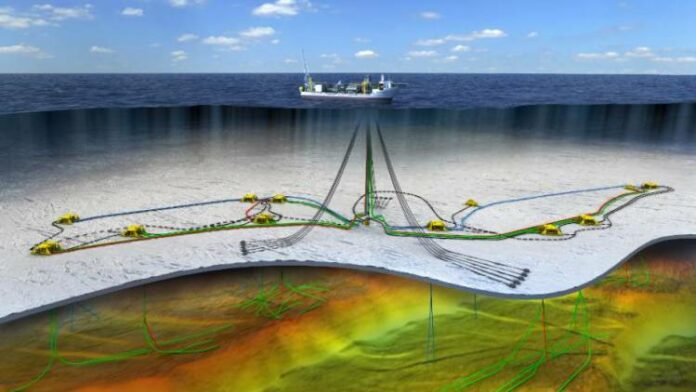
Some energy companies chasing potential hydrocarbon bounties in a region commonly known for its harsh environment, high price tags, infrastructure needs and environmental sensitivity are finding success and progressing multibillion-dollar projects.

Projects like the Equinor-operated Johan Castberg development in the less harsh Barents Sea and Bay du Nord discovery in the Flemish Pass Basin offshore Newfoundland in the Atlantic Ocean highlight the Arctic region’s potential. The region, which continues to compete with onshore areas for investment dollars, still has its challenges but has managed to attract players, according to panelists speaking Nov. 5 at the Arctic Technology Conference.

The change for us has been increased investments and knowledge of our prospectivity,” said Doug Trask, assistant deputy secretary of royalty and benefits for Newfoundland and Labrador’s Department of Natural Resources. “Prior to the last five or six years we were not investing and the awareness was not there of how many basins we had and what the size of some of those potential discoveries were.”

Newfoundland and Labrador has more than 20 basins with lots of exploration potential, he said, noting its regularly scheduled license rounds have played a role in gaining new entrants to its offshore region. The government has also made strategic investments in geoscience, including 3-D seismic data, in advance of license rounds to help attract investors.

Newfoundland is well positioned to play a role in supporting Arctic development. We have 50 years of exploration behind us and 20 years of production in some of the most challenging offshore environments there is characterized by icebergs, sea ice and difficult metocean conditions,” Trask said. “Today we produce about 1.8 billion barrels of oil from a number of facilities.

The province has undertaken a 12-year plan to speed up oil and gas development offshore, aiming to drill more than 100 exploration wells in multiple basins and increase production to more than 650,000 barrels of oil equivalent per day from the current level of about 250,000 barrels by 2030.

Production from the Exxon Mobil Corp.-operated Hebron project, which started production in late 2017, is expected to help in reaching the goal. The platform, which consists of a stand-alone gravity-based structure about 350 km (200 miles) offshore Newfoundland and Labrador, will produce up to 150,000 barrels per day at its peak.

Source:epmag

Watch: Container Ship “MSC AJACCIO” Moorings Break In Strong Wind

0

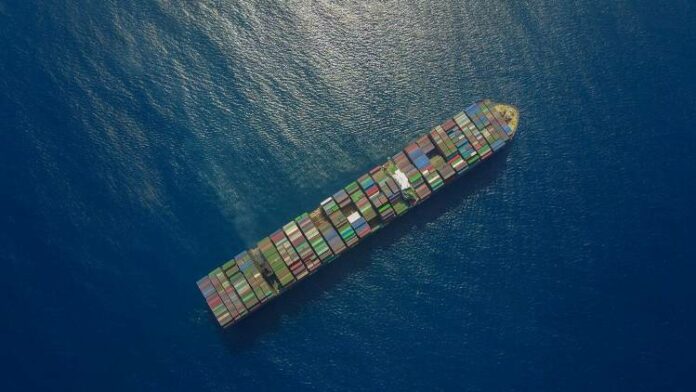
At November 7 , Strong winds lead to breaking of moorings of container ship MSC AJACCIO  at Paranagua port, Brazil.

The ship initially started drifting in the harbour but was then taken under control by tugs and brought to anchor after some 2 hours struggle with the gale-force wind.


Telford Offshore MPCV chartered for TSB Phase 2 offshore Indonesia

0

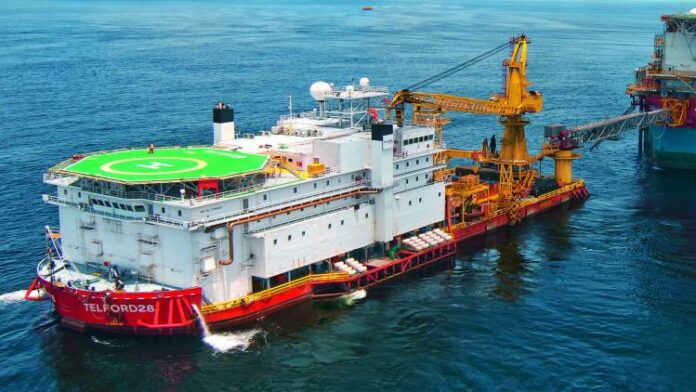
Indonesian contractor Timas Suplindo has chartered Dubai-based Telford Offshore’s Telford 25 to work on the TSB Phase 2 development.

The 3-month charter, which includes options, will see the multi-purpose construction vessel (MPCV) undertake a work scope including installing subsea structures and piles, laying flexible pipes, umbilicals and spoolpieces, and saturation diving on the project offshore Indonesia.

Currently in drydock in Indonesia, Telford 25 will be mobilised in late November for the project. One of four vessels in Telford’s fleet, which all have a dynamic positioning notation of DP3, the MPCV is equipped with an 800-tonne heave-compensated main crane and has 1,500 m2 of unobstructed deck space. The vessel can accommodate 355 people.

Telford Offshore’s managing director Duncan MacPherson said “We are very pleased with this contract from Timas Suplindo.

Over the course of this project Telford 25 will demonstrate its versatility by supporting multiple activities such as flexible pipelay, saturation diving, lifting, subsea construction and installation services.”

Telford Offshore launched in February 2018, having acquired its fleet of four vessels from Sea Trucks Group following that company's liquidation.

Source:osjonline

Equinor UK contracts another Solstad Offshore PSV

0

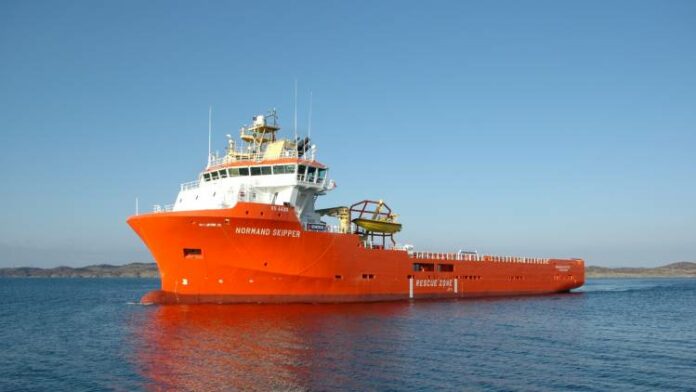
Solstad Offshore’s PSV Normand Skipper has been contracted by Equinor UK for two years plus options.

The contract will start in November or December this year and has an additional two years of options on top of the initial two-year period.

Normand Skipper will join two other vessels in supporting Equinor’s UK operations: Sea Falcon, which was contracted in 2016 and has just had a one-year option exercised, and Sea Frost, contracted in 2017.

Sea Falcon and Sea Frost were both built by Cochin Shipyard in 2013. They measure 88.9 m in length by 19.7 m in breadth with a dwt of 4,419. Normand Skipper was built by Flekkefjord Slipp & Maskinfabrikk in 2005 to a Vik-Sandvik VS4420 design. It measures 92.4 m in length by 22 m in breadth and has a dwt of 6,608 tonnes.

Source:osjonline

USCG updates guidelines for successful stability tests

0

USCG announced that the Marine Safety Center (MSC) published an updated Plan Review Guidelines and Design Verification Guidelines, regarding: GEN 05 – 'Stability Test Procedures'.

This Plan Review Guideline provides guidance and information for carrying out successful stability test and submitting stability test procedures to the MSC.

It applies to vessels certificated under any subchapter of 46 CFR.

In order for the US Coast Guard to issue a stability letter to a vessel with approved lightship characteristics, a stability test must be performed. Namely, an operator must ensure that the requirements of 46 CFR 170.185(g) are included in the procedures:

  • Identification of the vessel to be tested;
  • Date and location of the test;
  • Approximate draft and trim of the vessel;
  • Condition of each tank;
  • Estimated items to be installed, removed, or relocated after the survey, including the weight and location of each item;
  • Schedule of events;
  • Person or persons responsible for conducting the survey.

Vessel Floating Condition

Regarding the ships floating condition, that includes the following:

  • The vessel should be moored and free floating;
  • Trim should be less than 1% of the length between perpendiculars (LBP), unless the hydrostatic properties for the as-surveyed condition include the actual trimmed amount;
  • The ship’s initial heel should not surpass ½ degree;
  • A hydrometer of appropriate scale should be available to measure the specific gravity of the water at the time of the inclining, as well as any onboard liquid loads.

In addition, at least five separate and approximately equally spaced freeboard readings should be taken on each side of the vessel and plotted on a profile view of the vessel at the time of the survey.

Vessel survey

As for the survey of the vessel itself, the US Coast Guard emphasized seven key points:

  1. A survey of the vessel should be performed in the presence of the US Coast Guard witness to make sure the vessel is at least 98% complete;
  2. The list of weights to add/remove/relocate should be supplied to the US Coast Guard witness before the survey;
  3. Ensure on-board personnel are limited to individuals essential to conducting the stability test. Their overall weight should remain constant throughout the test and should be recorded for each individual rather than estimated;
  4. All empty tanks and voids should be open, ready for inspection, and have a gas free certificate;
  5. Ensure that the tankage specified in the procedure is acceptable per reference (d). The number of slack tanks should be minimized. No free surface correction will be allowed for loose water (in bilges and voids) or excessive slack tankage. Free surface correction for slack tanks may only be permitted if the slack tanks are of regular cross section and either: 20 to 80% full if they are deep tanks; 40 to 60% full if they are double-bottom tanks;
  6. The vessel’s downflooding points should be identified and their locations clearly delineated in the stability test results submittal;
  7. The USCG witness should initial each page of the rough field notes after verifying the recorded data.

Source:safety4sea

RH Marine begins study to ensure safe autonomous sailing of ships

0

RH Marine says it has started a 3 year research in order to let ships sail autonomously in a safe way. The study aims to develop algorithms which enable unmanned self-propelled vessels to sail efficiently from A to B, which recognize dangerous situations and learn to avoid these dangers.

The research is part of the larger European project Safer Autonomous Systems (SAS) under the direction of the KU Leuven (BE), in which the safety of various autonomous systems is being researched. A consortium of companies participates in the project, including MIRA, Bosch, Airbus, Jaguar and Lloyd’s Register. RH Marine, together with the Dutch maritime research institute MARIN, focuses on the safety of unmanned self-propelled vessels. The project is funded by the EU Horizon 2020 program, which couples and stimulates research and innovation.

RH Marine is a leading integrator of electrical and automation systems in super yacht, dredging and offshore industry and the defence, safety and security sectors. ,,We have been approached for this project because of these experience and our expertise in the field of innovation,” says Portfolio Manager Marcel Vermeulen of RH Marine. ,,We are already developing complex systems for naval, dredging, offshore and super yacht sector. Our future goal is to enable our customer’s vessels to sail autonomously. By participating in SAS, we can make significant strides in that ambition.”

The major aim of the SAS project is to establish confidence in the safety of autonomous systems. For this objective, RH Marine’s will develop three different algorithms. The first is to optimize the way from A to B for autonomous vessels, so that they sail as efficiently as possible at the lowest possible cost. This algorithm must be able to operate an entire fleet. In addition, the research must lead to an algorithm that, based on the data from sensors, can develop a complete situational awareness, which can assess actual situations and learn to recognize hazards. The third algorithm must avoid those hazards. ,,That is still the missing link for many systems,” Vermeulen knows. ,,Eventually, the ship has to decide for itself what it will do in difficult situations. Sometimes, besides following all the rules, good seamanship is decisive. Thus, with Artificial Intelligence-technology we have to develop an algorithm that operates smarter but recognisable for humans.”

The next three years a PhD student will be appointed, who will work on the three algorithms together with the RH Marine development team. The researcher’s job includes short internships at KU Leuven, MARIN and Lloyd’s Register. ,,Lloyd’s participation in the consortium is important because all kinds of regulations will have to be adapted for autonomous sailing. That too is being surveyed,” explains Vermeulen.

SAS is a so-called Early-Stage Research (ESR). The ultimate goal is to prove by model-based safety-analysis techniques that the behaviour of an autonomous vessel remains safe under all possible conditions.

Several companies in the world are engaged in similar projects for autonomous sailing, for instance in studies for self-propelled container vessels. Vermeulen: ,,With this project, Europe can take the lead. We already have the technology to operate ships remotely, so that they can sail unmanned. What we are going to research in the coming years is how to sail in a safe way entirely autonomously.”

Source:portnews