5.7 C
New York
Home Blog Page 1256

Ukraine, Egypt sign agreements to boost ties between their ports

0

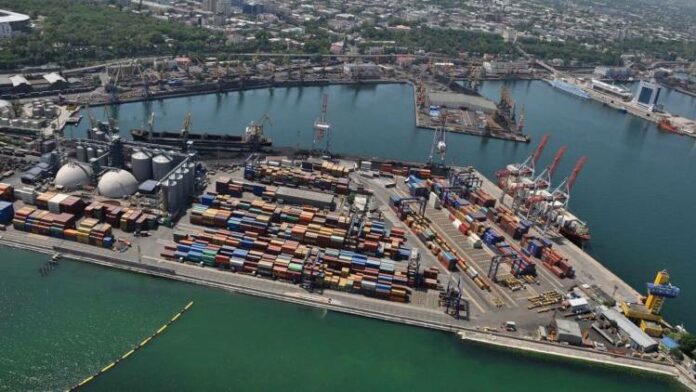
The Ukrainian Sea Ports Authority signed agreements with the Egyptian ports of Alexandria and Damietta on 2nd of November. These agreements aim to establish a bilateral working group with representatives of shipping lines, traders, port operators to discuss the implementation of joint projects.

The agreements provide a comprehensive exchange of information, joint assistance of shipping companies, importers, exporters and forwarders, exchange of experience in the field of modernization of the port infrastructure, improving the quality of servicing vessels, development of IT services and technologies.

In addition, a joint working group will be created, which will have representatives of the USPA and the authorities of the Egyptian ports as members, as well as shipping lines, traders, port operators. The working group's task will be to discuss the implementation of joint investment projects and increase cargo turnover between the countries.

The Minister of Investment and International Cooperation of the Arab Republic of Egypt, HE Dr. Sahar Nasr welcomed the intensification of dialogue and cooperation with Ukraine, as it concerns the interaction between the ports of Ukraine and Egypt.

Head of Odessa branch of the USPA, Igor Tkachuk, commented:"The port of Odessa has a great experience of cooperation with the ports of Egypt. The cargo turnover between our ports is more than 4.5 million tons per year. More than half of these cargoes is export of agrarian products from Ukraine. The signing of the Memorandum will be an additional stimulus and a basis for the further development of bilateral cooperation"

The Port of Alexandria's annual turnover is 15 million tons, accounting for about 80% of the total volume of foreign trade in Egypt.

Port Damietta is located on the Mediterranean coast, 200 km east of Alexandria. It has terminals for general and bulk cargo and its capacity for handling grain has increased to 7.5 million tons. It also has an LPG plant, a container terminal and a mineral fertilizer plant.

Source:safety4sea
Near miss fatal incident reported on rig off Nova Scotia

0

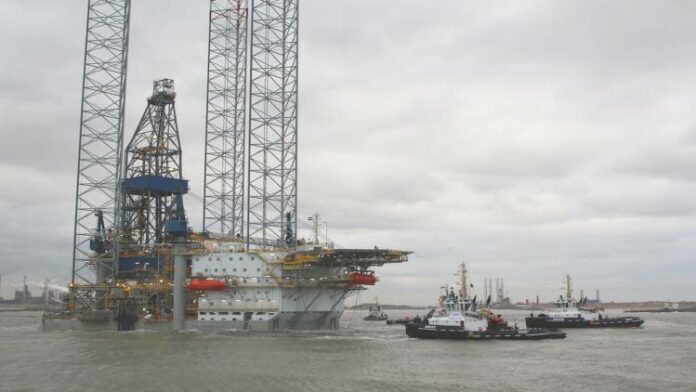
A near miss incident from dropped object was reported onboard the ‘Noble Regina Allen’ jack-up rig, offshore Nova Scotia, when a 52 foot chain fell onboard on 5 November. There were five workers in the area at the time of the incident, but no one was injured.

The Canada- Nova Scotia Offshore Petroleum Board (CNSOPB) deployed a safety officer early the following day onboard the rig, which is operated by ExxonMobil Canada and owned by Noble Corporation.

The safety officer confirmed that a 52 foot chain, along with a swivel and shackle (a segment of lifting gear arrangement) with a combined weight of 225 pounds, fell to the deck in the derrick area.

"Although there were no injuries associated with this incident, it was determined that it had the potential for fatality, and has thus been classified as a high potential near miss. Ongoing work was immediately stopped, and the area was secured. A safety stand down was held with all involved personnel. Well operations remain suspended as of this time,"…CNSOPB noted.

The rig is located by the Venture platform carrying out the plugging of development wells as part of ExxonMobil’s decommissioning of the Sable Offshore Energy Project.

Source:safety4sea


Iberian peninsula’s biggest floating wind farm receives EIB funding

0

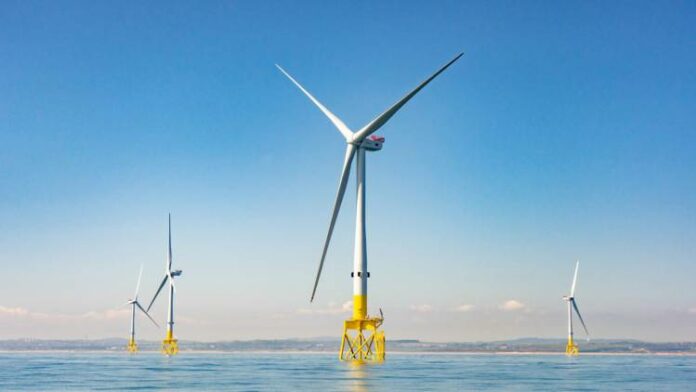
The first project-financed floating wind farm received funding from the European Investment Bank. This development came after DNV GL completed a technical due diligence, and the project will be the biggest floating wind farm in the Iberian Peninsula.

The European Investment Bank will now provide a EUR 60 million loan to Portuguese company Windplus for the wind farm.

The project is located about 20 km of Costa Viana do Castelo, Portugal and is currently being constructed, with its operation date set in 2019.

It has three 8.4 MW MHI Vestas turbines and the largest wind turbines on a floating foundation at sea.

Recently, Windplus and DNV GL carried out an independent energy yield assessment, along with a technical due diligence regarding all aspects of the floating offshore wind farm. The study focused on the risks associated with this technology.

According to DNV GL's Energy Transition Outlook, until 2050, energy from renewables will meet 50% of our energy needs. In addition, increased electrification of energy demand, along with the rise of wind and solar energy, will grow the world’s electricity transmission and distribution systems.

What is more decarbonisation will be a key sector to focus to. With energy mix rapidly decarbonizing, coal has peaked, while oil is expected to peak in 2023. These developments will make natural gas the largest single source from 2026.

Despite this positive developments however, we are on course to fail the Paris Agreement goals, but the affordability of the energy transition is the silver lining and it gives hope that things will eventually change.

Source:safety4sea

World’s largest battery-hybrid ship nears completion

0

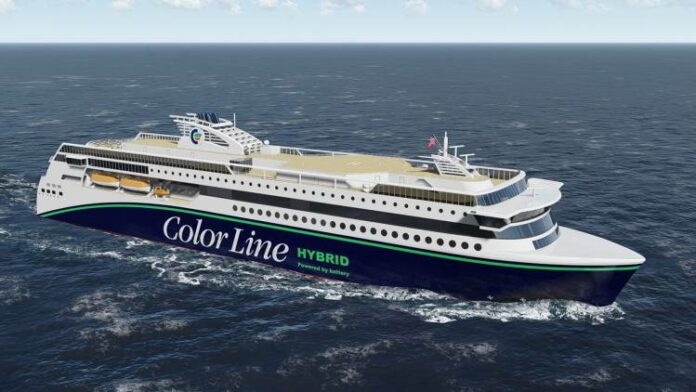
The world's largest battery-hybrid ship, 'Color Hybrid', has arrived at Norwegian shipbuilder Ulstein Verft in Norway for final stages of completion. The vessel is to be delivered to Color Line in mid-2019, when it will start servicing the Sandefjord and Strömstad route, improving the line between Norway and Sweden.

The tow of the hull arrived at Ulstein Verft on 6 November 2018, and the hull was positioned in the dock hall on 8 November. Completion work will now commence on the various areas of the vessels such as the engine area, public area, car deck and outer decks, thereafter comes tasks such as painting, commissioning, testing and sea trial.

The ship’s assembly was launched in April 2018 at Crist in Gdynia, Poland. The battery pack is used during transportation to absorb high power loads, contributing extra power when needed quickly during demanding operations.

The M/S Color Hybrid is being built for the Norwegian Ordinary Ship register and will be embodied by Norwegian crew. Moreover, it measures 160 meters in length, and has a capacity of 2,000 passengers and about 500 cars. Color Hybrid will almost double the capacity of M/S Bohus, which will be withdrawn when the new vessel launches into operation in summer 2019.

Color Line has placed shore power facilities in all of their Norwegian ports, including Oslo, Kristiansand, Larvik and Sandefjord. The facilities in Sandefjord will be used to charge the batteries of the Color Hybrid.

Source:safety4sea

Port of Rotterdam Authority wins ESPO Award 2018

0

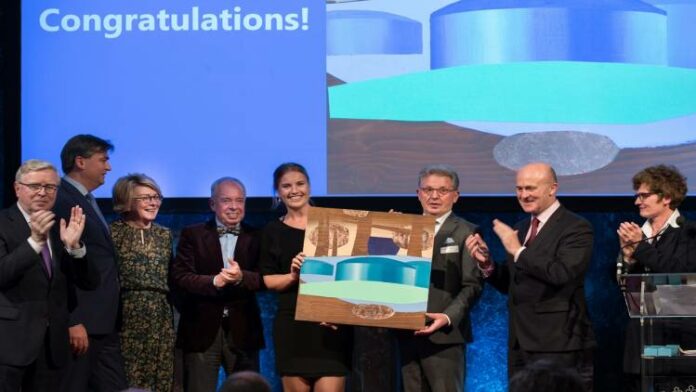
On November 7, Port of Rotterdam Authority was awarded the ESPO Award 2018 in recognition of its engagement with the city or wider community, through the creation of a good workplace environment for its current and future employees and the demonstration of its investment in a diverse and inclusive environment, facilitating mutual respect, non-discrimination and personal development.

The ESPO Award was handed out by the Deputy Director-General of DG Move, Maja Bakran, during a ceremony at “Palais des Académies” in Brussels. At this occasion, Maja Bakran said: "We truly see the ports at the heart of our transport system and you can count on our continuous support. Congratulations to the 2018 ESPO Award winner: the Port of Rotterdam Authority!"

Looking back at the selection process in this 10th edition of the ESPO Award, the Chairman of the Jury, Pat Cox, said: “The Jury was especially impressed by the strategic vision, commitment and means by which Rotterdam Port is planning for the future world of work both in its own operations and in partnership with its wider ecosystem.”

The Port of Rotterdam Authority won the 2018 Award for its project, “The Port of Rotterdam creates a good working environment for everyone”, which focuses on maximising the synergy between the port, the city and the region. This means giving employees skills matching the needs of companies in the port, providing training for the port’s current and future talents, and stimulating co-working between different companies within the port and by employing as many people from Rotterdam and its surroundings as possible in the port.

To reach that goal, the Port Authority has created various initiatives, which can be divided into three categories: School to Work, Work to Work, and Return to Work.

Henk de Bruijn, Manager Social and Labour Affairs at Port of Rotterdam Authority, said: "This ESPO Award is for us the recognition that we are on the right track with our 'People in and around Ports' program. To us, this Award is an extra motivation to take further steps with our social innovation ambitions in and for our port. We hope also to inspire other European ports with our program. We have to do it together.”

The ESPO Award 2018 saw four projects from Associated British Ports, North Sea Port, Port of Tallinn and Port of Rotterdam Authority compete for the prize.

This year’s ESPO Award ceremony evening was a special edition since it also marked the 25th anniversary of the Organisation. More than 200 guests were present to celebrate this festive moment and blow the candles of the birthday cake.

Source:portnews

Total and Sempra Energy Sign MOU on North American LNG Projects

0

Total and Sempra Energy have signed an MOU that provides the framework for cooperation in the development of North American LNG export projects. The scope of MOU covers continuing the development of the Cameron LNG liquefaction-export project in Louisiana and Energía Costa Azul (ECA) liquefaction-export project in Baja California, Mexico. 

The MOU involves Total potentially contracting for up to about nine million tons per annum (Mtpa) of LNG offtake across Sempra Energy’s LNG export development projects on the U.S. Gulf Coast and West Coast of North America. Total, already a partner of the Cameron LNG joint venture with a 16.6 percent stake, may also acquire an equity interest in ECA LNG.

The $10 billion Phase 1 of the Cameron LNG joint-venture liquefaction-export project includes three liquefaction trains with approximately 14 Mtpa of export capacity under construction in Louisiana. Commissioning of the first train is now under way and all three trains are expected to be producing LNG in 2019. Phase 2 of the Cameron LNG project, previously authorized by FERC and being developed jointly by the Cameron LNG co-owners, encompasses up to two additional liquefaction trains and up to two additional LNG storage tanks with approximately nine Mtpa of capacity.
 
ECA Phase 1 is a one-train facility with an expected total export capacity of 2.5 Mtpa, using the existing LNG receipt terminal’s tanks, loading arms and berth. ECA Phase 2 is expected to have additional export capacity of 12 Mtpa of LNG. The ECA project is located in Baja California, Mexico and will be supplied with natural gas from the U.S. This week, Sempra Energy announced that its subsidiaries IEnova and Sempra LNG & Midstream signed three Heads of Agreements with affiliates of Total, Mitsui & Co and Tokyo Gas for the full export capacity of Phase 1 of the project. The three companies each will potentially purchase approximately 0.8 Mtpa of LNG from ECA LNG Phase 1. A final investment decision for ECA LNG is targeted in late 2019 with potential first LNG deliveries in 2023. 

Sempra Energy has a long-term goal of developing more than 45 Mtpa of LNG export capacity in North America. "The U.S. is increasing its global leadership position in the production of oil and natural gas”, said Jeffrey W. Martin, CEO of Sempra Energy. “In large measure, the next step in fulfilling our country’s energy potential is the development of critical export infrastructure for LNG.” 

Source:maritime-executive

Port of Seattle Plans $340M Cruise Terminal Project

0

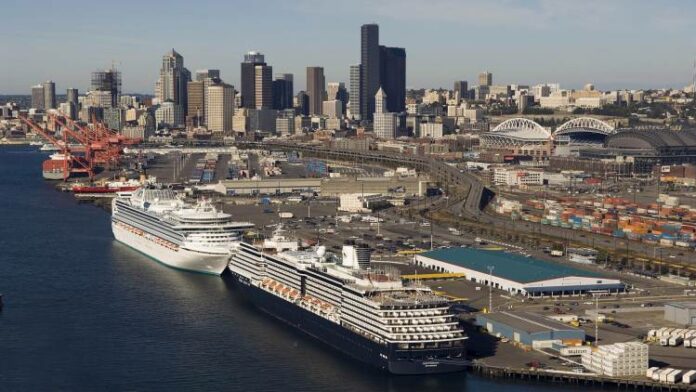
The Port of Seattle, Washington is considering a $340 million plan to add a new cruise terminal and invest in other waterfront improvements. 

The port welcomed 1.1 million cruise passengers last year, the second year in a row that it has surpassed the one-million-passenger mark, and it is looking for room to accommodate more growth. According to the Puget Sound Business Journal, the port has been in conversation with Seattle's mayor about renovating its existing cruise terminals, adding one more, and making improvements to the waterfront, a plan that it calls Waterfront 2040. 

This continued growth points to a bright future for cruise in Seattle, and we are proud that each homeported cruise vessel brings approximately $2.7 million for our local economy. Through innovation and collaboration, we continue to work with our partners to make this the greenest port in the nation," said port commission president Courney Gregoire in a statement. 

The port is ahead of all other cruise homeports on the West Coast for passenger volume, including Vancouver, B.C., which trails Seattle with about 900,000 passengers per year. Cruising generates about $500 million in revenue for local businesses, according to the port.

Next year, Seattle will host seven cruise lines and 11 vessels for a range of itineraries, almost all bound for Alaska via the Inside Passage. Royal Caribbean has announced that it will deploy the 4,200-passenger Ovation of the Seas to Seattle next year, the largest cruise ship ever home-ported in the city, and it will add a third vessel to its Seattle home-port schedule for the first time in 2020.

Source:maritime-executive

DP World Takes Djibouti Row to China

0

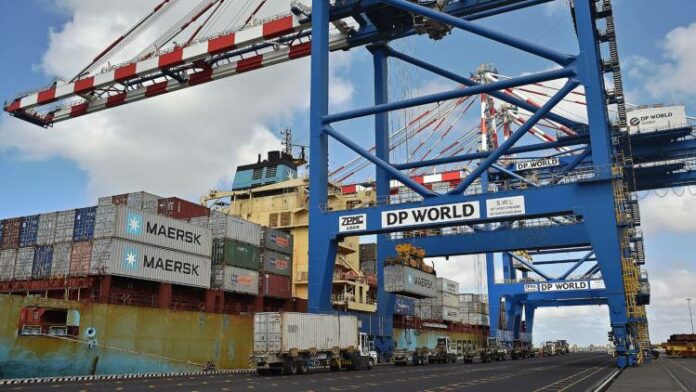
DP World has filed a lawsuit against state-owned China Merchants Port Holdings in a Hong Kong court for building a free zone on a terminal at the center of its dispute with the Djibouti government. 

The lawsuit seeks damages, interest and declaration that China Merchants unlawfully procured or induced Djibouti's breaches of its agreement with DP World, reports the Khaleej Times.

A senior Djibouti government official has dismissed the accusation that the government was "illegally induced" to breach the contract by a Chinese company. 

In February, the Djibouti government terminated the 50-year concession agreement for the Doraleh Container Terminal. The terminal was jointly owned by DP World (33.3 percent) and the Government of Djibouti’s port company Port de Djibouti S.A. (PDSA) (66.6 percent). In 2013, China Merchants Port Holdings bought a 23.5 percent of PDSA from Djibouti.

In September, the High Court of England and Wales in London continued an injunction first made on August 31 prohibiting PDSA from interfering with the management of the joint venture company, Doraleh Container Terminal S.A. (DCT). On August 31, the Court issued an injunction against PDSA prohibiting it from acting as if the joint venture agreement with DP World has been terminated. 

On DP World’s application, the Court also extended the injunction to include any affiliate of PDSA. The Court ordered that PDSA must ensure that any transferee of DCT shares is legally bound by the Joint Venture Agreement and Articles of Association in the same way as PDSA. The ruling means neither the Government nor PDSA can control DCT or give valid instructions to third parties on behalf of DCT without DP World’s consent.

The continuation follows the enactment of an ordinance by the President of Djibouti on September 9 that purported to transfer PDSA’s shares in DCT to the Government of Djibouti. The Government has indicated that it is acting to protect the fundamental interests of the nation of Djibouti and the legitimate interests of its partners in the face of what it called severe irregularities.

Source:maritime-executive

U.S. Waives Sanctions for Iran’s Chabahar Port Project

0

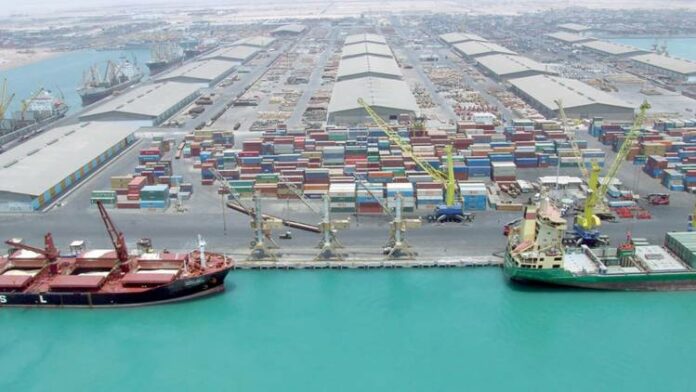
U.S. Secretary of State Mike Pompeo has granted a sanctions waiver for the Indian-Iranian port project at Chabahar. The joint venture would otherwise be prohibited by the American ban on transactions with Iran's shipping industry, and the exemption ends an extended period of uncertainty over the port's future. 

Chabahar's enhanced seaport will boost Indian trade volumes to and from Central Asia, but it will also serve American interests. It will facilitate the delivery of international aid and other goods for Afghanistan's U.S.-backed government, thanks to surface transport routes connecting Chabahar with the Iranian-Afghan border. The waiver includes an exemption for a proposed railway line along this route, and for its use to transport non-military goods across Iran to Afghanistan. 

"This exception relates to reconstruction assistance and economic development for Afghanistan. These activities are vital for the ongoing support of Afghanistan's growth and humanitarian relief," a State Department spokesperson said in a statement. 

A new Indian-run port at Chabahar will also serve to counterbalance China's regional influence. China's government recently financed a competing port project just across the border in Pakistan, where it is investing up to $60 billion in a giant network of transportation and energy infrastructure, the China Pakistan Economic Corridor (CPEC). 

For India, the port offers a way to deepen its trade ties with Central Asia, and it builds on existing trade relationships with Iran. India is one of the largest consumers of Iranian oil, and has indicated that it intends to continue buying Tehran's crude regardless of the American sanctions regime. For now, the State Department has granted India a separate waiver to permit the continued trade in petroleum products. 

State Department warns of Iran's tanker risks

The State Department has warned that the American "maximum pressure campaign" on Iran comes with legal consequences for those who disobey Washington's sanctions. On Wednesday, U.S. special representative Brian Hook suggested that shipping interests and foreign governments should also be concerned about the safety of Iran's tanker fleet, which is now blacklisted by the U.S. Treasury. 

"From the Suez Canal to the Strait of Malacca and all choke points in between, Iranian tankers are now a floating liability," he told media. "Countries, ports and canal operators and private firms should know they will be likely responsible for the costs of an accident involving a self-insured Iranian tanker."

Hook pointed to the disastrous accident aboard the Iranian Suezmax Sanchi earlier this year, and he warned that the National Iranian Tanker Company's vessels have increased the odds of a casualty by turning off their AIS transponders. "These transponders are designed to maximize visibility at sea and turning them off only increases the risk of accidents and injuries. Self-insured Iranian tankers engaging in unsafe behavior, with many tons of crude oil on board [are] courting environmental and financial disaster," Hook said. 

Source:maritime-executive

Subsea 7 suffers renewables revenue slide

0

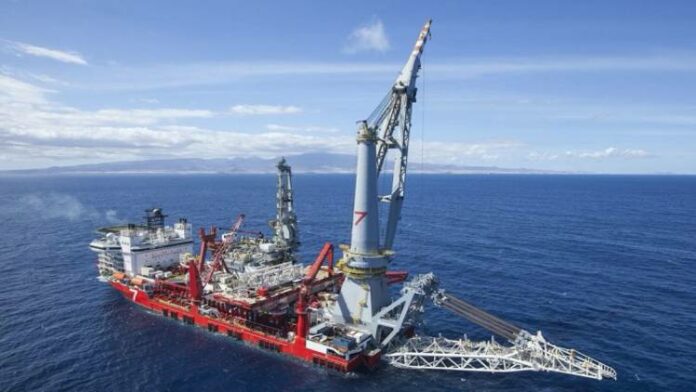
Revenue from renewables and heavy lifting at Subsea 7 was down to $582m in the first nine months of the year, from $777m in 2017, mainly due to reduced activity on the 588MW Beatrice offshore wind farm off Scotland as the project nears completion.

The company said it has also incurred costs due to delays at the Borkum West 2.2 offshore wind farm caused by adverse weather conditions.

Net operating income in the sector also fell to $17m from $93m last year, reflecting the lower activity levels.

Subsea 7 chief executive Jean Cahuzac said the next wave of wind farm contracts are not expected to be awarded until next year.

Overall, the company's net income was $133m in the first three quarters of the year, down from $403m last year.

Revenue, however, grew to over $3.05bn from just under $2.99bn.

Source:renews