5.7 C
New York
Home Blog Page 1255

Federal Court Halts Keystone XL Pipeline for Climate Impact Review

0

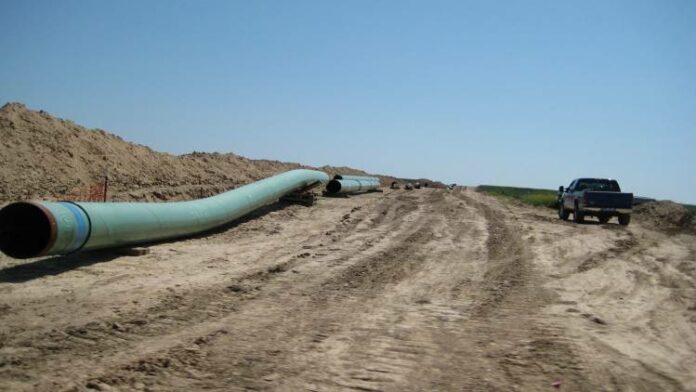
On Thursday, Judge Brian Morris of the U.S. District Court for Montana ordered TransCanada to halt work on the Keystone XL pipeline pending a new review of the project's climate impact. 

Once built, the Keystone XL will carry tar sands oil from Alberta to the American pipeline system, which will transfer it south to refineries and seaports on the U.S. Gulf Coast. For Canadian oil producers, it is a priority project, as it will open new overseas markets and end America's near-exclusive, preferential access to Canadian oil exports. 

The Obama administration denied a key federal permit for Keystone XL in 2015, citing the greenhouse gas emissions and climate change impact that would result from its operation. Tar sands oil has historically been estimated to produce about 17 percent more GHG emissions than conventional crude oils on a lifecycle, well-to-wheel basis. The Trump administration reversed this decision and approved permitting for the Keystone XL pipeline in 2017. At the time, the State Department also noted that the heavy oil that will be transported by Keystone XL produces greenhouse gas emissions "five to 20 percent higher" than estimated previously. 

Judge Morris' decision compels the administration to revisit the Keystone XL permit because it allegedly "ignored" the Obama administration's reasoning for rejecting the pipeline's application, in violation of the National Environmental Policy Act and the Administrative Procedure Act. "The [State] Department did not merely make a policy shift in its stance on the United States’ role on climate change," Morris wrote. “The Department instead simply discarded prior factual findings related to climate change to support its course reversal."

Morris also called for the government to update its review to include consideration of the pipeline spills that have occurred since the last environmental impact statement for Keystone XL in 2014. Large spills over the intervening years include the 360,000 gallon spill near Sweetwater, Texas; the 530,000 gallon spill in Ash Coulee Creek, North Dakota; the 420,000 gallon spill in Logan County, Colorado; and the 400,000 gallon Keystone (not Keystone XL) pipeline spill near Amherst, South Dakota.

Source:maritime-executive
Tanker Owner Buys Stake in Scrubber Manufacturer

0

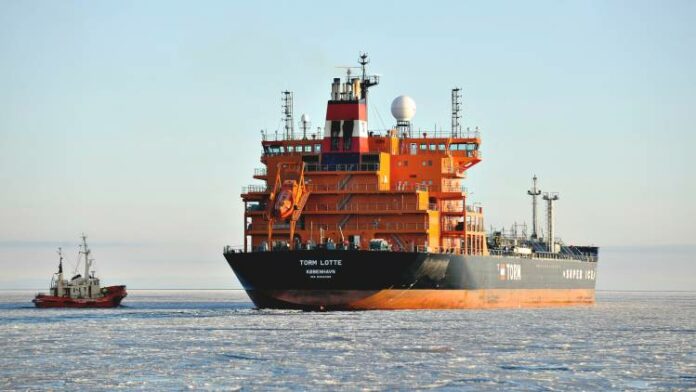
Leading product tanker operator Torm announced Friday that it has purchased a stake in a scrubber manufacturing venture, making it the latest shipowner to buy a supplier in advance of the IMO 2020 low-sulfur deadline. The move will give Torm guaranteed access and preferential pricing for scrubber units, giving it an additional competitive edge.

Torm now holds a 28 percent share of ME Production China, a joint venture between the Danish scrubber maker ME Production and China State Shipbuilding Corporation's Guangzhou Shipyard. "This strategic move provides us with a substantial economic interest in a venture that has the potential to be a large-scale international scrubber manufacturer. It will also result in Torm obtaining attractive prices for the scrubber investments that already have a short payback time,” said Torm's executive director, Jacob Meldgaard. 

Torm has ordered 16 scrubbers from the JV, and it holds a letter of intent for 18 more. Together, the deals will see about half of Torm's fleet equipped with the equipment at an average capex below $2 million per vessel, including installation. 

"In addition to the economic potential of the joint venture, it allows us to secure availability of high-quality scrubbers, which could pose a challenge to some owners as we approach the 2020 deadline for sulfur compliance set by IMO,” said Jesper S. Jensen, the head of Torm's technical division. 

Torm is not the first tanker owner to buy into a scrubber manufacturing business. In June, John Fredriksen-controlled Frontline purchased 20 percent of Feen Marine Scrubbers and placed an order for 14 units, with fixed-price options for 22 more.

At the time of the announcement, Frontline also said that concerns over availability informed its decision. "This transaction allows Frontline to secure the capacity to source a large volume of scrubbers, which we believe will present a challenge to many owners as the deadline for sulphur emissions compliance approaches," said Frontline Management CEO Robert Hvide Macleod in a statement. 

Source:maritime-executive

U.S. Provides Port Security for Papua New Guinea Summit

0

U.S. Coast Guard service members are deploying overseas to provide port security for the upcoming Asia-Pacific Economic Cooperation (APEC) summit in Papua New Guinea, which begins November 12. U.S. Ambassador to PNG Catherine Ebert-Gray and PNG Police Commissioner Gary Baki have signed a rare MOU authorizing the United States to enforce security zones in Port Moresby's harbor during the summit. 

Leaders and senior officials from 21 member nations are scheduled to attend, including U.S. Vice President Mike Pence. “With dignitaries arriving from the twenty-one APEC economies, the United States and the U.S. Coast Guard is happy to offer its support in providing safety and security operations to . . . protect Papua New Guinea ports, waterways and coastal areas during this significant international event," said Ambassador Ebert-Gray. 

The Coast Guard is deploying small boats and nearly 100 servicemembers to provide port security, waterside protection and anti-terrorism capabilities for the summit. The security teams will work in coordination with PNG Police and partner nations’ security forces. 

Due to long-running gang violence, Port Moresby has historically ranked among the most dangerous cities in the world. The U.S. Overseas Security Advisory Council (OSAC) advises that Western travelers should take precautionary measures when visiting Port Moresby, and the Department of State assesses that the city is a critical threat location for crime directed at or affecting official U.S. interests. 

The APEC security mission in Port Moresby is one of several Coast Guard joint operations int the Western Pacific. The service is also engaged in the Oceania Maritime Security Initiative, with law enforcement detachments deployed on U.S. Navy vessels to help Pacific nations to protect their EEZs and combat illegal fishing.

The United States is a Pacific nation,” said Vice Adm. Linda Fagan, U.S. Coast Guard Pacific Area Commander. “We have deep and long-standing ties to our partners in the region, and more importantly, we share a strong commitment to a rules-based international system that promotes peace, security and shared prosperity.”

Source:maritime-executive

Construction Begins for First Commercial Hydrogen-Powered Ferry

0

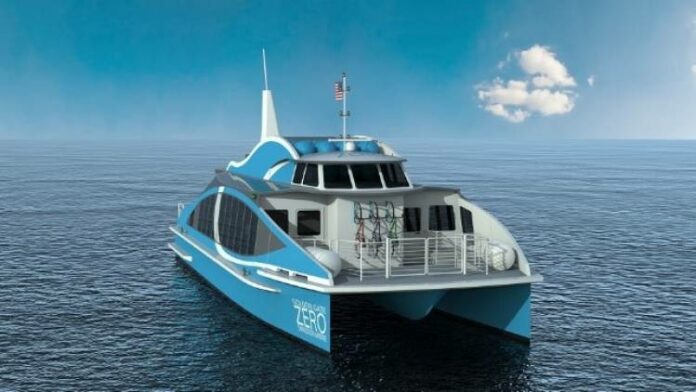
A consortium of federal, state and private partners has begun the construction of a new, first-of-its-kind ferry powered by hydrogen fuel cells. The 70-foot catamaran design is being built by Bay Ship & Yacht Co. of Alameda, California for Golden Gate Zero Emission Marine (GGZEM), with funding from the state's California Climate Investments program. It is intended as a demonstrator project to showcase the potential of hydrogen fuel cell power.  

"Today's ceremony symbolizes more than the start of construction of a single vessel, it marks the start of a new movement in the maritime community.  Operators all over the world are seeing that hydrogen fuel cell electric drivetrains can provide both environmental and economic advantages," said Dr. Joseph W. Pratt, the CEO of GGZEM, at the keel laying on Thursday. 

The Bay Area Air Quality Management District (BAAQMD) is administering the project, and local ferry company Red and White Fleet will handle marine operations. Other key partners include BAE Systems, Incat Crowther, Hexagon Composites, the Port of San Francisco, Sandia National Laboratories, and fuel cell manufacturer Hydrogenics. The latter firm is also supplying the fuel cells for a laboratory-scale marine propulsion testbed used by ABB and research organization SINTEF Ocean. 

The new vessel, the Water-Go-Round, is expected to begin its operations next year on a three month trial in San Francisco Bay. This initial operating period will allow scientists from Sandia National Laboratories to assess its performance and gather data for the California Air Resources Board (CARB). Ultimately, Red and White Fleet intends to use the Water-Go-Round as the first of several vessels from GGZEM as part of their strategy to build a fully zero emission fleet by 2025.

"The technology for zero pollution is here today and we are honored to be the operator of the Water-Go-Round," said Tom Escher, president of Red and White Fleet. "I'm convinced it will prove the feasibility of hydrogen fuel cell application on all maritime vessels . . . California is going to prove to the global shipping community that hydrogen fuel cells offer zero pollution for the benefit of the entire world."

Hydrogen propulsion's economic competitiveness and emissions profile vary depending upon the source of the fuel. Almost all commercially-produced hydrogen is currently derived from natural gas or coal gas. Due to the carbon dioxide created by the refining process, its well-to-propeller CO2 emissions can be higher than those from heavy fuel oil, according to a recent review by DNV GL. 

By contrast, hydrogen produced using renewable electricity and water electrolysis is nearly emissions-free – but can be very costly. The feasibility study that preceded the Water-Go-Round project found that renewably-produced hydrogen would cost far more than diesel for Red and White Fleet's location and operating profile (not including capital costs). 

Dr. Pratt says that the fuel supplier for Water-Go-Round has not yet been selected, but the consortium estimated the project's GHG emissions using a carbon intensity value of about 88 gCO2e/MJ – seven percent less than CARB's estimate for diesel, and about one-third less than its estimate for conventional liquid hydrogen. Pratt suggests that GGZEM hopes to achieve much lower emissions. 

"Renewable hydrogen is available today, and I expect the cost of 100% renewable hydrogen to be decreasing drastically, to the point where it is cheaper than conventionally-produced hydrogen," said Pratt. "The equipment on the boat can handle the transition to 100% renewable hydrogen without any changes. This gives the operator the flexibility to separately choose . . . when to transition to a zero emission fuel."

Source:maritime-executive

Norway’s new polar research vessel fitted with Optimarin BWTS

0

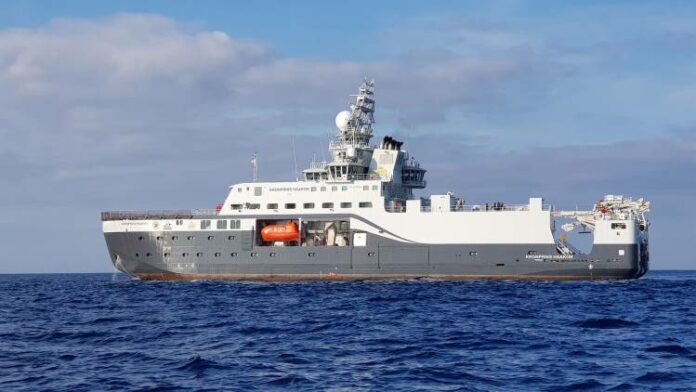
Optimarin reports that its USCG-approved ballast water treatment (BWT) technology will be aboard the Norwegian Polar Institute’s new research vessel Kronprins Haakon, due to be christened by Fincantieri next week.

The 100 meter-long PC-3 icebreaker, Norway’s first purpose-built polar research ship in a century years. has been built to undertake year-round scientific assignments in ice-covered water. It is fitted with the 167 m³/h Optimarin Ballast System (OBS), based on what Optimarin calls “simple, effective and ‘tried and tested’ UV-based technology”.

The past few weeks have been a busy time for Optimarin – which points out it has been exclusively focused on BWT since its formation in 1994, and fitted the first commercial BWT system as early as 2000.

The company recently won a retrofit order for 10 more systems from Höegh Autoliners, a contract for the delivery of 36 systems to Ardmore Shipping, and the commission to supply ballast equipment for the US Coast Guard’s new Offshore Patrol Cutter programme.

To date, Optimarin has sold in excess of 650 BWT systems, with more than 500 installed and operational, of which over 200 have been retrofits delivered in collaboration with global engineering partners Goltens and Zeppelin. OBS has certification from a range of leading classification organisations, including ABS, BV, DNV GL, LR and MLIT Japan.

Source:seatrade-maritime

New York offers 800MW offshore prize

0

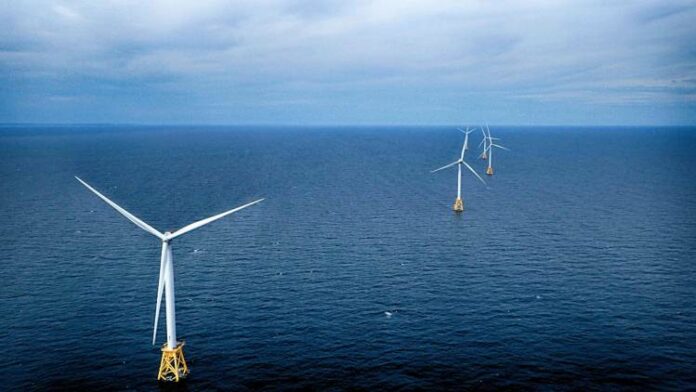
New York state has launched an 800MW offshore wind solicitation with bids due to land in February 2019.

Awards for projects will be made in spring 2019 in time to "take advantage of expiring federal tax credits".

The solicitation is part of New York plans to host 2.4GW of offshore wind to help meet 50% green energy targets for 2030.

Governor Andrew M Cuomo said: "This action is a watershed moment in New York's renewable energy development efforts as we work to establish a secure, reliable and cost-effective clean energy future."

He added: "New York will continue to combat climate change, investing in robust offshore wind development and clean energy that provides a path toward a greener and more sustainable future in our state and around the world."

Winners will secure 25-year power purchase deals for projects ranging from 200MW to 800MW "with an ability to award larger quantities if sufficiently attractive proposals are received".

Offshore wind is expected to bring an estimated $6bn of investments to New York and support 7000 jobs.

The round will include requirements for wage and labor agreements by offshore wind developers. A supplier forum will be held on 15 November for those interested in serving the offshore sector.

Source:renews

Minesto kite completes maiden flight

0

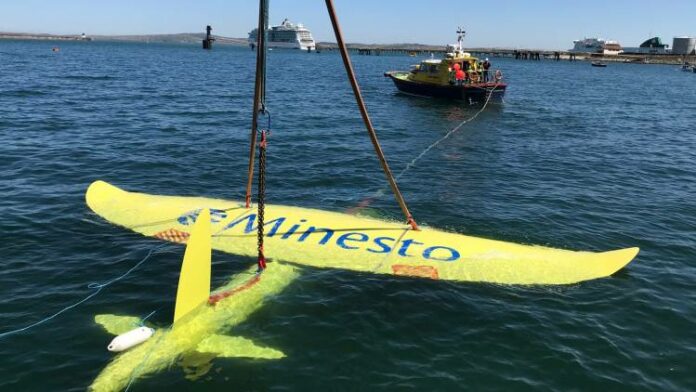
Swedish marine energy developer Minesto has completed offshore commissioning and testing of its Deep Green 500kW tidal kite off the coast of north Wales.

The company said the sea trials had verified the functionality of the DG500 device at utility scale, successfully flying full subsea operational trajectories.

Minesto will use the winter period to focus on maintenance and power plant upgrades, before resuming operations of the Deep Green system in the second quarter of 2019.

Minesto chief executive Martin Edlund said: “We are proud of what we have achieved in Wales this year, the team has reached all its testing milestones in a safe and professional manner.”

Through the project installation, commissioning and operation activities of our DG500 device, we are pleased to successfully have verified the control system of our technology at a utility scale, and to have achieved electricity generation for the first time with a commercial-scale unit.

We are looking forward to further building on the considerable asset base we have created in North Wales by continued site development work, to realise the full potential of our Holyhead Deep site.

Minesto chief operating officer David Collier said the company had learned a lot from the commissioning and testing programme.

This knowledge will enhance the functionality of the supporting infrastructure at the Holyhead Deep and other development sites.

We have also developed and verified procedures which creates value both in an operations perspective and a business perspective.

Source: Renews

UK: Enough Oil and Gas Reserves for the Next 20 Years

0

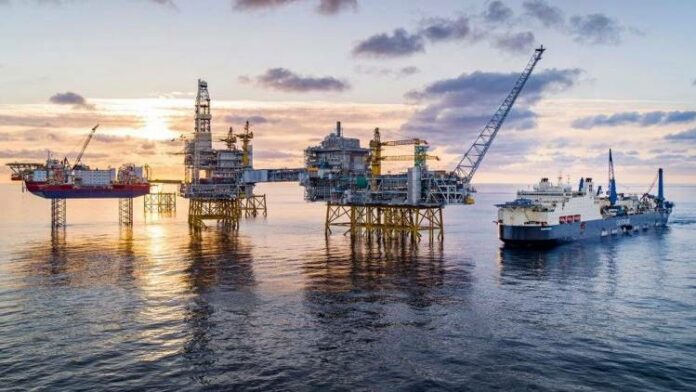
The UK has enough oil reserves to sustain production for the next 20 years and beyond, new figures indicate.

A report published by the UK Government suggests that the overall remaining recoverable reserves and resources in the North Sea range from 10 to 20 billion barrels plus of oil equivalent.

The Oil and Gas Authority (OGA) has estimated that production could last beyond the next two decades if additional undeveloped resources can be matured. The figures were calculated based on production estimates taken from the UK Continental Shelf (UKCS).

In 2017, 400 million boe were added to 2P reserves and about 600 mmboe were produced which equates to a reserve replacement ratio of 69%; with 100 mmboe matured from new field developments, 80 mmboe due to infield activities and approximately 220 mmboe reserves replacement due to field-life extensions, the report said.

The UK’s contingent resource level (2C) is significant with a central estimate of discovered undeveloped resources of 7.5 billion boe.

Much of this resource is in mature areas with 2.1 billion boe expected to be added through new field developments, 2.1 billion boe from incremental projects in producing fields, and the remaining 3.2 billion boe from undeveloped discoveries where no activity is currently being proposed.
 
Nick Terrell, Chair of the MER UK Exploration Task Force and Managing Director of Azinor Catalyst commented: “The work undertaken by the OGA, which has been independently verified, seeks to further quantify the huge remaining exploration potential of our UK offshore basins. The results illustrate the full spectrum of exploration opportunities, from infrastructure led exploration to high impact deep-water frontier opportunities."

"I commend the Oil and Gas Authority for undertaking this work in conjunction with the industry led Exploration Task Force and look forward to further results being published in the future,” he added.

Source:marinelink

Tanker, Frigate Collision Shuts Down Norwegian Oil, Gas to Europe

0

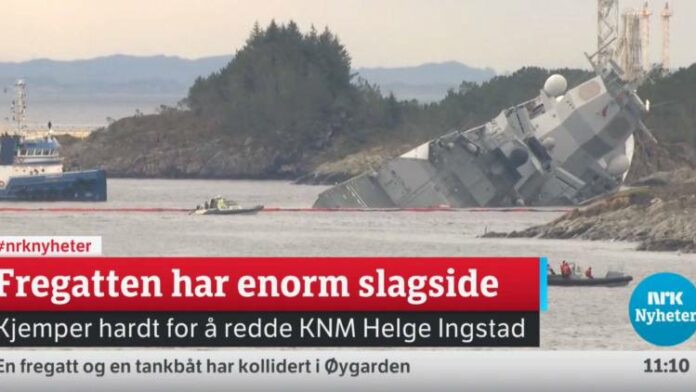
Norway has been forced to close the Sture Oil Terminal near Bergen and has started closing down the nearby Kollsness gas-and-condensate terminal — a lifeline of heating gas to Europe — after an early morning collision between a $440-million frigate and an oil tanker.

The frigate Helge Ingstad, now listing heavily to its port side, is loaded with torpedoes and weapons systems said to be unstable as a result of the collision. Eight navy personnel are said to be injured, including two flown to regional hospital, Haukland, but the tanker Sola’s 23 crew were all evacuated safely.

Spilling from the frigate is a slick of what is reportedly light oil and helicopter fuel, although Norwegian NRK reports there’s no immediate threat to the environment after oil barriers were put in place on Thursday morning. The coastal water where the stricken vessel lies is normally prone to heavy seas, but unseasonably calm conditions prevail.

“The frigate lost steering control and drove onto land with 137 people onboard,” Eirik Valle of the Norwegian Coastguard told NRK. The frigate could still capsize, the report said.

The Sture Oil Terminal processes about 500,000 barrels a day of North Sea oil, including oil from the Ivar Åssen, Grane and Edvard Grieg fields. The terminal, however, is linked by pipeline to the Kollsnes Gas Terminal, a major processor of North Sea and Norwegian Sea gas destined for receiving terminals in Germany and Belgium.

Heavy shipping traffic is the norm at Sture, where a quarter of all oil produced in oil-rich Norway is processed. The police, which investigate marine accidents in Norway, have cordoned off the area around the stricken frigate for fear of explosions.

Kollsnes, just west of coastal city Bergen, is also being shut down. Its plant processes gas from the Troll, Kvitebjoern, Visund and Fram fields, together about 135 million standard cubic metres of natural gas per day.

Source:marinelink

Tanker, Frigate Collision Shuts Down Norwegian Oil, Gas to Europe

0

Norway has been forced to close the Sture Oil Terminal near Bergen and has started closing down the nearby Kollsness gas-and-condensate terminal — a lifeline of heating gas to Europe — after an early morning collision between a $440-million frigate and an oil tanker.

The frigate Helge Ingstad, now listing heavily to its port side, is loaded with torpedoes and weapons systems said to be unstable as a result of the collision. Eight navy personnel are said to be injured, including two flown to regional hospital, Haukland, but the tanker Sola’s 23 crew were all evacuated safely.

Spilling from the frigate is a slick of what is reportedly light oil and helicopter fuel, although Norwegian NRK reports there’s no immediate threat to the environment after oil barriers were put in place on Thursday morning. The coastal water where the stricken vessel lies is normally prone to heavy seas, but unseasonably calm conditions prevail.

“The frigate lost steering control and drove onto land with 137 people onboard,” Eirik Valle of the Norwegian Coastguard told NRK. The frigate could still capsize, the report said.

The Sture Oil Terminal processes about 500,000 barrels a day of North Sea oil, including oil from the Ivar Åssen, Grane and Edvard Grieg fields. The terminal, however, is linked by pipeline to the Kollsnes Gas Terminal, a major processor of North Sea and Norwegian Sea gas destined for receiving terminals in Germany and Belgium.

Heavy shipping traffic is the norm at Sture, where a quarter of all oil produced in oil-rich Norway is processed. The police, which investigate marine accidents in Norway, have cordoned off the area around the stricken frigate for fear of explosions.

Kollsnes, just west of coastal city Bergen, is also being shut down. Its plant processes gas from the Troll, Kvitebjoern, Visund and Fram fields, together about 135 million standard cubic metres of natural gas per day.

Source:marinelink