5.7 C
New York
Home Blog Page 1254

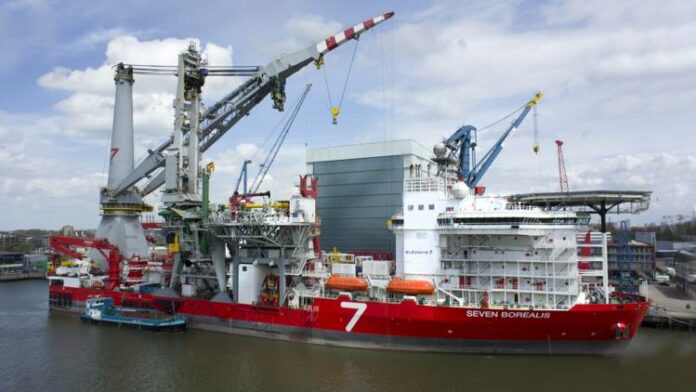
Subsea 7 reports high vessel utilisation in Q3 results

0

Sutton, UK-based Subsea 7 reported an active vessel utilisation rate of 89% in its Q3 results presentation on 8 November, up 11% from Q3 2017 and the highest level since 2014.

The high utilisation reflected strong activity in the West Nile Delta Phase Two project offshore Egypt, the Hasbah project offshore Saudi Arabia and the Borkum II project offshore Germany as well as increased inspection, repair and maintenance (IRM) activity.

While there were higher levels of activity in subsea umbilicals, risers and flowlines, conventional and IRM, activity levels in the renewables and heavy-lifting arm of the business decreased.

On the financial side, Q3 revenue was US$1.1Bn and adjusted earnings before interest, tax, depreciation and amortisation (EBITDA) was US$217M. The EBITDA margin of 20% was 5% lower than Q3 2017, which the company attributed to lower-priced projects taken on during the downturn and a reduced contribution from the company’s renewables and heavy-lifting business unit.

Looking ahead, the company anticipates several large greenfield project awards in 2019, which it believes will boost utilisation of vessels and also improve margins. Nonetheless, it expects 2019 to be a cyclical profitability low point, with 2020 expected to show recovery in utilisation and financial performance.

Subsea 7 chief executive officer Jean Cahuzac said “Our total vessel utilisation was the highest it has been since 2014 with several large projects executing offshore installation campaigns using our key enabling vessels supplemented by vessels from the wider fleet.”

Subsea 7 is well positioned for the recovery with its differentiated capability, long-standing relationships and market-leading technology.

We will continue to focus on cost discipline and efficiency while preparing for the future increase in activity related to the larger greenfield projects that are now being tendered and awarded.”

Source:osjonline
BAM International Begins Kitimat Wharf Contract

0

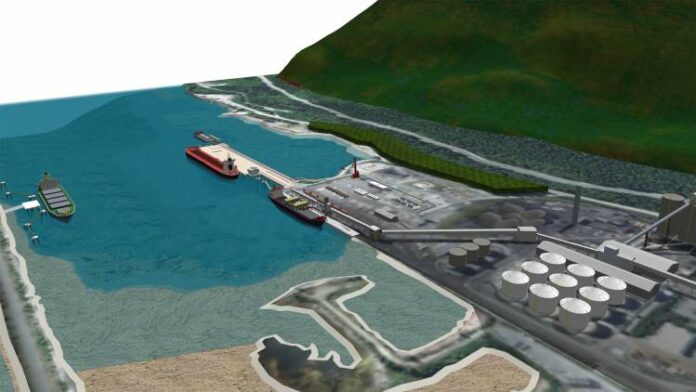
The Hague-based BAM International, together with JJM Construction (Canada) and Manson Construction (USA), has received the full order to build the new Rio Tinto BC Works Terminal A on behalf of LNG Canada.

The mobilisation and construction works being carried out by BAM and its partners for the Rio Tinto Terminal A expansion have started. BAM expects to complete this project in Autumn 2020.

The project is valued at CAD 135 million, with BAM’s share amounting to 50% and JJM and Manson covering the other 50%. BAM initially announced this contract in October 2017, ahead of final confirmation by LNG Canada.

LNG Canada has agreed to extend the existing BC Works Terminal A in exchange for their Terminal B, which handles exports of finished products for Rio Tinto’s ongoing operations. The location of Terminal B coincides with LNG Canada‘s Liquified Natural Gas (LNG) export terminal in Kitimat, British Columbia (approximately 600 km north-west of Vancouver).

LNG Canada represents the largest private investment in Canadian history and showcases how industrial development can co-exist with environmental stewardship.

The project will consist of a 320 x 60 metre terminal for the Rio Tinto BC Works, as well as a berth for cargo barges. Both elements will be built on more than 400 steel piles with a concrete deck of approximately 20,000 m3.

LNG Canada is a joint venture company comprised of five global energy companies with substantial experience in LNG: Shell, Petronas, PetroChina, KOGAS and Mitsubishi Corporation. The joint venture will be responsible designing, building and operating the LNG Canada export terminal. The first phase of construction will take approximately five years.

Since 2011, LNG Canada has worked closely with Rio Tinto, the community, First Nations, and municipal and regional governments to understand how the project can help Kitimat, the region and the wider province of British Columbia to achieve its social, economic and environmental aspirations.

Source:marinelink

Shell submits draft decommissioning plan for North Sea Goldeneye field

0

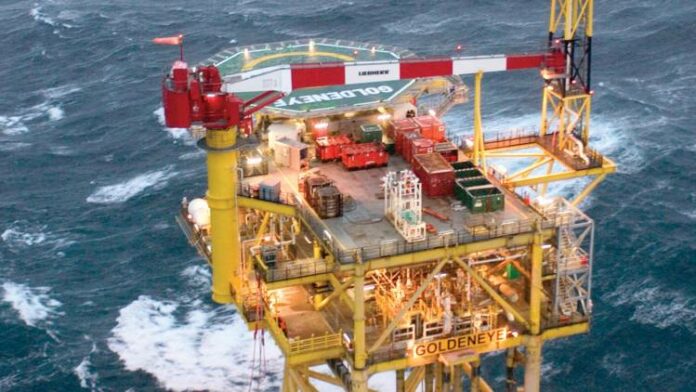
Shell U.K. will remove the Goldeneye platform in the UK central North Sea and some of the subsea infrastructure, subject to approval by Britain’s regulator.

The wellhead platform, located 100 km (74.6 mi) northeast of the Aberdeenshire coast in 120 m (393 ft) of water, produced gas from the Goldeneye field from 2004.

It has a 1,400-metric ton (1,543-ton) topsides with five platform wells, with production tied back directly to the St Fergus process complex north of Aberdeen.

Cessation of Production was granted in March 2011. The topsides processing facilities have since been depressurized, the pipeline has been flushed and filled with inhibited water, and the wells plugged and made safe.

Shell has maintained the normally unattended installation and associated infrastructure in accordance with a revised Safety Case which is said to ensure that all critical safety systems are maintained, and the integrity of the platform preserved.

The company has submitted a draft decommissioning program to the UK’s Department for Business, Energy, and Industrial Strategy (BEIS).

Shell has also decided to remove the Curlew FPSO, 210 km (130 mi) east of the Aberdeenshire coast, and to decommission the associated subsea infrastructure, again subject to the regulator’s approval.

The FPSO, in 93 m (305 ft) water depth, hosted three subsea field tiebacks, and is connected to the Fulmar pipeline for gas export to St Fergus.

Shell has submitted a draft decommissioning program.

Source:offshore-mag

Shell advancing Mattox project in deepwater Gulf of Mexico

0

With the arrival of the Appomattox platform to the deepwater Gulf of Mexico in May, Shell moved closer to first production of the related fields, which are expected to start production in 2019. At its peak, the Appomattox development is expected to produce 175,000 boe/d.

To move that product to market, the Mattox Pipeline Co. LLC, jointly owned by Shell and Nexen, is building the Mattox pipeline, a roughly 90-mi, 24-in. system that will move the produced crude oil from the Appomattox semisubmersible to an existing system, and from there to onshore markets.

Mattox will move the oil from the Appomattox platform in Mississippi Canyon block 437 westward to the existing Proteus pipeline system in South Pass 89. At its deepest, Mattox will reside in roughly 7,250 ft of water. The slope of the Gulf becomes less deep as the pipeline moves west, such that in South Pass 89 the pipeline will lie in 394 ft of water.

The Mattox pipeline is the first long-distance, large-diameter deepwater crude pipeline to be built in the Gulf of Mexico in recent years. But in addition to that, for Shell, Mattox represents a key component of its “corridor strategy” for pipelines in the Gulf of Mexico – a strategy that it has employed and built upon for decades.

Shell selected the pipelay vessel Solitaire to perform the deepwater installation, based on her flooded holding capacity for the 24-in. pipeline.



High voltage upkeep at Teesside

0

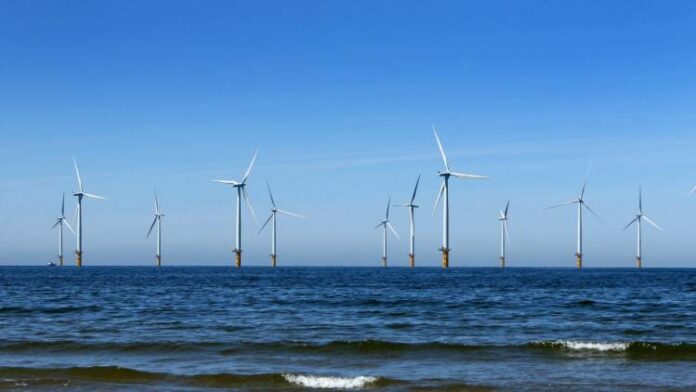
UK high voltage engineering specialist EDS HV Group has completed on-line tap changer maintenance work on 66kV/33kV generator transformers at EDF Renewable’s 62MW Teesside offshore wind farm off the northeast coast of England.

EDS is responsible for operations and maintenance of the HV network at the wind farm and the latest job was part of that contract.

EDS asset manager Ryan Murphy said: “Our planned preventative maintenance programme for the generator transformers at Teesside indicated that the condition of the oil within the tap changer compartments was deteriorating.”

EDF recognising the criticality of their transformers were very proactive in bringing us in to carry out this work.

At EDS, we pride ourselves on having highly skilled resources in-house to carry out such tasks, enabling us to provide an excellent and efficient turnkey solution to the client.”

EDS HV Group is a subsidiary of James Fisher and Sons.

Source:renews

LNG Shipping Rates Are Spiking and It Could Stay This Way for a Long Time

0

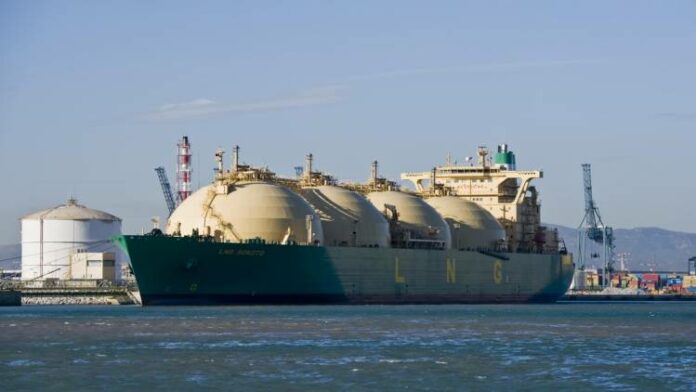
Rates for LNG carriers have boomed of late, with ship owners, active in this niche market, already reaping the benefits. In a recent note, Golar LNG said that “increasing US LNG production and start-up of Yamal T2 together with strong Asian demand and rising ton miles prompted a number of multi-month and multi-year charters ahead of the summer cooling season.

Vessel availability declined and rates increased, briefly surpassing their 2017 winter highs. Activity then eased over the summer months before regaining its positive momentum in September as strong end-user demand and rising oil prices fed through to increasing LNG prices, vessel fixtures, and spot rates approaching $100,000 per day. Newbuild deliveries also began to decline and commercial terms for Pacific basin fixtures exceeded those in the Atlantic for the first time since 3Q 2014. JKM and European gas prices ended the quarter up 86% and 43% respectively year-on-year, once again driven by strong demand from China and Korea. Comprised of a TCE1 of $48,100 in respect of its TFDE fleet (taking into account the dry-docking of one vessel during the quarter) and $11,000 for its two steam vessels, Golar recorded a 3Q 2018 TCE1 of $41,200 per day, up 210% on the $13,300 per day achieved in 3Q 2017 and 110% on the $19,600 achieved in 2Q 2018”.

According to Golar LNG, “dominated by new US volumes, LNG trade is expected to increase by 10% per annum from 290 million tons in 2017 to around 388 million tons in 2020. According to industry analysts, ton mile demand is expected to increase by 40+% over the same time frame. Annual fleet growth of 5% through to 2020, will, according to industry analysts, not be sufficient to meet this demand. Leading brokers continue to expect a 30-40 vessel shortfall. As of today there are minimal prompt available vessels worldwide and it is no longer possible to order a vessel for delivery before 2021. Multi-month and multi-year contracts continue to present themselves adding upward pressure on rates. The reactivated steam vessel Golar Viking is in the process of concluding an 11-month charter at a rate that is expected to improve the Adjusted EBITDA1 of the company by $17 million relative to the vessel’s layup position. Spot rates in excess of $100,000 are now routinely being achieved for TFDE vessels with some vessels being fixed on short-duration voyages at substantially higher rates. As previously indicated, Golar is working with other ship owners to establish a consolidated structure that will allow LNG shipping investors more direct exposure to the LNG shipping market. Some progress with these discussions has been made in the last quarter”, the shipowner concluded.

It’s worth noting that LNG shipping rates spiked during September, a trend likely to persist through next year as well, on increasing production from new plants, while tonnage supply won’t be able to keep up with demand. In a recent report, Reuters said that “the rate for vessels shipping LNG from the Atlantic Basin to Asia has jumped to $90,000 to $95,000 a day this week from $75,000 a day at the end of August, brokers and traders said. Rates, which broadly hovered around $30,000 to $40,000 a day from 2015 to 2017, have risen due to longer distances covered to transport LNG from new terminals in the United States and Arctic Russia, surging demand in China and a limited number of ships”, said Reuters.

Source:hellenicshippingnews

Kongsberg, KPMG launch cyber security partnership

0

Kongsberg and KPMG collaborated to advance cyber security solutions for the industry's operations. In the future, the partners expect the industry to adopt new digital solutions, which would have a major impact on operations and current business models in the maritime sector.

As Hege Skryseth, President of Kongsberg Digital and Executive Vice President Kongsberg notes, 90% of global trade is carried by ships, and digitalization of the maritime industry will enable increases in efficiency, safety, and productivity.

However, there are risks too. For this reason will and KPMG decided to cooperate in providing cyber security and risk management solutions.No more than you would climb Mount Everest without bringing a first aid kit, should you digitalize without thinking about cyber security.

Commenting on the occasion, Arne Helme, Partner Cybersecurity at KPMG, mentioned that the maritime industry has an exciting digitalization opportunity, 'that can only be harvested with proper risk management in place'.

The new cyber security partnership was launched in September 2018.

Describing the cyber security in shipping, Kongsberg reported the following findings:

  • Globally, almost 17 million cyberattacks occur every week;
  • In 2018, cybercrime is estimated to cost the global economy around $600 billion;
  • Among the greatest threats are malware like WannaCry, data breaches, phishing, social engineering and insider threats, hacking and hacktivism, weaponization of AI, and human error;
  • 50,000 ships in the maritime transport industry remain highly exposed to cyberattacks;
  • IMO has given ship owners and managers until 2021 to incorporate cyber risk management into ship safety.

Source:safety4sea

UN to allow inspections of vessels suspected of smuggling migrants off Libya

0

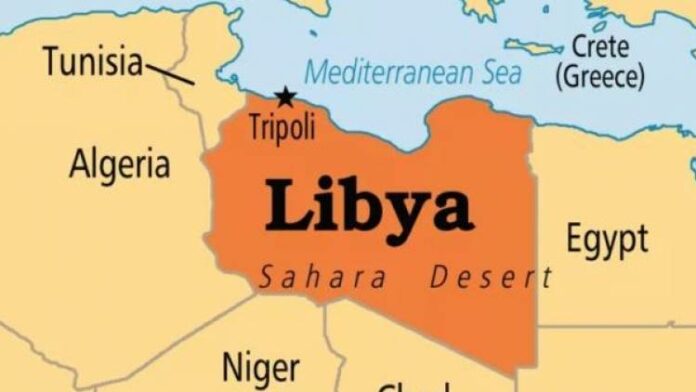
The UN Security Council decided to renew for one year, its authorization allowing Member States to inspect vessels on the high seas off the coast of Libya, as long as there are reasonable grounds for suspicion that they are being used for smuggling migrants or human trafficking.

The 15-member Council condemned all acts of migrant smuggling and human trafficking into, through and from the territory, and off the coast, of Libya.

Thus, the Council decided to renew, for 12 months, a set of authorizations allowing Member States to inspect any vessel off the Libyan coast that they suspect of being used to conduct such crimes, provided they make good-faith efforts to obtain the consent of the vessel’s flag State before performing that authority.

The authorization is granted 'with a view to saving the threatened lives of migrants or of victims of human trafficking on board such vessels' against 'exceptional and specific circumstances'.

The authorizations apply only with respect to migrant smuggling and human trafficking on the high seas off Libya’s coast, and will not affect the rights, obligations or responsibilities of Member States under international law, including the United Nations Convention on the Law of the Sea. It also said that the authorizations do not apply to vessels entitled to sovereign immunity under international law.

Source:safety4sea

Phase II of Hamad Port to begin in early 2019

0

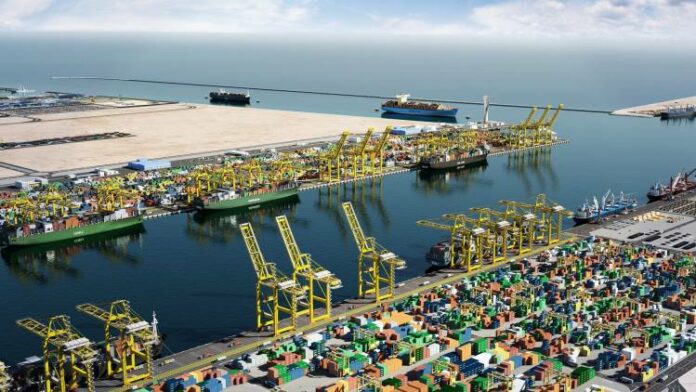
The second phase of Hamad Port development is set to be declared before the end of 2018. The project will be launched in the beginning of 2019 as stated by the Qatar's Minister of Transport and Communications.

H E Jassim bin Saif Al Sulaiti, Minister of Transport and Communication, stated that the first phase of the project concerning equipment, operation and clearance has been completed. Later on, the port will go through some major changes during the second phase of the project.

Moreover, the Minister gave further information about the project while signing the Memorandum of Understanding between Qterminals and China Harbour Engineering Company. QTerminals is the newly-established operator of the first phase of Hamad Port. The latter signed an MoU with China Harbour Engineering Company aiming to create joint chances of employment and investments between both sides around the world.

QTerminals is a terminal operating company between Qatar Ports Management Company holding the 51% and Qatar Navigation holding the 49% to provide the container, general cargo, RORO, livestock and offshore supply services in Phase 1 of Hamad Port.

According to local media, the deal makes QTerminals' and China Harbour Engineering Company's relations more powerful since they have same terms to reference, provide certain resources and support to achieve the intended objectives of this partnership. The companies would agree on the working mechanisms about funding, designing, constructing, operating and managing the opportunities.

Under the MoU, which serves the objectives of China’s One Belt, One Road initiative and the Qatar National Vision 2030, the parties would identify and invest in potential maritime investment opportunities around the world.

Source:safety4sea

Global Ship Lease announces new long-term charter agreements between Poseidon Containers and CMA CGM

0

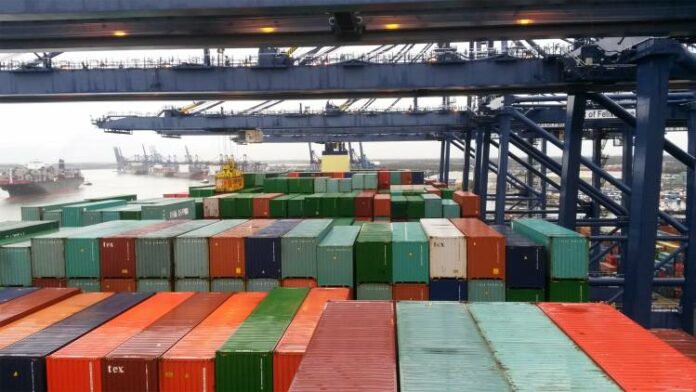
Global Ship Lease, Inc., a containership charter owner, has announced that Poseidon Containers, with which Global Ship Lease has entered a definitive merger agreement, has agreed five-year charters with CMA CGM for four of its 6,927 TEU containerships, Mary, Kristina, Katherine and Alexandra.

The charters will deliver incremental annualized EBITDA of approximately $11.0 million compared to third quarter 2018 contracted rates. The new charter for Mary commenced recently, and the remaining three new charters will commence upon expiry of their existing charters during the first half of 2019. The new five-year charters are expected to generate total EBITDA of approximately $135 million over the five-year contract period.

Ian Webber, Chief Executive Officer of Global Ship Lease, commented, “As we near the closing of our strategic combination, we are pleased to announce Poseidon Containers’ signing of these long-term charters with leading container liner company CMA CGM at levels substantially above their prior contracted rates. Upon closing our transformational combination with Poseidon Containers, the enhanced long-term visibility through 2024 from contracted revenue and cashflow from these charters will strengthen GSL’s balance sheet and contribute to further deleveraging, which, together with increased EBITDA, will drive improvements in financial leverage. We are excited about joining forces with Poseidon Containers; as illustrated by these new charters, the combination will significantly increase our scale and ability to capitalize on favorable fundamentals in the mid-sized and smaller containership segments.”

About Global Ship Lease

Global Ship Lease is a containership charter owner. Incorporated in the Marshall Islands, Global Ship Lease commenced operations in December 2007 with a business of owning and chartering out containerships under mainly long-term, fixed-rate charters to top tier container liner companies.

Source:portnews