5.7 C
New York
Home Blog Page 1253

Temporary prohibitions at Port of Singapore

0

The Maritime and Port Authority of Singapore informed that the Port Master prohibits all vessels from transiting, anchoring or remaining within specific areas in the Eastern Anchorage (AEW) and Eastern Holding C Anchorage (AEHC). The prohibition will apply from 13 November 2018 to 15 November 2018.
Moreover, ships that are currently anchored within these areas are required to shift out of the areas by 12.00 on 13 November 2018. Enhanced security measures will also be implemented in the eastern part of Singapore port waters from 13 to 15 November.

In addition, MPA called mariners to comply  with all instructions issued by the security agencies when navigating in the Eastern Anchorage, Eastern Holding 'Alpha', Eastern Holding 'Bravo' and Eastern Petroleum 'Alpha' Anchorages.

Furthermore, operators should take note that there will be increased security checks on craft and vessels plying the Eastern Anchorage, Eastern Holding 'Alpha' Anchorage, Eastern Holding 'Bravo' Anchorage and Eastern Petroleum 'Alpha' Anchorage on 13, 14 and 15 November 2018.

Finally, LNG carriers, LPG carriers and chemical tankers are strictly prohibited from anchoring at anchorages other than the designated locations as stated in the PMC.

In the following graphs you can a depiction of the prohibited areas

Source:safety4sea

IMRF, Nautical Institute to collaborate on improving safety at sea

0

The International Maritime Rescue Federation (IMRF) and the Nautical Institute signed a Memorandum of Understanding (MOU), according to which they will work together on projects to improve safety at sea.

The MoU commits both organisations to exchange information and technical cooperation in areas of mutual interest, and to improve training standards and guidelines across the shipping industry.

In addition, according to the agreement, IMRF and the Nautical Institute will attempt to promote issues regarding the safety of mariners and others at sea.

Representatives from the IMRF and the Nautical Institute will also take part in each other's workshops and seminars and will cooperate on future  proposals and initiatives.

Captain John Lloyd, CEO of The Nautical Institute, stated on the occasion:"Safety at sea and supporting those in peril is a key component of maritime tradition and professionalism. Through this MOU we will increase awareness in shared areas of concern and be stronger at promoting best practice"

Source:safety4sea


Watch: LNG vessel ran aground in Crete

0

Gaslog Saratoga, a Bermuda flagged LNG vessel, grounded on the 10th of November on Dermata bay in Heraklion, Crete. The coastguard came to the rescue to help all the crew members immediately. Heraklion's Hellenic Coastguard commanded the non departure of the LNG vessel until it was given a class certification addressing its security to sail.

The LNG vessel, Gaslog Saratoga, began its voyage from Sabine Pass Port, USA and was heading to Turkey carrying 150.080 M3 LNG. The grounding of the vessel, caused the immediate operation of Heraklion's Hellenic Coastguard to rescue the crew members. Along with the HCG, followed two patrol boats, five navy tugs, one boat and one vessel from the fire department, while from coast came a police car.

The vessel was safely detached with the help of the above vessels and then anchored with the help of a patrol boat while all 33 crewmembers were safe.

A diver did an autopsy concerning the incident and found out that the vessel ran aground in a shallow part of the sea, approximately 330 m from the coast. The diver also informed that there was no water pollution.

Finally, Heraklion's HCG commanded the non departure of the LNG vessel until it was given a class certification addressing its security to sail.

Source:safety4sea

Wan Hai Lines orders 20 new vessels

0

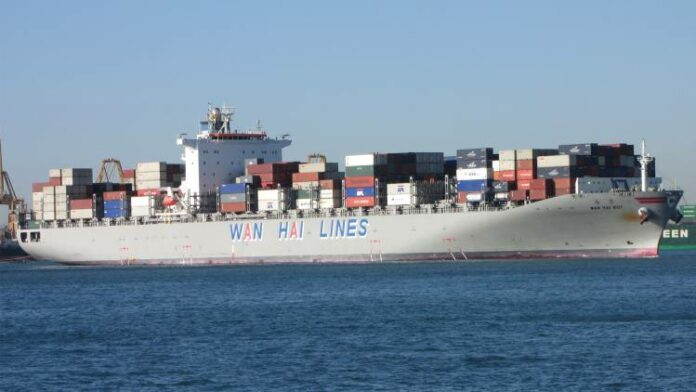
As part of the company’s fleet improvement plan, Wan Hai Lines has confirmed an order of 20 container vessels with JMU (Japan Marine United Corporation) and GWS (Guangzhou Wenchong Shipyard Co., Ltd) / CSTC (China Shipbuilding Trading Company, Limited). The contract signing ceremony was held at Wan Hai Lines’ Taipei headquarter on 12th November 2018.

The contract includes eight (8) 3036Teu container vessels with JMU and twelve (12) 2038Teu container vessels with GWS /CSTC. At the same time, Wan Hai has the option to declare an additional four(4) 3036Teu vessels within 6 months and four(4) 2038Teu vessels within 3 months. These two new vessel types will start taking delivery in end October 2020 and early January 2021 respectively.

Currently, Wan Hai Lines operates a fleet of 72 owned vessels and 24 chartered vessels. This new shipbuilding contract is the company’s latest fleet renewal plan, so as to ensure that the company’s vessel fleet is able to maintain competitive and support continuous market development. Eventually, the company hopes to deliver better service quality to its customers by more efficient vessel fleet.

Source:portnews

ClassNK and TÜV Rheinland sign partnership agreement for cybersecurity services

0

Leading classification society ClassNK and TÜV Rheinland have concluded a worldwide partnership agreement for cybersecurity services.  ClassNK is a classification society which carries out surveys to help ensure the safety of vessels and marine structures, and has many achievements involving the certification of ship equipment. TÜV Rheinland is a global leader in testing, inspection and certification services providing digital services for safety, cybersecurity and privacy.

Earlier, ClassNK and TÜV Rheinland built a cooperative relationship through the signing of partnership agreements in 2012 for wind turbine certification and in 2015 for test and product certification.  With their most recent partnership agreement, both parties have agreed to comprehensively collaborate in jointly developing and delivering a cybersecurity certification scheme for the maritime industry. Utilizing the knowledge and strength from the services they each provide, they will collaborate globally in the field of cybersecurity in order to further ensure the safety of vessels. Under the agreement, ClassNK will first team up with TÜV Rheinland to work on the cybersecurity guidelines that target onboard software currently being developed by the society. This partnership will also bring efficient and pragmatic cybersecurity certification services to meet the maritime sector’s needs. 

ABOUT CLASSNK 

Established in 1899, ClassNK is a world-leading classification society. As a non-profit, independent organization, its mission is to safeguard life and property at sea whilst protecting the marine environment. It offers a wide range of services that encompass every aspect of ship classification from the development of technical rules and guidelines to the approval of ship designs, and the survey and registration of vessels and installations. Boasting roughly 20% of the world’s merchant fleet on its register and over 130 offices located across 50 nations, ClassNK provides indispensable infrastructure to the maritime industry.

ABOUT TÜV RHEINLAND 

TÜV Rheinland is a global leader in independent inspection services, founded 145 years ago. The group maintains a worldwide presence of more than 20,000 people; annual turnover is nearly EUR 2 billion. The independent experts stand for quality and safety for people, technology and the environment in nearly all aspects of life. TÜV Rheinland inspects technical equipment, products and services, oversees projects, and helps to shape processes and information security for companies. Its experts train people in a wide range of careers and industries. To this end, TÜV Rheinland employs a global network of approved labs, testing and education centers. Since 2006, TÜV Rheinland has been a member of the United Nations Global Compact to promote sustainability and combat corruption.

Source;portnews

Danish shipyard orders large equipment package from Rolls-Royce

0

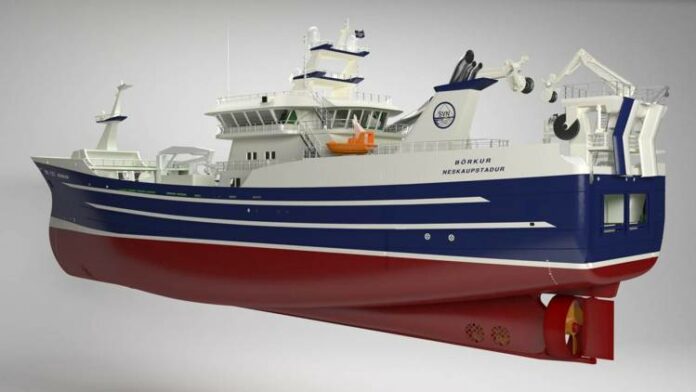
The Danish yard Karstensens Skibsværft is set build and design two new vessels for trawl and purse seine fishing ordered by two Icelandic ship-owning companies. Rolls-Royce Commercial Marine has been selected to deliver an extensive package of ship equipment to both ships.

The two fishing vessels of 88 metres will be outfitted with engines, propulsion, steering gear, rudders and winches together with connected control systems from Rolls-Royce. The equipment will be delivered from four of the company’s eight production facilities in the Nordic countries, three in Norway and one in Sweden.

One of the ships is to be named Vilhelm Þorsteinsson and has been ordered by the ship-owning company Samherji, while the other vessel is to be named Börkur and will be built for Sildarvinnslan.

Rolls-Royce has cooperated with Icelandic companies for several years on developing large fishing vessels.

Vilhelm Þorsteinsson is scheduled for delivery from the yard in June 2020, while delivery of Börkur is planned for December 2020. The list of Rolls-Royce equipment specified for the two identical vessels comprise:

 2 diesel engines of type Bergen B33:45 with six cylinders
 1 Promas propulsion and manoeuvring system, and gear
 1 steering gear
 3 Tunnel Thrusters
 1 Helicon X3 control system
 Low-pressure hydraulic winches and control systems. In total 17 winches are to be delivered to each vessel, adapted to trawl and purse seine fishing.

Source:portnews

Despite Competing Claims, Exxon Begins Drilling off Cyprus

0

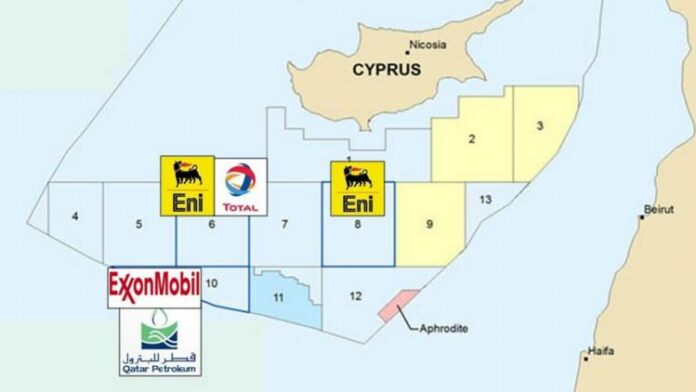
ExxonMobil and Qatar Petroleum are moving ahead with a natural gas exploration campaign off Cyprus, despite heated rhetoric from Turkey about the validity of the island nation's E&P leases. 

A drillship is presently in position to drill at the Exxon-Qatar lease site, named Delphinus, according to Cypriot state media. The national maritime authorities are broadcasting a warning to mariners regarding the vessel's presence and a security zone surrounding it. In addition, Cyprus has defined a security corridor between the drilling site and the Egyptian maritime boundary, which will be jointly patrolled by the naval vessels of several nations – including the United States. The U.S. Navy was also present in Cyprus in March, when Exxon began conducting survey work. 

Turkish president Recep Tayyip Erdogan warned last month that Turkey will not permit exploration in waters that are claimed by the Turkish Republic of Northern Cyprus. Cyprus is divided in two, with the southern half aligned with Greece and the northern half aligned with Turkey. Both nations are NATO allies, but the administration of Cyprus has been a source of tension between them since the 1970s, when they fought a war over its control. Only Turkey recognizes the Turkish Republic of Northern Cyprus.

In a recent interview, Exxon SVP Neil Chapman said that the EEZ dispute is solely a question for the nations involved. “We are a commercial entity and our business is about producing and developing natural resources on behalf of governments. Any government issues, that’s for governments to discuss and resolve,” he said. 

In February, Turkish warships obstructed the navigation of the Italian drillship Saipem 12000 in order to prevent her from exploring a lease block licensed by the Republic of Cyprus. Later that month, charterer and leaseholder Eni abandoned its work at the block and sent the drillship to explore a site off western Morocco instead. 

Last month, Turkey launched its own offshore E&P campaign in the eastern Mediterranean. Its first exploration well will be drilled at a location about 35 nm off the town of Alanya, Antalya province, according to Turkish energy minister Fatih Donmez. The area is far from the most hotly-contested region, which is off Cyprus' east coast. 

The Eastern Mediterranean's energy potential is significant. In February, Eni found a new gas deposit off Cyprus which may hold as much as the giant Zohr field, a 30 trillion cubic foot formation located in Egypt's EEZ. 

Source:maritime-executive

U.S. Navy Christens Expeditionary Fast Transport Puerto Rico

0

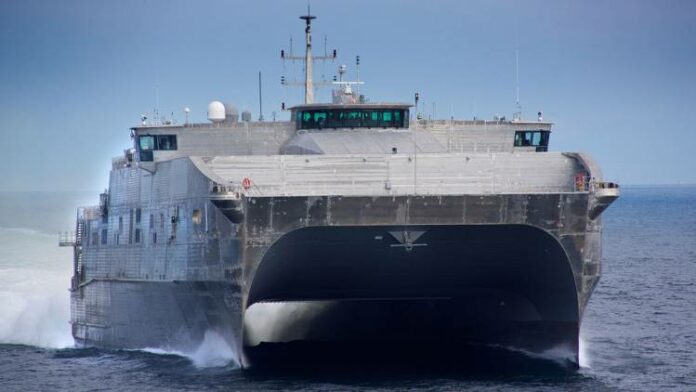
The U.S. Navy christened its newest Expeditionary Fast Transport, the future USNS Puerto Rico (T-EPF 11) on Saturday.
 
Justice Sonia Sotomayor, Associate Justice of the Supreme Court of the United States, serves as the ship’s sponsor, and she christened the ship at the Austal USA shipyard in Mobile, Alabama.
 
The future USNS Puerto Rico will be the first active ship in naval service to honor the island in the West Indies east of Hispaniola. “This ship honors the Commonwealth of Puerto Rico and the contributions Puerto Ricans have made to our nation and Navy and Marine Corps team,” said Secretary of the Navy Richard V. Spencer. An Alaska class cruiser named Puerto Rico (CB-5) was authorized July 19, 1940, but construction was canceled June 24, 1943.
 
With an all-aluminum shallow-draft hull, the EPF is a commercial-based catamaran capable of intra-theater personnel and cargo lift. EPF class ships are designed to transport 600 short tons of military cargo 1,200 nautical miles at an average speed of 35 knots. The ship is capable of operating in shallow-draft ports and waterways, interfacing with roll-on/roll-off discharge facilities, and on/off-loading a combat-loaded Abrams main battle tank.
 
The EPF includes a flight deck for helicopter operations and an off-load ramp that will allow vehicles to quickly drive off the ship. EPF’s shallow draft (under 15 feet) supports littoral operations and port access. This makes the EPF an extremely flexible asset for support of a wide range of operations including maneuver and sustainment, relief operations in small or damaged ports, flexible logistics support or as the key enabler for rapid transport.
 
The EPF program delivered its ninth ship late last year, USNS City of Bismarck (T-EPF 9), with delivery of USNS Burlington (EPF 10) planned for mid-November. The future USNS Puerto Rico is the 11th of 12 EPFs that Austal has under contract with the U.S. Navy with a combined value of over $1.9 billion. Austal also received instruction from the Navy to order long lead-time materials for EPF 13 in October.

General Characteristics

Builder: Austal USA
Propulsion: water jet
Length: 103 meters (338 feet)
Beam: 28.5 meters (93.5 feet)
Displacement: 2,500 metric tons
Draft: 13 feet (3.92 meters)
Speed: 35-40 knots
Range: 1,200 nautical miles
Crew: 26 civilian mariners

Source;maritime-executive

IHC launches world’s most powerful cutter suction dredge

0

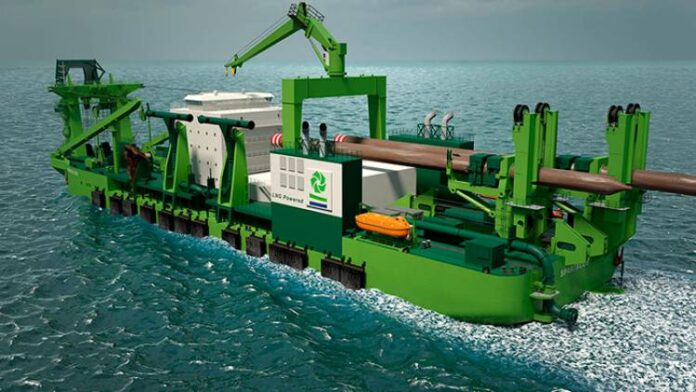
Royal IHC's Krimpen aan den IJssel, Netherlands, shipyard has successfully launched the world's largest, most powerful cutter suction dredge, the 44,180 kW self-propelled Spartacus.

Designed and built for Belgium's DEME Group, the 164 m Spartacus is the first cutter suction dredge to be liquefied natural gas (LNG) fueled.

The four main 9-cylinder Wärtsilä 46DF engines can run on LNG, marine diesel oil (MDO) and heavy fuel oil (HFO). The two 8-cylinder Wärtsilä 20 DFauxiliary engines also incorporate dual-fuel technology.

IHC and DEME acquired extensive knowledge during the build of the LNG fueled trailing suction hopper dredges Minerva and Scheldt River.

As the first LNG-powered CSD in the world, the Spartacus sets a new benchmark in the industry. It also features several additional innovations, such as a waste heat recovery system, a one-man operated dredge control and a heavy-duty cutter ladder that can reach a dredging depth of 45 m.

"DEME's drive to innovate and focus on sustainability is reflected in the company's multi-year fleet investment program," says Director and CEO of DEME Alain Bernard. "The new additions to the fleet are part of our continuous efforts to further increase efficiency, both in terms of production and environmental performance. Spartacus stands out because of her unrivaled power and high-tech features on board. The CSD will drive new levels of performance and provide our customers with flexible solutions for dredging projects in even the most harsh and remote environments."

"IHC is known for its willingness to push boundaries to develop and produce high added-value equipment and vessels for our customers," says IHC's CEO Dave Vander Heyde. "The combination of power, size and innovation makes the Spartacus a perfect example of such a project. DEME was once the first dredging company to put a 'jumbo' dredger in the market which has led to a new generation of dredging vessels. As the Spartacus will soon be the world's largest and most powerful LNG-powered CSD in operation, DEME will again have set a new standard in the market."

US Navy grants SAIC $597M deal

0

The US Navy has awarded Science Applications International Corp.  a contract for the production and delivery of integrated C5ISR systems, networks, and support equipment for the Space and Naval Warfare Systems Center  Atlantic.

As informed, the single-award contract has a five-year period of performance worth approximately $597 million.

The contract has an additional two-year award term that, if earned, would increase its potential value to approximately $861 million, according to SAIC.

Delivery/task orders awarded under the contract will include procuring, fabricating, assembling, integrating, testing, inspecting and delivering systems that include various complex designs provided by navy program offices in the form of technical data packages.

Systems vary in complexity but generally include the integration of engineered cable assemblies, mounting kit assemblies, hardware, and software/security applications necessary to provide the Warfighter with the capability to communicate, maintain situational awareness, and achieve information dominance.

Work will be performed in Charleston, South Carolina and Norfolk, Virginia.

We are proud to continue to help SSC Atlantic streamline their system production services and provide warfighters with the latest technology available,” Jim Scanlon, SAIC senior vice president and general manager of the Defense Systems Customer Group, commented.