4.5 C
New York
Home Blog Page 1251

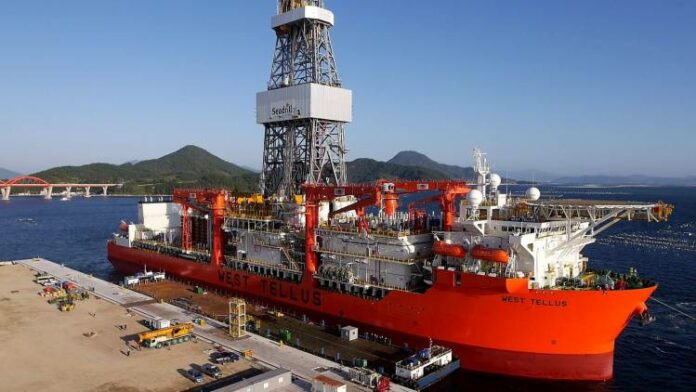
Golar FSRU Wins LNG Croatia Project

0

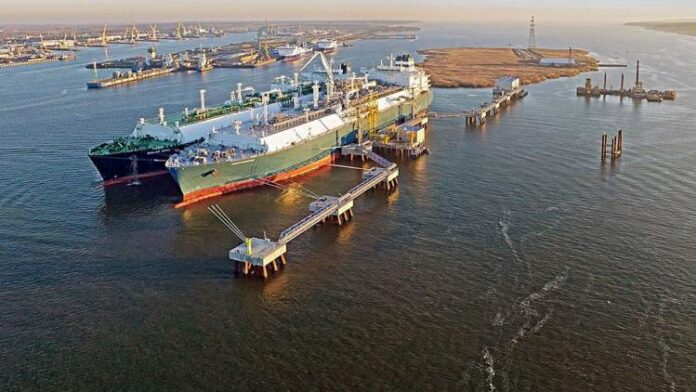
State-owned LNG Croatia has selected Golar Power, a joint venture between Golar LNG and Stonepeak Infrastructure Partners,  to deliver a floating storage and regasification unit (FSRU) for the nation's first liquefied natural gas import facility.

Golar Power was picked from three bidders, including Mitsui O.S.K. Lines and Maran Gas Maritime Inc, LNG Croatia, the company behind the project, LNG Croatia said in a statement.

"After reviewing and evaluating the bids, the committee for opening, review, evaluation of the bids and the selection of the most advantageous bidder determined that the bid from Golar Power Limited was fully in line with the requirements of the tender documentation and according to the criterion of choosing the most economically advantageous bid, the bid was ranked with highest score," it said.

LNG Croatia LLC has opted for Golar Power's offer, which includes a new conversion of the existing 2005-built LNG carrier Golar Viking to an FSRU which value is EUR 159.6 million.

Depending on the outcome of the Open Season procedure (obligatory capacity booking), which will close on December 20, 2018 and adoption of a positive investment decision, delivery window for the FSRU will be in the period from September 30, 2020 to October 30, 2020, in order for the LNG terminal to be fully operational by January 1, 2021.

The selected FSRU vessel has LNG storage capacity of 140,000 m3, with a nominal LNG regasification capacity of 300,000 m3 of natural gas per hour, giving a yearly capacity of 2.6 billion m3 of gas, which is in accordance with the technical capacity of the gas transmission system of the Republic of Croatia.

Offered technical solution for LNG regasification will work in the open loop system in such a way that during the intake and discharge of sea water the FSRU will not use electro-chlorination for the purpose of preventing marine growth in the system, since it will work on the principle of mechanical cleaning of the entire system as part of regular annual maintenance of the FSRU.

Source:marinelink

Equinor Preps For Icy Conditions At Nearly $6 Billion Arctic Subsea Development

0

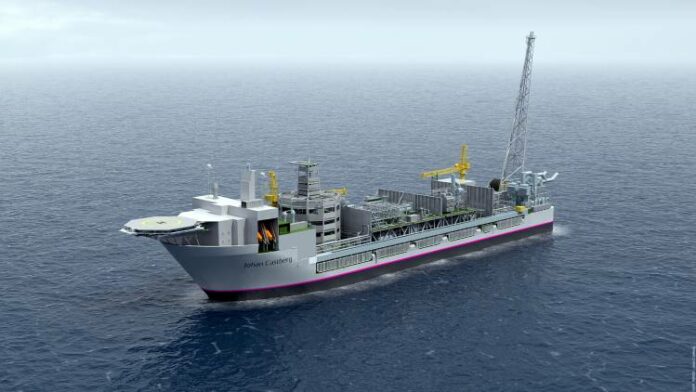
Equinor says conditions in the area of its northernmost-operated field under development in the Arctic are not considerably more severe than other regions where it operates, but the company is preparing for icy conditions that could come its way.

Morten Opsal, Equinor’s drilling and well manager for the Johan Castberg development in the Arctic, shared insight on some of the steps being taken as the company and partners Eni and Petoro move toward first oil in 2022.

The topside layout has been optimized to reduce the negative consequences of this risk and we have done full-scale testing on the lifeboats for icing,” Opsal said during the recently held Arctic Technology Conference in Houston.

He added that the risk for icebergs in the Johan Castberg area, which is about 100 km north of the Snøhvit Field in the Barents Sea, is low with the frequency being less than one per 10,000 years.

However, “there are uncertainties in these statistics we need to take that into account. So we have done extensive studies of ice hull interactions for the FPSO to see how we can optimize that and some reinforcement has been done to the hull due to the local ice pressure,”Opsal said. “In general we see that the Johan Castberg FPSO is a robust design in moderate ice conditions. …In general, ice risks will be handled by use of operational measures,” including production shutdown.

Floating structures are frequently impacted by winds, waves and currents, Opsal said. Johan Castberg will likely be no exception.

Companies like Equinor have been progressing exploration and development plans in the Arctic, which has returned to the spotlight—particularly in Norwegian waters—following the market downturn.

Source:epmag

Kirby Corporation Signs Agreement To Purchase CGBM’s Inland Tank Barge Fleet

0

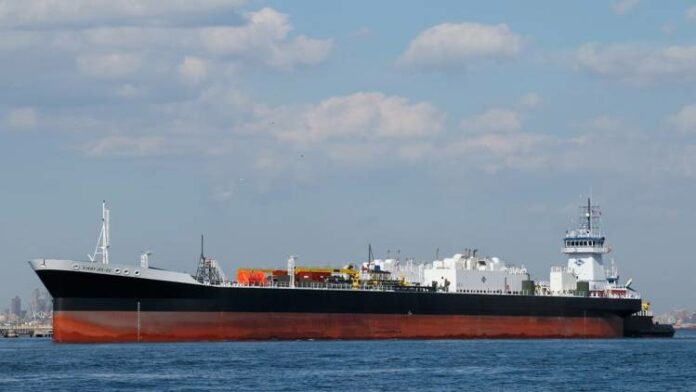
 Kirby Corporation ("Kirby") (NYSE: KEX) today announced the signing of an agreement to acquire substantially all of CGBM 100, LLC's ("CGBM") inland marine tank barge fleet for an undisclosed amount.

Under the terms of the agreement, Kirby will acquire 27 of CGBM's 10,000 barrel inland marine tank barges which have a total capacity of approximately 270,000 barrels. The closing of the acquisition is expected to occur in the 2018 fourth quarter and is subject to customary closing conditions.

Kirby Corporation, based in Houston, Texas, is the nation's largest domestic tank barge operator transporting bulk liquid products throughout the Mississippi River System, on the Gulf Intracoastal Waterway, coastwise along all three United States coasts, and in Alaska and Hawaii.  Kirby transports petrochemicals, black oil, refined petroleum products and agricultural chemicals by tank barge.  In addition, Kirby participates in the transportation of dry-bulk commodities in United States coastwise trade.  Through the distribution and services segment, Kirby provides after-market service and parts for engines, transmissions, reduction gears, and related equipment used in oilfield services, marine, power generation, on-highway, and other industrial applications.  Kirby also rents equipment including generators, forklifts, pumps, and compressors for use in a variety of industrial markets, and manufactures and remanufactures oilfield service equipment, including pressure pumping units, for land-based oilfield service customers.


ICS Chairman worried about today’s threats to global trade

0

Speaking in Tokyo, the Chairman of the International Chamber of Shipping (ICS), Esben Poulsson, gave emphasis on serious concerns regarding the challenge that the US presented 'to the proven benefits of multilateralism and the existing global trading order' .

Mr. Poulsson mentioned that the US has legitimate worries about the policies of some of its trading partners, particularly as far as China and South Korea are concerned, regarding their possible contribution towards overcapacity in shipping.

ICS genuinely believes that these are issues which can best be resolved through continued co-operation and dialogue, working through those international institutions which the U.S and others have successfully helped to establish and of which governments such as China and South Korea are generally supportive.

He also added that, that until now there are more than 100 trade complaints which the US has brought to the WTO for adjudication. This amount is the most cases than any other country has put forward, with the US having won over 90% of them.

Continuing, Mr. Poulsson noted that it is easy to overlook that demand for maritime transport has increased by about 30% since 2008. In fact, the annual volume of cargo carried by sea, now is over 10 billion tonnes.

Sluggish growth in many OECD economies has largely been compensated by the impressive growth in demand for shipping from China and other emerging economies which now account for over 50% of global shipping demand.

Finally, ICS Chairman highlighted that the influence of the shipping industry on the geopolitical and trade policies that governments might choose, is limited.

However, he said than the shipping industry has to explain the negative implications of policies that may seriously damage long term economic development.

Source:safety4sea


AMSA to deploy underwater drones to assess containers lost from YM Efficiency

0

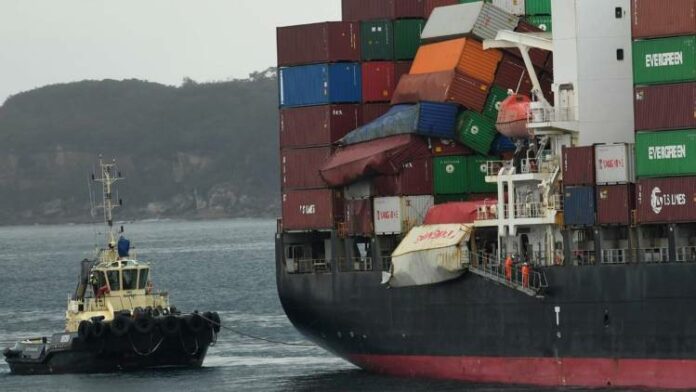
On 8 November, the Australian Maritime Safety Authority (AMSA) signed a contract to commence operations with Remotely Operated Underwater Vehicles (ROUVs) to investigate the containers lost from the YM Efficiency. The ROUVs will descend to the ocean floor and provide imagery of the containers and any associated debris that has been identified by the surveys so far. These images will allow an assessment by salvage experts on whether the items can be brought to the surface safely and without causing more damage to the environment.

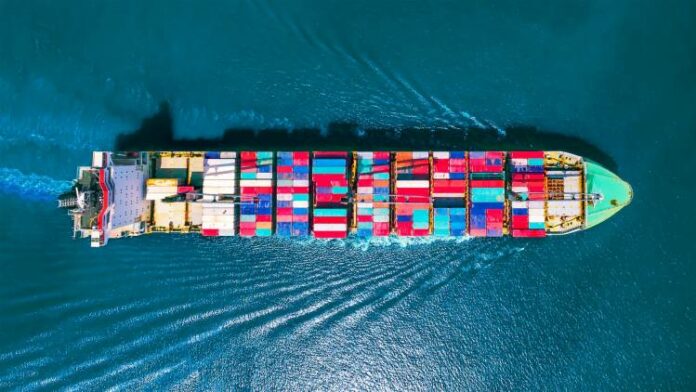
In early June, the vessel, owned by the Chinese company Yang Ming Marine Transport, was en route from Kaohsiung to Sydney, loaded with 3307 TEU onboard, when it encountered inclement weather which caused 83 containers to go overboard.

The ship’s insurers, Aus Ship, and operators, Yang Ming, conducted survey operations in the area in July, which located approximately 37 containers. There have been significant delays in further search operations caused by weather and sea conditions. While activities recommenced on Friday 19 October, AMSA’s analysis of the completed surveys indicates that there are as many as 42 containers still missing.

On the occasion of the AMSA announcement, AMSA Chief Executive Officer, Mick Kinley, expressed concern at the lack of progress in locating the remaining containers and the absence of any attempt to assess the need to recover the containers and debris found so far on the seabed:"The presence of these containers in the valuable fishing grounds off Newcastle presents an unacceptable risk to local fishers. The dangers of hooking up on debris has understandably led to many local trawlers avoiding these valuable areas which not only impacts their livelihood but also has knock-on effects for the local industry,"

So far, AMSA has received three credible reports of trawler hook-ups on containers or other materials lost from the YM Efficiency.

In addition to the economic effects, scientific advice to AMSA indicates several environmental concerns – the most serious being the large amount of plastics contained in the lost containers in the form of consumer products and packaging. Plastics not recovered will break down over time and spread as microplastics – affecting habitats and species over a wide area. These impacts will become more severe the longer the debris stays on the sea floor and potentially pose a threat for decades ahead as containers rust and release their contents.

AMSA has decided that further delays are no longer acceptable. While we would have preferred that Yang Ming or their insurers had taken further action, consistent with our function to combat pollution in the marine environment AMSA is contracting a third party to conduct a ROUV assessment of the containers and debris field identified to date. This operation will not be without cost which AMSA has advised Yang Ming and their insurers that we will be seeking to recover.

The survey activity is expected to begin in about a week and take several weeks to complete, AMSA will keep local fishers and the community informed of the progress and the plans to remove the debris as soon as possible.

Source:safety4sea


Asian seafaring nations focus on fair treatment of seafarers

0

A Regional Meeting of Asia’s leading seafaring nations focused on the situation that many seafarers face in case of a maritime accident. As a result, the nations promised to advance effective implementation of the IMO and International Labor Organization (ILO) agreed Guidelines on the Fair Treatment of Seafarers. The meeting took place in Manila on November 13.

The meeting took place in Manila on November 13, organised by Seafarers’ Rights International (SRI), and DOLE, the Philippine Department of Labor and Employment.

Issuing the first ever Manila Statement on the Fair Treatment of Seafarers, senior government representatives from over 10 countries in the region said the time was right for action to be taken to protect their seafarers.

The Regional Meeting also wanted to raise awareness of the Guidelines amongst stakeholders and role players, and explore how the region could develop resources, knowledge and expertise. In addition, it addressed increasing cooperation amongst States at regional and international level.

The Guidelines are voluntary and do not seek to interfere with any State's domestic, criminal, or civil law. They aspire to balance the rights and obligations of stakeholders to whom the Guidelines are addressed, such as port and coastal states, flag states, the seafarers’ states, shipowners and seafarers.

Deirdre Fitzpatrick, Executive Director of SRI, stated:"A number of governments have already implemented the Guidelines but many others need to consider them and look at how they can be implemented within their own legislation."

Source:safety4sea

COSCO Shipping Heavy Industry and GTT sign agreement for LNG carrier repairs

0

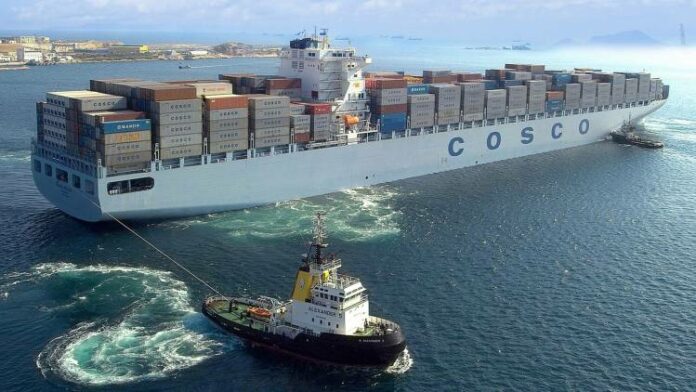
Following the strategic agreement signed between COSCO Shipping Heavy Industry Co.,ltd(CHI) and GTT last year, as a part of the plan, CHI and GTT have signed the Technical Service Agreement(TSA) on November 8 in Shanghai during the first CIIE.

TSA is well recognized by world’s LNG shipping companies, is considered as the “ticket” of a shipyard stepping into LNG carriers’ repair & conversion field, which proves and qualifies the shipyard’s capability of undertaking the repairs and conversion of a membrane type LNG carrier.

In this July, GTT had worked together with CHI Guangdong shipyard on a Mark III type LNG carrier “LNG Lucia Ambition”, the project was the first LNG carriers that a Chinese shipyard has ever done with intensive membrane type cargo tank repairs, and was completed very successfully meeting the satisfaction of all parties.

LNG carriers’ repair & conversion business is one of the direction for CHI to focus on in future, the signing of this TSA will help CHI and GTT to promote them to world’s LNG shipping companies.

Nowadays, CHI is talking with those major LNG shipping companies about the future potential cooperation, both CHI and GTT are confident to build China to a world’s LNG carrier repair base and CHI will be one of the core shipyard.

Source:portnews

Long Beach cargo volumes up 5.4 percent in October 2018

0

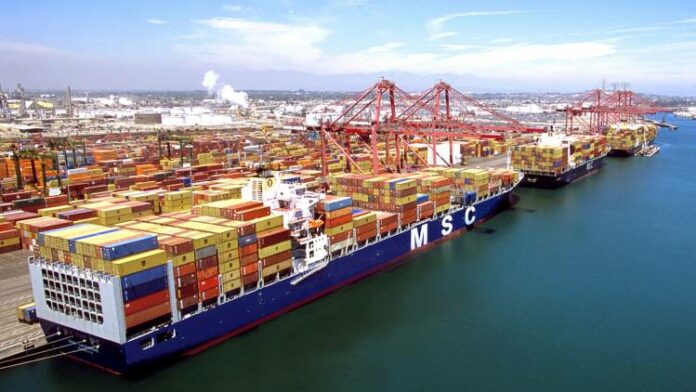
For the second consecutive year, the Port of Long Beach has broken its October record for cargo, as volumes rose 5.4 percent compared to the same month in 2017. October 2018 was also the third-busiest month in the Port’s 107-year history.

Marine terminals handled 705,408 twenty-foot equivalent units (TEUs) of container cargo in October. Inbound containers increased 7.4 percent, to 364,084 TEUs. Export TEUs totaled 119,837 TEUs, a 5 percent decline. Empty containers shipped overseas grew 8.5 percent, to 221,487 TEUs.

Port of Long Beach Executive Director Mario Cordero said the results illustrate the evolving effects of the U.S.-China trade war.
 
Through October, the Port of Long Beach has moved 6,727,542 TEUs, which is 7.9 percent higher than the matching period during 2017, when the Port broke its annual mark for cargo volume.

The Port of Long Beach is one of the world’s premier seaports, a gateway for trans-Pacific trade and a trailblazer in goods movement and environmental stewardship. With 175 shipping lines connecting Long Beach to 217 seaports, the Port handles $194 billion in trade annually, supporting hundreds of thousands of Southern California jobs.

Source:portnews

ABP invests £1 million in Port of Lowestoft as part of energy hub vision

0

The first phase of a £300,000 demolition project to clear a new 13-acre development site has completed at the Port of Lowestoft’s Shell Quay, ABP says in a press release. The project, to provide more development land for ABP and surrounding local businesses, brings ABP’s total investment in the Port of Lowestoft to £1 million in the last quarter.

This follows an announcement in October that ABP has signed a new contract with trailblazing Norfolk boat builder, Goodchild Marine Services Limited, to construct a new state-of-the-art pilot boat for the port.

In addition to these two latest investments, the Port of Lowestoft has benefited from a £10 million investment by ScottishPower Renewables in a new Operations and Maintenance (O&M) facility. This is thought to be the largest private sector investment in Lowestoft since the £7 million investment in the Tower Road Retail Park.

The demolition is focused on the former Shell Lowestoft base which served the Southern North Sea operations of Shell and was an important employer until its closing in 2004 and is an important phase of making the site available to support future local business growth.

Having started in August 2018, the demolition programme is progressing to schedule. So far 8 acres have been cleared with the remainder of the area to be free of all structures by early 2019 and made ready for use by industry.

Andrew Harston, ABP Short Sea Ports Director, said: “We are committed to investing in the future of the region and will continue to improve our offering to existing and potential customers.“

The new site will afford massive potential for a range of different industrial uses. It would make a perfect base for additional operations and maintenance centres to support the offshore wind industry, which would further underpin Lowestoft’s position as the East of England’s renewable energy hub. We have engaged architects to help bring this vision to life for our energy partners.

We are proud to support Lowestoft’s development as a strategically important centre for the UK’s offshore wind sector, and are pleased to work with partners of the calibre of ScottishPower to build on the region’s history in offshore energy.”

Source:portnews

Upstream Digitalization Could Save $75 Billion Annually

0

Digitalization in upstream: show me the money, a new report from global natural resources consultancy. Wood Mackenzie indicates the upstream sector could see annual cost savings of $75 billion annually from digitalization by 2023. 

The biggest benefit from digitalization would be the ability to uncover new resources, says Greig Aitken, principal analyst in Wood Mackenzie’s corporate analysis team. This may be from better processing of seismic data or gaining new understanding of well logs and chemical analysis. 

While the ultimate goal is for machine learning and artificial intelligence to process data and spot hydrocarbon-bearing reservoirs with an almost perfect success rate, secondary benefits include making better, faster decisions on where and how to drill or whether to drill at all.

Aitken said: “By accessing effectively unlimited computing power via the cloud, Cairn Energy, which began its digital transformation in 2015, now has the ability to shave months off its 3D seismic processing. For an exploration-focused company such as Cairn, the improved speed at which it can make drill-or-drop decisions is transformational.”

Since 2014, upstream operators have spent, on average, $50 billion annually on exploration. Using the 2014-2017 average activity and spend levels as the base, Wood Mackenzie’s analysis shows that over the next five years, potential cost savings of $5 billion-$7 billion (10-15 percent) per year in exploration could be achievable.

Similar savings could be achieved in drilling, completion and field development. For example, Equinor believes its “field of the future” concept will reduce offshore facility capex by around 30 percent.

Mhairidh Evans, principal analyst, upstream supply chain, said: “Such a dramatic reduction could have a top-line impact, enabling the monetization of currently sub-commercial reserves. Equinor sees most of the headline-grabbing cost cuts being enabled by automated platforms, such as Oseberg H, the first unmanned platform in the Norwegian sector.”

She added: “Worker-free environments mean smaller topsides with no accommodation modules and no supply vessels. Of course, this can only be achieved if every process can be automated or managed remotely – a point that underscores the potentially transformational impact of the digital twin.”

A digital twin is a virtual copy of a physical asset – replicating the dynamics of each valve, pipe and cable, as well as the structural integrity of the facilities. This allows simulation of outcomes on an unprecedented scale. BP is one of a number of oil and gas companies that have already implemented this technology, with the rollout of its Apex program.

Even without automated platforms, digitalization will lead to cost savings in the pre-FEED and FEED stages of traditional developments,” Evans said. “Automated modeling can generate economic outcomes for a field under a range of development concepts and a continuum of variables. This isn't new. But big data analytics infuses these models with real-world experience, allowing data-driven decisions to be made faster, with more confidence.”

The upstream industry’s track record in project execution has historically been a source of doubt for investors. Wood Mackenzie’s research shows that over the past decade, the average project was delivered six months late, with costs up 14 percent versus the forecast at final investment decision (FID). 

The conventional industry’s opex spend is over $340 billion each year, and while new developments stand to benefit most from digitalization, it can also be implemented at existing fields, with remarkable results, says Wood Mackenzi. The analysis below is based on a five percent reduction in annual field operating costs, and a one percent increase in annual field production.

For many assets, this is already a conservative assumption. For example, Total expects an opex reduction of almost 10 percent at the under-development Culzean field in the U.K. North Sea through the application of a digital package.

Production gains through increased uptime is a potentially more valuable gain. For example, a one percent increase from each conventional producing asset on stream globally in 2018 would result in an additional 1.3 million barrels of oil equivalent per day in the market – this is roughly equivalent to the total output from Libya.

Aitken says that large shocks to the system precipitate action, and automation efforts gathered speed in the last three years following the oil price crash and subsequent recovery. BP claims to have added 30,000 barrels of production last year due to its use of the APEX system and cites an example in the Gulf of Mexico of system optimization being reduced from 24-30 hours to just 20 minutes.

While the majors may have more tools at their disposal, the transformational benefits digitalization offers are available to all, even the smallest operators, says Wood Mackenzie.

Source:maritime-executive