4.5 C
New York
Home Blog Page 1250

Danes take back the Middelgrunden

0

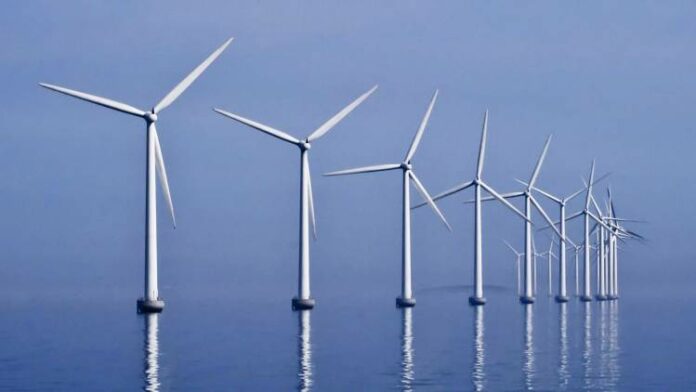
Danish company Hofor has bought 10 turbines back from Orsted at the 40MW Middelgrunden offshore wind farm off the coast of Denmark.

Middelgrunden was built in 2001 by Copenhagen Energy (now Hofor) and Middelgrundens Vindmollelaug and comprises 20 2MW machines.

In 2003, Copenhagen Energy sold its 10 turbine share to Energie E2, which is now part of Orsted.

Hofor said the plan now is to repower the wind farm, which is currently permitted to generate power until 2025.

Hofor director of economics and business Jan Kauffmann said repowering would ensure production beyond 2025.

He added that the new turbines would be of a similar size but more efficient.

Source:renews

Hitachi secures Taiwan O&M base

0

Japanese manufacturer Hitachi will use the port of Changhua as an operations and maintenance base for the over 109MW Changhua offshore wind farm under development by Taiwan Power Company.

The decision follows the signing of a memorandum of understanding with the Changhua County government to use the port and its facilities.

A consortium of Jan De Nul and Hitachi were awarded a turnkey contract in April to build the Changhua demonstration project.

The wind farm will feature 21 Hitachi 5.2MW turbines, backed by a five-year service deal.

Hitachi will start manufacturing the turbines in 2019 until early 2020, with installation of jacket foundations by Jan De Nul also in early 2020. Turbine installation will follow with commissioning taking place between the summer at the end of December that year.

Jan De Nul and Hitachi have been conducting seabed surveys and geotechnical investigations since May 2018 in the waters where the wind turbines will be installed.

Work on the O&M base will start next year and be completed by mid-2020, for the start of servicing in September that year.

Source:renews

EU signs new rules to achieve greater energy efficiency

0

The European Parliament signed new rules on renewables, energy efficiency and the governance of the Energy Union. This enables the European Union to move towards clean energy transition, and follow on the already adopted 2030 climate legislation, as well as meet the Paris Agreement goals.

The new rules are a key element of the Juncker Commission's political priority of  creating a resilient Energy Union with a forward-looking climate change policy. This aims at giving Europeans access to secure, affordable and climate-friendly energy.

Commissioner for Climate Action and Energy Miguel Arias Cañete added: "Four out of eight proposals of the Clean Energy for All Europeans Package have now been fully agreed, a signal that we are on the right track and that we will deliver on our pledge made at the beginning of the mandate. Our ambitious commitment to clean energy in Europe and the Paris Agreement will be made a reality by laws like the ones voted today. I now call on Member States to show similar ambition and leadership when submitting their draft National Energy and Climate Plans that are due by the end of this year."

The new regulatory framework focuses on two new targets for the EU in 2030:

  • A binding renewable energy target of at least 32% and an energy efficiency target of at least 32.5%;
  • These policies will lead to emission reductions by 45% by 2030 compared to 1990, instead of 40%.

The main achievements are divide into three categories:

Renewable Energy

The rules establish a binding, renewable energy target for the EU for 2030 of at least 32%, including a review clause by 2023 for an upward revision of the EU level target. It also aspires to achieve the following:

  • Improve the design and stability of support schemes for renewables.
  • Deliver real streamlining and reduction of administrative procedures.
  • Establish a clear and stable regulatory framework on self-consumption.
  • Increase the level of ambition for the transport and heating/cooling sectors.
  • Improve the sustainability of the use of bioenergy.

Energy Efficiency

The new regulation sets a new energy efficiency target for the EU for 2030 of at least 32.5%, with an upwards revision clause by 2023. EU will achieve this goal by:

  • Extending the annual energy saving obligation beyond 2020, which will attract private investments and support the emergence of new market actors;
  • Strengthening rules on individual metering and billing of thermal energy by giving consumers – especially those in multi-apartment building with collective heating systems – clearer rights to receive more frequent and more useful information on their energy consumption, enabling them to better understand and control their heating bills.
  • Requiring Member States to have in place transparent, publicly available national rules on the allocation of the cost of heating, cooling and hot water consumption in multi-apartment and multi-purpose buildings with collective systems for such services.

Governance of the Energy Union and Climate Action

As of the Energy Union, the new regulatory framework establishes a simplified, transparent governance, which promotes long-term certainty and predictability for investors and ensures that EU and Member States can cooperate towards achieving the 2030 targets and the EU's international commitments under the Paris Agreement. Namely, this governance:

  • Calls for each Member State to prepare a national energy and climate plan for the period 2021 to 2030, covering all the five dimension of the Energy Union and taking into account the longer-term perspective.
  • Aligns the frequency and timing of reporting obligations across the five dimensions of the Energy Union and with the Paris Climate Agreement, significantly enhancing transparency and reducing the administrative burden for the Member States, the Commission and other EU Institutions.

Now, the Council of Ministers will finalise its formal approval of the three laws in the following weeks.

Source:safety4sea

Clean water projects receive $3 mln from Long Beach Board of Harbor Commissioners

0

The Long Beach Board of Harbor Commissioners on Monday awarded more than $3 million to support four projects that will help improve water quality in and around Long Beach as part of the Port Community Grants Program.
 
Now in its second year, the decade-long, $46.4 million program is the largest voluntary effort of its kind in the nation aimed at lessening the environmental impacts of goods movement. Combined with $18.2 million given during a previous program, the Port has committed $65 million to improve the health of children, seniors and other vulnerable populations who live near the harbor.
 
The Port Community Grants Program identifies three funding programs: Community Health, Facility Improvements and Community Infrastructure. Monday’s awards are from the Community Infrastructure program.

As stewards of the Port, the Board of Harbor Commissioners is dedicated to environmental sustainability and social responsibility,” said Commission President Tracy Egoscue. “The Port Community Grants Program is a prime example of this commitment.”
 
For decades, the Port of Long Beach has been taking aggressive action to manage stormwater and improve water quality in San Pedro Bay. The Port’s Water Resources Action Plan, which addresses the various sources of water pollution affecting the harbor, has resulted in continual improvements in the marine habitat and water quality.

A five-person advisory committee appointed by Mayor Robert Garcia assisted Port staff in making funding recommendations to the Harbor Commission, which approved the following grants:

 City of Long Beach Public Works Department: Long Beach Municipal Urban Stormwater Treatment Project, $1 million
 Willmore City Heritage Association: Willmore Heritage Garden Biofiltration Swale, $440,000
 Rancho Los Cerritos: Looking Back to Advance Forward (Permeable pavement and underground cistern), $1 million
 Camp Fire: Camp Shiwaka, Long Beach Eco Parking Lot, $603,441

Last year, the Port granted $3.7 million from the program in two rounds. In October, commissioners awarded $743,631 to fund nine air filtration projects in Long Beach, Compton and Paramount. The facilities receiving grants see more than 2.2 million visits annually. A second $3 million award in November helped fund health efforts benefiting people vulnerable to respiratory and cardiopulmonary disorders and diseases.

Source:portnews

Damen Shiprepair Curaçao floating dock operational

0

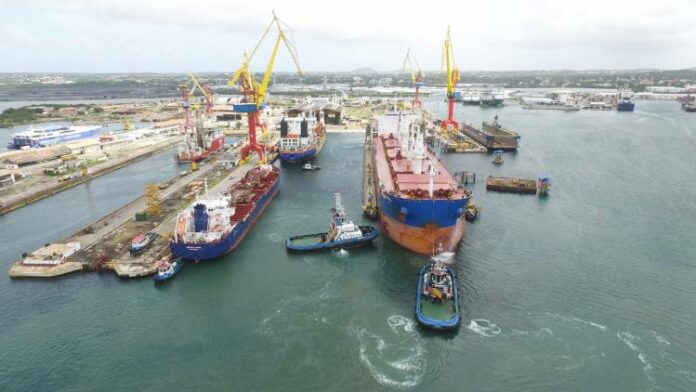
Damen Shiprepair Curaçao (DSCu), has on 2 November commissioned its large floating C dock. After the final tests had been carried out in the morning, the C Dock was submerged onto the equalized seabed. DSCu Nautical department, with the help of local KTK pilots and tugs subsequently docked the first commercial ship, a 63,400 tonnes deadweight bulkcarrier, thus putting the C dock into service.

This marks a special milestone and we are very proud of this,” Lodewijk Franken, DSCu’s managing director commented about the 230 by 45 metres Panamax-class dock. “It is highly rewarding to see the yard’s infrastructure today, following an intensive period of improvements, and to have the first ship in our C dock.” It is one of two floating docks in which DAMEN has invested. Both docks arrived jointly at the Caribbean island of Curaçao on 30 April 2018 and are part of a wider investment programme for DSCu since its takeover by DAMEN in 2017. 

Franken: “Many on the island still vividly remember the moment when the heavy lift ship Xin Guang Hua arrived at the Sint Anna Bay with our two floating docks on board and passed the Queen Juliana Bridge on April 30. This was a breathtaking moment which the staff at the yard relived when watching the first commercial docking on November 2. Docking the large bulkcarrier went smoothly.”

The smaller D dock – which had been docked inside the C dock since their Atlantic crossing – has been floated-out late October to be moored alongside the repair quayside. It is currently having electric power connected after which the pumps and valves can be tested. It is expected to be put into service in November also. 

Stolt-Nielsen, Golar LNG and Höegh LNG announce joint $182 mln investment in Avenir LNG

0

Reference is made to the Stock Exchange release on October, 01, 2018 where Stolt-Nielsen Limited, Golar LNG Limited and Höegh LNG Holdings Limited (collectively the 'Sponsors') announced a combined investment commitment of USD 182 million in Avenir LNG Ltd ('Avenir' or the 'Company') and a contemplated subsequent equity raise in the Company (the 'Private Placement').

The investment will be contributed as cash and equity-in-kind and will partly fund the construction of four 7,500cbm small-scale LNG carriers currently under construction at Keppel Singmarine in Nantong, China, two 20,000cbm small-scale LNG carriers on order from Sinopacific Offshore Engineering in Nantong, China and 80% ownership in an LNG terminal and distribution facility under development in the Italian port of Oristano, Sardinia.

Avenir LNG has the ambition to become the leading provider of small scale LNG for the Power, Bunkering, Trucking and Industrial markets through supplying low-cost LNG using innovative technology and leveraging from its Sponsors' know-how and existing LNG infrastructure.

The first step in the capitalisation of Avenir, a Private Placement of 110,000,000 new shares (the 'Offer Shares') at a par price of USD 1.00 per share, which has now been successfully completed at a subscription price of USD 1.00 per share.

This placement was split in two tranches. Tranche A consisted of 99,000,000 new shares that were subscribed for by Stolt-Nielsen Ltd (through Stolt-Nielsen LNG Holdings Ltd.), (49,500,000 Shares), Golar LNG Limited (24,750,000 Shares) and Höegh LNG Holdings Ltd (24,750,000 Shares). This Tranche has closed.

Tranche B consisted of 11,000,000 new shares and was placed with a group of institutional and other professional investors on 8 November. Tranche B will close today, November 13, 2018.

The Company will, once Tranche B is closed, have an issued share capital of USD 110,000,000 divided into 110,000,000 common shares, each with a nominal value of USD 1.00. Stolt-Nielsen LNG Holdings Ltd. will hold 45% of the shares, each of Golar LNG Limited and Höegh LNG Holdings Limited will hold 22.5% while the remainder will be initially held by the subscribers in Tranche B.

The Company's shares will be listed on the N-OTC list with effect from November 14, 2018.

Clarksons Platou Securities AS, Danske Bank Norwegian branch, DNB Markets, a part of DNB Bank ASA, Fearnley Securities AS, Nordea Bank Abp. Filial Norge, Pareto Securities AS, Swedbank Norge, branch of Swedbank AB (Publ.) in cooperation with Kepler Cheuvreux and Skandinaviska Enskilda Banken AB (publ.) (Oslo Branch) acted as managers in the Private Placement.

Source:portnews

Norden Tests New Robot for Cleaning Bulker Holds

0

Bulker operator Norden is working with a Danish startup to develop and deploy a bulkhead-climbing robot for cleaning holds. Bulkers often switch cargo types between voyages, and cleaning is important before bringing in the next load, particularly when it is an agricultural commodity.  

Hold cleaning is normally a labor-intensive process, with workers using pressure washers, chemical wash-down solutions, rigging or scaffolding to remove the residue of the last cargo. Multiple washings with three or four steps are typical.

Norden is working with a small tech startup, CLIIN, to test a prototype hold-washing robot in one of its bulkers. The robot uses magnetic tracks to drive up the holds' vertical bulkheads, and it has a high pressure waterjet to remove contaminants. 

The robot is easily operated and also reaches those places that can be difficult to get to. I have seen many robots in the market, but this one is a qualified suggestion for how cargo hold cleaning in the future can be done in a better, more safe, environmentally friendly and quicker way, and it’s about time," said Jonas Warming, Norden's senior optimization manager, in an interview for the firm's quarterly magazine. 

CLIIN's robot removes the need to suspend workers from the hatch opening in order to clean the tops of the hold, improving safety. Since its pressure-washing jet is very close to the work surface, it can clean effectively in a single pass, without the use of chemicals or rinse water. Norden hopes to deploy it on multiple vessels by the end of the year.

The CLIIN / Norden system is high tech and is built specifically for holds, but as Warming noted, it is not the only system of its type. CombiJet sells a similar product, the RJE 1000 (below), which is used for pressure washing and hydroblasting vertical steel surfaces in multiple industries, including marine and offshore. 

Source:maritime-executive

Manor preps for second service build

0

UK outfit Manor Renewable Energy is preparing to start construction of a wind farm service vessel for delivery in the latter part of 2019.

The new 26-metre by 11-metre vessel will be the second built by the company following the success of the Manor Venture, which has since worked on the Galloper and Arkona projects.

The new build will be in conjunction with Walker Marine Design, fully classed by Bureau Veritas and under the UK flag.

Construction will take place at the Manor fabrication and engineering facility in Portland, Dorset.

Manor Renewable Energy operations director Leif Cooper said: “Following the success of the vessel on both the Galloper and Arkona project, the Manor Venture has proven her versatility and positioned herself as one of the leading vessels in its class; we have adapted and modified this design from the lessons learnt over the last 18 months, however the core design and operational ethos remain the same.

The new vessel will have a maximum speed of 25 knots, an available tank capacity of 45 tonnes of fuel and fresh water and extensive workable deck space and craneage.

It will be able to transit 24 people for direct personnel transfer operations or 18 for more project related scopes.

Cooper added: ”This is a vessel that will be able to work anywhere in Europe and has the capability to stay offshore on the next generation of wind farm projects for prolonged periods; minimising the transit time, reducing costs and massively increasing the productivity.

Source:renews

Coming of the smart port era

0

Amid a slowing port industry due to the growing anti-globalization factor in the international community, global port operators are ramping up efforts to promote the smart transformation, which could address some problems traditional ports are facing now. Shanghai Zhenhua Heavy Industries Co (ZPMC), the world’s largest manufacturer of port machinery, is struggling to provide different smart solutions to its customers, in a bid to gain a stronger foothold in the coming smart port era.

At the autonomous container yard of the Laem Chabang Port, an unmanned crane is accurately stretching out to a container carried by a truck and putting it beside the many containers already piled at the yard block.

This is just one of the daily scenarios in the Laem Chabang Port, which is located 130 kilometers to the south of Bangkok and also the largest port in Thailand, supported by the autonomous system developed by Chinese State-owned Shanghai Zhenhua Heavy Industries Co (ZPMC).

With the new smart system, all Terminal D quay and yard cranes at the port can be operated by the advanced remote control technology.

Jiang Hao, assistant general manager of the R&D center at ZPMC, told the Global Times on Thursday that the port is also the world’s first fully automated yard block of ZPMC, which utilizes the automated rubber tired gantry (ARTG) for automated operation in the yard.

Currently, prompted by the fast development of advanced technology including artificial intelligence (AI) and autonomous driving, port operators around the world are ramping up efforts to catch up with the coming smart era,” Zhang Jian, vice president of ZPMC, told a port industry forum held in Bangkok on Thursday.

While Zhang cautioned that the transformation is more urgent now with the growing anti-globalization elements in the global market, which have brought some negative impacts to the growth of the global port industry.

“The golden era that has witnessed the fast development of the port industry has already gone; global ports operators are facing critical situations in making profits. Against this backdrop, transformation and innovation have become the consensus and a necessary move for ports all over the world,” Zhang noted.

Smart transformation

Amid the fast development of smart transformation, ZPMC, the world’s largest port machinery maker in terms of market share, has been stepping up efforts to develop and testing new smart solutions for port operators around world, in a bid to gain an earlier foothold in this trend.

Apart from the latest smart port solutions used in the Laem Chabang Port, ZPMC also launched its intelligent container truck system on Wednesday, which could achieve a full automation of inner container trucks.

The smart transformation of ports could greatly cut the number of workers needed at the site, thus the cost for that port might be reduced,” Hu Zhongwang, straddle carrier R&D manager of ZPMC’s port machinery group, told the Global Times on Wednesday, adding that a truck driver’s annual salary in Europe could reach as much as 1 million yuan ($143,740).

Wang Zhiqiang, manager of the production dispatching department of Jingtang Port, said that the automated terminal could also reduce work safety risks for drivers and increase handling efficiency.

When manually driven trucks work in terminals, drivers will encounter many hazards and frequent interaction with cranes in a noisy environment. And truck drivers need to work during the night under high intensity, which can cause problems such as fatigue and the lack of concentration. These issues also increase the probability of incidents,” Wang said.

ZPMC strength

Industry players told the Global Times on Thursday that ZPMC has an advantage in leading the coming smart port era, but also faces strong competition in the industry.

The phase 4 of the Shanghai Yangshan Deep Water Port, supported by ZPMC’s smart solution system, is now the world’s biggest automated container terminal, and the phase 4 was put into operation in December 2017.

The biggest advantage ZPMC has is its absolute leadership in the crane manufacturing industry, and it’s creating a quite complete smart port solution,” an industry insider, also a customer of ZPMC, told the Global Times on Thursday. The person asked to remain anonymous since he is not allowed to speak to the media.

According to the company’s website, ZPMC’s quayside container cranes and rubber-tired gantry cranes have a 70 percent world market share, and has remained to be the largest port machinery makers for 11 consecutive years.

With the company’s overwhelming share, people would prefer to adopt ZPMC’s smart port solutions, especially when building a new port, since they will consider buying port equipment from ZPMC anyway,” the insider explained, but mentioned that when it comes to the upgrading of traditional ports, ZPMC might face challenges from its counterparts.

One strong competitor is Finnish company Konecranes, a smart port solutions provider, which introduced the new generation of its ARTG system on October 31. Konecranes was the first company to develop an ARTG system on a wide commercial scale, according to a company statement.

Angelo de Jong, chief technology officer of the United Arab Emirates-based Abu Dhabi Terminals, who has cooperated with ZPMC since 2004, told the Global Times on Thursday that his company signed an equipment purchasing contract with ZPMC recently for port expansion projects.

However, for the detailed plans on upgrading the port, he can’t make a final decision in the short run. “I’m now comparing solutions provided by ZPMC and other companies,” he said, adding that ZPMC has a price advantage.

Despite a fierce competition, Zhu Lianyu, chairman of ZPMC, stressed the significance of cooperation and globalization at the preliminary stages of constructing smart ports.

It’s important for us to jointly promote the construction of global port terminals and establish an international standard for the technology of port equipment,” Zhu said at the forum.

In the future, it is even possible that an operator could just stay in one country, while controlling different ports remotely across the world, said Wang Chen, a market specialist of ZPMC electric group.

Source:hellenicshippingnews

Cruise Shipping: Sunstone Sells Victory Cruise Lines

0

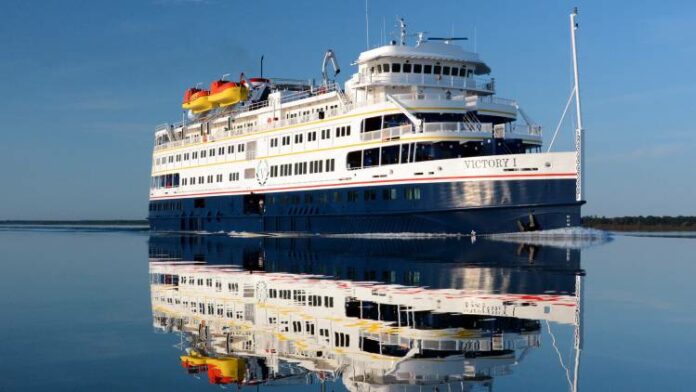
SunStone Ships, Inc. sold Victory Cruise Lines to the American Queen Steamboat Company (AQSC). After rapidly expanding market share in the Great Lakes, French Canada, and St. Lawrence Seaway, Victory became the market leader in these regions. Having recently added the VICTORY II, afforded AQSC the opportunity to acquire the largest capacity in the region.

AQSC will acquire the VICTORY I and VICTORY II cruise vessels, as well as some assets in connection herewith, among them being the Victory brand, all Great Lakes charters, group bookings, individual passenger reservations, and related assets. SunStone Ships has been working on this sale for some time, with the transaction expected to close in January, 2019.

"We believe we have found the perfect home for Victory Cruise Lines by selling it to AQSC and we are certain they can make this wellknown, respected and accepted product an even better brand for the future,” said Niels-Erik Lund, SunStone’s President and CEO. In a very short period of time, Victory Cruise Lines has been able to build a well-respected product on the Great Lakes and has seen bookings increase substantially over the years, with the 2019 Great Lakes season being the best ever.

We are pleased to purchase the Victory I and Victory II which will fuel the continued success and growth of American Queen Steamboat Company,” said American Queen Steamboat Company Chairman and CEO John Waggoner. “We look forward to working closely with Victory Cruise Line’s new and existing travel partners. These vessels enable us to provide guests with more diverse cruising options particularly in the Great Lakes, a region that our customers have been requesting for years.

The 5,000-ton, 300-foot-long, 202-passenger Victory I and Victory II are both identical and details of upcoming operations on both of vessels will be announced in the coming months. The Victory I and Victory II will join the American Queen Steamboat Company fleet under the Victory Cruise name, alongside the flagship American Queen and 166-guest boutique paddlewheeler American Duchess sailing the Mississippi and Ohio Rivers and American Empress in the Pacific Northwest. The new American Countess, currently under construction in Louisiana, will debut in 2020.

Source:marinelink