4.5 C
New York
Home Blog Page 1249

HMM Posts Continued Losses, Invests in Mega-Vessels

0

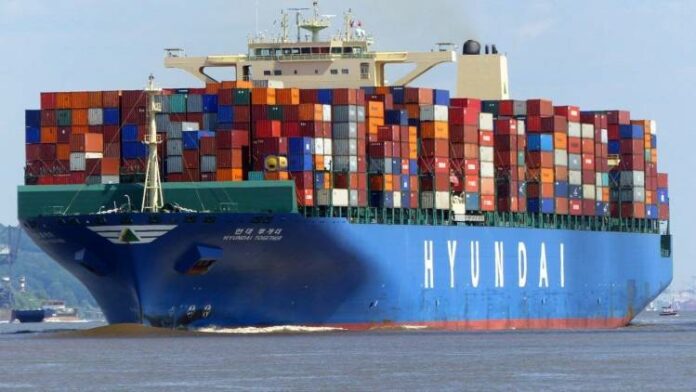
South Korean ocean carrier HMM announced continued losses on Wednesday, despite higher revenue and rising volumes. The line cited high bunker prices and low freight rates for the poor quarterly performance. 

HMM lost about $165 million in the third quarter – less than the $240 million it lost in the second quarter, but much more than the $40 million it lost during the same period last year. Its quarterly volumes increased by 13 percent year over year to about 1.2 million TEU. 

HMM did not predict when it might return to profitability, but it forecast a "continuous market uptrend" in U.S. trade – unlike sector leader Maersk, which expects to blank some of its sailings on transpacific routes next year due to the U.S.-China trade war. The two lines' strategies diverge further on newbuildings: HMM has ordered twelve 23,000 TEU megamax boxships and eight 15,000 TEU ULCVs from Korea's "Big Three" shipyards, while Maersk CEO Soren Skou has said that the line has no plans to place large orders for the near future. HMM's newbuilds are underwritten by the Korean government's newly-founded shipping investment vehicle, the Korea Ocean Business Corporation. 

HMM says that it will make its "utmost efforts" to find cargoes to fill its new ultra-large vessels before they are delivered, including new cost-cutting measures to strengthen "sales competitiveness." The business case for ULCVs is "crucially dependent" upon high utilization, according to the OECD's International Transport Forum, and competitors like MSC and CMA CGM are also bringing giant megamax vessels online to compete on the Asia-Europe trade lane. 

Rising fuel costs were part of the reason for HMM's loss in the third quarter, and bunker prices will only rise further after the new IMO sulfur limit takes effect in 2020. Like many other lines, HMM plans to introduce a bunker adjustment factor to account for the extra cost of low sulfur fuel oil once the rule takes effect.  

Source:maritime-executive

Top Ocean Carriers Launch Digital Standards Association

0

Five of the world's largest ocean carriers intend to create an association to pave the way for "digitalization, standardization and interoperability" in the container shipping industry. IT executives from Maersk, CMA CGM, Hapag-Lloyd, MSC and ONE are discussing the creation of common information technology standards, which will be openly available and free of charge for all stakeholders in the wider container shipping industry. 

It’s in the customers' and all stakeholders’ best interest, if container shipping companies operate with a common set of information technology standards," said André Simha, MSC's chief information officer and the group's spokesperson. “We are striving for less red tape and better transparency."

It is not the first time that the containerized freight industry has formed an association to address common IT needs for business operations: INTTRA, the largest independent online platform for container freight booking, started as a joint industry effort in 2001, with many of the same founding members. In an announcement, the five carriers acknowledged that the industry has many existing associations, and said that their members wanted to form a new neutral, non-profit body, with membership open to all. It will not build or operate any digital platform, the goup said, but will seek to create common standards to ensure interoperability. In an acknowledgement of the requirements of antitrust compliance, the group said that it "will not discuss any commercial or operational matters."

The group's founding members include carriers from all three major alliances – 2M (MSC and Maersk), THE Alliance (ONE and Hapag-Lloyd), and Ocean Alliance (CMA CGM). They are all close competitors, and they represent five out of the top six carriers in market share rankings. 

Ocean Network Express sees a wave of innovation technology development in shipping and logistics industry . . .  But, at the same time, we're a little bit cautious about adopting new technology by individual company since there is no common standard in the market," said Noriaki Yamaga, ONE's managing director for corporate and innovation. "With this mind, we feel it would be necessary to do some discussion and collaboration on the area of new technology and innovation to establish common IT standard and governance for the industry."

Source:maritime-executive

Petrobras starts up second Buzios field floater

0

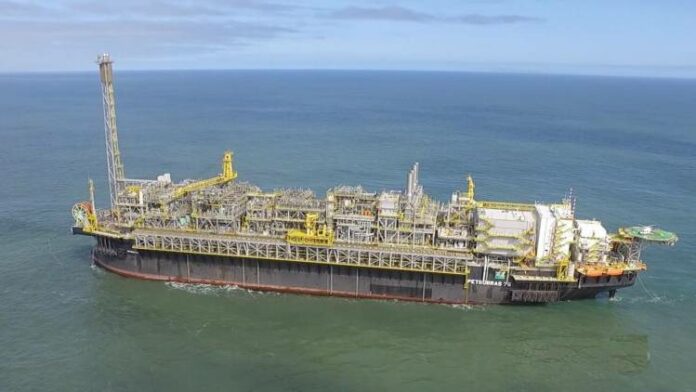
 Petrobras has produced first oil and gas from the Búzios 2 area of the presalt Santos basin through the FPSO P-75.

This is the second floater installed on the Búzios field. The location is 210 km (130 mi) off the coast of Rio de Janeiro state, in a water depth of 2,000 m (6,562 ft).

The P-75 can process up to 150,000 bbl of oil and compress up to 6 MMcm of gas. It will produce through 10 production wells supported by seven injection wells.

Oil will be offloaded to relief vessels, with gas exported through presalt pipeline routes.

Before year-end the company also expects to start up the FPSO P-67, currently on the Lula field, and P-76, which should head to the Búzios field in December.

Source:offshore-mag

Maersk say bunker surcharges fail to fully cover fuel cost increases in Q3

0

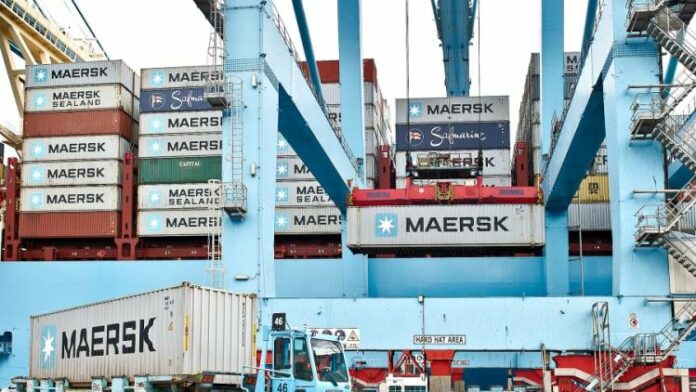
AP Moller – Maersk says that despite the introduction of an emergency bunker surcharge it is not recovering the full cost of increased fuel prices.

In its third quarter results Maersk said that freight rates for its container shipping business, which it classifies as Ocean, were 5.5% higher than the same period in 2017 at $1,929 per feu. However, the average bunker price was some 47% higher in Q3 2018 compared to the same period a year earlier. The company said that total unit cost in Q3 was 7.1% higher than last year.

Our business performance in Ocean is still challenged by increased bunker prices not being fully compensated through higher freight rates. However, we continue to see improved results in the third quarter after a very weak start to 2018,” Soren Skou, ceo of AP Moller – Maersk said.

Maersk’s overall volumes grew 27% in Q3 2018 compared to a year earlier, excluding Hamburg Sud, volume growth was 5%, however, Q3 2017 volumes were impacted by the cyber-attack that hit Maersk globally last year.

The Asia- Europe trade disappointed the most due to lower import from Asia to UK, Turkey and Mediterranean, but lower than expected volumes were realised on most trades. The volume development was slightly below market growth when adjusting for the cyber- attack in Q3 2017,” the company said.

EBITDA for its Ocean business in Q3 2018 was $925m up from $800m in the same period in the previous year.

Source:seatrade-maritime

UK updates its industry Code of Practice for autonomous vessels

0

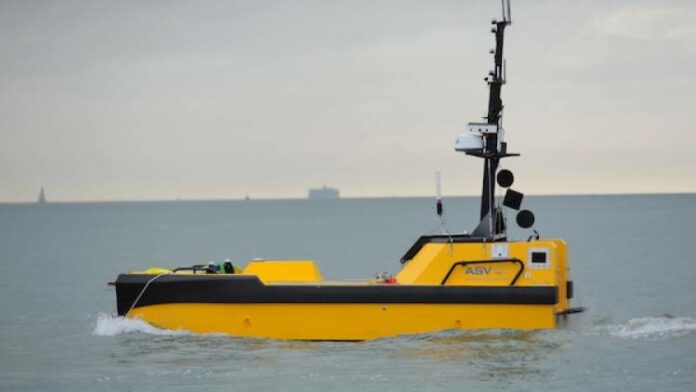
Reacting to what it calls “the fast pace of change” in the area of autonomous vessel, the UK has issued an updated version of its industry Code of Practice for Maritime Autonomous Surface Ships (MASS), giving greater guidance on skills, training and vessel registration.

The first version of the UK Industry Code of Practice focused mainly on the design, construction and operation of autonomous maritime systems, and was published by the UK Maritime Autonomous Systems Regulatory Working Group (MASRWG) in November 2017.

While not a legal text, the original Code has been well-received by companies and organisations around the world, says MASWRG, with some manufacturers reporting that compliance has become a requirement in contractual negotiations.

The new version adds further guidance on the operation of autonomous vessels, it adds, with particular focus on skills, training and vessel registration.

The whole industry is moving at a very fast speed and it's really important that there are guidelines available to underpin that development in a safe, efficient and sustainable way,” said James Fanshawe, chair of MASRWG.

The UK is a well-established leader in smaller autonomous vessels,” added Dan Hook, senior director – business development at L3 ASV, a manufacturer of unmanned surface vessels. “When companies like ours start to look toward scaling that technology though to larger ships, this Code of Practice will be hugely valuable.”

Source:seatrade-maritime

Austal Cyber Hack Probe May Take Years

0

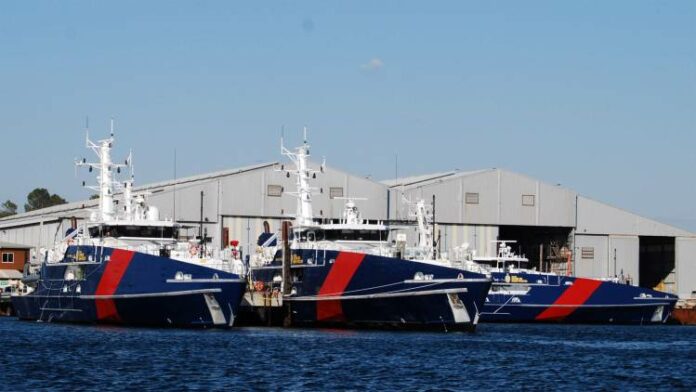
Australia's chief cyber security chief said on Tuesday an investigation into the hacking of defense contractor Austal Ltd could take years, rejecting a local media report that his agency had concluded the attack originated from Iran.

Austal said earlier this month hackers had breached its defenses to gain access to ship designs and that some staff email addresses and mobile phone numbers were accessed.

The attack triggered an investigation by the Australian Cyber Security Centre (ACSC), the country's top cyber security unit. The Australian Broadcasting Corporation reported on Tuesday that the ACSC had determined criminals in Iran were behind the attack, but the ACSC rejected the news report.

"Some might have their suspicions but we can't come to the conclusion that it came from any one country," Alastair MacGibbon, head of the ACSC, told Reuters.

"It is easy to speculate but attribution can take months, even years."

While the investigation continues, MacGibbon said the ACSC could yet determine the hack originated from Iran, which has been identified in recent years by Western intelligence services as a major source of cyber attacks.

A spokesman for the Iranian embassy in Canberra told Reuters that the country's government was not behind the attack, though he acknowledged the presence of cyber criminals.

"It may be someone within Iran but it was not our government," the spokesman told Reuters.

Austal makes defence vessels for several markets, including the United States. The company said its U.S. business was unaffected by the breach.

Source:marinelink

ABB Signs Breakthrough Contract for Marine Automation in China

0

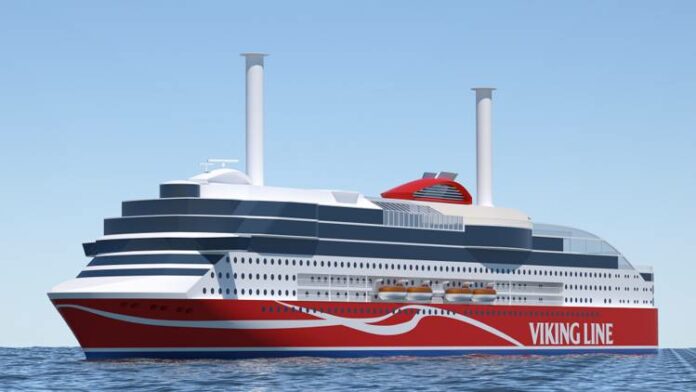
ABB has won its first marine automation system contract for a cruise ferry in China, after the technology package for Chinese-built Viking Line vessel has been extended to include the ABB Ability System 800xA.

ABB Ability System 800xA integrates power, propulsion and vessel management systems into one platform, enabling both crew and onshore teams to get a comprehensive overview of all the information needed to operate the vessel in the safest and most efficient manner. Adding marine automation to the technology package will improve project management, as well as result in greater vessel efficiency and digitalization.

On her delivery, this vessel will be the most efficient cruise ferry operating in the Baltic, if not the world,” says Jan Hanses, President and CEO, Viking Line. “Extending our arrangement with ABB to include the full automation package made perfect sense, given that ABB has the dedicated local automation team and access to global engineering resources that will ensure both responsiveness and delivery of a vessel benefiting from the highest levels of systems integration.

The 63,000 GT LNG-fueled cruise ferry, which is being built at Xiamen Shipbuilding Industry co., Ltd, will have space for 2,800-passengers when she joins services connecting the Finnish port of Turku in Finland, the Åland Islands and Stockholm, Sweden, in 2020.  

Chinese shipbuilding is one of the most significant markets for ABB’s power, propulsion and automation system,” says Alf Kåre Adnanes, head of ABB’s Marine and Ports business in China. “Chinese shipyards are diversifying their portfolios, and ABB’s long history in the cruise sector is particularly relevant to China’s shipbuilders. We are part of an existing shipping cluster and can support Chinese shipyards in their strategy to build cruise vessels for China and for global customers.”

As well as the ABB electrical power generation, distribution systems and bow thruster motors, the vessel will be the first cruise ferry in the world to feature twin XO 2100-type Azipod units – the propulsion solution of choice in the cruise ship market.

As ABB’s first marine automation contract for a cruise ferry in China, this is a breakthrough in a crucial territory where our marine business continues to increase, but it also confirms that our ‘Electric. Digital. Connected’ strategy is gaining traction in a growing number of sectors and markets,” says Juha Koskela, Managing Director, ABB Marine & Ports. “Integration that is available from the ground up meets today’s requirements and positions ABB to incorporate future technologies in a straightforward way.”

ABB’s vision for an “Electric. Digital. Connected.” maritime industry is based on the principles of simplicity, efficiency and safety, and seeks to leverage the power and automation group’s comprehensive bridge to propeller expertise to set shipping’s course towards the vessels of the future.

ABB Ability is the company’s unified, cross-industry offering extending from device to edge to cloud, integrating data to and from products, systems, solutions and services to deliver actionable information. The ABB Ability platform uses Microsoft Azure as the cloud for its integrated connectivity, so users can access enterprise-grade infrastructure that benefits from Microsoft’s significant investment.

Source:marinelink

ForSea Completes ABB Powered Battery Ferry Conversion

0

Inauguration of Tycho Brahe and Aurora marks successful completion of a high-profile conversion project with ABB’s technology at its heart.

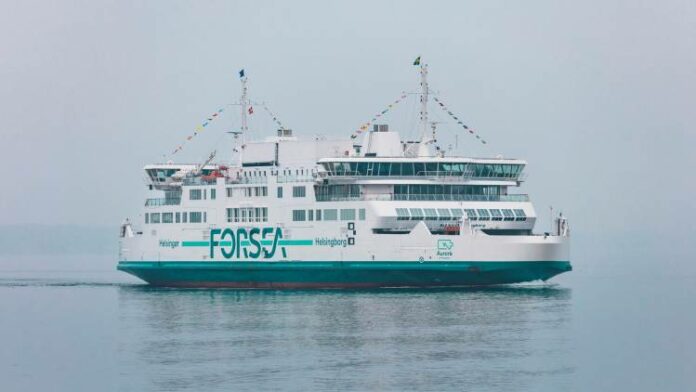
The largest emission-free ferries in the world have been officially welcomed into service after guests boarded Tycho Brahe in Helsingborg, Sweden and Helsingør, Denmark on November 9 for a special inauguration ceremony marking completion of an all-electric conversion.

We are delighted that the entire system is in place to support the emissions-free operations we envisaged from the outset,” said Johan Röstin, CEO, ForSea. “This is a truly groundbreaking project and the work we have done with ABB will offer invaluable lessons for those following our lead. In shipping, innovation takes time and patience, and we always kept sight of the environmental benefits at stake.”
 
This project signals a profound shift for the maritime industry, and shows a path towards zero-emission operations, aligned with International Maritime Organization’s goals for decarbonization,” said Marcus Högblom, Head of Passenger, Dry Cargo and Ice Segment, ABB Marine & Ports. “We congratulate ForSea on the inauguration of these vessels, and we are proud to have worked closely with them to deliver this pioneering solution.”
 
Tycho Brahe and Aurora have been converted from conventional diesel engine operations to battery power at Öresund Dry Docks, as part of ForSea’s strategy to reduce the environmental footprint along the 4km route between Sweden and Denmark. The vessels operate on a high intensity ferry route that transfers over 7.4 million passengers and 1.9 million vehicles between urban port terminals in Denmark and Sweden.

The conversion of these over 100-meter ferries, both built in 1991, required installation of a 4160 kWh battery on each vessel, as well as battery racks, energy storage control systems and ABB’s award-winning Onboard DC Grid power distribution technology.

Additionally, ABB supplied automated shore-side charging stations using an industrial robot to optimize the connection time and maximize the charging period, leveraging 3D laser scanning and wireless communication between ship and shore.

This is a landmark project, and we are convinced it will come to be seen as a critical step in shipping’s environmental revolution, as well as a milestone in rolling out ABB’s ‘Electric, Digital, Connected’ strategy for shipping,” said Marcus Högblom, ABB Marine & Ports.

Source:marinelink

Former U.S. Navy Captain Pleads Guilty in Corruption, Fraud Probe

0

A retired U.S. Navy captain pleaded guilty to criminal conflict of interest charges and a former U.S. Navy master chief was sentenced to 17 months in prison today on corruption charges. 

The defendants are among the latest U.S. Navy officials to plead guilty and be sentenced in the expansive corruption and fraud investigation involving foreign defense contractor Leonard Glenn Francis and his Singapore-based ship husbanding company, Glenn Defense Marine Asia (GDMA).

Assistant Attorney General Brian A. Benczkowski of the Justice Department’s Criminal Division, U.S. Attorney Adam L. Braverman of the Southern District of California, Director Dermot F. O’Reilly of the Defense Criminal Investigative Service (DCIS) and Director Andrew L. Traver of the Naval Criminal Investigative Service (NCIS) made the announcement.

Jeffrey Breslau, 52, of Cumming, Georgia, pleaded guilty to one count of criminal conflict of interest before U.S. District Judge Janis Sammartino of the Southern District of California.  Breslau was charged in September 2018.  Retired Master Chief Ricarte Icmat David, 62, of Concepcion, Tarlac, Philippines, was sentenced by Judge Sammartino, who also ordered him to serve a year of supervised release and pay restitution of $30,000.  David was charged in August 2018 and pleaded guilty in September to one count of conspiracy to commit honest services wire fraud.

According to admissions made as part of his guilty plea, from October 2009 until July 2012, Breslau was a captain in the U.S. Navy assigned as director of public affairs for the U.S. Pacific Fleet, headquartered in Pearl Harbor, Hawaii.  As part of his duties, Breslau was involved in devising the U.S. Navy’s public affairs communications strategy, and provided public affairs guidance to Pacific Fleet components and other U.S. Navy commands.  From August 2012 until July 2014, Breslau was assigned to the commanding officer for the Joint Public Affairs Support Element in Norfolk, Virginia, where he was responsible for leading joint crisis communications teams.

Breslau admitted that from March 2012 until September 2013, while serving in the above roles for the U.S. Navy, he provided Francis with public relations consulting services, including providing advice on how to respond to issues and controversies related to Francis’s ship husbanding business with the U.S. Navy.  These included issues related to port visit costs, allegations of malfeasance such as the unauthorized dumping of waste, disputes with competitors, and issues with Pacific Fleet and contracting personnel.  During the course of his consulting agreement with Francis, Breslau authored, reviewed or edited at least 33 separate documents; authored at least 135 emails providing advice to Francis; provided at least 14 instances of “talking points” in advance of meetings between Francis and high ranking U.S. Navy personnel; and “ghostwrote” numerous emails on Francis’s behalf to be transmitted to U.S. Navy personnel.  During the course of this consulting agreement, Francis paid Breslau approximately $65,000 without Breslau disclosing the agreement to the U.S. Navy, Breslau admitted.    

As part of his guilty plea, David admitted that he was assigned various logistics positions with the U.S. Navy’s Seventh Fleet, including with the Fleet Industrial Supply Center in Yokosuka, Japan from June 2001 to July 2004; on the USS Essex from July 2004 to August 2007; on the USS Kitty Hawk from September 2007 to August 2008; and on the USS George Washington from September 2008 to July 2010.  In these positions, David was responsible for ordering and verifying goods and services for the ships on which he served, including from contractors during port calls. 

Throughout this period, David received from Francis various things of value, including five star hotel rooms during every port visit, he admitted.  
David further admitted that he repeatedly facilitated fraud on the United States by allowing Francis and GDMA to inflate the husbanding invoices to bill for services never rendered.  For example, David instructed Francis to inflate invoices for the USS Essex’s anticipated November 2007 port visit to the Philippines.  As David transitioned to a new position aboard the nuclear aircraft carrier USS Kitty Hawk, on or about May 8, 2008, Francis’s company paid approximately 84,637.00 Hong Kong Dollars (HKD) for hotel reservations at the Grand Hyatt Hong Kong for U.S. Navy personnel assigned to the USS Kitty Hawk including 10,396 HKD for David’s four-night stay in a Harbor View Room, David admitted.

Francis pleaded guilty in 2015 to bribery and fraud charges, admitting that he presided over a massive, decade-long conspiracy involving “scores” of U.S. Navy officials, tens of millions of dollars in fraud and millions of dollars in bribes and lavish gifts, including luxury travel, airline upgrades, five-star hotel accommodations, top-shelf alcohol, the services of prostitutes, Cuban cigars, Kobe beef and Spanish suckling pigs.

So far, 33 defendants have been charged and 22 have pleaded guilty, many admitting to accepting things of value from Francis in exchange for helping the contractor win and maintain contracts and over bill the Navy by millions of dollars.

The case was investigated by DCIS, NCIS and the Defense Contract Audit Agency.  The case is being prosecuted by Assistant Chief Brian R. Young of the Criminal Division’s Fraud Section and Assistant U.S. Attorneys Mark W. Pletcher, Patrick Hovakimian and Robert Huie of the Southern District of California.

Source:marinelink

NYK Pushes Decarbonization via NYK Super Eco Ship Design

0

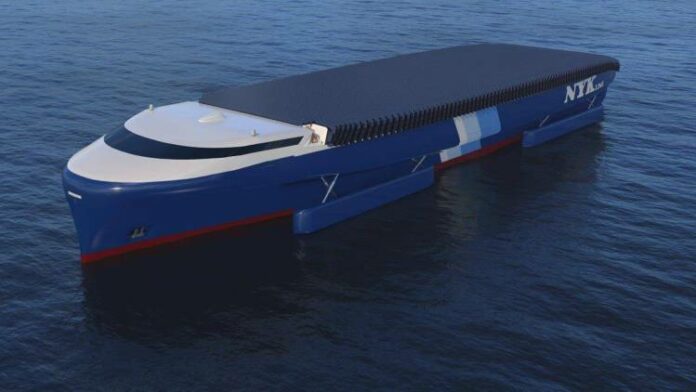
As a part of the NYK Group’s medium-term management plan “Staying Ahead 2022 with Digitalization and Green,” a new future concept ship has been designed by incorporating innovative technologies that will result in an emission-free vessel — the “NYK Super Eco Ship 2050.”

Background
The NYK Group’s mission of “Bringing value to life” and the company’s basic philosophy of “contributing to the betterment of societies” has inspired the group to positively address the tough issues that challenge our society.

In fact, NYK’s medium-term management plan includes the group’s intent to integrate environmental, social, and governance (ESG) initiatives into management strategy by establishing new medium- to long-term environmental targets.* To achieve these goals, NYK has teamed up with MTI and Elomatic, an engineering and consulting company based in Finland, to review the technical advances conceived for NYK’s previous concept ship (i.e., NYK Super Eco Ship 2030, created in 2009) and design an updated version that makes use of advances in technology in the realm of green and digitalization initiatives that embody the group’s basic philosophy.

About NYK Super Eco Ship 2050
This concept ship has been crafted as a 2050-model pure car and truck carrier (PCTC). The power needed to operate the ship has been cut by 70 percent by remodeling the hull to decrease water friction, reducing the weight of the hull, introducing fuel cells for electric propulsion, and relying on other highly efficient propulsion devices. Instead of fossil fuels, power for the ship would come from solar energy and hydrogen produced from renewable energy sources, all of which would lead to a reduction of CO2 by 100 percent and thus result in a zero-emission vessel.

NYK Super Eco Ship 2050
The weight of the hull is reduced by optimization through a dynamic, mathematical design that uses lightweight materials for the superstructure. In addition, computer-controlled devices, such as gyro stabilizers, are installed to provide active stability for the lightweight vessel hull.

An air-lubrication system effectively reduces the frictional resistance between the vessel’s bottom and the seawater by means of bubbles generated by supplying air to the vessel’s bottom. And automatic hull cleaning during port stays prevents any negative impact on vessel efficiency.

Finally, propulsion efficiency is increased by replacing conventional propellers with flapping foils that mimic the movements of dolphins.

The ship is powered by hydrogen fuel cells produced from renewable energy sources. Waste heat recovered from the fuel cells is also used. On long voyages, solar power can be utilized.

Maintenance is managed through use of digital twins, a technology that realizes physical conditions digitally and enables real-time analyses from land offices, accident prevention, and optimal maintenance.

Optimization of route planning is no longer a ship-level activity. It will be done at port and on a fleet level, which will enable just-in-time arrival throughout the supply chain. Automatic mooring and efficient ship-to-ship cargo handling will minimize port stays.

For more information about NYK Super Eco Ship 2050, visit: https://www.nyk.com/english/csr/envi/ecoship/

The Future
The NYK Group will promote decarbonization through technical development that contributes to energy savings and greenhouse gas (GHG) reduction. By applying this to actual vessels, through the concept of NYK Super Eco Ship 2050, the company will continue to contribute to the sustainable development of society and enrichment of the group’s corporate value.

Medium- to long-term environmental targets
NYK’s reduction targets for GHG emissions are 30% per ton-kilometer by 2030 compared with a 2015 base year, and 50% per ton-kilometer by 2050 compared with the same base year. The NYK Group will make its best efforts to reduce GHG emissions by increasing the efficiency of fleet allocation, vessel operation, and cargo handling; striving to achieve zero downtime; and realizing visualization and optimization through hardware innovation and digitalization. These targets have been recognized as science-based by the international Science Based Targets (SBT) initiative.

Source:marinelink