4.5 C
New York
Home Blog Page 1248

Bollore, PowerChina consortium preferred bidder for Nigeria’s Ibom port project

0

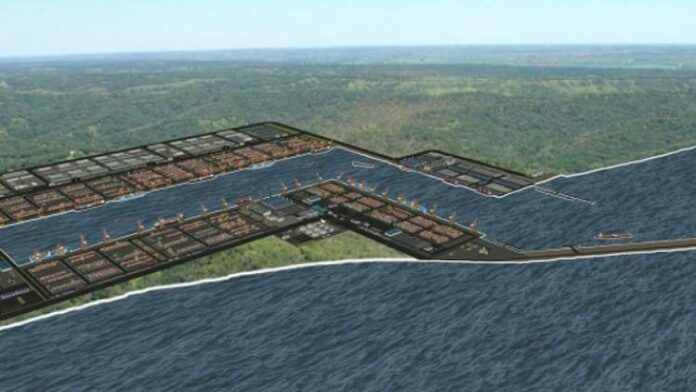
A consortium comprising Bollore Africa Logistics and PowerChina International Group has been chosen as the preferred bidder for the Ibom Deep Seaport Project (IDSP) in Nigeria.

Ibom Deepsea Port is located in Southeast Nigeria and is to be developed on a 2,565 hectare site within the Ibom Industrial City free trade zone. The port is designed to handle vessels up to neo-panamax size with 7.5 km of quay on completion, with operations expected to start in 2021.

The Bollore – PowerChina consortium has been chosen as preferred bidder with China Harbour Engineering emerging as reserve bidder for the project.

Chidi Izuwah, director-general of Nigeria’s Infrastructure Concession Regulatory Commission (ICRC), said: “The seaport will form part of an integrated industrial city to help foster economic development of the country as transportation is key to national development.“

The seaport is near the South South and South East regions and will drive the economic transformation and empowerment of Nigerians with a multiplier effect that will create massive employment for the country’s teeming population. It’s circle of economic influence is expected to extend radially to the North Central, North Eastern and North Western zones”.

The stage in the process will be due diligence and extensive negotiations with the aim of submitting a Full Business Case (FBC) for the issue of an FBC compliance certificate.

Source:seatrade-maritime

MPC Container Ships lines up major scrubber commitment

0

Feeder vessel owner MPC Container Ships has lined up a major potential scrubber orders for the majority of its fleet.

Oslo-listed MPC has inked an order for five scrubber retrofits with an undisclosed manufacturer and options for up 50 more scrubbers.

MPC owns a fleet of 68 feeder containerships between 1,000 teu – 3,000 teu in capacity and said it sees significant interest from charterers for scrubber-fitted vessels and is in well-advanced negotiations with charterers for mid- to longer-term charter parties at favourable rates.

The 50 options would be for installations in 2019 and early 2020. Fitting scrubbers will allow owners and charterers to meet the demands the IMO’s 0.5% sulphur cap from 1 January 2020 while still burning high sulphur fuel oil, which looks set to be significantly lower cost than compliant low sulphur fuels or marine gas oil. Charters that pay for bunker fuel as part of the charter would stand to make significant cost savings by hiring a vessel fitted with a scrubber.

"Having conducted thorough analyses on the subject, we are excited about the opportunity to retrofit selected vessels with scrubbers as an economically attractive alternative of complying with the 2020 sulphur regulations,” said Constantin Baack, ceo of MPC.

Moreover, the option to equip a larger portion of our fleet with scrubbers gives MPC Container Ships the strategic flexibility to adapt to new market environments as we deem fit."

MPC said the scrubbers would be financed from cash on hand and existing debt.

There has been a huge surge in scrubber orders this year particularly from owners of larger tonnage.

Source:seatrade-maritime

Offshore senses uptick in market but uncertainties remain

0

An overall positive macroeconomic outlook and increased regional infrastructure spending have suggested an improving business environment for the ailing offshore industry, though a rosy outlook is far from certain, according to Singapore-based OSV shipyard ASL Marine.

There are already uncertainties to oil prices, one of the key market determinants for the offshore sector, as oil majors have decided to extend curbs on supply, coupled with geopolitical events in Iran, Venezuela and other parts of the world. This will in turn impact upon the level of upstream activities, ASL Marine observed.

If oil and gas majors increase their capital expenditures across the value chain as forecasted, it could benefit the recovery of the oil services sector,” ASL Marine said.

It added that there are also mid-term opportunities for the group’s non-offshore and marine business with higher infrastructure spending in select Asian region, triggered by the Belt and Road initiative.

In Singapore, as the Tuas Mega Port project gains momentum, the demand for hiring tugs and barges is expected to remain strong,” ASL Marine said. The first berth of the Tuas Mega Port project is scheduled to come on stream in 2021.

In general the factors discussed above pointed to a largely positive market, ASL Marine noted. “However, given that capital goods lag the industry cycle and is very sensitive to marco economy, the group is benefiting from these factors only gradually,” it commented.

In shipbuilding, we will continue to seek orders for non-OSV vessels such as tankers, tugs and barges and exercise caution with selection of customers’ portfolio based on creditworthiness and size of projects,” Singapore-listed ASL Marine said.

Nam Cheong, another Singapore-listed, Malaysia-based offshore shipyard, is expecting a stable outlook for AHTS and PSV in fulfilling exploration and production commitment. However comparatively lower activities can be expected for higher capacity AHTS in view of the current cost optimisation environment.

As for accommodation and maintenance vessels, steady outlook can be expected as brownfield hook-up and commissioning will persist due to increasing number of projects and ageing facilities,” Nam Cheong said.

The Malaysian group is continuing to monitor and review its shipbuilding schedule, together with deferment and cancellation plans for its remaining vessels which have yet to be delivered.

ASL Marine, on the other hand, will explore more revenue sources by venturing beyond its traditional markets of Southeast Asia, Australia and Europe, to North Asia, Indian subcontinent and the Middle East.

Source:seatrade-maritime

Evergreen books four feeder vessels at Jiangnan Shipyard

0

Taiwan’s Evergreen Marine has placed an order for four feeder container vessels at China’s Jiangnan Shipyard.

The new 2,500-teu feeder vessels are priced between $31m to $35m apiece, bringing Evergreen’s total investment to between $124m to $140m, Evergreen announced to the Taiwan Stock Exchange.

The newbuildings are scheduled to be delivered in 22-24 months times.

The order was made via the carrier’s wholly-owned Evergreen Marine (Hong Kong) Ltd.

Source:seatrade-maritime

NYK And YLK Jointly Hold Training Program For Staff From Around The World

0

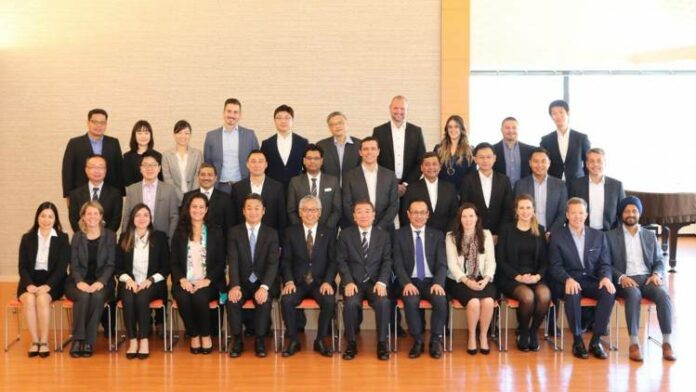
Nippon Yusen Kabushiki Kaisha (NYK) and Yusen Logistics Co. Ltd. (YLK) jointly conducted their 2018 Global NYK/YLK Week from October 29 to November 2 in Japan. Twenty-eight staff members from around the world were nominated from the Group’s global business bases to attend the program, along with a handful of employees based in Japan.

This training program has been jointly held by NYK and YLK since 2012 to deepen interaction among the participants across national, division, and company boundaries and further strengthen links and networks.

This year’s theme was “to drive ‘Staying Ahead 2022 with Digitalization and Green.’” The participants engaged in workshops that examined how to proceed and achieve the NYK Group’s medium-term management plan, how to improve the NYK Group’s competitiveness, and how to be the ideal leader during a time of rapid change. Afterwards, participants made presentations on the theme to board members, including the presidents of NYK and YLK, thus allowing the groups to have an impact on the Group’s business management.

At the end of the week, the participants travelled to Kyoto for a day of Japanese culture and learned about traditional methods to relax mind and body through Zen meditation.

It is expected that all participants will take their experiences from the five-day program back to their offices to share with their colleagues and that they will use what they learned in this program in their everyday work.

The NYK Group respects the diversity of its employees and the spirit of the challenge and is dedicated to the development of its human resources so that the Group can be a place where all employees can work with pride and realize their dreams.

Source:marineinsight

First targetless laser sensor for offshore wind farms developed

0

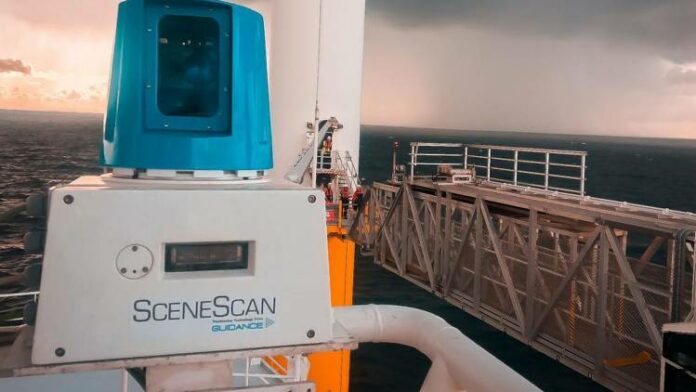
Wärtsilä developed the first targetless laser sensor for offshore wind farm applications, called 'SceneScan Monopole'. The laser sensor aims to increase safety onboard service operation vessels (SOVs).

The SceneScan Monopole measures the range and bearing to the offshore wind turbine, independent of the use of targets and GPS.

The technology can be applied in China’s offshore wind market, as well as in North Sea wind farms. The first SceneScan Monopole was delivered in summer 2018 for a Chinese SOV newbuild project.

It also includes Smart Marine vision, in order to ensure efficiency and improve operational safety, Dr Sasha Heriot, Business Development Manager, Navigation, Communication and Sensors at Wärtsilä, mentioned.

The system has undergone sea trials earlier in 2018, onboard the 'Windea La Cour', a purpose-built SOV.

The vessel also has the first targetless local position reference sensor based on radar technology.

Source:safety4sea

Port of Antwerp signs an agreement with Enabel

0

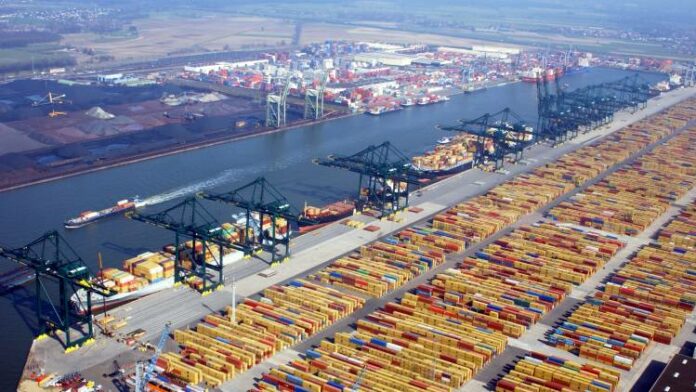
Wednesday 14 November, a collaboration agreement was signed in the port of Antwerp between on the one hand Antwerp Port Authority and its consultancy and investment subsidiary Port of Antwerp International (PAI) and on the other Enabel, the Belgian development agency. The aim of the agreement is to combine forces with a view to further sustainable development for ports in developing countries.

Finding and supporting suitable growth centres in particular countries now plays an increasingly important role in the vision for Belgian development collaboration. Ports as essential links in the supply chain play a vital part here, acting as engines of economic development. Ports can be made more efficient by providing advice and training, and by making improvements to facilities. This in turn boosts the country's supply chain, with a positive effect on national performance and competitiveness, as well as helping to create employment.

"I am very pleased to be able to sign this collaboration agreement," declared Enabel CEO Jean Van Wetter. "Shipping transport is an important factor in international development. The port of Antwerp and Belgian development aid both concentrate a large part of their efforts on Africa. The annual volume of freight carried between West Africa and the port of Antwerp amounts to 15 million tonnes. 13 out of Enabel's 14 partner countries are located in Africa, and many of these have coasts with major ports. Making their port management more efficient, both on the import and on the export side, is therefore crucial for future-oriented, sustainable development."
 
The agreement was signed in Port House by Jacques Vandermeiren, CEO of Antwerp Port Authority, Kristof Waterschoot, Managing Director of PAI, and Jean Van Wetter, CEO of Enabel. The aim of the agreement is to combine the forces of all three organisations so as to permit closer collaboration with a view to sustainable development of ports in developing countries.

Earlier this year the World Ports Sustainability Programme (WPSP) Charter was signed, based on the 17 Sustainable Development Goals (SDGs) defined by the United Nations.

Jacques Vandermeiren, CEO of Antwerp Port Authority, explained: "As engines of economic growth and development all over the world, ports are an important lever for achieving these SDGs. The port of Antwerp for its part is a major hub in the global supply chain and a leader in creating added value, and as such it aims to play a pioneering role here. The entire port community has therefore made a commitment to sustainable growth and development. The signature of this collaboration agreement will enable us to put these SDGs into practice."

Source:portnews

Meyer Turku starts construction of Carnival XL1

0

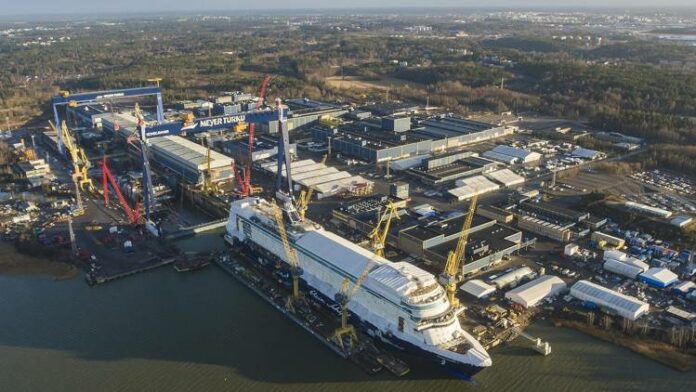
Meyer Turku says it has started today the production of a 5,286-lower berth cruise ship for Carnival Cruise Line. The ship will be the first North American-based cruise ship to run on LNG and will also be the largest Carnival cruise ship ever built with 180 000 gross tonnage (GT).

With the first steel cutting the physical form of the ship will start to takeshape. The new Carnival ship will offer a variety never-before-seen innovations and will be part of Carnival Corporation’s “green cruising” design platform.

This new ship promises to be truly special, from its ground-breaking one-of-a-kind features to a distinctive hull painting and hull design that is both timeless and forward-thinking while paying tribute to our nearly 50-year history of making wonderful vacation memories for our guests,” said Christine Duffy, president of Carnival Cruise Line.

Production ramp-up is moving forward at Meyer Turku shipyard with this large, state-of-the-art cruise ship. Meyer Turku’s production is already at the level of previous all-time high and more than doubled from 2014 when Meyer family bought the shipyard.

We are extremely pleased to work together with Carnival on this large and highly innovative ship. With the first steel cutting, our efforts in designing the hull, features and interior of the ship start to take shape. We are also very proud to build the first-ever LNG using cruise ship for North American market, making this state-of-the-art green technology a reality,” commented Jan Meyer, CEO of Meyer Turku.

To enable the ramp-up of production, Meyer Turku has hired more than 700 new shipbuilders since 2014 and recruitments are continuing with a pace of approximately 200 people each year.

Meyer Turku has been also investing heavily, with largest investments, a large part of 200 million investment program going to the steel factory. The shipyard’s steel halls will have a new plate cutting line, a new profile cutting line and a new panel line, all under final stages of construction at the moment.

With our new steel pre-treatment facility and storage and of course the new gantry crane that started operation in May, we are already seeing the effects of these investments. Next we will take further custom designed machines with increased automation into use in hull production. This all is happening in parallel with our ramp-up of both design and production in order to deliver on the promises we have made to our customers. For us and the network this is very exciting time as we are able to really show what we are capable of with the design and also the construction of these very sophisticated cruise ships,” CEO of Meyer Turku Jan Meyer states.

Carnival XL1 will be built on new green cruising platform for Carnival, yet it will feature completely newly designed interior spaces that Meyer Turku interior design team is working together with Carnival designers.

The as-yet-unnamed Carnival cruises ship will operate from Florida beginning in 2020.  The ship’s name is scheduled to be revealed in early December.  Details on the ship’s inaugural season are planned to be announced in January, with information on the vessel’s vast array of exciting culinary, beverage and entertainment options to be revealed later in 2019. A second XL class ship is scheduled for delivery in 2022.

Meyer Turku Oy employs 2,000 persons and specializes in building highly complex, innovative and environmentally friendly cruise ships, car-passenger ferries and special vessels. Together with two sister shipyards in Germany, Meyer Werft in Papenburg and Neptun Werft in Rostock, Meyer Turku is one of the world’s leading cruise ship builders. The successful shipbuilding tradition in Turku has been continuing since 1737. The company  is currently building cruise ships for TUI Cruises and Costa Crocier. The order book also icludes cruise shipas for Carnival Corporation and Royal Caribbean International. 

The design and construction of the ships are supported by the subsidiaries of Meyer Turku: Piikkio Works Oy, which is a Cabin Factory in Piikkiö, Shipbuilding Completion Oy, which provides turnkey solutions to public spaces in ships, and ENG´nD Oy, which is an engineering company offering services for shipbuilding and offshore.

Carnival Cruise Line, part of Carnival Corporation & plc (NYSE/LSE: CCL; NYSE: CUK), is "The World's Most Popular Cruise Line®" with 26 ships operating three- to 24-day voyages to The Bahamas, Caribbean, Mexican Riviera, Alaska, Hawaii, Canada, New England, Bermuda, Cuba, Australia, New Zealand, the Pacific Islands and Southeast Asia.  The line currently has three new ships scheduled for delivery – the 133,500-ton Carnival Panorama set to debut in 2019 and two as-yet-unnamed 180,000-ton ships in 2020 and 2022.

Source:portnews

OSV Operators Warn of Continued Weak Day Rates

0

OSV operators Tidewater, Maersk Group and Bourbon Offshore all warn that the OSV market will continue to suffer from low day rates for the near term. While the offshore drilling industry is beginning to turn around, about 40 percent of the world's OSVs are idled or stacked, and low utilization continues to weigh on charter negotiations. 

Last week, Bourbon said in an earnings report that it expects day rates for offshore vessels to remain "persistently low." Its year-to-date revenues have declined relative to the first nine months of 2017; its vessel utilization remains at about 50 percent; and it is actively seeking new investors and financing. About two dozen Bourbon subsidiaries recently opened French commercial court conciliation talks with creditors. In a reflection of the state of the market, Bourbon says that it plans to continue its focus on cutting costs and overhauling its operations using new high-tech tools. 

Maersk Group is looking for a buyer for its offshore vessel division, Maersk Supply Service, and this month it wrote the unit's value down by another $400 million (in addition to a previous impairment). In its earnings report released Wednesday, the firm said that it reassessed Maersk Supply's worth due to "continued challenging market conditions" and a subdued rate outlook in the near and mid-term. "Tender activity is rising, in line with signs of recovery in the offshore drilling sector; however, Maersk finds that day rates remain under significant pressure due to the large number of idle vessels," the firm wrote. 

U.S.-based OSV operator Tidewater, which recently emerged from Chapter 11 bankruptcy, said Wednesday that it expects "at least a modest uptick in the working offshore rig count [in] the second half of 2019," leading to an eventual improvement in utilization and day rates. "I think the real needle move here is when you can see the floater count move up, and at least where we sit today, we think that that's more likely than not to happen in the second half of 2019," said Tidewater CFO Quinn Fanning in an earnings call. 

Source:maritime-executive

CargoX’s Blockchain Platform Commences Operation

0

CargoX launched the CargoX platform on Wednesday saying it is the first open, neutral and accessible blockchain platform in the shipping industry. 

The platform offers a decentralized and secure environment for sending digital documentation by means of a public blockchain network and can be used by shipping, freight forwarding, non-vessel operating common carriers, exporting and importing companies and forwarder alliances and networks globally. 

The platform is based on the CargoX’s Blockchain Document Transaction System (BDTS) which includes the ability to create, transfer and state undoubted ownership of information or documentation. This includes the master bill of lading, house bill of lading, telex and express releases, switch bill of lading, sea waybills and other types of documents and custom attachments. Flexible endorsement types are available, and a certificate of origin can be transferred or exported. Letter of credit and escrow service workflows are supported, where documents can be transferred to a bank with just a couple of clicks – and the bank can join the platform just as the other parties to ensure the payment of goods.

The system stores documents and data securely encrypted on a public globally accessible blockchain network, so companies don’t have to implement any new infrastructure. The platform can be used by businesses of any size, even if they just need to send one Bill of Lading per day, or if their daily process includes hundreds of documents.

The platform is already being implemented by Swiss global logistics specialist Fracht AG, Sprint International Express, the full service and third party logistics provider, freight forwarder networks and platforms such as Globalink, Global Value Network, Ocean X and Freightalia, tech consultancy companies such as DBA Group from Italy and Actual Group from Slovenia, and regional logistics companies TPG Logistics, Milšped Group and Europacific.

Blockchain platforms shouldn't be treated and used as self-contained systems even if they do serve a particular purpose and solve a particular problem. In order to get as much as possible from these technologies, we need to build modular systems that efficiently solve problems – and then use these solutions to construct larger systems. The only way to do that is interoperability and we need to be careful to make systems as open as possible from the start. CargoX took special care to design its platform with ultimate open architecture in mind,” said Stefan Kukman, CEO and founder of CargoX.

CargoX confirms blockchain-based letters of credit and trade finance solutions will be added to the system soon.

Blockchain Development

The news follows on from other industry blockchain developments. Earlier this month, nine ocean carriers and terminal operators signed an MOU to form a consortium to develop the Global Shipping Business Network (GSBN), an open digital platform based on distributed ledger technology. 

The participants include ocean carriers CMA CGM, COSCO Shipping Lines, Evergreen Marine, OOCL, and Yang Ming; terminal operators DP World, Hutchison Ports, PSA International and Shanghai International Port; and software company CargoSmart. The new platform will connect all stakeholders, including carriers, terminal operators, customs agencies, shippers and logistics service providers to digitize their supply chain.

CargoSmart initiated the formation of the blockchain consortium, and will employ big data analytics, artificial intelligence, Internet of Things and blockchain technologies to develop the system. The first planned application will allow shippers to digitize and organize their dangerous goods documents and automatically connect with relevant parties to streamline the approval process. The application is scheduled to be available in December 2018.

In August, A.P. Moller – Maersk and IBM introduced their global blockchain solution TradeLens, with 94 organizations already participating. The companies announced their joint venture in January this year after collaborating on the concept since 2016. Early adopters include more than 20 port and terminal operators across the globe, including PSA Singapore, International Container Terminal Services Inc, Patrick Terminals, Modern Terminals in Hong Kong, Port of Halifax, Port of Rotterdam, Port of Bilbao, PortConnect, PortBase and terminal operators Holt Logistics at the Port of Philadelphia. They join the global APM Terminals' network in piloting the solution at over 230 marine gateways worldwide.

Source:maritime-executive