2.9 C
New York
Home Blog Page 1244

The design of world’s most powerful tidal turbine

0

The animation video unveils the design of a new tidal turbine, as part of the FloTEC project, funded by the European Union’s Horizon 2020 research and innovation programme. The Orbital O2 2MW, designed by Orbital Marine Power, is targeted to be deployed at the European Marine Energy Centre (EMEC) in Orkney in 2020. The company believes that, when launched in 2020, it will be the most powerful tidal generating platform in the world.

"The Orbital O2 is a low cost solution for future commercial projects and builds on the features which made the SR2000 an industry breakthrough. This optimised turbine will unlock tidal markets around the world at a competitive price point and provide regulators and investors with a new, predictable renewable energy option,"…Andrew Scott, CEO of Orbital Marine Power said.

The Orbital O2 will comprise of a 73m long floating superstructure, supporting two 1 MW turbines at either side for a nameplate power output of 2MW, at a tidal current speed of 2.5 m/s. With rotor diameters of 20m, it will have a 600sq metre rotor area, the largest ever on a single tidal generating platform to date.

The Orbital O2 has been designed for low cost access to all systems and components, the vast majority of which are located within the floating superstructure for simple onsite maintenance as per the SR2000. The machine will also feature new ‘gull wing’ style retractable legs that raise the nacelles, pitch hubs and blades to the water surface for easy access without the need for any specialist heavy lift vessels.

The steel structure of the turbine has been simplified to reduce fabrication costs and futureproof the product for volume manufacturing. The new configuration also reduces the draught of the unit to less than 3m to ensure this utility scale machine can be towed and installed with modest sized workboats.

Additionally, the system will feature 360 degree blade pitching control. This will allow safe, dynamic control of the machine’s 20m rotors and will enable power to be captured from both tidal directions without need to yaw the entire platform. These controllers will support the installation of even larger blades in the future.

This first production unit will be funded with support from a live public debenture offer through the Abundance Investment platform (announced 16th October), along with the European Horizon 2020 FloTEC project, Interreg North West Europe ITEG project, and the OCEANERA-NET COFUND. The debenture offer has already raised close to 50% of its £7m target.

Source:safety4sea

US unveils roadmap to accelerate offshore wind industry

0

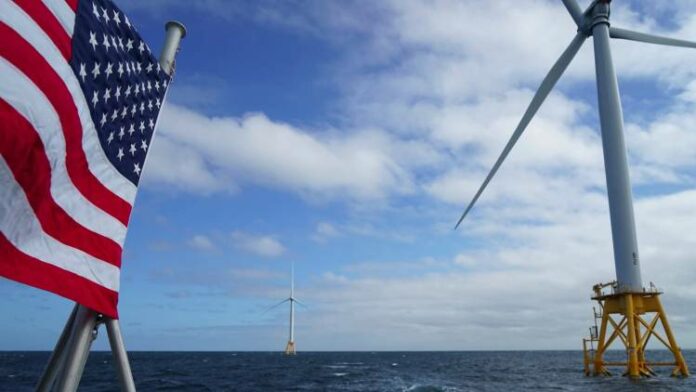
The National Offshore Wind Research and Development Consortium, the first US-funded public-private partnership focused on advancing research and development to accelerate the offshore wind industry in the country, announced the release of its first Research and Development Roadmap to advance offshore wind technology, and combat climate change.

Established in response to industry-led feedback, the Roadmap establishes a long-term vision for innovative offshore wind technology development in the US and identifies key priorities for establishing the industry as a US leading clean energy sector. The Roadmap was ratified at the first official meeting of the Consortium Board of Directors on 18 October.

In June, in line with New York State's work to develop a responsible and cost-effective way to develop a US offshore wind industry, the New York State Energy and Research Development Authority (NYSERDA) was awarded $18.5 million by the US Department of Energy (DOE) for a term of four years to lead the national research and development consortium.

The Consortium is growing and expanding upon New York's work to advance the cost effective and responsible development of offshore wind through collaboration between the offshore wind industry, utilities, research laboratories, and other states.

The DOE award, matched by NYSERDA, is being used to establish this independent partnership that is both market-driven and industry-led to develop the cutting-edge technology needed to make offshore wind an even greater economic driver for coastal states and a clean source of renewable power for the nation.

"I thank the policy leaders and industry partners who have led the development of the offshore wind roadmap to further the progress we’re making for a sustainable, cost-effective industry which will bring good jobs to New York while combating climate change. New York is leading the growth of offshore wind with smart, innovative market-driven policies and I’m proud New York is lending its expertise and contributing to the consortium’s work,"…Richard Kauffman, Chairman of Energy and Finance, New York State, said.

The Consortium, headquartered at the AERTC, will prioritize, support and promote research and development activities which target barriers that slow the adoption of offshore wind technologies as well as support US-based manufacturing and offshore wind supply chain and infrastructure.

Public and private partners were enlisted to support consortium initiatives that will specifically focus on driving further cost reductions for offshore wind development, lowering the deployment risk to investors, and expanding the range of feasible project sites in each of the five US offshore regions.

As such, the Consortium will fund research and development initiatives that focus on three pillars:

  • Offshore Wind Plant Technology Advancement: Will include research and development opportunities that focus on addressing near-term and mid-term challenges to reducing development costs in the initial phases of US offshore wind projects.
  • Offshore Wind Power Resource and Physical Site Characterization: Aims to reduce the risk of offshore wind in the United States through research and development that focus on activities that lower the cost, time, and uncertainty of site characterization for offshore wind developers on the US Outer Continental Shelf (OCS).
  • Installation, Operations and Maintenance, and Supply Chain: Will focus on research and development activities that lower cost and time of US offshore wind project construction, installation, and operation and maintenance costs.

Focusing on the research and development priorities identified in the Roadmap, the Consortium intends to distribute available research funds through a series of open solicitations over the next four years. The first request for proposals under the Roadmap is expected to be announced in 2019. After the first-round of competitive solicitations, the Roadmap will be regularly revised to incorporate up-to-date stakeholder feedback and new research priorities and objectives that support the evolving offshore wind market.

Source:safety4sea

How Will Ship Routing Look in Fifteen Years?

0

This past September, StormGeo announced its acquisition of Nautisk — a leading supplier of maritime charts and publications. By allowing us to integrate our routing and weather services with state-of-the-art charts and publications, this move pushes our company full-speed into the future of shipping technology. It has also made me think about how ship routing will look in years to come, and how it will likely be delivered in a very different way than it is today.

Ships will be much more digitally connected with increasing access to high-speed internet. This will allow route suggestions to be delivered in a format that the Master can accept directly into the ECDIS (Electronic Chart Display and Information System), rather than having to load them manually. This is why we’re moving towards integrating all routing services more tightly with voyage planning and route transfer directly to ECDIS.

At present, a Master using BVS (Bon Voyage System) can send a route from the ship to our operations center. We then evaluate it and pass a route back to the Master’s BVS. In the future, much more complicated route plans could be passed back and forth addressing any number of weather or environmental concerns. The improved quality of communications, sea-keeping data and weather data will allow for lower operating expenses as ships run more efficiently.

Given that the future of shipping will include a number of ships operated from shore as well as fully autonomous ships, I foresee routing information often being delivered to a shore-side operations facility rather than the vessel itself. For those that continue to have a crew on board, information could be projected onto the bridge windows in a type of 3-D overlay, which would enhance situational awareness. 

While vessel motion sensor technology is continuously improving, it is likely that ship routing systems will be able to take this data and provide more precise recommendations to the Master (on board or on shore) regarding vessel motions. Having more precise vessel motion data helps to ensure the utmost in crew, ship and cargo safety. 

Ship Routing’s Impact on Fuel Efficiency

In addition to the sensors mentioned above, there will also be engine sensors that report on all engineering systems and the cargo on board. These sensors and the data they send can allow for optimized heating/cooling of cargo, engage or disengage the shaft generator, and make changes in the heading and speed of the ship. The latter will reduce sloshing for liquid gas carriers and reduce the risk of parametric rolling for container ships. 

Beyond sensors, there will be tools on board the ship and in the shore-side operations centers to better manage constant power, which, when properly implemented, has a profound impact on fuel efficiency. This, of course, is a service we provide today but it is subject to certain human factors on board the ship that limit the efficacy. 

Where Will Autonomous Ships Be Utilized?

There are significant safety and economic reasons to move towards semi-autonomous shipping, which for me, refers to ships that will have a crew operating the navigation and engineering functions from a shore-side operations center. From a safety perspective, I foresee shore-side operators working with extremely sophisticated tools that will continuously check decisions and thus reduce human error.

Some are predicting the advent of remotely operated vessels by as early as 2020. While it may be an industry norm to have fully autonomous ships in 2030, I expect they will still be very much the minority. I believe these ships will mainly operate in lower traffic areas and on short voyages of four to five days or less. It’s important to note, however, that in 2016, shorter voyages made up close to 60 percent of the total maritime transport of goods to and from the main EU ports. So these ships may actually be in great demand.

The Age of Customization 

Despite all this, there is one area where not much will change: the need for recommended routes. It will take much larger leaps in technology to develop a ship capable of sailing through any weather. A vessel capable of withstanding the heaviest weather Mother Nature can produce would not be effective in carrying cargo or passengers.

With the innovation within sensors, new ship designs and improved shore to vessel communication, solutions for the industry are becoming more ship-specific. From vessel-specific hull curves to the capture and use of vessel-specific sensor data, solutions will be more customized than ever before. Companies using these tools will be able to precisely recommend the main engine load and RPM’s to achieve a superior level of fuel efficiency.

Whatever the future, StormGeo will always keep an eye on what lies ahead, while continuing to employ lessons learned from decades of supporting ships along safe and economic routes. 

Source:maritime-executive


ABP invests over £1 million on a rooftop solar project at the Port of Goole

0

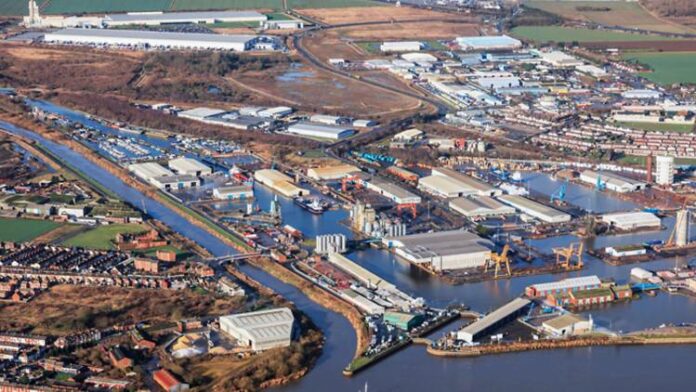
ABP says it has invested over £1 million on a rooftop solar project at the Port of Goole which will generate enough clean energy to power the port on solar alone during peak generation times.

In total, the major project will see 4,341 solar panels installed on four rooftops across the UK’s most inland port, Goole, and it will produce enough electricity (1.1-megawatts) to power around 154 residential homes per year. Surplus supplies will be exported to the grid for external use.

Britain’s biggest ports operator, ABP, is on track to become one of the largest corporate solar producers in the UK, and recently the Port of Immingham has upped its solar production to over 4-megawatts and was recognised for its green efforts at the Solar Power Portal Awards winning Commercial Roof Top Solar Project of The Year 2018.

Goole and Hull Port Manager, Chris Green, said: “We’re proud that the UK’s most inland port, Goole, will be a significant renewable energy generator in its own right.”

We still have enormous potential to further develop our ports to generate yet more clean energy, reducing the carbon footprint of our businesses and of our customers’ operations.

The project will reduce CO2 by over 450,000 kilograms each year – that’s an equivalent of planting over 20,000 trees.

The first installation is taking place at the RMS Boothferry Terminal, in preparation for the sunny summer months.

The UK’s leading commercial solar installer, Custom Solar, is heading the 12-week programme. Custom Solar Director, Gary Sucharewycz, said: “It’s fantastic to be working on another project with ABP Humber.

Following the recent success of projects at the Port of Immingham and other ports across the wider ABP group, this recent installation at the Port of Goole is another positive step as ABP implements solar generation across all ports.

Works have already started on site at Goole and we look forward to completing and commissioning the project prior to the end of 2018.”

Source:portnews

Carnival Cruise Line Cuts Steel on First LNG-Powered Ship

0

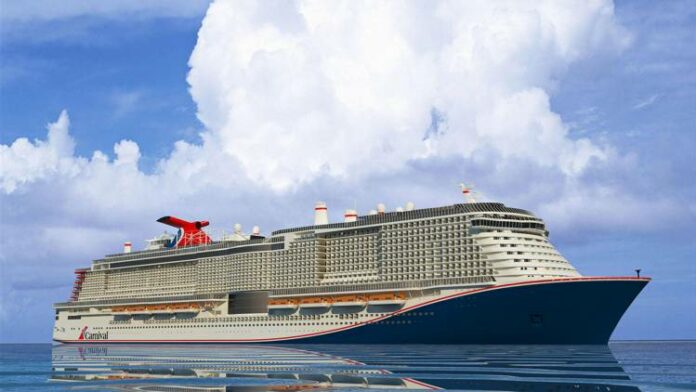
Carnival Cruise Line has cut the first steel and revealed the new livery for its 180,000-ton XL vessel that will be the first-ever ship operating in North America to use LNG. 

The vessel will be the line’s largest vessel to date and the first to be powered by LNG.

The steel-cutting ceremony was held at the Meyer Turku shipyard in Finland, and the vessel is expected to be delivered in 2020. A second XL ship will start construction in 2020 and be delivered in 2022 to mark the 50th anniversary of Carnival Cruise Line's founding.

The first ship will have a red, white and blue hull design that celebrates its U.S. legacy. The design was developed by New York-based Bluarch Architecture and is inspired by officers' uniforms along with vibrant red and white accents running the length of the 5,200 passenger, 1,130-foot-long ship.

The ship will operate from Port Canaveral, Florida, and her name is scheduled to be revealed in early December.  

Carnival Cruise Line has 26 ships operating three- to 24-day voyages to The Bahamas, Caribbean, Mexican Riviera, Alaska, Hawaii, Canada, New England, Bermuda, Cuba, Europe, Australia, New Zealand, the Pacific Islands and Southeast Asia. The line currently has three new ships scheduled for delivery – the 133,500-ton Carnival Panorama set to debut in 2019 and two 180,000-ton ships in 2020 and 2022.

Source:maritime-executive

The Fjords Announces Construction of New Zero-Emissions Vessel

0

Cruise operator The Fjords has announced it plans to add another all electric passenger vessel to its fleet, with Legacy of The Fjords now under construction at Brødrene Aa in Norway. 

The 400-passenger, carbon fiber catamaran shares the design of sister ships Vision of The Fjords and Future of The Fjords, but unlike the others will operate in the Norwegian capital, Oslo, from July 2019. The Fjords operates 11 vessels serving Western Norway’s fjords. Vision and Future are the current flagships, sailing daily between Flåm and Gudvangen and visiting the UNESCO World Heritage listed Nærøyfjord. 

This is a move that will surprise some in the industry but one we see as a natural progression for this ambitious business,” said The Fjords CEO Rolf Sandvik. “Oslo is very different from Flåm, but we believe it should demand the same degree of operational responsibility and environmental care – especially seeing as it is E.U. Green Capital of the Year 2019.”

Norwegian Prime Minister Erna Solberg has announced that the new ship will receive support from state run organizations Enova and the NOx Fund, conceived to help enable low emission technology.

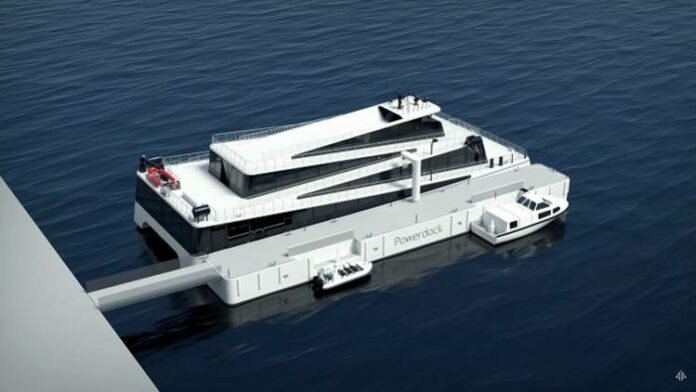
Legacy of The Fjords will employ a specially constructed Power Dock (a floating, charging solution originally designed for Future of The Fjords) allowing it to refill its 2.4MWh battery capacity in just 20 minutes. The Power Dock bleeds energy from the local grid throughout the day – while also storing consumables, fuel and waste for collection – and in doing so avoids unsustainable, expensive power surges. Its ability to store gray and black water also ensures zero emissions to water.

The Fjords is jointly owned by tourist body Flåm AS and Norwegian ferry company Fjord1. Westcon will provide the battery solution for Legacy of The Fjords.  

In September Future of The Fjords won the Ship of the Year accolade from Skipsrevyen at SMM, emulating sister vessel Vision of The Fjords, which secured the award when it launched in 2016.

Legacy of The Fjords

Length: 42m
Width:    15m
Materials: Carbon fibre sandwich
Seats: 400
Class: DNV GL light craft
El-motor: 2 x450kW
Propeller: CPP propeller
Battery pack: 1,800kWh

Source:maritime-executive

Greenpeace Regrets Ship Recycling Choice

0

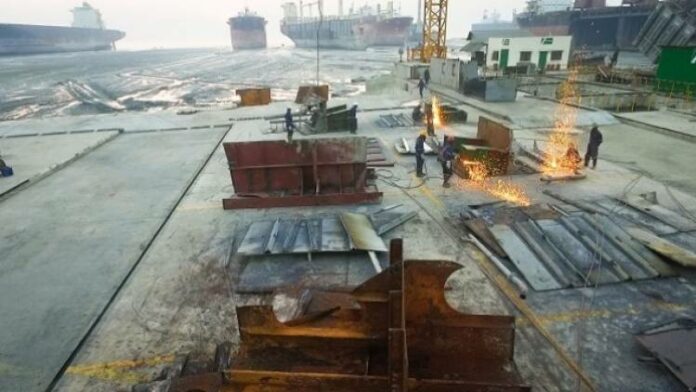
After cash buyer GMS congratulated the organization on its apparent support for the ship recycling of the former Rainbow Warrior (II) at a yard in Bangladesh, Greenpeace has issued a statement saying it was mistaken. Greenpeace does not believe that breaking ships apart on tidal beaches is green.

We have made a mistake, one that we have tried to correct. We have allowed the Rongdhonu, formerly the Rainbow Warrior (II), to be scrapped on a beaching yard in Bangladesh, in a way that does not live up to the standards we set ourselves and campaigned with our allies to have adopted across the world,” said Greenpeace International.

Greenpeace transferred ownership of the Rainbow Warrior to a Bangladeshi non-governmental organization called Friendship, in 2011, when the ship was no longer fit to sail the high seas. She was converted into a hospital ship traversing coastal waters and rivers. Renamed Rongdhonu, Bengali for rainbow, she has since brought vital health care to over 160,000 people in some of the world’s most remote and vulnerable communities. 

This year the ship, at 61 years old, reached the end of her life.

When we transferred the ship to Friendship in 2011 we retained the right of veto over any final disposal plan,” said Greenpeace. She became a Bangladeshi ship, owned, operated and flagged and only licensed to sail inland and coastal waters. Given its condition, we presumed it would need to be decommissioned in the best way possible in Bangladesh. As proposed by Friendship.

We should have consulted our partners in the NGO Shipbreaking Platform and the Basel Action Network, we did not. No excuse. We should have.

Over the last week we have been talking with both. They maintain, as does the E.U. and many other leaders in the field, that breaking ships on beaches is fundamentally unsafe, exploitative of workers and damaging to the marine environment.

Upon realizing our mistake, we began work to try and find an alternative way for the ship to be decommissioned, but this was not possible. The ship was beached and readied to be cut up.”

GMS had claimed that Greenpeace has finally recognized that safe and responsible recycling using the beaching method can be conducted in the Indian subcontinent and that Bangladesh specifically can be a green recycling destination. The vessel is being recycled at PHP Family yard in Chittagong. 

PHP Family recycling yard was the first in Bangladesh to receive a Statement of Compliance with the Hong Kong Convention for the Safe and Environmentally Sound Recycling of Ships. It was certified by classification society RINA, and in 2017 IMO Secretary General Kitack Lim visited the yard and said it was a role model for others in the country.

GMS’ position has been that there are good and bad yards all over the world and responsible recycling can in fact be conducted at yards that practice the beaching method, including those in the Indian subcontinent. “Therefore, after years of this debate, GMS is pleased to see ex-Rainbow Warrior (II) —one of the most globally recognized vessels previously owned by the world’s leading campaigner against beaching and recycling in the Indian subcontinent—has finally accepted the fact that responsible recycling in the Subcontinent is the most prudent option for shipowners worldwide.

It appears that Greenpeace got a nasty surprise when in fact they had acted in a reasonable and proper way, says Dr. Nikos Mikelis, Non-Executive Director of GMS. “They had located the best yard in Bangladesh where their aged Bangladeshi flag ship Rongdhonu was operating. I cannot see that they had any other option that could be justified in economic terms or in terms of environmental impact. It is very unfortunate that political expediency has now Greenpeace backtracking and apologizing to their associates, the NGO Platform and the Basel Action Network, for having ignored the core policy of their campaigns against the beaching method. In its press release Greenpeace now promise to urgently adopt an end-of-life ship policy, drafted with the help of the Shipbreaking Platform, to help ensure such errors do not occur in future."

I find it very hard to understand how is it possible for an organization such as Greenpeace, that relies on charity and therefore needs to be governed by an ethical core of principles, to ignore the damage it can inflict by aligning itself to an irrational anti-beaching policy and rhetoric. As Greenpeace had selected by far the most advanced yard in Bangladesh to recycle their domestically trading Bangladesh flag ship Rongdhonu, they must have been aware of the progress that the PHP yard has achieved, the great investment its owner has made in infrastructure, in the training of the workers and in setting and following safe and environmentally sound working procedures. 

Isn’t that what it is all about? Improved working conditions, improved workers safety, improved environmental protection. The alternative that is promoted by Greenpeace’s associates seeks an impossible future whereby Rongdhonu and all the end-of-life ships would be recycled in Europe, where no economic justification exists for the recycling of ocean going ships.

Perhaps Greenpeace would like to consider some input from me when they are preparing their end-of-life ship policy.” 

Source:maritime-executive

Romanian Black Sea gas to head through expanded transmission system

0

Transgaz and Black Sea Oil & Gas have signed a contract covering transportation of gas from the Midia Gas Development (MGD) project in the Black Sea to Romania’s National Transmission System (NTS).

Fulfillment of the arrangement remains subject to a final investment decision on the development. The contractual period lasts 15 years with a first gas delivery date on Feb. 1, 2021 at a transmission capacity of 1 bcm/yr.

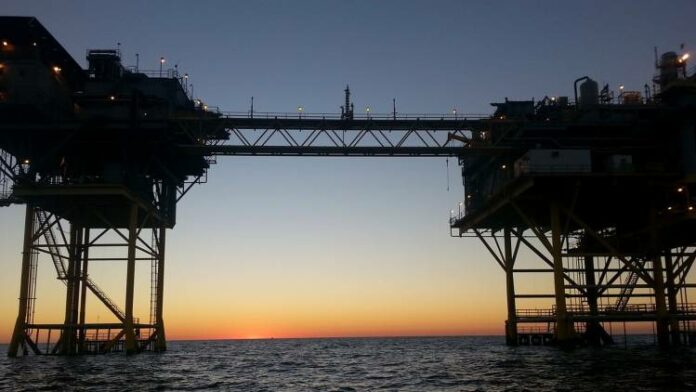
MGD will feature five production wells – one subsea well at the Doina field and four platform wells at the Ana field; and a subsea gas production system over the Doina well which will be connected through an 18-km (11.2-mi) pipeline to a new unmanned production platform on Ana.

A 126-km (78-mi) gas pipeline will link the Ana platform to the shore and a new terminal, with the processed gas delivered into the NTS at a gas metering station on the site.

Black Sea Oil & Gas’ Mark Beacom said: “We continue to move ahead to close out all the remaining milestones, necessary for our shareholder and partners to reach a decision. These milestones include completing all the regulatory requirements, the signing of a gas sales agreement with a gas buyer, having in place all the long lead and major equipment purchase orders, EPCIC and drilling contracts.”

The company will also assess the impact of Romania’s new Offshore Law on the project’s economic viability, he added.

Transgaz intends to expand the National Transmission System in order to set up an additional entry point for the natural gas coming from the Black Sea offshore blocks,” said Transgaz general director Ion Sterian.

The project consists of building a new 20-in. gas pipeline designed to carry natural gas at a pressure of 55 bar [798 psi], with a total length of approximately 24.37 km [15 mi] that will connect the Black Sea coast with Transit 1 transport pipeline on the route Black Sea coast – Corbu – Sacele – Cogealac – Gradina.

Source:offshore-mag

MPC Container Ships Invests in Exhaust Gas Cleaning Systems

0

MPC Container Ships ASA (the “Company”) is pleased to announce that it has entered into agreements for the purchase of five exhaust gas cleaning systems (“scrubbers”) which are to be retrofitted on five selected vessels within the Company’s fleet prior to the 1 January 2020 implementation date of the new sulphur emission cap regulation, as set forth by the International Maritime Organization.

The agreements also include options to purchase scrubbers for up to 50 additional vessels, allowing for further installations in both 2019 and early 2020, respectively. The Company will be carefully evaluating further scrubber installations, on a vessel by vessel basis, and exercise further options in due course.

The Company sees significant interest from charterers for scrubber-fitted vessels and is in well-advanced negotiations with charterers for mid- to longer-term charter parties at favourable rates that are expected to yield attractive returns for the Company. Simultaneously, the Company is evaluating additional charters and seeks to take advantage of the high optionality of its scrubber agreements.

The scrubber investment program is expected to be financed with cash on hand and available debt capacity on the Company’s existing fleet.

CEO Constantin Baack comments in relation to the announcement: “Having conducted thorough analyses on the subject, we are excited about the opportunity to retrofit selected vessels with scrubbers as an economically attractive alternative of complying with the 2020 sulphur regulations. Moreover, the option to equip a larger portion of our fleet with scrubbers gives MPC Container Ships the strategic flexibility to adapt to new market environments as we deem fit.

Source:hellenicshippingnews

Ship fuel data collection – training begins

0

In China this week (14 November), the IMO-led GloMEEP project has delivered a training course to help maritime administrations and classification societies play their part in an ambitious scheme to collect fuel consumption data from ships. The data collected will provide vital information to support IMO’s global efforts to reduce greenhouse gas emissions from international shipping.

From 1 January 2019 ships of 5,000 gross tonnage and above will have to collect consumption data for each type of fuel oil they use. These ships account for approximately 85% of CO2 emissions from international shipping. The data collected will be kept in a database hosted by IMO and will provide a firm basis on which future decisions on additional energy-efficiency measures, over and above those already adopted by IMO, can be made.

The GloMEEP training course, the first of its kind, was held in Hangzhou. Some 25 participants learned how to develop a ship fuel oil consumption data collection plan, verify the data collected and how to report data to IMO. The workshop was hosted by the China Maritime Safety Administration.

GloMEEP is a joint GEF-UNDP-IMO project, run by IMO, supporting the uptake and implementation of energy-efficiency measures for shipping, thereby reducing greenhouse gas emissions.

Source:hellenicshippingnews