2.3 C
New York
Home Blog Page 1189

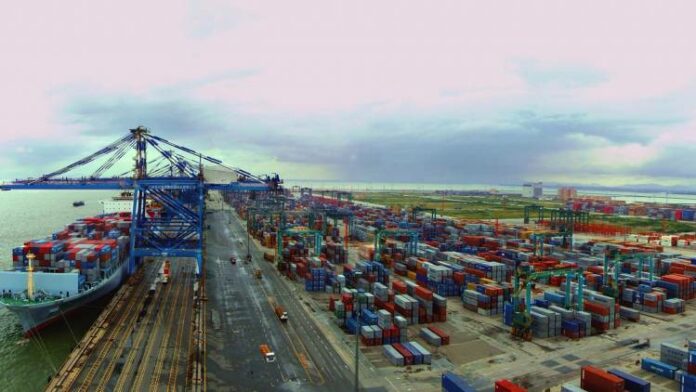
Cosco Shipping Ports Takes 4.34% Stake in Beibu Gulf Port

0

COSCO SHIPPING Ports Limited, a leading ports operator in the world, announced that it has subscribed for 70,943,455 shares of Beibu Gulf Port Co., Ltd. (“Beibu Gulf Port”) for a total consideration of approximately RMB 470 million, through China Shipping Terminal Development Co., Limited, a subsidiary of the Company.

The shares accounts for approximately 4.34% of Beibu Gulf Port’s total issued shares. By subscribing the shares, COSCO SHIPPING Ports aim to further strengthen the cooperation with Beibu Gulf Port, and lay a foundation for the Company to participate in the integration of Guangxi ports. At present, COSCO SHIPPING Ports teams up with Beibu Gulf Port in operating Qinzhou International Container Terminal Co., Ltd.

Beibu Gulf being the gateway of the New International Land-Sea Trade Corridor (“ILSTC”, formerly known as China-Singapore Southern Transport Corridor), is strategically significance in development. The ILSTC connects the Silk Road Economic Belt in the north, and 21st-Century Maritime Silk Road in the south via Guangxi and the Association of Southeast Asian Nations (ASEAN) countries such as Singapore, it forms a complete route of the Belt and Road Initiative through western China, plays a key role in the construction of the Belt and Road Initiative, it not only promotes the development of western China, but also strengthens the cooperation among China and ASEAN countries.

Locates near South China Economic Circle, Southwest China Economic Zone and ASEAN Economic Circle, Beibu Gulf Port is the main gateway port in Southwestern China, and is one of the 20 major coastal hub ports in China. Trade routes of Beibu Gulf Port cover major ports in ASEAN countries, and connect more than 200 ports in over 100 countries and regions. It has built sea transportation network from inland hinterland to Southeast Asia, Indian Ocean, Pacific Ocean, Mediterranean Sea and etc.

Total throughput of Beibu Gulf Port achieved for the 9 months of 2018 amounted to approximately 13.485 million tons, an increase of 13.68% year-on-year. The container throughput increased significantly by 30.17% year-on-year to approximately 2,186,300 TEUs. The three major port areas of Beibu Gulf Port are stepping up the development of the Rail-sea intermodal transportation to form an important hub for the ILSTC. With the rail-sea routes between western China and Southeast Asia built via Beibu Gulf, the railsea routes have been expanded to link inland cities of China; goods can then be transported from western 2 cities such as Chongqing to Beibu Gulf Port, and from the port to ASEAN countries by container ships, the whole route only takes 7 to 10 days, which substantially reduced the transportation time and costs.

Mr. Zhang Wei, Vice Chairman and Managing Director of COSCO SHIPPING Ports, said: “The subscription of Beibu Gulf Port’s shares further deepened the cooperation between COSCO SHIPPING Ports and Beibu Gulf Port, prepared for our participation in the integration of Guangxi Ports; the operation and economies of scale of Beibu Gulf Port should thus be further reinforced. We will continue to seek cooperation opportunities actively to further strengthen our terminal portfolio in Southwest China, and at the same time continue to extend our reach globally to build a global terminal network with controlling stake that offers linkage effects on costs, services and synergies to better serve our clients, enhance our synergies with the parent company and Ocean Alliance to create greater value and maximum returns to our shareholders.

Source:Cosco shipping ports


Drydocks World delivers unmanned platform to Dubai Petroleum

0

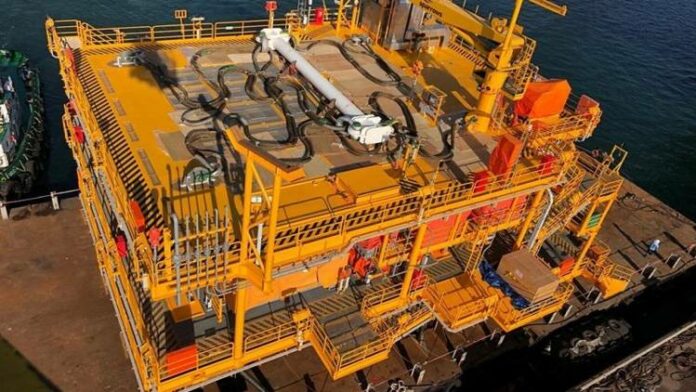
Drydocks World has completed construction of the Rashid D wellhead platform jacket and topsides for contractor TechnipFMC and end client Dubai Petroleum.

The topsides, a 950-ton oil and gas processing module, is designed for unmanned operations with a lifespan of 25 years and is equipped to perform oil, gas lift and water injection. The 500-ton jacket structure will be installed off Dubai in 31 m (102 ft) water depth.

Drydocks World’s scope included fabrication of the topsides piping systems, riser and piles, and the subsea spools that will connect the platform to Dubai Petroleum’s existing offshore subsea network.

Source:offshore-mag

Shell, EDF Renewables invest in New Jersey offshore wind

0

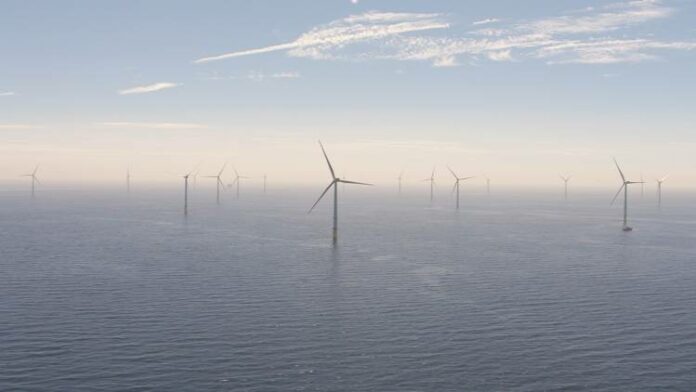
EDF Renewables North America and Shell New Energies US LLC have formed a 50/50 joint venture, Atlantic Shores Offshore Wind LLC, to co-develop OCS-0499 lease area within the New Jersey wind energy area.

The lease area holds the potential to produce about 2,500 megawatts of offshore wind energy – enough to power close to one million homes. This transaction is subject to regulatory approvals. Construction is subject to a positive final investment decision.

The lease comprises 183,353 acres about 8 mi (13 km) off the coast of Atlantic City on the US outer continental shelf. The area offers strong and steady wind resources in relatively shallow water, close to large population centers with associated electricity demand.

Atlantic Shores Offshore Wind LLC will begin working to complete a site assessment plan and initiate formal development efforts on the site, and subject to a positive final investment decision, could bring the wind farm into operation by the mid-2020s.

Dorine Bosman, VP Shell Wind Development, said: “Shell has bold ambitions to grow our renewable power business and we see great potential in US offshore wind. Gaining access to this acreage in New Jersey complements our successful entry to Massachusetts and our existing renewable generation business. Building on the strength of our brand and global presence allows us to continue providing our customers with more and cleaner energy.”

Tristan Grimbert, president and CEO of EDF Renewables North America, added: “The opportunity supports the EDF Group’s aim to double global renewable capacity to 50 gigawatts by 2030. It solidifies EDF Renewables ambitions to leverage its depth of experience in the European offshore wind market in the emerging US market."

As the costs of offshore wind are declining, the US offshore wind industry is quickly advancing with strong federal and state support. The industry is well-positioned to meaningfully contribute to the New York and New Jersey economies through employment and supply chain opportunities.

Source:offshore-mag

Rolls-Royce To Deliver Ship Design And Equipment To New Fishing Vessel

0

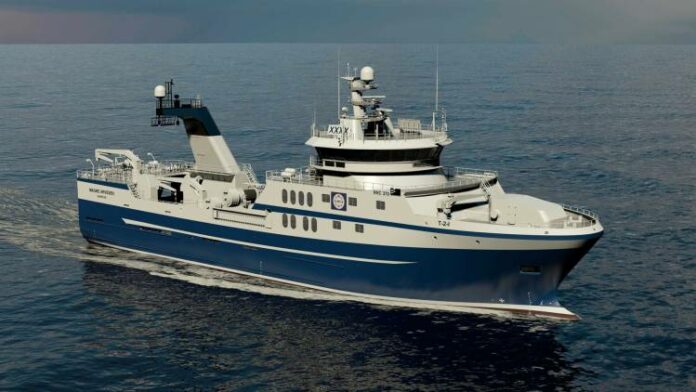
Rolls-Royce has signed a contract to deliver ship design and an extensive range of equipment to a 70-metre long stern trawler to be built for Engenes fiskeriselskap AS, based in Troms county, northern Norway.

This highly advanced fishing vessel is to be built by Gondan shipyard in Spain. Shipowners Johannes Arne and Børge Arvesen, Engenes fiskeriselskap, said: This is a milestone for our company and carries on the proud traditions of trawl fishing in our part of Norway.

The vessel will be of type NVC 370 with a low resistant hull design, which meets increased demands for fuel efficiency combined with good sea keeping. It will be equipped with a package of power and propulsion, deck machinery, electrical and automation systems that will deliver benefits to both the owner and the environment.

Monrad Hide, Rolls-Royce, Vice President Sales, said: “Engenes has truly made an investment for today and the future. Our designers are also impressed with the owner’s keen attention to the future working conditions of the crew, both related to comfort and safety.”

The equipment to be delivered from Rolls-Royce includes a hybrid propulsion system consisting of the successful and efficient B33:45 diesel engine, Promas integrated propeller system and HSG drive system to ensure optimum propulsion efficiency in all operational conditions. Rolls-Royce will also deliver its latest electric winch technology, including trawl winches driven by permanent magnet motors.

Engenes Fiskeriselskap’s new vessel is designed for bottom trawling as well as pelagic trawling. It will have a modern factory deck arrangement to handle and freeze both white fish and shrimps, and ensure a high quality catch. The vessel is expected to be delivered from the yard in Q1 2021.


Bourbon: General waiver renewal with lenders

0

Bourbon announces having renewed the general waiver with its leasers and debt holders representing the majority of the group’s debt, thus allowing it to suspend the payments of its loans and debt. This waiver allows it to stay focused on its operational priorities, while pursuing its search for all solutions capable of adapting its financing to its performance, in a secured framework.

The negotiations with main financial partners, both in France and abroad, began in the first quarter of 2018 to balance the servicing of its debt with the expected gradual market recovery and the corresponding upturn in the group’s performance.

The result of the negotiations was the previously mentioned general waiver which allowed the group to withhold all payments. Bourbon said at the time that the waiver demonstrates the goodwill of all parties to achieve a satisfactory debt reshaping.

As part of the negotiations, Bourbon requested the consent of the general meeting of bondholders to defer by one year the next interest payment date due under the bonds for an approximate amount of €3.9 million due on April 24, 2018 on April 24, 2019, which shall bear interest from October 24, 2018 (included) to April 24, 2019 (excluded) at the rate corresponding to the applicable rate to the bonds.

Shutdown Hits Coast Guard Academy, NOAA and MARAD

0

An estimated ten percent of the U.S. Coast Guard's employees have been furloughed due to the partial government shutdown, and most of those who remain working face uncertainty about their next paycheck. About 160 of the 260 staff at the U.S. Coast Guard Academy are among those who are off work until the shutdown ends, and students are set to return for the next semester on Sunday.  

Most of the 100 personnel still on duty at the Academy are faculty members, and classes will be held as scheduled, according to the school. However, groundskeepers, maintenance workers and some athletic coaches will not be on hand. Winter sports will continue, but other athletic events could be canceled. 

"The lapse in funding will impact the ability for cadets to receive academic support services, participate in outreach activities and some athletic events," the Academy said in an advisory. 

The shutdown also affects more than half the staff at the Maritime Administration, which prepared to cease all activities in the Committee on Marine Transportation Systems, the Office of Policy and Plans, and the Office of Maritime Education and Training, among others. MARAD continues all its essential operations for the U.S. Merchant Marine Academy, the Maritime Security Program, the NRDF and Ready Reserve, and the Ship Disposal Program.

At the National Oceanic and Atmospheric Administration, the shutdown has hit important licensing and research functions. Most NOAA research activities are suspended, and Alaska Public Radio reports that many of the NOAA officials who conduct required permitting for the Alaskan trawl fisheries are furloughed and unavailable. At least one large catcher-processor is tied to the pier in Dutch Harbor until the shutdown ends or another permitting solution is found. 

The Democratic Party takes control of the House of Representatives on Thursday, and among its first acts, it is set to pass spending bills to restore all federal funding at current levels. However, these measures will not likely pass the Republican-controlled Senate, which has signaled in advance that it will not vote in favor of legislation that the president will not sign. President Donald Trump has promised a lengthy shutdown until Congress appropriates $5 billion for the construction of a wall at the southern border; as the Democratic leadership's plan only includes $1.3 billion for general border security, the White House has described it as a "non-starter.

Source:maritime-executive

Ukrainian Gunboat Fires Shots to Halt Suspected Smugglers

0

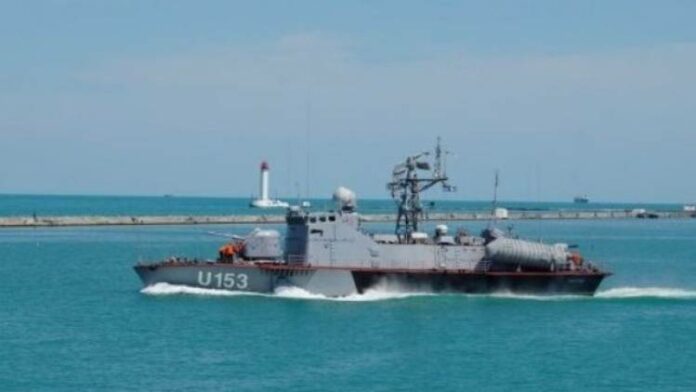
On New Year's Eve, the Ukrainian gunboat Pryluky intercepted a suspected smuggling vessel in the Black Sea by firing warning shots across its bow. 

In the last hours of the year, the Ukrainian Navy and other domestic security services detected the suspect vessel off Ukraine's coast. The Navy command center of the Ukrainian Armed Forces dispatched the Pryluky to meet and inspect it, and the gunboat intercepted the suspect vessel in Ukraine's territorial waters. However, despite radio communications and an order to stop, the unnamed vessel would not halt for a boarding and inspection. The Pryluky pursued it and fired a warning shot across its bow, compelling the vessel to comply. 

The gunboats Akkerman and Berdyansk assisted in bringing the vessel into port in Odessa to complete the arrest.

Enhanced security measures

Following last year's altercation between Russian and Ukrainian forces at Kerch Strait, which resulted in Russia's seizure of three Ukrainian Navy vessels, Ukraine has taken new measures to increase its maritime security capabilities. On December 29, President Petro Poroshenko signed a law expanding Ukraine's ability to enforce domestic regulations in its adjacent zone, the area between 12 and 24 nm from its coastal baseline. 

According to Poroshenko's government, the law is intended to help Ukraine fight smuggling and "illegal" ship calls in the ports of Russian-occupied Crimea. Ukraine still considers these ports its own and has declared that they are closed under Ukrainian law (though on the ground they are open to traffic). In the adjacent zone, Ukraine will now exercise control over customs and taxes, immigration and phytosanitary regulations. 

To provide enforcement for this new measure, Ukraine plans to order 20 new mid-size patrol boats for its navy. “They will be built at one of our factories in cooperation with leading French companies – with a high level of localization of the project in Ukraine,” said Interior Minister Arsen Avakov, speaking to Interfax Ukraine. 

Source:maritime-executive

Total’s Largest FPSO Commences Operation

0

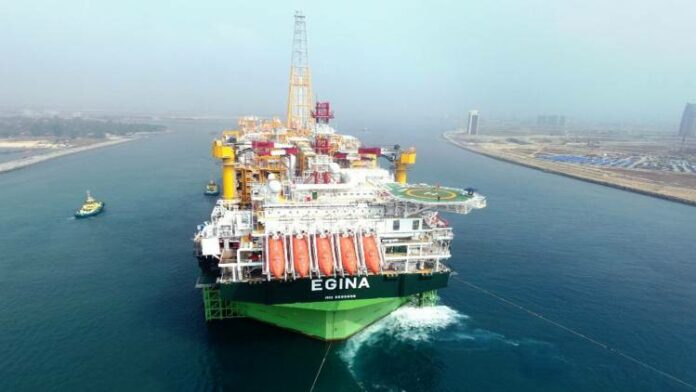
Total has started up production from the Egina field in Nigeria using one of the world's largest FPSOs.

Weighing close to 220,000 tons and measuring 330 meters (1,083 feet) long by 60 meters (197 feet) wide, the Egina FPSO is connected to 44 subsea wells at Nigeria's deepest offshore energy project to date. The FPSO is Total's largest to date and also the largest installed in Nigeria. 

The vessel was built by Samsung Heavy Industries (SHI), but the project has also involved a record level of local contractors. Six of the 18 modules on the FPSO were built and integrated locally, and 77 percent of hours spent on the project were worked locally. The fabrication and integration of the FPSO in Nigeria was the first time such a complex project of this type was executed in Africa. It was undertaken by SHI-MCI FZE, a yard built by SHI that is designed to make Nigeria the hub for FPSO integration in Africa. There are currently no other FPSO integration yards elsewhere on the continent.

The Egina field project is based on a subsea production system connected to the FPSO which is designed to hold 2.3 million barrels of oil. The field is located in around 1,600 meters of water depths, 150 kilometers off the coast of Nigeria, and operations commenced on December 29. At plateau, the Egina field will produce 200,000 barrels of oil per day, which represents about 10 percent of Nigeria’s production. 

Startup of the Egina field has been achieved close to 10 percent below the initial budget, which represents more than $1 billion of CAPEX savings, due in particular to excellent drilling performance where the drilling time per well has been reduced by 30 percent. 

Initially discovered in 2003, the Egina field is the second development in production on the Oil Mining Lease (OML) 130 following the Akpo field, which started-up in 2009. The Preowei field is another large discovery made on this block for which an investment decision is scheduled for 2019.

Total Upstream Nigeria Limited operates OML 130 with a 24 percent interest, in partnership with Nigerian National Petroleum Corporation (NNPC), South Atlantic Petroleum – SAPETRO Ltd. (15 percent), CNOOC E&P Nigeria Limited, a wholly owned subsidiary of CNOOC Limited (45 percent) and Petrobras Oil and Gas BV (16 percent). 

In addition to OML 130 where the Akpo, Egina and Preowei fields were discovered, Total operates other offshore assets such as OML 99 (40 percent) where the Ikike discovery is located, OML 100 (40 percent) and OML 102 (40 percent) where the Ofon 2 project was completed in 2016. 

The successful sail away of the Egina FPSO to its final location offshore courtesy of logistics partner Fortune Global.

Source:maritime-executive

Blockchain and Cryptocurrency: 2018 in Review

0

Bitcoin is dead…again. According to 99bitcoins.com’s “Bitcoin Obituaries”, Bitcoin has died 337 times since 2010 (91 times in 2018, alone). Despite the clickbait, this year has seen great strides for blockchain and distributed ledger technologies (DLT), particularly for the transportation and logistics sectors. Since its debut as a fundamental component of Bitcoin 10-years ago, in 2009 (see an article on its origins), DLTs have experienced a tumultuous journey from the basements of cypherpunks tonow receiving daily coverage on major networks and even gaining its own ticker symbols of XBT, NYXBT and BTC.  

At the time of writing this article, Bitcoin is priced (USD) at around $3,600 ($16,000 YTD), with a market cap of $63B (total of all 2071 listed cryptocurrencies is $120B). Although most of MarEx’s coverage on this space has been primarily directed towards blockchain applications, it is fundamentally important to recognize the direct correlation with cryptocurrencies such as Bitcoin. Understanding how the research and development of either, fosters and benefits the other, will convey a more meaningful appreciation for the transformation at hand within the new cryptoeconomics. 

As mentioned earlier this year in the article, A Force Awakens, "business as usual" is being vastly disrupted, and new technologies are being adopted. Such adoptions are removing both friction and middlemen in “trustless” environments (i.e. “seller A” has never met “buyer B” but can still trade or interact confidently and with verifiable traceability). This year, to better understand and share with our audience, MarEx was an official media partner with four different blockchain-related conferences. So, for purposes of providing a sampling of demand signals in the sector and a recap of this year’s summits, we offer this review.

Follow the Money

Despite its lackluster performance with respect to their prices, what perhaps the layperson fails to understand is the amount of infrastructure and acceptance these technologies have gained in 2018.  As William Mougayar points out in a recent article, “That’s because the largest mindshare has been on the price of tokens and cryptocurrencies. That is an unfortunate frame of reference, because it symbolizes the velocity of hype, more than enlightens on the real measures of progress in the industry.”

One admirable aspect of financial markets is its propensity to cut through the nonsense and find the most efficient paths. However, the hype cycle associated with blockchain has also made it a depot for snake-oil salespersons. In one instance, last December, the Long Island Ice Tea company, in threat of being delisted from NASDAQ, pivoted and changed its name to Long Blockchain (LBCC) and saw its stock price quadruple almost overnight. Its stock has since flatlined.  

Nonetheless, by following ‘smart money’ one can begin connecting the dots and better understand the operational and fundamental shifts occurring in organizations, along with industry trends. Tim Draper, a well-known venture capitalist who was an early investor in Tesla, Hotmail, and Skype, stated back in Aprilthat bitcoin will “be bigger than all those [previous investments] combined.” Draper, who is bullish on Bitcoin and predicts a [BTC] price of $250,000 within four years, debated that, “This is bigger than the internet. It’s bigger than the Iron Age, the Renaissance. It’s bigger than the Industrial Revolution. This affects the entire world and it’s going to be affected in a faster and more prevalent way than you ever imagined. In five years, you are going to try to go buy coffee with fiat currency and they are going to laugh at you because you’re not using crypto.

As it were, Draper is not solo on his long position. Big league players and institutions have made significant investments in several notable projects and/or announcements. Below is a sample of a few of the major demand signals that are expected to drive the sector in 2019:

Bakkt – Created back in August by Atlanta-based Intercontinental Exchange (ICE), owners of the NYSE, in order to facilitate Bitcoin futures markets along with “enabling consumers and institutions to seamlessly buy, sell, store and spend digital assets.” Subject to regulatory approval, they have been coordinating closely with the U.S. Commodity Futures Trading Commission (CFTC) and set a launch date of January 24, 2019, to begin trading. Kelly Loeffler, CEO of Bakkt, wrote that operations will have no reliance on cash platforms for settlement prices for pricing the daily Bitcoin futures contract. Their platform leverages Microsoft’s cloud and has been working with Boston Consulting Group and Starbucks on cryptocurrency settlement solutions. 

Fidelity Investments – With $7.2 trillion in customer assets and providing services to 13,000 institutional advisory firms and brokers, the world’s fifth-largest asset manager has launched Fidelity Digital Assets.  Having quietly been working on blockchain technology since 2013 with its Blockchain Incubator, this stand-alone spin-off company has already begun onboarding customers and plans to make products available by early 2019. In a recent Forbes article, Fidelity Investments chairman and CEO Abigail Johnson stated, “Our goal is to make digitally native assets, such as Bitcoin, more accessible to investors.” Interestingly, Fidelity Charitable began accepting Bitcoin donations in 2015. Bringing in more than $69 million, it is the organization’s fasting growing form of donations.

Digital Capital Management – Located in La Jolla, California, this boutique firm led by Managing Director Tim Enneking focuses on actively managing investment portfolios of digital currencies such as Bitcoin and Ethereum for high-net-worth individuals and institutions, as well as early-stage blockchain investing. DCM recently received significant clarification and exemption status from the SEC to operate as an “exempt reporting advisor” or “ERA”, and an exemption from the CFTC as a commodity pool operator (CPO). Together with their Cayman Island feeder, Crypto Asset Fund (CAF), DCM is globally servicing this emerging asset class with, what appears to be, the blessing of the perhaps the sector’s biggest hurdle, the United States. For those wanting to learn more about ICOs and how to assess them, see the MD’s article The Seven Pillars of ICO Investing.

Bank of America – Rivaling IBM and Alibaba’s race to have the most blockchain patents (ironic due to the open-source nature of cryptocurrencies and blockchains), BoA  recently filed their 53rd patent. This time it was for blockchain-enabled cash handlers (ATMs). 

Ohio & U.S. Congress – The Buckeye State is rolling out the red carpet for blockchain companies as their state treasurer Josh Mandel announced in November at the Consensus Invest conference in New York that Ohio would accept Bitcoin for payment of taxes. Currently only available to businesses, Bitcoin payments can be made through OhioCrypto.com and are verified by third-party payment processor BitPay(which also issues Visa debit cards in the U.S. that can be loaded with Bitcoin). Mandel, a former U.S. Marine Corps Intelligence Specialist with multiple combat tours, told CNBC that, “By leading the charge at the state level, we hope that will inspire other states and ultimately the federal government to allow people to pay their federal taxes [with Bitcoin].

In addition to Ohio, the U.S. Congress has now had several of its members reach an “ah ha!” moment and founded the Congressional Blockchain Caucus in the 114th Congress. It is a bi-partisan group of Members of Congress, Co-Chaired by Representative (now Colorado Governor-elect) Jared Polis (D-CO), Rep. David Schweikert (R-AZ), Rep. Bill Foster (D-IL) [a Ph.D. whose team helped discover the neutrino burst], and Rep. Tom Emmer (R-MN). Their areas of focus are government applications, data ownership, and healthcare, with a vision that declares a “hands-off regulatory approach, believing that this technology will best evolve the same way the internet did; on its own.”   

We the People expect great things from the Caucus, but no pressure.

Ripple – A blockchain-based solutions providers, whose associated cryptocurrency, XRP (a htird generation coin currently ranked no.2 by market cap), is focusing on financial institutions with offices in San Francisco, New York, London, Luxembourg, Mumbai, Singapore, and Sydney. Ripple, along with RippleNet (Ripple’s Global Payments Network), have made significant progress through their strategic partnerships with over 160 financial institutions and banks around the world. 

Strategic partnerships with the likes of PNC Bank, Santander Bank, SWIFT, MoneyGram, WesternUnion, National Australia Bank, Bank of Montreal, Barclays, CIBC, Royal Bank of Canada, Standard Charted, Bank of England, Bank of Thailand, and American Express have provided confidence for more and more institutions to join the collective ranks. You can see a live list of their strategic partners. 

Most recently, the CEO at Malaysian Banking Group CIMB, Tengku Dato’ Sri Zafrul Aziz, stated, “We are delighted to be part of RippleNet and look forward to a fruitful partnership with Ripple by leveraging each other’s strengths and capabilities. This innovative blockchain solution will revolutionize international cross-border remittances, and is a testament to CIMB’s ongoing efforts to enhance its digital banking proposition by providing speedy and cost-efficient solutions to our customers across ASEAN.”

In the same press release, Ripple's CEO Brad Garlinghouse elucidates that, “We’re seeing banks and financial institutions from across the world lean into blockchain solutions because it enables a more transparent, quicker and lower cost payments experience.”

EOS – One of the most fascinating projects to emerge has been that of the EOS coin (a 3rd generation coin currently ranked no.5 by market cap) and eco-system. During their yearlong initial coin offering (ICO) crowdsale, they raised a record-breaking $4 billion, without even having a live product (now live since June). With an unrivaled war chest, they have laid the foundation for an entirely new eco-system that uses common and familiar coding languages such as C++ and Python (compared to Ethereum’s apparently more difficult Solidity). This eco-system serves a sandbox for others to teach and learn how to build other projects as well as launching their own cryptocurrencies and decentralized applications (dApps) through the use of “sidechains” on the EOS platform.  

The EOS mainnet reached a significant scalability landmark this year and was able to demonstrate 3,996 transactions per second (tps). For reference, Visa is apparently capable of 24,000 tps, but it only receives 4,000 tps at peak hours. This may well solve the scalability issue presently holding adoption back.  

And if that wasn’t intriguing enough, as the ICO market seems to have died by way of regulation (and lack of trust), genius minds prevail and have discovered a workaround.  Instead of soliciting for money and possibly violating securities laws, projects may simply ‘airdrop’ their tokens to other holders of EOS token and then let the market provide a valuation (let’s see how regulators react). For example, say your project puts 100M tokens out into circulation through a free “airdrop,” and then that market values your coin at $0.30; your project would have a $30 million market cap. If your team held 30 percent of those coins, then WHAM! Your company just raised $9 million and didn’t have to ask for a dime.  

Granted there are several more variables involved, but you get it. Furthermore, because these ‘airdrops’ are happening all the time, EOS holders are essentially getting free money. Better still, to play in the EOS platform, projects need to purchase and then “stake” their coins (think escrow), thus adding even more scarcity and demand for the EOS token. Here’s a comprehensive video explanation by The Modern Investor. Also, watch this video on The Million Dollar EOS Bet, which someone is about to lose.

To further articulate the potential upcoming tsunami, a recent podcast with Trace Mayer explains how the world economy has gained tens of trillions of dollars more debt than was accumulated before the 2008 Global Financial Crisis (GFC). He reminds listeners that Bitcoin spawned out of frustration from the mishandlings of the GFC. Now that the technology has experienced a rapid professionalization of the space, legacy models and institutions are in for a rude awakening on the dawn of the “everything bubble.”  

As outlined by an article in Forbes, “since the GFC’s low in March 2009, the S&P 500 stock index has gained over 300 percent, taking it nearly 80 percent higher than its 2007 peak.” Mayer continues that, as we move forward with this new technology, a new financial paradigm shift is occurring both psychologically and fundamentally. That shift is going to be…

Source:maritime-executive

Kraken Completes Successful Sea Tests of KATFISH with Elbit Systems

0

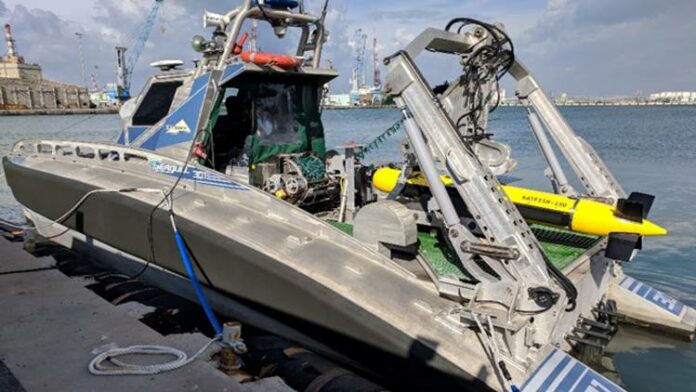
Kraken Robotics Inc., is pleased to announce that its wholly owned subsidiary, Kraken Robotic Systems Inc., has completed a series of successful sea tests of its KATFISH towed Synthetic Aperture Sonar system with Elbit Systems Ltd., a major international defence contractor based in Israel.

Elbit Systems has developed a state-of-the-art Unmanned Surface Vehicle (USV) named “Seagull”. Seagull is a multi-mission USV platform boasting high autonomy levels and modular features, allowing it to be rapidly reconfigured for a wide array of missions – including anti-submarine warfare and mine countermeasures.

Elbit Systems’ Seagull USV is one of the most advanced ocean drones in the world,said Karl Kenny, Kraken’s President and CEO. “With KATFISH integrated on Elbit’s Seagull USV, the system can provide remotely operated, unmanned, end-to-end mine hunting operations. With KATFISH, these ocean drones can detect very small objects hidden on the seabed and enter confined spaces where underwater explosives are likely to be hidden. Since robotic systems can be remotely operated their use can remove people from very dangerous missions – in essence, taking the sailor out of the minefield. Kraken and Elbit are co-operating on a number of international contract pursuits for KATFISH integrated on the Seagull platform.

Some key objectives realized during the KATFISHtests included:

  • Successful operations in sea states of 3 – 4
  • Towing at 7+ knots in shallow 15m water with KATFISH survey depth of less than 6.5m
  • Constant 3cm resolution imagery and 25cm bathymetric resolution, in real time
  • Area coverage rates greater than 2.1 km2per hour
  • 2-Sigma Target Position Error of less than 2.26m (95%)
  • Remote command and control of KATFISH over low-bandwidth wireless link
  • Compressed SAS imagery and bathymetry transmitted in real-time over low bandwidth wireless link
  • Survey operations conducted by supervised autonomy from remote shore-based site
  • Single operator launch and recovery of KATFISH payload in high sea states

Underwater Threats

The underwater defence market is evolving rapidly; responding to changing threats, tensions in the Middle East and Asia, economic and budgetary pressures and a growing trend by emerging navies to deploy asymmetrical weapons. As an example, today’s diesel-electric submarines are quickly becoming one of the biggest threats to naval operations and the $2 trillion commercial shipping industry.

Compounding the threat from stealthy submarines are the hazards posed to worldwide shipping from naval mines and underwater Improvised Explosive Devices (IEDs). A naval mine is a self-contained explosive device placed in water to damage or destroy ships or submarines. 

There are an estimated 80,000 mines in the Baltic that wereleft over from the two World Wars. Some are still active. While their fuses are not operational, the explosive material is still there. If something happens to touch them, they can explode. As recently as 2005, one such mine killed three Dutch fishermen— a murderous reminder of how deadly mines can be, and for how long.

There is one big difference from World War II – the modern naval mine threat is much more sophisticated.Today, stealthy mines made of composite materials in sonar-deflecting shapes lurk amidst the clutter of the sea floor. There are buried mines covered by layers of sand, mud and silt. There are “rising mines” that waitin deep water for a ship to pass overhead, then ascend until they’re within range to fire a torpedo. There are reports that China is working on an anti-aircraft mine that can detect a low-flying helicopter and launch a missile at it.

For over a century, clearing mines has beena brutal, crude and close-up business. For over twenty years, leading navies havebeen increasingly investingin technologies to “keep the sailor out of the minefield” by deployingunmanned systems, both underwater and on the surface.

Countering the Underwater Threat

Kraken’s KATFISH is an actively controlled, intelligent towfish platform used to generate real-time ultra-high definition seabed imagery and maps for a variety of military and commercial applications. Kraken’s products are primarily targeted to the rapidly growing Unmanned Maritime Systems drone market which is primarily comprised of Unmanned Underwater Vehicles (UUVs) and Unmanned Surface Vehicles (USVs).

Until recently, conventional side scan sonars have been the leading technology for detailed mapping and imaging of the seafloor. However, Kraken’s advanced sonar technology called Miniature Interferometric Synthetic Aperture Sonar (MINSAS) is now commercially available and is especially well-suited for military mine hunting missions.  MINSAS delivers ultra-high seabed image resolution (3 cm), simultaneously co-registered 3D bathymetry, and superior area coverage rates. The ability to generate centimetre-scale sonar resolution in all three dimensions has the potential to provide significant improvements in the detection, classification and identification of small seabed objects such as underwater mines and IEDs.

From a platform perspective, towed sonar systems have the benefit of acquiring sonar data to operators at high speed and in real-time. This is a critical feature for mine-hunting operations to enable the earliest possible identification and classification of underwater threats. Onboard processing enables real-time analysis of sonar data, significantly reducing post mission analysis time.

Actively controlled towfish provide a superior platform for seabed survey, particularly when using Synthetic Aperture Sonar. An actively controlled towfish can compensate for input disturbances, greatly improving the towed platform stability and the overall image quality. In addition, intelligently controlled active towfish can control their depth and altitude using intelligent bottom following and bottom avoidance routines.

Placing a survey sensor – such as Kraken’s Miniature Synthetic Aperture Sonar – closer to the seafloor will result in the acquisition of much higher resolution data. When the sensor is integrated to a high speed, intelligently stabilized towed platform such as KATFISH, better quality data is acquired at a faster rate, thus improving efficiency and lowering both operational and data acquisition costs. KATFISH provides the highest resolution seabed pixels at the lowest cost compared to any other competing survey sonar platform.