1.1 C
New York
Home Blog Page 1180

Phoenix Petroleum to Build Philippines First LNG Terminal

0

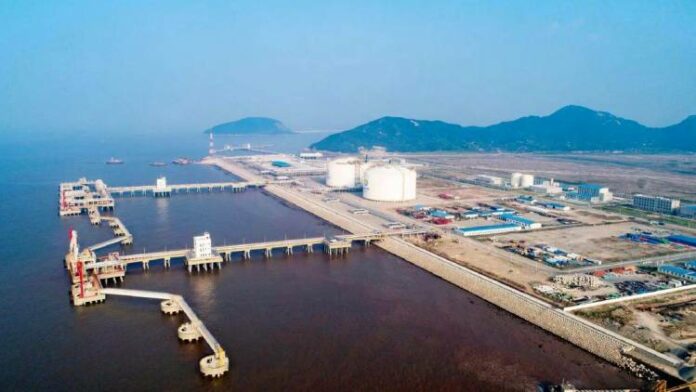
Philippines fuel retailing firm Phoenix Petroleum said it won government approval to build the country’s first liquefied natural gas (LNG) import terminal in partnership with China National Offshore Oil Corp (CNOOC).

The Department of Energy (DOE) has granted notice to proceed (NTP) to their joint venture firm Tanglawan Philippines LNG Inc. to build an LNG terminal in Batangas.

Phoenix Petroleum said in a stock exchange annoucement that it plans to break ground on the facility within the year. The facility has a capacity of 2.2 metric tons per annum, with commercial operations targeted to start in 2023.

Phoenix does not say how much the project will cost, but the government has estimated total investment for such a facility could reach $2 billion.

“The terminal is only stage one of our plans for the facility. We will develop it to become an LNG hub, giving Filipinos access to low-cost and environment-friendly energy supply,” said Phoenix Petroleum chief operating officer Henry Albert Fadullon.

Source:marinelink

US to Become Third Largest LNG Exporter in 2019

0

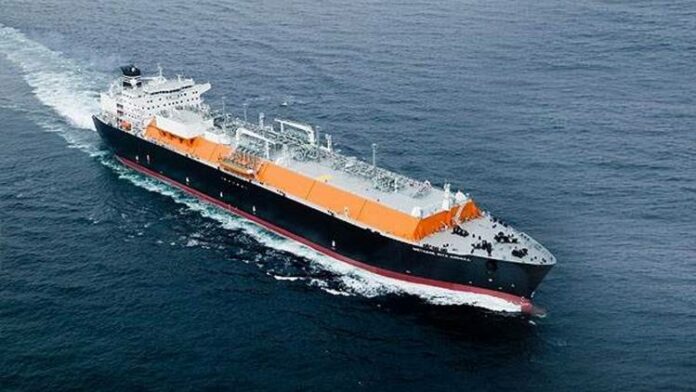
The coming year is expected to make the U.S. the third largest exporter of liquefied natural gas (LNG) in the world, creating jobs stateside while reducing emissions and providing reliable energy to countries around the world, said American Petroleum Institute (API).

API, Center for LNG, and LNG Allies, the three national trade associations specializing in U.S. LNG, today issued a first-of-its-kind joint statement on the extraordinary developments expected in U.S. LNG in 2019.

Todd Snitchler, Vice President of Market Development at the American Petroleum Institute, said: “The dramatic expansion of U.S. LNG exports since 2016 continues to deliver tremendous benefits across America and around the world. With LNG export capacity set to nearly double in 2019, the United States is poised to become a leading global supplier."

"U.S. LNG cargoes have already been delivered to nearly 30 countries around the globe, and with global LNG demand rapidly rising, we expect even more countries to reap the benefits—including reduced emissions—from U.S. LNG in the years to come,” Todd added.

Charlie Riedl, Executive Director of the Center for LNG, said: “The U.S. LNG industry is primed for remarkable growth in 2019, with multiple U.S. projects coming online to nearly double U.S. exports to the growing global market. Because of our massive natural gas resource base, the United States is in a unique position to provide natural gas to eager partners across the globe."

Charlie added: "As DOE’s recent NERA study demonstrates, even as exports grow, the price of natural gas is projected to be only slightly higher in 2040 than it was in 2010.  Most importantly, modest price increases will be significantly outweighed by the positive economic benefits of exports.”

Fred Hutchison, President and CEO of LNG Allies, said: “As American LNG exports increase throughout 2019, thousands of new jobs will be created in the United States, millions of people in the developing world will be lifted from energy poverty, and global greenhouse gas emissions will be reduced as clean U.S. natural gas displaces coal in industrial and electric power applications. When you also factor in the geostrategic and competitive advantages of U.S. LNG—especially in markets that have long been dominated by a monopolistic gas supplier—this is truly a win-win-win situation.”

API is the only national trade association representing all facets of the natural gas and oil industry, which supports 10.3 million U.S. jobs and nearly 8 percent of the U.S. economy.

API’s more than 600 members include large integrated companies, as well as exploration and production, refining, marketing, pipeline, and marine businesses, and service and supply firms. They provide most of the nation’s energy and are backed by a growing grassroots movement of more than 47 million Americans.

The Center for Liquefied Natural Gas (CLNG) advocates for public policies that advance the use of liquefied natural gas (LNG) in the United States, and its export internationally.

A committee of the Natural Gas Supply Association (NGSA), CLNG represents the full value chain, including LNG producers, shippers, terminal operators and developers, providing it with unique insight into the ways in which the vast potential of abundant, versatile LNG can be fully realized.

Source:marinelink

Rig lined up for North Sea Liberator area wells

0

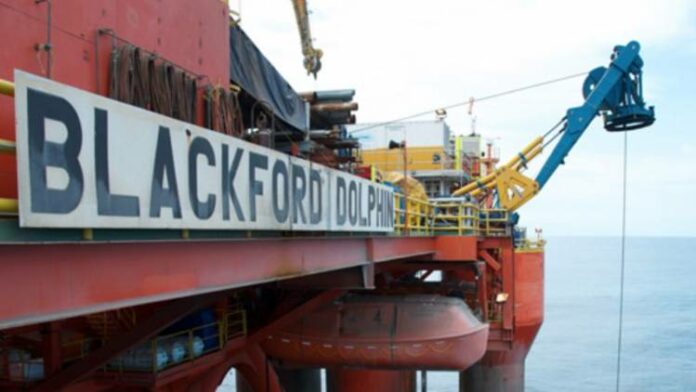
 Dolphin Drilling has a entered a letter of intent with i3 Energy to provide a semisubmersible rig for a three-well appraisal and development drilling program this summer in the UK central North Sea.

Either the Blackford Dolphin or the Borgland Dolphin would spud the first well sometime between June 1 and July 1, the A3 Liberator West appraisal well in block 13/23c.

The rig would then drill and suspend the first Liberator Phase I production well (L2) in block 13/23d and complete the campaign by drilling the S1 well into the Serenity prospect. Dolphin estimates the duration of the campaign at 94 days.

According to i3’s integrated subsurface analysis there appears to be 314 MMbbl of in-place oil at the Liberator field and 197 MMbbl in Serenity (based on oil column thickness). If A3 proves to be successful, the company would be able to convert part of Liberator West’s resources into reserves and determine the location for the second Phase I production well (either L4 or L1).

This could be brought onstream in tandem with the L2 well at a potential combined rate of up to 20,000 b/d of oil in mid-2020, followed by a third Phase I production well in mid-2021.

The well on Serenity will target a potential extension of the Tain discovery, an unclosed oil-bearing structure just to the east where there are four well penetrations.

Both A3 and S1 will also allow the company to determine the optimum size of a standalone FPSO envisaged for a potentially enlarged Phase II development, encompassing Liberator and Serenity.

Positive appraisal and development of these fields could deliver more than 200 MMbbl from the licenses, the company added.

i3 is negotiating for use of the leased FPSO Bleo Holm via the Ross field infrastructure, and on terms for the Liberator Phase I construction, tie-in, transportation, processing and operating services agreements.

All will likely be finalized alongside approval from the UK’s Oil and Gas Authority for the field development plan.

As a fallback option, i3 has also executed a memorandum of understanding for another FPSO for Liberator Phase I which would be leased, reducing the reliance on access to third-party operated infrastructure.

Negotiations continue on a farm-out process with further companies set to enter the process in January.

Concurrently, i3 is working on agreements to draw on finance of $100-$130 million, of which up to 25% would be available toward this year’s drilling (estimated to cost around $41 million), with the balance applied to the Liberator Phase I production wells, subsea installation and field tie-in.

Source:offshore-mag

South Pars Phase 14 platform nearing completion

0

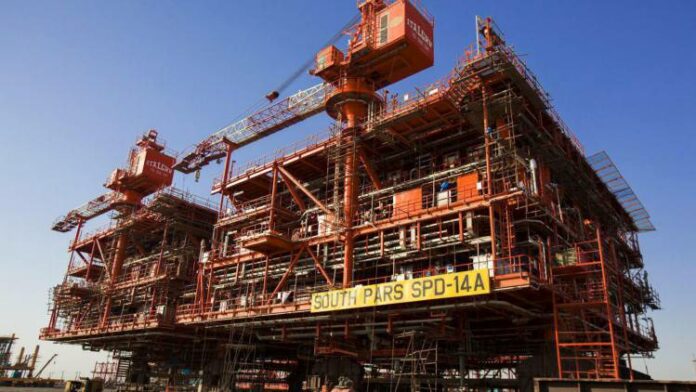
 Pars Oil and Gas Co. (POGC) expects to install platform 14B of the South Pars Phase 14 development in the Persian Gulf by March 20.

POGC official Hamidreza Masoudi told news service Shana that development drilling for the project was more than 83% complete, with production of sour gas from the phase at present of 28 MMcm/d, above exceeded expectations.

Drilling operations at the platform 14B have finished, he added.

Currently the structure is in the final stages of fabrication at the ISOICO yard in Bandar Abbas, undergoing preparations for loadout and installation.

Source:offshore-mag

Hornsea 2 applies for UXO clearance

0

Orsted has applied to marine authorities to commence a UXO clearance campaign at its 1400MW Hornsea 2 development off east England.

The developer is looking to clear up to 120 items from across the project's array area and export cable corridor across two separate campaigns between March and September of this year and next.

Offshore construction at the project, which will feature 165 Siemens Gamesa 8.4MW turbines, is set to begin in 2020.

The wind farm, located 89km off the Yorkshire coast, is due online in 2022.

Contractors working on the project include Balfour Beatty, which is building the onshore substation, VolkerInfra, which is supply onshore cables for the wind farm and Nexans, which is supplying near shore cabling.

In December, France-based Louis Dreyfus Armateurs contracted Norwegian offshore crane provider TTS to supply a new service operations vessel that will work on Hornsea 2.

Source:renews

Waves4Power eyes cable route to success

0

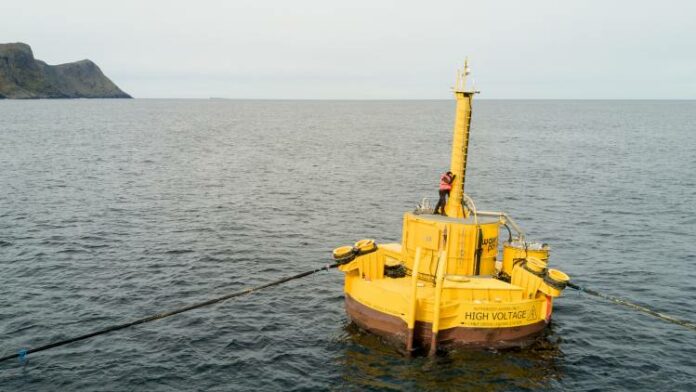
Swedish wave developer Waves4Power is to diversify into cable solutions as it prepares to redeploy its around 100kW prototype off the Norwegian coast by the summer.

Former chief executive Emil Christiansen, who stepped down from his role on 1 January, is to lead the new, as-yet unnamed spin-off, which will develop dynamic cables for connecting grid power to fish farms in collaboration with NKT Cables.

Christiansen will be assisted by another former Waves4Power supremo, Ulf Lindelof, at the new subsidiary, which will use the parent company’s parts, patented technology and know-how to developer fish farm connections.

Waves4Power will continue to develop its point absorber generation technology led by new chief executive Jonas Kamf.

“Together with NKT Cables, we have developed a special dynamic cable for wave power systems that face the same kind of problems as connecting fish farms,” said Kamf.

NKT Cables is not expected to have a direct investment in the new company aimed at fish farms at least 1km from shore, added Kamf.

Waves4Power, meanwhile, will redeploy from the spring its 100kW WaveEL 3.0 device, which will feature modifications to the 42-metre long steel buoy and power take-off and renamed the WaveEL 3.1, off the Norwegian island of Runde.

After launching the WaveEL 3.1 buoy, development work on the first iteration of its commercial-scale device – the around 300kW WaveEL 4.0 – will resume.

Source:renews

Scots wave duo set for Orkney party

0

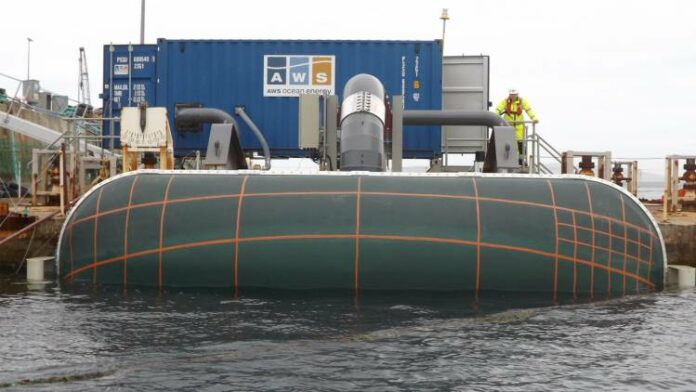
Wave Energy Scotland has picked AWS Ocean Energy and Mocean Energy to deploy half-scale wave energy machines at the European Marine Energy Centre off Orkney by 2020.

The companies will receive a share of £7.7m from Wave Energy Scotland for the projects.

Wave Energy Scotland said it is anticipated that the deployments will lead to full-scale development in the years ahead.

Mocean’s Blue Horizon system is a floating hinged structure, while AWS has developed a fully-submerged point absorber called Archimedes Waveswing.

The winning designs were selected over a course of four years out of eight original concepts that were then narrowed down to four and finally two.

Wave Energy Scotland managing director Tim Hurst said: “These state-of-the art designs represent the most advanced, and innovative devices in the UK today, and our programme is ensuring that Scotland stays front and centre of the global wave energy story."

Both devices have already proved their suitability during tank testing and in modelling and the next step is to test them in real-sea conditions.

“This funding will allow both companies to further develop their designs before building and testing the prototypes in Orkney in 2020, where marine engineering expertise is plentiful."

“The European Marine Energy Centre in Stromness will provide the specialist technical support needed to assess the devices’ performance.”

Scottish Minister for Energy, Connectivity and the Islands Paul Wheelhouse said: “With 465,000 square kilometres of seas in Scotland’s Exclusive Economic Zone, Scotland’s capacity to generate wave power is very considerable indeed and wave energy devices represent real game-changers for the industry not only here in Scotland but on a global scale."

The deployment of these two devices will represent a strategically important milestone for Scotland, demonstrating technical progress that will support identification of the most cost-effective technologies and encouraging private sector investment in this emerging industry.

With our skilled supply chain and expertise in energy innovation, Scotland is ideally positioned to both support and benefit from the expansion of the marine energy sector domestically and globally.

“I very much look forward to seeing the progress of both devices in the coming months.”

Source;renews

Hapag-Lloyd say Yantian Express fire brought under control

0

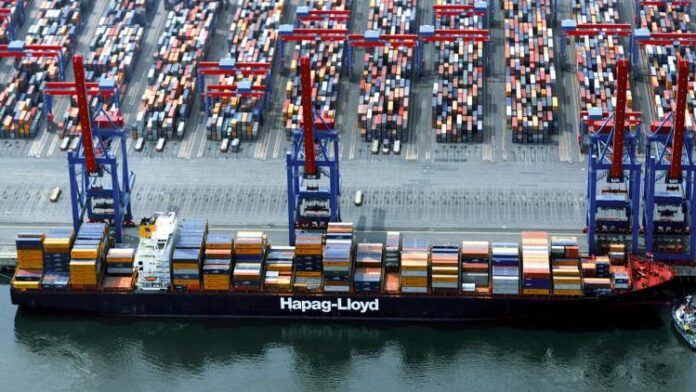
Hapag-Lloyd says that the container fire on the vessel Yantian Express that started on 3 January has been brought under control.

Working with salvage company Smit the fire, which started in a single container and spread, has been largely contained and brought under control according to Hapag-Lloyd.

While the crew of the vessel was evacuated to the salvage tug Smit Nicobar five transferred back to the Yantian Express on Wednesday evening.

The Yantian Express is currently being towed at “slow speed” by the tug Maersk Mobilser to the Port of Halifax and remains about 800 nm off the coast of Canada. A third ocean tug is expected to arrive around 13 January to assist in the towage operation.

While Hapag-Lloyd said it was not possible to make a precise to any damage to the vessel or its cargo more details were provided by partner Ocean Network Express (ONE).

“Based on current available information, we have to assume that all cargo in bay 12 on deck and forward is directly affected by the fire, as well as all cargo in Hold 1 (Bay 1 to 9). Furthermore, we have to expect that all cargo in Hold 2 (Bay 11 to 17) is affected by fire, smoke and / or damage caused by firefighting water,” ONE said in an advisory to customers.

It added that damage caused by smoke, heat and/or firefighting in adjacent areas was possible and that all reefers in Bays 1 – 24 were without power and switched off.

Source:seatrade-maritime

Cosco Shipping Development in sale and leaseback of four boxships

0

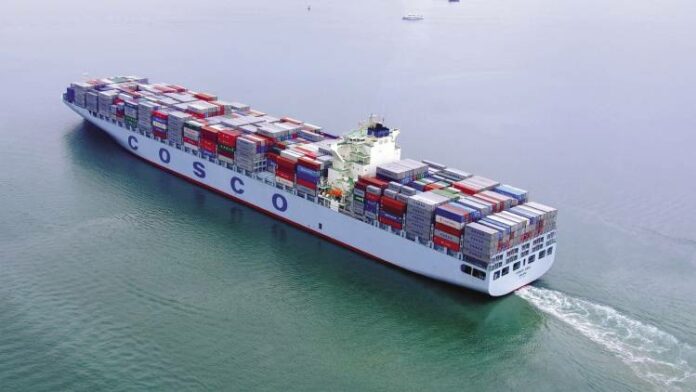
Cosco Shipping Development has announced that the company has entered into the sale and leaseback arrangement for four container ships via its subsidiary to provide funds and expand financing channels.

Cosco Shipping Development (Hong Kong), a subsidiary of Cosco Shipping Development, will sell four container ships via its four single vessel company CSCL Spring Shipping, CSCL Summer Shipping, CSCL Winter Shipping and CSCL Bohai Sea Shipping Co, and leaseback the four ships from the subsidiaries of Financial Products Group (FPG).

Each of the four single vessel companies is incorporated in Hong Kong and an indirect wholly owned subsidiary of the Cosco Shipping Hong Kong.

The aggregate transaction price is $267m (equivalent to approximately HK$2.09bn).

The deal allows the group to obtain additional financing with the vessels and expands the company’s financing channels. The proceeds from the transaction will be used for the general working capital of the group, Cosco Shipping Development stated in a filing.

Source:seatrade-maritime

Damen Completes Refit of Cunard’s Queen Elizabeth

0

Cunard’s Queen Elizabeth has left Damen Shiprepair Brest (DSBr) following a 12-day repair and refit program. She is the most recent addition to the Cunard fleet, having been delivered in 2010.

The program was highly intensive with a series of major systems being overhauled or installed. On arrival the ship was placed in Damen Shiprepair Brest’s drydock number 3, one of the largest in Europe at 420 meters, and the relevant manufacturers began immediately on maintenance to her stabilizers, ABB Azipods, bow thrusters and water intakes.

Meanwhile, above the waterline work was going on to install twin exhaust gas cleaning systems (EGCS) which, along with all the pipe and ducting work, involved the removal of two cabins to accommodate the additional equipment. Inside the vessel, the refurbishment included a series of cabins and corridors, along with the ship’s spa and part of the retail provision. Ashore, DSBr performed routine maintenance to Queen Elizabeth’s lifeboats, liferafts and tenders, and the yard also cleaned and repainted the hull and topsides of the ship.

The project represented a major logistical operation, with multiple third-party teams working alongside the DSBr personnel and each other. In total, around 250 people were at work on the project. Large quantities of materials flowed on board the vessel while substantial amounts of waste came ashore for disposal as the cabins were refurbished. DSBr’s experienced project management team ensured that everything went smoothly and that a series of large temporary shelters were available for the contractors’ use.

In the event, the program was completed a day early, with Queen Elizabeth back at her home port of Southampton on the morning of November 27th.

Source:marinelink