1.1 C
New York
Home Blog Page 1179

Oil and Gas in 2019 – A time of Transition

0

During 2018, volatility marked the global oil and gas sector. Dramatic swings in oil price – from 2015-level highs to vast one-day drops, combined with geopolitical maneuvers, changing global supply and demand trends and mountain budget pressures feed instability in the sector. 

And yet, market conditions served as a catalyst for the industry’s continued evolution and transformation, and there is now a sense of cautious optimism moving into 2019. Operators are working to adapt to major foundational shifts: the decline of hydrocarbons and the rise of renewables, the advance of digitalisation and what this means for workers and processes and new technologies to streamline operations and boost efficiency. 

Offshore operators and service providers must be aware of the key trends and opportunities to continue to successfully navigate the challenges and ensure profitability:

1. Outsourcing

Current market conditions have created an environment more keenly focused on price than ever before. Due to tightening margins, oil and gas players are under greater pressure to reduce expenditures. 

The industry is increasingly outsourcing projects and tasks that historically were managed in-house in a bid to reduce headcount and related costs and to refocus on their core competencies. 

So, they need service providers who they can rely on to provide key value-added services in support of their day-to-day operations. Not only must they have the operational maturity and capacity to handle projects, they need in-depth local knowledge of the offshore market as well as their partners’ and clients’ businesses. 

2. An industry in transition / Short-term contracts

The recent tough times for the oil and gas industry meant many big offshore infrastructure projects were not signed-off, there was a fall in maintenance calls and more rigs and other equipment was laid-up, either in warm lay-ups (better suitable for the short-term but with continued staff and maintenance costs) or cold lay-ups (more suitable for the long-term, but with higher reactivation outlay). 

The choice of lay-up location also influences how much work is needed to bring a vessel back into service. Service providers must be ready, willing and able to adapt to unpredictable and turbulent conditions whether it might be for crewing, resupply, repair or any other job for which they are called upon.

In the current market, many offshore operators are unwilling to plan for the long-term, so a new trend is emerging for short-term contracts over three to six months to mitigate the perceived risks. 

3. Demonstrating value-add 

More than 350,000 jobs have been lost worldwide in the sector. Operators’ resources have shrunk in parallel, with a direct impact on the entire supply chain, with operators demand greater service provision for less outlay. 

That’s why it is more important than ever before to demonstrate added value. Service partners must expect a more complex and demanding tendering process to show off what extra value they offer, as well cost efficiency, coverage, experience and added solutions. 

4. Technology

Increasingly, digitalization is a driver for business change in oil and gas. Embracing the digital revolution can be the factor that makes the difference between thriving or floundering for companies serving the sector, as offshore operators seek ways to transform their operating models to achieve greater efficiency and faster turnaround. 

The benefits are clear – increased productivity, safer operations, improvements in collaborations and maintenance, and cost savings – and they’re now being increasingly recognized. Data has become a commercial driver and a commodity for the sector in its own right. For example, upstream companies are leveraging data insights to discover new oil fields or improve and optimize their processes. 

As a result, operators expect higher levels of technology adoption than ever before from their service partners. And with the focus on transparency and visibility, providers must be able to adapt to the demands of the industry in the digital space to match or surpass in-house capabilities. 

Cautious optimism for 2019

As we head into 2019, there is a growing sense of optimism in the sector, with headlines talking about slow, steady growth and stability in the market. That cautiously upbeat mood was further reflected in a recently published KPMG report which noted that 85 percent of oil and gas CEOs had confidence in the industry’s growth. 

Moody’s 2019 outlook for the sector sounds a similarly optimistic note, reporting that upstream operators are starting to increase production, in turn helping midstream businesses and service providers. Overall, Moody predicts relative stability for the integrated oil and business over the next 12-18 months. 

According to Rystad Energy, the outlook for offshore oilfield service contractors is strong. The consultancy notes that more than 100 new offshore projects are aiming for 2019 sanctions, and an expected $210 billion will be spent on offshore oilfield services globally in the coming year. 

Real differentiation will be marked by those who are able to adapt, whether on the operational or supply side. As the oil and gas industry seek different approaches to recovering their bottom line, service providers who can remain flexible and work with pace will be the ones that stand out from the competition and thrive in the years to come. 

Source:maritime-executive
Divers Search Damaged Tanker for Missing Crewmembers

0

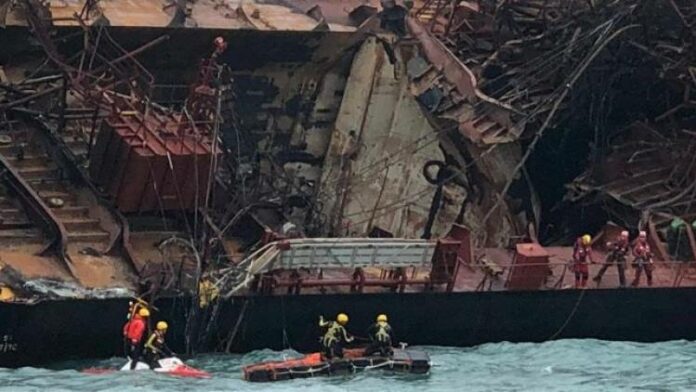
Emergency response teams are still searching for two crewmembers from the product tanker Aulac Fortune, which caught fire and exploded off Hong Kong on January 8.

Dive crews are searching the Fortune's number four cargo tank, which was one of three ripped open by the blast. The missing men are believed to have been working on the main deck above the tank at the time of the explosion. 

The damaged tanks are filled with up to about 20 feet of water and petroleum, according to the department. "Due to the impact of oil pollution, there is zero visibility at the bottom of the holds," the agency said in a statement. 

At a press conference Friday, emergency response officials described a hazardous search environment. The damaged tanks are filled with jagged wreckage, and wind, currents and wave action lead to movement of metal fragments within the spaces. Due to the extensive damage and the vessel's 30-degree list, the tanks are not easily accessible from deck, and the Hong Kong Fire Services Department has assigned a high-angle rescue team to rig lines and lower divers into each compartment.

The Vietnamese product tanker Aulac Fortune arrived off Lamma Island, Hong Kong on Tuesday morning for a bunkering stop. She exploded at 1130 hours, and residents reported that the blast was forceful enough to rattle windows on several nearby islands.  

The crew abandoned ship into the water, and first responders rescued 23 survivors, including four injured crewmembers who have been hospitalized. One crewmember has been confirmed dead, and an additional two remain missing.

Source:maritime-executive


Abundance closes largest investment to date for Orbital Marine Power

0

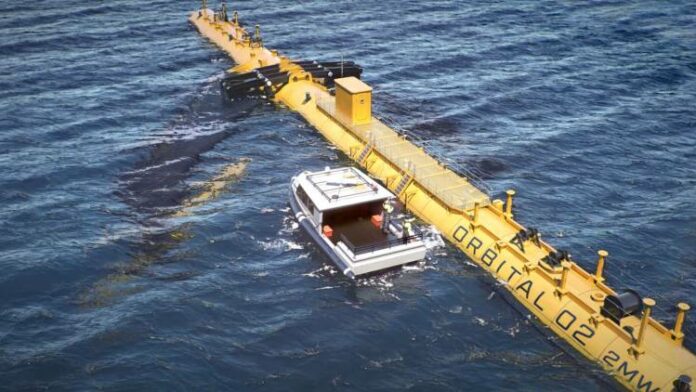
The UK’s leading peer-to-peer ethical investment company Abundance has closed its largest fund raise to date, raising £7 million for innovative Scottish tidal energy company Orbital Marine Power (Orkney).

Orbital Marine Power (formerly Scotrenewables Tidal Power) will use the funds raised to build its first production model Orbital O2 2MW turbine, an innovative floating tidal turbine platform that can be towed, installed and easily maintained. The project already has secured a number of supporting grants as well as equity funding, including from the Scottish Government.

The Abundance offer of 2.5-year debentures with an annual return of 12% attracted 2,278 individual investors, with over half investing via an Innovative Finance ISA for a tax-free return. The average investment was approximately £3,000, with the project attracting particularly strong interest from investors in Scotland who put in 50% more on average, at £4,500.

Andrew Scott, CEO, Orbital Marine Power, said: “We are delighted with this funding result; it’s a terrific endorsement of our technology and a clear signal that the UK public is hugely supportive of seeing tidal energy brought into the domestic and global energy mixes. The whole team at Orbital Marine are excited to be moving forwards with this flagship project and deliver the first O2 unit for costs similar to offshore wind and so provide the basis for a new and sustainable industry. This a journey we are now honoured to be taking with thousands of new investors, thanks to Abundance.”


Container ship YANTIAN EXPRESS fire UPDATE

0

According to latest HAPAG-LLOYD statement, 5 crew were transferred back to YANTIAN EXPRESS, presumably on Jan 11. Fire said “to be largely contained and brought under control”. 

Most probably, crew were transferred to container ship to facilitate towage and for a general reconnaissance. Maybe they remained on board, maybe they returned back to SMIT NICOBAR. It does seem like towage is ongoing, however slow and difficult. Average convoy speed on Jan 12 is 3 knots, with some 1100 nm distance to Halifax, assumedly port of destination, it’s some 2 weeks sailing, if weather permits. 

BIMCO: EU, China, US need to boost anti-piracy efforts in Gulf of Guinea

0

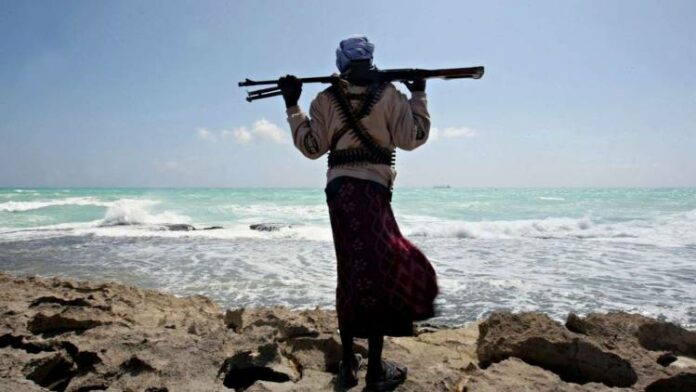
A week after the abduction of six crew members from the container ship MSC Mandy off Benin, BIMCO stressed that piracy in the Gulf of Guinea is an unacceptable burden to seafarers and shipping companies and asked, on behalf of its members, that maritime powers increase their presence and expand their collaboration with local states to curb piracy.

Around 40 ships have been attacked in the Gulf of Guinea in the past 12 months, while the area is a key area of concern for crew abductions. On the most recent of cases, on 2 January, pirates attacked the MSC Mandy while transiting Gulf of Guinea on its way to Nigeria, and kidnapped six crewmen.

"We look towards the EU, China and the US to join forces and deploy naval capacity in the Gulf of Guinea to end this constant threat to seafarers,".…noted Jakob P. Larsen, BIMCO Head of Maritime Security.

Under the 2013 Yaoundé Code of Conduct, inspired by the UN Security Council Resolution 2018 (2011) and 2039 (2012), states in the Gulf of Guinea recognized that piracy constituted an issue and initiated several initiatives to strengthen maritime security.

More specifically, several capacity building initiatives have been started in the region since the Yaoundé Code of Conduct was agreed, but the actual security situation in the Gulf of Guinea is still not good.

"BIMCO remains very thankful to the regional navies who are working tirelessly and with great sacrifice to secure their seas. While these efforts command our deepest respect, pirates in the Gulf of Guinea can still operate largely unchecked in the open seas, outside of the territorial waters, and on occasion even strike inside territorial waters."

According to Mr. Larsen, one of the reasons is that other security challenges in the region, such as land-based terrorist threats, generate a high demand for law enforcement resources. In addition to the strain put on seafarers, the current situation negatively impacts the economic potential of the sea of the countries in the region.

"It is time to step up law enforcement efforts, establish control of the sea in the Gulf of Guinea, relieve seafarers from the threat and the psychological pressure, and allow the countries in the region to harvest the full economic potential of the seas,"…Mr. Larsen notes.

International sea and air law enforcement assets, such as naval ships with helicopters, will be able to deliver a concrete and rapid contribution to the maritime security situation. If such assets were supported by onboard regional law enforcement officials in charge of the law enforcement element, operations could be conducted without infringing on the regional states’ sovereignty.

"While longer term capacity building efforts are commended, what is needed now is substantially more assets at sea and in the air. It is an obvious solution which can deliver the necessary effect with the desired speed, without compromising the territorial integrity of the countries in the region,"…Larsen says.

Source:safety4sea

Pulp terminal to be built at Port of Montevideo

0

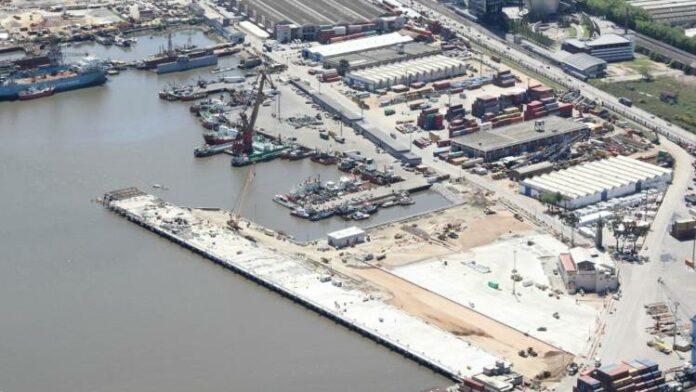
UPM will participate in the international public tendering process in the port of Montevideo organized by the National Ports Administration (ANP) of Uruguay. The goal is the building and operation of a port terminal specialized in the storage and shipping of pulp, chemicals and other inputs regarding pulp production with a capacity to handle approximately 2 million tonnes of pulp annually.

The tender includes the design, financing, engineering, construction, operation and maintenance of the pulp terminal. The tenure of the concession would be for 50 years.

According to the company, modern facilities in the Montevideo deep sea port will offer a competitive gateway from South America to increasing export markets benefiting the Uruguayan economy.

An investment agreement was signed with the Government of Uruguay in 2017. As part of this agreement, Uruguay will promote concession for a terminal specializing in pulp in the Montevideo port with rail access. The pulp mill would have an annual capacity of about 2 million tonnes of eucalyptus market pulp. The initial estimate for a pulp mill investment on site is around EUR 2 billion.

Two preparation phases will have to be successfully completed before UPM makes a final investment decision. The second preparation phase is currently ongoing. If these two preparation phases are concluded wit success, UPM will analyse and preparing an investment decision.

If awarded a concession in the Montevideo port, UPM's financial commitment will be at USD 20 million at this stage. The preliminary UPM investment estimatation for the port facilities would be at about USD 260 million.

Source:safety4sea

GasLog doubles up on LNG carrier newbuilds for Cheniere

0

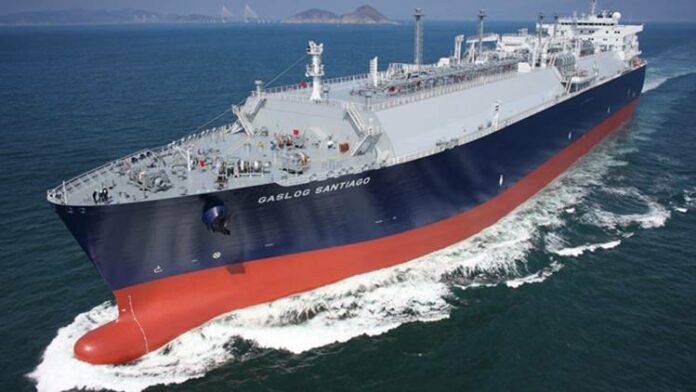
GasLog, the Monaco-based specialist in LNG carriers, has doubled up on its shipping relationship with Cheniere Energy by ordering two more newbuilds that will go straight into firm, seven-year charter party agreements with the Texas producer as soon as they are launched.

The latest orders with Samsung Heavy Industries bring to four the number of newbuilds GasLog has commissioned under pre-arranged charter party deals with Cheniere. “The four newbuilds we have on order for Cheniere will provide further support for their leading position in US LNG exports,” said chief executive Paul Wogan in a statement.

Just two weeks before GasLog placed the orders with Samsung Heavy Industries, Cheniere subsidiary Sabine Pass Liquefaction signed a heavyweight 20-year sale and purchase deal with Malaysia’s Petronas that will see Cheniere deliver 1.1 mta of LNG at a purchase price indexed to the monthly Henry Hub rate, plus an unspecified fee.

The latest announcement means that GasLog ordered seven newbuilds in 2018, six of which are heading for long-term charters. To date, the group’s consolidated fleet includes 14 LNG carriers operated by its subsidiary, GasLog Partners. A 15th LNG carrier was sold to a subsidiary of Mitsui Company and leased back under a long-term bareboat charter.

GasLog cites a number of factors that support its growing ambitions as the group meets its bankers’ earning and debt repayment targets. “Attractive LNG shipping market fundamentals, the strong liquidity position of the GasLog group, and increasing debt capacity due to scheduled amortisation underpin the funding strategy for our newbuild programme,” the company said. “As a result of our activities in 2018, we have made substantial progress towards meeting our target of more than doubling consolidated EBITDA over the 2017-2022 period.”

Healthy charter rates also lie behind GasLog’s rapid growth. All of its newbuilds as well as the currently chartered GasLog Sydney will benefit from multi-year deals written “broadly in line with mid-cycle rates that deliver returns [that meet] GasLog’s financial strategy,” the company said.

The latest orders specify 180,000 mvessels with low-pressure two-stroke propulsion. The cargo containment systems will be provided by GTT’s Mark III Flex Plus technology.

Source:lngworldshipping

Maersk Supply Service to support Chevron’s Gorgon Stage Two

0

Chevron Australia has contracted Maersk Supply Service to support its Gorgon Stage Two drilling programme, it was announced on 9 January.

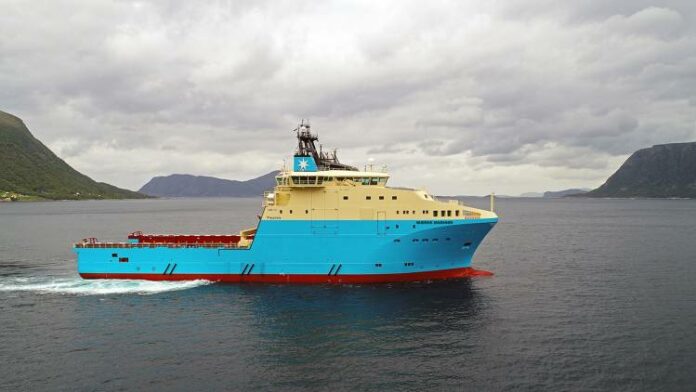
Two Starfish-class AHTS vessels will provide towing, anchor handling, supply and ROV services for Chevron’s activities in the Northwest Shelf offshore Western Australia from Q2 2019.

The vessels, Maersk Mariner and Maersk Master are already in Western Australia – since September 2017 in Maersk Mariner’s case and since March 2018 in Maersk Master’s case. They will be operated by local crews and supported from Maersk Supply Service’s Perth base.

The contracted AHTS vessels were the first two deliveries in Maersk Supply Service’s Starfish newbuild series.Three sister vessels, Maersk MoverMaersk Minder and Maersk Mobiliser are also in service and another vessel is expected to be delivered in early 2019.

Maersk Master was named Vessel of the Year at the Offshore Support Journal Conference & Awardsindustry gala in London in February 2018.

Built for deepwater operations, the Starfish vessels are 95 m long, with a beam of 25 m and are equipped with a raft of innovative features including an anchor-recovery frame that simplifies operations over the stern roller and a remotely operated deck-handling gantry crane.

Maersk Supply Service Asia-Pacific head of commercial, Asia-Pacific, David Lofthouse said “We are proud to have the opportunity to utilise the advanced capabilities of these new vessels to deliver a superior service and contribute to the offshore development of this important project for the region.”

Source:osjonline

Equinor Closes UK Rosebank Acquisition From Chevron

0

Equinor ASA said Jan. 11 it had completed the acquisition of Chevron Corp.’s stake in the U.K. Continental Shelf project, Rosebank, for an undisclosed sum.

The acquisition of Chevron’s 40% operated interest was initially announced in early October and came as Chevron was looking to shrink its presence in the North Sea.

Rosebank is one of the largest undeveloped oil and gas fields off Britain. Chevron has estimated that the field, situated some 130 km (80 miles) northwest of the Shetland Islands, could hold more than 300 million barrels, a Reuters report on Oct. 1 said.

Reuters also reported that the Rosebank project is currently estimated to cost over $6 billion, citing consultancy firm Wood Mackenzie.

The other partners in the field are Suncor Energy Inc. with 40% and Siccar Point Energy with 20%. Siccar Point is seeking to sell at least half of its stake.

In a statement on Jan. 11, Equinor said the Rosebank acquisition “further strengthens Equinor’s U.K. upstream portfolio which includes the Mariner development, expected to start commercial production during the first half of 2019.”
Source:epmag

First European Shipper Signs Green Shipping Guarantee Program

0

The European Investment Bank (EIB) announces the signature of the first agreement under its Green Shipping Guarantee Programme (GSGP) through ABN Amro.

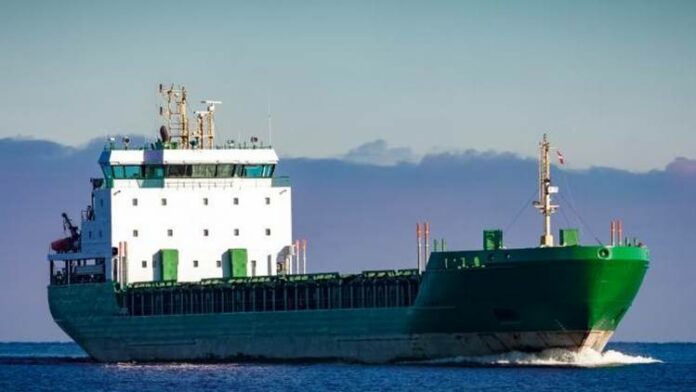
The EIB will contribute EUR 10.1 million to an ABN AMRO arranged facility to finance the construction of three cement carrier vessels for the Eureka Shipping group, said a press release.

The project vessels’ design represents an improvement to the overall environmental performance of the promoter’s fleet, as well as cement carrier vessels currently operating in European waters. The new vessels, which will be laid up in the Netherlands, will operate with significantly better fuel efficiency and reduced emissions of pollutants.

All three new ships will be built and operated in compliance with IMO and EU regulations and will operate under an EU flag. They will serve northern European ports, predominantly in the Sulphur Emission Control Areas (SECAs) of the Baltic and North Sea.

The project will contribute to a modal shift in which, instead of by road, goods are transported by sea, which is considered to be the most sustainable transport mode for this type of cargo. This will help to reduce the overall climate impact of transport, and specifically the promoter’s carbon footprint.

Source:marinelink