1.1 C
New York
Home Blog Page 1178

DP World Acquires Chilean Ports

0

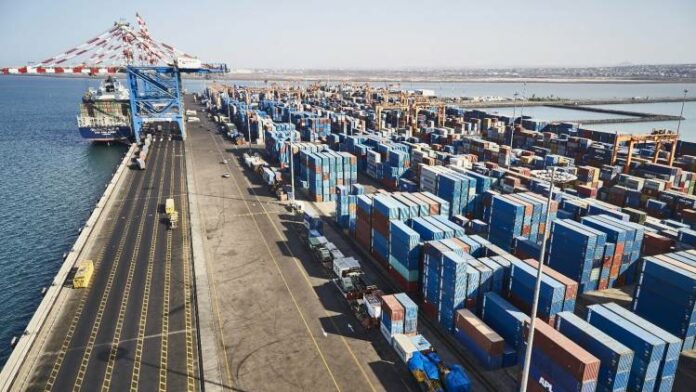
Dubai-based port operator DP World says it will buy a 71.3 percent stake in Chile's Puertos y Logistica SA, taking control of two key port terminals in the South American state.

According to a filing on Nasdaq Dubai, where the state-owned port operator is listed, the group bought the 71.3% stake from Minera Valparaiso and other shareholders associated with Chilean conglomerate, the Matte Group.

The statement quoted DP World Group chairman and CEO Sultan Ahmed bin Sulayem as saying the deal allows his firm now to serve customers at five key points in South America.

"Under the tender process DP World will offer [US$502mn] in consideration for 100% equity ownership. As of 30 September 2018, Pulogsa had net financial debt of $226m. The acquisition is expected to be earnings accretive in the first full year of consolidation and it will be financed from existing balance sheet resources. The transaction is subject to relevant third party consents and is expected to close in the first half of 2019" said the statement.

Pulogsa operates a long-term concession for Puerto Central (PCE) in San Antonio, in Chile’s Central Region V as well as owning and operating Puerto Lirquen (PLQ) in Chile’s Southern Region VIII.
PCE is a multipurpose terminal located in San Antonio, which is a gateway to the Chilean capital Santiago and to leading industrial, commercial and agricultural businesses. PCE is one of the country's largest container ports (over 1MN TEU capacity) with recent infrastructure investments, making it the most modern terminal in Chile. PCE has the potential for further capacity expansion for both container and non-container operations.

PLQ is a multipurpose terminal incorporating long term maritime concessions with freehold land ownership, which handles containers, break-bulk and dry bulk. The port is strategically positioned to benefit from the well-established pulp and lumber industry in Southern Chile, next to the country’s second largest city and industrial hub Concepción.

Source:marinelink

Pipelayer Star Centurion sinks after collision with Pertamina tanker

0

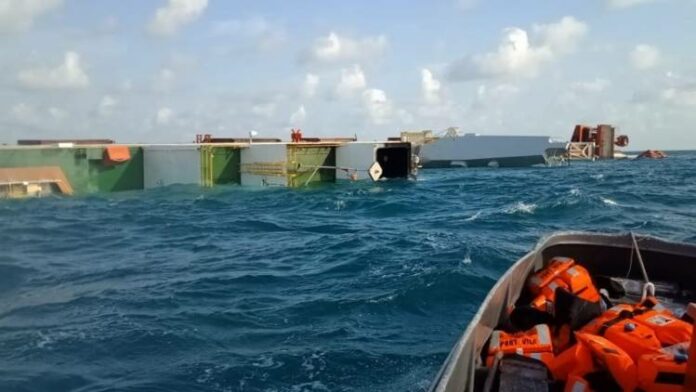
The pipelayer Star Centurion, part of the fleet of Vallianz Offshore, has sunk following a collision with a Pertamina tanker off Indonesia.

The Vanuatu-registered pipelayer was involved in a collision with the Hong Kong–registered tanker, owned by Indonesian state-oil firm Pertamina on Sunday morning near the Indonesian island of Bintan.

According to reports the Star Centurion capsized and sank within hours of the collision. The 20 crew on board the pipelayer were reported to have been rescued by the Singapore authorities after the accident was reported to the International Fusion Centre in Singapore.

The Star Centurion was working on an underwater pipeline and according to the Equasis database managed by Vallianz Offshore in Singapore.

Source:seatrade-maritime

Bankrupt Hanjin Philippine yard draws Chinese interest

0

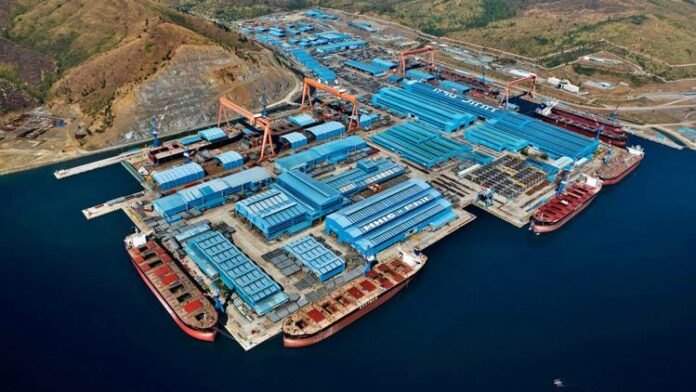
The recent insolvency of the Philippine yard of South Korea’s Hanjin Heavy Industries & Construction (HHIC) has stirred interests of investment from Chinese companies, reports said.

Last week, HHIC-Phil filed for a rehabilitation procedure with a Philippine regional court as it collasped under debts of over $400m owed to banks.

The local media cited Philippine trade undersecretary and board of investments managing head Ceferino Rodolfo as saying that the agency was in touch with two Chinese companies that have earlier expressed interest in opportunities in shipbuilding in the Philippines.

Rodolfo said both companies, which are operating shipyards in China, are considering investing into HHIC-Phil.

Trade secretary Ramon Lopez was reported saying that the trade department is providing support by linking potential investors with HHIC-Phil.

Our first objective is to replace with another shipbuilder that will take over,” Lopez was quoted saying.

HHIC-Phil had been building containerships, gas carriers, tankers and others from its 300-hectare Subic shipyard before its downfall.

Source:seatrade-maritime

Rolls Royce’s Autonomous Ship Gives Us A Peek Into The Future Of Sea Transport

0

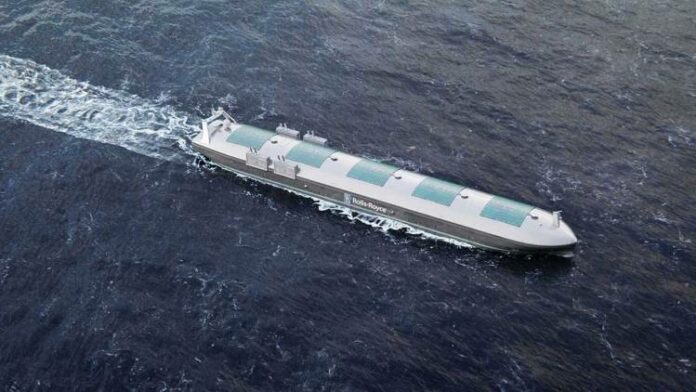
Rolls-Royce, the luxury auto and aviation propulsion system maker, is on the cutting edge of the autonomous marine vehicle market with their successful test of the first fully autonomous ferry.

The company, in conjunction with the state-owned ferry line of Finland called Finferries, took 80 dignitaries (but no crew) on a joyride around the archipelago south of the Finnish city of Turku on their 178-foot long ferry named Falco. The successful demonstration took place in early December.

According to their press release:

The vessel detected objects utilising sensor fusion and artificial intelligence and conducted collision avoidance. It also demonstrated automatic berthing with a recently developed autonomous navigation system. All this was achieved without any human intervention from the crew.

The company’s marine division already manufactures products for 30,000 commercial merchant, fishing, Coast Guard, and research vessels, including automation and control mechanisms, cranes, and deck machinery.

While their ongoing projects in ship design, operations, and management are set to change the safety and efficiency of sea travel, it’s their ambitious new Ship Intelligence system that will likely have the largest payoff. This project is split into two parts – Intelligent Asset Management and Remote & Autonomous. More testing for this new autonomous technology is taking place in Norway and Finland following last month’s VIP trial tour.

The goal of the new AI ship upgrades is to reduce human error, enhance safety, and improve the environmental footprint of large marine vessels. According to the company’s publicity materials:

We believe remote and autonomous ships will be safer, more efficient and cheaper to build and operate. Our solutions will reduce human-machine interaction by automating tasks and processes, while keeping the human at the center of critical decision-making.

The company is also developing what they call “health management software” for their fleets:

This pioneering hardware and software solution aims to reduce a vessel’s asset ownership costs by monitoring analyzing equipment data. It alerts customers to imminent issues, enabling them to perform predictive maintenance and operate more safely and efficiently.

And while the goal of the project is to eventually hand over operation of ships to AI software, the company understands the need for humans to stay in the loop:

“Remote and autonomous ships will be safer, more efficient and cheaper to build and operate. Our solutions will reduce human-machine interaction by automating tasks and processes, while keeping the human at the center of critical decision-making.”

Rolls-Royce lists the benefits of this new AI technology in their specs sheet, telling customers that they can expect the technology to help ameliorate the “growing maritime skills shortage,” and make seafaring jobs more attractive to young people. However, they also expect that cargo vessels will no longer need systems such as heating and ventilation to support a crew.

It remains to be seen how important humans will be in the future of shipping. As it stands, it appears that these vessels won’t need any human crew, just land controllers to monitor and intervene if problems arise. This would certainly allow more people with families to take jobs in shipping if large amounts of time spent at sea is no longer an issue.

And Rolls-Royce isn’t the only player in the burgeoning autonomous ship market. Kongsberg, ASV, DARPA, NYK Line, Mitsui O.S.K. Lines, HNA Group, and a few others are all developing their own autonomous technologies.

The most important features to look for in these AI systems will be rigorous cyber security mechanisms. The International Maritime Organization is mandating that shipowners protect their vessels from hackers under the International Safety Management (ISM) code as of January 1, 2021. The company that can nail these features the fastest will have the upper hand in this emerging market.

Only 6 months ago, a survey commissioned by the telecommunications company Inmarsat revealed that only 35% of ship owners considered themselves up-to-date on new technologies and a mere 5% identified themselves as ahead of the curve. Autonomous tech will no doubt require a steep learning curve in the industry, with many smaller companies likely to be left in the dust if they can’t compete.

Now that Rolls-Royce has unveiled the successful test of an autonomous marine vessel, expect to see other companies follow suit in 2019.

Source:hellenicshippingnews

Self-learning computer predicts vessel arrival

0

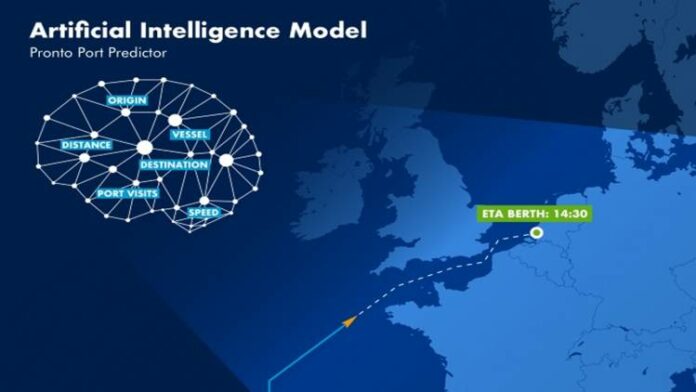
Computers recognise patterns in large data volumes much faster than people. Significant efficiency steps can also be taken in the maritime sector regarding big data and artificial intelligence. For instance, this technology is enabling the arrival times of vessels in sea and inland ports to be predicted earlier and with increased precision.

Had anybody heard of Alibaba five years ago? And yet, the Chinese e-commerce giant is now well on the way to achieving a billion customers worldwide. On 11 November 2018, Alibaba made a billion euro in turnover in just 85 seconds. Mainly known in the past for its copycat behaviour, these days China is at the forefront in the development of artificial intelligence and other trendsetting technologies. According to Alibaba founder Jack Ma, data rather than oil is the fuel of the future. More technology is also becoming available to generate and share that data. It is expected that over 11 billion devices will be connected with the internet by 2021. While the volume of data is increasing exponentially, data analysis costs are falling rapidly.

Predicting vessel arrival
Computers use the sea of data that we produce these days for self-training. The Port of Rotterdam is also investing in this development with Pronto, an application for standardised data exchange on port calls. Almost half of shipping companies, agents, terminals and other nautical service providers in the port use the system to plan, implement and monitor their activities during a port call. Pronto uses artificial intelligence to predict vessel arrival times in the port. "Various factors influence a vessel’s arrival time’, stated Arjen Leege, Senior Data Scientist at the Port of Rotterdam Authority. ‘This includes the vessel type and cargo type, as well as the location, route, sailing speed and movements of other vessels in the vicinity. We have mapped out the most crucial parameters. During this process we sometimes dropped parameters or added new ones. For instance, it emerged that the number of times a vessel has already entered the Port of Rotterdam is also relevant."

Complex connections
Data sources include AIS and the Port Authority databases, including vessel arrival times at the loading platform. Port Authority data scientists used the parameters to develop a self-learning computer model. Initially, this was fed with some 12,000 items of historical data. The computer recognised patterns in these, enabling it to learn to predict how much time a vessel needs to move from the loading platform to the berth. ‘Computers can make complex connections must faster than people’, explained Leege. "That is actually the power of artificial intelligence. A computer’s predictive capacity increases when it is fed continuously with up-to-date data. We can now predict with 20-minute precision when arriving vessels will reach the berth. The computer can also look further into the future and calculate the arrival times of vessels that are still some seven days away from the Port of Rotterdam. By looking further ahead, we will ultimately be able to predict a vessel’s entire route. Perhaps even some 30 days in advance, including multiple ports."

Asset Management
Leege continued: "The more details we know at an earlier stage, the better we can plan our resources. If you know it will be busy in the port you can, for instance, increase the towage capacity in advance by requesting tugboats from another port to call at Rotterdam. Pronto can now also identify which vessels are bunkered, piloted or towed in the port. Possibly there will be new applications in the future that we’ve not considered as yet. That is what’s great about this development."

Data security
Using artificial intelligence has already reduced vessel waiting times in the Port of Rotterdam by 20 per cent. Robbert Engels, Product Lead Port Call Optimisation, sees further optimisation potential. The more parties share data and work actively with the information they receive from the system, the more transparent the chain will become, the better we will be at taking decisions and the better we will be able to manage planning deviations. It is still up to users themselves to interpret all the various times contained in Pronto, but in future, the computer may be able to help with this. The higher the data volumes, the more you can do. It goes without saying that there has been a strong focus on data security. Cyber security has been integrated into the system. We do not use any privacy-sensitive data.

No black box
As well as optimism, there is scepticism regarding artificial intelligence. In practice, self-learning robots sometimes cause problems. Google Assistant learned to swear because it was fed data by people who swore. Amazon pulled the plug on a job application robot that discriminated against women. Amazon appointed mainly men over the past ten years, stated Leege. The computer recognised this pattern in the datasets and simply continued it. Predictions are always complex and a computer can get it wrong. However, with Pronto we’ve not gone for a black box approach. We gave a lot of thought to the factors that determine the distance a vessel covers. We’ve provided the computer with reliable parameters for its predictions. In theory we can even show per prediction how this came about.

9 cruise trends we will see in 2019

0

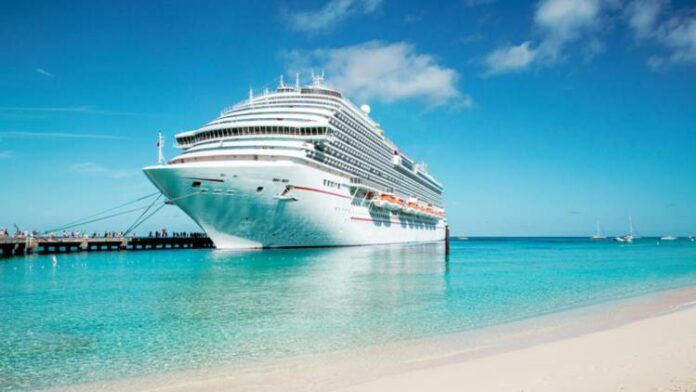
While cruise ships constitute less than 1% of the commercial vessels globally, the significance of cruise industry in tourism and global economy cannot be underestimated, with a notable total of 30 million ocean cruise passengers projected in 2019. In this regard and in view of the new year ahead, we attempted to predict key cruise trends that are awaited to shape the industry landscape in 2019 and beyond, mostly pushed by a shift to environmental sustainability mixed with the constant acceleration of smart technology.

 #1 Onboard smart tech

Technology for simplifying processes as well as providing unique experiences of luxury have been a must in cruise sector for several years. For example, many cruise lines have introduced use of bracelets or necklaces for passengers to unlock their rooms, purchase services onboard and many others.

In addition, some cruise giants like Carnival have introduced a pre-cruise service that allows the passengers to avoid the embarkation burden by registering all the required details before the cruise.

Meanwhile, smartphone apps for dinner reservations onboard and other services has seen increased interest by cruise majors such as MSC, Carnival Corporation, NCL and Royal Caribbean.

Another growing trend in shipping and in general, the so-called 3D printing, is also being used on ships as the MSC Meraviglia for entertaining children and adults.

As technology is accelerating at a rate which is transforming every aspect of our everyday lives, the way forward for smart technology onboard cruise ships is expected to keep up.

#2 Social Media

Social media have entered every fragment of our everyday life and of course, the luxury of cruising vacation could not lack connectivity. The capability of being constantly connected, even at sea, and sharing Instagram feeds and Facebook posts from travel experience, both onboard and on land from several cruise destinations, is some part of most young people’s routine and is unlikely to cease in 2019.

#3 Cyber risk

Issues surrounding cyber security are gaining an increased interest due to a growth in number of cyber attacks, making businesses around the world to emphasize more and more on measures to encounter risk. The Cruise Lines Industry Association (CLIA), as the world's largest cruise industry trade association, has been one of the industry groups which produced and supported the latest updated guidelines on cyber security onboard ships, in December 2018.

As the cyber security landscape is transforming along the route of new developments, the new guidelines include three new areas, Safety Management System, OT risks and supply chain dangers, in line with the wider shipping industry trend of cyber awareness and protection, which will not leave cruise industry unaffected this year.

#4 Solo travel

Solo traveling is gaining popularity with Google searches for “solo travel” and “traveling alone” rising more than ever before. Cruising allows for solo travel, as it provides the opportunity for travelers to connect with other travelers. Notably, last year, the case was not just for young travelers, but also for over-fifties.

#5 Age groups

Generation Z, referring to people born between mid-1990s to mid-2000s, is set to become the largest consumer generation by the year 2020 -outpacing even Millennials, referring to the previous generation, and unveiling ‘a new category of cruisers’, according to CLIA, which also prefers experiences over material items and is seeking out travel like its precedent.

#6 Is bigger the new big?

2018 saw the official launch of Symphony of the Seas, the world’s largest cruise ship, by Royal Caribbean. On the same context, cruise companies seem to maintain tendency over the years to launch bigger and bigger ships.

#7 New routes, new exploration

Ice melting has opened up new routes for shipping, such as Arctic cruise expeditions which enable passengers to experience different travel opportunities and observe unique natural phenomena like Northern Lights or Arctic wildlife.

#8 Gender equality and women in leadership roles

The cruise industry serves as a good example for the maritime sector in the field of women participation. While women seafarers constitute about 2% of crews globally, the cruise industry has been recently noting major landmarks, such as the appointment of Nicole Langosch as AIDA’s first female captain on AIDAsol, the award of Captain Belinda Bennett of Windstar Cruises with the UK Merchant Navy Medal for Meritorious Service as ‘the first black female captain in the commercial cruise industry’, the appointment of Kelly Craighead as CLIA President and CEO from 1st January 2019, as well as the launch of Celebrity Edge, a new multi-billion cruise ship known for involving women in its development and in several key positions onboard.

As gender equality is gaining an increasing awareness in business sector, women participation is expected to grow further in cruising, as a significant fragment of the maritime sector which seeks to achieve a greater gender balance.

#9 Environmental sustainability

2018 saw an environmental milestone with delivery of the world’s first LNG-fueled cruise ship to AIDA Cruises in December. Meanwhile, major cruise firms like Royal Caribbean, Disney, MSC Cruises, TUI, and several Carnival subsidiaries have placed orders for an estimated total of 19 LNG cruise ships to operate worldwide. Will 2019 continue this trend? Taking into consideration the upcoming stringent environmental regulations and the greater awareness brought as a result, from us it’s a yes.


Interesting facts

  • Cruise ships are some of the largest ships in the world by internal volume, bigger than many cargo ships.
  • In 2018, 11,9 million passengers came from the US, 2,19 from Germany, and 1,93 from UK.
  • The 2019 projection for global ocean cruise passengers is 30 million, up from 28,2 in 2018.
  • More than 8 out of 10 CLIA-certified travel agents stated they are expecting an increase in sales in 2019.
  • Caribbean is the queen of cruise deployment with the 34.4% of global share. Mediterranean reaches a 17.3%
  • 18 new CLIA-member ocean ships are scheduled to debut in 2019.

Source:safety4sea

Norway awards Equinor exploitation permit for CO2-storage

0

Equinor has been awarded an exploitation permit for CO2-storage on the Norwegian Continental Shelf, according to Norway's Ministry of Petroleum and Energy. The storage solution is part of the large-scale carbon capture and storage-project in Norway. If approved, the storage is set to begin operations in 2023 or 2024, Gassnova, a governmental agency in charge of developing the CCS project, reported.

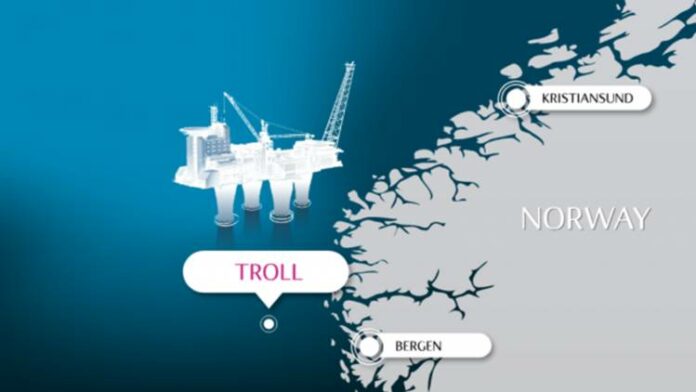
Specifically, the allocated area for storage of CO₂ is located near the Troll oil and gas field and was announced in July 2018. The storage will receive CO2 from onshore facilities, as  power or cement plants, to reduce emissions to the atmosphere.

Equinor will submit a development plan in 2019, whereas the parliament is to make its final decision in 2020-2021.  

Also, the government aspires to find a cost effective solution for full-scale carbon capture and storage in Norway, since it will result to international technology development.

Kjell-Børge Freiberg, Minister of Petroleum and Energy, supported that the company's plan to mature a storage solution is a sample of a successful project.

Equinor, together with project partners Shell and Total, will now mature the storage concept towards a Plan for Development and Operations (PDO) scheduled for delivery in 2019. An investment decision for the Norwegian full-scale carbon capture and storage project is expected in 2020/2021.

Concluding, supporters of carbon capture and storage address that countries are in need of technology to help fulfil promises and plans that were made during the Paris climate change agreement in 2015.

On the other hand, environmentalists are opposed to the use of technology, stating that it will perpetuate the status quo when limitations to use energy are of a great importance to limit global warming, according to Reuters.

Source:safety4sea


Alternative Transport Put Four Ro-Ro Ships On The Market

0

Following the close down of the maritime link directly operated between Turkey (Istanbul) and Italy (Trieste), Alternative Taşımacılık A.Ş. has decided to use its ro-ro ships PAQIZE, QEZBAN, HATCHE and MELEQ by chartering or selling them to different international operators.

The general manager of the Turkish shipping firm, Hakan Yılmaz, stated that they took this decision to ensure the continued growth of the group companies in a stronger and more secure way. “We had to take this decision to eliminate the imbalance in our cash flow for which we couldn’t find the desired solution, mostly due to the unfavourable economic conditions in our country that appeared after we had to finance the Yalova port investment ourselves” Yılmaz said.

The other two vessels in fleet, AYSHE and FADIQ, are currently operated on charter and will continued be deployed on the link between Çeşme in Turkey and Sète in France.

As for the future intentions regarding the ro-ro terminal controlled in the port of Trieste through the company Europe Multipurpose Terminal, Alternative’s commercial director Esber Horasan commented as follows: “In our main end to end logistics business we will continue investing more in the intermodal business. Terminals are part of this development for railway connections, so in the short term plans we do not have plan to dismiss it. We are receiving cooperation and purchase offers for our terminals but there are no sales negotiation ongoing”.

Marlink extends Transpetrol contract

0

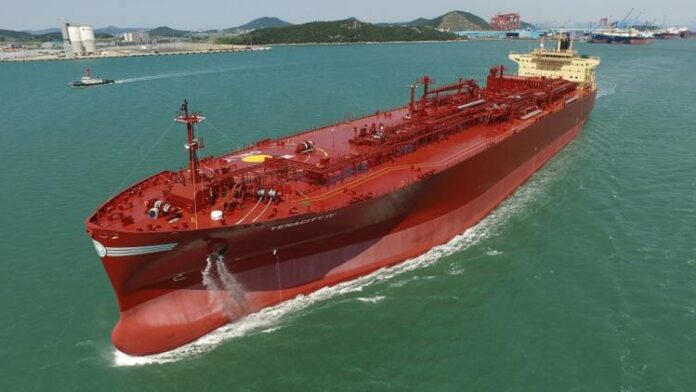
Tanker owner Transpetrol has signed a renewal of its VSAT contract with Marlink, which will see the vessel operator expand its use of the Sealink VSAT service to its the entire tanker fleet, as well as two planned newbuildings due for delivery within the next 18 months.

Transpetrol’s ships, from medium range tankers up to Aframax and Very Large Gas Carriers on global routes, are already provided with global Ku-band VSAT and L-band back-up systems under an existing deal, but the Committed Information Rate (CIR) and Maximum Information Rate (MIR) available to the ships will increase with the new contract.

Marlink will also deploy its SkyFile Anti-Virus, part of its Cyber Guard portfolio, on board each ship.

“With more digital applications becoming essential to the efficiency of our business, reliable connectivity at sea is more important now than it ever was,” said Eirik Sanderlien, fleet manager, Transpetrol.

“It’s vital that we partner with a provider that can guarantee always available service levels regardless of where our ships are. Based on our experience as a customer since 2011, we’re very confident that Marlink is that partner.”

Connectivity and value added services will be centrally managed using the Marlink XChange platform, which can also be used to control crew communications and provide remote access to onboard networks from shore for IT maintenance. An XChange Cloud service is additionally included, for the transfer and synchronisation of files between ship and shore.

“Transpetrol is a great example of how our services have evolved over time to follow customer needs,” said Tore Morten Olsen, president maritime, Marlink.

By providing a future-proof solution at the start of our relationship, we have been able to increase their vessel’s connectivity bandwidth and speed, as well as add new digital solutions without any major hardware change or price increase. We are enabling Transpetrol to run their ships more efficiently while increasing crew welfare in a controlled and very cost-effective way.”

Source:thedigitalship

Washington splashes marine R&D cash

0

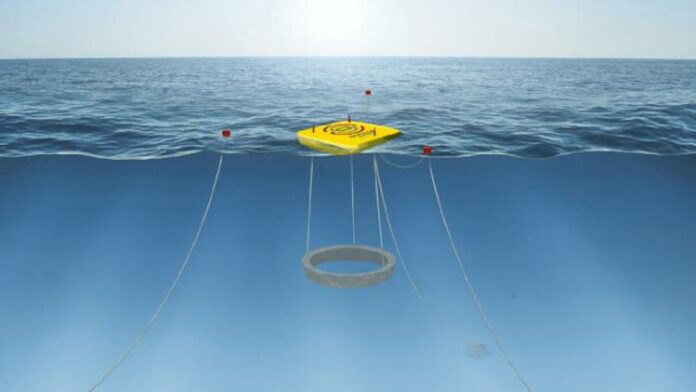
The US Department of Energy has selected 12 organisations to receive a combined $25m funding to support wave and tidal energy research and development.

Eight of the developers to receive grants from the DoE’s Office of Energy Efficiency and Renewable Energy Water Power Technologies Office will further early stage device designs.

Those organisations consist of Atargis Energy, Columbia Power Technologies, Florida Atlantic University, Littoral Power Systems, North Carolina State University, Oscilla Power, Texas A&M University and University of Hawaii at Manoa.

Three grants were awarded to AWS Ocean Energy, CalWave Power Technologies and Portland State University to work on control systems and power take-off design integration and testing.

California strategic communications outfit Kearns and West, meanwhile, will develop a marine energy environmental permitting toolkit.

“Advancing next-generation marine energy will help the US ensure a secure, reliable, and enduring supply of American energy,” said Under Secretary of Energy Mark Menezes.

These early-stage research and development projects are key to the development of water power as part of DoE’s ‘all-of-the-above’ energy strategy.

Source:renews