0.7 C
New York
Home Blog Page 1174

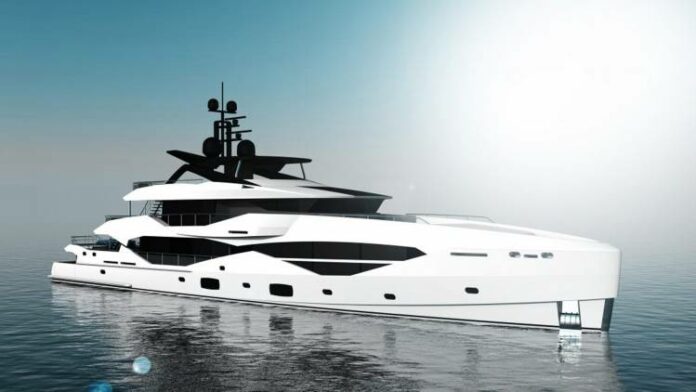
Sunseeker International and Rolls-Royce to present first production yacht with MTU hybrid power in 2020

0

British luxury yacht manufacturer Sunseeker International and Rolls-Royce have agreed to present the first yacht fitted with an MTU series production hybrid propulsion system in 2020. At Boot Düsseldorf from 19 until 27 January Sunseeker and MTU will present the new hybrid propulsion system in hall 6 at booth B61, the company said in its release.

The new Sunseeker yacht will have an integrated MTU hybrid propulsion system. It will consist of two 12-cylinder MTU Series 2000 diesel engines (each delivering around 1,432 kW/ 1,947 hp), on-board generators, electric propulsion modules, transmission system, batteries, control and monitoring systems and can be expanded on a modular basis.

The yacht will be provided with six different operating modes that are easy to operate, including the automated “smart hybrid” and “charge hybrid” modes, which enable all power sources to be used as required. In an “electric mode” the yacht propulsion and on-board power can be supplied continuously by the generators, providing optimisation of fuel consumption and comfort on-board for long and overnight passages. In “silent mode”, which uses power solely from the batteries, up to 40 minutes of propulsion and 120 minutes of on-board power are available with each pair of MTU batteries installed, with no emissions produced whatsoever.

Sunseeker and MTU UK have had a successful working relationship for more than 18 years, with over 1.8 million hp of MTU power installed in yachts with lengths of between 20 and 47 metres. As early as 2010, the two companies laid the basis for the hybrid propulsion system in tests that were carried out on a prototype yacht.

Tallink and Taltech to collaborate on developing smart ship solutions

0

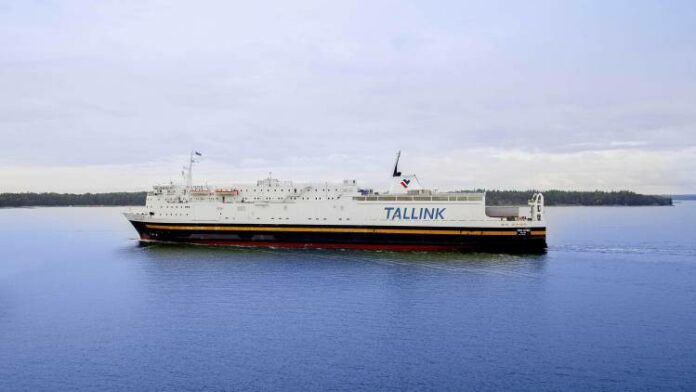
Tallink Grupp and the TalTech have started a scientific collaboration with the aim of developing various innovative solutions for Tallink Grupp’s vessels over the next two years, Tallink says in a press release.

According to the two-year 100,000 Euro cooperation agreement, signed by Member of the Management Board of Tallink Grupp, Mr Lembit Kitter and the rector of TalTech, Mr Jaak Aaviksoo, the focus of the collaboration will be on developing the so-called „Smart Car Deck“ solutions, which would be aligned with the Smart Port solutions already in use today and would result in innovative technologies that would make the ships’ car decks and operations on the car decks more efficient.

The expected results of the Smart Car Deck project, among other things, are the increased efficiency of the operations of the ships’ hold, a decreased need for workforce for the loading and unloading of ships, enabling the workforce to be used for other specialist duties, and a reduction in the waiting time for embarking and disembarking the ships.

"The ports around the Baltic Sea have already developed or are currently developing several „Smart Port“ solutions for easier vehicle check-in, for directing traffic in ports, etc, all of which has enabled the ports to make the processes involving vehicles automated and thus more efficient. The Port of Tallinn with its solutions is no doubt one of the pioneers for these solutions in the region. Our ships are important partners and customers of the Baltic Sea ports and therefore it is only logical that alongside the smart ports we must also create smart ships,“ Paavo Nõgene, CEO of Tallink Grupp commented on the need for new technologies and development.

"Our ambition is to be a partner for and a pioneer in developing smart solutions for the shipping industry both here in the Baltic Sea region as well as globally.  Our goal initially is to extend the Smart Port solutions used by Baltic Sea ports to the car decks on our vessels and I am certain that we will successfully develop such solutions over the next few years in partnership with TalTech,“ Nõgene added.

TalTech is pleased to help Tallink Grupp develop smart solutions, which will help reduce the waiting times before embarking the vessels and will make the more routine every-day work more automated.

Our goal is to focus on three main topics during this development project. First, to automate the vehicle traffic flow. Second, make the utilisation of the hold more effective. Third, to guide the passenger with the vehicle to the right parking zone and guide passengers to the nearest exits.

„On the one hand, the Smart Car Deck is an extension of the Smart Port solutions and, on the other hand, it is a good example of how the results of scientific research achieved through the cooperation of TalTech and enterprises, can be applied in real life,“ said Jaak Aaviksoo, Rector of TalTech.

The two-year cooperation agreement was signed on Wednesday on board Tallink Grupp’s vessel Silja Europa. TalTech’s expertise from all of its different fields of research will be used during the cooperation to achieve the goals set for the project and the development work will receive a funding of 50,000 EUR per year for the next two years.

Despite Shutdown, BOEM Resumes Work on Offshore Drilling Plan

0

The Bureau of Ocean Energy Management (BOEM), the permitting agency for offshore development in federal waters, has recalled 40 furloughed employees to work on the Trump administration's proposed offshore oil and gas leasing plan. The majority of the agency – including the departments that handle offshore wind development – will remain shut. 

The closure of BOEM has significant implications for the wind industry, according to trade group Business Network for Offshore Wind. “There are a number of big, important offshore wind projects moving through the BOEM approval process, and we can’t afford to have them disrupted in terms of their coordination and timing,” said Liz Burdock, the group's CEO and president, speaking to Bloomberg. “We are not able to hold meetings with BOEM because they’re not able to work."

Six public hearings scheduled for the $2 billion Vineyard Wind project off Martha's Vineyard have already been pushed back due to the shutdown, and the timeline for rescheduling them is uncertain. Federal tax credits for wind developments will expire this year, so a lengthy delay could impose a large financial penalty on wind farm operators, according to Business Network for Offshore Wind.

Work on offshore oil and gas resumes

Separately, BOEM has redesignated 40 of its furloughed employees as exempt from the shutdown's closure requirements, which will allow them to return to work on the National Outer Continental Shelf Program – the master five-year policy plan for oil and gas drilling in federal waters.  The first draft of this plan, which was released in January 2018, drew controversy over proposed leasing activity off the Atlantic and Pacific coasts. 

Additional BOEM personnel will now return to working on permitting and other related functions, including previously-scheduled oil and gas lease auctions. BOEM cited "the Administration's America First energy strategy" and the potential impact on investment in the Gulf oil sector for its decision to resume work.

"[We] support the Administration’s decision to bring back, on a limited basis, dedicated Department of Interior employees to continue preparatory work for upcoming offshore oil and natural gas lease sales," said Randall Luthi, president of the National Ocean Industries Association in a statement. "It makes both economic and energy sense to continue work on this long-planned and approved sale."

NOIA suggested that BOEM should also take steps to keep future offshore wind sales on track, given the recent success of the offshore wind auction for waters off Massachusetts.

However, environmental advocacy group Oceana suggested that BOEM's decision was out of order. "Charging ahead with what appears to be the demands of the offshore drilling industry while so many government services go neglected is jaw dropping,” said Oceana campaign director Diane Hoskins in a statement. 

Rep. Raul Grijalva (D-NM), the chair of the House Natural Resources Committee, suggested that BOEM's decision to restart activities on oil and gas policy could be a violation of the Antideficiency Act. This rarely-cited law dates back to 1884, and it implements the Constitution's ban on spending money without an appropriation from Congress. 

"We urge you to reverse these actions," Rep. Grijalva wrote. "If you refuse, we insist that you come to Capitol Hill this week for a detailed briefing . . . providing information on where the funding for these activities is coming from, how it is being spent, and what the consequences are of spending that funding during a shutdown."

Unlike 800,000 other federal employees, the personnel working on BOEM's National OCS Program will be paid during the shutdown, as BOEM has reclassified them as "exempt" from furlough requirements. According to the Treasury, this classification indicates that "their work is funded by a source of funds that has not expired."

Source:maritime-executive

First Photos Show Fire Damage to the Yantian Express’ Cargo

0

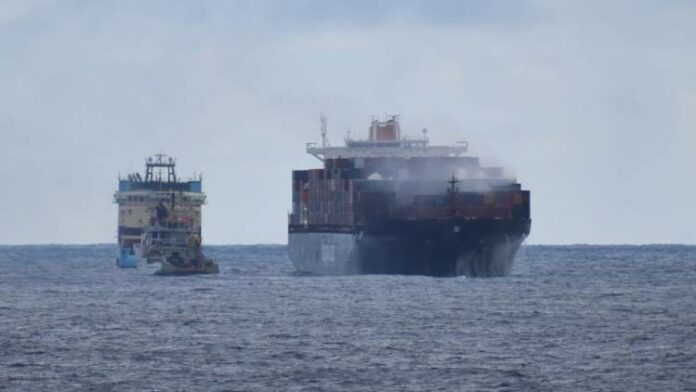
The first photos of the fire damage to the container ship Yantian Express have emerged, and the imagery suggests that the extent of the blaze was much smaller than the devastating fire aboard the Maersk Honam in 2018. 

USMMA midshipman Cameron Brunick (Class of 2021), who is currently embarked on a merchant vessel in the North Atlantic, took what are likely the first published photos of the Yantian Express. The images show thin smoke rising from the containers on her foredeck and water draining from her scuppers forward. Three oceangoing tugs are in attendance – including the AHTS Maersk Mobiliser and the Smit Nicobar – but contrary to earlier reports, the Express does not appear to be making way under tow. 

The images were taken in the early afternoon of January 15 at position 33.5° N 43.9° W, about 870 nm southeast of Newfoundland. 

The cargo fire broke out on the foredeck of the Yantian Express on January 3 as she transited off Canada's eastern seaboard. Efforts to extinguish the fire were launched immediately, but these initial operations had to be suspended due to deteriorating weather. All crew safely evacuated from the Yantian Express onto the Smit Nicobar on January 6, and five returned to the Express to rejoin the firefighting effort on January 9. Hapag-Lloyd reports that the fire is now under control, but the full extent of the damage has not yet been determined. 

Two additional tugs, the DonJon-owned Atlantic Enterprise and the Boskalis AHTS Sovereign, were dispatched to the scene this week to assist, according to the U.S. Coast Guard.

Source:maritime-executive

IMO to finalize polar communication and navigation equipment guidance

0

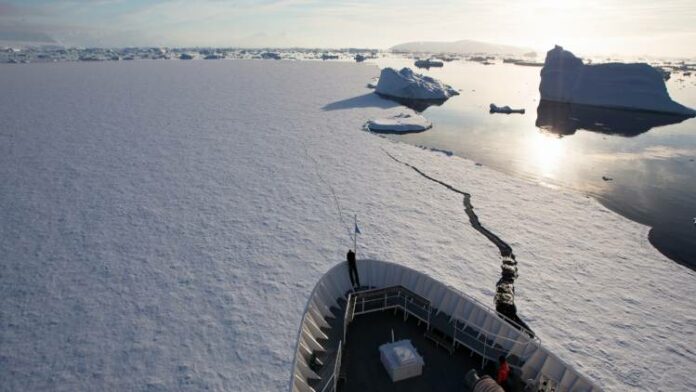
IMO’s Polar Code aims to ensure that ships operating in the Arctic and Antarctic areas consider extremes of temperature and make sure critical equipment remains operational. Draft guidance for navigation and communication equipment intended for use on ships operating in polar waters is expected to be finalized by the current session of the Sub-Committee on Navigation, Communications and Search and Rescue.

The guidance will provide recommendations on temperature and mechanical shock testing, and on how to deal with ice accretion and battery performance in cold temperatures.

The Sub-Committee will also take into consideration the report of the 14th meeting of the Joint IMO/ITU Experts Group on maritime radiocommunication matters.

The meeting will finalize the draft IMO position on maritime radiocommunication matters for submission to the World Radiocommunication Conference 2019, which will take place in November. The availability of interference-free parts of radio spectrum, dedicated for maritime radiocommunication and radionavigation purposes, is vital to ensure the safety and security of shipping.

The Sub-Committee will continue working on several key agenda items, such as the current work to modernize the Global Maritime Distress and Safety system (GMDSS). The modernization plan wants to update the provisions, including allowing for the incorporation of new satellite communication services.

On e-navigation issues, the meeting will give emphasis on harmonization and standardization for the effective implementation of the e-navigation strategy. The Sub-Committee will develop the description of various maritime services, in order to improve harmonization. It will also set out draft guidelines on standardized modes of operation, or S-mode, to enhance standardization of the user interface and information used by seafarers.

Regarding search and rescue matters, the Sub-Committee will analyze recommendations from the latest regular International Civil Aviation Organization (ICAO)/IMO Joint Working Group. The meeting will probably validate a revised model course on SAR Mission Coordinator.

Finally, amongst other agenda items, the Sub-Committee will review proposed new and amended ships' routeing measures and updates to Maritime Safety Information (MSI) related provisions. It will also discuss matters regarding the functioning and operation of the Long-Range Identification and Tracking (LRIT).

Source:safety4sea

Bangladesh’s second LNG terminal to start in March; supply faces hiccups

0

Bangladesh’s second liquefied natural gas (LNG) terminal is expected to start operations in mid-March though domestic pipeline constraints means it will be unable to fully supply gas demand to the country’s capital Dhaka.

Summit Corp, a subsidiary of Bangladesh’s Summit Holdings, and partner Mitsubishi Corp are expected to start operations at their floating storage and regasification unit (FSRU) off the country’s coast by the middle of March and ahead of schedule, a source familiar with the matter told Reuters on Tuesday.

A Summit Corp spokeswoman confirmed in an emailed response that the Summit LNG terminal is on schedule, but did not elaborate.

However, construction delays on a pipeline that will carry regasifed gas from the coastal city of Chattogram, near where the FSRU will be anchored, to Dhaka means that the vessel will not be fully utilised, the source said.

Until the pipeline is fully connected, the FSRU will handle about 300 million cubic feet per day (mmcfd) of gas which will be supplied to the Chattogram area, the source said. The ship can regasify up to 500 mmcfd of LNG, according Summit’s website.

Once the pipeline is completed, state-owned energy company Petrobangla will be able to send up to 1,000 mmcfd from both the Summit FSRU and a vessel operated by U.S. company Excelerate that started up in August, the source said.

“Our target is to complete all the connecting gas transmission pipelines by April,” Ali Al-Mamun, managing director of the Gas Transmission Company Limited, a subsidiary of state-owned Petrobangla, told Reuters.

He added that the company has awarded a contract to Chinese oil and gas major CNOOC to build a 7-km (4.2 mile)pipeline that connects the Summit FSRU to the shore.

Other pipelines that will connect the offshore pipeline to the country’s main gas grid near the city of Bakhrabad are still being built, he said.

Summit LNG’s FSRU will anchor 6 km off the island of Moheshkali in the Cox’s Bazar district of the Chattogram division, where it will regasify LNG procured by Petrobangla. The planned LNG import volume of the project is about 3.5 million tonnes a year, which will double the country’s LNG import capacity to 7.5 mmtpa once fully operational.

Bangladesh has scrapped plans to build additional floating LNG terminals in favour of land-based stations after the start-up of Excelerate’s vessel was delayed by several months due to technical problems and bad weather.

Source:hellenicshippingnews

MDL, TechnipFMC conclude four projects in the North Sea

0

Maritime Developments Ltd. (MDL) has completed a four-project campaign with TechnipFMC in the North Sea.

The work scopes on the jobs, which took place throughout 2018, included installation and retrieval of umbilicals, jumpers, risers, and flowlines.

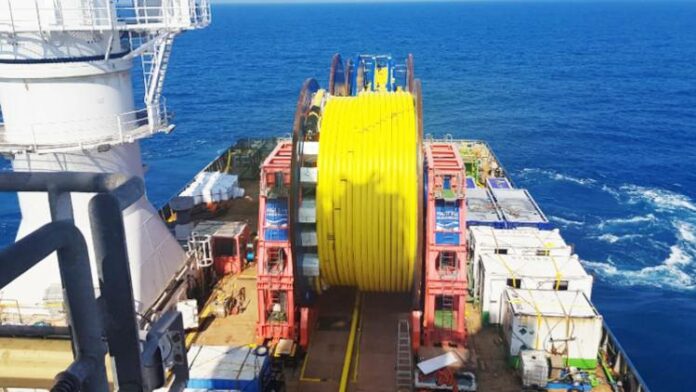
In total 16 reels were handled and about 40 km (25 mi) of product was installed from three different vessels, using two different MDL reel drive systems and four-track tensioners from MDL Offshore Service’s rental range.

Among the projects was a major riser installation, which followed on from a previous MDL scope in 2016. This program also saw the return of the MDL third-generation 350Te RDS and 50Te tensioner, three years after they were used on the original projects.

Two other work scopes that were performed off the same vessel involved a horizontal lay using the MDL tensioner, which was integrated into the client’s own HLS ramp. An MDL Reel Drive System was then integrated with the existing VLS onboard the vessel for a vertical installation.

Dave Gardiner, MDL BD & Commercial Manager, said: “We worked closely with the four TechnipFMC project teams from an early stage to plan out how they would share the equipment across the three vessels. This approach ensured efficiencies were maximized without incurring any additional cost."

“Completing all projects safely and on budget was possible thanks to the expertise of our teams, both onshore and offshore, as well as the portability of our equipment and MDL sea-fastening solutions, which resulted in shorter mobilization and minimal vessel idle time.”

Source:offshore-mag

New is better in LNG propulsion, concludes major study

0

As the 2020 deadline for lower emissions looms ever closer, shipowners increasingly prefer to install LNG propulsion in new ships rather than retrofit existing ones, according to just-released research by the Oxford Institute for Energy Studies.

The numbers show that just eight of the current global LNG-fuelled fleet of 143 vessels are retrofits – all the rest are newbuilds, said the 60-page study entitled LNG supply chains and the development of LNG as a shipping fuel in northern Europe.  

Further, all of the eight vessels are larger ships – four ferries, three oil product/chemical tankers, and a container ship. In short, vessels with high fuel consumption.

And that looks to be the trend for the future. The evidence shows that shipowners increasingly prefer to invest in new LNG-fuelled vessels rather than retrofit LNG-fuelled propulsion systems to existing vessels, the paper concluded.

Among other things, this suggests a steady rather than spectacular adoption of LNG by the marine sector. “Given that vessels have lifespans of several decades, and that the size of the LNG-fuelled fleet is growing year-on-year, this leads to the conclusion that LNG is being phased into the marine shipping sector,” the paper argued. “Consequently, demand for LNG as a shipping fuel is likely to rise at a steady pace rather than in a sudden ‘big bang’.”

In the long run, the steady-as-she-goes approach should be beneficial because it will allow time to develop the necessary additional infrastructure. Just as importantly, it should lead to steady LNG pricing by “preventing demand for marine fuel from acting as a source of volatility on the global LNG market”.

One of the many factors in a retrofit decision is the vessel’s home waters, particularly if it spends most of its time in an emissions control area (ECA) with much stricter regulations. If a ship never leaves the area, the main consideration is the cost of low-sulphur fuel such as marine gasoil compared with the capital investment in an LNG-fuelled power unit or, alternatively, in a suitable scrubber. That is because it vitally affects payback times.

And here the numbers favour LNG, noted the study. Interestingly, LNG bunker fuel in northwest Europe has not only consistently traded at a substantial discount to low-sulphur marine gasoil (LSMGO) but has also competed on price with heavy fuel oil 180/380 (HFO), the study showed. In 2018, for example, LNG averaged US$220 per tonne less than ECA-compliant LSMGO. Even more surprisingly, the price hovered between US$64 – US$38 a tonne lower than HFO 180/380.

Despite the late-2018 fall in oil prices, LNG still sold on average at US$120 a tonne cheaper than LSMGO in December. Thus, LNG has come out well overall: “Even with strongly declining oil prices in Q4 2018, LNG retained a substantial discount relative to LSMGO – and remained competitive with HFO.”

Another important consideration in a retrofit is the size of the ship – the bigger the vessel, naturally the more expensive it is. “The cost of retrofitting to run on LNG or of installing a scrubber varies dramatically according to vessel size,” the study said.

The numbers are enlightening. According to Clean Marine Energy, cited in the study, a vessel consuming five tonnes of marine gasoil a day would cost US$6M to retrofit while a large vessel chewing up 80 tonnes a day would cost a hefty US$22M or so to convert.

But how long would it take to recoup that investment? An educated estimate based on LNG staying around US$200 a tonne cheaper than LSMGO suggests it would take a ship using five tonnes of fuel a day exactly 16.4 years to recoup the US$6M spent on LNG propulsion. The proposition improves greatly for the vessel eating up 80 tonnes a day – in that case it would take just 3.8 years to recover the US$22M.

As for scrubbers, because they are cheaper to install than a whole new propulsion system, the payback comes about three times faster. In both options, the numbers are far less favourable for vessels that spend, say, only half their time in an ECA.

Meantime whatever the payback time, the hefty capital investment required in a retrofit is a major deterrent for shipowners. “[It] has largely dissuaded vessel owners from retrofitting their existing vessels with either scrubbers or LNG propulsion,” the study reported. For evidence, it cited the relatively few ships that are having scrubbers or LNG engines installed as a percentage of the global fleet.

The economics change significantly in favour of newbuilds. Because it is cheaper to install scrubbers as well as LNG propulsion on newbuilds than existing ones, the payback period is shorter. Fearnley LNG estimates, for example, that it would cost US$28M to convert an existing 8,500-TEU container ship to LNG compared with US$13M for an equivalent-sized new one.

Finally, assuming similar differences in price between LNG and IMO-compliant fuel oil and gasoil, the study predicts LNG will be the best choice in northern Europe – and probably in other low-emission zones – from 2021 onwards.

Source:lngworldshipping

Divesting Kongsberg Evotec to meet regulatory requirements

0

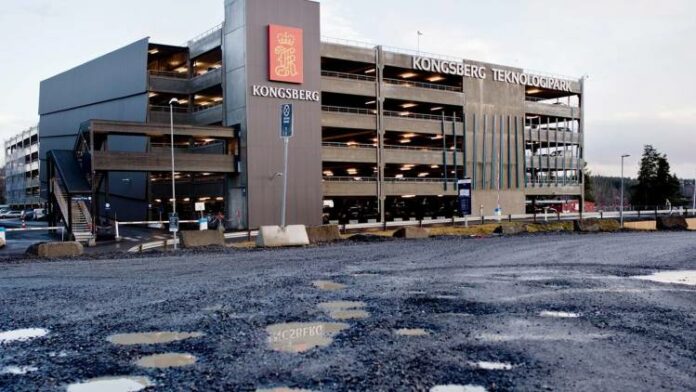
As a result of the acquisition of Rolls-Royce Commercial Marine, Kongsberg Gruppen has entered into an agreement with Rome AS to divest Kongsberg Evotec.

The acquisition has been made to meet regulatory requirements regarding competition in the market for seismic vessel deck equipment.

In July 2018, Kongsberg Gruppen announced the acquisition of the globally leading supplier of maritime technology products, Rolls-Royce Commercial Marine. Evotec is divested to ensure regulatory approval of the acquisition of Rolls-Royce Commercial Marine which has a unit that covers Evotec’s market area.

The parties have agreed not to disclose the price of the transaction. Closing date will be January 21, 2019.

Shipbuilding: Synergy’s New 20,000+ TEU Containership

0

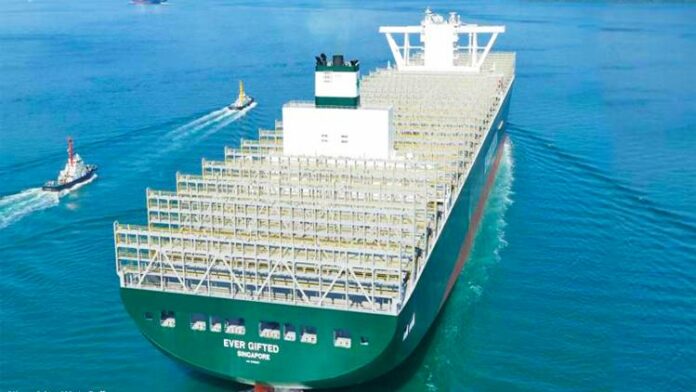
Synergy Group took delivery of Ever Gifted, an Ultra Large Container Vessel (ULCV) newbuilding built in Japan at Imabari Shipbuilding.

Currently under Synergy’s technical management on Evergreen Line’s popular Far East-North Europe and Mediterranean service, the 20,000+ TEU capacity ULCV is one of the largest container ships in service worldwide.

Captain Rajesh Unni, CEO and Founder of Singapore-headquartered Synergy Group said: “The Ever Gifted is one of the highest capacity container ships currently in service. It is also one of the most efficient, enviro-friendly and impressive vessels deployed across Evergreen’s service network. It offers fuel-efficient headhaul options and slow steaming variations on backhauls.”

The Singapore-flagged, 199,489 dwt Ever Gifted has an overall length (L.O.A) of 399.98 meters, beam of 58.8 meters, total capacity of 20,388 twenty-foot equivalent units (TEU) and 1,300 reefer points.

Fitted with a fuel optimized MAN B&W 11-cylinder G95ME engine, Ever Gifted offers a service speed of 23.2 knots and weighs in at 217,762 MT.

On January 15, Synergy will take delivery of Ever Grade, a sistership of Ever Gifted also constructed by Imabari Shipbuilding.

Source:marinelink