5.2 C
New York
Home Blog Page 1166

Watch: Chinese icebreaker collides in iceberg, Antarctic

0

The Chinese icebreaker Xue Long suffered minor damage on Saturday after striking an iceberg, according to China's Ministry of Natural Resources. 

The collision occurred at 69.6 S 94.0 W, off the coast of the Antarctic Peninsula. The Xue Long was making three knots in foggy conditions at the time of the encounter. Images broadcast by state television showed a small mountain of ice and snow on the Xue Long's deck forward, and the crew used picks, axes, firehoses and deck cranes to break the debris free and put it over the side. 

Video from the scene showed damage to the Xue Long's foremast, railings and other fixtures on her bow, but no injuries or mechanical casualties were reported.

The 1993-built Xue Long is China's sole heavy icebreaker (and one more is due for delivery this year). She was last in the news in 2014, when she was involved in evacuating 52 passengers from the Russian icebreaker Akademik Shokalskiy. The Shokalskiy became trapped in the ice off the coast of East Antarctica in December 2013, prompting a multinational rescue effort. Xue Long could not reach the Russian vessel, but she deployed her helicopter to airlift the passengers to the Australian icebreaker Aurora Australis. 

China is intensifying its involvement in the polar regions, and its activities in Antarctica figure prominently in state media coverage. On January 4, a Chinese overland mission completed a 750-mile, 18-day journey from the coast to the Kunlun research station, the highest-elevation outpost on the continent. Kunlun lies a few miles from Dome A, the highest point on Antarctica's glaciers at about 13,500 feet above sea level. It is quite possibly the coldest region on earth: In 2010, satellite measurements recorded a record low of -136 F near Dome A during the Antarctic winter. 
Launching kraken into the deep

0

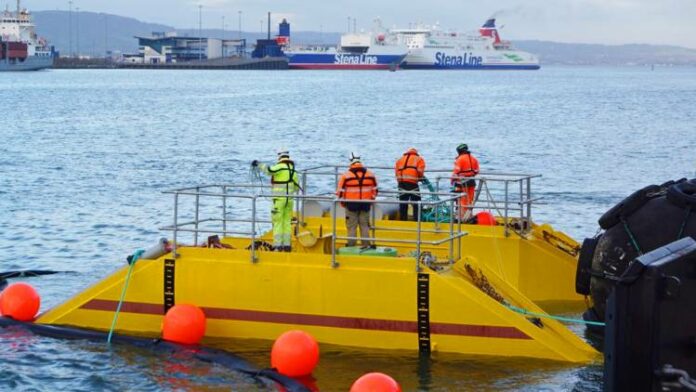
Subhub was lifted into the water on Monday 14th of January. The lift was managed and supported by Doyle Shipping Group who conducted all stevedoring operations and provided boat support. They contracted Kavanagh Cranes to perform a skilful dual lift using a 350t and 500t cranes. The weight on the hook was 146t which is just over 1% more than our estimated total hull weight of 144t and provided immediate confidence in the stability analysis completely by QED Naval.

The barge used to support the Subsea Manifold was provided by Cuan Marine. The barge also supported the umbilicals used to provide the remote control of the Subhub platform used in this unique method of installing and recovering tidal turbines from the seabed. Finally the barge provided the tow operators with easy access to the emergency tow line and anchor.

The clever bit about Subhub is it’s fundamentally stable in the dive condition when submerged and the descent can be controlled using trim tanks easily. It is responds quickly to subtle changes in the ballast system so it can be installed safely or recovered in minutes over a wide range of tidal and wave conditions.

The Subhub’s draft was measured at 3.8m when it was launched without the cross beam and turbines fitted. This is a little lower than expected but indicates that the stability analysis is conservative. The platform is very stable in this condition and with the guardrails fitted shows how safe access to the top deck allows marine operations to be performed whilst at sea.

There is full access to the tidal turbines above the waterline whilst in the transit or maintenance condition along with the PTO, electrical transmission equipment and connectors from the top deck.

Integration of Cross Beam and Tidal Turbines

The cross beam including the central turbine was fitted to the Subhub whilst afloat to minimise the overall weight of the lift. These essential parts of the payload were fitted in under 30 minutes using locating pins to provide the exact position to fit the cross beam to the foundation structure with the bolts.

The outboard tidal turbines were fitted in under 15 minutes and provides a useful check of the Subhub’s stability again by performing an inclining experiment which showed the draft levels on the port and starboard sides.

All these stages of the project validate the business model for customers where: "All the complex integration tasks, commissioning and testing are all done on the quayside or moored alongside as opposed to doing them at sea which raises major logistical and health and safety issues. This helps Subhub dramatically reduce costs of integration."

Validation of Stability

The final draft mark of the Subhub with all the systems fitted came to just under 4.0m draft. The trim of the vessel was completely level and there was no list. This was pretty remarkable since there are significant differences in the structure between the port and the starboard sides. The port side includes all the Power Take-Off and transmission equipment and additional structure to secure it in position. This all needs to be counter balanced with ballast on the starboard side. Therefore the results of the waterline checks shows  stability assessment was performed to a high standard by the QED Naval design team.

BIMCO calls for urgent international naval coalition to fight piracy off West Africa

0

International shipowning body BIMCO is calling for international naval support to counter the growing threat of piracy off West Africa.

A fresh annual report from the International Maritime Bureau (IMB) shows that attacks in West Africa pushed piracy numbers up in 2018.

According to the bureau’s report, there were 201 incidents reported to the bureau last year including six hijackings – all of which happened in the Gulf of Guinea. That is a rise from 180 incidents in 2017 and from 191 in 2016.

The report also showed that the region saw a considerable spike in violence in the last quarter of the year, with 41 kidnappings in the waters off Nigeria alone. In West Africa, there appears to be challenges with underreporting, which is estimated at as much as 40%, the report says.

Jakob Larsen, BIMCO’s head of maritime security, commented on the need for navies to step in yesterday.

“To be honest, unless we see international naval support and close cooperation between international navies and local law enforcement, I doubt that we will see the numbers go down in any significant way,” Larsen stated in a release.

“Significant capacity building is going on in the region and naval forces are being trained, but these initiatives are all aimed at the longer term and do not solve the problem right now. Therefore, we need to step up the effort. Only then can we really turn the tide on piracy in the region,” Larsen said.

Larsen believes that what is needed is to combine the capacity building with more assets at sea and in the air in order to achieve a more robust local law enforcement.

The BIMCO executive admitted any operation could be complicated from a political point of view, getting all the littoral states of West Africa to agree to the naval option.

Source:splash247

CMA CGM Marco Polo Makes Record Visit to Vietnam

0

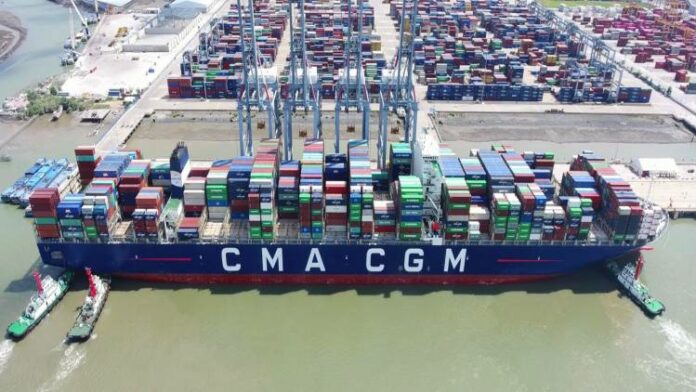
Vietnam welcomed the 390-meter (1,280-foot), 16,020 TEU CMA CGM Marco Polo at the Cai Mep International Terminal (CMIT) for the first time earlier this month.

CMIT sees 2019 as another year of double digit growth in container volume. It is a deep sea container terminal and market leader for global ocean carriers serving the South Vietnamese economy. The terminal can handle container vessels up to 194,000dwt and has a 14-meter (46-foot) channel and a minimum depth of 16.5 meters (54 feet) alongside the 600-meter (1,969-foot) quay. The terminal has a 1.115 million TEU total capacity and five Super Post-Panamax (22+1 row outreach) cranes. It is a joint venture between APM Terminals, Vinalines and Saigon Port which started operations in Cai Mep in 2011.  

“We are confident that Vietnam will develop into a key international maritime and logistics hub in the coming years,” said Bruno Gutton, General Director of CMA CGM Vietnam.

The shift that started from China to move production of labor-intensive products years ago will further accelerate in 2019, said Serkan Kavas in a blog for More Than Shipping late last year. “Especially labor-intensive products, such as textiles, apparels, footwear, and furniture, are the first industries that will leave China."

To prevent this, many factories in China are moving further inland as Western China continues to offer cheaper labor compared to China’s coastal cities. However, being further inland means more expensive freight rates and longer transit times, as barges must be used along with other means of transportation to connect coastal cities for mother vessel departures. 

Vietnam may be the biggest winner of this switch, along with other countries, such as Indonesia and Thailand, as they have better infrastructure, such as deep sea ports which can now accept larger vessels. I observed that many Chinese companies are already positioning themselves in countries like Vietnam, and Indonesia is setting up factories in order not to miss out on this production shift.

Source:maritime-executive

Finland to allow remote pilotage

0

Finland will allow remote pilotage subject to authorisation in public channels and in the Saimaa Canal lease area, that have been marked as routes requiring pilotage. The Pilotage Act will now allow the pilot to perform his/her duties somewhere else than onboard the vessel.

Finland proposed on 17 January 2019 that the Pilotage Act be adopted and is now expected to enter into force on 1 February 2019.

Up until now, a pilotage company has to apply for an authorisation from the Transport and Communications Agency. A requirement for awarding an authorisation is that remote pilotage will not as such or in combination with other functions cause any danger to vessel traffic safety or any danger to other vessel traffic or the environment.

The remote pilotage authorisation defines the routes and parts of routes where remote pilotage is allowed. It also describes the vessels involved and the origin and destination of the remote pilotage. The authorisation will be granted for a maximum of five years and can be renewed if necessary.

A provision will now be added to the Act stating that the Defence Forces will be able to exempt foreign state ships from the necessity of using a pilot. The Defence Forces could exempt vessels that participate in a training or exercise organised by them, take part in another form of defence cooperation or are hosted by the Defence Forces.

Source:safety4sea

Chinese Icebreaker Damaged in Iceberg Collision

0

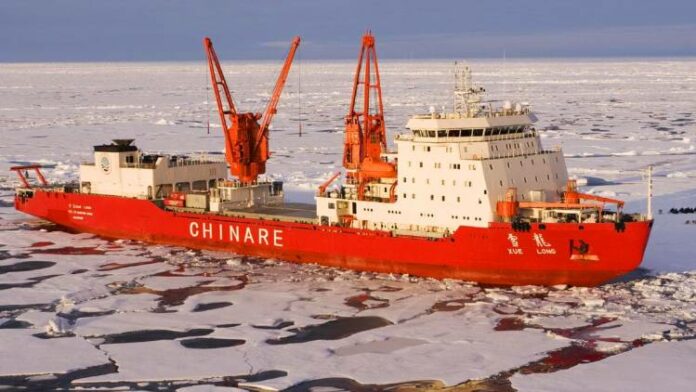
The Chinese icebreaker Xue Long suffered minor damage on Saturday after striking an iceberg, according to China's Ministry of Natural Resources. 

The collision occurred at 69.6 S 94.0 W, off the coast of the Antarctic Peninsula. The Xue Long was making three knots in foggy conditions at the time of the encounter. Images broadcast by state television showed a small mountain of ice and snow on the Xue Long's deck forward, and the crew used picks, axes, firehoses and deck cranes to break the debris free and put it over the side. 

Video from the scene showed damage to the Xue Long's foremast, railings and other fixtures on her bow, but no injuries or mechanical casualties were reported.

The 1993-built Xue Long is China's sole heavy icebreaker (and one more is due for delivery this year). She was last in the news in 2014, when she was involved in evacuating 52 passengers from the Russian icebreaker Akademik Shokalskiy. The Shokalskiy became trapped in the ice off the coast of East Antarctica in December 2013, prompting a multinational rescue effort. Xue Long could not reach the Russian vessel, but she deployed her helicopter to airlift the passengers to the Australian icebreaker Aurora Australis. 

China is intensifying its involvement in the polar regions, and its activities in Antarctica figure prominently in state media coverage. On January 4, a Chinese overland mission completed a 750-mile, 18-day journey from the coast to the Kunlun research station, the highest-elevation outpost on the continent. Kunlun lies a few miles from Dome A, the highest point on Antarctica's glaciers at about 13,500 feet above sea level. It is quite possibly the coldest region on earth: In 2010, satellite measurements recorded a record low of -136 F near Dome A during the Antarctic winter. 
Source:maritime-executive

Watch: Construction begins for zero-emission Ceiba

0

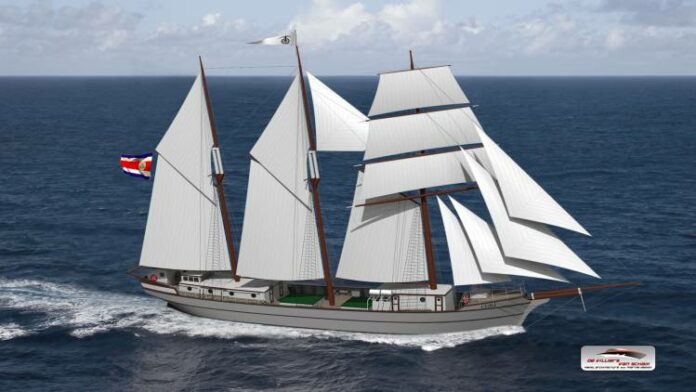
Sailcargo announced that construction has officially begun for Ceiba, a 148-foot emission-free cargo tall ship. By synthesizing old-world ship building techniques with modern propulsion engineering, the vessel will feature a 100% electric engine, solar batteries, panels and wind turbines, to make all auxiliary power 100% renewably sourced.

In addition, an advanced variable pitch propeller will convert kinetic energy into stored electrical energy to power the ship's functions. Due to the high torque efficiency of electric engines, Ceiba's engine will only need to be about 120 horsepower, which is easy half of what would be required for other engine designs.

The vessel's three masts will also provide sufficient sail area to sail in very light winds, but also to provide flexibility and maneuverability for sail changes during heavy weather. Having sail area lower to the deck helps to stabilize the vessel, making her safer.

The three-masts also allow for flexibility when loading or discharging cargo, as her spars double as cranes. The vessel will be able to ship a variety of types of cargo, and will have a chilled hold available.

The construction will use Costa Rican materials wherever possible and will need three years to complete. "Our objective as costa rica's flagship is to demonstrate that a carbon neutral shipping company can not only be financially competitive, but can inspire change and educate."

Source:safety4sea


AI toughens up blades

0

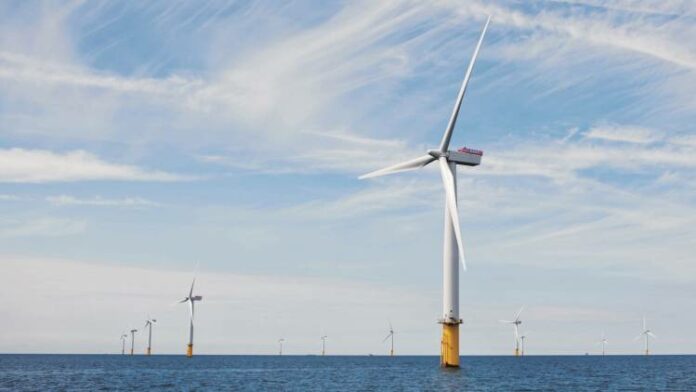
A research project in Finland is using artificial intelligence (AI) and 3D printing to develop wind turbine blade materials highly resistant to erosion.

In the ‘antiAGE’ project, Finnish applied research organisation VTT modelled the rates of erosion of materials used in blades, due to effects of weather.

VTT principal scientist Anssi Laukkanen said: “Blade material erodes due to the effects of rain, hailstones and sand dust, significantly reducing the service life of wind turbines."

Accelerated replacement of turbines becomes expensive. Up to 2–4% of the value of all wind-generated power is lost as a result of this problem.

VTT has developed a durable material that hardens when exposed to mechanical stress, through a design process using virtual testing and machine learning.

AI was used in the project to unpick complex cause-and-effect relationships between different weather conditions and particulates, such as dust, on blade erosion, simulating solutions and presenting infinite numbers of alternatives best suited to a turbine’s operational requirements.

3D printing, or additive manufacturing, allows the production of new formulations of composite material with specific features and functions in any shape at reasonable cost.

“When we published the news about our solution, wind turbine manufacturers became immediately interested in it. We are now negotiating details with commercial operators,” Laukkanen said.

VTT is also applying for additional funding for the project, as other segments of the wind industry could also potentially benefit from optimised materials.

Laukkanen said: “It is a classic problem within the wind industry, which can add billions of euros of costs."

As wind turbine sizes increase and wind farms are placed out on the sea in increasingly demanding conditions, the problem will become more serious, he said.

Source:renews

Eneco, Boralex, Van Oord and DGE enter Dunkirk race

0

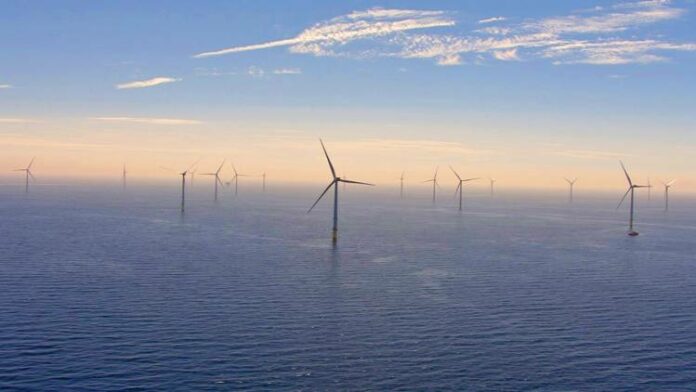
Eneco, Boralex, Van Oord and Diamond Generating Europe have joined forces to bid for the right to develop an up to 600MW offshore wind farm off the coast of Dunkirk in France.

The Vents de Dunkerque consortium said it can provide a package for the whole lifecycle of the project.

Eneco, Van Oord and DGE have already cooperated on the operational 129MW Luchterduinen project off the Netherlands.

They are also working together to build the 369.6MW Norther plant off Belgium and the 700MW Borssele 3&4 project off the Dutch coast.

Boralex will bring knowledge of the French market to the group.

A total of nine consortia are participating in the tender for the Round 3 Dunkirk project.

They have until early March to submit bids for the wind farm, with the government set to announce the winner this summer.

Source:

Schottel and Svitzer collaborate on mechanical hybrid concept

0

A new propulsion concept allows workboats and tugboats to benefit from flexible hybrid propulsion without installing a gearbox or additional electrical components.

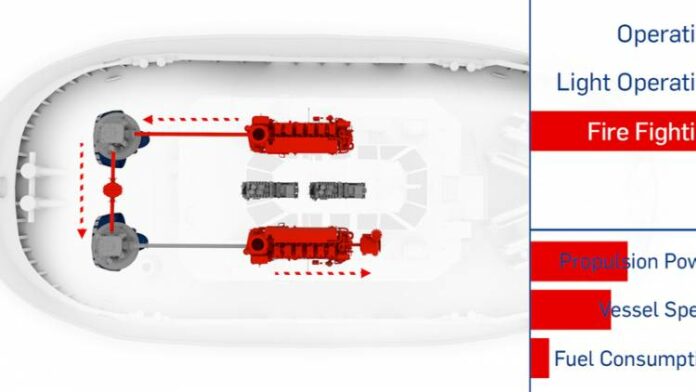
The new arrangement is based on Schottel’s recently developed Y-Hybrid thruster technology. This allows port and starboard azimuth thrusters to be connected, meaning that both can be driven by either of the main engines. 

Svitzer, the global tugboat operator owned by Maersk, has been involved in the design of the new concept. The companies are discussing a pilot installation on one of Svitzer’s 430 vessels.

The conventional hybrid arrangement for tugboats involves at least one power source (diesel engine and/or electric motor) for each thruster. Using the Sydrive-M, the flexibility of a hybrid arrangement can be achieved without the addition of gearboxes or electrical components. This arrangement means that owners can select a hybrid configuration without altering their existing vessel design.

The hybrid configuration allows many permutations depending on operational mode. In light operation or free sailing mode, when full power of both engines is not needed, one of the two main engines remains alternating off – reducing the operation hours of the main engines, with an equivalent reduction in maintenance. This mode also means that the working engine is more optimally loaded than two engines working at relatively low load in a conventional set-up.

In fire-fighting mode, the disengaged main engine is used to drive the pump through its front power take-off, with no requirement for dedicated engines or extra clutches and controllable pitch propellers. In full thrust operation, the connection between the two thrusters is disengaged and each engine is engaged to a thruster.

Sydrive-M can be integrated into any common vessel design with direct propulsion with no need of design changes. It is available for Schottel’s Rudderpropeller and EcoPeller series of azimuth thrusters from 1,000kW up to 3,000kW.

Source:osjonline