5.2 C
New York
Home Blog Page 1165

Global OTEC Resources Set for Maldives Survey

0

Global OTEC Resources is undertaking geotechnical, meteorological and oceanographic studies off the Maldives.

The company which aims to bring a new form of renewable energy to tropical islands has spent the last year developing concept for using ocean thermal energy conversion (OTEC)

Global OTEC Resources was awarded a £140,000 ‘Marine Challenge Fund’ grant in September 2018 to further the concept and will now look at the specific characteristics of the Maldivian archipelago.

A geotechnical study will determine how the relevant physical and chemical properties of the seabed will influence the design of the mooring system. A number of borehole samples and laboratory test results will be considered to carry out an initial assessment.

The company has appointed Ryder Geotechnical to provide expert advice based on their experience in the offshore oil and gas and renewables sectors.

Global OTEC Resources is also working in collaboration with the University Of Exeter’s Ocean Engineering group through Marine-i, who will deliver a preliminary site MetOcean report in the first quarter of 2019 covering several identified key areas in the Maldives.

The study will encompass a review of open source materials, in order to consider the temperature profiles, wind speeds, wave heights and currents at multiple co-ordinate points across the region, and should allow the Global OTEC Resources team to refine the hull and mooring system for the unit.

All of the above will help the company to further refine its cost model for the capital expenditure required to harness the Maldives thermal energy stored in the Indian Ocean.

Earlier this year, the Maldives Ministry of Economic Development issued a letter of support to Global OTEC Resources in a follow up to its meeting with the company held in Male in December.

Global OTEC Resources’ managing director, Dan Grech, said: “The interest we’ve received from the government and private tourism sector really highlights the potential for developing zero-fuel OTEC plants in the Maldives and we’re incredibly excited about this venture.

Source:globalotec

Carbon Trust focuses on ways to reduce offshore vessels emissions

0

The Carbon Trust’s Offshore Wind Accelerator (OWA) announced a competition to accelerate the development and uptake of new technologies, in order to reduce emissions and fuel consumption in offshore vessels. For this reason, it also called the industry to respond to a Request for Information (RFI) for the competition.

The RFI is the first step in the competition that will have an estimated funding envelope of circa £400,000. The results from the RFI will help measure the current interest and development levels, and help efforts to tailor the competition to best suit industry needs.

At first the focus will be on systems, subsystems and technology that support the operation of Crew Transfer Vessels (CTV). However the industry’s view for larger vessels such as Service Operations Vessels in the future will also be considered.

Moreover, the RFI requires respondents to complete 13 questions regarding current state of the art industry systems, subsystems and technology projects, and should take no longer than 15 minutes to complete.

The project is led by BMT Defence and Security UK (BMT DAS) and Black & Veatch, commissioned by the Scottish Government and nine OWA industry partners – EnBW, EON, Iberdrola, Innogy, Ørsted, Shell, SSE, Equinor, and Vattenfall.

Source:safety4sea

KPMG: Cyber security is also for small businesses

0

'Cyber security is for all businesses' noted Mr. Jonathan Lavender, Global Chairman, KPMG Enterprise, KPMG International, on the occasion of the cunderway in Davos. As he explained, hackers are always targeting the unprepared and this is why the majority of cyber-attack victims are small businesses.

There is a big misconception that only large, billion-dollar corporations are targeted. The truth is that cyber hackers are opportunistic and seek out organizations that are not prepared, regardless of size. In fact, the majority of malware victims (58 percent) are small businesses, which, for many reasons chief among them cost, tend to be least prepared for a cyberattack.

The threat of a cyber-attack to derail growth is keeping CEOs of large organizations up at night, according to a KPMG’s survey of 1,300 CEOs around the world. Almost half of respondents (49%) said that becoming the victim of a cyber-attack is a case of ‘when’, not ‘if’.

Notably, in 2018, there were 53,000+ security incidents and 2,216 confirmed data breaches in the US alone, according to a new report by Ponemon Institute and sponsored by Keeper Security.

In this regard, Mr. Lavender highlighted that collaboration across industries, boarders and public and private sectors is key to an integrated response to cyber-attacks, given the threat specifically to private businesses, their involvement in developing a global control system is both essential and necessary.

While their vulnerability is clear to cyber criminals, small businesses do not appear to be taking action to shore up their defenses. Only about half of small businesses report having a clear cybersecurity strategy, said another survey by US insurer Hiscox.

It’s understandable as resources are limited and working in and on the business to drive growth is the main focus for many small business owners. Still the risk to reputation, customers and the bottom line should not be ignored.

Five key findings on cyber protection:

  • Cyber security is not just a technology issue. It’s a business issue that should be prioritized and that requires a holistic approach.
  • The threats aren’t just external. Gaps in various links in the supply chain can also leave a company exposed. Or an employee may inadvertently click on a rogue link or open malware in an email. In all cases, the damage can be significant.
  • Vigilance is key. This means being proactive, staying up to date and sharing information about cyber threats and vulnerability. In the UK, the National Cyber Security Centre issues alerts and advisories to address cyber security issues being detected there.
  • A rapid response plan that takes hold within 48 hours is critical as important information leading to the identification of the who, what, where, why and how of the attack may be overwritten or erased. Digital and automated solutions can help companies react quickly.
  • Behavior matters. The most technically sophisticated security solution is completely useless if it isn’t used correctly by the majority of those within the organization. This will require embedding cybersecurity in the company culture.

Source:safety4sea

Subsea duo join hands

0

Subsea equipment rental, sales and services outfit Ashtead Technology is partnering with 4Subsea to boost the former's inspection, maintenance and repair services in offshore energy markets, including renewables.

Under the terms of the deal, Ashtead will add 4Subsea’s sensors to its portfolio and have access to latter's team of subsea experts.

4Subsea will strengthen its position in the global sensor market with access Ashtead’s sales and distribution network, which includes facilities in Aberdeen, Abu Dhabi, Halifax, Houston and Singapore.

Ashtead chief executive Allan Pirie (pictured) said: “This global strategic partnership strengthens the group’s capabilities, creating a wider, more competitive offering, while reinforcing our position as a leader in the provision of advanced subsea integrity management solutions."

Our customers now have access to a leading innovator in offshore asset monitoring and integrity solutions.

“Adding 4Subsea’s autonomous sensor technology and services to our existing capabilities means we can now offer a comprehensive monitoring and integrity management service to support the performance and life extension of critical infrastructure.”

4Subsea chief executive Peter Jenkins said: “We are pleased and excited about building a partnership with Ashtead Technology."

They hold a world-leading position in providing offshore equipment solutions to the oil and gas industry, and we regard this partnership as a joining of forces to enhance our offering to the market and drive greater customer success.

Ultimately we believe this partnership will support operators in reducing both risk and costs associated with operating subsea fields.

Source:renews

New report highlights increasing oil and gas industry confidence

0

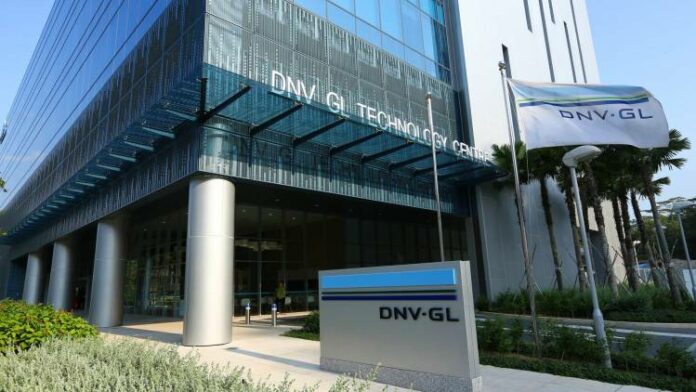
New research from DNV GL has revealed that companies’ resilience to volatile market conditions will be put to the test in 2019, as business leaders expect the industry to commit to greater investment to meet hydrocarbon demand.

Two-thirds (67%) of senior oil and gas professionals believe more large, capital-intensive projects will be approved this year, according to “A test of resilience,” DNV GL’s ninth annual report on the outlook for the oil and gas industry.

Seventy percent plan to increase or maintain capex in 2019 – nearly double that of 2017’s figure of 39%. And the proportion of industry leaders who expect to raise or sustain opex has also grown over the two-year period, from 41% in 2017 to 65% for 2019.

Recruitment is firmly back on the agenda after four years of consistent reductions, supported by cost-efficiency measures, according to the report. One-third (34%) of the 791 senior professionals surveyed expect to grow their workforce in 2019 – more than three times as many respondents than four years ago (10%). More than one-third (39%) also expect to increase the use of contractors this year.

Liv A. Hovem, CEO, DNV GL – Oil & Gas, said: “The global oil and gas industry is entering 2019 with renewed optimism and a greater sense of resilience. Despite greater oil price volatility in recent months, our research shows that the sector appears confident in its ability to better cope with market instability and long-term lower oil and gas prices. For the most part, industry leaders now appear to be positive that growth can be achieved after several difficult years.”

“While increasing optimism and expectations for higher spending are to be welcomed, there will also be new challenges for the sector this year. The industry’s resolve to maintain the efficiencies established during the recent market downturn will be tested as the sector relaxes its focus on cost control, and signs of supply chain inflation and skills shortages emerge,” Hovem added.

DNV GL’s research shows signs that the old spending habits which affected the sector during the pre-2014 period of high oil prices may be returning. In 2019, fewer senior oil and gas professionals (54%) believe that the cost efficiency measures put in place during the downturn are permanent, compared to 2018 (62%). The proportion of companies planning to increase strictness on cost control has also dropped from a high of 72% in 2015 to 44% for 2019.

As oil and gas companies make more investments and modestly relax their tight grip on costs, DNV GL has for the first time asked senior oil and gas professionals about an underlying danger of a gradual cost creep in the coming years. Four out of 10 (41%) said they had experienced cost inflation from suppliers in 2018, rising beyond half in the Middle East and North Africa, and in Asia/Pacific. The downstream sector is most affected (60%) compared to just over one-third in upstream (34%). Forty percent expect suppliers to drive cost inflation in 2019.

Despite suggestions from some that cost inflation is re-emerging, the oil and gas supply chain says it is still feeling the pinch. Respondents who primarily identify as suppliers are much less confident in achieving revenue (66%) and profit targets (57%) in the year ahead than buyers (82% and 80%, respectively).

While more than three times as many respondents expect to grow their workforce in 2019, compared to four years ago, skills shortages and an aging workforce have resurfaced as a major concern. According to the report, the issue takes joint second place as a perceived barrier to growth, alongside the oil price and the state of the global economy. Competitive pressure is viewed as the greatest challenge.

The report highlights the escalating challenge of addressing its attractiveness to young talent, who may view the sector as unstable and environmentally unsustainable after a period of prolonged stagnation during the downturn.

The oil and gas industry’s efficiency efforts coincide with one-third (36%) of senior oil and gas professionals expecting increased research and development (R&D) spending this year.

Digitalization comfortably leads R&D priorities for the oil and gas industry in 2019, with 60% of respondents to DNV GL’s research expecting their organization to increase spending in this area in 2019.

The top three priorities within the industry’s digitalization agenda all relate to data sharing, integration, and access (cloud-based applications, data platforms and data sharing between organizations). Two-thirds of respondents (67%) say their company will prioritize the quality and availability of data in 2019.

Half (51%) of senior industry professionals will focus on actively adapting to a less carbon-intensive energy mix in 2019, up from 44% last year. While momentum for long-term decarbonization is building, DNV GL’s research indicates that companies today are more likely to be doing so because they are told to, rather than because they want to.

Regulation topped the list of factors most likely to drive oil and gas companies to decarbonize their operations in 2019. The energy transition and ‘doing the right thing for society’ came in ninth and tenth place, respectively.

One-third of respondents said that they are looking to increase their investment in renewable energy in 2019, and more than one-third (35%) said that their organizations will increase investment in gas-focused projects and portfolios.

R&D into the decarbonization of gas transmission and distribution networks through the introduction of hydrogen into the mix is on the rise – more than one-quarter (28%) of respondents expect to see a significant increase in its use in 2019.

Hovem said: “Not long ago, the industry regarded the energy transition as a transformation on the horizon; however, it has become clear that this significant change is already upon us. The sooner companies start planning and acting, the better.”

TUI Cruises Takes Delivery of New Mein Schiff 2

0

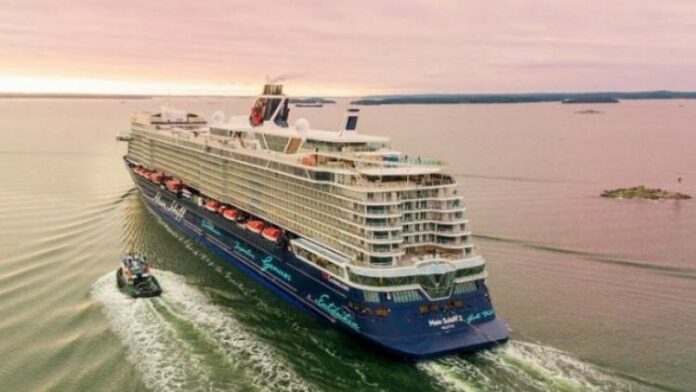
TUI Cruises has taken delivery of New Mein Schiff 2, the cruise line's sixt newbuilding from Meyer Turku.

New Mein Schiff 2 is a sister ship to Mein Schiff 1, with an added length of 20 meters from the previous ships in the series. TUI Cruises and Meyer Turku have also agreed to build Mein Schiff 7 with delivery expected in 2023. The new vessel will be based on the design of the Mein Schiff 1 and Mein Schiff 2

TUI Cruises used a combination of designers for the new vessel including Tillberg Design, Werner Aisslinger, 3Deluxe and cmDesign.

New Mein Schiff 2 

Length: 315 meters
Width: 36 meters
Gross Tonnage: 111,500
Number of Passengers: 3,132
Number of cabins: 1,437
Crew: 1,092
Flag: Malta
 

Source:maritime-executive

Royal Navy and USCG Team Up for Anti-Narcotics Effort

0

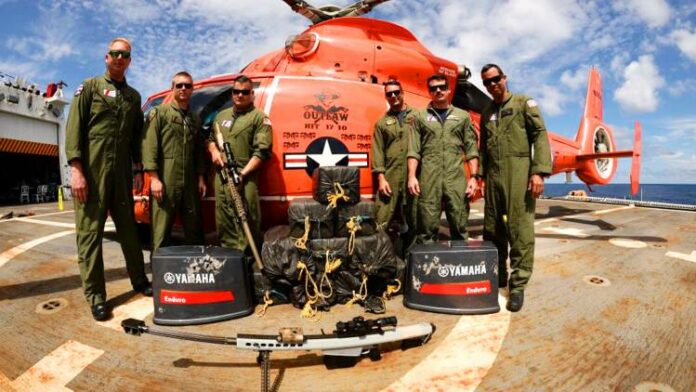
The Royal Navy auxiliary RFA Mounts Bay has embarked a U.S. Coast Guard sniper squadron and a law enforcement boarding team to join the anti-smuggling effort in the Caribbean. The U.S. Coast Guard's counter-narcotics teams – who have not been paid since December 31 due to the ongoing shutdown – will partner with the crew of Mounts Bay to target go-fast smuggling boats. 

Mounts Bay provides the UK’s long-term naval presence in the Caribbean. The ship dedicates her summer and autumn seasons to disaster relief operations in the wake of hurricanes, an all-too-frequent mission in the region. The rest of her year is focused on counter-narcotics patrols. 

To further this mission, Mounts Bay has embarked a Coast Guard HITRON team (Helicopter Interdiction Tactical squadRON) and a LEDET (Legal Enforcement DETachment). Coast Guard LEDETs often lead the way for American and allied interdictions at sea, not just from the service's own cutters, but from U.S. Navy, Canadian Navy and British vessels as well. 

The USCG's HITRON squads chase down go-fast boats using a helicopter, and if necessary they shoot out the boat's engines with high-caliber rifles (after warning shots). This dramatic tactic gives surface forces a chance to catch up to the high-speed smuggling craft and conduct a boarding. Over the course of 20 years in operation, the squad's aircrews have intercepted more than 500 boats, 420,000 kilos of cocaine and 27,000 kilos of marijuana with a wholesale value of more than $17 billion.

The teams joined the Mounts Bay in Miami in December, then sailed for Curacao. The LEDET will conduct most board-and-search operations by boat, so Mounts Bay’s Pacific 24 RIB took them out for test runs to give them a chance to practice boat-to-boat boardings with a "suspect" craft.  The HITRON team's helicopter has been practicing operations from Mounts Bay's deck, including coordinated drills involving the helicopter and boats against a simulated target – a small boat crewed by some of the auxiliary’s sailors.

“We are very much looking forward to supporting law enforcement and security in the Caribbean,” said Captain Angus Bissell RFA, Mounts Bay’s Commanding Officer.

Source:maritime-executive

Port Authority of Bay of Algeciras joins Tradelens

0

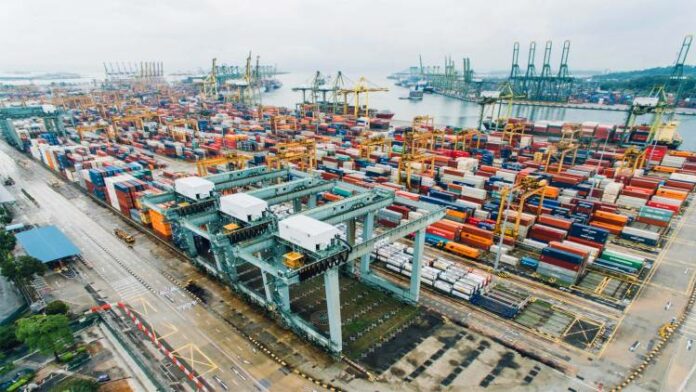
The Port Authority of the Bay of Algeciras (APBA) will cooperate with IBM on Tradelens, the digital platform based on blockchain that IBM and Maersk have developed. By the end of 2018, over 100 organizations and 20 port operators have joined Tradelens.

The TradeLens project is a technological solution developed by IBM and Maersk that allows the blockchain to be applied to the global supply chain.

The TradeLens ecosystem currently includes more than 20 port operators and terminals around the world, representing approximately 234 seaports on five continents, including PSA Singapore, ICTSI, Patrick Terminals, Modern Terminals in Hong Kong, Port of Halifax, Port of Rotterdam, Port of Bilbao, PortConnect, PortBase and terminal operators Holt Logistics in the Port of Philadelphia.

According to local media, the platform will enable APBA to safely and efficiently exchange information and documentation between partners within a supply chain. Namely, the platform will provide value for shippers, freight forwarders, logistics operators and shipping companies.

On November 5, Valenciaport announced its involvement with the TradeLens project. Valenciaport will be integrated as "Early Adopters", a category which the parties consider themselves of mutual interest so that the technologies that are developed consider Valenciaport as a collaborator from the beginning.

Furthermore, the Port of Montreal joined TradeLens, too, alongside Canada Border and Services Agency (CBSA) as the two newest Canadian members of the global, blockchain-enabled shipping solution.

However, during November, there were reports that Maersk and IBM were reportedly struggling with their blockchain platform, as besides them, only one other carrier has joined in, Pacific International Lines (PIL). This comes at a time when, Maersk's competitors such as CMA CGM, Cosco, Evergreen, OOCL and Yang Ming have also established a similar platform.

Namely, since its announcement, only one carrier, Pacific International Lines have joined the project. According to sources, the reason for this is the fact that Maersk’s rivals are not to keen about entering the platform on unequal terms.

Source:safety4sea

N-KOM welcomes first FSRU at the Erhama Bin Jaber Al Jalahma Shipyard

0

Nakilat-Keppel Offshore & Marine (N-KOM) says it has recently received its first floating storage regasification unit (FSRU) project at the Erhama Bin Jaber Al Jalahma Shipyard. The FSRU owned by Excelerate Energy (USA) will undergo drydocking, maintenance and upgrades at the facility, which is renowned for its expertise in handling gas carriers.

During its drydocking, the FSRU will undergo several modifications and retrofitting of new systems, including the installation of a ballast water treatment system (BWTS). To date, N-KOM has completed six such BWTS installations for various types of vessels such as LNG and LPG vessels as well as very large crude carriers (VLCCs).

Nakilat Chief Executive Officer Eng. Abdullah Al Sulaiti said: “We are proud to be entrusted with this repair project from our partner Excelerate Energy (USA), which is made even more significant since it is the first FSRU to be repaired at our shipyard. This goes to show the remarkable progress the shipyard has made since it first began operations in 2011 to where it is today – a centre of excellence for marine repairs and offshore fabrication that has safely and reliably delivered more than 880 projects to clients worldwide.”

Excelerate Energy’s Managing Director Steven Kobos said: “Over the past months, we have enjoyed a fruitful working relationship with Nakilat and this is today strengthened by the award of the FSRU repair project to their world-class shipyard, prior to its deployment in Bangladesh. We look forward to the growing partnership between both companies and the successful delivery of the project.”

Earlier last week, Nakilat’s floating storage regasification unit (FSRU) ‘Exquisite’ achieved a milestone accomplishment by completing the 200th ship-to-ship transfer of liquefied natural gas (LNG) at the Engro Elengy terminal (EETL) in Pakistan’s Port Qasim. Nakilat acquired a 55% interest in its first FSRU ‘Exquisite’ back in 2018, after forming a joint venture agreement with Excelerate Energy-USA. This strategic acquisition paved the way for Nakilat to widen its international footprint and take its first step into a new business segment.

Ship-to-ship transfer operations occur in the open ocean, in a protected body of water at a location between the LNG load port and the market delivery point, or at a dockside LNG receiving terminal. It involves the transfer of cargo from one vessel to another moored alongside it. In this instance, LNG vessels are moored alongside the FSRU and transfer their cargo to the latter, which acts as a regasification terminal.

N-KOM is one of Middle East's leading shipyards, offering a comprehensive range of marine services as well as solutions for the oil and gas industry. Strategically located at the heart of oil and gas activities in the Arabian Gulf, Nakilat-Keppel Offshore & Marine (N-KOM) combines a wealth of experience and expertise from its parent companies Qatar Gas Transport Company (Nakilat) and Keppel Offshore & Marine (KOM), to provide repair, conversion and construction services for marine vessels, offshore and onshore structures. Spanning over 50 hectares, the comprehensive facility is equipped with two graving docks and a floating dock that can easily accommodate VLCCs, quays and piers offering a total berthage capacity of 3,150m, a range of workshops ideally situated in front of the drydocks, more than 500,000sqm of fabrication area and sub-contractor facilities on-site, thus enhancing the shipyard's flexibility and capabilities.

Source:portnews

MPA Singapore develops inter-operability framework for electronic trade documents

0

MPA Singapore has announced the development of an inter-operability framework for electronic trade documents for the maritime and trade industries, which is expected to boost Singapore’s standing as a global maritime hub. This was announced by Dr. Lam Pin Min, Senior Minister of State for Transport and Health, on the sidelines of the Singapore Shipping Association’s (SSA) Annual Lunar New Year Cocktail Reception, along with another initiative, the Singapore War Risks Insurance Conditions (SWRIC) aimed at enhancing Singapore’s maritime insurance offerings.

Bolstering digitalisation of electronic Bills of Lading

Seeking to strengthen position as a global maritime hub, the Maritime and Port Authority of Singapore (MPA) is developing inter-operability enablers, as part of its efforts to bring about digitalization benefits to the wider supply chain.

This is a step-up to the three-party MoUs that MPA, SSA and Singapore Customs signed at the Sea Transport Industry Transformation Map launched in January 2018, to jointly look into the digitalisation of trade and maritime documentation, such as Bills of Lading (BL), in the industry.

To facilitate inter-operability of the solutions developed by the various consortiums, such as those by APL and the other by PIL and IBM, the members included a new MoU partner, Info-communications Media Development Authority (IMDA), to develop a new inter-operability framework.

Working together with IMDA, the industry can expect to see different digital ecosystems inter-operate seamlessly with efficient exchange of electronic trade documents. The work will entail the development of a set of governance and legal frameworks, technical standards and inter-operable digital enablers.

"The close partnership between the Government, the industry and SSA is a unique competitive advantage for Singapore. We must continue to strengthen this partnership. This will enable Maritime Singapore to stay relevant and competitive,"…said Dr. Lam.

Singapore War Risks Insurance Conditions (SWRIC)

The SWRIC is an enhancement to the Singapore War Risks Mutual (SWRM), Singapore’s first national war risks insurance facility which was launched in 2015, as part of efforts to develop Singapore as a comprehensive marine insurance hub. In a short span of four years since its launch, the SWRM cover has insured almost 800 ships.

Available to members of SSA irrespective of the flag of the ship, and non-members whose ships are registered in Singapore, the cover under SWRM rules includes Protection and Indemnity (P&I) war risks, hull war risks, detention and diversion expenses, sue and labour and discretionary insurance.

The SWRIC are the first insurance conditions to be written from a shipowner’s perspective, addressing important risks felt by the global shipping community. Local expertise will be developed to ensure that the conditions are updated and remain relevant to the industry.

Source:safety4sea