5.2 C
New York
Home Blog Page 1167

7 green shipping techs to get along with IMO’s sulphur cap

0

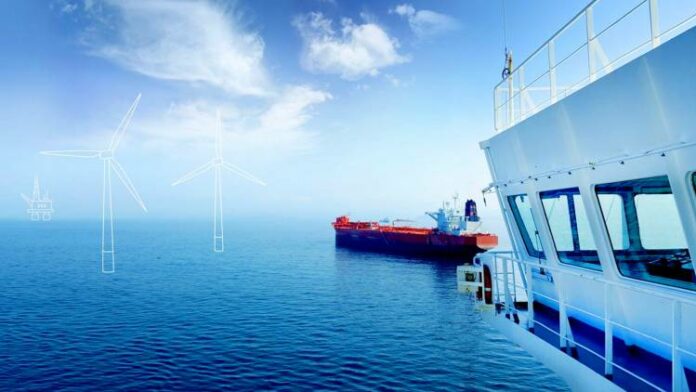
Based on IMO's strict sulphur regulations, the shipping industry is looking for ways to take its shipping in a greener and more sustainable path by innovating in the technological fields. As IMO has demanded, the shipping industry's sulphur emissions should not exceed the 0.50% m/m of sulphur, by 2020 unless the ships are equipped with scrubbers or get along with other options available.

According to Bloomberg, many are the companies that aspire to look for green technologies and adapt to the new environmentally friendly regulations. Specifically:

  • Sailing

Firstly, start-up, Japan-based, Eco Marine Power has designed a sail with solar panels on its body. This aims to improve fuel saving and decrease emissions.

Also, A.P. Moller-Maersk A/S is thinking of using a modern version of sail to help its vessels. The devices, which are being tested on one of Maersk’s tankers, look more like huge marble columns placed on its yacht.

The two 10-story-tall cylinders can harness enough wind to replace 20 % of the ship’s fossil fuels, as stated by Norsepower, the company that makes them. The fuel-efficient technology expected to save approximately 10% in fuel consumption and associated emissions on 109,647 DWT product tanker vessel.

  • Smart ships using air lubrication to save fuel

A first option is air lubrication, which is a system used in vessels by using air to decrease the frictional resistance of the hull of a ship. As a result, the vessel glides easily through water. Tiny air bubbles are pumped through vents fitted in the hull of the ship.

Another option, being tried by firms including Samsung Heavy Industries Co. and Mitsubishi Heavy Industries Ltd., is streaming bubbles out of tiny holes in a ship’s underbelly, as a lubricant, to help it slice more cleanly through the water.

  • Robot Cleaners

All the biggest cargo lines are using submarine robots to strip away debris and enhance fuel efficiency.

One device, developed by a Japanese startup called Hullbot, looks, as stated, like a propeller-powered go-cart with nylon brushes and a vacuum on its belly.

Thrusters on its back keep it pinned to the vessel’s hull. No divers are needed, but the machine still requires a human operator to guide it by remote control.

  • Hydrogen Fuel

Hyundai Heavy Industries Co., announced in 2018, that it’s developing hydrogen-fueled engines for its massive vessels.

Also, a small ferry made its appearance, as the first fuel-cell passenger ferry, the Water-Go-Round, which begins operating on San Francisco Bay.

Hydrogen-based ferry systems are also planned in Norway and Scotland’s remote Orkney islands.

  • Battery Boats

In Norway, where the government wants two-thirds of all ferries carrying passengers and cars along its Atlantic coast to be electrified by 2030, Kongsberg Gruppen ASA is offering battery-powered ship engines and developing a short-haul electric container vessel.

In 2017, China launched the first fully-electric cargo carrier. The vessel is emissions-free and is ran by batteries sufficient enough to  power three dozen Tesla sedans.

  • Exhaust Scrubbers

Within the next few years, some 10 to 15 % of ships are projected to install scrubber systems.

Companies such as Finland’s Wartsila OYJ and Sweden’s Alfa Laval AB, state that there’s already a big backlog of orders, so many ships won’t be outfitted in time for the 2020 rule change.

  • Fossil Fuel Switch

The most immediate alter is switching to lighter marine gas oil. It’s still a fossil fuel, but less polluting because it’s been more thoroughly refined.

Liquefied natural gas is another option, but the cleaner fuel requires whole new engines and port facilities to store it.

In 2016, Nippon Yusen KK launched the world’s first LNG-powered car carrier. Whereas, last October a Russian super tanker crossed the Baltic Sea, running on the condensed gas.

Source:safety4sea

Rolls-Royce sells rights to dynamic positioning product to US firm

0

Rolls-Royce Commercial Marine has agreed to sell its dynamic positioning (DP) product to US-based thruster manufacturer Thrustmaster of Texas, Inc.

The agreement means that Thrustmaster of Texas takes over the intellectual property rights to produce and sell the DP product. 

Thrustmaster of Texas president Joe Bekker told this publication "Thrustmaster plans to move the production of the DP product acquired from Rolls-Royce Commercial Marine from Norway to Houston, TX (where the company is headquartered), during the course of this calendar year". 

"We plan to grow the product both as an independent product line as well as an accessory to our existing thruster products. We are not looking at licensing it to other producers," Mr Bekker said, noting that the product complimented the existing Thrustmaster product line.

In a statement, Rolls-Royce said it will also pass on necessary documentation and knowledge of the DP product, but that agreement does not involve transferring personnel.

In early July 2018, Rolls-Royce agreed to sell its Commercial Marine division to Kongsberg in Norway. The acquisition hasn't finalised yet, however, as it is awaiting a ruling from competition authorities, which is due in the first half of 2019, according to a Kongsberg spokesperson.  

As a direct result of acquiring Rolls-Royce Commercial Marine, Kongsberg Gruppen announced last week it had entered into an agreement with Rome AS to divest its Evotec division in order to meet regulatory requirements regarding competition in the market for seismic vessel deck equipment. 

The deal closed as of 21 January 2019, and neither party has disclosed the price of the transaction.

Thrustmaster of Texas manufactures heavy duty commercial marine propulsion and thrusters. The factory and production of all thrusters is based out of Houston, Texas, with a global network of sales offices in Rotterdam, Singapore, China, Dubai and Brazil. A service office is located in Houma, Louisiana to assist offshore clients.


IMO chief highlights seafarer’s role in automated future

0

IMO Secretary-General Kitack Lim has highlighted the need to consider seafarer training and standards as the use of technology in shipping evolves in the future, and the automation of tasks currently performed by humans continues to grow.

How will the seafarer of the future manage the challenges related to an increasing level of technology and automation in maritime transport? How will the new technologies impact on the nature of jobs in the industry? What standards will seafarers be required to meet with respect to education, training and certification to qualify them for the jobs of the future?” Mr Lim said.

Member States and the industry need to anticipate the impact these changes may have and how they will be addressed.”

Mr Lim was speaking at the launch of a new International Transport Workers’ Federation (ITF) and World Maritime University (WMU) report, Transport 2040: Automation, Technology and Employment – the Future of Work, which offers an independent assessment of how automation will affect the future of work in the transport industry, focusing on technological changes and automation in road, air, rail and maritime transport.

The report concludes that the introduction of automation in global transport will be “evolutionary, rather than revolutionary,” and that “despite high levels of automation, qualified human resources with the right skill sets will still be needed in the foreseeable future”. Technological advances are inevitable, but will be gradual and vary by region. Workers will be affected in different ways based on their skill levels and the varying degrees of preparedness of different countries.

The integration of new and advancing technologies into the regulatory framework is an important strategic direction for IMO, balancing the benefits derived from new and advancing technologies against safety and security concerns. These include the potential impact on the environment and on international trade facilitation, the potential costs to the industry, and the impact of technological change on personnel, both on board and ashore.

Source:thedigitalship

Began a new race in the Arctic

0

Officially, the Arctic countries agreed to keep the Arctic zone free from geopolitical tensions, the Danish newspaper reminds. However, the region is rich in raw materials and has an invaluable strategic importance in terms of security policy. In addition, other countries have claims to the Arctic. Danish experts are alarmed, first of all, by China's investments in Greenland.

Nuclear icebreaker "Yamal»

The two-hundred-meter Danish vessel "Venta Maersk" with a capacity of 3.6 thousand containers has just completed a risky passage along the Northern sea route. Coming out of Vladivostok, it passed through the Bering Strait separating the United States and Russia, rounded the Arctic coast of Russia and Norway and crossed the Baltic sea. The ship finished its journey in St. Petersburg, becoming the first container ship to make this dangerous route.

In recent years, shipping companies have been looking more closely at the Northern sea route to expand the current route network. Compared with the route through the Suez canal, the Northern sea route is shorter, cheaper and also takes half the time.

Geopolitical battle for the Arctic

Despite the constant cold, the Arctic has become a new hot spot for global security policy. Now there is a virtual race to the Arctic, it's something like a hundred years ago competition between Amundsen and Scott: who will be the first to reach the South pole. It involves both superpowers and smaller countries, and each in the region has its own "actions" and its own interests.

The task is to secure the right to huge deposits of oil and gas hidden in the depths of the Arctic. Now, when the region is released from the ice, it will be possible to deploy large-scale searches and production. In addition, we are talking about military means to support their geopolitical claims in this sensitive region.

Greenland

Thanks to Greenland, Denmark can be considered a great Arctic power. Denmark, Russia, USA, Canada, Norway, Sweden, Finland and Iceland have ownership in the Arctic or border it — and therefore are part of the Arctic Council. Now they are engaged in internecine disputes. Nevertheless, they agree that they have the primary right to a vast territory, which they intend to divide among themselves. Hitherto it was very peaceful under the auspices of the UN, which, however, did not stop the growth of military tension. In addition, other countries dream of stepping on the Arctic ice.

Denmark is a key player

"Of course, we recognize that the Arctic is of fundamental importance for Russia — as well as for ourselves. Just look at the world map! We want the Arctic to remain a low-voltage zone, because we actually cooperate well with the Russians in the Arctic," explains defense Minister Klaus iort Frederiksen (Klaus Hjort Frederiksen). "Denmark, of course, closely monitors the actions of Russia," he adds.

Watching the Russians and the US. In August the Pentagon restored disbanded was the Second fleet. His job is to patrol the North Atlantic. This should be a response to Russia's actions in the Arctic.

"Everyone strives for a conflict-free solution of issues. The only problem is that China's interests in relation to the sea "silk road" are contrary to American interests. Countries that usually prefer to do business with the US will increasingly cooperate with China," he says. In his opinion, Pakistan is a vivid example of what the US Chinese intentions have already noticed.

"The same will happen in the Arctic. Investment in Greenlandic airports was only a minor prelude to future developments. The Chinese see the Arctic ocean as the focus of their future trade routes, and there they will have to confront Russia or several NATO members. Therefore, the easiest way to cling to Greenland, " says Andre Ken Jacobsson.

China as a polar superpower

The Danish military intelligence service also warns about China's ambitions.

"The close ties between Chinese companies and China's Communist leadership pose particular risks due to China's extensive investment in Greenland," Danish intelligence warns in its recent risk assessment, where China and the Arctic have a special role to play.

The police security service has just recently seconded its security adviser to the Greenland capital of Nuuk for consultation and monitoring of the Arctic zone.

Top of the world

The Arctic ocean is claimed by a number of countries — even though not all of them border on the territory around the North pole. They justify their position by the fact that this area falls into the category of the common good. Officially, everyone agreed to make the Arctic a low-voltage zone, but the build-up of the military structure is in full swing.

he Arctic Council, which includes the countries of the Arctic region and its indigenous peoples, deals exclusively with civil development and environmental protection, but does not deal with military Affairs and security. Denmark is also a member.

This year, China presented a new Arctic strategy, which defined its interests in the region. Currently, Beijing is also building icebreakers and is considering the Arctic in the context of its major silk road project, which is expected to connect China with Western Europe. India also registered as an Arctic power, securing observer status in the Arctic Council in 2013, along with Singapore, Korea and Italy. Switzerland later joined the Council.

British soldiers in Norway

Not borders with the Arctic and the UK. However, a few months ago, the British government announced that it was developing its own Arctic defence strategy, which included, among other things, the deployment of a British contingent of 800 soldiers in Northern Norway. Together with their Norwegian and Dutch colleagues, they will observe Russia's military operations in the Arctic, said defense Minister Gavin Williamson (Gavin Williamson).

"We must declare our presence and readiness to defend our interests," Gavin Williamson said. "Under the ice, Russia has a lot of submarines, and it plans to build more than 100 military facilities in the Arctic. Russians make claims and carry out militarization of the region. We must be ready to solve problems as they come," he added.

Norway and the United States jointly operate a radar station in ward. The station is located in the North of Norway and is also undergoing active modernization. From here you can observe most of the Kola Peninsula, including tracking the movement of the Russian Northern fleet and Intercontinental missiles.

Russia is investing heavily

No one invests in the Arctic as much as Russia. The Kremlin has moved the Arctic to the center of its military strategy. When a few years ago, Russian defense Minister Dmitry Rogozin (so in the text, approx. pens.) presented an updated fleet strategy, the Atlantic and the Arctic were identified as strategically important areas for the Russian fleet.

Russia is systematically expanding its presence in the Arctic region. Among other things, the Kremlin announced the construction of a fleet of nuclear icebreakers. The construction of one icebreaker can take up to 10 years, so long-term planning may be required.

During large-scale NATO exercises "United Trident", held in Norway in October, there were reports that Russia had cut the connection between the structures of NATO. It is assumed that this is the work of the Arctic command, which under the command of 3 thousand people.

"Russia delivers the Arctic with great fanfare. The Arctic in Russia is a big topic. None of the Arctic countries is not as pronounced identity, as in Russia. This is an echo of the Soviet era, when many expeditions were carried out. The Arctic has always held a special place in the minds of Russians", explains Flemming, Splidsboel Hansen.

Many words, lower case

Nevertheless, he emphasizes that Russia is cunning about the Arctic in its own way. "Arctic" allocations to the Russian armed forces for the period 2015-2020 quietly decreased by 94%. In 2017, a new strategic plan for the region for 2018-25 was adopted, much more modest.

"Statements about ambitious plans for the Arctic — both civilian and military — are often followed by significant reductions, and the world press does not pay due attention to this," he explains. In addition, stresses, Splidsboel Hansen, Russia has good working relations with other stakeholders in the region, including Denmark.

The growth of military tensions

Denmark (as, indeed, Canada) rejects Russia's claims, considering the Lomonosov ridge to be the spur of the continental shelf of Greenland. These issues have been discussed for years, and Denmark is a permanent participant in the discussions.

Despite good intentions, the risk of escalation of the conflict in the Arctic still exists. The more people talk about him, the easier it is for him to break out. NATO's new Atlantic command, designed to provide transatlantic links in times of crisis, is also moving North. This can lead to further growth of tension in relations between NATO and Russia, says Flemming Hansen, Splidsboel.

Defense Minister Klaus yort Frederiksen notes that Denmark would like to adhere to the peaceful development of the Arctic in the future: "at the same time, we have no right to be naive when other countries are gaining a foothold in the region. Therefore, we must pay constant attention to the development of the Arctic and North Atlantic together with our allies."

… "Venta Maersk" passed the Northern sea route safe and sound. Now in disputed waters brewing new adventures.
Source:inosmi

BV to support Fenja project offshore mid-Norway

0

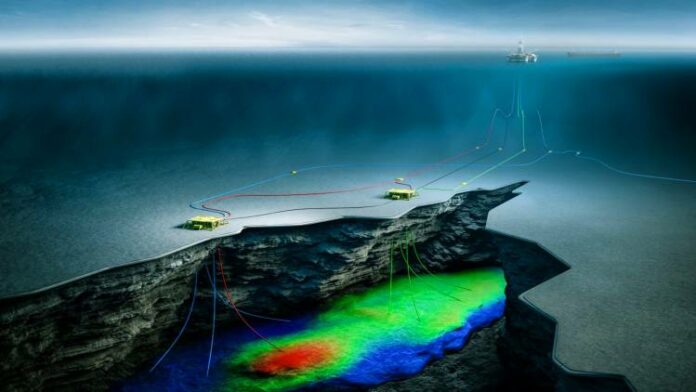
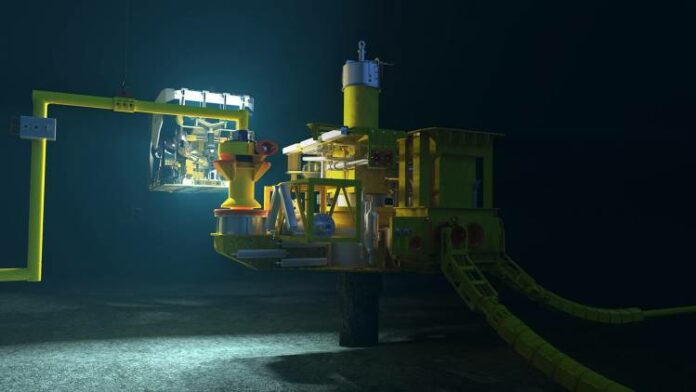
Neptune Energy has awarded Bureau Veritas a four-year contract for second and third-party inspection services for the Fenja oil and gas development in the Norwegian Sea.

The Fenja field, estimated to hold 100 MMbbl of oil, encompasses the Pil and Bue discoveries. Norway’s government approved the $1.2-billion development last April, via a six-well subsea tieback to Equinor’s Njord A facilities, 35 km (21.7 mi) to the northeast. Production is due to start in 2021.

The frame agreement runs until December 2022 and may be extended to third-party inspection services in Newcastle, Evanton, Le Trait, and other European and global locations.

Source:offshore-mag

Panama’s Bunker Suppliers Prepare for IMO 2020

0

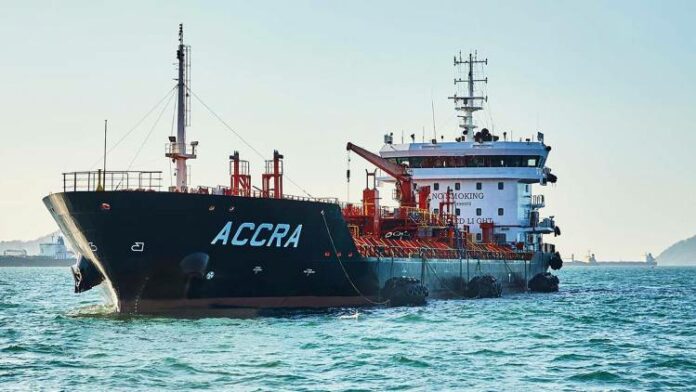
Monjasa, the second-largest local bunker supplier in the Panama Canal zone, has brought a new bunkering tanker to the area to meet growing demand. The 8,800 dwt Accra is now the largest vessel of her kind operating in the Canal, and she is among the youngest. 

“Today, the total fleet of bunker barges in Panama holds an average age of 31 years and 3,100 dwt. So, employing our own quality tanker brings new opportunities for [ships] transiting the Canal and further helps us challenge status-quo in the local market,” said Monjasa Americas managing director Rasmus Jacobsen in a statement. 

The move is part of the firm's strategy to prepare for the IMO 2020 bunkering regulations. It already operates two bunkering barges on the Canal, one in Balboa and the other in Cristobal, and it delivers about 40,000 tonnes of bunkers every month – enough to supply about one-tenth of the area's total market of 4.5 million tonnes per year.

More than ever, a safe port in terms of supply quality is the main concern of our customers. We already have the right sourcing partners in place to enable this transition towards more environmentally sound products," said Jacobsen. 

Beginning January 1, 2020, internationally-trading merchant ships will have to use fuel that contains no more than 0.5 percent sulfur. Carriage of noncompliant HFO – which typically has a sulfur content in the range of 2.5 percent – will be prohibited, unless the vessel is equipped with an exhaust scrubber. The transition process is expected to take several months, and most operators are making plans to begin in the third or fourth quarter of 2019. 

The IEA predicts that the demand for compliant fuel may have far-reaching effects on the refined product market. Refiners are expected to increase capacity rapidly over the next several years, but as they will be processing larger quantities of low-sulfur crude to meet the demand for low-sulfur bunkers, the cost of other fuels that depend upon the same feedstock could rise. 

Source:maritime-executive

Philippines Considers Buying HHIC-Phil Shipyard

0

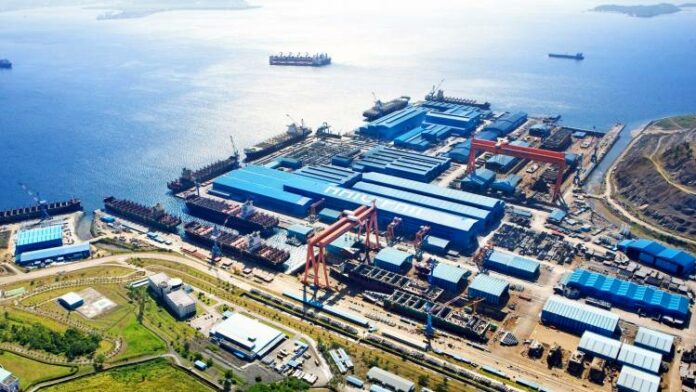
The government of the Philippines may acquire Hanjin Heavy Industries and Construction-Philippines (HHIC-Phil), according to defense secretary Delfin Lorenzana. The announcement follows after news that two Chinese shipbuilders might have an interest in buying a stake. 

"While we sympathise with the financial woes of Hanjin we are excited by this development because we see the possibility of having our own shipbuilding capacity in the Philippines, especially for large ships," said Lorenzana in comments to the Philippine Senate. “Why not we take over the Hanjin and give it to the [Philippine] Navy to manage?"

The investment could take many different forms: an outright purchase; a public-private partnership with a Philippine shipbuilder; a purchase followed by a lease or sale; or the purchase of just a portion of the yard, to be operated by the Navy. Lorenzana said that a stake in HHIC-Phil would give the government the opportunity to build its own ships rather than order them from overseas, and he suggested that Philippine President Rodrigo Duterte supported the idea. 

After previous reports that Chinese firms had an interest in HHIC-Phil – and warnings from defense analysts that a Chinese presence could be detrimental to the national interest – Lorenzana said that the government would "monitor" any potential suitors. He later added that a domestic buyer would be preferable. "(It) would be good if a local company would acquire and operate it to support our Navy modernization," Lorenzana said last week.

HHIC-Phil is in bankruptcy, and its filing is the largest in Philippine history. The compay owes more than $400 million to Philippine financial institutions and $900 million more to its South Korean lenders, and it has sought the assistance of the Philippine government in finding a buyer. 

Source:maritime-executive

Equinor Stops Drilling Key Arctic Well After Incident

0

Norway’s Equinor has put on hold the drilling of a key exploration well in the Barents Sea after a well incident last week, the company said on Jan. 21.

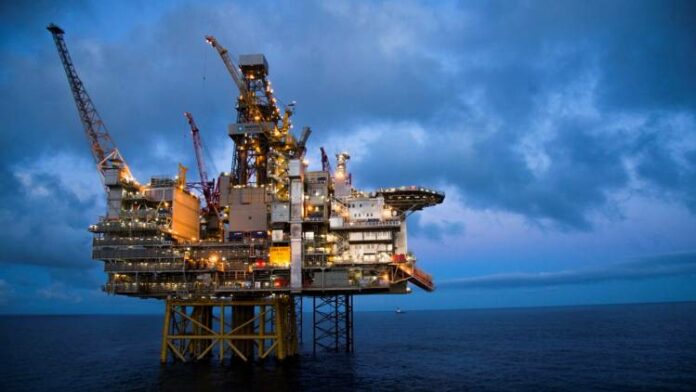
The incident occurred when Seadrill’s rig West Hercules was drilling the Gjoekaasen well offshore Norway.

The so-called “high-risk, high-impact” well could hold between 26 million and 1.4 billion barrels of oil equivalents, one of Equinor’s partners, Aker BP, said last week.

Other partners include Sweden’s Lundin Petroleum and Norwegian state-owned oil company Petoro.

During the incident the lower mariner riser package on the blowout preventer was unintentionally disconnected for still unknown reasons.

No personal injuries or harm to the environment occurred during the incident, in which a device used to protect a subsea well and prevent blowouts was disconnected, the Norwegian Petroleum Safety Authority (PSA) said in a statement.

“Operations are stopped until we know the cause of the disconnect. Rig owner Seadrill has initiated an investigation into the incident, where Equinor participates,” a spokesman for the oil company said in a statement to Reuters.

Source:epmag

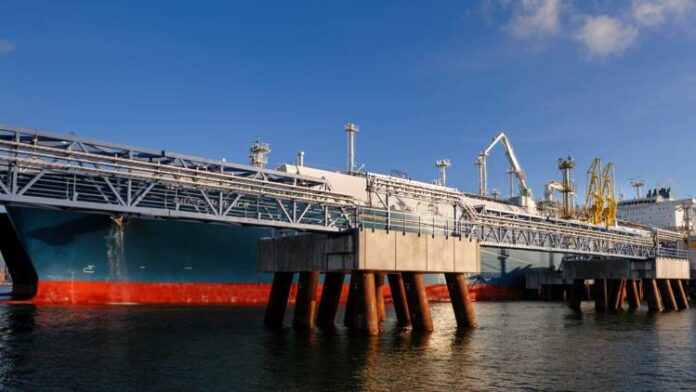
Lithuania LNG port expects to turn into a Baltic hub in 2021

0

Lithuania's LNG import terminal, 'Independence', which is located in Klaipeda, is expected to double its LNG volumes after the opening of gas pipelines to Poland and Finland, 2021. The pipeline opening will turn the Baltic Port into a regional hub, according to Reuters. 'Independence' mostly imported Norwegian LNG for domestic use, using a fifth and a third of its annual capacity of 2.7 million tonnes of LNG. Yet, it began to change in 2017, along with its first US cargo import.

Mainly, 'Independence' was constructed in Klaipeda in 2014 aiming to halt the monopoly of Russia's Gazprom that services Lithuania, Latvia and Estonia, Baltic countries formerly ruled from Moscow.

Mindaugas Jusius, Klaipedos Nafta CEO, stated that there's a higher demand, now, from global trading sources to use this FRSU, aiming to access gas markets in Central and Eastern Europe. He continued adding that already, Poland's LNG terminal is fully booked up to 2035. 

"Our ambition is to achieve terminal utilization of 40-50%."

In addition, Poland’s Swinoujscie LNG terminal, 295 miles (475 km) west along the Baltic coast, is to expand capacity to 5.4 million tonnes, yearly, by 2021. The polish terminal aims to capitalise on higher gas demand in central Europe and limit the region’s dependence on Russian gas.

Also, between Poland's and Lithuania's ports, lies the Russian enclave of Kaliningrad, that inaugurated on January 2018, its own LNG import terminal, serving domestic needs.

In addition, Poland’s Swinoujscie LNG terminal, 295 miles (475 km) west along the Baltic coast, is to expand capacity to 5.4 million tonnes, yearly, by 2021. The polish terminal aims to capitalise on higher gas demand in central Europe and limit the region’s dependence on Russian gas.

Also, between Poland's and Lithuania's ports, lies the Russian enclave of Kaliningrad, that inaugurated on January 2018, its own LNG import terminal, serving domestic needs.

The GIPL pipeline to Poland is expected to launch in 2021, and with it the expectation that Lithuania will supply Ukraine. The former's service to Ukraine will boost the latter's variety of its own supplies from Russia.

Klaipedos Nafta is also participating in the development of four LNG import terminals in Europe and central and southern America, with a future idea of becoming a shareholder and long-term operator.

According to Mr Jusius, one of the projects could reach final investment decision (FID) in 2019 and another by 2020.

Concluding, Lithuania decided last year to continue LNG imports until at least 2044. Mr Jusius noted that Klaipedos Nafta will decide by late 2022 whether to buy a floating storage and regasification unit (FSRU) import terminal from Norway’s Hoegh LNG.

Source:safety4sea

Oceaneering wins three subsea umbilical contracts

0

Oceaneering International Inc. has secured three subsea umbilical contracts valued at more than $80 million in total. 

The contracts with major international operators are to supply developments in the Mediterranean Sea, the North Sea, and the South China Sea. 

Two contracts are for electro-hydraulic, steel tube production control umbilicals, measuring about 66 mi (106 km) in total, and related umbilical distribution hardware. The third contract is for three thermoplastic production control umbilicals, measuring about 26 mi (42 km), and related umbilical distribution hardware. 

Manufacture of the umbilicals is expected to start in 1Q 2019 with deliveries scheduled during the first half of 2020. 

Source:offshore-mag