3.8 C
New York
Home Blog Page 1159

Odfjell Drilling secures drilling platform extension from BP

0

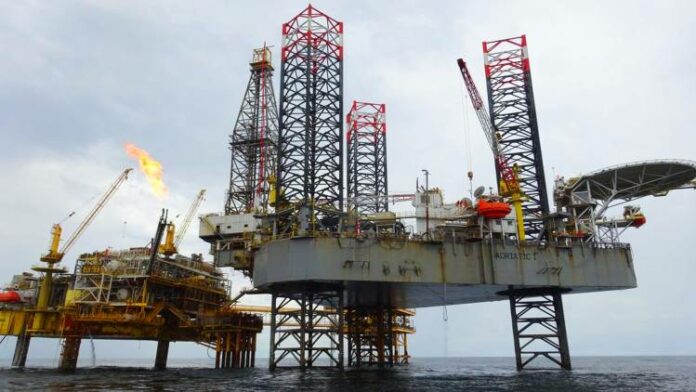
Norwegian offshore driller Odfjell Drilling has secured an extension from BP for its drilling services on the UK continental shelf with a new contract for platform drilling and maintenance services on three of its platforms in the North Sea.

The contract period is for two years, with an additional two one-year options. The firm contract period has an estimated value of up to $50m, and will commence in direct continuation of the current contract with ends end-January 2019.

“This award from BP to continue our long relationship recognizes Odfjell Drilling as a quality provider of platform drilling and maintenance services with a strong focus on safe and efficient operations. We welcome and appreciate this new contract award from BP and look forward to a further long and productive working relationship,” said Ole Fredrik Maier, vice president of platform drilling at Odfjell Drilling.

Source:splash247

Watch: BP invests in new artificial intelligence technology

0

BP Ventures has invested $5 million in Artificial Intelligence and named it 'Sandy', aiming to improve its upstream digital capabilities. This investment, boosts the company's continuous work on exploring opportunities to apply machine learning and cognitive computing in its global oil and gas business. It is directed at the Houston technology start-up Belmont Technology, a company that has developed a cloud-based geoscience platform using artificial intelligence (AI).

Specifically, the platform has some unique features as it includes specially-designed knowledge graphs.

BP specialists provide the AI platform with geology, geophysics, reservoir and historic project information. Consequently, 'Sandy' combines the information and identifies new connections and workflows.

Similar to data searches, BP experts can ask the AI questions in natural language. The technology then uses AI neural networks to interpret results and perform rapid simulations.

The technology is aiming a 90% time decrease in data collection, interpretation and simulation.

According to David Eyton, BP's group head of technology.. "Sandy, is expected to unlock critical data for our subsurface engineers at a much accelerated pace."

Concluding, the AI investment follows BP's deals in computing. The specific investment is helping deploy AI technology previously used in deep space exploration missions in offshore exploration, accelerating operational insight and process automation across operations.

Source:safety4sea

Shelf Drilling awarded jackup contract by Petrobel

0

UAE-headquartered offshore driller Shelf Drilling has been awarded a contract by Belayim Petroleum Company (Petrobel) for jackup rig Trident 16.

The contract, which is for one year and includes additional options, will see the 1982-built rig operating in the Gulf of Suez, offshore Egypt. The planned start-up of operations is in the first quarter of this year.

Petrobel is a joint venture between Italy’s Eni and Egyptian General Petroleum Corporation.

Source:splash247

VolkerInfra joins Moray East crew

0

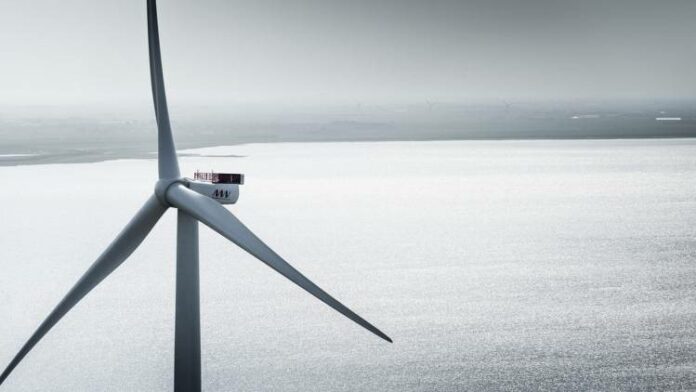
UK subcontractor VolkerInfra will supply onshore cables and associated infrastructure for EDPR's 950MW Moray East offshore wind farm off the coast of Scotland.

Contractor Siemens selected VolkerInfra, following a two-year competitive tender.

VolkerInfra will design, supply and install the onshore cables for Moray East, including the extra high voltage equipment for the offshore transmission modules.

The Preston-based company has completed cable route development works, including geotechnical surveys to finalise the route and the development of key design features to support applications for local and statutory authority planning consent permissions.

The Moray Offshore Windfarm (East) Limited consortium developing the offshore wind project off Scotland’s east coast is comprised of EDPR (43.3%), Diamond Green Limited (33.4%) and Engie (23.3%).

The initial design work commenced in late 2017 and the main pre-construction works started in October 2018.

The installation is planned to take two years to complete and will see VolkerInfra working with cables at voltages of 400 kilovolts (kV), 220kV and 33kV.

The works also include three 220kV circuits and multiple 66kV connections for three offshore transformer modules, the offshore equivalent of a land based electricity substation.

VolkerInfra will also install, connect and pre-commission test approximately 330,000m of 220kV onshore underground export cables, covering a route length of over 34km, as well as connecting two 400kV circuits between new and existing substations.

Source:renews

First Hybrid Straddle Carriers at Hamburg Port

0

The port of Hamburg has for the first time introduced two straddle carriers with environmentally friendly hybrid engines.

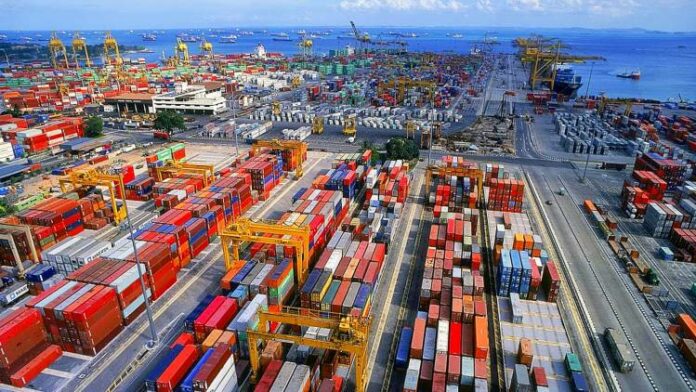
The first two energy saving, low emissions straddle carriers with hybrid engines are being used to transport containers between the ship, the yard, the rail terminal and the truck gate at the HHLA Container Terminal Tollerort (CTT).

According to a press release frm the company, the two prototypes are expected to use at least 15 percent less diesel than their predecessors. This will significantly reduce emissions of CO2, nitric oxide and particulate matter.

The principle behind the hybrid technology is simple: the straddle carrier stores surplus energy, which is for example generated during braking or while the load is being lowered, in a high-performance lithium-ion battery. As it drives, the vehicle uses this energy from the battery. This significantly eases the load on the combustion engine.

"The effect is striking: the manufacturer Konecranes promises annual fuel savings of at least 15 percent per hybrid straddle carrier compared with the diesel-electric model most recently supplied to the CTT. This significantly lowers emissions. Konecranes forecasts an annual reduction of 30 to 50 tonnes of CO2 per straddle carrier," said the release.

The two prototypes represent a further step by HHLA towards adapting their heavy machinery to increasingly environmentally friendly technologies.

CTT’s Managing Director, Dr. Thomas Koch, explains, “With the new hybrid straddle carriers, we are cutting our energy costs and reducing emissions. This is further evidence that HHLA is a consistent supporter of cutting-edge technologyand intelligent solutions. The company, the environment and the employees all benefit.”

The two hybrid-battery Konecranes Noell Straddle Carriers were developed and tested at the Konecranes plant in Würzburg.

Hubert Foltys, Director of the Business Line Straddle Carrier at Konecranes said: “HHLA and Konecranes are united by a long-standing partnership which has often involved pioneering work to introduce innovative container handling solutions. With the new hybrid-battery generation, Konecranes is taking the propulsion technology for straddle carriers to the next level and enabling HHLA to make further significant improvements to the economy and ecology of container handling at Tollerort.”

Source:marinelink

Terminal Puerto Arica uses new terminal operating system to deal with increased cargo volume

0

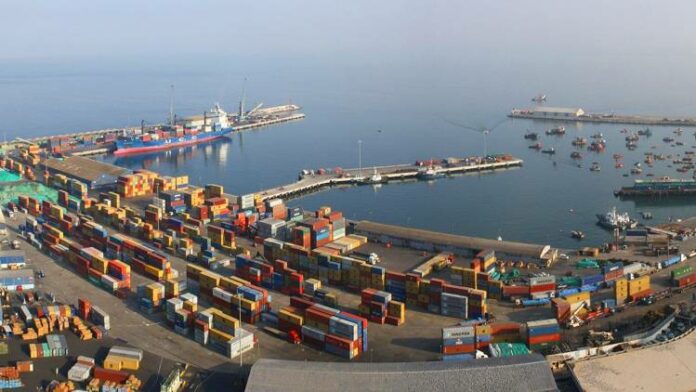
Navis announced that Terminal Puerto Arica (TPA) has gone live with the N4 terminal operating system to better manage the rise in cargo handling volume, which has more than tripled. N4 is a customizable and scalable Terminal Operating System (TOS).

TPA is located on the Port of Arica, which has the largest infrastructure in the region, welcoming ships from Chile, Bolivia and South of Peru. Since 2004, TPA has tripled its cargo handling, to a total of 3.1 million tonnes in 2018.

This challenged TPA regarding the free storage offered to Bolivian imported cargo for up to 365 days and 60 days for exported cargo. This led to high dwell times for cargo, high levels of extra movements and a high level of yard occupation, which reached maximums of 85% in some periods of 2018.

This increase made TPA replace its in-house operating system with a new TOS to meet the needs of the multi-purpose port. The decision to implement N4 was made in 2016 and went live September 1, 2018.  After a successful go-live the terminal will depend on N4 to meet its goals of increasing vessel productivity from 18 to 22 moves per hour, its productivity of the yard equipment by 20% and reducing extra moves in the yard by 40%.

Dante Battaglia, Operation Assistant Manager and Head project N4 implementation, TPA, stated:"We underwent profound changes in the organizational structure of our company, integrating all systems around N4 to completely manage all types of port operations and we’re confident that we will see a substantial ROI as our operations become safer, faster and more efficient."

Source:safety4sea

Data Protection Day: EU GDPR in numbers

0

On the occasion of the EU Data Protection Day on 28 January, the European Commission noted key highlights with respect to eight months since the EU General Data Protection Regulation came into force, providing a global standard for the strongest and most modern data protection rules in the world. The Commission also shared an insightful infographic with key figures regarding the regulation.

"One of the main aims of the General Data Protection Regulation is to empower people and give them more control over one of the most valuable resources in modern economy – their data. We can only reach this goal if and when people have become fully aware of their rights and the consequences of their decisions"…….First Vice-President Timmermans, Vice-President Ansip, Commissioners Jourová and Gabriel, said in a joint statement.

Less than a year after the regulation entered into force, citizens have become more conscious of the importance of data protection and of their rights, with national Data Protection Authorities having received more than 95,000 complaints from citizens by now, they stressed.

The Data Protection Authorities are also enforcing the new rules and better coordinating their actions in the European Data Protection Board. They are guiding companies, especially small and medium sized enterprises, and citizens, explaining them their rights and obligations.

Practical implementation by Member States is now well advanced. We count, however, on the five remaining Member States to adapt their legal frameworks to the new EU-wide rules as soon as possible…There is a clear convergence at international level towards a modern data protection regime. This facilitates data exchanges and supports trade. The best example is the recent adoption of our mutual adequacy findings with Japan. With this, we have created the world's largest area of free and safe data flows.

The Council of Europe launched the Data Protection Day in 2006, to be celebrated each year on 28 January.

The General Data Protection Regulation has been applying since 25 May 2018. In January 2018, the Commission published a guidance document to facilitate the smooth application of the new data protection rules across the EU as of 25 May. The Commission also launched a new online tool to inform organisation and citizens about the new rules.

The Commission will launch the raising awareness campaign to help citizens and businesses, especially small and medium sized, understand better their new rights and obligations and will organise an event in June to take stock with authorities, companies and others of where we stand one year after the entry into application of the General Data Protection Regulation.

Source:safety4sea

Singapore port operations will remain attractive to safeguard maritime trade

0

Cheaper, faster and better. That is how Singapore plans to keep its port operations so its maritime trade continues to thrive – even if global warming causes an alternative trade route to open up in the Arctic Ocean.

We have to make sure that our port provides the most efficient, cost-effective services to shipping companies. So even with reduced shipping activities, there will still be a sizeable number of ships calling at our port,” said Minister of State for Foreign Affairs Sam Tan.

Speaking to The Straits Times earlier this week on the sidelines of a conference on Arctic issues in Tromso, Norway, Mr Tan cited Singapore’s investment of billions of dollars into the new Tuas mega port as a strategy to safeguard the Republic’s booming maritime industry, which accounts for 7 per cent of gross domestic product.

The Tuas project will increase Singapore’s port capacity to 65 million TEUs (twenty-foot equivalent units) of cargo, more than double what the port handled in 2016. Announced by then Transport Minister Lui Tuck Yew in 2012, the mega port will consolidate all of Singapore’s port operations in Tuas. It will open in four phases, with the first berths expected to be operational in 2021.

Global warming is causing sea ice in the Arctic Ocean to melt, opening up the Northern Sea Route to ships.

This is a passageway that will shave 30 per cent off travel time via the conventional Suez Canal-Malacca Strait option. While it is now open only for a few months during the northern hemisphere summer, accelerating rates of sea ice melt could make this route viable all year round.

Mr Tan said such developments may not pose immediate threats. But Singapore is taking a long-term view on developments in the Arctic – whether it be the opening up of new trade routes or rising sea levels caused by melting glaciers.

According to projections from Singapore’s Second National Climate Change Study, mean sea level is estimated to rise by up to about 1m by 2100. To prepare for this, the authorities in 2011 raised the minimum reclamation level to at least 4m above mean sea level – an increase of 1m.

Said Mr Tan: “We have to prepare ourselves for these eventualities. If we don’t do anything, when the new water channels open up, and sea levels rise, then we will be caught flatfooted.

While climate change and melting ice may pose many challenges for the Republic, there are opportunities to be reaped as well.

Singapore infrastructure company Keppel Corporation, for example, has since 2006 built rigs and ships for customers operating in the harsh Arctic region.

It has, for example, completed 11 ice-class specialised shipbuilding projects, including ice-breakers and storage and offloading vessels that can operate in icy conditions.

Mr Aziz Merchant, executive director of the marine and deepwater technology division of Keppel Offshore and Marine, said he also saw opportunities for Keppel to contribute its expertise in building search and rescue facilities, ice-class vessels, and tourism infrastructure, such as floating platforms that cruise ships can stop at.

On the need for search and rescue facilities, Mr Merchant, who also attended the Arctic Frontiers conference in Tromso, said: “With increased activity in the Arctic region, there is a rising need to enhance search and rescue operations there.”

As Ms Hema Nadarajah, a Singaporean doctoral candidate studying international relations at the University of British Columbia’s department of political science, noted: “Despite being over 7,000km north of the equatorial tropics, the transnational nature of the changes in the Arctic would have profound consequences on Singapore’s environment as well as economy… But the changes bring more opportunities than they do disruptors to the maritime industry in Singapore.”

Source:hellenicshippingnews

Polarcus awarded 3D project in West Africa

0

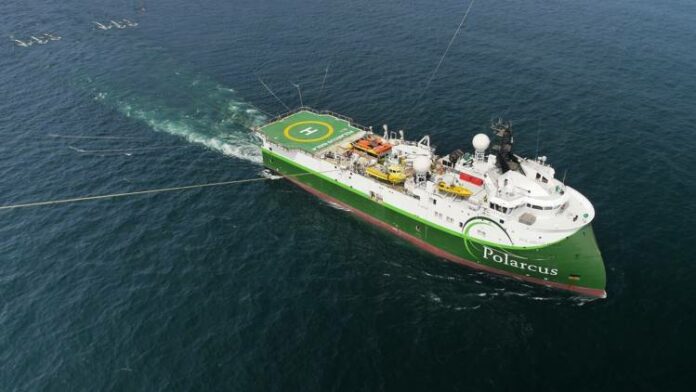
Polarcus Limited ("Polarcus" or the "Company") (OSE: PLCS) announces that an award has been received for a 3D marine seismic acquisition project in West Africa.

The project will commence in Q1 2019 with an approximate duration of six weeks.

About Polarcus

Polarcus (OSE: PLCS) is an innovative marine geophysical company with a pioneering environmental agenda, delivering high-end towed streamer data acquisition and imaging services from Pole to Pole. Polarcus operates a fleet of high performance 3D seismic vessels incorporating leading-edge maritime technologies for improved safety and efficiency. Polarcus offers contract seismic surveys and multi-client projects with advanced onboard processing solutions and employs approximately 350 professionals worldwide. The Company's principal office is in Dubai, United Arab Emirates. 

Source:polarcus

First definition for automation in inland navigation

0

During its meeting in December, the CCNR adopted a first international definition of levels of automation in inland navigation. This definition aims to lead to a clearer understanding of automated navigation as a whole.

Automation is affecting the different modes of transport. As with maritime or road transport, technological developments about automated navigation come under scrutiny by the inland navigation sector.

National and international inland navigation research projects, such as LAESSI, RAVEN or NOVIMAR are trying to innovate by establishing more automated navigation. Beyond evaluating the technical capabilities and associated advantages/disadvantages, these projects should enable actual experience to be acquired.

With automated navigation also being developed in the maritime sector, the specific requirements of inland navigation also need to be taken into consideration, such as:

  • Crew composition;
  • Navigation in enclosed and confined surroundings;
  • Passage through locks;
  • Water depth and bridge clearances;
  • Vessel manoeuvrability.

The following table describes the definition set by CCNR:
Unlike other modes of transport, inland navigation does not have any international definition with the aim of establishing a clear key to understanding the different levels of automation, within which the trialling of different levels of automation could continue. In this respect, the objective of resolution 2018-II-16 is to define the levels of automation of the complex systems used in inland navigation.

"This definition enables us to arrive at a clear understanding of automated navigation as a whole and, subsequently, to assess the need to adopt regulatory measures in a differentiated way, based on a common approach"…CCNR said.

Source:safety4sea