3.8 C
New York
Home Blog Page 1158

Polaris Shipping to exit supramax sector

0

South Korea’s Polaris Shipping has put its only two supramaxes up for sale as a slew of much larger size newbuild vessels start to deliver into its fleet.

Brokers are circulating the 2013-built Solar Jade and Solar King, inviting offers for the pair by February 12. No price was indicated for the ships, with VesselsValue putting their values at just under $13m each. Both of the tier two vessels were built at China’s Taizhou Sanfu and have ballast water treatment units fitted.

The move to sell comes as Polaris prepares to take in several much larger size newbuild vessels. According to VesselsValue, Polaris has 18 dry bulk vessels on order made up of two newcastlemaxes and sixteen VLOCs, with four of the VLOCs set to deliver this year from Hyundai Heavy Industries.

Polaris has been ordering big off the back of a COA deal signed with Brazilian miner Vale.

Source:splash247

Total Makes Gas Discovery At North Sea Glengorm Prospect

0

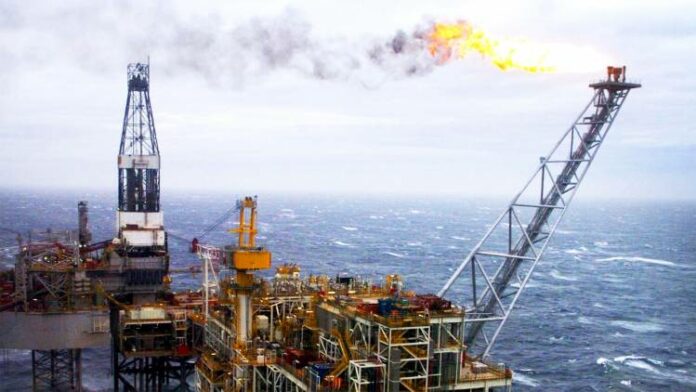
Total and partners including China’s CNOOC have made a significant new gas discovery off the coast of Britain at the North Sea Glengorm prospect, with recoverable resources estimated at around 250 million barrels of oil equivalent (MMboe), the company said on Jan. 29.

Total said further drilling and testing would be carried out to appraise the resources and productivity of the reservoir.

“Glengorm is another great success for Total in the North Sea, with results at the top end of expectations and a high condensate yield in addition to the gas,” Kevin McLachlan, Total’s senior vice president for exploration, said in a statement.

The discovery is close to existing infrastructures operated by Total and offers tieback possibilities, such as the Elgin-Franklin platform and the Culzean project, scheduled to start production this year, the company said.

It also presents upside potential with several other prospects identified on the same block, it added.

Britain’s Oil and Gas Authority welcomed the discovery as it underlined the area’s potential.

Our official estimate is that there still remains between 10 and 20 billion barrels plus to be recovered, so there is every chance of yet more significant finds, provided industry can increase exploration drilling,” Andy Samuel, CEO of the Oil & Gas Authority, said.

Source:epmag

Deep Sea Mooring Inks Mulityear Agreement With Diamond Offshore

0

Deep Sea Mooring (DSM), have signed a multiyear agreement with Diamond Offshore, the company said on Jan. 29.

Under the terms of the agreement, DSM will provide mooring and related equipment to several of Diamond’s rigs and will work closely with Diamond in developing Diamond’s industry leading Mooring Integrity Management System (MIMS) for offshore operations. MIMS was developed in conjunction with DSM’s subject matter experts and will ensure that mooring integrity for Diamond’s mobile offshore drilling units are of the highest standard.

Diamond’s MIMS covers procurement standards, inspection and maintenance standards, certification requirements, risk exposure and protocols, design and assessment standards, and operational practices.

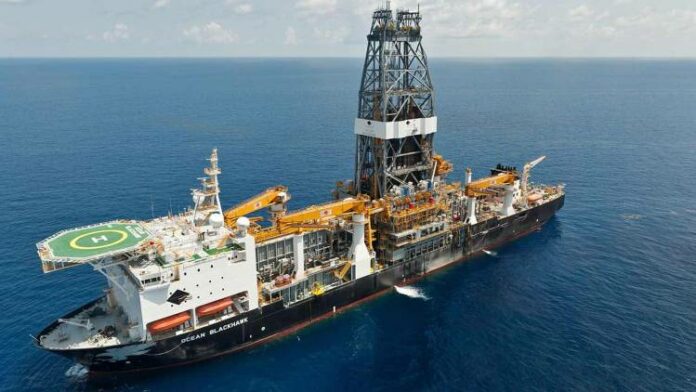
Diamond Offshore is a leader in offshore drilling, providing contract drilling services to the energy industry around the globe with a total fleet of 17 offshore drilling rigs, consisting of 13 semisubmersibles and four dynamically positioned drillships. Equipment that DSM will provide to Diamond as part of the base package in the agreement includes a broad array of high quality mooring equipment. DSM will also provide engineering and rig services expertise as part of the agreement.

Not only are we committing to a ten-year partnership agreement for the provision of mooring equipment to Diamond, but we will also be working closely together on the latest advanced mooring integrity management systems with regular meetings throughout the year,” Wolfgang Wandl, group CEO at Vryhof, said.

Source:epmag

Sulphur 2020 tank cleaning challenge could cost billions

0

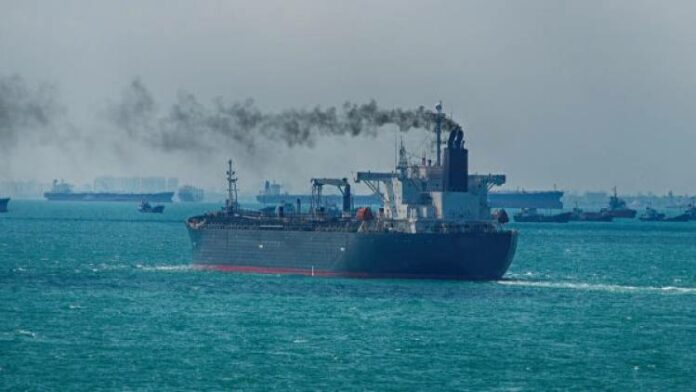
The scale of the challenge facing ship operators as they prepare bunker tanks for new low-sulphur fuels ahead of the IMO’s 2020 sulphur cap may have been underestimated, according to some marine fuel experts.

The issues are both technical and commercial, notably for ship operators with ships deployed on time-or trip charters in which bunkers are procured and paid for by charterers.

On the technical side, bunker tanks which have been used for heavy fuel oil over long periods will have accumulations of solid residuals lying at the bottom which will have to be thoroughly cleaned out prior to the carriage of new fuels. Powerful additives may be used for cleaning in some instances, although there can be a significant disposal issue, but comprehensive cleaning will inevitably involve the labour-intensive deployment of personnel, in some cases “to dig the stuff out”, as one fuel expert said.

There are commercial implications too. On a large vessel, with a range of bunker tanks, the cleaning process could take up to a week or more, according to some estimates. Tank cleaning will be the responsibility of ship operators and so there are significant off-hire implications. But if the cleaning is not sufficiently thorough, any remaining residuals could be disturbed in heavy seas, potentially raising the sulphur content of the new 0.5% sulphur fuels so that they are no longer compliant.

In the case of a time-chartered vessel, ship operators and charterers will have to agree when to undertake tank cleaning because the vessel will not be available for some days. Marine fuel experts recommend that plenty of time should be allowed in preparation for new fuels and, indeed, that they should be used prior to the January 2020 deadline. However, if a prudent operator wishes to clean tanks in July or August, for example, to allow some time for preparation, his charterer will have to agree not only for the non-availability of the ship over several days, but also to pay for more expensive fuel thereafter, prior to January 2020.

For vessels deployed on other types of charter contracts where fuel is for owner’s account, there is a similar conundrum. Clean too early, pay more for fuel and, presumably, hope to recover some of the extra costs in the charter rate. Leave the cleaning exercise too late, however, and there could be insufficient time to try out new fuels and ensure compliance from January 2020 onwards.

According to classification society DNV GL, less than 2,500 ships will have scrubber installations by the time the sulphur cap kicks in, so the vast majority of ships which have used heavy fuel oil until now will have to undergo comprehensive bunker tank cleaning. A back-of-the-envelope calculation indicates that this will be another substantial cost for shipowners to bear, probably running into several billion dollars.

Source:seatrade-maritime

Natural gas alone not enough to meet emissions targets, report says

0

The Imperial College London published a report examining the use of natural gas for shipping. It says that using natural gas fuel with other methods could help the shipping industry meet environmental targets, but it should be combined with energy efficiency measures.

The paper, written by academics at Imperial’s Sustainable Gas Institute, examines the benefits of using natural gas for ship fuel. It also looks at how the change could affect GHG emissions, air pollution, and cost to industry.

Namely, natural gas to fuel ships releases less carbon than diesel. However, some natural gases, like methane, leak as they move through the supply chain. This reduces the benefit of switching fuel. Thus, natural gas should be combined with energy efficiency measures that will significantly improve greenhouse gas emissions.

In fact, the authors noted that switching to natural gas as a transport fuel could provide cost effective emissions benefit and the technology is available, but it will not be enough to reach long term low carbon ambitions.

Lead author Dr. Jamie Speirs, from Imperial’s Department of Earth Science & Engineering, explained:"The greenhouse gas benefits of natural gas as a transport fuel are useful in the short term, but must be coupled with additional energy efficiency measures and longer term plans that include much lower carbon truck and ship technologies."

Moreover, ships that use natural gas are expensive to make, but the authors believe that the money saved in fuel will outweigh the initial cost over their lifetime as natural gas is currently cheaper than diesel.

Shipping manufacturers can also reduce the amount of energy, and money, used by installing solar panels to supplement energy needs and using sails to leverage wind power. Another method would be to use barnacle-repellent paint to avoid build up on the hull and keep the ship streamlined.

Finally, the report states that small amounts of methane leakage across the supply chain of natural gas can eliminate the benefit of substituting diesel for natural gas.

Source:safety4sea

Bill introduced prohibiting offshore drilling in the Arctic

0

In order to protect the coastline of the US from the dangers of offshore oil drilling, Congressman Jared Huffman reintroduced, on January 8 the West Coast Ocean Protection Act and the Stop Arctic Ocean Drilling Act.

Commenting on the Act, Mr. Huffman said that America’s oceans must be protected from dangerous offshore drilling.

Opening our public waters up to oil and gas companies puts fragile ecosystems in jeopardy for environmental catastrophe. We cannot stand idly by while the Trump administration places the short-term profit goals of polluters over the long-term interests of the American people

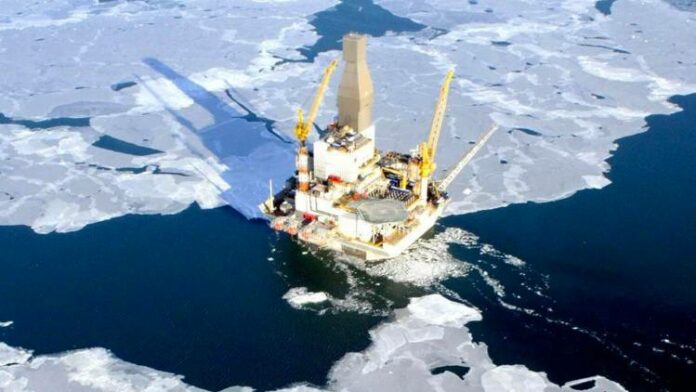
The Stop Arctic Ocean Drilling Act would make the Arctic Ocean off-limits to any future drilling proposals by not allowing any new or renewed leases for the exploration, development, or production of oil, natural gas or any other minerals in the Arctic Ocean Planning Areas of the Outer Continental Shelf.

In addition, Rep. Cunningham is introducing the Coastal Economies Protection Act, Rep. Carbajal (D-CA) is introducing the California Clean Coast Act, Rep. McEachin (D-VA) is introducing the Defend Our Coast Act, Rep. Pallone (D-NJ) is introducing the Clean Ocean and Safe Tourism Anti-Drilling Act, Rep. Cicilline (D-RI) is introducing the New England Coastal Protection Act, and Rep. Castor (D-FL) is introducing the Florida Coastal Protection Act.

The West Coast Ocean Protection Act would permanently protect the California, Oregon, and Washington coasts by changing the Outer Continental Shelf Lands Act to prohibit new oil or natural gas leases in each state’s outer continental shelves. It will also permanently protect the $44 billion coastal economies of the three states, which support about 650,000 jobs.

Moreover, Leah Donahey, legislative director at Alaska Wilderness League, noted that highlighted that the Arctic is fragile and remote with little to no infrastructure to deal with possible oil spills. What is more, the region continues to warm, and this warming is reflected in the extreme climate-related events across the continent.

Sea ice is disappearing, and iconic Arctic species like polar bears face an uncertain future. Simply put, it would be irresponsible to drill there

Source:safety4sea

Kincardine taps Spanish expertise

0

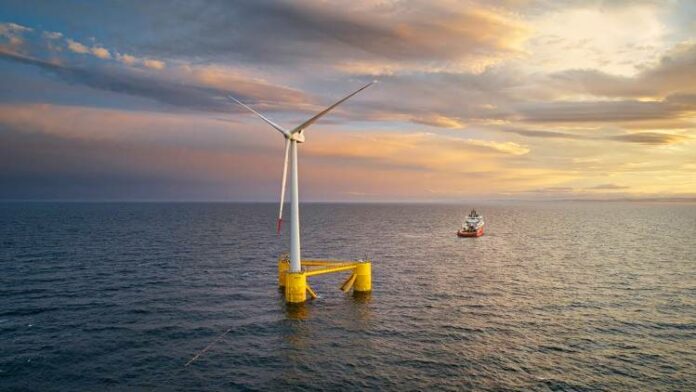
Madrid-based engineering company SENER has been recruited to work on the 50MW Kincardine floating wind project, being developed off the Scottish coast.

Spanish construction company Cobra Wind International contracted SENER to supervise production of the floating platforms.

Cobra is the majority owner of the developer Kincardine Offshore Wind Limited (KOWL). 

Kincardine will comprise one 2MW turbine and five 9.525MW turbines.

Other work SENER will undertake includes analysing the technical feasibility of wind turbine assembly for the project, and providing technical assistance in monitoring the plant.

SENER renewables director Miguel Domingo said the purpose of the collaboration with Cobra is to reduce costs for future floating wind farms. 

“We consider this option to be the most appropriate for any location with adequate wind and where depth impedes a conventional foundation,” he said.

KOWL is building Kincardine, 15km from the coast of Aberdeen, which is expected to be fully operational in 2020.

The first phase of Kincardine came online in late September 2018, in time for the renewables obligation certificate deadline.

Source:renews

U.S. Ports Want $4 Billion to Enhance Security

0

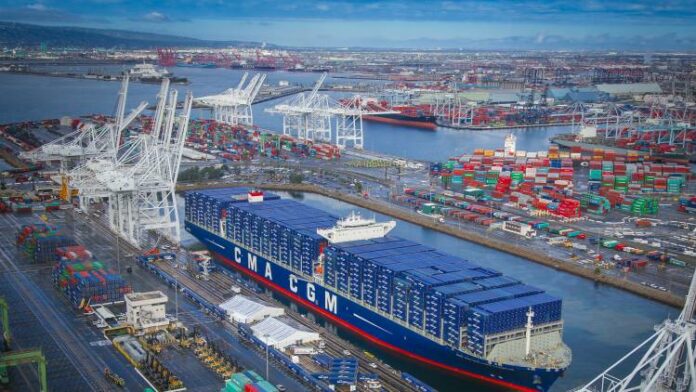
In the latest report in its “The State of Freight” infrastructure series, U.S. member ports of the American Association of Port Authorities (AAPA) identified nearly $4 billion in crucial port and supply chain security needs over the next 10 years. 

The AAPA says that money is needed to ensure America's port facilities are properly equipped to address new and evolving security challenges. The report recommends refocusing the Federal Emergency Management Agency’s Port Security Grant Program to better meet the security infrastructure needs of publicly-owned commercial seaports and related maritime operations. This includes funding an estimated $2.62 billion in maintenance and upgrades to port security equipment and systems, and another $1.27 billion for investments to tackle cybersecurity, active shooter, drone mitigation, resiliency and other evolving security threats. 

Currently, the U.S. government invests $100 million annually in the Port Security Grant Program. Since the grant program was initially authorized after 9/11, America’s population has increased about 15 percent, with a pronounced population shift to metropolitan areas, and in many cases near port authority freight and passenger facilities. By the end of 2017, container volumes through these facilities had increased 71 percent and total foreign trade tonnage had increased 37 percent, while cruise passenger traffic nearly doubled. 

In the survey used to prepare the report, 85 percent of AAPA U.S. member ports say they anticipate direct cyber or physical threats to their ports to increase over the next 10 years. Conversely, 10 years ago, cybersecurity, active shooter, drones, increasing energy exports or other soft targets were not highly anticipated threats. The 2017 APM Maersk cyber attack illustrated how an incident can start outside the U.S. and have a cascading impact on ports and terminal operations across the globe. 

78 percent of ports anticipate using future port security grant funding on cyber security, and 90 percent report that future funding would be used for upgrading technology, such as cameras and other surveillance tools. 

In addition, soft targets such as active shooters “keep port security staff up at night,” said multiple port security directors. 86 percent of ports would use future security funding to enhance physical security, and 65 percent would use it for training to better prepare port and local first responders to respond effectively to soft target threats such as an active shooter.

AAPA President and CEO Kurt Nagle said: In The State of Freight IV, we took a deep-dive to better understand the future security challenges of U.S. ports, the communities that surround them and the supply chains that serve them. Not only did we find that Port Security Grant Program appropriations need to increase four-fold to $400 million a year, but the ratio of grant funds going to ports needs to at least double to 50 percent to properly mitigate for security threats.

“Protecting our nation’s seaports against terrorism and other security threats helps ensure safe and reliable goods movement, which is critical to our economy. However, in recent years, nearly two-thirds of Port Security Grant Program funding has been spent on training and equipping first responders and on improving response capabilities. What’s needed now is a shift to more investments in maritime domain awareness, including prevention and protection measures.”

Source:maritime-executive

Port of Rotterdam warns for fake website

0

Port of Rotterdam alarms its website users on criminals that often set up fake copies of its website in order to attract existing or potential clients into disclosing confidential information or paying fraudulent invoices. Sometimes, the fake sites are an exact copy of the Port of Rotterdam website and are difficult to distinguish from the original site.

Specifically, the Port highlights that many are the times when cyber criminals tend to copy the original URL and provide a similar one. This makes the fake website legit.

Port of Rotterdam Authority suggests users to always check whether they are navigating within www.portofrotterdam.com and be extra cautious when being directed to the right website from an email or other channel.

In addition, the port's authority comments that the websites of companies located in Rotterdam’s port area are frequently copied to scam unwitting visitors.

An incident that is becoming common is websites for storage spoofing. Storage spoofing is the sale of non-existent storage capacity, raw materials or other stocks, which the criminal claims to hold at terminals in Rotterdam’s port area.

The port stresses that if the website's URL contains a typo or spelling mistake, the user is advised to exit the website.

Concluding, if visitors come across a fake website they are advised to notify the Port of Rotterdam via the contact form on their site.


World’s first digital survey on container ship

0

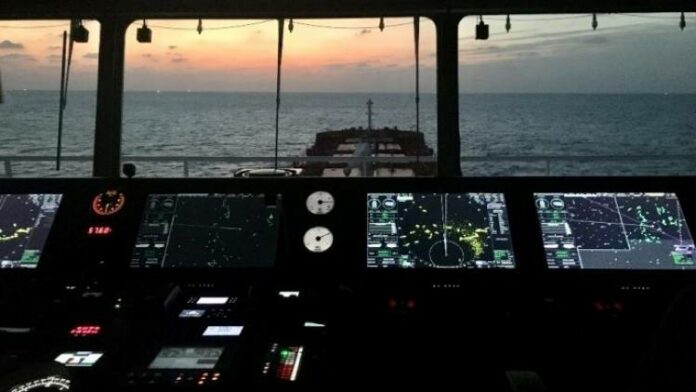
Last week DNV GL and Klaveness Ship Management report that they conducted the world’s first digital survey on board the container ship MV Bardu. The survey gave full insights into the maintenance data from the vessel through live dashboards.

Namely, surveyor and Principal Engineer from DNV GL Rolf Petter Hancke, put up dashboards that gave full insight to maintenance data on Klaveness container ships. This gave him the chance to survey the ship without visiting it.

Mr. Hancke explained that the dashboard makes it easier for him to filter to the most relevant components that he discusses with the ship owners. It specifically tells him how many maintenance jobs MV Bardu has had in the last year and how many jobs where done before and after on due date.

Commenting on this development, Karl-Uno Holm, Ship Manager in Klaveness Ship Managemen, noted that this form of transparency of sharing of data makes it possible for DNV GL to conduct analysis of the data it has.

Source:safety4sea