0.3 C
New York
Home Blog Page 1157

HMM announces deal for Pusan Port

0

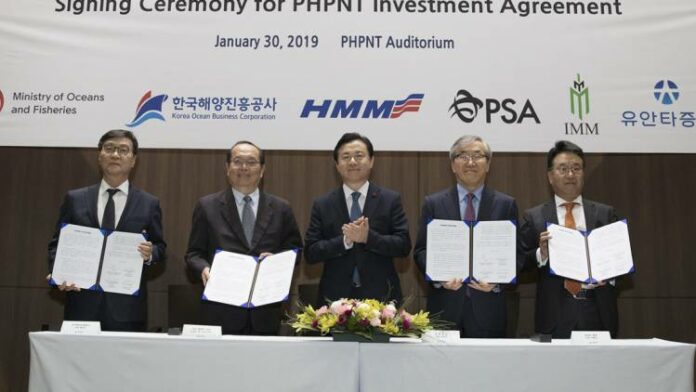
On January 30, 2019, HMM held a signing ceremony for the 'PSA-Hyundai Pusan New Port (PHPNT) Pier 4' sales contract. This sales contract includes that the private equity fund, Yuanta-HPNT, which will acquire stakes of Waska Inc. which holds 50% stakes of PHPNT.

The total investment amount will be KRW 221.2 billion which consists of HMM and PSA’s investment of KRW 177 billion and 44.2 billion, respectively. As result, HMM will become co-owner of PSA-Hyundai Pusan New Port with PSA, each with 50% equal stakes.

HMM will also secure stable berths for 23,000 TEU mega containerships which are planned to be delivered in the second quarter of 2020. What is more, HMM plans to attract global liners participating in the shipping alliance to call at Pusan port in order to increase transit cargo volume and terminal revenue.

HMM’s CEO C.K. Yoo, stated:"Through the acquisition of PHPNT’s 50% stakes, HMM can strengthen its competitiveness and provide top priority to customer service at the same time. We will do our best to make PHPNT a worldwide hub port."

Source:safety4sea

China Cosco in Piraeus – the good and the bad news

0

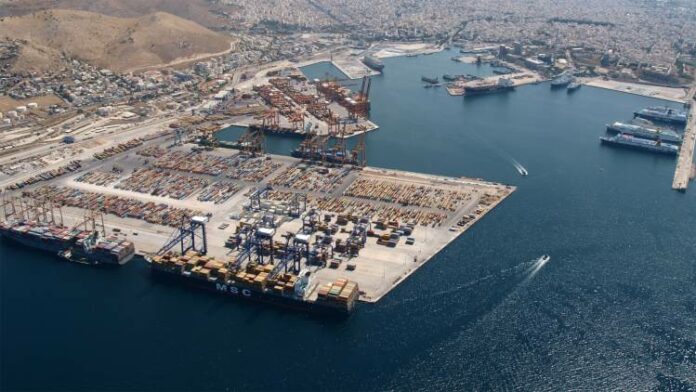
In what is becoming so common in Greece these days, good news is often clouded by bad news. China’s Cosco-run port of Piraeus had no sooner announced its goal of handling 5m teu annually is on the horizon after a record-breaking performance in 2018 at the port's three container piers, than it was dealing with allegations of fraud against its clients.

The good news first. The 5m teu target of the Piraeus Port Authority (PPA) is likely to be topped with the Greek port’s Cosco-controlled container piers II and III, handling 4.41m containers, and the Cosco-managed PPA's pier expected to break the 500,000 teu mark.

Cosco Shipping has already confirmed concession piers II and III have topped the 3.69m teu handled in 2017, marking an increase of 19.4%. In December alone the 418,100 boxes were handled were up 31.6% on the December 2017 level.

Presently, Piraeus ranks 7th among European container ports and second in the Mediterranean. Globally Greece's largest port occupies 37th place, up from the 44th in 2016.

With imminent completion of the projects at pier III the total capacity of the PPA’s pier I and Cosco’s piers II and III will increase to 7.2m teu.

Meanwhile, as the PPA's investment 'master plan' remains in limbo, the country’s Shipping and Island Policy ministry has again rejects claims of foot-dragging regarding approval of its investment Master Plan some of the investments being mandatory under Cosco's management agreement. Ministry officials say that on the contrary, the privatisation agency (Taiped) is keen to address all issues related to implementation of the concession agreement, but notes other competent bodies are involved which operate according to “specific criteria and conditions”.

The Shipping ministry says the public sector respects the deadlines provided by law and the concession agreement but that the various conditions have to be met.

In this context, the PPA has submitted six different Master Plans at different times in an effort to meet requirements. At the same time the ministry also notes approval of the Strategic Environmental Impact Assessment is required, and this is also “evaluated on the basis of specific criteria and specifications”.

At the same time, Greek officials are yet to comment on a EUR200m ‘fine’ imposed by the European Union’s Anti-Fraud Office (OLAF) on Greece for failing to stop the alleged wide-scale tax fraud carried out by Chinese importers of ultra-cheap goods through Piraeus. While the alleged crime is a state customs matter and has nothing to do with the port's management, it certainly is of concern.

According to media reports OLAF claims importers dodged import duties and value-added tax on footwear and clothing items by undervaluing the goods imported into Greece in the period 1 January 2015 to 31 May 2018. News outlet Politico reports: "Based on its findings, OLAF has issued a financial recommendation to Greek customs to recover the sum of EUR202.3m in lost customs duties related to the fraudulently under-declared values for such products.”

Source:seatrade-maritime

US Navy conducts second drug discovery in a month

0

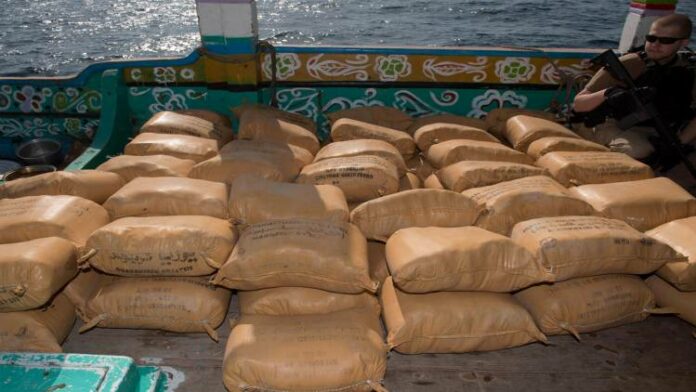
While conducting maritime security operations in the international waters of the Gulf of Aden, the guided-missile destroyer USS Chung-Hoon (DDG 93) interdicted a shipment of illicit narcotics aboard a stateless vessel, on January 24.

Specifically, the vessel's board, search and seizure team discovered and seized 4.7 tonnes of hashish during a flag verification boarding.

The suspect vessel was determined to be stateless during the boarding. Yet, the vessel and its crew were permitted to depart after the narcotics were confiscated.

It is the second incident the destroyer has completed in a month. The Chung-Hoonseized over 5,000 kilograms of hashish from a dhow in the same region on December 27, 2018.

Cmdr. Brent Jackson, commanding officer of the Chung-Hoon commented.."What I’m most proud of is the synergy between our information, operations and boarding teams that allowed us to complete the mission.."

Moreover, the destroyer Chung-Hoon is on patrol in the Gulf of Eden along with amphib USS Fort McHenry, and interdicting illicit drug shipments into Yemen and Somalia is a part of itsmission.

According to the Navy, the results indicate that the smuggling often fund terrorism and other illegal activities.

Concluding, the USS Chung-Hoon is named after Rear Adm. Chung-Hoon, a decorated commander in WWII and the Korean War. He was also the first admiral of Chinese-Hawaiian ancestry in the U.S. Navy.

Source:safety4sea

Port of Rotterdam: Digitalisation can improve environmental footprint of shipping

0

During 2018, the signatories to the Paris Agreement on Climate Change adopted the guidelines for its implementation. International shipping can can contribute greatly in the transition towards a more sustainable economy. This can be done by developing new vessel types and by improving the current fleet. Digitalization will play a key role in these programmes, Port of Rotterdam believes.

Currently, the Port of Rotterdam is trying to realise a carbon-neutral landscape. The Wuppertal Institute for Climate, Environment and Energy contributed to the transition plan 'Towards a sustainable industrial cluster in Rotterdam-Moerdijk in three steps'. Commenting on this, Alan Dirks, head of Environmental Management (Port Authority), said:"In the case of the industrial sector, we have adopted a number of routes, including biomass, wind power and storing CO2 in the sea bed. We can cut our carbon emissions relatively quickly through these approaches."

However, the emissions must be measured. Policy Officer Rinske van der Meer is responsible for coordinating the development of models for this calculation, with several of these models being linked to the Port Authority’s Pronto software application. Pronto focuses on reducing waiting times for ships calling on the port and provides real-time insight into the available berths and handling capacity. For example, if an incoming ship has to wait until a berth becomes available, it can reduce its navigation speed. This limits the volume of emissions generated during the voyage and at the berth, and saves fuel.

What is more, IT developer Pim Verkerk, noted that Pronto’s CO2 module can calculate a vessel’s CO2 emissions based on its route, itinerary, the current terminal planning and its navigation speed. It then compares this to the vessel’s optimal speed under the existing conditions. This can be used to determine potential savings per port call. Currently, the Port can calculate a ship’s emissions based on the collected data, report them and indicate where there’s scope for further savings. In future, there are plans to for a more predictive information and possibly visualisation of savings in real time.

Nevertheless, in some cases, a vessel actually does not want to slow down to reach the port just in time. This could be because it is contractually obliged to travel from one port to the next as quickly as possible. That is why the Port Authority consultants and IMO staff also take contractual aspects into account.

Finally, Pronto shows the nitrogen load generated by sea-going vessels. According to Mr. Van der Meer:"This has a major impact – particularly along the coast. When ships are forced to stay at anchorage for too long, this directly affects the local ecology here in Rotterdam."

However, he added that now it is not certain that everyone will share their data. For this reason, the Port Authority hopes that Pronto’s environmental tools will increase sector parties’ willingness to actively share information. Nonetheless, by offering insight into fuel consumption and emissions could lower the threshold, as parties in the sector know that this insight is important and will only become more important in the years ahead.

Source:safety4sea

Don’t be misled by the apparent accuracy of electronic navigation aids

0

Although modern satellite systems have reached a landmark for maritime navigation and navigators vastly rely on ECDIS data, safe navigation requires also from mariners to take into consideration the accuracy and reliability of the source hydrographic data, Capt. Yves Vandenborn, Director of Loss Prevention at Standard P&I Club, highlighted.

Introduction

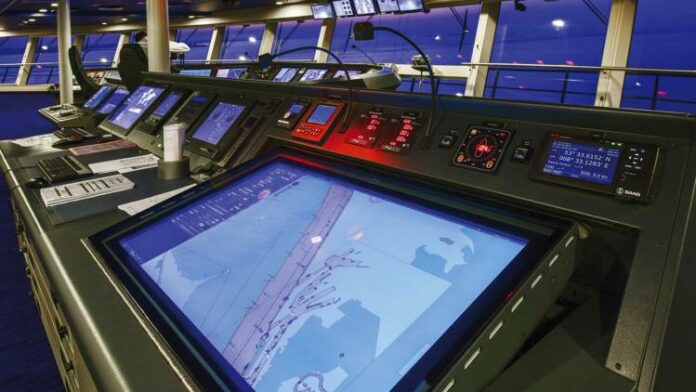
Maritime navigation has undergone a gradual increase in precision and accuracy, from early astro-navigation through Harrison’s chronometers to modern satellite systems. However, while navigators might assume that the accuracy of Global Navigation Satellite Systems (GNSS) is certain, this is not always the case, and many navigators are placing too much faith in the information that their ECDIS displays. For safe navigation, a mariner must also consider the accuracy and reliability of the source hydrographic data.

The flaws in technology

Electronic Navigation Charts (ENCs) display hydrographic data that, according to The International Hydrographic Office’s S66 ‘…is based on the latest source data available to the relevant Hydrographic Office…’.

In many cases the ‘latest source data available’ may have been gathered some time ago, using older less reliable methods. The risk is that this reduces the accuracy of the information being displayed on the ship’s ECDIS, and creates a false sense of confidence for the navigator. Category Zones of Confidence (CATZOCs) enable the mariner to make decisions on the degree of reliance to place on the chart when planning a passage or conducting navigation.

GNSS provides mariners with highly accurate positioning information. Over-reliance on this information can lead to an erosion of the traditional cautious approach with which navigators used to make landfall, because the navigator believes they have a clear picture of where they are, in relation to other objects.

If mariners do not use any other source to confirm their location or the ENC, and one of these is wrong, a casualty is inevitable.

Case study

A cargo vessel grounded in the Mediterranean Sea on a charted shoal.

During the planning of the passage the 2nd officer consulted several sources, such as pilot books, the Admiralty list of radio signals and temporary and preliminary notices to mariners. One thing which was not checked, however, was the value of the CATZOCs for the ENCs to be used along the route.

During the voyage the vessel’s destination was changed, requiring an alteration of the route. The subsequent alteration took the vessel closer to the shoal than the original passage plan. Despite this decrease in clearance, no reference was made to the accuracy/reliability of the ENCs which depicted the shoal. The changes to the track reduced the passing distance between the vessel and the shoal to a few hundred metres. The margin for error had been significantly reduced!

Unfortunately, the depiction of the shoal on the ENCs was inaccurate. They had been compiled by the local hydrographic authority and utilised data from only a single source. This data had been gathered using analogue techniques in the 1960s, the CATZOC value for the area was ‘U = Unassessed’. The age and lack of information regarding the value of the CATZOC data should have served as a red flag for the crew. The failure to check the CATZOCs meant that this red flag went unnoticed.

Post incident the locally produced ENC was compared to data from the BA chart series. The BA charts had been compiled using information from a variety of sources and more accurately depicted the location of the shoal. When the grounding position was plotted on the BA chart it showed the ship’s position within the extent of the shoal, whereas the ECDIS of the ship depicted the vessel in safe, deep water.

The shoal patch was covered by a pair of sectored lights. The respective red and green sectors of these lights overlapped covering the shoal in question. A vessel observing both the red and green sectors would be inside this overlap. Details of the lights were contained in the pilot book for the area. These lights and their significance for navigation were not considered by the 2nd officer during the planning of the passage.

Conclusion

Hydrographic Offices around the world are engaged in an effort to provide mariners with accurate, up to date hydrographic information. Despite these efforts, some ENCs have been compiled from older, less accurate source data. Officers should always factor these considerations into the passage planning process, by consulting the CATZOCs for each leg of the voyage and using pick reports to determine the details of the survey data. Officers should take care to avoid being seduced by the levels of precision that GNSS and ECDIS offer when used together. They should continue to incorporate appropriate margins of safety into their plans whilst employing good judgement on what does and does not constitute an acceptable navigational risk.

Source:safety4sea

Legislation Changes the Face of Russia’s Maritime Industry

0

2018 was a crucial year for water transport, shipbuilding and port industries in Russia, with key personnel changes, unexpected events and important legislative amendments. Nothing remains constant, and a lot is to be done in 2019.

Control of the Northern Sea Route

In 2018, Russian President has signed the law “On introduction of amendments into certain legislative acts of the Russian Federation (on participation of Rosatom Corporation in functioning of the Northern Sea Route).” According to the law, the bulk of authority is handed over to Rosatom Corporation which is to have its plans approved by the Ministry of Transport under the “two-key” principle.

One “key” is held by Vyacheslav Ruksha, head of Rosatom’s Northern Sea Route Directorate.

In fact, transition of the “two-key” principle from legislation into practice is not easy. As Yury Tsvetkov told journalists in December 2018, there are at least two issues to be settled by the Transport Ministry and Rosatom – administration of the Hydrographic Company and vessel traffic management system in the Arctic. Rosatom has drafted the Rules for providing navigational and hydrographic support in the water area of the Northern Sea Route, hoping for taking over the Hydrographic Company.

Actually, this year has not brought final clearance to the issues of Arctic development. The Ministry of Defence and the Ministry of Nature still have their interests in the Arctic. Denis Khramov has been appointed as Deputy Minister of Natural Resources and Environment of the Russian Federation in charge of geological and economical issues, use of subsurface resources, development of projects in the Arctic zone.

The Security Council of the Russian Federation, in its turn, continues promoting an idea of establishing a separate state body on the Arctic issues. Sergey Vakhrukov, Deputy Secretary of the Security Council has recently said: “We want such a body to appear, and we expect the Government to make such a decision in the nearest future.”

At least three different approaches to legislation and state planning related to the Arctic will meet next year. In 2019, Rosatom is going to start working on a plan for comprehensive development of Northern Sea Route infrastructure; the Ministry of Nature will develop its own project “Implementation of the Arctic’s logistics and raw materials potential,” while the Ministry of Transport undertakes to implement activities under a comprehensive plan for upgrading and expanding core infrastructure through 2024 including the federal projects “Seaports of Russia” and “Northern Sea Route.” When participating in meetings on Arctic issues the officials persistently repeat, like a mantra, that the target of 80 million tons of cargo traffic on the Northern Sea Route set up by President Vladimir Putin should be reached by 2024.

Novatek

Meanwhile, Novatek is striving to occupy a share in the fast growing global market of LNG. The company has commissioned the second and third phases of its facilities on the Yamal peninsula, six months and over a year ahead of schedule. The total capacity of the Yamal LNG plant is 16.5 million tons of LNG per year with each phase having a capacity of 5.5 million tons. In fact, the capacity of cargo fleet able to export LNG is lagging behind the Novatek’s achievements.

According to the Federal Law On Amending the Merchant Shipping Code effective from February 1, 2018, foreign-flagged ships are not allowed to transport hydrocarbons on the Northern Sea Route and participate in short-sea transportation. As of today, vessels involved in three Arctic projects may fall under this law: gas carriers flying foreign flags under Novatek’s project, tankers for oil exports under Gazprom Neft’s project in the Gulf of Ob (currently operating under the flag of the Russian Federation) and bulk carriers intended for coal port Chaika which has not been put into operation yet. In practice, this regulation was not put into effect in 2018.

Novatek is going to deploy 15 ice-class Arc7 ice-breaking LNG carriers for transportation of LNG on the Northern Sea Route. As of today, eight LNG carriers make calls to Sabetta with the rest to be put into operation throughout 2019. All of them are foreign-flagged ships built by foreign shipyards but contracted before the amendments came into effect. Therefore, the law does not apply to them.

Amid the surge of cargo volumes, Novatek needs more ships. It proved to be a challenge to find Arc7 ships in the global market. Such vessels are usually ordered for specific projects. Moreover, chartering of vessels with lower ice class, Arc4, for operation on the Northern Sea Route during summer navigation season is not possible because of the amendments introduced into the Merchant Shipping Code. Applications for exemption to the law have not succeeded so far. However, according to some media reports, the Government has submitted amendments to the law to allow Novatek to use foreign-flagged Arctic vessels.

Nevertheless, the company has managed to increase LNG shipments. In late November 2018, a new offshore facility for ship-to-ship LNG transshipment was launched near the port of Honningsvag (North-East of Norway). In the future, Novatek is going to have two transshipment facilities built in the Murmansk Region and Kamchatka.

As Yury Tsvetkov told journalists in December 2018, the issue of a three-year long transition period in respect of using Russian-flagged ships in the Arctic is under consideration. Of course, it is Novatek that is interested in such a decision most of all. In the future, the company is going to have ships for its projects (like Arctic LNG 2) built at Zvezda shipyard. In three years, Rosneft is expected to complete construction of a shipbuilding complex in the Primorsky Territory intended for building ships of such class and size.

LNG as bunker

2018 saw the beginning of the cargo fleet’s transition to new environmentally friendly bunker fuel. A joint project by Sovcomflot and Shell is currently represented by two ice-class Arc4 tankers with LNG used as their key fuel: the Gagarin Prospect and the Lomonosov Prospect. The vessels operate in the Baltic Sea with the series being continued.

Gazpromneft Shipping, a subsidiary of Gazpromneft Marine Bunker (the leader of Russia’s bunkering market), has recently placed an order for construction of Russia’s first LNG bunkering tanker.

From Summa to prison

In late March, Ziyavudin and Magomed Magomedov, the co-owners of the Summa group, were detained over a case on embezzlement of public funds on a grand scale and are still in custody. That event is important for the industry since Summa’s assets included Novorossiysk Commercial Sea Port, TransContainer and FESCO.

The development has also affected the project of the United Grain Company (part of Summa Group) for the construction of a transshipment facility in Zarubino port (Primorsky Territory). There is a plan to build a terminal for transshipment of grain (wheat, corn and soya) with a design capacity of 33.5 million tons per year.

As a result, from autumn 2018, Novorossiysk Commercial Sea Port is controlled by Transneft, Federal Property Management Agency (20 percent) and minor shareholders.

Delo Group buys Global Ports

In spring 2018, Sergey Shishkarev’s Delo Group purchased a more than 30 percent stake in Global Ports from N-Trans. Global Ports’ terminals are located in the Baltic and Far East Basins. Global Ports operates five container terminals in Russia (Petrolesport, First Container Terminal, Ust-Luga Container Terminal and Moby Dik in the Russian Baltics, and Vostochnaya Stevedoring Company in the Russian Far East) and two container terminals in Finland (Multi-Link Terminals in Helsinki and Kotka).

The same stake in Global Ports is held by A.P. Moeller-Maersk A/S through APM Terminals B.V. The market experts do not rule out a possibility of Delo Group’s NUTEP, a container terminal in Novorossiysk, joining Global Ports via a sale and purchase transaction.

A port welcomes concession

A concession agreement for the construction of the coal terminal Lavna on the left shore of the Kola Bay (Murmansk Region) was signed in November. The agreement provides for a concession operator to build the 18 million ton capacity terminal with the concession grantor to ensure accessibility by transport and to complete Phase I of railway infrastructure construction.

Pre-construction works, grading and leveling are underway at the site. A contract has been signed for equipment supply. The terminal’s Phase I, with a capacity of nine million tons, is to be put into operation in December 2019; Phase II in December 2021.

Main lines future

The future of Russian ports will be determined by the plan for core transport infrastructure development till 2024, corporatization of Rosmorport and legislative improvements. All of this is to raise the overall annual capacity of Russian ports by at least 350 million tons with their throughput to grow by one third.

According to the basic scenario, the annual capacity of ports in the Arctic Basin is to grow by 65 million tons, in the Far East Basin – by 130 million tons, in the North-West Basin – by almost 55 million tons, in the Azov-Black Sea Basin and the Caspian Basin by 105 million tons.

The coming year is expected to be crucial for inland water ways in terms of a balance between different types of transport, mostly railways and inland water ways. Discounts for railway transportation during the navigation period are among the key barriers hindering the development of cargo transportation by rivers. As Yury Tsvetkov told journalists in December 2018, the criteria of transport balance are to be defined by spring 2019.

Source:maritime-executive

Ensco and Rowan combination moves a step closer

0

Offshore driller Ensco has entered into an amendment to the transaction agreement with Rowan Companies which will see the companies combine in a $12bn all-stock transaction.

The amendment has been unanimously approved by the boards of both companies, and will see Rowan shareholders receive 2.750 Ensco shares for each Rowan share. The offer is higher than an increased offer announced by Ensco earlier this month, despite the company stating it was a final offer.

Upon closing of the combination, Ensco shareholders will own around 55% of the enlarged company, while Rowan shareholders will take a 45% stake.

Carl Trowell, president and CEO of Ensco, commented: “By reaching an amended agreement, Ensco and Rowan shareholders will benefit from anticipated expense synergies that are expected to create approximately $1.1 billion of capitalized value. Furthermore, a larger, more technologically-advanced and diverse offshore driller will provide shareholders of both companies with even greater upside as the industry recovery unfolds – ideally positioning the combined company to meet increasing customer demand and capitalize on significant future revenue growth opportunities.”

Ensco and Rowan expect to realize annual synergies of around $165m from the merger, and will operate a fleet of 82 rigs across six continents serving more than 35 customers.

The deal is subject to shareholder approval, however will be supported by one of Rowan’s largest shareholders, Odey Asset Management.


MSC Invests In Portugal’s Largest Dry Port

0

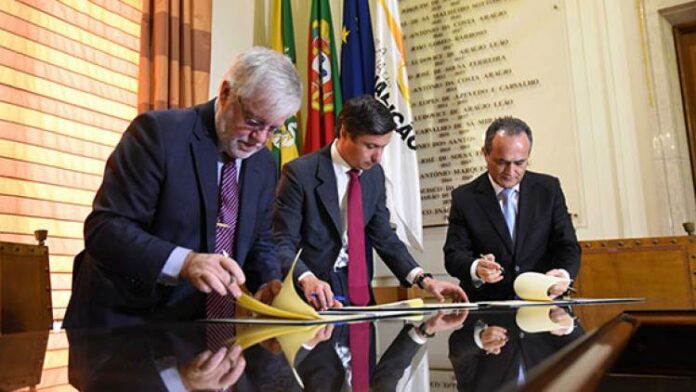
MSC Mediterranean Shipping Company through its rail freight operator Medway in Iberia, is making a significant investment in the construction of Portugal’s largest dry port to address the growing needs of exporters and shippers in the north of the country.

This new railway station at Lousado will serve the second largest economic region in Portugal through direct connections to the port of Sines. Northern Portugal accounts for about 39% of the national exports and 29% of the national economy and its main industries include textiles clothing, footwear and metallurgy as well as medium- and high-tech sectors such as automotive components, pharmaceuticals, machinery, precision and communication equipment and computers.

The Lousado terminal will have an estimated area of 200,000 sqm and storage capacity of 10,000 TEUs. Its six rail lines will be of a European standard of 750m each, serving 12 to 14 trains per day. It will increase the use of electric railways compared to road, and hence have a positive impact on traffic congestion and CO2 emissions, thus providing a more sustainable mode of freight transportation.

The project is proceeding with the cooperation and support of public institutions, such as the local City Hall of Famalicão and Infraestruturas de Portugal (IP). Portugal is planning major infrastructure investments to enhance rail connectivity, including 19 rail projects with a total budget of 4.1 billion euros. The new terminal at Lousado will be connected to the national rail network and the main corridors to the port of Sines, and would allow for trans-border service connecting the Iberian Peninsula to the rest of Europe.

“We are very pleased to implement this new agreement, which will lead to the construction of what will be the largest dry terminal in the Iberian Peninsula,” says Giuseppe Prudente, MSC’s Chief Logistics Officer.

Latest-generation terminal

Construction will begin as soon as the required licences have been approved and is expected to be operational by March 2020. The terminal will be equipped with the most modern technologies, such as state-of-the-art lifting equipment, and is estimated to create more than 90 direct and indirect new jobs.

Using the latest-generation technology, this will be among the most modern dry terminals in the world and the answer to the logistics needs of local companies, making exports and imports easier and thus contributing to the region's prosperity,” Giuseppe Prudente says. “At the same time, this is a demonstration of our commitment to become more efficient and sustainable, providing the service that our customers need, every day.”

Running 100 trains per day, that is equivalent to 136 trips around the world in a year, Medway has a 90% share of the Portuguese rail freight market and the dry terminal is part of a major expansion plan in Portugal. Medway also operates in Spain, where it will be making further investments. 

Liquefied Hydrogen Bunker Vessel Designed

0

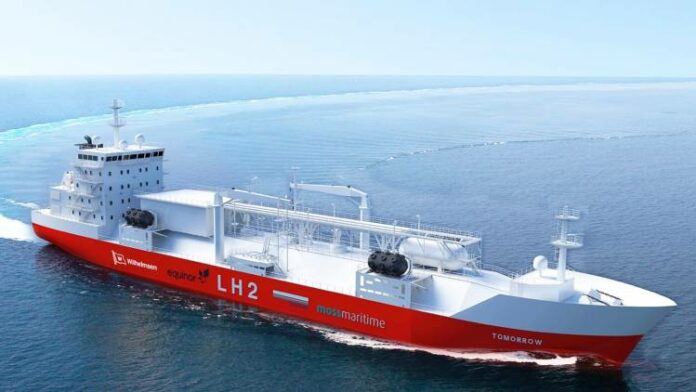
Moss Maritime, Equinor, Wilhelmsen and DNV GL have developed a design for a liquefied hydrogen bunker vessel. 

Liquefied hydrogen at a temperature of -253°C is expected to offer advantages over pressurized hydrogen gas in relation to transportation costs. The project, sponsored by Innovation Norway, was launched to find solutions for storage and handling of this demanding fuel on a vessel.

The 9,000-cubic-meter vessel has been developed to provide liquefied hydrogen bunkering services to merchant ships in addition to open sea transport. Equinor believes hydrogen may represent an attractive energy solution for the sectors that are hard to decarbonize and currently outside the scope of renewable solutions like batteries. Long haul maritime shipping is one of these, says Steinar Eikaas, VP for Low Carbon Solutions in Equinor.

Håkon Lenz, VP Europe and Americas of Wilhelmsen Ship Management, adds: “We see hydrogen as a possible fuel for the future. The commercial feasibility of such a vessel is depending on the overall hydrogen market development. Once market signals show that there is a need for big scale liquefied hydrogen, we and our partners are ready to take this design to the next level.”

Hydrogen as a Fuel

Once liquefied, hydrogen is reduced to 1/800th of its volume, compared to that of its gas phase, facilitating a more-efficient distribution. As a fuel, hydrogen does not release any CO2, and liquefied hydrogen can be used to charge batteries for electrical propulsion via fuel cell technology. 

Some 55 million tons per annum (Mtpa) of hydrogen is currently made every year for industrial feedstock, mostly for oil refining and making chemicals. In contrast, only 0.002 percent of hydrogen production, about 1,000 tons annually, is produced for use as an energy source. Most, if not all, of this currently powers hydrogen fuel-cell electric vehicles. 

Hydrogen propulsion's economic competitiveness and emissions profile vary depending upon the source of the fuel. Almost all commercially-produced hydrogen is currently derived from natural gas or coal gas. Due to the carbon dioxide created by the refining process, its well-to-propeller CO2 emissions can be higher than those from heavy fuel oil, according to a recent review by DNV GL. By contrast, hydrogen produced using renewable electricity and water electrolysis is nearly emissions-free – but can be very costly.

DNV GL predicts significant long-term rises in these numbers, with low-carbon hydrogen becoming an effective decarbonization agent to mitigate climate change. For example, DNV GL estimates that demand in 2050 for hydrogen solely for energy could range from 39–161 Mtpa. 

Other Maritime Projects

Late last year, MAN Cryo, shipowner Fjord1 and designer Multi Maritime in Norway announced the development of a marine fuel-gas system for liquefied hydrogen. The system is designed for vessels, such as ferries, employed on relatively short routes, and it has been granted preliminary approval in principle by DNV GL. The system has a scalable design and is suited for both above- and below-deck applications.

Also last year, DNV GL partnered with Sandia, the Scripps Institution of Oceanography and the naval architect firm Glosten to assess the technical, regulatory and economic feasibility of a hydrogen fuel-cell coastal research vessel. The project found that a 10-knot vessel with 2,400 nautical mile range, able to perform 14 Scripps science missions was feasible. The vessel could be refueled with liquid hydrogen at four different ports of call along the U.S. west coast. No “show-stopping” issues were identified by either DNV GL or the United States Coast Guard. The feasibility of the Zero-V, as well as the ability to refuel it with approximately 11,000 kg of hydrogen, has positive implications for large hydrogen fueled vessels such as cargo vessels and cruise ships. The work was funded by the U.S. Maritime Administration.

In another maritime hydrogen development, Ferguson Marine Engineering is building the world’s first fuel cell ferry that will use hydrogen harvested entirely from renewable sources. The ferry will operate around Scotland’s Orkney Islands, which are producing hydrogen in volume from renewable energy. The vessel will be delivered in 2020 with steel cut around October this year.

In the U.S., a consortium of federal, state and private partners has begun the construction of a new, first-of-its-kind ferry powered by hydrogen fuel cells. The 70-foot catamaran design is being built by Bay Ship & Yacht Co. for Golden Gate Zero Emission Marine, with funding from the state's California Climate Investments program. It is intended as a demonstrator project to showcase the potential of hydrogen fuel cell power. The Bay Area Air Quality Management District is administering the project, and local ferry company Red and White Fleet will handle marine operations. Other key partners include BAE Systems, Incat Crowther, Hexagon Composites, the Port of San Francisco, Sandia National Laboratories and fuel cell manufacturer Hydrogenics. The new vessel is expected to begin its operations in 2019 on a three month trial in San Francisco Bay. 

Source:maritime-executive

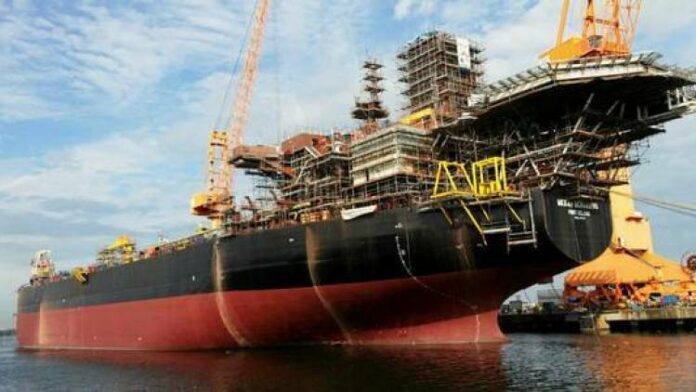
EA Technique settles FSO contract dispute with Amaniaga Resources

0

Malaysian owner EA Technique has withdrawn its arbitration proceedings against offshore service provider Amaniaga Resources after the two parties reached a settlement.

In March last year, EA Technique filed a RM27.4m ($6.6m) claim against Amaniaga for alleged breach of contract to provide services including transportation and offshore installation for a floating storage and offloading (FSO) vessel.

The company said it has reached an amicable resolution with Amaniaga towards a full and final settlement of RM600,000 ($146,000).

In July last year, EA Technique also entered a settlement with Malaysia Marine and Heavy Engineering (MMHE) for a dispute related to the conversion of an oil tanker into a FSO.

Source:splash247