0.3 C
New York
Home Blog Page 1156

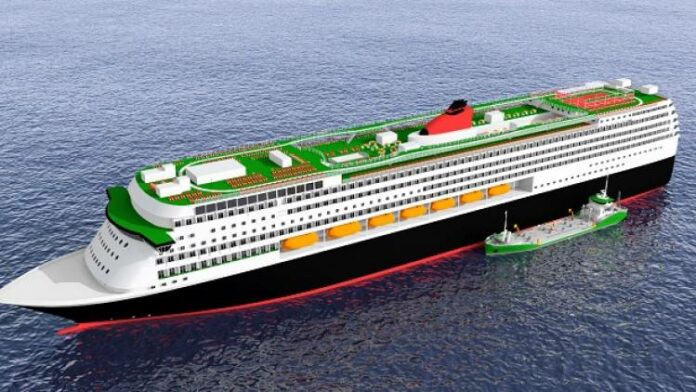
Concept Design for World’s First Pure-Electric Tanker Revealed

0

Asahi Tanker Co. and Exeno-Yamamizu Corporation Tokyo have developed a new domestic shipping tanker design which incorporates zero emission electric propulsion using lithium ion batteries.

Commercial model development of the “e5” design is underway for bunker supply vessels trading in Tokyo Bay. The first vessel is expected to be launched in the fourth quarter of 2020. 

The project partners are also working on the development of “e5” coastal vessels with longer cruising range. 

ClassNK will provide technical advice on ship design and electric propulsion.

The use of electric propulsion controls emissions of CO2, Nox and SOx and also minimizes noise and vibration on the vessel. The design offers economic efficiency through the use of the internet of things and digital tools coupled with improved propulsion performance from using electricity. A simple hull construction and the use of automated equipment on board will reduce the work load for the crew.

e5 vessel details

Total length: 60.00m (197 feet)
Overall width: 10.30m (34 feet)
Propulsion machinery: 2 x 350 kW azimuth thruster, 1 x 130 kW bow thruster
Gross tonnage: 499 tons
Cargo tank capacity: Approximately 1,300 cubic meters
Vessel registration: Japan
Concept designer: Groot Ship Design (Hull) 

Source:maritime-executive

Ophir Energy Agrees To $511 Million Takeover Offer By Medco

0

Ophir Energy Plc said Jan. 30 it has agreed to be bought out by Indonesian oil and gas group Medco Energi Internasional Tbk for a sweetened bid of 390.6 million pounds (US$511.02 million) in cash.

The offer of 55 pence per Ophir share represents a 65.7% premium to Ophir's closing price on Dec. 28, the last trading day before Medco first announced a possible offer for the London-listed company.

Ophir's current output of 25,000 barrels of oil equivalent per day (boe/d) combined with Medco's stated 2018 target of 85,000 boe/d would make Medco, which has been expanding, the seventh largest non-national oil company upstream producer in Southeast Asia, according to research firm Wood Mackenzie. (US$1 = 0.7644 pounds)

Source:epmag

Vintage Energy, Comet Ridge Contracts Rig For Galilee Basin Deeps JV

0

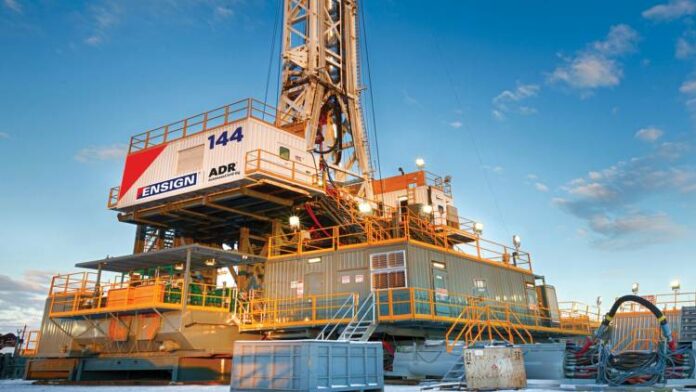
Vintage Energy Ltd. said Jan. 30 that Comet Ridge Ltd., as operator of the Galilee Basin Deeps joint venture (GBDJV, Vintage 15%), has executed a rig contract with Ensign Drilling to secure Rig 932 for the Albany-2 and Albany-1/ST1 drilling program.

The program is scheduled to commence in March 2019 once the wet season has finished. The agreement is for two firm wells plus two contingent wells, with the contingent wells dependent upon evaluation of the Koburra 2-D seismic program.

Ensign Rig 932 is 1,000 horse-power rig and depth rated to 3,200 m (10,498 ft). It is a significantly larger and more powerful rig than utilized on the project previously and will both increase drilling rates for the planned wells and reduce trip times when changing drill bits or other components on the drill pipe.

Vintage and Comet Ridge have now both formally committed to Stage 2 of the farm-in process, whereby Vintage will earn an additional 15% interest in the GBDJV. The agreed Stage 2 work program is 325 km (201 miles) of 2-D seismic and the drilling of Albany-2 and deepening of Albany-1, which successfully flowed gas from a 13 m (42 ft) sandstone interval in June 2018. The Koburra 2-D seismic program is now well underway with line preparation completed and over one third of the seismic data acquired.

“The possibility of extending the drilling program beyond 2 wells gives the joint venture scope to accelerate evaluation of the significant exploration potential of the joint venture area,” Neil Gibbins, Vintage managing director, said. “Stage 2 of the farm-in is already underway and we are looking forward to a very active operational program during the second half of FY19.”

Source:epmag

Unique inks saturation diving deal with POSH Subsea

0

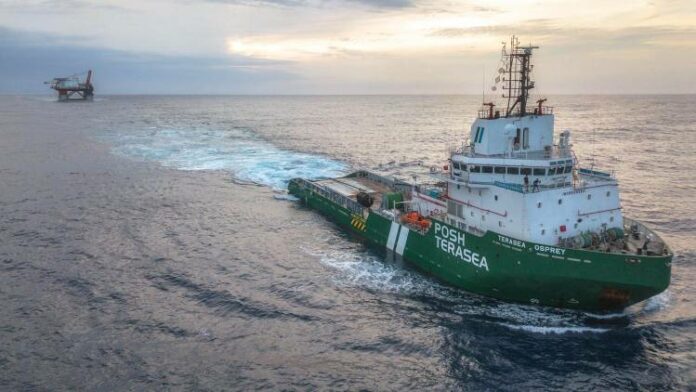
Unique Group has inked a contract with Singapore-based POSH Subsea to offer integrated diving solutions. Under the deal, Unique Group will design, manufacture and deliver classed air and saturation dive systems for integration on POSH’s vessels.

With a fleet of 120 offshore support vessels, POSH has over 60 years of specialised experience in offshore and marine oil field services. The group’s subsea arm is supported by a fleet of young and diverse multi-purpose vessels capable of supporting subsea inspection, repair and maintenance, construction and installation works. POSH’s fleet includes AHTS vessels, PSVs, accommodation vessels, tugs and barges.

Under this partnership, Unique Group will supply a suite of classed air and saturation diving equipment, compliant to the stringent Oil and Gas Producers 468 and International Marine Contractors Association guidelines; consumables and technical support during and post installation spanning a two-year period.

The Unique Equipment Manager, a digitalised planned maintenance system integrated with the dive systems, will enable POSH to track the condition of the equipment more accurately to minimise operational downtime.

“We are pleased to announce our partnership with POSH, an industry-leading offshore marine operator,” said Unique chief executive Harry Gandhi. “This bears witness to our compliance with their stringent requirements and is yet another testament to our track record for delivering timely and quality solutions.”

POSH Subsea divisional director Kurush Contractor said, “Partnering with a reliable equipment manufacturer is critical for POSH as we continually strive for operational excellence. Unique Group has demonstrated professionalism and deep technical expertise in delivering state-of-the-art diving systems on time. Unique’s ability to design and build equipment specific to our needs will be of immense value to POSH.”

Source:osjonline

Kidnapped crew from MSC boxship released by pirates

0

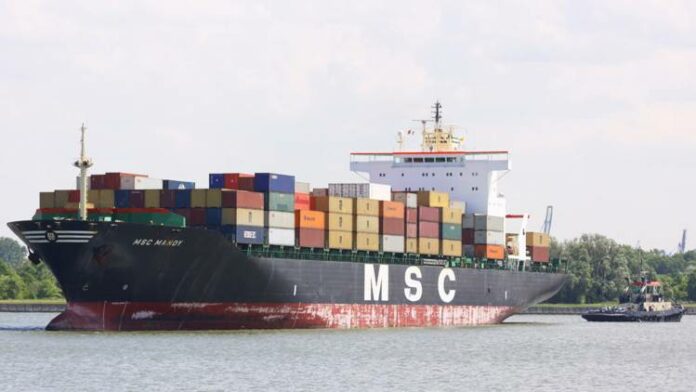
Six crew members, including the captain, kidnapped earlier this month from 2,668 teu MSC Mandy off Benin, have been released according to Russian media.

The Panama-flagged vessel was attacked and boarded around 55 nautical miles off Cotonou on January 2, and negotiations to have the seafarers released have been ongoing since.

Splash understands that Russian authorities had been leading negotiations as the vessel’s crew was almost entirely Russian.

Benin has become a piracy hotspot over the last year, with a series of incidents occurring since January when a Union Maritime oil products tanker was taken along with 22 crew members while anchored off Cotonou.

Meanwhile, MSC Mandy has resumed normal service and is currently moored in Antwerp.

Source:splash247

Developing Canada’s first LNG export terminal

0

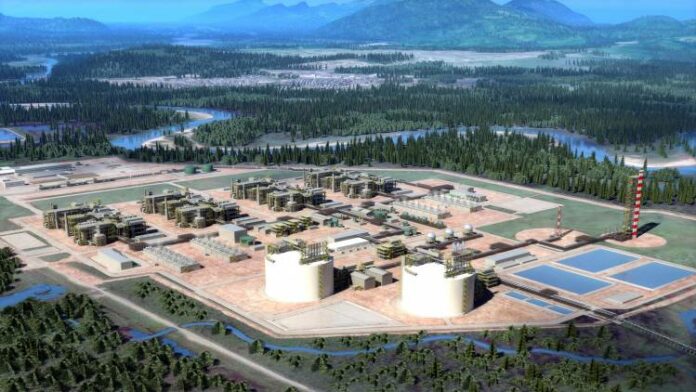
LNG Canada is the largest of 13 LNG export terminals proposed for British Columbia and one of the country’s largest infrastructure projects ever.

The emergence of abundant, cheap US shale gas over the last decade has dramatically changed the North American gas market and, by extension, the world energy picture. One result of the US shale gas revolution has been to lessen its reliance on natural gas piped in from Canada.

Data from the US Energy Information Administration bears that out. In 2007, natural gas pipeline imports from Canada to the US were 3,782,708M ft3. In 2017, natural gas imports fell 22% to 2,962,689M ft3.

With natural gas pipeline exports to the US falling, Canadian gas producers shifted their gaze beyond North America to the more lucrative markets of Asia and Europe. The result is that since 2011, 24 LNG projects have been issued long-term export licences by Canada.

Since Canada only has one operational LNG terminal – Canaport LNG’s regasification import terminal located in Saint John, New Brunswick – it also set in motion proposals for developing 18 LNG export facilities. Those proposals include five in eastern Canada – two in Quebec, three in Nova Scotia – and 13 others on its west coast, all in British Columbia.

The largest of the LNG export terminals proposed is in British Columbia (BC). LNG Canada export terminal is one of the largest ever infrastructure projects in Canada. Construction on the Can$40Bn terminal has already begun. In January, it awarded contracts worth Can$937M after the facility’s first three months of construction.

LNG Canada will be located on a site near Kitimat, BC, on the Douglas River. In phase one, LNG Canada will have two LNG trains, with storage tanks and processing equipment, a rail yard and wharf that can berth two LNG carriers. A second phase will add two more trains. Annual LNG exports are estimated to be equivalent to 1,357.8Bn ft3 of natural gas per year, or 3.72Bn ft3 per day (Bcfd) inclusive of a tolerance allowance. If all goes according to plan, LNG Canada should be operational by 2021.

LNG Canada will be the first LNG export facility to bring Canadian natural gas to Asia, with China, South Korea and Japan eager consumers. China, in particular, would benefit from a steady supply of clean natural gas to replace its dirty coal-fired plant habit. Coal-fired plants generate about two-thirds of China’s electricity.

Forbes reported that domestic gas supply shortages in recent years have led China to soften its policy on displacing coal heating with natural gas.

China approved nearly US$6.7Bn worth of new coal mining projects last year, and it produced 3.55Bn tonnes – a 5.2% increase. Coal imports also jumped 9% last year.

One of the five joint venture (JV) partners in LNG Canada is PetroChina Company Limited. It owns a 15% stake in the JV through its subsidiary PetroChina Canada Limited; along with Royal Dutch Shell plc, through its affiliate Shell Canada Energy (40%); Petronas, through its wholly-owned entity North Montney LNG Limited Partnership (25%); Mitsubishi Corporation, through its subsidiary Diamond LNG Canada Ltd (15%); and Korea Gas Corporation, through its wholly-owned subsidiary Kogas Canada LNG (5%).

Source:lngworldshipping

Hyundai Heavy Industries in Talks to Buy DSME

0

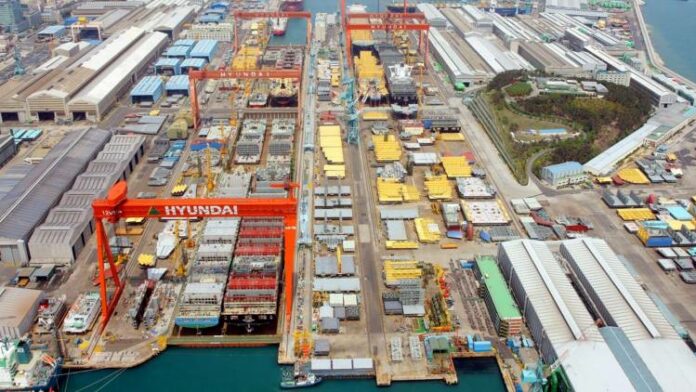
South Korea's "Big Three" shipbuilders may soon become the "Big Two," as Hyundai Heavy Industries (HHI) has reportedly expressed interest in taking over state-owned Daewoo Shipbuilding and Marine Engineering (DSME). The move would consolidate HHI's position as the top South Korean shipbuilder and create a new industry giant. 

DSME experienced severe financial distress during the shipbuilding downturn in 2015-2017. After a series of government bailouts and debt-for-equity swaps, its biggest lender became its biggest shareholder. State-run policy bank KDB now owns a 55 percent majority stake in DSME, and it is reportedly in talks with HHI for a sale. KDB is expected to consider a formal offer from HHI at a board meeting scheduled for March 31. "It is not the stage where we can unveil specifics,” an official at Hyundai Heavy Industries told Yonhap – though more details may emerge at HHI's next earnings call, which is scheduled for tomorrow.

The Korean government has stated its intention to find a buyer for DSME since 2017, and the Wall Street Journal reports that HHI has been in talks with KDB for a purchase for about one year. DSME's CEO, Jung Sung-leep, has already signaled that he is positioning his firm to be sold, and he has endorsed a "Big Two" organizational structure for the Korean shipbuilding market. “I will focus on making Daewoo Shipbuilding a small but firm company ahead of a sale,” Jung said at a press conference last November.

A combination of DSME and HHI would be better-positioned to compete with Chinese rivals, notably state-owned conglomerates CSSC and CSIC. Taken together, these two companies have annual revenues of more than $75 billion – more than the total for Korea's "Big Three" shipbuilders combined. 

Siemens Gamesa chooses Danish davits at Seamade

0

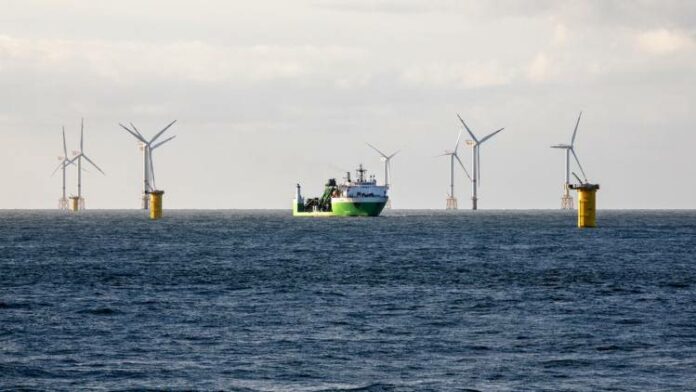
Siemens Gamesa has ordered 58 cranes from Danish outfit Seasight Davits for turbines to be installed at Otary's 487MW Seamade offshore wind farm off the coast of Belgium.

The davit cranes have an outreach of 3.2 metres, a lifting capacity of 1 tonne and will be installed on the turbines' platforms, Seasight said.

They will be manufactured by Seasight Davits’ parent company, Hvide Sande Shipyard, Steel and Service.

The first batch is due for delivery at the start of April 2019.

Seasight said the deal is its first with Siemens Gamesa and the Danish company hopes it is the “beginning of a continuing cooperation”.

Siemens Gamesa is supplying 8.4MW hardware to the project, which is expected to deliver first power in 2020.

Otary holds a 70% majority stake in Seamade, Engie Electrabel has 17.5% and Eneco 12.5%.

Source:renews

COPL outlines phased development plan for Noa offshore Nigeria

0

Canadian Overseas Petroleum Ltd. (COPL) expects to drill its first appraisal well on the Noa field in the OPL 226 lease offshore Nigeria by mid-2019.

An extended well test will be the next step via an early production system, followed by drilling of up to three more, similar wells on the Noa structure, all coming onstream by the end of 2020.

Thereafter, COPL aims to progress to a full-field development.

OPL 226 covers 1,530 sq km (591 sq mi), 50 km (31 mi) from the Nigerian coast in water depths of 40-180 m (131-590 ft). It also surrounds OML 83 which contains the Anyala oil and gas field discovered by Texaco in 1972.

Five wells have been drilled to date on the lease, including Oyoma-1 and Dubagbene-1 later in 1972, which respectively delivered 36.2 m (119 ft) of net oil and gas pay and 8.2 m (27 ft) net oil pay.

The Nduri-1 well in 1973 encountered 9 m (29 ft) of net gas pay, with HJ South-1 in 1988 intersecting 8.5 m (28 ft) of net gas pay. The fifth well drilled was the Noa-1 discovery well in 2001, operated by Solgas.

All wells drilled prior to 2001 were based on analysis of 2D seismic lines.

Essar Exploration and Production Ltd. (Nigeria) (EEPLN) was awarded the license in 2010, completing acquisition of a new 568-sq km (219-sq mi) 3D seismic survey in 2012.

ShoreCan has since undertaken a seismic inversion and interpretation project incorporating rock physics analysis of the long offset 2012 survey.

The proposed drilling plan comprises appraisal of the Noa East lobe and the Noa West lobe, the location of Noa-1.

Development will be based on one horizontal production well and three deviated producers, with a spare well slot contingent on reservoir performance. Discussions continue with various offshore service providers on providing project financing and accompanying services.

Under the first phase the targeted production rate for each of the wells will be 6,000-10,000 b/d.

COPL’s initial appraisal proposal focuses solely on the area around Noa-1. A potential next phase appraisal/development plan covering Noa East, Noa North and Noa Northeast could include drilling of up to 28 additional producers, three gas injectors and five water injectors, with more robust surface and subsurface facilities.

Source:offshore-mag

NZOG set to join Ironbark well partnership offshore Australia

0

Cue Energy has completed the funding requirements for the Ironbark-1 exploration well on the WA-359-P permit offshore Western Australia.

New Zealand Oil & Gas (NZOG) has agreed to take a 15% interest, free-carrying Cue for 2.85% of the costs of the well on the potentially giant Deep Mungaroo gas target, close to the North West Shelf LNG infrastructure.

BP, Beach Energy, and NZOG have each agreed, subject to certain conditions, to form a joint venture to drill Ironbark-1.

The partners have agreed on the well location: BP as operator is proceeding with drill rig tendering and environmental approvals.

Cue also executed an agreement giving NZOG the option to take a 5.36% stake in the WA-409-P permit, with associated free carry costs or cash equivalent if a well is drilled.

Elsewhere, Cue has a 5% interest in the OMV-operated PMP 38160 in New Zealand’s offshore Taranaki basin which contains the producing Maari and Manaia fields.

Here recent production enhancement work included increased water injection through the MR1 and MR5 water injector wells.

The MR6a well was offline at the end of 4Q 2018, with a workover performed subsequently to replace the electric submersible pump with a larger-capacity unit to increase oil production.

At the Sampang PSC off Indonesia (Cue 15%), studies are under way to develop the recent Paus-Biru gas discovery through the existing Oyong facilities for submission to the regulator for approval.

Source:offshore-mag